


 |
市場調查報告書
商品編碼
2125391
馬來西亞二手車市場:市場佔有率分析、產業趨勢與統計及成長預測(2026-2031)Malaysia Used Car - Market Share Analysis, Industry Trends & Statistics, Growth Forecasts (2026 - 2031) |
||||||

※ 本網頁內容可能與最新版本有所差異。詳細情況請與我們聯繫。
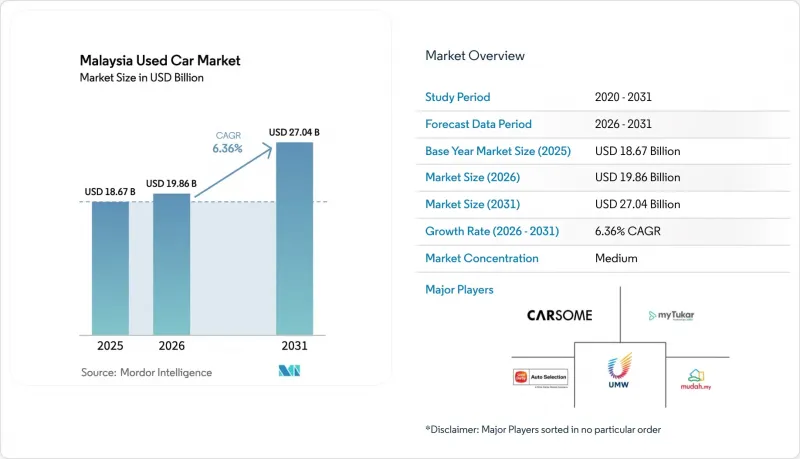
據 Mordor Intelligence 稱,馬來西亞二手車市場在 2025 年的價值為 186.7 億美元,預計到 2031 年將達到 270.4 億美元,而 2026 年為 198.6 億美元,預測期(2026-2031 年)的複合成長率為 6.36%。
本報告按車輛類型(例如,掀背車)、供應商(正規/非正規)、燃料類型(汽油、柴油、其他)、車輛年份(0-2年、3-5年、其他)、價格範圍(低於5000美元、其他)、銷售管道(線上、線下)和所有權類型(原車主轉售、多位車主)進行細分。報告還包括市場規模和成長預測(價值(美元)和銷售(輛))。
馬來西亞二手車市場的趨勢與洞察
新車價格飆升
預計2024年新車價格將持續上漲,若2026年消費稅改革得以實施,預計將再上漲8%至20%。這促使許多中等收入家庭轉向價格在5000美元至9999美元之間的二手車市場,該市場目前已佔據38.74%的市場佔有率。持續的通貨膨脹和疲軟的馬幣推高了進口成本,導致價格差距擴大。這種價格差距使得像Perodua和Proton這樣供應充足且零件價格合理的本土品牌能夠維持穩定的存貨周轉。
數位零售平台的擴張
CARSOME每年透過其人工智慧驅動的175項檢測系統處理超過10萬輛汽車,創造約10億美元的收入,並樹立了新的品質標準。它與Google雲端的合作實現了即時定價和最佳化的客戶體驗,同時,傳統經銷商也開始採用虛擬展示室來維持市場佔有率。線上通路6.73%的複合年成長率表明,儘管許多消費者仍然優先考慮最終的現場驗車,但馬來西亞消費者擴大透過行動搜尋開始他們的購車流程。
假車/非法進口車
取消「開放式核准許可證」模式,並對新加坡註冊車輛入境馬來西亞時違反「車輛入境許可證」規定的行為處以300馬幣的新罰款,凸顯了馬來西亞邊境管制的收緊。雖然此舉短期內會增加合規成本,但最終將保護授權經銷商的利益,並鼓勵消費者選擇擁有檢驗文件的正規經銷商。
細分市場分析
預計到2025年,馬來西亞二手車市場中,轎車仍將保持37.68%的最大市場佔有率,而SUV預計將超越其他所有車型,實現7.03%的複合年成長率。 SUV市場成長趨勢主要歸功於其較高的駕駛座椅位置、出色的離地間隙以及租賃車輛Proton X70歸還帶來的新增供應。根據CARSOME的一份報告,儘管SUV的平均售價更高,銷量仍落後於轎車,但SUV交易正在提升每輛車的盈利。
在馬來西亞二手車市場,SUV市場預計到2031年將大幅成長。同時,由於維護成本較低,掀背車作為入門車型預計仍將保持受歡迎。多用途汽車(MPV)的需求持續成長,尤其受到重視靈活座椅佈局的大家庭和共享出行業者的青睞。隨著基礎建設導致都市區通勤時間增加,經銷商們透過儲備各種SUV車型,成功滿足了這項需求。
儘管非正規經銷商仍佔據馬來西亞二手車市場62.54%的佔有率,但正規經銷商正以6.47%的複合年成長率快速成長,這主要得益於保固範圍的擴大和數位化服務的普及。消費者願意為認證檢測支付合理的溢價,以降低風險,並確保售後服務的可靠性。
隨著 CARSOME 擴大其檢測中心規模,以及 Carro 推出線上即時估價服務,馬來西亞二手車市場授權經銷商的市場佔有率正在不斷成長。森那美收購 UMW Holdings 將把豐田和 Perodua 的二手車業務整合到一個品牌下,這預示著產業整合的趨勢即將到來。
預計到2025年,汽油車將佔汽車交易總量的75.92%,但電池式電動車(BEV)的成長速度最快,達到7.15%,這主要得益於獎勵和充電基礎設施的建設。柴油車目前仍主要應用於物流車隊,而混合動力汽車正逐漸成為專注於續航里程的駕駛者的過渡選擇。
在馬來西亞的二手車市場,受充電站數量增加至10,000個以及稅收優惠政策持續至2025年的推動,預計2026年至2031年間,電動車市場規模將成長三倍。經銷商正開始培訓技術人員進行高壓維護,以便在第一批大眾市場電動車進入二手市場時,抓住殘值機會。
其他好處:
- Excel格式的市場預測(ME)表
- 3個月的分析師支持
目錄
第1章:引言
- 研究假設和市場定義
- 調查範圍
第2章:調查方法
第3章執行摘要
第4章 市場狀況
- 市場概覽
- 市場促進因素
- 新車價格飆升
- 數位零售平台的擴張
- 每款車型均有多種選擇。
- 金融與保險的融合
- OEM支持的CPO計劃
- 透過遠端資訊處理確保透明度
- 市場限制因素
- 仿冒品/非法進口車
- 電動車殘值存在不確定性
- 檢驗標準差異
- 有限售後保固
- 價值供應鏈分析
- 監理情勢
- 技術展望
- 波特五力模型
第5章 市場規模與成長預測
- 車輛類型
- 掀背車
- 轎車
- 運動型多用途車(SUV)
- 多用途汽車(MPV)
- 其他(敞篷車、小轎車、跨界車、跑車)
- 依供應商類型
- 按組織
- 非組織性的
- 按燃料類型
- 汽油
- 柴油引擎
- 混合動力(HEV 和 PHEV)
- 電池式電動車(BEV)
- 液化石油氣/壓縮天然氣/其他
- 經年累月的使用
- 0-2歲
- 3-5年
- 6-8歲
- 9-12歲
- 超過12年
- 按價格範圍
- 不到5000美元
- 5,000 美元至 9,999 美元
- 10,000 美元至 14,999 美元
- 15,000 美元至 19,999 美元
- 20,000 美元至 29,999 美元
- 超過3萬美元
- 按銷售管道
- 線上
- 數位分類廣告入口網站
- 純粹的線上零售商
- OEM授權網路商店
- 離線
- 原廠授權經銷商
- 多品牌獨立零售商
- 實體店面競標行
- 線上
- 依所有權類型
- 原車主轉售
- 多位業主
第6章 競爭情勢
- 市場集中度
- 策略趨勢
- 市佔率分析
- 公司簡介
- CARSOME Sdn Bhd
- myTukar Sdn Bhd
- Sime Darby Auto Selection
- UMW Toyota Motor Sdn Bhd(TOPMARK)
- Mercedes-Benz Malaysia(CPO)
- Mudah.my Sdn Bhd
- Carlist.my
- Caricarz Sdn Bhd
- BMW Malaysia(Premium Selection)
- Perodua Pre-Owned Vehicles
- Proton Certified Pre-Owned
- Bermaz Auto Pre-Owned
- TC Euro Cars(Renault)
- GoCar Subs/GoEV Marketplace
- EasyCars
- MUV Marketplace
- Big Three Auto
- Motor Trader Malaysia
- eBid Motors
- Carsome Certified Lab
第7章 市場機會與未來展望
According to Mordor Intelligence, the Malaysia used car market size was valued at USD 18.67 billion in 2025 and estimated to grow from USD 19.86 billion in 2026 to reach USD 27.04 billion by 2031, at a CAGR of 6.36% during the forecast period (2026-2031).
This report is Segmented by Vehicle Type (Hatchbacks and More), Vendor Type (Organized and Unorganized), Fuel Type (Petrol, Diesel, and More), Vehicle Age (0 - 2 Years, 3 - 5 Years, and More), Price Segment (Less Than USD 5 000, and More), Sales Channel (Online and Offline), and Ownership (First-Owner Resale and Multi-Owner). Market Size & Growth Forecasts (Value (USD) and Volume (Units)).
Malaysia Used Car Market Trends and Insights
Escalating New-Car Prices
New-vehicle sticker prices climbed during 2024 and are expected to rise another 8-20% once excise duty reforms are activated in 2026, pushing many middle-income families toward the USD 5,000-9,999 used segment that already commands 38.74% share. Persistent inflation and a weak ringgit inflate import costs, keeping the price gap wide. The differential supports steady inventory turnover for local brands such as Perodua and Proton that provide ample supply and affordable parts.
Digital Retail Platform Expansion
CARSOME processes more than 100,000 vehicles a year through its AI-driven 175-point inspection regime, delivering roughly USD 1 billion in revenue and setting new quality benchmarks. Partnerships with Google Cloud allow real-time pricing and customer-experience optimization, while traditional lots now add virtual showrooms to defend market share. The online channel's 6.73% CAGR shows that Malaysian shoppers increasingly begin their journey with a mobile search even though many still insist on a last-mile physical inspection.
Counterfeit / Illegally Imported Vehicles
The end of the Open Approved Permit model and fresh Vehicle Entry Permit fines of RM300 for Singapore-registered cars entering Malaysia underscore tighter border controls. The crackdown lifts compliance costs in the short run but ultimately shields legitimate dealers, encouraging customers to gravitate toward organised lots with verifiable documentation.
Other drivers and restraints analyzed in the detailed report include:
- Diverse Selection Among Models
- Integrated Financing & Insurance
- Fragmented Inspection Standards
For complete list of drivers and restraints, kindly check the Table Of Contents.
Segment Analysis
Sedans maintained the largest 37.68% slice of the Malaysia used car market in 2025, though SUVs are forecast to post a 7.03% CAGR, outpacing every other body style. The SUV uptrend stems from elevated driving positions, better flood clearance and fresh supply from Proton X70 lease returns. CARSOME reports that SUV transactions command higher average selling prices, boosting per-unit profitability even while unit volumes are still catching sedans.
The Malaysia used car market size for SUVs is projected to grow exponentially by 2031, while hatchbacks retain strong entry-level resonance because of low running costs. Multi-Purpose Vehicles continue serving large families and ride-hailing operators that value flexible seating. Dealers stocking diversified SUV trims position themselves ahead of the demand curve as infrastructure projects lengthen urban commutes.
Unorganised yards still control 62.54% of the Malaysia used car market share, but organised operators are growing faster at 6.47% CAGR due to warranty coverage and digital service layers. Consumers are willing to pay modest premiums for certified inspections that reduce risk and provide after-sales peace of mind.
The Malaysia used car market size attributable to organised vendors as CARSOME expands to increase its inspection centres and Carro introduces instant online valuations. Sime Darby's purchase of UMW Holdings integrates Toyota and Perodua pre-owned programs under a single banner, signalling deeper consolidation ahead.
Petrol cars commanded 75.92% of 2025 transactions, yet battery-electric units are charting the fastest 7.15% trajectory on incentives and charging rollouts. Diesel remains the province of logistics fleets, whereas hybrids deliver a transitional option for drivers worried about range.
Malaysia used car market size for xEVs is projected to triple between 2026 and 2031 as charging points climb to 10,000 and tax holidays stay intact through 2025. Dealers are beginning to train technicians in high-voltage servicing to capture the residual-value opportunity once the first wave of mass-market EVs enters secondary circulation.
Complete Report Scope:
- By Vehicle Type
- Hatchbacks
- Sedans
- Sport-Utility Vehicles (SUVs)
- Multi-Purpose Vehicles (MPVs)
- Others (convertibles, coupes, crossovers, sports cars)
- By Vendor Type
- Organised
- Unorganised
- By Fuel Type
- Petrol
- Diesel
- Hybrid (HEV & PHEV)
- Battery-Electric (BEV)
- LPG / CNG / Others
- By Vehicle Age
- 0 - 2 Years
- 3 - 5 Years
- 6 - 8 Years
- 9 - 12 Years
- More than 12 Years
- By Price Segment
- Less than USD 5 000
- USD 5 000 - USD 9 999
- USD 10 000 - USD 14 999
- USD 15 000 - USD 19 999
- USD 20 000 - USD 29 999
- More than or equal to USD 30 000
- By Sales Channel
- Online
- Digital Classified Portals
- Pure-play e-Retailers
- OEM-Certified Online Stores
- Offline
- OEM-Franchised Dealers
- Multi-brand Independent Dealers
- Physical Auction Houses
- Online
- By Ownership
- First-owner Resale
- Multi-owner
List of Companies Covered in this Report:
- CARSOME Sdn Bhd
- myTukar Sdn Bhd
- Sime Darby Auto Selection
- UMW Toyota Motor Sdn Bhd (TOPMARK)
- Mercedes-Benz Malaysia (CPO)
- Mudah.my Sdn Bhd
- Carlist.my
- Caricarz Sdn Bhd
- BMW Malaysia (Premium Selection)
- Perodua Pre-Owned Vehicles
- Proton Certified Pre-Owned
- Bermaz Auto Pre-Owned
- TC Euro Cars (Renault)
- GoCar Subs / GoEV Marketplace
- EasyCars
- MUV Marketplace
- Big Three Auto
- Motor Trader Malaysia
- eBid Motors
- Carsome Certified Lab
Additional Benefits:
- The market estimate (ME) sheet in Excel format
- 3 months of analyst support
TABLE OF CONTENTS
1 Introduction
- 1.1 Study Assumptions & Market Definition
- 1.2 Scope of the Study
2 Research Methodology
3 Executive Summary
4 Market Landscape
- 4.1 Market Overview
- 4.2 Market Drivers
- 4.2.1 Escalating new-car prices
- 4.2.2 Digital retail platform expansion
- 4.2.3 Diverse selection among models
- 4.2.4 Integrated financing & insurance
- 4.2.5 OEM-backed CPO programs
- 4.2.6 Telematics-enabled transparency
- 4.3 Market Restraints
- 4.3.1 Counterfeit / illegally imported vehicles
- 4.3.2 EV residual-value uncertainty
- 4.3.3 Fragmented inspection standards
- 4.3.4 Limited aftermarket warranty
- 4.4 Value / Supply-Chain Analysis
- 4.5 Regulatory Landscape
- 4.6 Technological Outlook
- 4.7 Porter's Five Forces
- 4.7.1 Threat of New Entrants
- 4.7.2 Bargaining Power of Buyers/Consumers
- 4.7.3 Bargaining Power of Suppliers
- 4.7.4 Threat of Substitute Products
- 4.7.5 Intensity of Competitive Rivalry
5 Market Size & Growth Forecasts (Value (USD))
- 5.1 By Vehicle Type
- 5.1.1 Hatchbacks
- 5.1.2 Sedans
- 5.1.3 Sport-Utility Vehicles (SUVs)
- 5.1.4 Multi-Purpose Vehicles (MPVs)
- 5.1.5 Others (convertibles, coupes, crossovers, sports cars)
- 5.2 By Vendor Type
- 5.2.1 Organised
- 5.2.2 Unorganised
- 5.3 By Fuel Type
- 5.3.1 Petrol
- 5.3.2 Diesel
- 5.3.3 Hybrid (HEV & PHEV)
- 5.3.4 Battery-Electric (BEV)
- 5.3.5 LPG / CNG / Others
- 5.4 By Vehicle Age
- 5.4.1 0 - 2 Years
- 5.4.2 3 - 5 Years
- 5.4.3 6 - 8 Years
- 5.4.4 9 - 12 Years
- 5.4.5 More than 12 Years
- 5.5 By Price Segment
- 5.5.1 Less than USD 5 000
- 5.5.2 USD 5 000 - USD 9 999
- 5.5.3 USD 10 000 - USD 14 999
- 5.5.4 USD 15 000 - USD 19 999
- 5.5.5 USD 20 000 - USD 29 999
- 5.5.6 More than or equal to USD 30 000
- 5.6 By Sales Channel
- 5.6.1 Online
- 5.6.1.1 Digital Classified Portals
- 5.6.1.2 Pure-play e-Retailers
- 5.6.1.3 OEM-Certified Online Stores
- 5.6.2 Offline
- 5.6.2.1 OEM-Franchised Dealers
- 5.6.2.2 Multi-brand Independent Dealers
- 5.6.2.3 Physical Auction Houses
- 5.6.1 Online
- 5.7 By Ownership
- 5.7.1 First-owner Resale
- 5.7.2 Multi-owner
6 Competitive Landscape
- 6.1 Market Concentration
- 6.2 Strategic Moves
- 6.3 Market Share Analysis
- 6.4 Company Profiles (Includes Global Level Overview, Market Level Overview, Core Segments, Financials as Available, Strategic Information, Market Rank/Share for Key Companies, Products and Services, SWOT Analysis, and Recent Developments)
- 6.4.1 CARSOME Sdn Bhd
- 6.4.2 myTukar Sdn Bhd
- 6.4.3 Sime Darby Auto Selection
- 6.4.4 UMW Toyota Motor Sdn Bhd (TOPMARK)
- 6.4.5 Mercedes-Benz Malaysia (CPO)
- 6.4.6 Mudah.my Sdn Bhd
- 6.4.7 Carlist.my
- 6.4.8 Caricarz Sdn Bhd
- 6.4.9 BMW Malaysia (Premium Selection)
- 6.4.10 Perodua Pre-Owned Vehicles
- 6.4.11 Proton Certified Pre-Owned
- 6.4.12 Bermaz Auto Pre-Owned
- 6.4.13 TC Euro Cars (Renault)
- 6.4.14 GoCar Subs / GoEV Marketplace
- 6.4.15 EasyCars
- 6.4.16 MUV Marketplace
- 6.4.17 Big Three Auto
- 6.4.18 Motor Trader Malaysia
- 6.4.19 eBid Motors
- 6.4.20 Carsome Certified Lab
7 Market Opportunities & Future Outlook
- 7.1 White-space & Unmet-Need Assessment

 中國二手車市場:市場佔有率分析、產業趨勢與統計及成長預測(2026-2031)印尼二手車金融:市場佔有率分析、產業趨勢與統計及成長預測(2026-2031)中東和非洲二手車市場:市場佔有率分析、行業趨勢和統計數據以及成長預測(2026-2031 年)印尼二手車市場:市佔率分析、產業趨勢與統計及成長預測(2026-2031)新加坡二手車市場:市佔率分析、產業趨勢與統計及成長預測(2026-2031)法國二手車市場:市場佔有率分析、產業趨勢與統計及成長預測(2026-2031)義大利二手車市場:市佔率分析、產業趨勢與統計及成長預測(2026-2031)英國二手車市場:市佔率分析、產業趨勢與統計及成長預測(2026-2031)西班牙二手車市場:市佔率分析、產業趨勢與統計及成長預測(2026-2031)東南亞二手車市場:市場佔有率分析、產業趨勢與統計及成長預測(2026-2031)