


 |
市場調查報告書
商品編碼
2124414
東南亞二手車市場:市場佔有率分析、產業趨勢與統計及成長預測(2026-2031)South-East Asia Used Car - Market Share Analysis, Industry Trends & Statistics, Growth Forecasts (2026 - 2031) |
||||||

※ 本網頁內容可能與最新版本有所差異。詳細情況請與我們聯繫。
根據 Mordor Intelligence 預測,東南亞二手車市場規模預計在 2025 年達到 697.3 億美元,2026 年達到 743.3 億美元,到 2031 年達到 1,023.7 億美元,2026 年至 2031 年的複合年成長率為 6.61%。
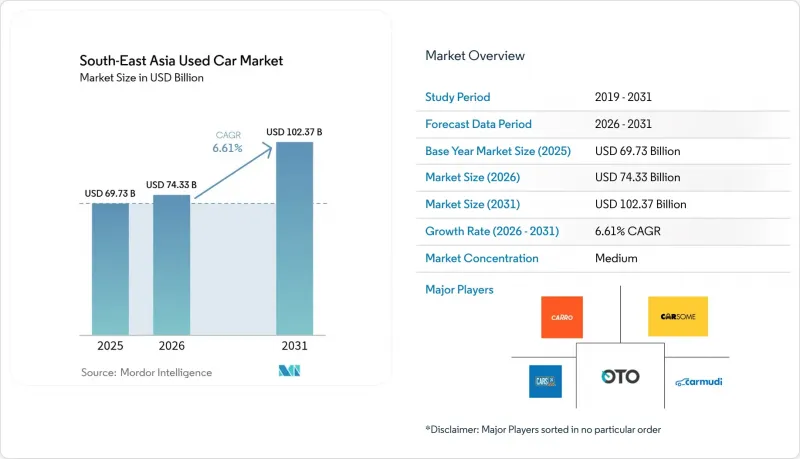
本報告按車輛類型(掀背車、其他)、燃料類型(汽油、柴油、其他)、車齡(0-3年、其他)、里程數(低於3萬公里、其他)、分銷管道(線下和線上)、供應商類型(正規和非正規)、購買方式和國家/地區進行分類。市場預測以價值(美元)和銷售(輛)為單位呈現。
東南亞二手車市場趨勢與洞察
擴大經銷商網路和認證二手車項目
豐田U Trust和本田認證二手車提供額外一年的保固和100項全面檢測,許多SUV買家為了安心,願意支付更高的價格。豪華汽車品牌更進一步。新加坡的寶馬尊選二手車專案提供24個月的保修,並透過其合作金融機構提供利率折扣,將客戶與品牌的生命週期緊密聯繫起來。馬來西亞車輛檢測機構Puspakom於2025年推出了人工智慧驅動的CAVIS V4系統,為授權經銷商提供外部基準,以區別於街頭經銷商。
提供綜合金融和保險解決方案
Carsome Capital 透過控制不良債務鞏固了自身地位。為此,該公司將借款人現金流數據與人工智慧驅動的車輛評級相結合,從而最佳化了信用風險評估。這個精細的策略贏得了包括 AmBank 和 Maybank 在內的多家大型銀行的信任,這些銀行向 Carsome 提供了大量信貸額度,並增強了 Carsome 貸款模式的信心。 2025 年初,JACCS 將目光轉向零工經濟領域,並收購了 Carsome 的大量少數股權。該公司利用包括電子錢包交易在內的替代數據流,拓展了業務範圍。同時,Carsome 推出了捆綁式保險產品,並將道路救援系統無縫整合到月供中。此舉不僅降低了購車門檻,還提升了客戶體驗,並提高了 Carsome 生態系統內的佣金率。
非法經銷商和路邊攤的興起
在東南亞二手車市場,路邊攤販主要以現金交易為主,憑藉更低的價格和靈活的每週付款計劃,無需正式的信用審查,其業績優於正規經銷商。例如,在雅加達的克馬約蘭市場,社會信任往往比電子記錄更為重要,這進一步鞏固了這些非正規經銷商的地位。同時,在泰國,銀行貸款收緊迫使許多小規模經銷商倒閉。倖存的經銷商只能透過拍賣止車來維持庫存並避免維護成本。此外,由於經銷商無需強制辦理許可證,這些非正規經銷商可以降低合規成本,從而在與受嚴格監管的正規經銷商的競爭中佔據優勢。
細分市場分析
預計到2025年,SUV將佔32.37%的市場佔有率,複合年成長率(CAGR)為6.63%,是所有車款中成長率最高的。東南亞二手SUV市場預計到2031年將達到331億美元,這主要得益於即使三年後,SUV的殘值仍能維持在購車價格的60%至70%。在泰國, Fortuna和在印度尼西亞,三菱Xpander是認證二手車市場的高階車型,而在馬來西亞,寶騰X70則引領中階市場。隨著企業和共享出行營運商轉向跨界車,轎車的市佔率正在下降。在越南和菲律賓,掀背車和多用途車(MPV)吸引了小眾市場的需求,因為在狹窄的都市區道路上,小型車輛更受歡迎。
SUV 的換車週期平均為 3-5 年,而轎車則為 5-7 年,這使得符合延長保固條件的新車型能夠進入市場。像比亞迪 Atto 3 這樣的新車型到 2028 年將有充足的供應,屆時早期用戶將重新進入東南亞二手車市場。認證二手車專案主要針對 SUV,因為更高的轉售價格可以抵消翻新成本。
到 2025 年,汽油動力車仍將佔 73.36% 的市場佔有率,但預計到 2031 年,電動車 (EV) 將以 6.71% 的複合年成長率成長。馬來西亞的「電池護照」計畫透過提供電池健康評分,將二手電動車的折扣從傳統的 30-40% 降低到 20%。
電動車(EV)的銷量在2020年起步時不足150輛,但隨後呈現顯著成長,尤其是在2025年上半年。到2025年第二季度,季度銷量已增至約22,000輛。這些車輛中的大部分將從2028年起進入東南亞二手車市場。隨著曼谷和雅加達低排放氣體區的設立,柴油車的市佔率正在下降。越南將於2026年推出一項稅收優惠政策,將混合動力汽車汽車的稅率設定為內燃機汽車稅率的70%,預計這將促進混合動力汽車的普及並擴大未來的供應量。
預計到2025年,車齡4-6年的二手車市佔率將達到38.72%,佔據主導地位。然而,目前該細分市場正面臨價格壓力。自2015年以來,泰國二手車指數已下跌超過30點,殘值也隨之下降。另一方面,車齡0-3年的二手車市場正快速崛起,預計年複合成長率將達到6.78%。這一成長主要得益於SUV的提前更換以及殘值保障政策,這些因素加速了更換週期的縮短。
同時,越南和泰國都對車齡超過10年的進口車實施嚴格的政策限制。因此,消費者開始轉向購買經過認證的較新二手車,進一步強化了東南亞二手車市場轉移到官方管道的趨勢。
其他好處
- Excel格式的市場預測(ME)表
- 3個月的分析師支持
目錄
第1章:引言
- 研究假設和市場定義
- 調查範圍
第2章:調查方法
第3章執行摘要
第4章 市場狀況
- 市場概覽
- 市場促進因素
- 擴大經銷商網路和認證二手車項目
- 提供綜合金融和保險解決方案
- 新車銷售(尤其是SUV)的成長帶動了二手車供應量的成長。
- 透過線上通路和數位市場拓展銷售
- 政府的循環經濟政策和車輛報廢獎勵措施正在加速以舊換新進程。
- 透過人工智慧驅動的檢測和定價平台提升客戶信任度。
- 市場限制因素
- 非法經銷商和路邊攤的興起
- 車輛狀況報告缺乏標準化程序
- 對二手車進口實施新的限制
- 「交通行動服務」計畫正在導致都市區。
- 價值供應鏈分析
- 監理情勢
- 技術展望
- 波特五力模型
第5章 市場規模與成長預測
- 按車輛類型
- 掀背車
- 轎車
- 運動型多用途車(SUV)
- 多用途汽車(MPV)
- 按燃料類型
- 汽油
- 柴油引擎
- 電的
- 替代燃料(液化石油氣/壓縮天然氣/混合動力)
- 車輛年份
- 0-3歲
- 4-6年
- 7-10歲
- 超過10年
- 按距離
- 30,000公里或更少
- 31,000 至 60,000 公里
- 61,000 至 100,000 公里
- 超過10萬公里
- 透過分銷管道
- 線上
- 離線
- 依供應商類型
- 組織類型
- 非組織性的
- 購買方式
- 大量購買
- 透過融資購買
- 專屬式融資
- 銀行貸款
- 非銀行金融公司(NBFC)
- 國家
- 印尼
- 泰國
- 越南
- 馬來西亞
- 菲律賓
- 新加坡
- 其他國家(柬埔寨、寮國、緬甸、汶萊)
第6章 競爭情勢
- 市場集中度
- 策略趨勢
- 市佔率分析
- 公司簡介
- Carro
- Carsome
- Cars24 Services Pvt Ltd
- Carousell
- OLX
- iCar Asia(Carlist.my)
- myTukar
- BeliMobilGue.co.id
- Carmudi
- Oto.com
- Automart PH
- Mercedes-Benz Certified
- Toyota U Trust
- Honda Certified Pre-Owned
- BMW Premium Selection
- Nissan Intelligent Choice
- Hyundai Promise
- Mitsubishi Diamond Certified
- Isuzu Used Car Program
- LausAutoGroup(Carmix)
第7章 市場機會與未來展望
According to Mordor Intelligence, the south-East Asia used car market size is projected to be USD 69.73 billion in 2025, USD 74.33 billion in 2026, and reach USD 102.37 billion by 2031, growing at a CAGR of 6.61% from 2026 to 2031.
This report is Segmented by Vehicle Type (Hatchback and More), Fuel Type (Gasoline, Diesel, and More), Vehicle Age (0 To 3 Years and More), Mileage (Less Than 30, 000 Km and More), Sales Channel (Offline and Online), Vendor Type (Organized and Unorganized), Purchase Method, and Country. The Market Forecasts are Provided in Value (USD) and Volume (Units).
South-East Asia Used Car Market Trends and Insights
Growth in Organized Dealership Networks and Certified Pre-Owned Programs
Toyota U Trust and Honda Certified add one-year warranties and 100-point inspections, commanding premiums that many SUV buyers accept for peace of mind . Luxury badges push the envelope: BMW Premium Selection in Singapore offers 24-month coverage and rate discounts through its captive lender, tethering clients to the brand's lifecycle. Malaysia's inspection firm Puspakom rolled out AI-aided CAVIS V4 in 2025, giving organized lots an external benchmark to distance themselves from curbside sellers .
Availability of Integrated Financing and Insurance Solutions
Carsome Capital bolstered its standing by curbing non-performing loans. This was achieved by merging borrower cash-flow data with AI-driven vehicle grading, thereby refining credit risk assessments. Such a meticulous strategy won the trust of major banks, including AmBank and Maybank, which offered substantial credit lines and bolstered confidence in Carsome's lending model. In early 2025, JACCS, eyeing the gig-economy segment, acquired a notable minority stake. They tapped into alternative data streams, notably e-wallet transactions, to broaden their reach. Concurrently, Carsome introduced bundled insurance offerings, seamlessly integrating roadside assistance into monthly installments. This move not only alleviated buyer friction but also enriched the customer experience and elevated commission take-rates within Carsome's ecosystem.
Dominance of Unorganized Dealers and Roadside Lots
In Southeast Asia's used car market, cash-based curbside dealers are outpacing certified sellers by offering lower prices and flexible weekly payments, all without the need for formal credit checks. For instance, in Jakarta's Kemayoran market, social trust often takes precedence over digital records, bolstering the presence of these informal dealers. Meanwhile, in Thailand, stricter bank lending has shuttered many small dealerships. Those that remain are turning to repossession auctions for inventory, sidestepping refurbishment costs. Furthermore, the lack of mandatory dealer licensing means that unregulated vendors incur lower compliance costs, giving them a competitive edge over organized dealers bound by stricter regulations.
Other drivers and restraints analyzed in the detailed report include:
- Increasing Turnover of New-Car Sales (Especially SUVs) Feeding Used Supply
- Rising Sales Through Online Channels and Digital Marketplaces
- Lack of Standardized Vehicle-Condition Reporting Protocols
For complete list of drivers and restraints, kindly check the Table Of Contents.
Segment Analysis
SUVs represented 32.37% of the 2025 market share and are set to climb at a 6.63% CAGR, the fastest of any body style. The Southeast Asia used-car market for SUVs is projected to reach USD 33.1 billion in 2031, driven by residual values that remain 60-70% of the original price after 3 years. Thailand's Toyota Fortuner and Indonesia's Mitsubishi Xpander funnel high-clearance stock into certified lots, while Malaysia's Proton X70 lifts the mid-range bracket. Sedans lose share as corporate and ride-hailing fleets pivot toward crossovers. Hatchbacks and multipurpose vehicles hold niche appeal in Vietnam and the Philippines, where tight urban lanes favor compact footprints.
Trade-in cycles average 3-5 years for SUVs, compared with 5-7 years for sedans, which injects late-model units that qualify for warranty extensions. New launches such as the BYD Atto 3 will seed the pipeline by 2028, when early adopters re-enter the Southeast Asian used-car market. Certified programs cherry-pick SUVs because reconditioning costs are spread over higher resale values.
Gasoline cars still accounted for 73.36% of the 2025 market share, yet electric vehicles will grow at a 6.71% CAGR through 2031. Malaysia's battery passport rule reduces buyer discounting of used EVs from the historical 30-40% to 20% by providing state-of-health scores.
Starting from a modest base of under 150 units sold in 2020, electric vehicle (EV) sales have experienced a notable uptick, especially in the first half of 2025. By the second quarter of 2025, quarterly sales had climbed to around 22,000 units; most of these units will enter the Southeast Asian used-car market after 2028. Diesel's relevance slides as Bangkok and Jakarta introduce low-emission zones. Vietnam's 2026 tax incentive, pricing hybrids at 70% of the internal-combustion duty, will spur hybrid adoption and expand future supply.
In 2025, the 4-to-6-year age band commanded a dominant 38.72% share. However, it now grapples with pricing pressures. Since 2015, Thailand's used-vehicle index has plummeted by over 30 points, diminishing residual values. On the other hand, the 0-to-3-year segment is on a rapid ascent, boasting a projected CAGR of 6.78%. This growth is bolstered by early SUV upgrades and residual-value guarantees, which promote swifter replacement cycles.
Meanwhile, in both Vietnam and Thailand, imports over a decade old face stringent policy challenges. This has nudged buyers towards younger, certified vehicles, further solidifying the trend towards organized channels in Southeast Asia's used-car arena.
Complete Report Scope:
- By Vehicle Type
- Hatchback
- Sedan
- Sport-Utility Vehicle (SUV)
- Multi-Purpose Vehicle (MPV)
- By Fuel Type
- Gasoline
- Diesel
- Electric
- Alternative Fuels (LPG/CNG/Hybrid)
- By Vehicle Age
- 0 to 3 Years
- 4 to 6 Years
- 7 to 10 Years
- More than 10 Years
- By Mileage
- Less than 30 000 km
- 30 001 to 60 000 km
- 60 001 to 100 000 km
- More than 100 000 km
- By Sales Channel
- Online
- Offline
- By Vendor Type
- Organized
- Unorganized
- By Purchase Method
- Outright Purchase
- Financed Purchase
- Captive Financing
- Bank Financing
- Non-Banking Financial Companies (NBFC)
- By Country
- Indonesia
- Thailand
- Vietnam
- Malaysia
- Philippines
- Singapore
- Other Countries (Cambodia, Laos, Myanmar, Brunei)
List of Companies Covered in this Report:
- Carro
- Carsome
- Cars24 Services Pvt Ltd
- Carousell
- OLX
- iCar Asia (Carlist.my)
- myTukar
- BeliMobilGue.co.id
- Carmudi
- Oto.com
- Automart PH
- Mercedes-Benz Certified
- Toyota U Trust
- Honda Certified Pre-Owned
- BMW Premium Selection
- Nissan Intelligent Choice
- Hyundai Promise
- Mitsubishi Diamond Certified
- Isuzu Used Car Program
- LausAutoGroup (Carmix)
Additional Benefits:
- The market estimate (ME) sheet in Excel format
- 3 months of analyst support
TABLE OF CONTENTS
1 Introduction
- 1.1 Study Assumptions & Market Definition
- 1.2 Scope of the Study
2 Research Methodology
3 Executive Summary
4 Market Landscape
- 4.1 Market Overview
- 4.2 Market Drivers
- 4.2.1 Growth in Organized Dealership Networks and Certified-Pre-Owned Programs
- 4.2.2 Availability of Integrated Financing and Insurance Solutions
- 4.2.3 Increasing Turnover of New-Car Sales (Especially SUVs) Feeding Used Supply
- 4.2.4 Rising Sales Through Online Channels and Digital Marketplaces
- 4.2.5 Government Circular-Economy and Scrappage Incentives Accelerating Trade-Ins
- 4.2.6 AI-Driven Inspection/Pricing Platforms Boosting Buyer Trust
- 4.3 Market Restraints
- 4.3.1 Dominance of Unorganized Dealers and Roadside Lots
- 4.3.2 Lack of Standardized Vehicle-Condition Reporting Protocols
- 4.3.3 Emerging Import Restrictions on Older Used Vehicles
- 4.3.4 Reduced Private-Car Ownership in Urban Areas Due to Mobility-As-A-Service
- 4.4 Value / Supply-Chain Analysis
- 4.5 Regulatory Landscape
- 4.6 Technological Outlook
- 4.7 Porter's Five Forces
- 4.7.1 Threat of New Entrants
- 4.7.2 Bargaining Power of Suppliers
- 4.7.3 Bargaining Power of Buyers
- 4.7.4 Threat of Substitutes
- 4.7.5 Competitive Rivalry
5 Market Size & Growth Forecasts (Value (USD) and Volume (Units))
- 5.1 By Vehicle Type
- 5.1.1 Hatchback
- 5.1.2 Sedan
- 5.1.3 Sport-Utility Vehicle (SUV)
- 5.1.4 Multi-Purpose Vehicle (MPV)
- 5.2 By Fuel Type
- 5.2.1 Gasoline
- 5.2.2 Diesel
- 5.2.3 Electric
- 5.2.4 Alternative Fuels (LPG/CNG/Hybrid)
- 5.3 By Vehicle Age
- 5.3.1 0 to 3 Years
- 5.3.2 4 to 6 Years
- 5.3.3 7 to 10 Years
- 5.3.4 More than 10 Years
- 5.4 By Mileage
- 5.4.1 Less than 30 000 km
- 5.4.2 30 001 to 60 000 km
- 5.4.3 60 001 to 100 000 km
- 5.4.4 More than 100 000 km
- 5.5 By Sales Channel
- 5.5.1 Online
- 5.5.2 Offline
- 5.6 By Vendor Type
- 5.6.1 Organized
- 5.6.2 Unorganized
- 5.7 By Purchase Method
- 5.7.1 Outright Purchase
- 5.7.2 Financed Purchase
- 5.7.3 Captive Financing
- 5.7.4 Bank Financing
- 5.7.5 Non-Banking Financial Companies (NBFC)
- 5.8 By Country
- 5.8.1 Indonesia
- 5.8.2 Thailand
- 5.8.3 Vietnam
- 5.8.4 Malaysia
- 5.8.5 Philippines
- 5.8.6 Singapore
- 5.8.7 Other Countries (Cambodia, Laos, Myanmar, Brunei)
6 Competitive Landscape
- 6.1 Market Concentration
- 6.2 Strategic Moves
- 6.3 Market Share Analysis
- 6.4 Company Profiles (Includes Global Level Overview, Market Level Overview, Core Segments, Financials as Available, Strategic Information, Market Rank/Share for Key Companies, Products and Services, SWOT Analysis, and Recent Developments)
- 6.4.1 Carro
- 6.4.2 Carsome
- 6.4.3 Cars24 Services Pvt Ltd
- 6.4.4 Carousell
- 6.4.5 OLX
- 6.4.6 iCar Asia (Carlist.my)
- 6.4.7 myTukar
- 6.4.8 BeliMobilGue.co.id
- 6.4.9 Carmudi
- 6.4.10 Oto.com
- 6.4.11 Automart PH
- 6.4.12 Mercedes-Benz Certified
- 6.4.13 Toyota U Trust
- 6.4.14 Honda Certified Pre-Owned
- 6.4.15 BMW Premium Selection
- 6.4.16 Nissan Intelligent Choice
- 6.4.17 Hyundai Promise
- 6.4.18 Mitsubishi Diamond Certified
- 6.4.19 Isuzu Used Car Program
- 6.4.20 LausAutoGroup (Carmix)
7 Market Opportunities & Future Outlook
- 7.1 White-space & unmet-need assessment

 中國二手車市場:市場佔有率分析、產業趨勢與統計及成長預測(2026-2031)印尼二手車金融:市場佔有率分析、產業趨勢與統計及成長預測(2026-2031)中東和非洲二手車市場:市場佔有率分析、行業趨勢和統計數據以及成長預測(2026-2031 年)印尼二手車市場:市佔率分析、產業趨勢與統計及成長預測(2026-2031)新加坡二手車市場:市佔率分析、產業趨勢與統計及成長預測(2026-2031)法國二手車市場:市場佔有率分析、產業趨勢與統計及成長預測(2026-2031)義大利二手車市場:市佔率分析、產業趨勢與統計及成長預測(2026-2031)英國二手車市場:市佔率分析、產業趨勢與統計及成長預測(2026-2031)西班牙二手車市場:市佔率分析、產業趨勢與統計及成長預測(2026-2031)馬來西亞二手車市場:市場佔有率分析、產業趨勢與統計及成長預測(2026-2031)