


 |
市場調查報告書
商品編碼
2124180
泰國瓷磚市場:市佔率分析、產業趨勢與統計及成長預測(2026-2031)Thailand Ceramic Tiles - Market Share Analysis, Industry Trends & Statistics, Growth Forecasts (2026 - 2031) |
||||||

※ 本網頁內容可能與最新版本有所差異。詳細情況請與我們聯繫。
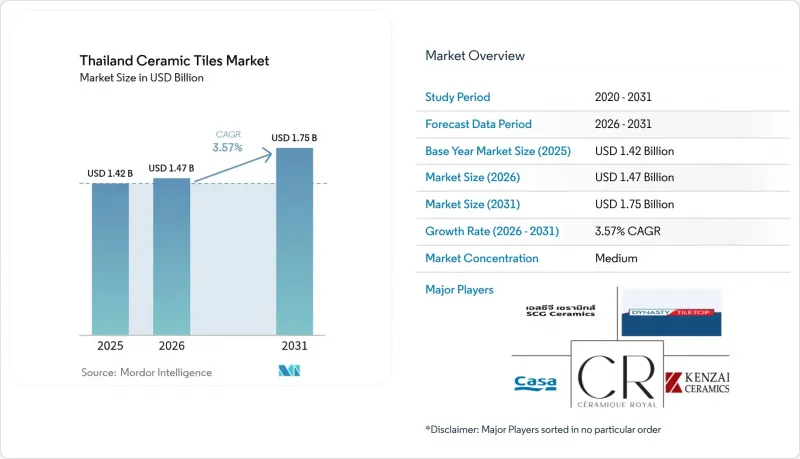
據 Mordor Intelligence 稱,2025 年泰國瓷磚市場價值為 14.2 億美元,預計到 2031 年將從 2026 年的 14.7 億美元成長至 17.5 億美元,預測期(2026-2031 年)複合年成長率為 3.57%。
本報告按產品類型(陶瓷瓷磚、釉藥等)、應用領域(地面、牆面、屋頂)、最終用戶(住宅、商業)、施工類型(新建、維修/更換)、配銷通路(瓷磚石材專賣店、家居裝建材店、DIY商店等)和地區進行細分。市場預測以美元計價。
泰國瓷磚市場趨勢與洞察
都市區住宅快速復甦
隨著政府持續提供優惠房屋抵押貸款並降低資本利得稅以刺激需求,新建住宅項目數量不斷增加。在東部經濟走廊(EEC),開發商已宣布400個項目,總投資額達1,570億泰銖,春武里府及周邊府的地價上漲超過50%。 Pulksa Holding和Sansiri等大型建設公司正在加快開工建設,這重振了中高階住宅的瓷磚採購週期。來自中國和日本的外國投資者正在聯合開發綜合用途物業,並增加高規格的室內裝修,這些裝修通常需要高檔陶瓷瓷磚。對首次購屋者的政策支持以及公共交通的快速發展,將支撐住宅需求在2027年之前保持穩定。住宅建設的復甦標誌著與疫情期間的低迷狀態相比發生了根本性的轉變,開發商現在更加注重品質和永續性,而這需要先進的瓷磚解決方案。
旅遊主導飯店專案的擴張
泰國計劃在2025年接待4000萬外國遊客,這需要酒店開發項目來增加客房容量並維修現有設施。中央帕塔納地區在2024年新開了五家飯店,銷售額達468億泰銖,顯示該產業正在強勁復甦。精品度假酒店正在使用符合國際連鎖品牌標準的抗菌防滑瓷磚。大尺寸瓷磚因其能在酒店大廳營造無縫美感,同時減少人流量大區域的瓷磚縫隙維護而備受青睞。因此,旅遊業的復甦帶動了專業商用瓷磚銷售量的成長。飯店業的建設熱潮也推動了對大尺寸瓷磚和先進表面處理流程的需求,這些工藝既能創造獨特的視覺體驗,又能維持商業設施的營運效率。
來自中國和越南的低價進口商品激增。
進口瓷磚的價格比本地工廠價低30%之多,迅速搶佔了市場佔有率,迫使多家泰國陶器廠在2024年前減產一半。電商平台讓消費者繞過經銷商經銷商,直接購買價格較低的進口磁磚。泰國工業聯合會正在遊說政府徵收保障性關稅並進行品質審核,以恢復市場競爭平衡。國內企業則透過強調設計複雜性、快速物流和國外賣家無法複製的售後服務來應對這項挑戰。這種競爭正在加速產業整合,小規模生產商被迫退出市場。政府正在考慮採取政策干預措施,包括審查低價進口產品的稅收優惠政策,並實施更嚴格的品質標準,以創造公平的競爭環境。進口壓力迫使中小型製造商進行產業整合並提高效率,因為它們難以實現與中國和越南大型生產商競爭所需的規模經濟效益。
細分市場分析
陶瓷瓷磚憑藉其優異的密度、低於0.5%的吸水率和多樣化的設計,預計到2025年將佔據泰國陶瓷磚市場41.40%的佔有率。釉藥瓷磚在注重預算的建築項目中繼續發揮重要作用,而無釉藥技術磚則被廣泛用作工業地板材料,必須滿足R-12防滑標準。受精品酒店和豪華公寓對引人注目的防濺板和泳池襯裡的青睞,馬賽克瓷磚預計到2031年將以4.33%的複合年成長率成長。其他裝飾性產品,例如手工陶土磚,也因社交媒體主導的室內設計潮流而備受關注。投資正轉向能夠壓縮1600噸的壓機技術和拓展美學選擇的數位噴墨生產線,從而鞏固瓷磚的高階地位。
可支配收入的成長以及海外設計理念的湧入,正加速消費者對大尺寸瓷磚的需求,這種瓷磚能顯著減少勾縫寬度,並在視覺上擴大空間。超薄瓷磚技術為商業領域開闢了新的可能性,使外觀維修無需增加過多重量即可實現。可客製化的網狀背襯瓷磚簡化了複雜的佈局,推動了馬賽克瓷磚的發展。在東部經濟走廊(EEC)地區,耐磨性和耐化學性比美觀更為重要,因此釉藥基材更適合工廠擴張。儘管面臨進口瓷磚帶來的銷售壓力,但這些趨勢共同推動了泰國瓷磚市場向高附加價值產品的轉型。
至2025年,地面鋪裝應用將佔泰國瓷磚市場規模的58.50%。這主要得益於商業場所人流量大以及住宅磨損帶來的市場需求成長。在購物中心、公共交通樞紐和工業區,為了兼顧承重能力和成本,通常會選用600 x 600毫米的瓷磚。預計到2031年,牆面鋪裝應用將以4.65%的複合年成長率成長,因為設計師正在推廣在客廳和酒店大廳中使用仿大理石和仿木紋的裝飾牆。屋頂鋪裝應用仍然是一個小眾領域,傳統的陶瓦因其適合熱帶氣候的隔熱性能而佔據主導地位。這種按應用領域分類的細分凸顯了瓷磚應用從純粹的功能性地板材料向裝飾性垂直表面的多樣化趨勢。
牆面應用領域的拓展得益於噴墨列印技術逼真度的顯著提升,這項技術使得製作出外觀酷似石材且維護成本極低的裝飾層板成為可能。開發商擴大採用從地板到天花板的瓷磚鋪設浴室牆面,以減少漏水並降低清潔難度。在屋頂市場,沿海度假區對耐鹽性能的需求正在逐步成長。地板材料領域,公共車站建設和公寓走廊等需要達到PEI IV級耐磨性的場所仍能保持強勁的需求。隨著市場格局的轉變,製造商需要根據不同的應用場景最佳化表面處理、防滑係數和安裝配件,以在泰國瓷磚市場保持差異化優勢。
其他好處:
- Excel格式的市場預測(ME)表
- 3個月的分析師支持
目錄
第1章:引言
- 研究假設和市場定義
- 調查範圍
第2章:調查方法
第3章執行摘要
第4章 市場狀況
- 市場概覽
- 市場促進因素
- 都市區住宅建設正在迅速復甦。
- 旅遊主導飯店專案的擴張
- 政府發展歐亞經濟共同體基礎設施
- 過渡到高檔陶瓷瓷磚和大尺寸規格瓷磚
- 採用抗菌易清潔釉藥。
- 使用薄瓷磚的鋪設方法正在推動房屋翻新需求的成長。
- 市場限制因素
- 來自中國和越南的低價進口商品激增。
- 窯爐成本會因天然氣和電力價格波動而大幅波動。
- 熟練磁磚工短缺
- 與ESG主導的窯爐脫碳相關的資本投資負擔
- 產業價值鏈分析
- 波特五力分析
- 洞察最新市場趨勢與創新
- 近期產業趨勢分析(新產品發布、策略性舉措、投資、合作、合資、業務擴張、併購等)
第5章 市場規模與成長預測
- 依產品類型
- 陶瓷瓷磚
- 釉藥磁磚
- 無釉陶瓷磚
- 馬賽克瓷磚
- 其他(裝飾性、圖案性、手工製作)
- 透過使用
- 地面
- 牆
- 屋頂材料
- 最終用戶
- 住宅
- 商業的
- 飯店業(飯店、度假村)
- 零售空間
- 辦公室和公共設施
- 衛生保健
- 教育設施
- 交通樞紐(機場、捷運、客運站)
- 其他商業用戶
- 依建築類型
- 新建工程
- 維修和重建
- 透過分銷管道
- 磁磚和石材專賣店
- 家居裝修商店和DIY專賣店
- 線上零售
- 直接向承包商銷售
- 按地區
- 曼谷大都會區
- 泰國中部(曼谷除外)
- 泰國北部
- 東北(義三)
- 東海岸
- 泰國西部
- 泰國南部
第6章 競爭情勢
- 市場集中度
- 策略趨勢
- 市佔率分析
- 公司簡介
- SCG Ceramics(COTTO, Campana, Sosuco)
- Dynasty Ceramic Public Co.
- Royal Ceramic Industry(RCI)
- Kenzai Ceramic
- Casa Tiles
- Mogen Ceramic
- Tiger Ceramic
- RAK Ceramics Thailand
- Johnson Tiles(Thailand)
- Nitco(Thai distribution)
- Marazzi Group(Siam distribution)
- Kajaria Ceramics(Thai presence)
- Mohawk Industries(Daltile)
- Inax(LIXIL)
- Cera Cotto
- Thai Ceramic Coating
- Panthera Tiles
- Supreme Tile
- Campine Tiles
- STC Ceramic
第7章 市場機會與未來展望
According to Mordor Intelligence, the Thailand ceramic tiles market size was valued at USD 1.42 billion in 2025 and estimated to grow from USD 1.47 billion in 2026 to reach USD 1.75 billion by 2031, at a CAGR of 3.57% during the forecast period (2026-2031).
This report is Segmented by Product Type (Porcelain Tiles, Glazed Ceramic Tiles, and More), Application (Floor, Wall, Roofing), End-User (Residential, Commercial), Construction Type (New Construction, Renovation and Replacement), Distribution Channel (Specialty Tile & Stone Stores, Home Improvement & DIY Stores, and More), and Geography. The Market Forecasts are Provided in Terms of Value (USD).
Thailand Ceramic Tiles Market Trends and Insights
Rapid Urban Residential Construction Rebound
New-home launches are climbing as the government sustains mortgage incentives and transfers fees reductions to stimulate demand. In the EEC, developers unveiled 400 projects worth THB 157 billion, pushing land prices up more than 50% in Chon Buri and satellite provinces. Leading builders such as Pruksa Holding and Sansiri are accelerating groundbreaks, which amplifies tile procurement cycles for both mid-market and luxury units. Foreign investors from China and Japan are co-developing mixed-use estates, adding higher-spec finish schedules that favor premium porcelain. Policy support for first-time buyers and rapid mass-transit extensions underpin steady residential demand through 2027. The residential construction rebound represents a fundamental shift from the pandemic-era slowdown, with developers now focusing on quality and sustainability features that require advanced ceramic tile solutions.
Tourism-Led Expansion of Hospitality Projects
Thailand targets 40 million foreign arrivals in 2025, pressuring hotel pipelines to add keys and refurbish legacy stock. Central Pattana opened five new hotels in 2024 and reported revenue of THB 46.8 billion, signaling strong sector recovery. Boutique resorts are specifying antimicrobial, slip-resistant tiles that comply with international chains' brand standards. Large-format porcelain slabs are favored to craft seamless lobby aesthetics while reducing grout maintenance in high-traffic zones. The tourism upswing therefore channels incremental volumes into specialized commercial-grade tile categories. The hospitality construction boom is also driving demand for large-format tiles and sophisticated surface treatments that can create distinctive visual experiences while maintaining operational efficiency in commercial settings.
Surge of Low-Cost Imports from China & Vietnam
Imports captured share by undercutting local ex-factory prices by up to 30%, forcing several Thai kilns to halve output in 2024. E-commerce platforms expedite direct consumer access to cheaper foreign tiles, bypassing traditional distributor vetting. The Federation of Thai Industries lobbies for safeguard duties and quality audits to restore competitive balance. Domestic firms respond by emphasizing design complexity, faster logistics, and warranty service impossible to replicate for overseas sellers. The dispute accelerates industry consolidation as sub-scale producers exit. The government is considering policy interventions including review of tax waivers on low-value imports and enforcement of stricter quality standards to level the competitive playing field for domestic producers. The import pressure is forcing industry consolidation and efficiency improvements as smaller manufacturers struggle to achieve economies of scale necessary for competing against large-scale Chinese and Vietnamese producers.
Other drivers and restraints analyzed in the detailed report include:
- Government EEC Infrastructure Build-Out
- Shift Toward Premium Porcelain & Large-Format Tiles
- Volatile Natural-Gas & Electricity Kiln Costs
For complete list of drivers and restraints, kindly check the Table Of Contents.
Segment Analysis
Porcelain tiles claimed 41.40% of Thailand's ceramic tile market share in 2025 on the back of superior density, water absorption below 0.5%, and design versatility. Glazed ceramic remains relevant for budget-focused builds, whereas unglazed technical bodies fill industrial floors requiring R-12 slip standards. Mosaic variants enjoy a 4.33% CAGR tailwind as boutique hotels and high-end condos specify statement backsplashes and pool linings through 2031. Decorative "others" such as handmade terracotta gain visibility through social-media-driven interior trends. Investments pivot toward pressing technology capable of 1600-ton compaction and digital inkjet lines that widen aesthetic offerings, cementing porcelain's premium status.
Growing disposable income and imported design references accelerate consumer migration to large-format porcelain panels that slash grout lines and visually enlarge rooms. Thin-tile technology enables facade retrofits without adding excessive dead load, opening new commercial frontiers. Mosaic's growth benefits from customizable mesh-mounted sheets simplifying complex layouts. Unglazed bodies align with EEC factory expansions where abrasion and chemical resistance outweigh aesthetics. Altogether these dynamics propel Thailand ceramic tiles market toward higher value mix despite volume pressure from imports.
Floor installations represented 58.50% of the Thailand ceramic tiles market size in 2025 thanks to heavy commercial foot traffic and residential wear demands. Shopping malls, mass-transit hubs, and industrial corridors specify 600X600-millimeter porcelain pieces to balance load-bearing with cost. Wall cladding posts a 4.65% CAGR as designers push feature walls in living rooms and hotel lobbies that mimic marble and wood through 2031. Roofing applications, though niche, rely on traditional clay tiles for thermal insulation suited to tropical climates. The application split underscores diversification from purely functional flooring toward decorative vertical surfaces.
Wall expansion owes to technological leaps in inkjet realism, enabling stone-look veneers without maintenance burdens. Developers embrace full-height bathroom clads to reduce leak points and cleaning labor. Roofing sees incremental uplift in coastal resorts where salt-spray resistance is prized. Floor segments remain resilient via public-sector station builds and condominium corridors requiring PEI IV wear ratings. The evolving balance means manufacturers must tailor surface finishes, slip coefficients, and installation accessories per use case to sustain differentiation within Thailand ceramic tiles market.
Complete Report Scope:
- By Product Type
- Porcelain Tiles
- Glazed Ceramic Tiles
- Unglazed Ceramic Tiles
- Mosaic Tiles
- Others (Decorative, Patterned, Handmade)
- By Application
- Floor
- Wall
- Roofing
- By End-User
- Residential
- Commercial
- Hospitality (Hotels, Resorts)
- Retail Spaces
- Offices & Institutions
- Healthcare
- Educational Facilities
- Transport Hubs (Airports, Metro, Bus Terminals)
- Other Commercial Users
- By Construction Type
- New Construction
- Renovation and Replacement
- By Distribution Channel
- Specialty Tile & Stone Stores
- Home Improvement & DIY Stores
- Online Retail
- Direct Sales to Contractors
- By Geography
- Bangkok Metropolitan
- Central Thailand (ex-Bangkok)
- Northern Thailand
- Northeastern (Isan)
- Eastern Seaboard
- Western Thailand
- Southern Thailand
List of Companies Covered in this Report:
- SCG Ceramics (COTTO, Campana, Sosuco)
- Dynasty Ceramic Public Co.
- Royal Ceramic Industry (RCI)
- Kenzai Ceramic
- Casa Tiles
- Mogen Ceramic
- Tiger Ceramic
- RAK Ceramics Thailand
- Johnson Tiles (Thailand)
- Nitco (Thai distribution)
- Marazzi Group (Siam distribution)
- Kajaria Ceramics (Thai presence)
- Mohawk Industries (Daltile)
- Inax (LIXIL)
- Cera Cotto
- Thai Ceramic Coating
- Panthera Tiles
- Supreme Tile
- Campine Tiles
- STC Ceramic
Additional Benefits:
- The market estimate (ME) sheet in Excel format
- 3 months of analyst support
TABLE OF CONTENTS
1 Introduction
- 1.1 Study Assumptions & Market Definition
- 1.2 Scope of the Study
2 Research Methodology
3 Executive Summary
4 Market Landscape
- 4.1 Market Overview
- 4.2 Market Drivers
- 4.2.1 Rapid Urban Residential Construction Rebound
- 4.2.2 Tourism-Led Expansion Of Hospitality Projects
- 4.2.3 Government EEC Infrastructure Build-Out
- 4.2.4 Shift Toward Premium Porcelain & Large-Format Tiles
- 4.2.5 Adoption of Antimicrobial & Easy-Clean Glazes
- 4.2.6 Thin-Tile Overlay Solutions Boosting Renovation Demand
- 4.3 Market Restraints
- 4.3.1 Surge of Low-Cost Imports From China & Vietnam
- 4.3.2 Volatile Natural-Gas & Electricity Kiln Costs
- 4.3.3 Shortage of Skilled Tile Installers
- 4.3.4 ESG-Driven Kiln Decarbonisation Cap-Ex Burden
- 4.4 Industry Value Chain Analysis
- 4.5 Porter's Five Forces Analysis
- 4.5.1 Threat of New Entrants
- 4.5.2 Bargaining Power of Suppliers
- 4.5.3 Bargaining Power of Buyers
- 4.5.4 Threat of Substitutes
- 4.5.5 Competitive Rivalry
- 4.6 Insights into the Latest Trends and Innovations in the Market
- 4.7 Insights on Recent Developments (New Product Launches, Strategic Initiatives, Investments, Partnerships, JVs, Expansion, M&As, etc.) in the Industry
5 Market Size & Growth Forecasts (Value in USD)
- 5.1 By Product Type
- 5.1.1 Porcelain Tiles
- 5.1.2 Glazed Ceramic Tiles
- 5.1.3 Unglazed Ceramic Tiles
- 5.1.4 Mosaic Tiles
- 5.1.5 Others (Decorative, Patterned, Handmade)
- 5.2 By Application
- 5.2.1 Floor
- 5.2.2 Wall
- 5.2.3 Roofing
- 5.3 By End-User
- 5.3.1 Residential
- 5.3.2 Commercial
- 5.3.2.1 Hospitality (Hotels, Resorts)
- 5.3.2.2 Retail Spaces
- 5.3.2.3 Offices & Institutions
- 5.3.2.4 Healthcare
- 5.3.2.5 Educational Facilities
- 5.3.2.6 Transport Hubs (Airports, Metro, Bus Terminals)
- 5.3.2.7 Other Commercial Users
- 5.4 By Construction Type
- 5.4.1 New Construction
- 5.4.2 Renovation and Replacement
- 5.5 By Distribution Channel
- 5.5.1 Specialty Tile & Stone Stores
- 5.5.2 Home Improvement & DIY Stores
- 5.5.3 Online Retail
- 5.5.4 Direct Sales to Contractors
- 5.6 By Geography
- 5.6.1 Bangkok Metropolitan
- 5.6.2 Central Thailand (ex-Bangkok)
- 5.6.3 Northern Thailand
- 5.6.4 Northeastern (Isan)
- 5.6.5 Eastern Seaboard
- 5.6.6 Western Thailand
- 5.6.7 Southern Thailand
6 Competitive Landscape
- 6.1 Market Concentration
- 6.2 Strategic Moves
- 6.3 Market Share Analysis
- 6.4 Company Profiles (includes Global level Overview, Market level overview, Core Segments, Financials as available, Strategic Information, Market Rank/Share for key companies, Products & Services, and Recent Developments)
- 6.4.1 SCG Ceramics (COTTO, Campana, Sosuco)
- 6.4.2 Dynasty Ceramic Public Co.
- 6.4.3 Royal Ceramic Industry (RCI)
- 6.4.4 Kenzai Ceramic
- 6.4.5 Casa Tiles
- 6.4.6 Mogen Ceramic
- 6.4.7 Tiger Ceramic
- 6.4.8 RAK Ceramics Thailand
- 6.4.9 Johnson Tiles (Thailand)
- 6.4.10 Nitco (Thai distribution)
- 6.4.11 Marazzi Group (Siam distribution)
- 6.4.12 Kajaria Ceramics (Thai presence)
- 6.4.13 Mohawk Industries (Daltile)
- 6.4.14 Inax (LIXIL)
- 6.4.15 Cera Cotto
- 6.4.16 Thai Ceramic Coating
- 6.4.17 Panthera Tiles
- 6.4.18 Supreme Tile
- 6.4.19 Campine Tiles
- 6.4.20 STC Ceramic
7 Market Opportunities & Future Outlook
- 7.1 Expansion of Exports to ASEAN and Global Markets
- 7.2 Boost in Renovation-Driven Tile Consumption Nationwide

 德國瓷磚:市場佔有率分析、產業趨勢與統計及成長預測(2026-2031)法國陶瓷磚:市場佔有率分析、產業趨勢與統計及成長預測(2026-2031)英國磁磚市場:市佔率分析、產業趨勢與統計及成長預測(2026-2031)日本陶瓷磚:市佔率分析、產業趨勢與統計及成長預測(2026-2031)義大利瓷磚:市佔率分析、產業趨勢與統計及成長預測(2026-2031)中國瓷磚市場:市場佔有率分析、行業趨勢與統計及成長預測(2026-2031年)印尼陶瓷磚市場:市場佔有率分析、產業趨勢與統計及成長預測(2026-2031)印度瓷磚市場:市場佔有率分析、行業趨勢與統計及成長預測(2026-2031)越南瓷磚市場:市場佔有率分析、產業趨勢與統計及成長預測(2026-2031)
 2026-2030年全球陶瓷磚市場