


 |
市場調查報告書
商品編碼
2115150
法國陶瓷磚:市場佔有率分析、產業趨勢與統計及成長預測(2026-2031)France Ceramic Tiles - Market Share Analysis, Industry Trends & Statistics, Growth Forecasts (2026 - 2031) |
||||||

※ 本網頁內容可能與最新版本有所差異。詳細情況請與我們聯繫。
根據 Mordor Intelligence 預測,法國瓷磚市場規模將從 2025 年的 13.6 億美元成長到 2026 年的 14.1 億美元,然後在 2031 年達到 16.7 億美元,2026 年至 2031 年的複合年成長率為 3.38%。
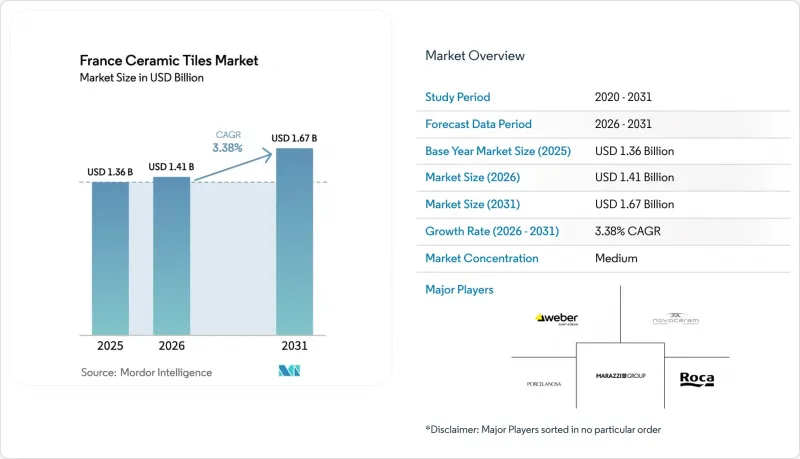
本報告按產品類型(陶瓷瓷磚、釉藥等)、應用領域(地面、牆面等)、最終用戶(住宅、商業)、施工類型(新建、維修)、配銷通路(瓷磚石材專賣店、家居建材店、DIY商店等)以及地區(法國法蘭西島、奧弗涅-羅訥-阿爾卑斯大區等)進行細分。市場預測以美元計價。
法國瓷磚市場的趨勢和洞察
MaPrimeRenov 和中東歐補貼推動了翻新熱潮。
法國的維修資助體系持續推動住宅地板材料維修,這構成了法國瓷磚市場短期需求的基礎。國家住宅署董事會批准了2026年54億美元(46億歐元)的臨時預算,其中51億美元(44億歐元)將用於家庭支持,惠及約35萬戶家庭。這筆資金將用於至少12萬套高品質節能維修和至少15萬套單項維修,延續了將地板材料翻新與外牆和固定裝置升級相結合的定向項目趨勢。與此預算撥款同步實施的還有一套節能認證體系,政府的2025-2035年規劃藍圖也概述了持續的義務和政策連續性,以在中期內穩定維修規模。這項支援措施旨在維持對廚房、浴室和門廳等區域耐用飾面材料的投入,這些區域的瓷磚具有衛生、防水和經久耐用等優點。該計劃的設計優先考慮能夠提升能源性能等級的項目,從而推動進行全面的工程,不僅包括隔熱維修,還包括表面材料的更換。
過渡到以奢華和耐用性為優先考慮的大尺寸瓷磚。
大尺寸陶瓷瓷磚憑藉其簡潔美觀的外觀、更少的勾縫、低吸水率和高強度,在法國瓷磚市場確立了自身價值。位於大都會圈中心的注重設計的住宅和高階商業項目,都指定使用邊緣切割精準的瓷磚,從而推動了市場轉向更高價位產品的轉變。法國的生產系統與知名大型製造商合作,利用集團規模優勢,提供最大尺寸達120公分的瓷磚,同時保持在地化的加工和品管,滿足消費者對認證低排放產品的偏好。此外,磁磚的低孔隙率和耐磨性等技術特性,使其能夠滿足高人流量區域的維護需求。隨著尺寸的增加,專業的搬運、找平系統和專業安裝人員的重要性依然突出,確保了專業瓷磚店即使在日益數位化的銷售管道中也能保持其市場地位。
能源價格波動推高了燃燒成本。
能源是陶瓷燒製的核心投入要素,法國電力和天然氣市場的價格波動持續為成本轉嫁和利潤率管理帶來嚴峻挑戰。根據能源公共產業生產者物價指數,2025年的能源成本仍高於2021年的基準值,即使在能源危機最嚴重的時期過去之後,高耗能生產的成本下限仍然很高。根據TURPE 7框架調整的電網使用費反映了計劃在2028年之前對輸配電網路進行的投資,這將對製造商支付的電網使用費造成結構性上行壓力,而與商品價格波動無關。 2024年和2025年企業電力消耗稅的恢復和後續成長增加了供電總成本,使依賴穩定基本負載電力運作的窯爐的避險策略變得更加複雜。根據歐盟統計局的數據,2025年上半年非居民用電價格較2024年上半年下降了9.0%。這是一個暫時的緩解因素,但管制費率和稅收變化的整體影響仍然對單位獲利能力造成沉重打擊。
細分市場分析
預計到2025年,瓷質磚將佔據48.23%的市場佔有率,憑藉其卓越的性能,尤其適用於人流量大、濕度高的區域,這些區域對瓷磚的吸水率和強度要求極高,瓷磚將成為該品類的領頭羊。這一主導地位奠定了法國瓷磚市場的產品組合基礎。同時,馬賽克瓷磚的成長速度最快,這主要得益於其在裝飾牆和複雜表面設計方面的柔軟性。低VOC認證產品和永續發展標籤為釉藥產品線在對室內空氣品質有要求的項目中提供了支持,確保法國製造的瓷磚系列在公共和私人競標中繼續獲得強勁的市場認可。隨著集團規模平台的擴張,大尺寸瓷磚的供應量不斷增加,而本地化的成品加工服務則維護了本土品牌的價值,這種組合提升了展示室的吸引力,並支撐了高階價格區間。隨著瓷磚和標準釉藥瓷磚之間的價格差距不斷縮小,項目規範越來越傾向於在主要生活空間中使用瓷磚,而馬賽克瓷磚和特色瓷磚則突出了產品系列的裝飾性。
預計馬賽克瓷磚將以3.68%的複合年成長率(CAGR)保持最快成長速度,直至2031年。開發人員和住宅在高磨損地面和高濕度區域傾向於選擇瓷磚,而馬賽克瓷磚在水療中心、泳池和裝飾牆的需求不斷成長,這使得法國瓷磚市場的成長要素更加多元化。專業零售商正積極回應,引入可容納120公分以下尺寸瓷磚的大型展示空間和陳列裝置,從而最佳化高階系列產品的購買流程。店內選擇商品與數位化視覺化相結合,有助於展現大尺寸尺寸瓷磚在飾面、紋理和尺寸等方面的關鍵特性。在此背景下,馬賽克瓷磚在法國瓷磚市場的佔有率預計將隨著該細分市場的領先成長而擴大。設計師們優先考慮適合精品酒店和住宅翻新的色彩變化和模組化設計。兼具美觀、低排放和生產過程可追溯性的認證產品系列,不僅具有採購優勢,還有助於培養長期的品牌忠誠度。
到2025年,地板應用將佔市場價值的63.11%,在住宅和商業建築中仍將佔據核心地位,其使用壽命長、易於清潔和耐磨等特性足以抵消總安裝成本。儘管法國瓷磚市場在規模上仍然高度依賴地板應用,但屋頂應用正以3.56%的複合年成長率從小規模的基數成長,預計到2031年將持續成長,這主要得益於歷史建築外牆翻新和節能改造項目的推動。牆面應用在潮濕區域和重點空間中保持穩定,這些區域通常使用裝飾釉藥來滿足防潮和視覺設計要求。 2025年地板和牆面覆層應用的有利價格指標與穩定的維修活動相符,並支撐了地板材料的銷售量,儘管新建建築領域存在其他競爭產品。公共和私人建築標準越來越重視高人流量區域的耐用性和衛生性,這將進一步推動地板材料在交通和公共建築環境中的應用。
在這一細分市場中,隨著市政當局和業主將建築外圍護維修與氣候變遷適應目標相結合,法國屋頂相關瓷磚的市場規模預計將與預測的成長率保持一致。在採購主導專案中,對硬質地板的偏好以及合規性要求推動了瓷磚在走廊、大廳和衛生間等場所的應用。與其它材料相比,地板材料的主要優勢在於其整體生命週期成本,尤其是在預期使用頻繁和需要頻繁清潔的場所,瓷磚地面更具優勢。隨著大尺寸尺寸瓷磚選擇的增多,地板材料可以實現無縫外觀,滿足現代設計要求,同時減少勾縫維護的負擔。總而言之,地板材料仍然是市場需求的核心,而屋頂材料在專業維修專案中也獲得了更高的附加價值。
其他好處:
- Excel格式的市場預測(ME)表
- 3個月的分析師支持
目錄
第1章:引言
- 研究假設和市場定義
- 調查範圍
第2章:調查方法
第3章執行摘要
第4章 市場狀況
- 市場概覽
- 市場促進因素
- MaPrimeRenov 和 CEE 的補貼推動了翻新熱潮。
- 新冠疫情後,住宅維修熱潮帶動了DIY磁磚的需求。
- 為了追求更佳的美觀和耐用性,大尺寸陶瓷瓷磚越來越受歡迎。
- 實驗性的綠色氫氣窯減少了法國瓷磚中嵌入的碳含量。
- 抗菌釉藥在醫院維修工程中備受關注。
- 連接義大利、西班牙和法國的鐵路走廊縮短了交貨前置作業時間並降低了成本。
- 市場限制因素
- 能源價格波動推高了燃燒成本。
- 在對價格敏感的住宅市場中,乙烯基和LVT產品的市場佔有率正在不斷萎縮。
- 由於熟練的瓷磚鋪設工短缺,工程進度被延誤了。
- 提高歐盟排放交易體系(EU-ETS)第四階段的基準值會增加合規成本。
- 產業價值鏈分析
- 五力分析
- 新進入者的威脅
- 供應商的議價能力
- 買方的議價能力
- 替代品的威脅
- 競爭公司之間的競爭
- 洞察最新市場趨勢與創新
- 近期產業趨勢分析(新產品發布、策略性舉措、投資、合作、合資、業務擴張、併購等)
第5章 市場規模與成長預測
- 依產品類型
- 磁磚
- 釉藥磁磚
- 無釉陶瓷磚
- 馬賽克瓷磚
- 其他(裝飾性、圖案性、手工製作)
- 透過使用
- 地面
- 牆
- 屋頂材料
- 最終用戶
- 住宅
- 商業
- 飯店業(飯店、度假村)
- 零售空間
- 辦公室和公共設施
- 衛生保健
- 教育設施
- 交通樞紐(機場、捷運、客運站)
- 其他
- 依建築類型
- 新建工程
- 維修和重建
- 透過分銷管道
- 磁磚和石材專賣店
- 家居裝修商店和DIY專賣店
- 線上零售
- 直接向承包商銷售
- 按地區
- 法國法蘭西島
- 奧弗涅-羅納-阿爾卑斯大區
- 普羅旺斯-阿爾卑斯-藍色海岸
- 法國及其他地區
第6章 競爭情勢
- 市場集中度
- 策略趨勢
- 市佔率分析
- 公司簡介
- Saint-Gobain Weber
- Novoceram
- Porcelanosa Grupo
- Roca Ceramica
- Marazzi Group
- Florim Ceramiche
- Panariagroup
- Mohawk Industries
- Groupe Boulenger
- Cerabati
- Villeroy & Boch
- Pamesa Ceramica
- Atlas Concorde
- Casalgrande Padana
- Lapeyre
- Keraben Grupo
- RAK Ceramics
- ABK Group
- Imola Ceramica
- Diffusion Ceramique
第7章 市場機會與未來展望
According to Mordor Intelligence, the France ceramic tiles market size is expected to grow from USD 1.36 billion in 2025 to USD 1.41 billion in 2026 and is forecast to reach USD 1.67 billion by 2031 at a 3.38% CAGR over 2026-2031.
This report is Segmented by Product Type (Porcelain, Glazed Ceramic, and More), Application (Floor, Wall, and More), End-User (Residential, Commercial), Construction Type (New Construction, Renovation), Distribution Channel (Specialty Tile & Stone Stores, Home Improvement & DIY Stores, and More), and Geography (Ile-De-France, Auvergne-Rhone-Alpes, and More). Market Forecasts are Provided in Value (USD).
France Ceramic Tiles Market Trends and Insights
Renovation Wave Backed by MaPrimeRenov & CEE Subsidies
France's renovation funding pipeline continues to reinforce residential flooring upgrades, which anchors near-term demand in the France ceramic tiles market. The national housing agency's board adopted a provisional budget of USD 5.4 billion (EUR 4.6 billion) for 2026, assigning USD 5.1 billion (EUR 4.4 billion) to household aid with a target of nearly 350,000 homes, including at least 120,000 high-quality energy renovations and a minimum of 150,000 single-action renovations, which sustains the flow of eligible projects where flooring work is bundled with envelope and systems upgrades . The energy savings certificates scheme runs in parallel to this allocation, and the government's 2025-2035 program blueprint indicates continued obligations and policy continuity that keep renovation volumes stable across the medium term. These supports keep spending directed at durable finishes in kitchens, bathrooms, and entryways, where ceramic provides hygiene, water resistance, and long life. The program design favors projects that lift energy performance categories, which encourages comprehensive scopes that include surface renewals alongside thermal retrofits.
Shift to Large-Format Porcelain for Premium Aesthetics & Durability
Large-format porcelain is consolidating value in the France ceramic tiles market because it delivers a clean-lined aesthetic with fewer grout joints while retaining low water absorption and high strength. Design-driven residential projects in metropolitan cores and premium commercial programs are specifying rectified-edge products, which support a mix shift toward higher ticket items. French production linked to established champions can leverage group-scale capabilities to offer formats up to 120 centimetres while maintaining local finishing and quality control, aligning with buyer preference for certified, low-emission portfolios. The technical profile of porcelain, including low porosity and abrasion resistance, also matches the maintenance objectives in high-traffic venues. As formats scale up, specialized handling, levelling systems, and pro installers remain important, which helps specialty tile stores maintain relevance in a channel mix that is otherwise opening to digital journeys.
Volatile Energy Tariffs Inflate Firing Costs
Energy is a core input in ceramic firing, and the price dynamics across the French electricity and gas landscape keep cost pass-through and margin management in the foreground. Producer price indicators for energy-linked utilities show that energy costs in 2025 remained above the 2021 baseline, which sustained a higher cost floor for energy-intensive production even after the acute phase of the energy crisis had passed. Changes to grid access charges under the TURPE 7 framework reflect step-ups in planned network investments at the transmission and distribution levels through 2028, which translate into structural upward pressure on grid fees that manufacturers pay regardless of commodity price swings. The restoration and subsequent increase of the electricity excise duty for businesses in 2024 and 2025 added to the total delivered power cost, complicating hedging strategies for kiln operations that benefit from steady baseload. While Eurostat data point to a 9.0% decline in non-household electricity prices in the first half of 2025 compared with the first half of 2024, which offers some temporary relief, the totality of regulated charges and tax changes continues to weigh on unit economics. .
Other drivers and restraints analyzed in the detailed report include:
- Pilot Green-Hydrogen Kilns Lower Embodied-Carbon of French Tiles
- Antibacterial Glazed Tiles Gain Traction in Hospital Upgrades
- Skilled Tile-Layer Shortage Delays Project Timelines
For complete list of drivers and restraints, kindly check the Table Of Contents.
Segment Analysis
Porcelain tiles accounted for 48.23% in 2025, leading the category with a performance profile that suits heavy footfall and wet-area demands where low water absorption and high strength are essential. This leadership anchors product mix in the France ceramic tiles market, even as mosaics post the fastest growth on the back of design flexibility for feature walls and complex surfaces. Certified low-VOC portfolios and sustainability labels support glazed lines in projects that specify indoor air quality outcomes, which helps French-made collections maintain preference in public and private tenders. Large-format porcelain formats are widening in availability through group-scale platforms while local finishing maintains domestic brand equities, a combination that strengthens showroom appeal and supports premium price points. As price differentials between porcelain and standard glazed ceramic continue to narrow, project specifications tip more often toward porcelain in main living areas while mosaics and specialty pieces lift the decorative end of the range.
Mosaic tiles are expected to post the fastest growth at a 3.68% CAGR through 2031. Developers and homeowners use porcelain for high-wear floors and high-moisture zones, while mosaics gain in spas, pools, and accent walls, which diversifies growth drivers within the France ceramic tiles market. Specialty retailers are adapting with larger display bays and handling fixtures for formats up to 120 centimetres, which improves the path to purchase for premium collections. The balance of in-store curation and digital visualization helps communicate finish, texture, and scale, which are pivotal for large-format adoption. In this context, the France ceramic tiles market size attributed to mosaics is expected to expand in line with their segment-leading growth, with designers favouring colourways and modularity that suit boutique hospitality and residential upgrades. Certified ranges that combine aesthetics with low emissions and traceable production carry an advantage in procurement and deliver longer-term brand loyalty.
Floor installations represented 63.11% of value in 2025, and they remain the core application where service life, cleanability, and abrasion resistance justify total installed cost in residential and commercial settings. The France ceramic tiles market continues to rely on floors for scale, while roofing grows from a smaller base at a 3.56% CAGR through 2031, on projects that combine envelope repairs with energy upgrades in heritage contexts. Wall applications keep a stable role in wet zones and in feature settings where decorative glazes are specified to meet moisture control and visual design outcomes. Positive pricing indicators for floor and wall covering works in 2025 line up with steady renovation activity, which supports flooring volumes despite competitive alternatives in new-build segments. Public and private facility standards increasingly emphasize durability and hygiene in high-traffic areas, further reinforcing floor application selection in transport and institutional environments.
Within the segment, the France ceramic tiles market size linked to roofing applications is projected to expand in line with the forecast growth rate as municipalities and owners combine envelope interventions with climate adaptation aims. Where projects are procurement-driven, hard-surface preferences and compliance requirements support ceramic use in corridors, lobbies, and restrooms. The main line of defence for flooring against substitutes is total lifecycle cost, which remains favourable where heavy use and frequent cleaning are expected. As large-format options proliferate, floors can achieve a seamless look that meets contemporary design briefs while reducing grout line maintenance. Taken together, these conditions keep floors central to demand while roofing captures incremental value in specialized retrofit programs.
Complete Report Scope:
- By Product Type
- Porcelain Tiles
- Glazed Ceramic Tiles
- Unglazed Ceramic Tiles
- Mosaic Tiles
- Others (Decorative, Patterned, Handmade)
- By Application
- Floor
- Wall
- Roofing
- By End-User
- Residential
- Commercial
- Hospitality (Hotels, Resorts)
- Retail Spaces
- Offices & Institutions
- Healthcare
- Educational Facilities
- Transport Hubs (Airports, Metro, Bus Terminals)
- Others
- By Construction Type
- New Construction
- Renovation & Replacement
- By Distribution Channel
- Specialty Tile & Stone Stores
- Home Improvement & DIY Stores
- Online Retail
- Direct Sales to Contractors
- By Geography
- Ile-de-France
- Auvergne-Rhone-Alpes
- Provence-Alpes-Cote d'Azur
- Rest of France
List of Companies Covered in this Report:
- Saint-Gobain Weber
- Novoceram
- Porcelanosa Grupo
- Roca Ceramica
- Marazzi Group
- Florim Ceramiche
- Panariagroup
- Mohawk Industries
- Groupe Boulenger
- Cerabati
- Villeroy & Boch
- Pamesa Ceramica
- Atlas Concorde
- Casalgrande Padana
- Lapeyre
- Keraben Grupo
- RAK Ceramics
- ABK Group
- Imola Ceramica
- Diffusion Ceramique
Additional Benefits:
- The market estimate (ME) sheet in Excel format
- 3 months of analyst support
TABLE OF CONTENTS
1 Introduction
- 1.1 Study Assumptions & Market Definition
- 1.2 Scope of the Study
2 Research Methodology
3 Executive Summary
4 Market Landscape
- 4.1 Market Overview
- 4.2 Market Drivers
- 4.2.1 Renovation wave backed by MaPrimeRenov & CEE subsidies
- 4.2.2 Post-COVID home-improvement culture sustains DIY tile demand
- 4.2.3 Shift to large-format porcelain for premium aesthetics & durability
- 4.2.4 Pilot green-hydrogen kilns lower embodied-carbon of French tiles
- 4.2.5 Antibacterial glazed tiles gain traction in hospital upgrades
- 4.2.6 Italy-Spain-France rail corridor cuts delivery lead-time & cost
- 4.3 Market Restraints
- 4.3.1 Volatile energy tariffs inflate firing costs
- 4.3.2 Vinyl & LVT products erode price-sensitive residential share
- 4.3.3 Skilled tile-layer shortage delays project timelines
- 4.3.4 Tighter EU-ETS Phase IV benchmarks raise compliance outlays
- 4.4 Industry Value Chain Analysis
- 4.5 Porter's Five Forces Analysi
- 4.5.1 Threat of New Entrants
- 4.5.2 Bargaining Power of Suppliers
- 4.5.3 Bargaining Power of Buyers
- 4.5.4 Threat of Substitutes
- 4.5.5 Competitive Rivalry
- 4.6 Insights into the Latest Trends and Innovations in the Market
- 4.7 Insights on Recent Developments (New Product Launches, Strategic Initiatives, Investments, Partnerships, JVs, Expansion, M&As, etc.) in the Industry
5 Market Size & Growth Forecasts
- 5.1 By Product Type
- 5.1.1 Porcelain Tiles
- 5.1.2 Glazed Ceramic Tiles
- 5.1.3 Unglazed Ceramic Tiles
- 5.1.4 Mosaic Tiles
- 5.1.5 Others (Decorative, Patterned, Handmade)
- 5.2 By Application
- 5.2.1 Floor
- 5.2.2 Wall
- 5.2.3 Roofing
- 5.3 By End-User
- 5.3.1 Residential
- 5.3.2 Commercial
- 5.3.2.1 Hospitality (Hotels, Resorts)
- 5.3.2.2 Retail Spaces
- 5.3.2.3 Offices & Institutions
- 5.3.2.4 Healthcare
- 5.3.2.5 Educational Facilities
- 5.3.2.6 Transport Hubs (Airports, Metro, Bus Terminals)
- 5.3.2.7 Others
- 5.4 By Construction Type
- 5.4.1 New Construction
- 5.4.2 Renovation & Replacement
- 5.5 By Distribution Channel
- 5.5.1 Specialty Tile & Stone Stores
- 5.5.2 Home Improvement & DIY Stores
- 5.5.3 Online Retail
- 5.5.4 Direct Sales to Contractors
- 5.6 By Geography
- 5.6.1 Ile-de-France
- 5.6.2 Auvergne-Rhone-Alpes
- 5.6.3 Provence-Alpes-Cote d'Azur
- 5.6.4 Rest of France
6 Competitive Landscape
- 6.1 Market Concentration
- 6.2 Strategic Moves
- 6.3 Market Share Analysis
- 6.4 Company Profiles (includes Global level Overview, Market level overview, Core Segments, Financials as available, Strategic Information, Market Rank/Share for key companies, Products & Services, and Recent Developments)
- 6.4.1 Saint-Gobain Weber
- 6.4.2 Novoceram
- 6.4.3 Porcelanosa Grupo
- 6.4.4 Roca Ceramica
- 6.4.5 Marazzi Group
- 6.4.6 Florim Ceramiche
- 6.4.7 Panariagroup
- 6.4.8 Mohawk Industries
- 6.4.9 Groupe Boulenger
- 6.4.10 Cerabati
- 6.4.11 Villeroy & Boch
- 6.4.12 Pamesa Ceramica
- 6.4.13 Atlas Concorde
- 6.4.14 Casalgrande Padana
- 6.4.15 Lapeyre
- 6.4.16 Keraben Grupo
- 6.4.17 RAK Ceramics
- 6.4.18 ABK Group
- 6.4.19 Imola Ceramica
- 6.4.20 Diffusion Ceramique
7 Market Opportunities & Future Outlook
- 7.1 Carbon-neutral tile lines using green-hydrogen kilns in Provence
- 7.2 Smart temperature-regulating porcelain tiles for heritage retrofits

 德國瓷磚:市場佔有率分析、產業趨勢與統計及成長預測(2026-2031)泰國瓷磚市場:市佔率分析、產業趨勢與統計及成長預測(2026-2031)英國磁磚市場:市佔率分析、產業趨勢與統計及成長預測(2026-2031)日本陶瓷磚:市佔率分析、產業趨勢與統計及成長預測(2026-2031)義大利瓷磚:市佔率分析、產業趨勢與統計及成長預測(2026-2031)中國瓷磚市場:市場佔有率分析、行業趨勢與統計及成長預測(2026-2031年)印尼陶瓷磚市場:市場佔有率分析、產業趨勢與統計及成長預測(2026-2031)印度瓷磚市場:市場佔有率分析、行業趨勢與統計及成長預測(2026-2031)越南瓷磚市場:市場佔有率分析、產業趨勢與統計及成長預測(2026-2031)
 2026-2030年全球陶瓷磚市場