


 |
市場調查報告書
商品編碼
2119112
印度OTT市場:市場佔有率分析、產業趨勢與統計及成長預測(2026-2031年)India OTT - Market Share Analysis, Industry Trends & Statistics, Growth Forecasts (2026 - 2031) |
||||||

※ 本網頁內容可能與最新版本有所差異。詳細情況請與我們聯繫。
據 Mordor Intelligence 稱,2025 年印度 OTT 市值為 94.5 億美元,預計到 2031 年將達到 221.8 億美元,而 2026 年為 110.5 億美元,預測期(2026-2031 年)的複合年成長率為 14.95%。
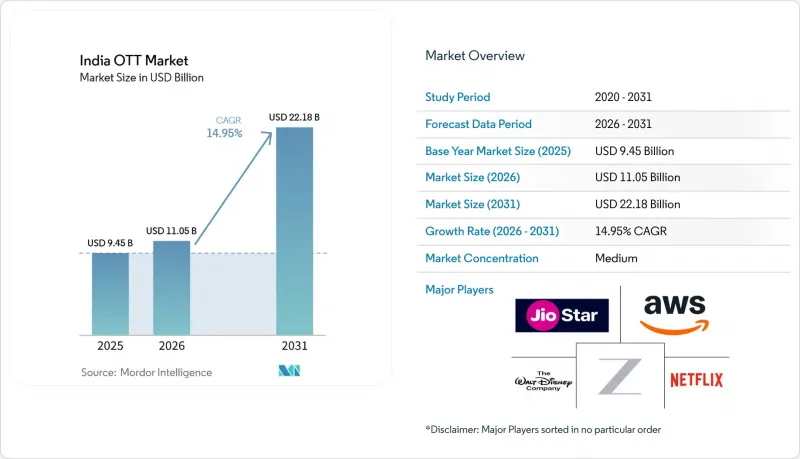
本報告按收入模式(SVOD、AVOD、TVOD 和混合模式(訂閱加廣告))、設備類型(智慧型手機和平板電腦、智慧型電視、筆記型電腦和桌上型電腦以及其他設備類型)和內容類型(電影、電視節目和劇集、紀錄片以及其他內容類型)進行分類。市場預測以美元計價。
印度OTT市場的趨勢與洞察
都市區家庭中聯網電視的普及
2026年第一季,印度15歲以上聯網電視用戶每月活躍用戶數達1.66億,較去年同期成長23%。調查顯示,36%的聯網電視用戶僅使用螢幕觀看影片,這意味著有5900萬用戶無法透過傳統線性電視廣告宣傳觸達。印度工商聯合會(FICCI)和安永會計師事務所(EY)聯合發布的2026年報告預測,到2025年,印度將有6800萬戶聯網電視家庭(其中4000萬戶為每週活躍用戶),到2028年,這一數字將超過9000萬。該報告也預測,2025年聯網電視廣告收入將成長42%,達到99億印度盧比(約1.179億美元),到2028年將達到164億印度盧比(約1.952億美元)。因此,聯網電視為印度OTT市場提供了能夠支援更長觀看時間和優質廣告形式的家庭環境。此外,凱度顧問公司的研究表明,60%的聯網電視用戶屬於NCCS A級家庭,這有利於他們接受高級訂閱服務和高價值廣告位。
體育賽事轉播權及實況活動的獲利
體育賽事直播仍然是各大平台吸引觀眾並在整個賽季中保持用戶參與的可靠途徑。 2025 年印度板球超級聯賽 (IPL) 在電視和數位服務平台上共吸引了 11.9 億觀眾,其中 6.52 億為數位觀眾。該賽事還創下了 5,520 萬數位觀眾同時在線上觀看的峰值,總觀看時長達 8,400 億分鐘。 JioStar 宣布計劃投資 5 億美元用於體育賽事製作、行銷和技術,並強調獲取轉播權與建立與粉絲的長期關係密切相關。這種策略有助於將偶爾觀看體育賽事的觀眾轉化為印度 OTT 市場中非賽事期間的娛樂和廣告支援服務使用者。然而,對於那些廣告基礎或付費用戶基礎不足的平台而言,這也增加了其在追求優質轉播權時所面臨的財務風險。 JioStar India 為應對高額體育賽事合約的預期損失而提列的準備金從上年度的12,319 印度盧比(1.467 億美元)增加到 2025 年的 25,760 印度盧比(3.067 億美元)。因此,一個新興市場正在形成,在這個市場中,大規模的體育投資加深了用戶參與度,同時進一步擴大了財務實力雄厚的平台的優勢。
對價格敏感的使用者群體中正在蔓延「訂閱疲勞」。
訂閱疲勞正在限制服務商將龐大的用戶群轉化為永續收入的能力。根據Ormax Media發布的《2025年OTT用戶報告》,近年來超過13%的用戶成長率預計到2025年將放緩至10%以下,服務分散和解約率上升是導致這一放緩的主要原因。雖然單一平台的月費看似可以接受,但如果一個家庭訂閱了多個服務,負擔就會變得沉重。因此,在印度OTT市場,謹慎選擇套餐和續費至關重要,尤其對於價格敏感型家庭而言。捆綁套餐可以降低消費者的短期成本,但也可能削弱平台與其用戶之間的直接聯繫。擁有獨特節目內容和清晰套餐差異的服務更不容易被用戶輕易取代。
細分市場分析
2025年,SVOD(訂閱視訊點播)仍將是最大的收入模式,佔串流媒體收入的46.31%。 JioHotstar、Amazon Prime Video和Netflix提供多種價格等級的付費服務,以滿足不同家庭的預算需求。這些方案使服務供應商既能提供高階選項,又能提供價格低廉的入門級服務。 TVOD(交易型視訊點播)則迎合了以特定事件主導的觀看需求,尤其是在影片在廣泛授權之前擁有有限的獨家播放期時。 Zee Entertainment的數位業務負責人解釋說,他們會設定兩到三週的窗口期,以便在授權給其他平台之前控制內容成本。結合訂閱和廣告的混合服務已經意識到,許多用戶並不完全屬於「完全付費」或「完全免費」的範疇。因此,印度OTT產業正在採用靈活的訪問路徑,以更漸進的方式從隨意觀看過渡到付費服務。
AVOD預計將成為成長最快的收入模式,2026年至2031年的複合年成長率將達到15.38%。這一成長主要得益於聯網電視廣告的成長和程式化採購的普及。 FICCI-EY聯合發布的2026年報告指出,聯網電視廣告收入將在2025年顯著成長。消費品、汽車和金融服務業的廣告主可以利用聯網電視,透過可衡量的數位投放,在大螢幕上觸達每個家庭。 AVOD也為那些想要觀看影片內容但又不想訂閱新服務的用戶提供了一個可行的選擇。收入的成功取決於廣告資源的品質、家庭定位的精確度以及平台能否提供令人滿意的觀看體驗。這種模式為印度的OTT(Over-The-Top)市場提供了一條不那麼依賴即時訂閱轉換率的成長路徑。
其他好處:
- Excel格式的市場預測(ME)表
- 3個月的分析師支持
目錄
第1章:引言
- 研究假設和市場定義
- 調查範圍
第2章:調查方法
第3章執行摘要
第4章 市場狀況
- 市場概覽
- 市場促進因素
- 都市區家庭中聯網電視的普及
- 體育賽事轉播權及實況活動的獲利
- 混合獲利模式將成為標準收入模式。
- 本地語言內容正在將其受眾群體擴展到大都會圈以外。
- 程序化連網電視廣告可提高廣告收入及精準投放成效。
- 與電信業者和寬頻套餐捆綁銷售可以降低獲取新客戶的門檻。
- 市場限制因素
- 價格敏感型用戶正在出現訂閱疲勞現象。
- 非法複製內容和共用帳戶給盈利帶來了壓力。
- 優質體育節目和原創節目的製作成本不斷上漲。
- 大眾市場支付分散化和續訂率下降
- 產業價值鏈分析
- 宏觀經濟因素對市場的影響
- 監理情勢
- 技術展望
- 波特五力分析
第5章 市場規模與成長預測
- 按收入模式
- SVOD
- AVOD
- TVOD
- 混合模式(訂閱與廣告結合)
- 依設備類型
- 智慧型手機和平板電腦
- 智慧電視
- 筆記型電腦和桌上型電腦
- 其他設備類型
- 按內容類型
- 電影和影像作品
- 電視節目和劇集內容
- 記錄
- 其他內容類型
第6章 競爭情勢
- 市場集中度
- 策略趨勢
- Vendor Positioning Anaysis
- 公司簡介
- Netflix, Inc.
- Amazon.com, Inc.
- Alphabet Inc.
- JioStar India Private Limited
- Zee Entertainment Enterprises Limited
- Sony Pictures Networks India Private Limited
- Sun TV Network Limited
- Warner Bros. Discovery, Inc.
- Apple Inc.
- Arha Media & Broadcasting Private Limited
- Tata Play Limited
- Bharti Airtel Limited
- Pocket FM
- Shemaroo Entertainment Limited
- Eros Media World PLC
- Hoichoi Technologies Private Limited
- YuppTV, Inc.
- Balaji Telefilms Limited
- Hungama Digital Media Entertainment Private Limited
第7章 市場機會與未來展望
According to Mordor Intelligence, the India OTT market size was valued at USD 9.45 billion in 2025 and is estimated to grow from USD 11.05 billion in 2026 to reach USD 22.18 billion by 2031, at a CAGR of 14.95% during the forecast period (2026-2031).
This report is Segmented by Revenue Model (SVOD, AVOD, TVOD, and Hybrid Subscription and Ads), by Device Type (Smartphones and Tablets, Smart TVs, Laptops and Desktops, and Other Device Types), by Content Genre (Movies and Films, TV Shows and Episodic Content, Documentaries, and Other Content Genres). The Market Forecasts are Provided in Terms of Value (USD).
India OTT Market Trends and Insights
Rising Connected TV Adoption in Urban Households
India's connected TV audience reached 166 million monthly viewers aged 15 and above in the first quarter of 2026, increasing 23% year over year. The same research found that 36% of connected TV viewers used only that screen for video, placing 59 million viewers beyond the reach of conventional linear television campaigns. The 2026 FICCI-EY report stated that India had 68 million connected TV households in 2025, including 40 million weekly active households, and projected more than 90 million households by 2028. The report also recorded a 42% increase in connected TV advertising revenue to INR 9,900 crore (USD 117.9 million) in 2025 and projected INR 16,400 crore (USD 195.2 million) by 2028. Connected TV, therefore, gives the India OTT market access to longer viewing sessions and a household setting that can support premium advertising formats. Kantar also found that 60% of connected TV viewers belonged to NCCS A households, which supports the case for premium subscriptions and higher-value advertising inventory.
Sports Rights and Live Event Monetization
Live sports remain a dependable way for platforms to attract viewers and keep them active through an event season. IPL 2025 reached 1.19 billion viewers across television and digital services, including 652 million digital viewers, while peak digital concurrency reached 55.2 million and total watch time reached 840 billion minutes. JioStar disclosed a USD 500 million commitment to sports production, marketing, and technology, underscoring that rights acquisition is tied to a broader effort to build long-term fan relationships. This approach can help the India OTT market turn occasional sports viewers into users of entertainment and ad-supported offerings between events. It also raises financial risk for platforms that pursue premium rights without enough advertising scale or paying users. JioStar India's provisions for expected losses on onerous sports contracts rose to INR 25,760 crore (USD 306.7 million) in FY25 from INR 12,319 crore (USD 146.7 million) in the prior year. The result is a market where large sports investments can deepen engagement but can also widen the advantage of platforms with stronger balance sheets.
Subscription Fatigue Among Price-Sensitive Users
Subscription fatigue limits services' ability to translate large audiences into recurring revenue. Ormax Media's 2025 OTT Audience Report indicated that audience growth slowed to below 10% in 2025 after exceeding 13% in earlier years, with service fragmentation and churn contributing to the slowdown. Monthly pricing may appear manageable for a single platform, but it becomes difficult when households maintain several subscriptions. The India OTT market must therefore carefully manage plan selection and payment renewals, particularly in price-sensitive households. Bundling can reduce consumers' immediate costs, but it may also weaken the direct relationship between a platform and its subscribers. Services with distinctive programming and clear plan differences are better placed to avoid being treated as easily replaceable.
Other drivers and restraints analyzed in the detailed report include:
- Hybrid Monetization Becomes the Default Revenue Stack
- Regional Language Content Expands Audience Reach Beyond Metro Cities
- Content Piracy and Account Sharing Pressure Monetization
For complete list of drivers and restraints, kindly check the Table Of Contents.
Segment Analysis
SVOD accounted for 46.31% of streaming revenue in 2025 and remained the largest revenue model. JioHotstar, Amazon Prime Video, and Netflix use multiple pricing tiers to offer paid access across a broad range of household budgets. These plans allow services to preserve premium options while keeping lower-price entry points available. TVOD addresses more event-driven viewing, especially when a title has a limited exclusive period before broader licensing. Zee Entertainment's digital business leadership described windowing periods of 2-3 weeks as a way to manage content costs before licensing to another platform. Hybrid subscription and advertising offerings recognize that many users do not fit neatly into fully paid or fully free categories. The India OTT industry is therefore using flexible access paths to support a more gradual move from casual viewing to paid services.
AVOD is projected to be the fastest-growing revenue model at a 15.38% CAGR from 2026 to 2031. The expansion follows growth in connected TV advertising and the broader use of programmatic buying. The 2026 FICCI-EY report noted the strong increase in connected TV advertising revenue during 2025. Advertisers in consumer goods, automotive, and financial services can use connected TV to reach households on a larger screen with measurable digital delivery. AVOD also provides a practical option for viewers who want video access but are reluctant to add another monthly subscription. Revenue results will depend on the quality of advertising inventory, household targeting, and a platform's ability to maintain a satisfactory viewing experience. This model provides the India over-the-top (OTT) market with a growth path less dependent on immediate subscription conversion.
Complete Report Scope:
- By Revenue Model
- SVOD
- AVOD
- TVOD
- Hybrid Subscription and Ads
- By Device Type
- Smartphones and Tablets
- Smart TVs
- Laptops and Desktops
- Other Device Types
- By Content Genre
- Movies and Films
- TV Shows and Episodic Content
- Documentaries
- Other Content Genres
List of Companies Covered in this Report:
- Netflix, Inc.
- Amazon.com, Inc.
- Alphabet Inc.
- JioStar India Private Limited
- Zee Entertainment Enterprises Limited
- Sony Pictures Networks India Private Limited
- Sun TV Network Limited
- Warner Bros. Discovery, Inc.
- Apple Inc.
- Arha Media & Broadcasting Private Limited
- Tata Play Limited
- Bharti Airtel Limited
- Pocket FM
- Shemaroo Entertainment Limited
- Eros Media World PLC
- Hoichoi Technologies Private Limited
- YuppTV, Inc.
- Balaji Telefilms Limited
- Hungama Digital Media Entertainment Private Limited
Additional Benefits:
- The market estimate (ME) sheet in Excel format
- 3 months of analyst support
TABLE OF CONTENTS
1 INTRODUCTION
- 1.1 Study Assumptions and Market Definition
- 1.2 Scope of the Study
2 RESEARCH METHODOLOGY
3 EXECUTIVE SUMMARY
4 MARKET LANDSCAPE
- 4.1 Market Overview
- 4.2 Market Drivers
- 4.2.1 Rising Connected TV Adoption in Urban Households
- 4.2.2 Sports Rights and Live Event Monetization
- 4.2.3 Hybrid Monetization Becomes the Default Revenue Stack
- 4.2.4 Regional Language Content Expands Audience Reach Beyond Metro Cities
- 4.2.5 Programmatic CTV Advertising Improves Ad Yield and Targeting
- 4.2.6 Bundling With Telco and Broadband Plans Lowers Acquisition Friction
- 4.3 Market Restraints
- 4.3.1 Subscription Fatigue Among Price-Sensitive Users
- 4.3.2 Content Piracy and Account Sharing Pressure Monetization
- 4.3.3 High Content Costs for Premium Sports and Originals
- 4.3.4 Fragmented Payments and Renewal Drop-Off in Mass-Market Segments
- 4.4 Industry Value Chain Analysis
- 4.5 Impact of Macroeconomic Factors on the Market
- 4.6 Regulatory Landscape
- 4.7 Technological Outlook
- 4.8 Porter's Five Forces Analysis
- 4.8.1 Threat of New Entrants
- 4.8.2 Bargaining Power of Suppliers
- 4.8.3 Bargaining Power of Buyers
- 4.8.4 Threat of Substitutes
- 4.8.5 Intensity of Competitive Rivalry
5 MARKET SIZE AND GROWTH FORECASTS (VALUE)
- 5.1 By Revenue Model
- 5.1.1 SVOD
- 5.1.2 AVOD
- 5.1.3 TVOD
- 5.1.4 Hybrid Subscription and Ads
- 5.2 By Device Type
- 5.2.1 Smartphones and Tablets
- 5.2.2 Smart TVs
- 5.2.3 Laptops and Desktops
- 5.2.4 Other Device Types
- 5.3 By Content Genre
- 5.3.1 Movies and Films
- 5.3.2 TV Shows and Episodic Content
- 5.3.3 Documentaries
- 5.3.4 Other Content Genres
6 COMPETITIVE LANDSCAPE
- 6.1 Market Concentration
- 6.2 Strategic Moves
- 6.3 Vendor Positioning Anaysis
- 6.4 Company Profiles (includes Global Level Overview, Market Level Overview, Core Segments, Financials as available, Strategic Information, Market Rank/Share, Products and Services, Recent Developments)
- 6.4.1 Netflix, Inc.
- 6.4.2 Amazon.com, Inc.
- 6.4.3 Alphabet Inc.
- 6.4.4 JioStar India Private Limited
- 6.4.5 Zee Entertainment Enterprises Limited
- 6.4.6 Sony Pictures Networks India Private Limited
- 6.4.7 Sun TV Network Limited
- 6.4.8 Warner Bros. Discovery, Inc.
- 6.4.9 Apple Inc.
- 6.4.10 Arha Media & Broadcasting Private Limited
- 6.4.11 Tata Play Limited
- 6.4.12 Bharti Airtel Limited
- 6.4.13 Pocket FM
- 6.4.14 Shemaroo Entertainment Limited
- 6.4.15 Eros Media World PLC
- 6.4.16 Hoichoi Technologies Private Limited
- 6.4.17 YuppTV, Inc.
- 6.4.18 Balaji Telefilms Limited
- 6.4.19 Hungama Digital Media Entertainment Private Limited
7 MARKET OPPORTUNITIES AND FUTURE OUTLOOK
- 7.1 White-Space and Unmet-Need Assessment

 全球Over-The-Top服務市場規模、佔有率、趨勢和成長分析報告(2026-2034年)
 商業媒體服務:市場佔有率分析、產業趨勢與統計、成長預測(2026-2031 年)英國OTT:市場佔有率分析、產業趨勢與統計、成長預測(2026-2031年)美國OTT:市場佔有率分析、行業趨勢和統計數據、成長預測(2026-2031年)雲端OTT:市場佔有率分析、產業趨勢與統計、成長預測(2026-2031年)中國OTT市場:市場佔有率分析、產業趨勢與統計及成長預測(2026-2031年)德國OTT:市場佔有率分析、產業趨勢與統計及成長預測(2026-2031年)OTT(Over The Top):市場佔有率分析、產業趨勢與統計數據、成長預測(2026-2031)北美OTT:市佔率分析、產業趨勢與統計及成長預測(2026-2031年)OTT機上盒:市場佔有率分析、產業趨勢與統計及成長預測(2026-2031年)