


 |
市場調查報告書
商品編碼
2119113
德國OTT:市場佔有率分析、產業趨勢與統計及成長預測(2026-2031年)Germany OTT - Market Share Analysis, Industry Trends & Statistics, Growth Forecasts (2026 - 2031) |
||||||

※ 本網頁內容可能與最新版本有所差異。詳細情況請與我們聯繫。
根據 Mordor Intelligence 預測,德國 OTT 市場規模將從 2025 年的 328.9 億美元和 2026 年的 362.7 億美元成長到 2031 年的 551.2 億美元,2026 年至 2031 年的年複合成長率(CAGR)為 8.73%。
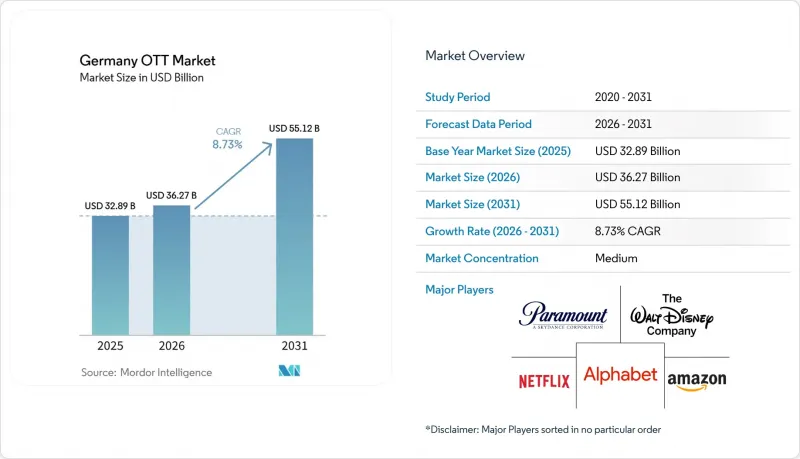
本報告按收入模式(SVOD、AVOD、TVOD、混合模式、訂閱模式和廣告模式)、設備類型(智慧型手機/平板電腦、智慧電視等)和內容類型(電影、電視劇/劇集、紀錄片)進行分類。市場預測以美元計價。
德國OTT市場的趨勢與洞察
智慧電視和連網裝置的滲透率不斷提高
智慧電視的普及性降低了德國OTT市場的一大進入門檻。這是因為用戶現在可以直接透過電視螢幕存取串流媒體服務,而電視仍然是家庭娛樂的中心。根據德國電視聯合會(AGF)最近的一項調查,德國絕大多數擁有電視的家庭都擁有連網電視,這表明連網觀看不再局限於特定場景。這些家庭中的大多數都直接連接到網際網路,串流媒體棒和機上盒也佔據了相當大的佔有率,這為服務提供者提供了多種進入用戶客廳的途徑。 ProSiebenSat.1的一份報告指出,大多數電視都具備連網功能,而且絕大多數都已連接網際網路,這大大降低了影片服務的硬體門檻。該公司還透露,受訪家庭中的許多電視都是相對較新的型號,配備了現代化的介面,應用商店也隨處可見。這種普及程度意味著串流媒體應用和電視作業系統在內容發現方面發揮核心作用,這也進一步凸顯了良好的搜尋功能、清晰的應用程式佈局和可靠的使用者體驗的重要性。
從線性電視到點播觀看的轉變正在加速。
從定時播出轉向點播觀看正在擴大德國OTT市場的目標受眾,並改變消費者選擇電視接收方式的習慣。根據Zattoo的一份報告,在最近的報告期內,大多數家庭透過網路接收電視內容,與前一時期較低的比例相比,這一成長在短時間內顯著。該公司的研究也顯示,相當一部分家庭將OTT串流服務作為接收內容的主要方式,而不是將其視為附加服務。認為傳統電視就足夠了的非串流媒體家庭比例較前一時期有所下降,顯示長期以來阻礙串流媒體普及的障礙正在減少。隨著「Nebenkostenprivileg」(公用事業費豁免)政策於2024年結束,電視接收已成為許多租屋者的主動選擇,其中包括居住者。根據 AGF 的一項調查,15.9% 的受影響家庭已轉而使用其他接收方式,這為能夠清晰解釋其服務並促進平穩過渡的網路服務創造了機會。
訂閱疲勞與客戶流失風險上升
在德國OTT市場,訂閱疲勞是重要的阻礙因素。這是因為如今家庭用戶能夠同時比較多種付費、免費和捆綁式服務。 Zattoo的研究顯示,德國消費者因費用問題持續取消串流媒體服務,且取消率較上一季上升。家庭用戶傾向於在特定劇集或運動賽季結束後更換服務,而不是在原本就捉襟見肘的月度預算中增加新的平台。這一趨勢使得獨家節目、清晰的價值提案和合適的交付時間表比龐大的內容庫本身對客戶維繫更為重要。此外,消費者對價格更低、廣告支援的套餐也越來越感興趣,尤其是在他們希望減少支出但又不想完全放棄串流媒體服務的情況下。對於那些依賴偶爾觀看的服務而言,年輕家庭可能會面臨更高的用戶解約率,因為他們傾向於將訂閱視為與特定劇集相關的臨時選擇。
細分市場分析
預計到2025年,SVOD(訂閱視訊點播)將佔總收入的55.83%,成為最大的收入模式。由於許多家庭更傾向於不間斷地存取豐富的片庫、熱門影集和原創節目,因此這個類別仍然十分重要。 2026年第二季度,Netflix和Amazon Prime Video各自佔了24%的SVOD市場佔有率,凸顯了大型訂閱服務的強勁實力。混合型服務(結合訂閱和廣告)預計到2031年將以9.21%的複合年成長率成長。這一趨勢反映了消費者希望降低前期成本,而平台則尋求廣告收入來補充其月費收入。
廣告支援影片(AVOD) 為不想訂閱其他月費套餐的觀眾提供了一種選擇,尤其適合那些在付費服務之間輪換或只觀看免費影片的家庭。 Joyn 報告稱,到 2025 年,AVOD 收入將成長 36%,這表明免費的廣告支援影片對本地企業來說具有商業性可行性,並且可以擴大廣告商的受眾範圍。 RTL+ 和 HBO Max 共同推出了一項廣告支援套餐,前六個月每月收費 9.99 歐元(10.89 美元),這表明夥伴關係如何利用定價策略來鼓勵用戶試用。在影片廣泛上線訂閱庫之前,TVOD 仍然在院線發行窗口期內提供觀看管道,而 Prime Video 和 LEONINE Studios 之間的“付費 2”協議則說明了窗口期在電影發行中仍然至關重要。雖然這些模式的組合可以讓服務提供者滿足每個家庭的預算需求,但廣告的品質和數量可能會影響觀眾是否認為較低的價格「合理」。
其他好處:
- Excel格式的市場預測(ME)表
- 3個月的分析師支持
目錄
第1章:引言
- 研究假設和市場定義
- 調查範圍
第2章:調查方法
第3章執行摘要
第4章 市場狀況
- 市場概覽
- 市場促進因素
- 智慧電視和連網型設備的滲透率不斷提高
- 傳統電視向點播觀看的轉變正在加速。
- 德國本地原創節目和體育賽事轉播權的擴張
- 與通訊和付費電視生態系統商品搭售
- 廣告收入的增加使得產品價格更實惠。
- 人工智慧驅動的個人化和內容發現
- 市場限制因素
- 訂閱疲勞與客戶流失風險上升
- 加值內容版權膨脹
- 跨多個平台的去中心化觀看
- 免費套餐和混合套餐中的廣告展示頻率敏感度
- 產業價值鏈分析
- 宏觀經濟因素對市場的影響
- 監理情勢
- 技術展望
- 波特五力分析
第5章 市場規模與成長預測
- 按收入模式
- SVOD
- AVOD
- TVOD
- 混合模式、訂閱模式、廣告
- 依設備類型
- 智慧型手機和平板電腦
- 智慧電視
- 筆記型電腦和桌上型電腦
- 其他設備類型
- 按內容類型
- 電影和影像作品
- 電視節目和劇集內容
- 記錄
- 其他內容類型
第6章 競爭情勢
- 市場集中度
- 策略趨勢
- 市佔率分析
- 公司簡介
- Amazon.com, Inc.
- Netflix, Inc.
- The Walt Disney Company
- RTL Group SA
- ProSiebenSat.1 Media SE
- Apple Inc.
- Paramount, a Skydance Corporation
- Warner Bros. Discovery, Inc.
- Alphabet Inc.
- DAZN Group Limited
- Zweites Deutsches Fernsehen
- ARD Mediathek
- Deutsche Telekom AG
- Freenet AG
- Zattoo AG
- Rakuten Group, Inc.
- Sony Group Corporation
- Samsung Electronics Co., Ltd.
- MUBI, Inc.
- LEONINE Studios GmbH
第7章 市場機會與未來展望
According to Mordor Intelligence, the Germany OTT market size is projected to expand from USD 32.89 billion in 2025 and USD 36.27 billion in 2026 to USD 55.12 billion by 2031, registering a CAGR of 8.73% between 2026 to 2031.
This report is Segmented by Revenue Model (SVOD, AVOD, TVOD, and Hybrid, Subscription and Ads), Device Types (Smartphones and Tablets, Smart TVs, and More), Content Genre (Movies and Films, TV Shows and Episodic Content, and Documentaries). The Market Forecasts are Provided in Terms of Value (USD).
Germany OTT Market Trends and Insights
Rising Smart TV and Connected Device Penetration
Smart TV adoption has reduced a major access barrier for the Germany OTT market because viewers can access streaming services directly through the television screen that remains central to household entertainment. AGF found that a substantial majority of German TV households had an internet-connected television in its latest study, which shows that connected viewing has moved beyond a specialist use case. Direct internet connections accounted for most of these households, while streaming sticks or boxes represented an additional share, giving services multiple routes into the living room. ProSiebenSat.1 reported that most television sets were internet-capable, and a large majority of those sets were connected, leaving a limited hardware barrier for video services. The company also found that many television sets in surveyed homes were relatively new, so current interfaces and application stores are widely available. This installed base makes streaming apps and television operating systems central to content discovery, which increases the value of good search, clear app placement, and a dependable user experience.
Faster Shift From Linear TV to On-Demand Viewing
The shift from scheduled television to on-demand viewing is expanding the addressable audience for the Germany OTT market and is changing how consumers choose television reception.Zattoo reported that a majority of households received television content over the internet in the latest reported period, compared with a lower share in the previous period, showing a substantial increase over a short period. Its research also showed that a notable share of households used OTT streaming services as their primary reception method, rather than treating streaming as an additional service. The share of non-streaming households that considered traditional television sufficient declined from the previous period, reducing a longstanding barrier to adoption. The end of the Nebenkostenprivileg in 2024 made television reception an active choice for many renters, including households that had previously accepted cable as part of housing costs. AGF found that 15.9% of affected households moved to another reception method, creating an opening for internet-based services that can explain their offer clearly and ease the transition.
Subscription Fatigue and Rising Churn Risk
Subscription fatigue has become a material constraint in the Germany OTT market because households can now compare multiple paid services, free services, and bundled offers at the same time. Zattoo found that German consumers continued to cancel streaming subscriptions because of cost, with cancellations increasing compared with the previous period. Households can switch among services when a title or sports season ends, rather than adding every new platform to an already crowded monthly budget. This behavior makes exclusive programs, clear value propositions, and timely release schedules more important for retention than a large library alone. It also places more attention on lower-priced and advertising-supported plans, especially when consumers want to reduce spending without leaving streaming altogether. Services that depend on occasional viewing may face higher churn among younger households that treat subscriptions as temporary choices linked to particular programs.
Other drivers and restraints analyzed in the detailed report include:
- Expansion of Local German Originals and Sports Rights
- Bundling With Telecom and Pay-TV Ecosystems
- Premium Content Rights Inflation
For complete list of drivers and restraints, kindly check the Table Of Contents.
Segment Analysis
SVOD accounted for 55.83% of revenue in 2025, making it the largest revenue model. The category remains important because many households prefer uninterrupted access to broad libraries, established franchises, and original programming. Netflix and Amazon Prime Video each held 24% of the supplied SVOD comparison in the second quarter of 2026, which shows the strength of the largest subscription services. Hybrid subscription and advertising services are projected to grow at a 9.21% CAGR through 2031. This direction reflects consumer interest in lower entry prices, while platforms seek advertising revenue that can complement monthly fees.
Advertising-supported video provides a route for viewers who do not want another full-price monthly plan, including households that may otherwise rotate among paid services or use only free video. Joyn reported 36% growth in AVoD revenue in 2025, which indicates that free, advertising-funded viewing has commercial relevance for local operators and can broaden the audience available to advertisers. RTL+ and HBO Max introduced a combined advertising-supported package at EUR 9.99 per month, or USD 10.89, for the first 6 months, illustrating how a partnership can use price to encourage trial. TVOD retains a role where theatrical release windows provide access before titles become widely available in subscription libraries, and Prime Video's pay-2 agreement with LEONINE Studios shows why windowing still matters to film distribution. The model mix gives providers a way to address different household budgets, while the quality and quantity of advertising will influence whether viewers consider lower prices a fair exchange.
Complete Report Scope:
- By Revenue Model
- SVOD
- AVOD
- TVOD
- Hybrid, Subscription and Ads
- By Device Type
- Smartphones and Tablets
- Smart TVs
- Laptops and Desktops
- Other Device Types
- By Content Genre
- Movies and Films
- TV Shows and Episodic Content
- Documentaries
- Other Content Genres
List of Companies Covered in this Report:
- Amazon.com, Inc.
- Netflix, Inc.
- The Walt Disney Company
- RTL Group S.A.
- ProSiebenSat.1 Media SE
- Apple Inc.
- Paramount, a Skydance Corporation
- Warner Bros. Discovery, Inc.
- Alphabet Inc.
- DAZN Group Limited
- Zweites Deutsches Fernsehen
- ARD Mediathek
- Deutsche Telekom AG
- Freenet AG
- Zattoo AG
- Rakuten Group, Inc.
- Sony Group Corporation
- Samsung Electronics Co., Ltd.
- MUBI, Inc.
- LEONINE Studios GmbH
Additional Benefits:
- The market estimate (ME) sheet in Excel format
- 3 months of analyst support
TABLE OF CONTENTS
1 INTRODUCTION
- 1.1 Study Assumptions and Market Definition
- 1.2 Scope of the Study
2 RESEARCH METHODOLOGY
3 EXECUTIVE SUMMARY
4 MARKET LANDSCAPE
- 4.1 Market Overview
- 4.2 Market Drivers
- 4.2.1 Rising Smart TV and Connected Device Penetration
- 4.2.2 Faster Shift From Linear TV to On-Demand Viewing
- 4.2.3 Expansion Of Local German Originals and Sports Rights
- 4.2.4 Bundling With Telecom And Pay-TV Ecosystems
- 4.2.5 Ad-Supported Monetization Improving Price Accessibility
- 4.2.6 AI-Assisted Personalization and Content Discovery
- 4.3 Market Restraints
- 4.3.1 Subscription Fatigue and Rising Churn Risk
- 4.3.2 Premium Content Rights Inflation
- 4.3.3 Fragmented Viewing Across Multiple Platforms
- 4.3.4 Ad Load Sensitivity in Free and Hybrid Tiers
- 4.4 Industry Value Chain Analysis
- 4.5 Impact of Macroeconomic Factors on the Market
- 4.6 Regulatory Landscape
- 4.7 Technological Outlook
- 4.8 Porter's Five Forces Analysis
- 4.8.1 Bargaining Power of Buyers
- 4.8.2 Bargaining Power of Suppliers
- 4.8.3 Threat of New Entrants
- 4.8.4 Threat of Substitutes
- 4.8.5 Intensity of Competitive Rivalry
5 MARKET SIZE AND GROWTH FORECASTS
- 5.1 By Revenue Model
- 5.1.1 SVOD
- 5.1.2 AVOD
- 5.1.3 TVOD
- 5.1.4 Hybrid, Subscription and Ads
- 5.2 By Device Type
- 5.2.1 Smartphones and Tablets
- 5.2.2 Smart TVs
- 5.2.3 Laptops and Desktops
- 5.2.4 Other Device Types
- 5.3 By Content Genre
- 5.3.1 Movies and Films
- 5.3.2 TV Shows and Episodic Content
- 5.3.3 Documentaries
- 5.3.4 Other Content Genres
6 COMPETITIVE LANDSCAPE
- 6.1 Market Concentration
- 6.2 Strategic Moves
- 6.3 Market Share Analysis
- 6.4 Company Profiles (includes Global Level Overview, Market Level Overview, Core Segments, Financials as available, Strategic Information, Market Rank/Share, Products and Services, Recent Developments)
- 6.4.1 Amazon.com, Inc.
- 6.4.2 Netflix, Inc.
- 6.4.3 The Walt Disney Company
- 6.4.4 RTL Group S.A.
- 6.4.5 ProSiebenSat.1 Media SE
- 6.4.6 Apple Inc.
- 6.4.7 Paramount, a Skydance Corporation
- 6.4.8 Warner Bros. Discovery, Inc.
- 6.4.9 Alphabet Inc.
- 6.4.10 DAZN Group Limited
- 6.4.11 Zweites Deutsches Fernsehen
- 6.4.12 ARD Mediathek
- 6.4.13 Deutsche Telekom AG
- 6.4.14 Freenet AG
- 6.4.15 Zattoo AG
- 6.4.16 Rakuten Group, Inc.
- 6.4.17 Sony Group Corporation
- 6.4.18 Samsung Electronics Co., Ltd.
- 6.4.19 MUBI, Inc.
- 6.4.20 LEONINE Studios GmbH
7 MARKET OPPORTUNITIES AND FUTURE OUTLOOK
- 7.1 White-Space and Unmet-Need Assessment

 全球Over-The-Top服務市場規模、佔有率、趨勢和成長分析報告(2026-2034年)
 商業媒體服務:市場佔有率分析、產業趨勢與統計、成長預測(2026-2031 年)英國OTT:市場佔有率分析、產業趨勢與統計、成長預測(2026-2031年)美國OTT:市場佔有率分析、行業趨勢和統計數據、成長預測(2026-2031年)雲端OTT:市場佔有率分析、產業趨勢與統計、成長預測(2026-2031年)中國OTT市場:市場佔有率分析、產業趨勢與統計及成長預測(2026-2031年)印度OTT市場:市場佔有率分析、產業趨勢與統計及成長預測(2026-2031年)OTT(Over The Top):市場佔有率分析、產業趨勢與統計數據、成長預測(2026-2031)北美OTT:市佔率分析、產業趨勢與統計及成長預測(2026-2031年)OTT機上盒:市場佔有率分析、產業趨勢與統計及成長預測(2026-2031年)