


 |
市場調查報告書
商品編碼
2118952
中東OTT市場:市場佔有率分析、產業趨勢與統計、成長預測(2026-2031年)Middle East OTT - Market Share Analysis, Industry Trends & Statistics, Growth Forecasts (2026 - 2031) |
||||||

※ 本網頁內容可能與最新版本有所差異。詳細情況請與我們聯繫。
2025 年中東 OTT 市場價值為 148.5 億美元,預計到 2031 年將達到 255.6 億美元,而 2026 年為 166 億美元,預測期(2026-2031 年)複合年成長率為 9.02%。
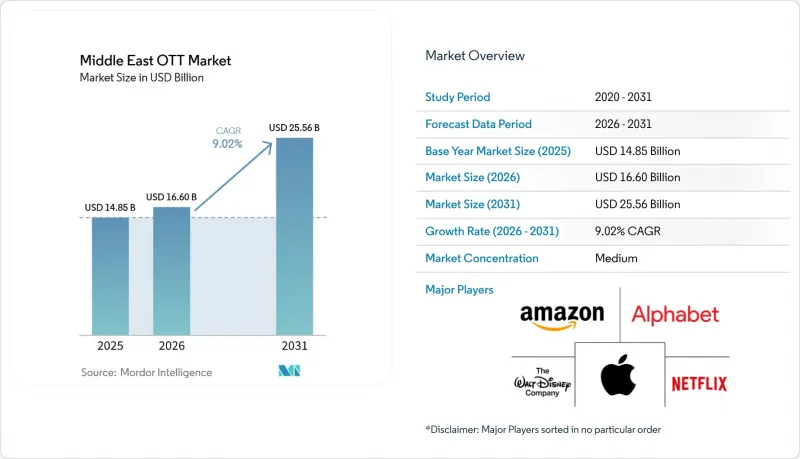
本報告按收入模式(SVOD、AVOD、TVOD、混合模式、訂閱模式和廣告模式)、設備類型(智慧型手機和平板電腦、筆記型電腦和桌上型電腦以及其他設備)、內容類型(電影、電視節目和劇集、紀錄片以及其他內容)以及地區(沙烏地阿拉伯、阿拉伯聯合大公國、卡達、科威特、巴林、阿曼以及其他地區)進行細分。市場預測以美元計價。
中東OTT市場趨勢與洞察
智慧型手機和智慧電視的普及率不斷提高
到2024年,沙烏地阿拉伯的智慧型手機普及率將超過90%;到2025年,海灣國家超過85%的家庭將擁有連網螢幕。這項基礎設施對中東OTT市場大有裨益,因為觀眾無需依賴衛星設備即可在行動裝置和家庭螢幕之間自由切換。此外,與傳統電視相比,透過連網電視觀看節目能讓廣告主更直接衡量受眾。沙烏地阿拉伯、阿拉伯聯合大公國和卡達正在優先部署5G網路,這降低了高速行動觀看的門檻,並減少了緩衝現象。因此,中東OTT市場既能滿足以行動裝置為中心的使用者群體,也能滿足越來越傾向於使用大螢幕的家庭使用者的需求。
阿拉伯語和當地語言的原創作品可以提高觀眾留存率。
預計阿拉伯語影視作品數量將從2020年的120部增加到2025年的400多部,並在2026年突破500部。片庫的擴充將使中東OTT市場能夠提供不易被國際服務取代的節目內容。這也有助於平台在齋戒月以外的時段留住用戶,因為齋戒月期間的收視率往往會下降。 2025年,Netflix推出「Write the Future」電影長片創作實驗室,將其角色從內容授權擴展到人才培育。阿拉伯語影集被視為價值20億美元的季節性廣告機會,但其製作成本卻低於許多西方標準。如果平台能夠獲得合適的版權和發行管道,這將有助於提升訂閱收入和廣告位。
盜版、帳號共用和非法IPTV洩露
非法串流媒體已不再局限於簡單的帳號共用,而是發展成為付費影片和體育賽事直播領域一個重要的競爭管道。根據創意與娛樂聯盟 (ACE) 統計,StreamEast 在 2025 年 8 月關閉前,累積播放量超過 16 億次。 beIN Sports 報導稱,中東地區的非法串流媒體每年造成的損失超過 10 億美元。 2026 年 7 月,開羅經濟法院判處兩名 StreamEast 業者兩年監禁,並分別處以 550 萬英鎊(約 11 萬美元)的罰款。據估計,該地區仍有 23% 的用戶在使用盜版 IPTV 服務,這減少了內容購買者的收入。由於各地區法律體系的差異,識別帳號資訊共用仍十分困難。
細分市場分析
到2025年,在對無廣告阿拉伯語原創內容和獨家體育節目的需求推動下,SVOD將佔據中東OTT市場47.50%的佔有率。由於訂閱制內容庫的興起,TVOD的作用正在減弱,因為以前按次付費的內容擴大被納入定期訂閱計劃。在可以單獨收費的即時存取領域,例如院線電影上映後立即觀看以及高階實況活動,TVOD仍然發揮著重要作用。中東OTT市場的規模將持續取決於平台能否維持一個優質的阿拉伯語內容庫。正是這樣的內容庫的存在,才能促使使用者長期使用特定服務,而不是輕易地在類似的選項之間切換。
隨著廣告主尋求串流廣告位,觀眾對低成本選擇的需求日益成長,預計到2031年,AVOD(廣告支援的視訊點播)將以9.86%的複合年成長率成長。此外,結合訂閱和廣告的混合模式也越來越受到關注,因為這種模式既可以提供付費套餐,也可以提供免費或低價選項。電信公司可以根據收入水平對這些模式進行捆綁,而無需向所有家庭提供統一的固定價格。中東的OTT(網路電視)產業可以利用這種結構,將價格敏感度從觀看障礙轉變為存取等級的選擇。提供本地內容的服務保持著競爭優勢,因為競爭平台往往缺乏足夠的本地節目。
其他好處:
- Excel格式的市場預測(ME)表
- 3個月的分析師支持
目錄
第1章:引言
- 研究假設和市場定義
- 調查範圍
第2章:調查方法
第3章執行摘要
第4章 市場狀況
- 市場概覽
- 宏觀經濟因素對市場的影響
- 市場促進因素
- 智慧型手機和智慧電視的普及率不斷提高
- 通訊服務商品搭售及營運商計費方式的擴展
- 透過阿拉伯語和當地語言的原創內容提高客戶維繫。
- 聯網電視和大螢幕串流媒體的普及
- 透過加強打擊侵害著作權內容的措施,提高獲利能力。
- 快速成長和廣告驅動的經營模式正在擴大其影響力。
- 市場限制因素
- 盜版、共用身分驗證憑證和非法 IPTV 外洩。
- 零散的內容監管和審查要求
- 多服務家庭的價格敏感度和訂閱疲勞
- 聯盟、工作室和窗口系統之間的版權分配。
- 產業價值鏈分析
- 監理情勢
- 技術展望
- 波特五力分析
第5章 市場規模與成長預測
- 按收入模式
- SVOD
- AVOD
- TVOD
- 混合模式、訂閱模式、廣告
- 依設備類型
- 智慧型手機和平板電腦
- 智慧電視
- 筆記型電腦和桌上型電腦
- 其他設備類型
- 按內容類型
- 電影和影像作品
- 電視節目和劇集內容
- 記錄
- 其他內容類型
- 按地區
- 沙烏地阿拉伯
- 阿拉伯聯合大公國
- 卡達
- 科威特
- 巴林
- 阿曼
- 其他中東國家
第6章 競爭情勢
- 市場集中度
- 策略趨勢
- 市佔率分析
- 公司簡介
- Netflix, Inc.
- Amazon.com, Inc.
- Alphabet Inc.
- The Walt Disney Company
- Apple Inc.
- YuppTV, Inc.
- Paramount, a Skydance Corporation
- MBC Group
- Orbit Showtime Network FZ-LLC
- beIN MEDIA GROUP LLC
- StarzPlay Arabia FZ-LLC
- Saudi Telecom Company
- Yango Group
- Rotana Media Group Holding Company
- Saudi Broadcasting Authority
- Al Jazeera Media Network
- Zee Entertainment Enterprises Limited
第7章 市場機會與未來展望
According to Mordor Intelligence, the Middle East OTT market size was valued at USD 14.85 billion in 2025 and estimated to grow from USD 16.60 billion in 2026 to reach USD 25.56 billion by 2031, at a CAGR of 9.02% during the forecast period (2026-2031).
This report is Segmented by Revenue Model (SVOD, AVOD, TVOD, and Hybrid, Subscription and Ads), Device Type (Smartphones and Tablets, Laptops and Desktops, and More), Content Genre (Movies and Films, TV Shows and Episodic Content, Documentaries, and More), and Geography (Saudi Arabia, United Arab Emirates, Qatar, Kuwait, Bahrain, Oman, and More). The Market Forecasts are Provided in Terms of Value (USD).
Middle East OTT Market Trends and Insights
Rising Smartphone and Smart TV Penetration
Smartphone penetration exceeded 90% in Saudi Arabia during 2024, and connected screens were present in more than 85% of Gulf households in 2025. This installed base favors the Middle East OTT market because viewers can move between mobile and household screens without relying on satellite equipment. Connected television viewing also gives advertisers more direct audience measurement than linear television. Saudi Arabia, the UAE, and Qatar have prioritized 5G deployment, lowering barriers to high-bitrate mobile viewing and reducing buffering. The Middle East OTT market can therefore serve both mobile-first viewers and households that increasingly prefer larger screens.
Arabic and Local Language Originals Scaling Retention
Arabic output increased from 120 titles in 2020 to more than 400 in 2025, and was expected to exceed 500 in 2026. The larger catalog gives the Middle East OTT market programming that is less easily replaced by international services. It also helps platforms keep subscribers outside the Ramadan season, when viewing interest can otherwise weaken. Netflix launched its Write the Future Feature Film Writers Lab with Saudi Arabia's Righters House in 2025, extending its role from content licensing to talent development. Arabic-scripted drama was described as a USD 2 billion seasonal advertising opportunity, while production costs remained below many Western benchmarks. This combination supports subscription revenue and advertising inventory when platforms have suitable rights and distribution.
Piracy, Credential Sharing, and Illegal IPTV Leakage
Illegal streaming has developed beyond casual account sharing into a substantial competing channel for premium video and live sports. StreamEast logged more than 1.6 billion visits before its August 2025 shutdown, according to the Alliance for Creativity and Entertainment. beIN Sports reported annual losses exceeding USD 1 billion due to unauthorized streaming in the Middle East. In July 2026, the Cairo Economic Court sentenced 2 StreamEast operators to 2 years in prison and imposed EGP 5.5 million (USD 110,000) in fines on each defendant. An estimated 23% of regional users still access pirate IPTV services, reducing the returns available to content buyers. Credential sharing remains difficult to identify because legal treatment varies across regional jurisdictions.
Other drivers and restraints analyzed in the detailed report include:
- Telecom Bundling and Carrier Billing Expansion
- FAST and Ad-Supported Monetization Broadening Reach
- Fragmented Content Regulation and Censorship Requirements
For complete list of drivers and restraints, kindly check the Table Of Contents.
Segment Analysis
SVOD held 47.50% of the Middle East OTT market share in 2025, supported by demand for ad-free Arabic originals and exclusive sports programs. Subscription libraries have reduced TVOD's role, as titles that once supported pay-per-view are increasingly included in recurring plans. TVOD remains relevant for recent theatrical releases and premium live events where immediate access can support a separate charge. The Middle East OTT market size continues to depend on the platform's ability to maintain a valuable Arabic catalog. These catalogs create a reason for customers to retain a specific service rather than switching easily between similar options.
AVOD is projected to expand at a 9.86% CAGR through 2031 as advertisers seek streaming inventory and viewers look for lower-cost choices. Hybrid subscription and advertising models are also gaining interest because they can offer paid tiers alongside free or lower-priced options. Telecom companies can bundle these models across income groups without presenting a single fixed price to every household. The Middle East OTT industry can use this structure to turn price sensitivity into a choice of access level rather than a barrier to viewing. Services with local catalogs retain an advantage because local programming is less available on competing platforms.
Complete Report Scope:
- By Revenue Model
- SVOD
- AVOD
- TVOD
- Hybrid, Subscription and Ads
- By Device Type
- Smartphones and Tablets
- Smart TVs
- Laptops and Desktops
- Other Device Types
- By Content Genre
- Movies and Films
- TV Shows and Episodic Content
- Documentaries
- Other Content Genres
- By Geography
- Saudi Arabia
- United Arab Emirates
- Qatar
- Kuwait
- Bahrain
- Oman
- Rest of Middle East
List of Companies Covered in this Report:
- Netflix, Inc.
- Amazon.com, Inc.
- Alphabet Inc.
- The Walt Disney Company
- Apple Inc.
- YuppTV, Inc.
- Paramount, a Skydance Corporation
- MBC Group
- Orbit Showtime Network FZ-LLC
- beIN MEDIA GROUP LLC
- StarzPlay Arabia FZ-LLC
- Saudi Telecom Company
- Yango Group
- Rotana Media Group Holding Company
- Saudi Broadcasting Authority
- Al Jazeera Media Network
- Zee Entertainment Enterprises Limited
Additional Benefits:
- The market estimate (ME) sheet in Excel format
- 3 months of analyst support
TABLE OF CONTENTS
1 INTRODUCTION
- 1.1 Study Assumptions and Market Definition
- 1.2 Scope of the Study
2 RESEARCH METHODOLOGY
3 EXECUTIVE SUMMARY
4 MARKET LANDSCAPE
- 4.1 Market Overview
- 4.2 Impact of Macroeconomic Factors on the Market
- 4.3 Market Drivers
- 4.3.1 Rising Smartphone and Smart TV Penetration
- 4.3.2 Telecom Bundling and Carrier Billing Expansion
- 4.3.3 Arabic and Local Language Originals Scaling Retention
- 4.3.4 Connected TV and Big-Screen Streaming Adoption
- 4.3.5 Content Anti-Piracy Enforcement Improving Monetization Capture
- 4.3.6 FAST and Ad-Supported Monetization Broadening Reach
- 4.4 Market Restraints
- 4.4.1 Piracy, Credential Sharing, and Illegal IPTV Leakage
- 4.4.2 Fragmented Content Regulation and Censorship Requirements
- 4.4.3 Price Sensitivity and Subscription Fatigue in Multi-Service Households
- 4.4.4 Rights Fragmentation Across Leagues, Studios, and Windowing Models
- 4.5 Industry Value Chain Analysis
- 4.6 Regulatory Landscape
- 4.7 Technological Outlook
- 4.8 Porter's Five Forces Analysis
- 4.8.1 Threat of New Entrants
- 4.8.2 Bargaining Power of Suppliers
- 4.8.3 Bargaining Power of Buyers
- 4.8.4 Threat of Substitutes
- 4.8.5 Competitive Rivalry
5 MARKET SIZE AND GROWTH FORECASTS (VALUE)
- 5.1 By Revenue Model
- 5.1.1 SVOD
- 5.1.2 AVOD
- 5.1.3 TVOD
- 5.1.4 Hybrid, Subscription and Ads
- 5.2 By Device Type
- 5.2.1 Smartphones and Tablets
- 5.2.2 Smart TVs
- 5.2.3 Laptops and Desktops
- 5.2.4 Other Device Types
- 5.3 By Content Genre
- 5.3.1 Movies and Films
- 5.3.2 TV Shows and Episodic Content
- 5.3.3 Documentaries
- 5.3.4 Other Content Genres
- 5.4 By Geography
- 5.4.1 Saudi Arabia
- 5.4.2 United Arab Emirates
- 5.4.3 Qatar
- 5.4.4 Kuwait
- 5.4.5 Bahrain
- 5.4.6 Oman
- 5.4.7 Rest of Middle East
6 COMPETITIVE LANDSCAPE
- 6.1 Market Concentration
- 6.2 Strategic Moves
- 6.3 Market Share Analysis
- 6.4 Company Profiles (includes Global Level Overview, Market Level Overview, Core Segments, Financials as available, Strategic Information, Market Rank/Share, Products and Services, Recent Developments)
- 6.4.1 Netflix, Inc.
- 6.4.2 Amazon.com, Inc.
- 6.4.3 Alphabet Inc.
- 6.4.4 The Walt Disney Company
- 6.4.5 Apple Inc.
- 6.4.6 YuppTV, Inc.
- 6.4.7 Paramount, a Skydance Corporation
- 6.4.8 MBC Group
- 6.4.9 Orbit Showtime Network FZ-LLC
- 6.4.10 beIN MEDIA GROUP LLC
- 6.4.11 StarzPlay Arabia FZ-LLC
- 6.4.12 Saudi Telecom Company
- 6.4.13 Yango Group
- 6.4.14 Rotana Media Group Holding Company
- 6.4.15 Saudi Broadcasting Authority
- 6.4.16 Al Jazeera Media Network
- 6.4.17 Zee Entertainment Enterprises Limited
7 MARKET OPPORTUNITIES AND FUTURE OUTLOOK
- 7.1 White-space and Unmet-Need Assessment

 全球Over-The-Top服務市場規模、佔有率、趨勢和成長分析報告(2026-2034年)
 商業媒體服務:市場佔有率分析、產業趨勢與統計、成長預測(2026-2031 年)英國OTT:市場佔有率分析、產業趨勢與統計、成長預測(2026-2031年)美國OTT:市場佔有率分析、行業趨勢和統計數據、成長預測(2026-2031年)雲端OTT:市場佔有率分析、產業趨勢與統計、成長預測(2026-2031年)中國OTT市場:市場佔有率分析、產業趨勢與統計及成長預測(2026-2031年)印度OTT市場:市場佔有率分析、產業趨勢與統計及成長預測(2026-2031年)德國OTT:市場佔有率分析、產業趨勢與統計及成長預測(2026-2031年)OTT(Over The Top):市場佔有率分析、產業趨勢與統計數據、成長預測(2026-2031)北美OTT:市佔率分析、產業趨勢與統計及成長預測(2026-2031年)