


 |
市場調查報告書
商品編碼
2118123
英國醫療小包裹最後一公里配送:市場佔有率分析、產業趨勢與統計及成長預測(2026-2031 年)United Kingdom Healthcare Parcel Last-mile Delivery - Market Share Analysis, Industry Trends & Statistics, Growth Forecasts (2026 - 2031) |
||||||

※ 本網頁內容可能與最新版本有所差異。詳細情況請與我們聯繫。
據 Mordor Intelligence 稱,英國醫療小包裹最後一公里配送市場在 2025 年的價值為 13 億美元,預計到 2031 年將從 2026 年的 13.8 億美元成長到 18.6 億美元,預測期(2026-2031 年)的複合年成長率預計為 6.12%。
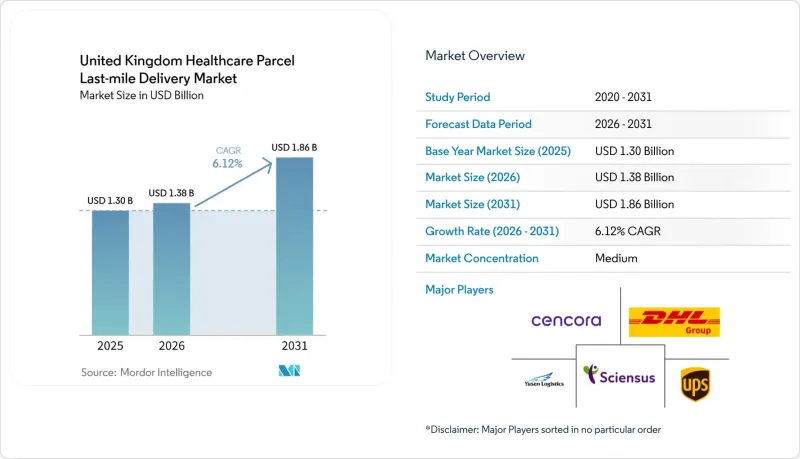
英國醫療保健小包裹「最後一公里」配送市場的成長反映了從集中式藥品分發到小包裹主導的穩定轉變,後者可直接將藥品送達患者家中、藥房和醫療機構,滿足更嚴格的服務要求。本報告按配送類型(標準配送、當日達、次日達)、溫度類型(溫控、非溫控)、產品類型(藥品、疫苗、其他)、配送模式(B2C、B2B)、最終用戶(線上藥局和實體藥局、醫院和診所、其他)以及地區(英格蘭、蘇格蘭、其他)進行細分。市場預測以美元計價。
英國醫療保健小包裹最後一公里配送市場的趨勢和見解。
對有時間限制的醫療相關小包裹當日達和次日達的需求日益成長。
在英國最後一公里醫療小包裹遞送市場,處方藥的緊急性日益凸顯,當日達和次日達服務正逐漸成為一項核心服務,而不再只是增值附加服務。處方箋數位化可視性的提升進一步推動了這一轉變。英國國家醫療服務體系 (NHS) 應用程式的處方箋追蹤功能將於 2025 年上線,涵蓋約 1650 家藥房,包括英格蘭所有 Boots 門市,這提高了人們對小包裹遞送狀態透明度和更嚴格遞送時限的期望。處方箋的激增也推動了這項服務的需求。到 2025 年,英格蘭各地的藥房預計將配發約 12 億張處方,涵蓋從日常遞送到緊急遞送的各種包裹,這些包裹將經由藥房和患者途徑流轉。因此,在英國最後一公里醫療小包裹遞送市場,能夠維持更嚴格的接收期限、提供即時可視性並更有效地處理異常情況的營運商將更有利於獲得持續的醫療遞送業務。這種影響在都市區最為明顯,因為城市地區既定的服務標準往往會影響整個市場的採購預期。
擴大居家照護和直接送藥服務範圍
隨著英國國家醫療服務體系 (NHS) 的護理路徑越來越依賴院外護理,居家照護在英國最後一公里醫療小包裹遞送市場中正成為一種日益重要的營運模式。居家臨床照護可以減少不必要的醫院就診,在維持與院內治療效果相當的同時,還能保障急診資源,並支持向居家配送和協調病患服務的更廣泛轉變。從醫療機構配藥到居家照護的每一次轉變,都會建立起更連續的小包裹遞送關係,這通常需要嚴格的日程安排、與患者的溝通,在某些情況下,還需要護士協調配送時間段。這正在改變英國小包裹一公里醫療包裹遞送市場中小包裹供應商的角色,使其從單純的承運人轉變為維護護理連續性的服務合作夥伴。此外,一旦患者加入居家照護管道,配送就成為持續照護流程的一部分,而非一次性的寄送,有助於增強長期需求。
醫療配送路線最後一公里成本不斷上漲,而收貨密度卻很低。
低密度配送路線仍然是英國醫療小包裹「最後一公里」配送市場的主要障礙。這是因為受監管的醫療小包裹比普通電商包裹更難收集和整合。配送通常需要更嚴格的身份驗證、更精確的時間管理,有時還需要溫控條件,這限制了低成本收集模式和彈性取貨點的使用。在英格蘭、威爾斯、北愛爾蘭和蘇格蘭部分地區等農村地區,這種負擔更為突出,因為這些地區每個醫療小包裹的配送所需時間往往更長。因此,英國醫療小包裹「最後一公里」配送市場存在利潤率差距:一方面是人口密集的都市區路線,可以提供更快捷的服務;另一方面是偏遠地區的路線,每個小包裹的運營成本更高。除非加強對外包服務的支援或醫療需求進一步成長,否則成本上升很可能持續給這些路線帶來商業性壓力。
細分市場分析
2025年,隔日達將佔據英國醫療小包裹最後一公里配送市場42%的佔有率,成為最大的配送方式。這是因為隔夜補貨仍符合批發商、藥局和英國國民醫療服務體系(NHS)相關訂單週期的營運節奏。在英國醫療小包裹最後一公里配送市場,次日達服務仍是常規定時配送和緊急點對點配送之間切實可行的折中方案。此細分市場具有許多優勢,例如可預測的配送路線、規律的配送模式,以及涵蓋各種需要可靠配送的常溫和受監管醫療產品,而無需承擔緊急配送的全部成本。此外,由於許多醫療採購負責人仍在尋求平衡服務品質和採購規範,而隔天達配送網路非常適合大規模地實現這一目標,因此該細分市場佔據著至關重要的地位。
當日達是成長最快的細分市場,預計到2031年將以10.20%的複合年成長率成長。最能體現這一轉變的事件是Matternet公司於2026年4月在倫敦市中心為英國國家醫療服務體系(NHS)啟動無人機運輸業務,在幾分鐘內即可在兩家主要醫院之間運送診斷樣本、檢測檢體和藥品。這並不意味著地面運輸將會消失,而是顯示在緊急醫療需求方面,需要更快的配送速度和更專業的路線規劃。
預計到2025年,英國醫療保健小包裹「最後一公里」配送市場規模中,常溫小包裹將佔51.26%,成為最大的溫控包裹細分市場。這是因為常溫藥品、醫療設備和居家醫療用品的數量仍佔小包裹總量的絕大部分。這類物流主要依賴可靠性、時效性和小包裹可視性,而非複雜的溫控基礎設施。與冷藏和低溫運輸相比,常溫包裹還具有路線規劃更簡單、處理更簡單的優勢。
儘管溫控配送量相對較小,但英國小包裹保健包裹配送市場在這一細分領域預計到2031年將以6.98%的複合年成長率成長,因為生物製藥、生物類似藥和先進療法在醫療保健物流需求中所佔的佔有率越來越大。聯邦快遞(FedEx)於2025年獲得國際航空運輸協會(IATA) CEIV Pharma企業認證,進一步鞏固了其在該細分市場的地位,使其認證處理的全球醫療保健貨物量超過90%。 2026年6月,德迅(Kuehne+Nagel)擴展了其管理網路,透過提高途經歐洲門戶的時效性藥品運輸的可靠性,為英國供應鏈提供支援。
其他好處
- Excel格式的市場預測(ME)表
- 3個月的分析師支持
目錄
第1章:引言
- 研究假設和市場定義
- 調查範圍
第2章:調查方法
第3章執行摘要
第4章 市場狀況
- 市場概況及最後一公里小包裹配送在醫療物流中的作用。
- 醫療費用趨勢
- 市場促進因素
- 對有時間限制的醫療相關小包裹當日達和次日達的需求日益成長。
- 擴大居家照護和直接送藥服務範圍
- 臨床和藥品小包裹冷鏈合規性面臨壓力
- 英國國家醫療服務體系 (NHS) 和私人公司將非核心物流業務外包
- 人們對受監管醫療用品運輸過程中小包裹的可追溯性要求日益提高。
- 透過線上藥局和全通路藥局拓展跨通路履約
- 市場限制因素
- 醫療配送路線最後一公里成本不斷上漲,而收貨密度卻很低。
- 醫療服務中多次交接過程中監管鏈的風險。
- 易碎物品的包裝以及因溫度偏差造成的損失
- 英國國家醫療服務體系 (NHS)、私部門和使用者主導服務交付中存在的服務需求分散化問題。
- 法律規範
- 價值鍊和分銷管道的結構分析
- 技術創新前景
- 波特五力分析
- 醫療相關小包裹最後一公里配送要求的變化
- 地緣政治事件對供應鏈變化的影響
第5章 市場規模及成長預測(價值,2026-2031 年)
- 配送類型
- 標準配送
- 當日送達
- 隔日送達
- 按溫度類型
- 溫控型
- 無溫度控制
- 依產品類型
- 製藥
- 處方藥和特殊藥物
- 成藥
- 生物製藥(生物製劑和生物相似藥)
- 疫苗
- 臨床試驗用材料
- 細胞和基因治療
- 醫療器材
- 動物用藥品
- 血液、血漿和血液成分
- 診斷和測試產品
- 居家醫療用品
- 其他
- 製藥
- 按型號提供
- B2C
- B2B
- 最終用戶
- 醫院和診所
- 網路藥局和實體藥局
- 診斷實驗室
- 家庭醫療保健服務提供者
- 直接送達患者
- 其他
- 按地區
- 英格蘭
- 蘇格蘭
- 威爾斯
- 北愛爾蘭
第6章 競爭情勢
- 市場集中度
- 關鍵策略趨勢
- 市佔率分析
- 公司簡介
- Sciensus
- Yusen Logistics Group(including Movianto)
- Life Couriers UK Limited
- Phoenix Healthcare Distribution
- AAH Pharmaceuticals
- DHL Group
- UPS
- Oximio
- GXO Logistics, Inc.
- Royal Mail Group
- Polar Speed
- CitySprint
- Cencora
- FedEx
- DPDgroup
- Uniphar Logistics UK
- Geopost
- Matternet, Inc.
- CEVA Logistics
- Kuehne+Nagel
- EMED Group
- BAP Pharma Limited
第7章 市場機會與未來展望
According to Mordor Intelligence, the United Kingdom healthcare parcel last-mile delivery market size was valued at USD 1.30 billion in 2025 and is estimated to grow from USD 1.38 billion in 2026 to reach USD 1.86 billion by 2031, at a CAGR of 6.12% during the forecast period (2026-2031).
Growth in the United Kingdom healthcare parcel last-mile delivery market reflects a steady shift away from centralized dispensing toward parcel-led distribution that reaches patients at home, in pharmacies, and in care settings with tighter service requirements. This report is Segmented by Delivery Type (Standard, Same-Day, Next-Day), by Temperature Type (Temperature Type, Non-Temperature Controlled), by Product Type (Pharmaceuticals, Vaccines, and More), by Delivery Model (B2C, B2B), by End User (E-Pharmacies, Hospitals, and More), and by Geography (England, Scotland, and More). The Market Forecasts are Provided in Terms of Value (USD).
United Kingdom Healthcare Parcel Last-mile Delivery Market Trends and Insights
Rising Same-Day and Next-Day Demand for Time-Critical Healthcare Parcels
Urgency in regulated dispensing means that same-day and next-day delivery are increasingly treated as core service tiers in the United Kingdom healthcare parcel last-mile delivery market rather than premium add-ons. This shift is reinforced by digital prescription visibility, as the NHS App prescription tracker launched in 2025 and covered around 1,650 pharmacies, including every Boots store in England, which raises expectations for clearer parcel status and tighter delivery windows. Large prescription volumes also support this service need, as England's community pharmacies dispensed nearly 1.2 billion items in FY 2025, leaving a broad base of routine and urgent shipments moving through pharmacy and patient channels. As a result, operators in the United Kingdom healthcare parcel last-mile delivery market that can maintain tighter cut-off times, provide live visibility, and handle exceptions more effectively are better placed to win recurring healthcare flows. The effect is most visible first in urban areas, but the service standard set there tends to shape procurement expectations across the wider market.
Expansion of Home-Based Care and Direct-to-Patient Delivery
Home-based care is becoming a larger operating model for the United Kingdom healthcare parcel last-mile delivery market, as NHS-linked care pathways increasingly rely on treatment outside hospital settings. Clinical home care can reduce unnecessary hospital visits, free up acute care capacity, and maintain comparable outcomes, supporting a broader shift toward home delivery and coordinated patient services. Each shift from site-based dispensing to home care creates a more recurring parcel relationship that often needs scheduling discipline, patient communication, and, in some cases, nurse-coordinated delivery windows. That changes the role of parcel operators from simple transport vendors to service partners that help maintain treatment continuity in the United Kingdom healthcare parcel last-mile delivery market. It also supports stronger long-run demand because once a patient is enrolled in a home-based pathway, delivery becomes part of an ongoing care routine rather than a one-time shipment.
Last-Mile Cost Inflation in Low-Drop Density Healthcare Routes
Low-density delivery routes remain a meaningful brake on the United Kingdom healthcare parcel last-mile delivery market because regulated healthcare parcels are harder to consolidate than standard e-commerce volumes. Deliveries often require stronger identity checks, tighter timing, and, in some cases, controlled-temperature conditions, which limit the use of cheaper drop models and flexible consolidation points. That burden is more visible in rural England, Wales, Northern Ireland, and parts of Scotland, where travel time per successful healthcare drop tends to be structurally higher. The result is a margin gap in the United Kingdom healthcare parcel last-mile delivery market between dense urban routes, which can support faster service, and remote routes, which require greater operational effort per parcel. Unless those routes gain better commissioning support or denser healthcare demand, cost inflation is likely to remain a persistent commercial pressure.
Other drivers and restraints analyzed in the detailed report include:
- Cold Chain Compliance Pressure Across Clinical and Pharmaceutical Parcels
- NHS and Private Provider Outsourcing of Non-Core Logistics
- Chain-of-Custody Risk in Multi-Hand-Off Healthcare Deliveries
For complete list of drivers and restraints, kindly check the Table Of Contents.
Segment Analysis
Next-day delivery held 42% of the United Kingdom healthcare parcel last-mile delivery market share in 2025, making it the largest delivery type, as overnight replenishment still aligns with the operating rhythms of wholesalers, pharmacies, and NHS-linked ordering cycles. In the United Kingdom healthcare parcel last-mile delivery market, next-day services remain the practical middle ground between routine scheduled supply and urgent point-to-point dispatch. This segment benefits from predictable routing, repeat-delivery patterns, and a broad base of ambient and regulated healthcare products that require reliable delivery without incurring full emergency costs. It also remains important because many healthcare buyers still balance service quality with procurement discipline, and next-day networks are well placed to do that at scale.
Same-day delivery is the fastest-growing segment, and it is projected to expand at a 10.20% CAGR through 2031. The strongest signal behind that shift came in April 2026, when Matternet launched NHS drone operations in Central London to move diagnostic samples, laboratory specimens, and pharmaceuticals between 2 major hospital campuses in minutes. This does not remove the role of road-based couriers, but it shows that high-acuity healthcare demand is moving toward shorter delivery windows and more specialized route design.
Non-temperature-controlled parcels accounted for 51.26% of the United Kingdom healthcare parcel last-mile delivery market size in 2025, making them the largest temperature segment, as high-volume ambient medicines, devices, and home healthcare supplies still represent the broadest parcel base. Much of this flow depends on reliability, timing, and parcel visibility rather than advanced thermal infrastructure. The segment also benefits from easier route planning and lower handling complexity compared with chilled or cryogenic transport.
Temperature-controlled delivery is smaller in volume, but the United Kingdom healthcare parcel last-mile delivery market for this segment is forecast to grow at a 6.98% CAGR through 2031 as biologics, biosimilars, and advanced therapies claim a larger share of healthcare logistics demand. FedEx strengthened this part of the market in 2025 through its IATA CEIV Pharma corporate certificate, which extended certified handling to more than 90% of its global healthcare volume. Kuehne+Nagel expanded its own-controlled network in June 2026, improving reliability for time-sensitive pharmaceutical cargo moving through European gateways, supporting the United Kingdom's supply chains.
Complete Report Scope:
- By Delivery Type
- Standard Delivery
- Same-Day Delivery
- Next-Day Delivery
- By Temperature Type
- Temperature Controlled
- Non-Temperature Controlled
- By Product Type
- Pharmaceuticals
- Prescription and Specialty Drugs
- OTC Drugs
- Biopharmaceuticals (Biologics and Biosimilars)
- Vaccines
- Clinical Trial Materials
- Cell and Gene Therapies
- Medical Devices
- Veterinary Medicine
- Blood, Plasma and Blood Components
- Diagnostic and Laboratory Products
- Home Healthcare Supplies
- Others
- Pharmaceuticals
- By Delivery Model
- B2C
- B2B
- By End User
- Hospitals and Clinics
- E-Pharmacies and Pharmacies
- Diagnostic Laboratories
- Home Healthcare Providers
- Direct-to-Patient Deliveries
- Others
- By Geography
- England
- Scotland
- Wales
- Northern Ireland
List of Companies Covered in this Report:
- Sciensus
- Yusen Logistics Group (including Movianto)
- Life Couriers UK Limited
- Phoenix Healthcare Distribution
- AAH Pharmaceuticals
- DHL Group
- UPS
- Oximio
- GXO Logistics, Inc.
- Royal Mail Group
- Polar Speed
- CitySprint
- Cencora
- FedEx
- DPDgroup
- Uniphar Logistics UK
- Geopost
- Matternet, Inc.
- CEVA Logistics
- Kuehne+Nagel
- EMED Group
- BAP Pharma Limited
Additional Benefits:
- The market estimate (ME) sheet in Excel format
- 3 months of analyst support
TABLE OF CONTENTS
1 Introduction
- 1.1 Study Assumptions and Market Definition
- 1.2 Scope of the Study
2 Research Methodology
3 Executive Summary
4 Market Landscape
- 4.1 Market Overview and Role of Parcel Last-Mile Delivery in Healthcare Logistics
- 4.2 Healthcare Spending Trends
- 4.3 Market Drivers
- 4.3.1 Rising Same-Day and Next-Day Demand for Time-Critical Healthcare Parcels
- 4.3.2 Expansion of Home-Based Care and Direct-to-Patient Delivery
- 4.3.3 Cold Chain Compliance Pressure Across Clinical and Pharmaceutical Parcels
- 4.3.4 NHS and Private Provider Outsourcing of Non-Core Logistics
- 4.3.5 Higher Parcel Traceability Expectations for Regulated Healthcare Shipments
- 4.3.6 Growing Cross-Channel Fulfillment by E-Pharmacies and Omnichannel Pharmacies
- 4.4 Market Restraints
- 4.4.1 Last-Mile Cost Inflation in Low-Drop Density Healthcare Routes
- 4.4.2 Chain-of-Custody Risk in Multi-Hand-Off Healthcare Deliveries
- 4.4.3 Packaging and Temperature Excursion Losses for Sensitive Parcels
- 4.4.4 Fragmented Service Requirements Across NHS, Private, and Consumer-Directed Deliveries
- 4.5 Regulatory Framework
- 4.6 Value Chain and Distribution Channel Architecture Analysis
- 4.7 Technology Innovations Outlook
- 4.8 Porter's Five Forces Analysis
- 4.8.1 Threat of New Entrants
- 4.8.2 Bargaining Power of Suppliers
- 4.8.3 Bargaining Power of Buyers
- 4.8.4 Threat of Substitutes
- 4.8.5 Rivalry Among Competitors
- 4.9 Evolution of Healthcare Parcel Last-Mile Delivery Requirements
- 4.10 Impact of Geo-Political Events on Supply Chain Shifts
5 Market Size and Growth Forecasts (Value, 2026-2031)
- 5.1 By Delivery Type
- 5.1.1 Standard Delivery
- 5.1.2 Same-Day Delivery
- 5.1.3 Next-Day Delivery
- 5.2 By Temperature Type
- 5.2.1 Temperature Controlled
- 5.2.2 Non-Temperature Controlled
- 5.3 By Product Type
- 5.3.1 Pharmaceuticals
- 5.3.1.1 Prescription and Specialty Drugs
- 5.3.1.2 OTC Drugs
- 5.3.2 Biopharmaceuticals (Biologics and Biosimilars)
- 5.3.3 Vaccines
- 5.3.4 Clinical Trial Materials
- 5.3.5 Cell and Gene Therapies
- 5.3.6 Medical Devices
- 5.3.7 Veterinary Medicine
- 5.3.8 Blood, Plasma and Blood Components
- 5.3.9 Diagnostic and Laboratory Products
- 5.3.10 Home Healthcare Supplies
- 5.3.11 Others
- 5.3.1 Pharmaceuticals
- 5.4 By Delivery Model
- 5.4.1 B2C
- 5.4.2 B2B
- 5.5 By End User
- 5.5.1 Hospitals and Clinics
- 5.5.2 E-Pharmacies and Pharmacies
- 5.5.3 Diagnostic Laboratories
- 5.5.4 Home Healthcare Providers
- 5.5.5 Direct-to-Patient Deliveries
- 5.5.6 Others
- 5.6 By Geography
- 5.6.1 England
- 5.6.2 Scotland
- 5.6.3 Wales
- 5.6.4 Northern Ireland
6 Competitive Landscape
- 6.1 Market Concentration
- 6.2 Key Strategic Moves
- 6.3 Market Share Analysis
- 6.4 Company Profiles (includes Global level Overview, Market level overview, Core Segments, Financials as available, Strategic Information, Market Rank/Share for key companies, Products & Services, and Recent Developments)
- 6.4.1 Sciensus
- 6.4.2 Yusen Logistics Group (including Movianto)
- 6.4.3 Life Couriers UK Limited
- 6.4.4 Phoenix Healthcare Distribution
- 6.4.5 AAH Pharmaceuticals
- 6.4.6 DHL Group
- 6.4.7 UPS
- 6.4.8 Oximio
- 6.4.9 GXO Logistics, Inc.
- 6.4.10 Royal Mail Group
- 6.4.11 Polar Speed
- 6.4.12 CitySprint
- 6.4.13 Cencora
- 6.4.14 FedEx
- 6.4.15 DPDgroup
- 6.4.16 Uniphar Logistics UK
- 6.4.17 Geopost
- 6.4.18 Matternet, Inc.
- 6.4.19 CEVA Logistics
- 6.4.20 Kuehne+Nagel
- 6.4.21 EMED Group
- 6.4.22 BAP Pharma Limited
7 Market Opportunities and Future Outlook
- 7.1 White-space and Unmet-Need Assessment

 新加坡最後一公里配送:市佔率分析、產業趨勢與統計及成長預測(2026-2031)印度D2C(直接面對消費者)物流:市場佔有率分析、行業趨勢和統計數據以及成長預測(2026-2031年)德國最後一公里配送:市場佔有率分析、產業趨勢與統計及成長預測(2026-2031 年)歐洲電子商務最後一公里配送:市場佔有率分析、產業趨勢與統計及成長預測(2026-2031 年)印度電子商務最後一公里配送:市場佔有率分析、產業趨勢與統計及成長預測(2026-2031)
 全球末端配送車輛市場預測(至2034年)-按車輛類型、動力系統、有效載荷能力、自動化程度、所有權、應用、最終用戶、銷售管道、分銷管道和地區分類的分析美國電子商務最後一公里配送:市場佔有率分析、產業趨勢與統計、成長預測(2026-2031)美國醫療小包裹最後一公里配送:市場佔有率分析、產業趨勢與統計及成長預測(2026-2031 年)
 自主最後一公里配送市場-2026-2032年全球市場預測食品低溫運輸最後一公里配送市場:全球市場預測(2026-2032 年)