


 |
市場調查報告書
商品編碼
2116388
馬來西亞汽車機油:市場佔有率分析、產業趨勢與統計及成長預測(2026-2031)Malaysia Automotive Engine Oils - Market Share Analysis, Industry Trends & Statistics, Growth Forecasts (2026 - 2031) |
||||||

※ 本網頁內容可能與最新版本有所差異。詳細情況請與我們聯繫。
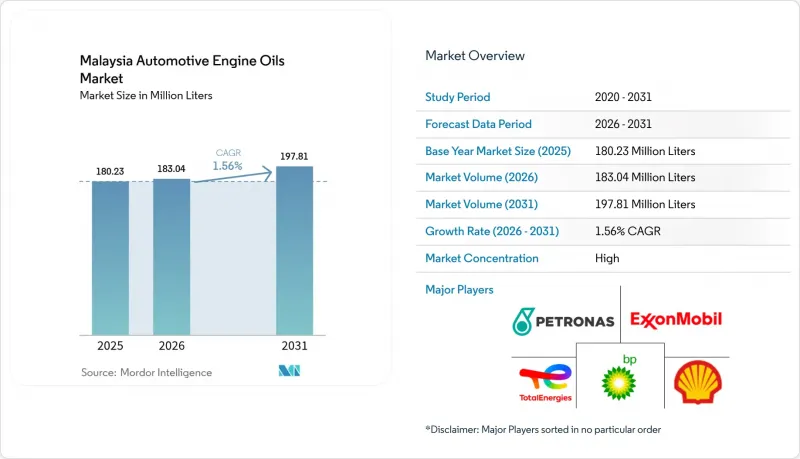
據 Mordor Intelligence 稱,馬來西亞汽車引擎油市場在 2025 年的價值為 1.8023 億公升,預計到 2031 年將從 2026 年的 1.8304 億公升成長到 1.9781 億升,在預測期(2026-2031 年)預計複合年成長率為 1.5%。
本報告按產品類型(乘用車引擎油 (PCMO)、重型車輛引擎機油 (HDMO)、摩托車機油 (MCO))和基礎油(礦物油、合成油、半合成油、生物基油)進行分類。市場預測以銷售量(公升)為單位。
馬來西亞汽車機油市場趨勢與分析
最後一公里配送車輛數量迅速增加
隨著線上零售交易量的成長,宅配業者和外送公司不斷擴大其二輪車輛車隊。光是馬來西亞郵政公司(Pos Malaysia)就計劃在2024年新增1,092輛電動機車,儘管其營運的內燃機車輛數量仍然遠遠超過電動自行車。由於充電基礎設施不足和高昂的初始成本阻礙了電動自行車的普及,預計到2025年,電動機車的滲透率將保持在1%以下,這導致服務中心對礦物油和合成機油(MCO級)的需求持續成長。車輛管理人員指定使用合成10W-40或5W-40機油,以將保養週期延長至6000-8000公里,減少停機時間,並配合獎勵騎行里程更長的獎勵計劃。儘管電動配送自行車數量不斷成長,但這些營運成本因素仍然推動著高階機油的持續普及,從而支撐了馬來西亞汽車機油市場銷售和收入的逐步成長。
共享出行平台車輛激增,大規模服務合作
像Grab這樣的叫車平台訂單量實現了兩位數的成長,其馬來西亞子公司在2023年累計了6.73億馬來西亞馬幣的收入。這為其租賃和公司自有車輛組成的車隊提供了支持,這些車輛均接受標準化維護。業者與知名潤滑油連鎖店簽訂批量採購協議,確保採購符合OEM API SP或ILSAC GF-6A標準的5W-30合成機油的最低數量。 1萬公里的可預測維護週期保證了重複需求,而平台數據分析會在需要更換機油時通知司機,從而降低了主要品牌的客戶流失率。因此,合成PCMO在都市區的普及率正在迅速提高,從而提升了馬來西亞汽車引擎油市場的價值。
共享出行服務的整合減少了私家車的行駛里程。
儘管汽車共享和訂閱模式吸引了媒體的關注,但吉隆坡僅244平方公里的面積上就擁有超過70萬輛汽車,反映出當地根深蒂固的私家車擁有文化以及馬幣2令吉的汽油補貼價格。營運商正面臨停車位短缺和車輛折舊免稅額風險的雙重困境,共享汽車的成長率相對於註冊車輛總數而言仍然處於個位數低點。然而,隨著共用模式的推進,換油頻率正在降低,這導致馬來西亞汽車引擎油市場預期的複合年成長率下降了0.08個百分點。
細分市場分析
即使到了2025年,摩托車機油仍將佔據馬來西亞汽車機油市場58.92%的佔有率,這反映了馬來西亞「每兩人擁有一輛摩托車」的比例以及大規模的宅配者群體。目前,PETRONAS Sprinta、Motul 300V和Gulf Syntrac是效果行銷的主力軍,而與馬來西亞郵政和GrabFood簽訂的大型車隊合約則支撐了高銷售單品的銷售。乘用車機油雖然規模較小,但其複合年成長率高達1.28%,這主要得益於豐田、Perodua和本田擴大了其合成機油服務套餐,並且自2022年以來,0W-20和5W-30的市場佔有率成長了兩倍。森那美-UMW的一體化銷售網路能夠實現潤滑油和服務的聯合推廣,從而加速了對成本敏感的B級掀背車車主對合成乘用車機油(PCMO)的接受度,並提升了馬來西亞汽車機油市場的價值。
儘管重型機油的成長速度相對滯後,但它們對於棕櫚油物流、建築和長途跨境運輸仍然至關重要。嘉實多VECTON CK-4和Petronas Urania CI-4+在B20生物柴油燃料下展現了優異的氧化穩定性,並透過與Hap Sen和Thion Nam合作開展的車隊測試,將換油週期延長至8萬至12萬公里,贏得了用戶的認可。即將推出的歐6及更高標準的生物柴油混合燃料將創造對FA-4級機油的需求,預計2027年後重型車輛合成機油的市場將進一步擴大。
其他好處:
- Excel格式的市場預測(ME)表
- 3個月的分析師支持
目錄
第1章:引言
- 研究假設和市場定義
- 調查範圍
第2章:調查方法
第3章執行摘要
第4章 市場狀況
- 市場概覽
- 市場促進因素
- 最後一公里配送車輛的快速成長
- 叫車平台車輛數量激增以及與公共運輸服務的合作。
- 更嚴格的二氧化碳排放法規/相當於歐6排放氣體標準的法規推動了對優質合成油的需求。
- 原廠製造商強制延長換油週期,提高了每次加油的價值。
- 摩托車愛好者文化正在推動對高性能機油的需求。
- 市場限制因素
- 共享出行服務的整合正在減少私家車的行駛里程。
- 灰色市場進口潤滑油正在損害品牌商品的銷售量。
- 由於排水週期延長,服務頻率降低。
- 價值鍊和通路分析
- 波特五力模型
- 法律規範
- 汽車產業的發展趨勢
第5章 市場規模與成長預測
- 依產品類型
- 乘用車引擎機油(PCMO)
- 0W-XX
- 5W-XX
- 10W-XX
- 15W-XX
- 單級
- 其他年級
- 重型機油(HDMO)
- 0W-XX
- 5W-XX
- 10W-XX
- 15W-XX
- 單級
- 其他年級
- 摩托車機油(MCO)
- 0W-XX
- 5W-XX
- 10W-XX
- 15W-XX
- 單級
- 其他年級
- 乘用車引擎機油(PCMO)
- 依基料
- 礦物
- 合成
- 半合成
- 生物基
第6章 競爭情勢
- 市場集中度
- 策略趨勢
- 市佔率(%)** / 排名分析
- 公司簡介
- Bardahl
- BP plc
- Chevron Corporation
- ENEOS Corporation
- Exxon Mobil Corporation
- FUCHS
- Gulf Oil International Ltd
- Idemitsu Kosan Co Ltd
- Liqui Moly
- Motul
- PETRONAS Lubricants
- Repsol
- Saudi Arabian Oil Co.
- Shell plc
- Sinopec Lubricant(Singapore)Pte Ltd
- SK Inc.
- TotalEnergies SE
第7章 市場機會與未來展望
第8章:執行長面臨的關鍵策略挑戰
According to Mordor Intelligence, the Malaysia automotive engine oils market size was valued at 180.23 million liters in 2025 and estimated to grow from 183.04 million liters in 2026 to reach 197.81 million liters by 2031, at a CAGR of 1.56% during the forecast period (2026-2031).
This report is Segmented by Product Type (Passenger Car Motor Oil (PCMO), Heavy Duty Motor Oil (HDMO), Motorcycle Engine Oil (MCO)), by Base Stock (Mineral, Synthetic, Semi-Synthetic, Bio-Based). The Market Forecasts are Provided in Terms of Volume (Liters).
Malaysia Automotive Engine Oils Market Trends and Insights
Rapid growth of last-mile delivery fleets
Courier and food-delivery operators continue to enlarge two-wheeler pools as online retail volume grows, and Pos Malaysia alone added 1,092 electric bikes in 2024 while still running a far larger internal-combustion roster. Electric penetration remains below 1% through 2025 as charging gaps and high upfront costs slow migration, so mineral and increasingly synthetic MCO grades keep flowing into workshops. Fleet managers specify synthetic 10W-40 or 5W-40 blends to extend service to 6,000-8,000 km, reducing downtime and aligning with rider incentive schemes that reward higher on-road hours. These operating economics sustain premium-grade uptake despite the rise of electric delivery bikes, supporting incremental volume and value for the Malaysia automotive engine oils market.
Surge in ride-hailing platform vehicles and bulk-service tie-ups
Grab and other e-hailing platforms report double-digit booking growth, and Grab's Malaysian arm booked MYR 673 million revenue in 2023, underpinning a fleet of leased and owned vehicles that undergo standardized servicing. Operators use bulk agreements with branded lubricant chains, guaranteeing minimum volumes for 5W-30 synthetics that meet OEM API SP or ILSAC GF-6A specs. Predictable maintenance cycles at 10,000 km intervals secure repeat demand, while platform data analytics alert drivers to oil-change milestones, keeping churn low for preferred brands. As a result, synthetic PCMO penetration rises faster in urban centers, reinforcing value growth for the Malaysia automotive engine oils market.
Shared-mobility consolidation reducing private-car kilometres
Car-sharing and subscription models gain media attention, yet Kuala Lumpur's vehicle density exceeds 700,000 units across just 244 km2, reflecting entrenched ownership culture and subsidized petrol at MYR 2 per liter. Operators struggle with parking shortages and depreciation risk, limiting shared-fleet growth to low-single-digit percentages of total registered cars. Even so, any incremental shift toward pooled usage compresses oil-change frequency, nibbling 0.08 percentage points off the Malaysia automotive engine oils market CAGR forecast.
Other drivers and restraints analyzed in the detailed report include:
- Tightening CO2 / Euro 6-equivalent emission norms driving premium synthetics
- Motorcycle enthusiast culture boosting high-performance oils
- Grey-market lubricants eroding branded volumes
For complete list of drivers and restraints, kindly check the Table Of Contents.
Segment Analysis
Motorcycle Engine Oil still commanded 58.92% of the Malaysia automotive engine oils market share in 2025, a reflection of Malaysia's 1-bike-per-2-persons ratio and a large courier workforce. PETRONAS Sprinta, Motul 300V, and Gulf Syntrac now headline performance marketing, while bulk fleet contracts with Pos Malaysia and GrabFood anchor high-volume SKUs. Passenger Car Motor Oil, though smaller, grows at the swiftest 1.28% CAGR as Toyota, Perodua, and Honda broaden synthetic service packages, trebling 0W-20 and 5W-30 share since 2022. Sime-UMW's unified distributor footprint allows bundled lubricant-plus-service promotions that accelerate synthetic PCMO adoption among cost-sensitive B-segment hatchback owners, bolstering value for the Malaysia automotive engine oils market size.
Heavy Duty Motor Oil trails in growth terms but remains vital for palm-oil logistics, construction, and cross-border haulage. Castrol VECTON CK-4 and PETRONAS Urania CI-4+ command loyalty by proving oxidation stability with B20 biodiesel, extending drains to 80,000-120,000 km in fleet trials with Hap Seng and Tiong Nam. Upcoming Euro 6 and higher biodiesel blends create an opening for FA-4 grades, positioning heavy-duty synthetics for renewed expansion beyond 2027.
Complete Report Scope:
- By Product Type
- Passenger Car Motor Oil (PCMO)
- 0W-XX
- 5W-XX
- 10W-XX
- 15W-XX
- Monogrades
- Other Grades
- Heavy Duty Motor Oil (HDMO)
- 0W-XX
- 5W-XX
- 10W-XX
- 15W-XX
- Monogrades
- Other Grades
- Motorcycle Engine Oil (MCO)
- 0W-XX
- 5W-XX
- 10W-XX
- 15W-XX
- Monogrades
- Other Grades
- Passenger Car Motor Oil (PCMO)
- By Base Stock
- Mineral
- Synthetic
- Semi-Synthetic
- Bio-Based
List of Companies Covered in this Report:
- Bardahl
- BP plc
- Chevron Corporation
- ENEOS Corporation
- Exxon Mobil Corporation
- FUCHS
- Gulf Oil International Ltd
- Idemitsu Kosan Co Ltd
- Liqui Moly
- Motul
- PETRONAS Lubricants
- Repsol
- Saudi Arabian Oil Co.
- Shell plc
- Sinopec Lubricant (Singapore) Pte Ltd
- SK Inc.
- TotalEnergies SE
Additional Benefits:
- The market estimate (ME) sheet in Excel format
- 3 months of analyst support
TABLE OF CONTENTS
1 Introduction
- 1.1 Study Assumptions and Market Definition
- 1.2 Scope of the Study
2 Research Methodology
3 Executive Summary
4 Market Landscape
- 4.1 Market Overview
- 4.2 Market Drivers
- 4.2.1 Rapid growth of last-mile delivery fleets
- 4.2.2 Surge in ride-hailing platform vehicles and bulk-service tie-ups
- 4.2.3 Tightening CO2 / Euro 6-equivalent emission norms driving premium synthetics
- 4.2.4 OEM-mandated extended-drain intervals raising per-fill value
- 4.2.5 Motorcycle enthusiast culture boosting high-performance oils
- 4.3 Market Restraints
- 4.3.1 Shared-mobility consolidation reducing private-car kilometres
- 4.3.2 Grey-import lubricants eroding branded volumes
- 4.3.3 Rising drain-intervals lowering service frequency
- 4.4 Value Chain and Distribution Channel Analysis
- 4.5 Porter's Five Forces
- 4.5.1 Threat of New Entrants
- 4.5.2 Bargaining Power of Suppliers
- 4.5.3 Bargaining Power of Buyers
- 4.5.4 Threat of Substitutes
- 4.5.5 Industry Rivalry
- 4.6 Regulatory Framework
- 4.7 Automotive Industry Trends
5 Market Size and Growth Forecasts (Volume)
- 5.1 By Product Type
- 5.1.1 Passenger Car Motor Oil (PCMO)
- 5.1.1.1 0W-XX
- 5.1.1.2 5W-XX
- 5.1.1.3 10W-XX
- 5.1.1.4 15W-XX
- 5.1.1.5 Monogrades
- 5.1.1.6 Other Grades
- 5.1.2 Heavy Duty Motor Oil (HDMO)
- 5.1.2.1 0W-XX
- 5.1.2.2 5W-XX
- 5.1.2.3 10W-XX
- 5.1.2.4 15W-XX
- 5.1.2.5 Monogrades
- 5.1.2.6 Other Grades
- 5.1.3 Motorcycle Engine Oil (MCO)
- 5.1.3.1 0W-XX
- 5.1.3.2 5W-XX
- 5.1.3.3 10W-XX
- 5.1.3.4 15W-XX
- 5.1.3.5 Monogrades
- 5.1.3.6 Other Grades
- 5.1.1 Passenger Car Motor Oil (PCMO)
- 5.2 By Base Stock
- 5.2.1 Mineral
- 5.2.2 Synthetic
- 5.2.3 Semi-Synthetic
- 5.2.4 Bio-Based
6 Competitive Landscape
- 6.1 Market Concentration
- 6.2 Strategic Moves
- 6.3 Market Share (%)**/Ranking Analysis
- 6.4 Company Profiles (includes Global level Overview, Market level overview, Core Segments, Financials as available, Production Capacity, Strategic Information, Market Rank/Share for key companies, Products and Services, and Recent Developments)
- 6.4.1 Bardahl
- 6.4.2 BP plc
- 6.4.3 Chevron Corporation
- 6.4.4 ENEOS Corporation
- 6.4.5 Exxon Mobil Corporation
- 6.4.6 FUCHS
- 6.4.7 Gulf Oil International Ltd
- 6.4.8 Idemitsu Kosan Co Ltd
- 6.4.9 Liqui Moly
- 6.4.10 Motul
- 6.4.11 PETRONAS Lubricants
- 6.4.12 Repsol
- 6.4.13 Saudi Arabian Oil Co.
- 6.4.14 Shell plc
- 6.4.15 Sinopec Lubricant (Singapore) Pte Ltd
- 6.4.16 SK Inc.
- 6.4.17 TotalEnergies SE
7 Market Opportunities and Future Outlook
- 7.1 White-space and Unmet-need Assessment
8 Key Strategic Questions for CEOs

 印尼汽車機油市場:市場佔有率分析、產業趨勢與統計及成長預測(2026-2031)越南汽車引擎油:市場佔有率分析、產業趨勢與統計及成長預測(2026-2031)中國汽車引擎油市場:市場佔有率分析、產業趨勢與統計及成長預測(2026-2031年)北美汽車引擎機油:市場佔有率分析、產業趨勢與統計及成長預測(2026-2031)印度汽車機油:市場佔有率分析、產業趨勢與統計及成長預測(2026-2031)德國汽車引擎機油:市場佔有率分析、產業趨勢與統計及成長預測(2026-2031)歐洲汽車引擎機油:市場佔有率分析、產業趨勢與統計及成長預測(2026-2031)法國汽車引擎油:市場佔有率分析、產業趨勢與統計及成長預測(2026-2031)
 汽車機油市場:2026-2032年全球市場預測(按產品類型、車輛類型、應用、最終用戶和分銷管道分類)東非汽車機油:市場佔有率分析、產業趨勢與統計及成長預測(2026-2031 年)