


 |
市場調查報告書
商品編碼
2098565
東非汽車機油:市場佔有率分析、產業趨勢與統計及成長預測(2026-2031 年)East Africa Automotive Engine Oil - Market Share Analysis, Industry Trends & Statistics, Growth Forecasts (2026 - 2031) |
||||||

※ 本網頁內容可能與最新版本有所差異。詳細情況請與我們聯繫。
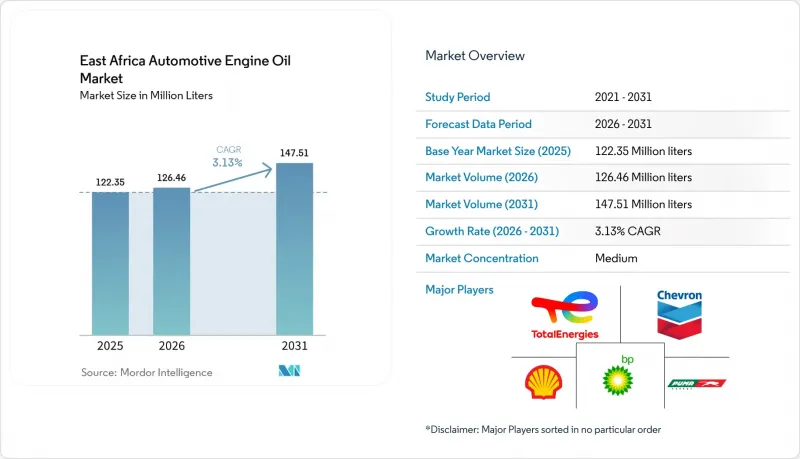
根據 Mordor Intelligence 預測,東非汽車機油市場規模預計到 2025 年將達到 1.2235 億公升,到 2026 年將達到 1.2646 億公升,到 2031 年將達到 1.4751 億公升,2026 年至 2031 年的複合年成長率為 3%。
本報告按類型(例如,乘用車引擎油 (PCMO))、基礎油類型(礦物油、半合成油、全合成油、生物基油)、黏度等級(0W-XX、5W-XX、10W-XX、15W-XX、單級油、其他等級)和地區(肯亞、坦尚尼亞、烏干達、衣索比亞、盧安達、布隆共和國。市場預測以銷售量(公升)為單位。
東非汽車機油市場趨勢與洞察
車輛平均使用壽命的延長
肯亞將於2026年1月生效的「8年進口限制」政策將允許進口2018年生產的車輛。這將導致肯亞車隊的車輛車齡在6至15年之間,由於磨損、洩漏和燒機油等問題加劇,15W-40和20W-50潤滑油的運作將會增加。 2024年前八個月,坦尚尼亞進口了46,944輛二手車,烏干達進口了19,440輛,其中大部分車輛的里程表讀數超過10萬公里。肯亞的DKS 1515:2025年度檢驗法規現已將檢查引擎機油油位、壓力和洩漏情況納入其中,這導致商用車輛的換油週期更加頻繁。儘管物流業者正在試驗機油狀況監測,但其普及率仍低於5%,這意味著對優質潤滑油的需求潛力巨大。隨著引擎老化,即使消費者試圖延長換油週期,建議的換油週期也往往會縮短,這導致潤滑油消耗總量增加。
車輛擁有量增加和二手車進口量增加
2025年12月,肯亞新增註冊車輛31,595輛,使該國車輛總數超過300萬輛。其中包括超過140萬輛摩托車,導致潤滑油需求顯著成長。來自日本和阿拉伯聯合大公國的車輛湧入,帶來了渦輪增壓汽油和柴油引擎。這些引擎需要使用低硫、低灰分、低磷、低硫(SAPS)和低黏度的潤滑油,這些潤滑油需符合原廠設備製造商(OEM)手冊的規定。然而,這些潤滑油在農村地區難以取得,迫使維修技師只能使用15W-40礦物油。 2025年,註冊摩托車數量達到163,112輛,較上年成長128.2%。摩托車每公里的機油消耗量是乘用車的3到5倍。消費者對包裝規格的偏好正在發生變化,摩托車駕駛人傾向於選擇更小巧、更經濟實惠的產品,因此1升裝和500毫升裝的機油成為路邊攤的主要商品。東非汽車機油市場受益於車輛保有量的成長以及各類車輛換油頻率的提高。
假冒劣質石油的氾濫
肯亞仿冒品執法部門在五年內查獲了價值6,500萬肯亞先令(約50萬美元)的非法潤滑油,而坦尚尼亞公平競爭委員會於2026年2月在卡利亞庫查獲了5,000加侖潤滑油。這些案例表明,灰色市場仍然存在,並對品牌價值造成損害。造假者將劣質礦物油或回收油填充到品牌油罐中,並透過邊境城鎮和城區的非正式售貨亭進行銷售。由於處罰力度不足且法醫實驗室數量有限,有效打擊假冒產品犯罪的難度加大,使得不法分子能夠迅速恢復生產。儘管經銷商正在試行使用QR碼和短訊驗證碼進行防偽,但由於合規成本高昂,非正式零售商對此持抵制態度。如果沒有更嚴格的法律威懾,假冒產品將繼續減少合法市場的流量,並對東非的汽車機油產業造成負面影響。
細分市場分析
預計到2025年,乘用車引擎油將佔東非汽車引擎油市場53.81%的佔有率,這反映了轎車和SUV在都市區的主導地位。摩托車機油預計將成為成長最快的細分市場,到2031年年複合成長率(CAGR)將達到3.34%,這主要得益於2025年肯亞新增摩托車註冊量163,112輛以及烏干達摩托車計程車網路的擴張。重型車輛機油的需求則受到北部走廊貨運量增加以及正在進行的鐵路項目(需要挖掘機和推土機持續運作)的支撐。
由於騎士們傾向於選擇更小巧、更經濟實惠的包裝,路邊維修店也擴大選擇1升裝和500毫升裝的摩托車機油。這種包裝方式的轉變使得每公升機油的利潤率提高了20%至30%。卡車運輸業的車輛現代化,例如DHL引進符合歐盟5排放標準的生物柴油車輛,正在推動對更高黏度和性能機油的需求,東非汽車機油市場也正轉向合成混合油。同時,由於車主降低了維護成本,乘用車的換油週期正在延長,這在一定程度上抵消了車輛數量成長所帶來的市場成長。
其他好處:
- Excel格式的市場預測(ME)表
- 3個月的分析師支持
目錄
第1章:引言
- 研究假設和市場定義
- 調查範圍
第2章:調查方法
第3章執行摘要
第4章 市場狀況
- 市場概覽
- 市場促進因素
- 車輛平均使用壽命的增加
- 汽車保有量增加和二手車進口量增加
- 物流、採礦和基礎設施項目蓬勃發展
- 快速過渡到合成油和半合成油
- 東非共同體的關稅減免計畫正在促進本地混合燃料的生產。
- 市場限制因素
- 假冒偽劣和受污染油脂的氾濫
- 對價格高度敏感且依賴進口
- 外匯供應供不應求導致潤滑油短缺。
- 價值鏈分析
- 波特五力模型
第5章 市場規模與成長預測
- 依產品類型
- 乘用車引擎機油(PCMO)
- 重型機油(HDMO)
- 摩托車機油(MCO)
- 不同類型的濃縮物
- 礦物
- 半合成
- 全合成油
- 生物基
- 按年級
- 0W-XX
- 5W-XX
- 10W-XX
- 15W-XX
- 單級
- 其他年級
- 按地區
- 肯亞
- 坦尚尼亞
- 烏干達
- 衣索比亞
- 盧安達
- 蒲隆地
- 剛果民主共和國
第6章 競爭情勢
- 市場集中度
- 策略趨勢
- 市佔率和排名分析
- 公司簡介
- AMSOIL Inc.
- BP plc(Castrol)
- Chevron Corporation
- China National Petroleum Corp.(CNPC)
- China Petroleum & Chemical Corp.(Sinopec)
- Engen Petroleum(PTY)LTD
- Exxon Mobil Corporation
- FUCHS
- Gazprom
- Hindustan Petroleum Corp.
- Idemitsu Kosan Co.
- Lake Group Ltd.
- LUKOIL
- Motul SA
- OLA Energy
- Oryx Energies
- Petrobras
- PETRONAS Lubricants International
- Phillips 66 Company
- PT Pertamina Lubricants
- Puma Energy
- Rubis Energy Kenya(KenolKobil)
- Saudi Arabian Oil Co.
- Shell plc
- SK Lubricants Co. Ltd.
- TotalEnergies
- Veedol Corporation Limited
第7章 市場機會與未來展望
According to Mordor Intelligence, the east Africa automotive engine oil market size is projected to be 122.35 million liters in 2025, 126.46 million liters in 2026, and reach 147.51 million liters by 2031, and is expected to grow at a CAGR of 3.13% from 2026 to 2031.
This report is Segmented by Type (Passenger Car Motor Oil (PCMO), and More), Base Stock Type (Mineral, Semi-Synthetic, Fully Synthetic, and Bio-Based), Grade (0W-XX, 5W-XX, 10W-XX, 15W-XX, Monogrades, and Other Grades), and Geography (Kenya, Tanzania, Uganda, Ethiopia, Rwanda, Burundi, and Democratic Republic of Congo). The Market Forecasts are Provided in Terms of Volume (Liters).
East Africa Automotive Engine Oil Market Trends and Insights
Rising Average Vehicle Age
Kenya's eight-year import cap, effective from January 2026, allows the import of vehicles manufactured in 2018. This results in fleets with service lives ranging from 6 to 15 years, which consume higher volumes of 15W-40 and 20W-50 lubricants due to increased wear, leaks, and oil burn. In the first eight months of 2024, Tanzania imported 46,944 used cars, while Uganda imported 19,440, with most vehicles showing odometer readings exceeding 100,000 km. Kenya's DKS 1515:2025 annual inspection regulations now include checks on engine oil levels, pressure, and leak integrity, prompting more frequent oil drain cycles for commercial fleets. Although logistics operators are experimenting with oil condition monitoring, adoption remains below 5%, leaving significant potential for premium-grade lubricant sales. As engines age, recommended drain intervals often shorten, despite consumer efforts to extend them, contributing to an overall increase in lubricant consumption.
Growing Vehicle Parc and Used-Car Imports
In December 2025, Kenya registered 31,595 new vehicles, while the national vehicle parc surpassed 3 million units, including over 1.4 million motorcycles, significantly increasing lubricant demand. The influx of vehicles from Japan and the United Arab Emirates has introduced turbocharged gasoline and diesel powertrains, which require low-sulfated ash, phosphorus, and sulfur (SAPS), low-viscosity oils as specified in original equipment manufacturer (OEM) manuals. However, these oils are rarely available in rural areas, leading mechanics to rely on mineral 15W-40 oils. Motorcycle registrations surged by 128.2% year-on-year to 163,112 units in 2025, with motorcycles consuming oil at three to five times the per-kilometer rate of passenger cars. Pack-size preferences are shifting, with 1-liter and 500-mL bottles dominating roadside sales as boda-boda riders opt for smaller, more affordable quantities. The East Africa automotive engine oil market benefits from both the growth in the vehicle parc and the higher frequency of oil top-ups across different vehicle categories.
Proliferation of Counterfeit or Adulterated Oils
Kenya's Anti-Counterfeit Authority seized KES 65 million (USD 0.50 million) worth of illicit lubricants over five years, while Tanzania's Fair Competition Commission confiscated 5,000 gallons in Kariakoo in February 2026. These incidents indicate a persistent gray market that affects branded equity. Counterfeiters refill branded cans with downgraded mineral or recycled oil and distribute them through informal kiosks in border towns and peri-urban areas. Low penalties and limited forensic laboratories hinder effective prosecution, allowing offenders to resume operations quickly. Marketers are testing QR-code or Short Message Service (SMS) validation seals, but informal retailers resist due to compliance costs. Without stricter legal deterrents, counterfeit products will continue to reduce legitimate market volumes and impact the East Africa automotive engine oil industry.
Other drivers and restraints analyzed in the detailed report include:
- Boom in Logistics, Mining, and Infrastructure Projects
- Rapid Shift Toward Synthetic and Semi-Synthetic Oils
- High Price Sensitivity and Import Reliance
For complete list of drivers and restraints, kindly check the Table Of Contents.
Segment Analysis
Passenger car motor oil is projected to account for 53.81% of the East Africa automotive engine oil market size in 2025, reflecting the prevalence of sedans and SUVs in urban fleets. Motorcycle engine oil is expected to be the fastest-growing segment, with a compound annual growth rate (CAGR) of 3.34% through 2031, driven by Kenya's 163,112 new motorcycle registrations in 2025 and the expansion of two-wheeler taxi networks in Uganda. Demand for heavy-duty motor oil is supported by freight growth along the Northern Corridor and ongoing railway projects that require continuous operation of excavators and bulldozers.
Roadside mechanics are increasingly opting for 1-liter and 500 mL packs for two-wheelers, as riders prefer smaller, more affordable packaging. This shift in packaging has improved per-liter margins by 20-30%. Fleet modernization in the trucking sector, such as DHL's adoption of Euro 5 biodiesel vehicles, is driving higher viscosity and performance requirements, steering the East Africa automotive engine oil market toward synthetic blends. Meanwhile, passenger car drain intervals are lengthening as owners reduce maintenance expenses, partially offsetting growth driven by the expansion of the vehicle population.
Complete Report Scope:
- By Product Type
- Passenger Car Motor Oil (PCMO)
- Heavy-Duty Motor Oil (HDMO)
- Motorcycle Engine Oil (MCO)
- By Base Stock Type
- Mineral
- Semi-Synthetic
- Fully Synthetic
- Bio-Based
- By Grade
- 0W-XX
- 5W-XX
- 10W-XX
- 15W-XX
- Monogrades
- Other Grades
- By Geography
- Kenya
- Tanzania
- Uganda
- Ethiopia
- Rwanda
- Burundi
- Democratic Republic of Congo
List of Companies Covered in this Report:
- AMSOIL Inc.
- BP p.l.c. (Castrol)
- Chevron Corporation
- China National Petroleum Corp. (CNPC)
- China Petroleum & Chemical Corp. (Sinopec)
- Engen Petroleum (PTY) LTD
- Exxon Mobil Corporation
- FUCHS
- Gazprom
- Hindustan Petroleum Corp.
- Idemitsu Kosan Co.
- Lake Group Ltd.
- LUKOIL
- Motul SA
- OLA Energy
- Oryx Energies
- Petrobras
- PETRONAS Lubricants International
- Phillips 66 Company
- PT Pertamina Lubricants
- Puma Energy
- Rubis Energy Kenya (KenolKobil)
- Saudi Arabian Oil Co.
- Shell plc
- SK Lubricants Co. Ltd.
- TotalEnergies
- Veedol Corporation Limited
Additional Benefits:
- The market estimate (ME) sheet in Excel format
- 3 months of analyst support
TABLE OF CONTENTS
1 Introduction
- 1.1 Study Assumptions & Market Definition
- 1.2 Scope of the Study
2 Research Methodology
3 Executive Summary
4 Market Landscape
- 4.1 Market Overview
- 4.2 Market Drivers
- 4.2.1 Rising average vehicle age
- 4.2.2 Growing vehicle parc & used-car imports
- 4.2.3 Boom in logistics, mining & infrastructure projects
- 4.2.4 Rapid shift toward synthetic & semi-synthetic oils
- 4.2.5 EAC duty-remission scheme catalyzing local blending
- 4.3 Market Restraints
- 4.3.1 Proliferation of counterfeit/adulterated oils
- 4.3.2 High price sensitivity & import reliance
- 4.3.3 Forex shortages causing lubricant stock-outs
- 4.4 Value Chain Analysis
- 4.5 Porter's Five Forces
- 4.5.1 Bargaining Power of Suppliers
- 4.5.2 Bargaining Power of Buyers
- 4.5.3 Threat of New Entrants
- 4.5.4 Threat of Substitutes
- 4.5.5 Degree of Competition
5 Market Size & Growth Forecasts (Volume)
- 5.1 By Product Type
- 5.1.1 Passenger Car Motor Oil (PCMO)
- 5.1.2 Heavy-Duty Motor Oil (HDMO)
- 5.1.3 Motorcycle Engine Oil (MCO)
- 5.2 By Base Stock Type
- 5.2.1 Mineral
- 5.2.2 Semi-Synthetic
- 5.2.3 Fully Synthetic
- 5.2.4 Bio-Based
- 5.3 By Grade
- 5.3.1 0W-XX
- 5.3.2 5W-XX
- 5.3.3 10W-XX
- 5.3.4 15W-XX
- 5.3.5 Monogrades
- 5.3.6 Other Grades
- 5.4 By Geography
- 5.4.1 Kenya
- 5.4.2 Tanzania
- 5.4.3 Uganda
- 5.4.4 Ethiopia
- 5.4.5 Rwanda
- 5.4.6 Burundi
- 5.4.7 Democratic Republic of Congo
6 Competitive Landscape
- 6.1 Market Concentration
- 6.2 Strategic Moves
- 6.3 Market Share(%)/Ranking Analysis
- 6.4 Company Profiles (includes Global level Overview, Market level overview, Core Segments, Financials as available, Strategic Information, Products & Services, and Recent Developments)
- 6.4.1 AMSOIL Inc.
- 6.4.2 BP p.l.c. (Castrol)
- 6.4.3 Chevron Corporation
- 6.4.4 China National Petroleum Corp. (CNPC)
- 6.4.5 China Petroleum & Chemical Corp. (Sinopec)
- 6.4.6 Engen Petroleum (PTY) LTD
- 6.4.7 Exxon Mobil Corporation
- 6.4.8 FUCHS
- 6.4.9 Gazprom
- 6.4.10 Hindustan Petroleum Corp.
- 6.4.11 Idemitsu Kosan Co.
- 6.4.12 Lake Group Ltd.
- 6.4.13 LUKOIL
- 6.4.14 Motul SA
- 6.4.15 OLA Energy
- 6.4.16 Oryx Energies
- 6.4.17 Petrobras
- 6.4.18 PETRONAS Lubricants International
- 6.4.19 Phillips 66 Company
- 6.4.20 PT Pertamina Lubricants
- 6.4.21 Puma Energy
- 6.4.22 Rubis Energy Kenya (KenolKobil)
- 6.4.23 Saudi Arabian Oil Co.
- 6.4.24 Shell plc
- 6.4.25 SK Lubricants Co. Ltd.
- 6.4.26 TotalEnergies
- 6.4.27 Veedol Corporation Limited
7 Market Opportunities & Future Outlook
- 7.1 White-space & Unmet-Need Assessment
- 7.2 Expansion of Aftermarket & Distribution Channels

 印尼汽車機油市場:市場佔有率分析、產業趨勢與統計及成長預測(2026-2031)越南汽車引擎油:市場佔有率分析、產業趨勢與統計及成長預測(2026-2031)馬來西亞汽車機油:市場佔有率分析、產業趨勢與統計及成長預測(2026-2031)中國汽車引擎油市場:市場佔有率分析、產業趨勢與統計及成長預測(2026-2031年)北美汽車引擎機油:市場佔有率分析、產業趨勢與統計及成長預測(2026-2031)印度汽車機油:市場佔有率分析、產業趨勢與統計及成長預測(2026-2031)德國汽車引擎機油:市場佔有率分析、產業趨勢與統計及成長預測(2026-2031)歐洲汽車引擎機油:市場佔有率分析、產業趨勢與統計及成長預測(2026-2031)法國汽車引擎油:市場佔有率分析、產業趨勢與統計及成長預測(2026-2031)
 汽車機油市場:2026-2032年全球市場預測(按產品類型、車輛類型、應用、最終用戶和分銷管道分類)