


 |
市場調查報告書
商品編碼
2116376
北美汽車潤滑油:市場佔有率分析、產業趨勢與統計及成長預測(2026-2031 年)North America Automotive Lubricants - Market Share Analysis, Industry Trends & Statistics, Growth Forecasts (2026 - 2031) |
||||||

※ 本網頁內容可能與最新版本有所差異。詳細情況請與我們聯繫。
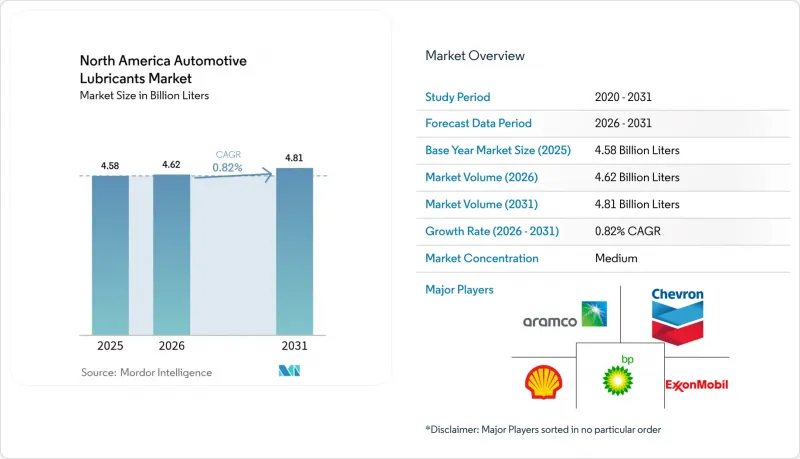
據 Mordor Intelligence 稱,2025 年北美汽車潤滑油市值為 45.8 億公升,預計到 2031 年將從 2026 年的 46.2 億升成長至 48.1 億升,預測期(2026-2031 年)的複合年成長率為 0.82%。
本報告按產品類型(汽車引擎油、手排變速箱油、自動變速箱油、煞車油、汽車潤滑脂及其他產品類型)、車輛類型(乘用車、商用車、摩托車)和地區(美國、加拿大、墨西哥)進行細分。市場預測以銷售量(公升)為單位。
北美汽車潤滑油市場趨勢與洞察
內燃機(ICE)的定期維護週期保證了基礎油的穩定需求。
由於車輛平均使用壽命延長,舊款內燃機乘用車和卡車(需要更頻繁地更換機油和使用黏度更高的機油)的需求量仍然居高不下。 2023年,加拿大汽車汽油銷售量達127億公升,其中90.8%透過加油站售出。這凸顯了傳統動力傳動系統固有的維護需求。車車齡12年的車輛通常每行駛3000至5000英里就需要保養,這與新型引擎延長的換油週期形成鮮明對比。因此,對傳統機油和高里程機油的需求仍然強勁,因為舊款車主需要能夠減少磨損、抑制密封件膨脹並控制積碳的配方,即使行駛里程超過75000英里。即使車輛電氣化程度不斷提高,這一趨勢也有助於維持引擎機油的基準銷售量。
電動輕型商用車車隊仍需要專用的電動車專用油液。
雖然電動車無需曲軸箱潤滑油,但它們也為電力驅動橋的介電冷卻劑和潤滑油創造了新的機會。加拿大石油公司(PetroCanada)於2024年推出了EVR系列產品,以滿足OEM和一級供應商在電池和變速箱應用方面的需求。嘉實多(Castrol)的ON系列和勝牌(Valvoline)針對混合動力汽車最佳化的合成油也採用了類似的策略,將其銷售重點從按升銷售轉向高階化學技術。墨西哥的電動車產量預計將從2020年的6,717輛增加至2024年的206,870輛,其中95%用於出口。這意味著區域電動車需求與跨境貿易密切相關。電池和電力電子設備的溫度控管需要精確控制電導率,這使得擁有先進添加劑技術並與OEM密切合作的供應商更具優勢。
新引擎延長了換油週期。
ILSAC GF-7 標準許可於 2025 年 3 月首次發布,建議每行駛 7,500 至 10,000 英里更換一次機油,與傳統換油週期相比,可將每輛車的年度潤滑油消耗量減少高達 50%。低黏度等級的 0W-16 和 0W-20 機油可進一步延長換油週期,同時提高燃油效率。車隊營運商擴大採用油液分析服務來進一步延長換油週期,這進一步放大了對油耗的影響。美國石油學會 (API) 的售後市場審核計畫目前正在監測散裝和包裝機油的黏度保持性和氧化穩定性,從而對無法兌現其延長換油週期承諾的製造商施加壓力。
細分市場分析
2025年,機油類別在北美汽車潤滑油市場中維持了59.65%的佔有率,鞏固了其作為最大收入來源的地位。在該類別中,高里程產品和合成油佔據了高階價格區間,有助於抵消因換油週期延長而導致的銷售下滑。自動變速箱油是成長最快的產品線,複合年成長率達0.98%,這主要得益於多速自動變速箱、雙離合器變速箱和混合動力齒輪組等需要特定摩擦特性的零件需求不斷成長。在北美汽車潤滑油市場,隨著OEM設計日益複雜,變速箱油市場規模預計將穩定擴大。由於ADAS(高級駕駛輔助系統)的普及導致液壓系統承受更高的高溫負荷,煞車油的需求保持穩定。
儘管電動車專用潤滑油市場規模較小,但仍在持續成長,其價值創造主要依靠先進的化學技術而非銷售量。嘉實多、勝牌和加拿大石油公司相繼推出了介電冷卻液和電驅動橋潤滑油,旨在保護高壓下的銅繞組和電力電子元件。同時,電動方向盤的普及正在淘汰液壓系統,導致手排變速箱油和動力方向盤油的需求下降。另一方面,潤滑脂預計將逐步成長,尤其是在高速馬達軸承領域,因為這類軸承需要更精確的剪切穩定性控制。在每個細分領域,OEM認證正日益成為產品規格的決定性因素,迫使供應商必須為其出廠填充產品獲得認證,才能確保在下游售後市場獲得更大的市場佔有率。
其他好處:
- Excel格式的市場預測(ME)表
- 3個月的分析師支持
目錄
第1章:引言
- 研究假設和市場定義
- 調查範圍
第2章:調查方法
第3章執行摘要
第4章 市場狀況
- 市場概覽
- 市場促進因素
- 由於ICE列車車隊的更新換代,基礎油的需求仍然強勁。
- 小型電動車隊仍需要專用的電動車潤滑油。
- Tier-III 重型車輛排放氣體法規提高了對潤滑油的性能要求。
- 墨西哥 OEM 生產能力的提高(2024-2027 年)正在推動對工廠安裝零件的需求。
- OEM品牌售後服務計劃正在獲得更大的市場佔有率。
- 市場限制因素
- 新引擎延長了換油週期。
- 緊湊型汽車細分市場的電動車滲透率
- Quicklube連鎖店的整合給獨立經銷商帶來了壓力。
- 價值鍊和通路分析
- 波特五力模型
- 法律規範
- 汽車產業的發展趨勢
第5章 市場規模與成長預測
- 依產品類型
- 汽車引擎油
- 0W-XX
- 5W-XX
- 10W-XX
- 15W-XX
- 單級
- 其他年級
- 手排變速箱油(MTF)
- 自排變速箱油(ATF)
- 煞車油
- 汽車潤滑脂
- 其他產品類型(例如動力方向盤機油)
- 汽車引擎油
- 按車輛類型
- 搭乘用車
- 商用車輛
- 摩托車
- 按地區
- 美國
- 加拿大
- 墨西哥
第6章 競爭情勢
- 市場集中度
- 策略趨勢
- 市佔率(%)** / 排名分析
- 公司簡介
- AMSOIL INC.
- BP plc
- Chevron Corporation
- CITGO Petroleum Lubricants
- Exxon Mobil Corporation
- FUCHS
- HollyFrontier(Petro-Canada Lubricants)
- Idemitsu Lubricants America
- LIQUI MOLY
- Lucas Oil Products, Inc.
- Motul
- PETRONAS lubricant International
- Phillips 66 Company
- Roshfrans
- Saudi Arabian Oil Co.
- Shell plc
- TotalEnergies
第7章 市場機會與未來展望
第8章:執行長面臨的關鍵策略挑戰
According to Mordor Intelligence, the North America automotive lubricants market size was valued at 4.58 Billion Liters in 2025 and estimated to grow from 4.62 Billion Liters in 2026 to reach 4.81 Billion Liters by 2031, at a CAGR of 0.82% during the forecast period (2026-2031).
This report is Segmented by Product Type (Automotive Engine Oil, Manual Transmission Fluids, Automatic Transmission Fluids, Brake Fluids, Automotive Greases, and Other Product Types), Vehicle Type (Passenger Vehicles, Commercial Vehicles, and Two-Wheelers), and Geography (United States, Canada, Mexico). The Market Forecasts are Provided in Terms of Volume (Litres).
North America Automotive Lubricants Market Trends and Insights
ICE Parc Renewal Cycle Keeps Base-Oil Demand Steady
The high average vehicle age continues to underpin a large portion of older internal combustion engine cars and trucks that require more frequent oil changes and higher-viscosity blends. In 2023, motor gasoline sales in Canada reached 12.7 billion litres, with 90.8% distributed through service stations, underscoring the entrenched maintenance needs of conventional powertrains. Vehicles exceeding 12 years of age typically follow 3,000- to 5,000-mile service intervals, counterbalancing the extended drain schedules of newer engines. Demand for conventional and high-mileage oils, therefore, remains resilient as owners of aging vehicles seek formulations that mitigate wear, manage seal swelling, and control deposits beyond 75,000 miles. This trend prolongs baseline engine-oil volumes even as fleet electrification advances.
Electrified Light-Duty Fleet Still Requires Specialty E-Fluids
Electric vehicles eliminate crankcase oil yet introduce fresh opportunities in dielectric coolants and e-axle lubricants. Petro-Canada launched its EVR range in 2024 to serve OEM and Tier-1 battery and gearbox applications. Castrol's ON series and Valvoline's hybrid-optimized synthetics follow similar strategies that shift the conversation from liter-based sales to premium chemistry. Mexican EV production increased from 6,717 units in 2020 to 206,870 units in 2024, with 95% of the units exported, thereby tying regional e-vehicle demand to cross-border trade flows. Thermal management for batteries and power electronics requires precise control of conductivity, which favors suppliers with advanced additive expertise and close OEM ties.
Longer Drain Intervals in New Engines
ILSAC GF-7 licensing, first issued in March 2025, supports 7,500-10,000-mile oil changes, cutting annual lubricant volume per vehicle by up to 50% compared with legacy schedules. Low-viscosity 0W-16 and 0W-20 grades further extend service windows while boosting fuel economy. Fleet operators are increasingly deploying oil-analysis services to extend intervals even longer, thereby magnifying the impact on consumption. API's aftermarket audit program now monitors bulk and packaged oils for viscosity retention and oxidative stability, putting pressure on producers that cannot meet extended-service claims.
Other drivers and restraints analyzed in the detailed report include:
- Tier-III Heavy-Duty Emissions Norms Raise Lubricant Performance Requirements
- Mexico OEM Capacity Additions Spur Factory-Fill Volumes
- EV Penetration in Light-Duty Segment
For complete list of drivers and restraints, kindly check the Table Of Contents.
Segment Analysis
The engine oil category retained a 59.65% share of the North America automotive lubricants market in 2025, underscoring its role as the largest revenue contributor. Within this space, high-mileage formulations and synthetics command premium price points that help offset the volume drag from longer drain times. Automatic transmission fluids represent the fastest-growing product line, with a 0.98% CAGR, driven by the increasing demand for multi-speed automatics, dual-clutch units, and hybrid gearsets that require tailor-made friction characteristics. The North America automotive lubricants market size for transmission fluids is projected to expand steadily as OEM design complexity increases. Brake fluids maintain a steady demand due to the integration of advanced driver assistance systems, which place higher temperature stress on hydraulics.
EV-specific e-fluids remain a small but growing segment, capturing value through sophisticated chemistry rather than the volume of gallons moved. Castrol, Valvoline, and Petro-Canada have all launched dielectric coolants and e-axle lubes designed to preserve copper windings and power electronics under high voltage. Manual gearbox oils and power steering fluids are trending downward as electric power steering architectures eliminate hydraulic systems. Greases, meanwhile, capture incremental growth from high-speed electric motor bearings requiring tighter shear-stability control. Across each sub-category, OEM approvals increasingly dictate specification, pushing suppliers to secure factory fill endorsements to protect downstream aftermarket pull-through.
Complete Report Scope:
- By Product Type
- Automotive Engine Oil
- 0W-XX
- 5W-XX
- 10W-XX
- 15W-XX
- Monogrades
- Other Grades
- Manual Transmission Fluids (MTF)
- Automatic Transmission Fluids (ATF)
- Brake Fluids
- Automotive Greases
- Other Product Types (Power Steering Fluid etc.)
- Automotive Engine Oil
- By Vehicle Type
- Passenger Vehicles
- Commercial Vehicles
- Two-Wheelers
- By Geography
- United States
- Canada
- Mexico
List of Companies Covered in this Report:
- AMSOIL INC.
- BP plc
- Chevron Corporation
- CITGO Petroleum Lubricants
- Exxon Mobil Corporation
- FUCHS
- HollyFrontier (Petro-Canada Lubricants)
- Idemitsu Lubricants America
- LIQUI MOLY
- Lucas Oil Products, Inc.
- Motul
- PETRONAS lubricant International
- Phillips 66 Company
- Roshfrans
- Saudi Arabian Oil Co.
- Shell plc
- TotalEnergies
Additional Benefits:
- The market estimate (ME) sheet in Excel format
- 3 months of analyst support
TABLE OF CONTENTS
1 Introduction
- 1.1 Study Assumptions and Market Definition
- 1.2 Scope of the Study
2 Research Methodology
3 Executive Summary
4 Market Landscape
- 4.1 Market Overview
- 4.2 Market Drivers
- 4.2.1 ICE parc renewal cycle keeps base-oil demand steady
- 4.2.2 Electrified light-duty fleet still requires specialty e-fluids
- 4.2.3 Tier-III heavy-duty emissions norms raise lubricant performance requirements
- 4.2.4 Mexico's OEM capacity additions (2024-27) spur factory-fill volumes
- 4.2.5 OEM-branded aftersales programs gain share
- 4.3 Market Restraints
- 4.3.1 Longer drain intervals in new engines
- 4.3.2 EV penetration in light-duty segment
- 4.3.3 Consolidation of quick-lube chains squeezes independent distributors
- 4.4 Value Chain and Distribution Channel Analysis
- 4.5 Porter's Five Forces
- 4.5.1 Threat of New Entrants
- 4.5.2 Bargaining Power of Suppliers
- 4.5.3 Bargaining Power of Buyers
- 4.5.4 Threat of Substitutes
- 4.5.5 Industry Rivalry
- 4.6 Regulatory Framework
- 4.7 Automotive Industry Trends
5 Market Size and Growth Forecasts (Volume)
- 5.1 By Product Type
- 5.1.1 Automotive Engine Oil
- 5.1.1.1 0W-XX
- 5.1.1.2 5W-XX
- 5.1.1.3 10W-XX
- 5.1.1.4 15W-XX
- 5.1.1.5 Monogrades
- 5.1.1.6 Other Grades
- 5.1.2 Manual Transmission Fluids (MTF)
- 5.1.3 Automatic Transmission Fluids (ATF)
- 5.1.4 Brake Fluids
- 5.1.5 Automotive Greases
- 5.1.6 Other Product Types (Power Steering Fluid etc.)
- 5.1.1 Automotive Engine Oil
- 5.2 By Vehicle Type
- 5.2.1 Passenger Vehicles
- 5.2.2 Commercial Vehicles
- 5.2.3 Two-Wheelers
- 5.3 By Geography
- 5.3.1 United States
- 5.3.2 Canada
- 5.3.3 Mexico
6 Competitive Landscape
- 6.1 Market Concentration
- 6.2 Strategic Moves
- 6.3 Market Share (%)**/Ranking Analysis
- 6.4 Company Profiles (includes Global level Overview, Market level overview, Core Segments, Financials as available, Production Capacity, Strategic Information, Market Rank/Share for key companies, Products and Services, and Recent Developments)
- 6.4.1 AMSOIL INC.
- 6.4.2 BP plc
- 6.4.3 Chevron Corporation
- 6.4.4 CITGO Petroleum Lubricants
- 6.4.5 Exxon Mobil Corporation
- 6.4.6 FUCHS
- 6.4.7 HollyFrontier (Petro-Canada Lubricants)
- 6.4.8 Idemitsu Lubricants America
- 6.4.9 LIQUI MOLY
- 6.4.10 Lucas Oil Products, Inc.
- 6.4.11 Motul
- 6.4.12 PETRONAS lubricant International
- 6.4.13 Phillips 66 Company
- 6.4.14 Roshfrans
- 6.4.15 Saudi Arabian Oil Co.
- 6.4.16 Shell plc
- 6.4.17 TotalEnergies
7 Market Opportunities and Future Outlook
- 7.1 White-space and Unmet-need Assessment
8 Key Strategic Questions for CEOs

 日本汽車潤滑油市場:市場佔有率分析、產業趨勢與統計及成長預測(2026-2031)泰國汽車潤滑油市場:市場佔有率分析、產業趨勢與統計及成長預測(2026-2031)越南汽車潤滑油市場:市場佔有率分析、產業趨勢與統計及成長預測(2026-2031)非洲汽車潤滑油:市場佔有率分析、產業趨勢與統計及成長預測(2026-2031 年)馬來西亞汽車潤滑油:市場佔有率分析、產業趨勢與統計及成長預測(2026-2031)中國汽車潤滑油市場:市場佔有率分析、產業趨勢與統計及成長預測(2026-2031年)德國汽車潤滑油市場:市場佔有率分析、產業趨勢與統計及成長預測(2026-2031)法國汽車潤滑油市場:市場佔有率分析、產業趨勢與統計及成長預測(2026-2031)
 2026-2034年全球汽車潤滑油市場規模、佔有率、趨勢及成長分析報告印度汽車潤滑油:市場佔有率分析、產業趨勢與統計及成長預測(2026-2031)