


 |
市場調查報告書
商品編碼
2116385
泰國汽車潤滑油市場:市場佔有率分析、產業趨勢與統計及成長預測(2026-2031)Thailand Automotive Lubricants - Market Share Analysis, Industry Trends & Statistics, Growth Forecasts (2026 - 2031) |
||||||

※ 本網頁內容可能與最新版本有所差異。詳細情況請與我們聯繫。
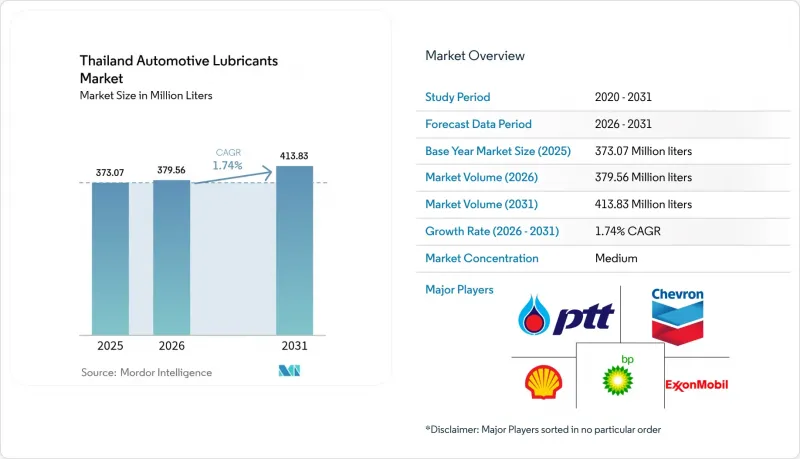
根據 Mordor Intelligence 預測,泰國汽車潤滑油市場預計將從 2025 年的 3.7307 億公升成長到 2026 年的 3.7956 億公升,然後在 2031 年達到 4.1383 億公升,2026 年至 2031 年的複合成長率為 1.74%。
本報告按產品類型(汽車引擎油、手排變速箱油 (MTF)、自動變速箱油 (ATF)、煞車油、汽車潤滑脂及其他產品類型(例如動力方向盤液))和車輛類型(乘用車、商用車、摩托車)進行分類。市場預測以銷售量(公升)為單位。
泰國汽車潤滑油市場趨勢及洞察
商用車輛車隊規模擴大和基礎設施投資增加
隨著東部經濟走廊(EEC)內鐵路、公路項目和倉庫建設的推進,商業貨運量持續成長。車輛業者尋求長效、節能的潤滑油以減少停機時間,從而催生了針對不同卡車品牌的標準化產品規格的大批量訂單。提供數位化油液分析的供應商正獲得競爭優勢,因為預測性維護減少了車輛維修次數。這對高運轉率的線路卡車來說無疑是一大利好。 PTT潤滑油公司透過其電商網路與運輸商合作採購,預計到2025年其產能運轉率將超過2.6億公升。大型國際公司正利用泰國的自由貿易優勢,將包裝貨物回程傳輸至東協當地,這在穩定國內工廠加工能力的同時,也帶動了出口的逐步成長。即使乘用車潤滑油銷售量趨於平穩,這一趨勢預計仍將為潤滑油需求提供堅實的基礎。
向合成低黏度機油的轉變正在逐步推進。
隨著更嚴格的歐盟5排放氣體標準和汽油價格飆升,消費者正轉向使用SAE 0W-20和5W-30多級合成機油,這些機油能顯著提高燃油效率。埃克森美孚的目標是將其在泰國的「美孚1號」年銷量提高10%,並專注於15,000公里換油週期和更佳的引擎清潔度。殼牌的太陽能潤滑脂工廠是其以永續性為核心進行品牌重塑的典範,透過強調環保因素,強化了其高階產品線。授權經銷商透過將原廠機油納入預付式保養套餐,在確保符合原廠保固條款的同時,也保障了售後市場的利潤。雖然合成機油的商店價格較高,但減少的保養次數可以抵消初始成本,因此從整體擁有成本的角度來看,改用合成機油是有利的。這一趨勢導致礦物油的銷售佔有率逐漸下降,而每公升銷量卻在成長,從而推動了泰國汽車潤滑油市場的價值成長。
基礎油價格波動與外匯風險
2025年初,上游煉油廠的停產導致進口III類基礎油現貨溢價擴大,對沒有長期合約的小規模調和商的毛利率帶來壓力。雖然泰銖走強降低了進口成本,但外匯的劇烈波動使價格調整變得更加複雜,尤其是在那些難以承受頻繁價格變動的分散零售通路中。一體化煉油企業正透過內部貨物互換來應對價格波動,而非煉油企業則透過期貨合約和船隊協議中的轉嫁條款進行避險。如果這種波動持續下去,規模將在供應談判和吸收庫存損失方面變得至關重要,這將加速企業併購,並最終使競爭優勢轉移到規模更大的公司。
細分市場分析
預計到2025年,汽車機油將佔泰國汽車潤滑油市場銷售量的57.45%,凸顯其在關鍵保養週期中的核心地位。通勤摩托車、乘用車和輕型皮卡通常使用多級礦物油和半合成油,以滿足熱帶地區的運行溫度要求。儘管由於其他潤滑油的成長速度超過引擎油,引擎油在泰國汽車潤滑油市場的佔有率預計將略有下降,但考慮到泰國車輛的平均車齡接近11年,且即使是老舊車輛的換油週期也較短,引擎油的絕對銷售量仍然相當可觀。供應商正在對其產品線進行升級,推出SP級配方、用於防止凸輪軸磨損的鋅磷添加劑,以及專為泰國柴油市場普遍使用的生物柴油混合燃料設計的清潔劑。
自動變速箱油 (ATF) 預計將成為成長最快的市場,到 2031 年年複合成長率(CAGR)將達到 2.05%,這主要得益於消費者在都市區交通中對自動變速箱的偏好。自動踏板車的蓬勃發展以及配備 CVT 變速箱的摩托車數量的增加,使得 ATF 的需求範圍從乘用車擴展到其他領域。全球原始設備製造商 (OEM) 正在聯合開發各自的摩擦改進劑,以減少振動和熱劣化。為此,泰國組裝指定使用出廠預裝的系列產品,並要求根據保養週期進行補充。本地調配商正在尋求許可協議,以便根據 OEM 代碼複製添加劑的化學成分,從而確保產品能夠供應給經銷商。手排變速箱油和煞車油市場呈現穩定成長,而專用轉向油則佔據著一個細分市場,這主要得益於配備電動液壓式輔助轉向系統的高階車型。
其他好處:
- Excel格式的市場預測(ME)表
- 3個月的分析師支持
目錄
第1章:引言
- 研究假設和市場定義
- 調查範圍
第2章:調查方法
第3章執行摘要
第4章 市場狀況
- 市場概覽
- 市場促進因素
- 商用車輛數量增加和基礎設施投資增加
- 向合成低黏度機油的轉變正在逐步推進。
- 摩托車保有量增加和共享出行距離延長
- 支持延長換油週期的原廠服務套餐正在推動高利潤潤滑油的需求。
- 泰國潤滑油調配和再出口的出口樞紐策略
- 市場限制因素
- 基礎油價格波動與外匯風險
- 仿冒品和低品質的國產品牌正在給利潤率帶來壓力。
- 電動車補貼計畫正在降低內燃機(ICE)對石油的長期需求。
- 價值鍊和通路分析
- 波特五力模型
- 法律規範
- 汽車產業的發展趨勢
第5章 市場規模與成長預測
- 依產品類型
- 汽車引擎油
- 0W-XX
- 5W-XX
- 10W-XX
- 15W-XX
- 單級
- 其他年級
- 手排變速箱油(MTF)
- 自排變速箱油(ATF)
- 煞車油
- 汽車潤滑脂
- 其他產品類型(例如動力方向盤機油)
- 汽車引擎油
- 車輛類型
- 搭乘用車
- 商用車輛
- 摩托車
第6章 競爭情勢
- 市場集中度
- 策略趨勢
- 市佔率(%)** / 排名分析
- 公司簡介
- Bangchak Corporation
- BP Plc
- Chevron Corporation
- Exxon Mobil Corporation
- FUCHS
- Idemitsu Kosan Co. Ltd
- LIQUI MOLY
- Motul
- PETRONAS Lubricants International
- PTT Lubricants
- Saudi Arabian Oil Co.
- Shell plc
- Siam Pan Group Public Co.Ltd
- SK Enmove Ltd
- Thai Oil PLC
- TotalEnergies
第7章 市場機會與未來展望
第8章:執行長面臨的關鍵策略挑戰
According to Mordor Intelligence, the Thailand automotive lubricants market size is expected to grow from 373.07 million liters in 2025 to 379.56 million liters in 2026 and is forecast to reach 413.83 million liters by 2031 at 1.74% CAGR over 2026-2031.
This report is Segmented by Product Type (Automotive Engine Oil, Manual Transmission Fluids (MTF), Automatic Transmission Fluids (ATF), Brake Fluids, Automotive Greases, and Other Product Types (Power Steering Fluid and More)), Vehicle Type (Passenger Vehicles, Commercial Vehicles, and Two-Wheelers). The Market Forecasts are Provided in Terms of Volume (Liters).
Thailand Automotive Lubricants Market Trends and Insights
Expanding Commercial-Vehicle Fleet and Infrastructure Spend
Commercial freight tonnage continues to rise as rail-road projects and warehouse construction progress inside the Eastern Economic Corridor. Fleet operators demand longer-life, fuel-saving lubricants to reduce downtime, leading to bulk-order contracts that lock in product specifications across mixed truck brands. Suppliers offering digital oil analytics garner a competitive advantage because predictive maintenance shortens workshop visits, a clear benefit for high-utilization route trucks. PTT Lubricants recorded a capacity utilization of over 260 million liters in 2025, driven by procurement from hauling companies linked to e-commerce networks. Foreign majors leverage Thailand's free-trade access to backhaul packaged products across mainland ASEAN, creating incremental export volume while stabilizing domestic plant throughput. The trend is projected to preserve a positive lubricant demand baseline even as passenger-vehicle oil volumes plateau.
Rising Shift Toward Synthetic, Low-Viscosity Engine Oils
Tighter Euro 5 equivalent standards and rising pump prices are driving a consumer shift toward SAE 0W-20 and 5W-30 multigrade synthetics, which deliver measurable fuel savings. ExxonMobil targets a 10% annual sales growth in Thailand for Mobil 1, highlighting 15,000 km drain intervals and the benefits of improved engine cleanliness. Shell's solar-powered grease plant exemplifies brand repositioning around sustainability credentials, reinforcing premium price points through environmental messaging. Authorized dealers bundle genuine oil into prepaid maintenance packages to capture aftermarket margins while assuring OEM warranty compliance. Although synthetics command higher shelf prices, the total cost of ownership favors the switch because fewer services offset the upfront expense. This dynamic gradually dilutes the mineral-oil volume share yet raises revenue per liter, supporting value growth within the Thai automotive lubricants market.
Base-Oil Price Volatility and Foreign-Exchange Risk
Imported Group III base oils saw spot premiums widen in early 2025 after upstream refinery outages, squeezing gross margins for small blenders that lack term contracts. A stronger baht lowers import costs, yet currency whiplash complicates selling-price resets, especially in fragmented retail channels that resist frequent list-price changes. Integrated refiners counter swings by swapping cargos internally, whereas non-refining players hedge through futures or pass-through clauses in fleet contracts. Persistent volatility accelerates mergers as scale becomes vital for negotiating supply and absorbing inventory losses, thereby tilting competitive leverage toward major companies.
Other drivers and restraints analyzed in the detailed report include:
- Growing Motorcycle Population and Ride-Hailing Mileage
- OEM Extended-Drain Service Packages
- EV-Subsidy Programs Reducing Long-Term ICE-Oil Demand
For complete list of drivers and restraints, kindly check the Table Of Contents.
Segment Analysis
Automotive Engine Oil contributed 57.45% of 2025 volume, underscoring its foundational role inside the Thailand automotive lubricants market size for core maintenance cycles. Motorcycle commuter fleets, passenger cars, and light pickups use multigrade mineral and semi-synthetic blends that accommodate tropical driving temperatures. The Thailand automotive lubricants market share for engine oil is expected to decline slightly as other fluids grow faster, yet absolute volumes remain substantial because the average vehicle age hovers near 11 years, and older models retain short drain intervals. Suppliers refresh portfolios with SP-grade formulations, zinc-phosphorus additives for cam-wear defense, and detergent packages designed for biodiesel blends prevalent in the Thai diesel pool.
Automatic Transmission Fluids posted a leading 2.05% CAGR outlook to 2031 as consumers embrace automatic gearboxes in city traffic. The automatic-scooter boom and rising CVT bikes extend ATF demand beyond passenger cars. Global OEMs jointly engineer proprietary friction modifiers to mitigate shudder and thermal breakdown, prompting Thai assemblers to specify factory-fill series that must be matched at service intervals. Local blenders pursue licensing deals to replicate additive chemistry under OEM code to retain dealership shelf access. Manual Transmission and Brake Fluids keep steady, while specialty steering fluids occupy a niche driven by premium models adding electric-hydraulic assist.
Complete Report Scope:
- By Product Type
- Automotive Engine Oil
- 0W-XX
- 5W-XX
- 10W-XX
- 15W-XX
- Monogrades
- Other Grades
- Manual Transmission Fluids (MTF)
- Automatic Transmission Fluids (ATF)
- Brake Fluids
- Automotive Greases
- Other Product Types (Power Steering Fluid etc.)
- Automotive Engine Oil
- By Vehicle Type
- Passenger Vehicles
- Commercial Vehicles
- Two-Wheelers
List of Companies Covered in this Report:
- Bangchak Corporation
- BP P.l.c
- Chevron Corporation
- Exxon Mobil Corporation
- FUCHS
- Idemitsu Kosan Co. Ltd
- LIQUI MOLY
- Motul
- PETRONAS Lubricants International
- PTT Lubricants
- Saudi Arabian Oil Co.
- Shell plc
- Siam Pan Group Public Co.Ltd
- SK Enmove Ltd
- Thai Oil PLC
- TotalEnergies
Additional Benefits:
- The market estimate (ME) sheet in Excel format
- 3 months of analyst support
TABLE OF CONTENTS
1 Introduction
- 1.1 Study Assumptions and Market Definition
- 1.2 Scope of the Study
2 Research Methodology
3 Executive Summary
4 Market Landscape
- 4.1 Market Overview
- 4.2 Market Drivers
- 4.2.1 Expanding commercial-vehicle fleet and infrastructure spend
- 4.2.2 Rising shift toward synthetic, low-viscosity engine oils
- 4.2.3 Growing motorcycle population and ride-hailing mileage
- 4.2.4 OEM extended-drain service packages boosting high-margin oil uptake
- 4.2.5 Thailand's export-hub strategy for blending and re-export of lubes
- 4.3 Market Restraints
- 4.3.1 Base-oil price volatility and Foreign Exchange risk
- 4.3.2 Counterfeit / low-quality domestic brands eroding margins
- 4.3.3 EV-subsidy programmes reducing long-term ICE-oil demand
- 4.4 Value Chain and Distribution Channel Analysis
- 4.5 Porter's Five Forces
- 4.5.1 Threat of New Entrants
- 4.5.2 Bargaining Power of Suppliers
- 4.5.3 Bargaining Power of Buyers
- 4.5.4 Threat of Substitutes
- 4.5.5 Industry Rivalry
- 4.6 Regulatory Framework
- 4.7 Automotive Industry Trends
5 Market Size and Growth Forecasts (Volume)
- 5.1 By Product Type
- 5.1.1 Automotive Engine Oil
- 5.1.1.1 0W-XX
- 5.1.1.2 5W-XX
- 5.1.1.3 10W-XX
- 5.1.1.4 15W-XX
- 5.1.1.5 Monogrades
- 5.1.1.6 Other Grades
- 5.1.2 Manual Transmission Fluids (MTF)
- 5.1.3 Automatic Transmission Fluids (ATF)
- 5.1.4 Brake Fluids
- 5.1.5 Automotive Greases
- 5.1.6 Other Product Types (Power Steering Fluid etc.)
- 5.1.1 Automotive Engine Oil
- 5.2 By Vehicle Type
- 5.2.1 Passenger Vehicles
- 5.2.2 Commercial Vehicles
- 5.2.3 Two-Wheelers
6 Competitive Landscape
- 6.1 Market Concentration
- 6.2 Strategic Moves
- 6.3 Market Share (%)**/Ranking Analysis
- 6.4 Company Profiles (includes Global level Overview, Market level overview, Core Segments, Financials as available, Production Capacity, Strategic Information, Market Rank/Share for key companies, Products and Services, and Recent Developments)
- 6.4.1 Bangchak Corporation
- 6.4.2 BP P.l.c
- 6.4.3 Chevron Corporation
- 6.4.4 Exxon Mobil Corporation
- 6.4.5 FUCHS
- 6.4.6 Idemitsu Kosan Co. Ltd
- 6.4.7 LIQUI MOLY
- 6.4.8 Motul
- 6.4.9 PETRONAS Lubricants International
- 6.4.10 PTT Lubricants
- 6.4.11 Saudi Arabian Oil Co.
- 6.4.12 Shell plc
- 6.4.13 Siam Pan Group Public Co.Ltd
- 6.4.14 SK Enmove Ltd
- 6.4.15 Thai Oil PLC
- 6.4.16 TotalEnergies
7 Market Opportunities and Future Outlook
- 7.1 White-space and Unmet-need Assessment
8 Key Strategic Questions for CEOs

 日本汽車潤滑油市場:市場佔有率分析、產業趨勢與統計及成長預測(2026-2031)越南汽車潤滑油市場:市場佔有率分析、產業趨勢與統計及成長預測(2026-2031)非洲汽車潤滑油:市場佔有率分析、產業趨勢與統計及成長預測(2026-2031 年)馬來西亞汽車潤滑油:市場佔有率分析、產業趨勢與統計及成長預測(2026-2031)中國汽車潤滑油市場:市場佔有率分析、產業趨勢與統計及成長預測(2026-2031年)北美汽車潤滑油:市場佔有率分析、產業趨勢與統計及成長預測(2026-2031 年)德國汽車潤滑油市場:市場佔有率分析、產業趨勢與統計及成長預測(2026-2031)法國汽車潤滑油市場:市場佔有率分析、產業趨勢與統計及成長預測(2026-2031)
 2026-2034年全球汽車潤滑油市場規模、佔有率、趨勢及成長分析報告印度汽車潤滑油:市場佔有率分析、產業趨勢與統計及成長預測(2026-2031)