


 |
市場調查報告書
商品編碼
2124759
越南汽車潤滑油市場:市場佔有率分析、產業趨勢與統計及成長預測(2026-2031)Vietnam Automotive Lubricants - Market Share Analysis, Industry Trends & Statistics, Growth Forecasts (2026 - 2031) |
||||||

※ 本網頁內容可能與最新版本有所差異。詳細情況請與我們聯繫。
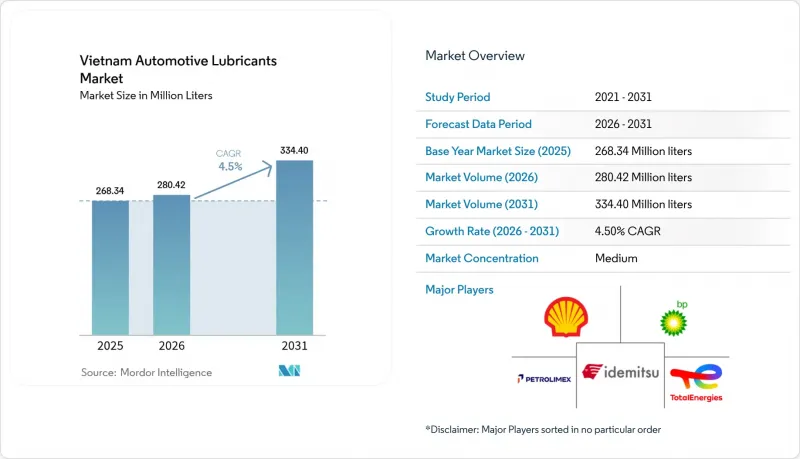
根據 Mordor Intelligence 預測,越南汽車潤滑油市場規模預計將從 2025 年的 2.6834 億公升成長到 2026 年的 2.8042 億公升,到 2031 年達到 3.344 億公升。
預計從 2026 年到 2031 年,其複合年成長率將達到 4.5%。
本報告依產品類型(汽車機油[0W-XX、5W-XX、10W-XX、15W-XX、單級油及其他]、手排變速箱油、自排變速箱油、煞車油等)及車輛類型(乘用車、商用車、摩托車)進行分類。市場預測以銷售量(公升)為單位。
越南汽車潤滑油市場趨勢及洞察
摩托車作為都市區交通工具的優勢
預計到2025年,越南註冊摩托車數量將超過7,000萬輛。儘管新摩托車銷量略有下降,但每輛摩托車每年仍需更換3-4次機油,這構成了穩固的需求基礎,並保護了越南汽車潤滑油市場免受乘用車銷量波動的影響。隨著歐盟5排放氣體標準於2026年生效,騎士們正轉向使用低SAPS(硫磷灰分)的API SN Plus和JASO MA2標準機油,這進一步推動了高階合成機油在零售市場的滲透。雖然電動踏板車的普及率正以三位數的速度成長,但這並未對潤滑油銷售量產生實質影響,因為軸承、煞車液壓系統和傳動系統仍需要潤滑脂和液壓油,儘管用量較少。
電子商務物流車輛激增
越南大宗商品總值預計將從2023年的220億美元增加至2025年的約520億美元。為因應這一成長,宅配網路已將其車隊規模擴大了40%至50%,導致引擎頻繁啟停,換油週期縮短了一半。營運商現在更傾向於使用半合成機油(10W-40和5W-30),即使在每天運作14小時的情況下也能保持熱穩定性。一項將於2024年生效的法令強制要求平台業者公開車輛維護記錄,此舉將透過推廣使用原廠標準潤滑油來加速市場規範化進程。
對價格敏感的消費者更喜歡礦物油。
由於約70%的車主將價格作為購車首要考量,市場對單級20W-50和15W-40礦物油的需求依然強勁,這些礦物油的零售價格比合成油便宜30-40%。這些礦物油降低了毛利率,並削弱了高階品牌在越南汽車潤滑油市場的地位。從中國和印度二級煉油廠進口的自有品牌產品往往規避API認證,進一步加劇了這種情況。
細分市場分析
預計到2025年,內燃機仍將是乘用車、商用車和摩托車領域的標準動力傳動系統,汽車機油將佔越南汽車潤滑油市場佔有率的53.42%。受本田鋒範和豐田威馳等車型中CVT變速箱日益普及的推動,自動變速箱油市場規模預計到2031年將以4.71%的複合年成長率成長。半合成10W-40機油是車隊需求的基礎,因為它們可以在不超出成本上限的情況下延長換油週期。煞車油和潤滑脂目前仍屬於小眾市場,但在安全合規性審核中至關重要,而這種審核在電子商務車隊中正變得越來越普遍。
隨著汽車製造商越來越重視燃油效率法規,原廠加註機油的黏度等級呈下降趨勢,例如 5W-30 和 0W-20。同時,售後市場用戶仍偏好 10W-40 和 15W-40 礦物油,這進一步加劇了經銷商在兩個通路進行庫存管理的挑戰。運輸部將於 2024 年推出新規,要求維修店必須儲備 API SN Plus 或更高等級的機油,這促使即使是注重預算的消費者也開始轉向高性能合成機油。
其他好處:
- Excel格式的市場預測(ME)表
- 3個月的分析師支持
目錄
第1章:引言
- 研究假設和市場定義
- 調查範圍
第2章:調查方法
第3章執行摘要
第4章 市場狀況
- 市場概覽
- 市場促進因素
- 摩托車作為都市區交通工具的優勢
- 電子商務物流車輛激增
- OEM規格,延長換油週期
- 摩托車叫車服務的快速成長
- 政府獎勵措施促進國內混合能力
- 市場限制因素
- 對價格敏感的消費者更傾向於選擇低品質的礦物油。
- 仿冒品潤滑油貿易日益猖獗
- 提高廢油處置環境稅
- 價值鍊和通路分析
- 波特五力模型
- 法律規範
- 汽車產業的發展趨勢
第5章 市場規模與成長預測
- 依產品類型
- 汽車引擎油
- 0W-XX
- 5W-XX
- 10W-XX
- 15W-XX
- 單級
- 其他
- 手排變速箱油(MTF)
- 自排變速箱油(ATF)
- 煞車油
- 汽車潤滑脂
- 其他(動力方向盤機油等)
- 汽車引擎油
- 車輛類型
- 搭乘用車
- 商用車輛
- 摩托車
第6章 競爭情勢
- 市場集中度
- 策略趨勢
- 市佔率(%)** / 排名分析
- 公司簡介
- AP SAIGON PETRO
- BP plc
- Chevron Corporation
- Exxon Mobil Corporation
- Fuchs Petrolub SE
- GS Caltex Corporation
- Idemitsu Kosan Co. Ltd
- Mekong Petrochemical Jsc
- Motul
- Petrolimex(PLX)
- PETRONAS Lubricants International
- PVOIL
- Repsol Vietnam
- Shell Plc
- TotalEnergies
- Wolf Oil Corporation
第7章 市場機會與未來展望
According to Mordor Intelligence, the Vietnam automotive lubricants market size is expected to increase from 268.34 million liters in 2025 to 280.42 million liters in 2026 and reach 334.40 million liters by 2031, growing at a CAGR of 4.5% over 2026-2031.
This report is Segmented by Product Type (Automotive Engine Oil [0W-XX, 5W-XX, 10W-XX, 15W-XX, Monogrades, and Other Grades], Manual Transmission Fluids, Automatic Transmission Fluids, Brake Fluids, and More), Vehicle Type (Passenger Vehicles, Commercial Vehicles, and Two-Wheelers). The Market Forecasts are Provided in Terms of Volume (Liters).
Vietnam Automotive Lubricants Market Trends and Insights
Two-Wheeler Dominance in Urban Mobility
Vietnam's registered motorbike parc surpassed 70 million units in 2025. Despite a slight contraction in new sales, each motorbike still undergoes three to four oil changes a year, forming a dependable demand base that insulates the Vietnam automotive lubricants market from swings in car sales. Euro 5 emission rules, effective 2026, are steering riders toward low-SAPS API SN Plus and JASO MA2 oils, pushing premium synthetics deeper into mass retail. Electric scooter uptake, while expanding at triple-digit rates, has yet to materially dent lubricant volumes because bearings, brake hydraulics, and drivetrains continue to need greases and fluids, albeit in smaller quantities.
Surge in E-Commerce Logistics Fleets
Vietnam's gross merchandise value rose from USD 22 billion in 2023 to an estimated USD 52 billion in 2025. Parcel networks responded by enlarging fleets 40-50%, subjecting engines to stop-start duty cycles that halve traditional drain intervals. Operators now favor semi-synthetic 10W-40 and 5W-30 oils that deliver thermal stability under 14-hour workdays. A 2024 decree requiring platforms to publish vehicle maintenance records is enforcing OEM-grade lubricant adoption and accelerating market formalization.
Price-Sensitive Consumers Favoring Mineral Oils
Approximately 70% of vehicle owners prioritize upfront price, driving persistent demand for monograde 20W-50 and 15W-40 mineral oils that retail at 30-40% below synthetics. These oils deliver thinner gross margins and dilute premium-brand positioning in the Vietnam automotive lubricants market. Private-label brands imported from secondary refiners in China and India compound the erosion, often bypassing API licensing.
Other drivers and restraints analyzed in the detailed report include:
- OEM Extended-Drain Interval Specifications
- Rapid Growth of Ride-Hailing Motorbike Fleets
- Growing Counterfeit Lubricant Trade
For complete list of drivers and restraints, kindly check the Table Of Contents.
Segment Analysis
Automotive Engine Oil captured 53.42% of the Vietnam automotive lubricants market share in 2025 as internal-combustion engines remained the default powertrain across passenger, commercial, and two-wheeler segments. The Vietnam automotive lubricants market size for automatic transmission fluids is projected to climb at a 4.71% CAGR through 2031, propelled by the spread of CVTs in models such as the Honda City and Toyota Vios. Semi-synthetic 10W-40 grades anchor fleet demand by extending drains without breaching cost ceilings. Brake Fluids and Greases remain niche but critical for safety-compliance audits now common among e-commerce fleets.
A convergence toward lower-viscosity 5W-30 and 0W-20 grades is emerging as OEM factory fills embrace fuel-efficiency mandates. Aftermarket riders, however, retain a preference for 10W-40 or 15W-40 mineral oils, reinforcing a dual-channel inventory challenge for distributors. Ministry of Transport guidelines added in 2024 now oblige workshops to stock API SN Plus or higher, nudging even budget clients toward better-performing synthetics.
Complete Report Scope:
- By Product Type
- Automotive Engine Oil
- 0W-XX
- 5W-XX
- 10W-XX
- 15W-XX
- Monogrades
- Other Grades
- Manual Transmission Fluids (MTF)
- Automatic Transmission Fluids (ATF)
- Brake Fluids
- Automotive Greases
- Other Product Types (Power Steering Fluid, etc.)
- Automotive Engine Oil
- By Vehicle Type
- Passenger Vehicles
- Commercial Vehicles
- Two-Wheelers
List of Companies Covered in this Report:
- AP SAIGON PETRO
- BP p.l.c.
- Chevron Corporation
- Exxon Mobil Corporation
- Fuchs Petrolub SE
- GS Caltex Corporation
- Idemitsu Kosan Co. Ltd
- Mekong Petrochemical Jsc
- Motul
- Petrolimex (PLX)
- PETRONAS Lubricants International
- PVOIL
- Repsol Vietnam
- Shell Plc
- TotalEnergies
- Wolf Oil Corporation
Additional Benefits:
- The market estimate (ME) sheet in Excel format
- 3 months of analyst support
TABLE OF CONTENTS
1 Introduction
- 1.1 Study Assumptions and Market Definition
- 1.2 Scope of the Study
2 Research Methodology
3 Executive Summary
4 Market Landscape
- 4.1 Market Overview
- 4.2 Market Drivers
- 4.2.1 Two-wheeler dominance in urban mobility
- 4.2.2 Surge in e-commerce logistics fleets
- 4.2.3 OEM extended-drain interval specifications
- 4.2.4 Rapid growth of ride-hailing motorbike rentals
- 4.2.5 Government incentives for domestic blending capacity
- 4.3 Market Restraints
- 4.3.1 Price-sensitive consumers favouring low-grade mineral oils
- 4.3.2 Growing counterfeit lubricant trade
- 4.3.3 Stricter environmental levy on used-oil disposal
- 4.4 Value Chain and Distribution Channel Analysis
- 4.5 Porter's Five Forces
- 4.5.1 Threat of New Entrants
- 4.5.2 Bargaining Power of Suppliers
- 4.5.3 Bargaining Power of Buyers
- 4.5.4 Threat of Substitutes
- 4.5.5 Industry Rivalry
- 4.6 Regulatory Framework
- 4.7 Automotive Industry Trends
5 Market Size and Growth Forecasts (Volume)
- 5.1 By Product Type
- 5.1.1 Automotive Engine Oil
- 5.1.1.1 0W-XX
- 5.1.1.2 5W-XX
- 5.1.1.3 10W-XX
- 5.1.1.4 15W-XX
- 5.1.1.5 Monogrades
- 5.1.1.6 Other Grades
- 5.1.2 Manual Transmission Fluids (MTF)
- 5.1.3 Automatic Transmission Fluids (ATF)
- 5.1.4 Brake Fluids
- 5.1.5 Automotive Greases
- 5.1.6 Other Product Types (Power Steering Fluid, etc.)
- 5.1.1 Automotive Engine Oil
- 5.2 By Vehicle Type
- 5.2.1 Passenger Vehicles
- 5.2.2 Commercial Vehicles
- 5.2.3 Two-Wheelers
6 Competitive Landscape
- 6.1 Market Concentration
- 6.2 Strategic Moves
- 6.3 Market Share (%)**/Ranking Analysis
- 6.4 Company Profiles (includes Global level Overview, Market level overview, Core Segments, Financials as available, Production Capacity, Strategic Information, Products and Services, and Recent Developments)
- 6.4.1 AP SAIGON PETRO
- 6.4.2 BP p.l.c.
- 6.4.3 Chevron Corporation
- 6.4.4 Exxon Mobil Corporation
- 6.4.5 Fuchs Petrolub SE
- 6.4.6 GS Caltex Corporation
- 6.4.7 Idemitsu Kosan Co. Ltd
- 6.4.8 Mekong Petrochemical Jsc
- 6.4.9 Motul
- 6.4.10 Petrolimex (PLX)
- 6.4.11 PETRONAS Lubricants International
- 6.4.12 PVOIL
- 6.4.13 Repsol Vietnam
- 6.4.14 Shell Plc
- 6.4.15 TotalEnergies
- 6.4.16 Wolf Oil Corporation
7 Market Opportunities and Future Outlook
- 7.1 White-space and Unmet-need Assessment

 日本汽車潤滑油市場:市場佔有率分析、產業趨勢與統計及成長預測(2026-2031)泰國汽車潤滑油市場:市場佔有率分析、產業趨勢與統計及成長預測(2026-2031)非洲汽車潤滑油:市場佔有率分析、產業趨勢與統計及成長預測(2026-2031 年)馬來西亞汽車潤滑油:市場佔有率分析、產業趨勢與統計及成長預測(2026-2031)中國汽車潤滑油市場:市場佔有率分析、產業趨勢與統計及成長預測(2026-2031年)北美汽車潤滑油:市場佔有率分析、產業趨勢與統計及成長預測(2026-2031 年)德國汽車潤滑油市場:市場佔有率分析、產業趨勢與統計及成長預測(2026-2031)法國汽車潤滑油市場:市場佔有率分析、產業趨勢與統計及成長預測(2026-2031)
 2026-2034年全球汽車潤滑油市場規模、佔有率、趨勢及成長分析報告印度汽車潤滑油:市場佔有率分析、產業趨勢與統計及成長預測(2026-2031)