


 |
市場調查報告書
商品編碼
2098452
英國綠色IT軟體:市場佔有率分析、產業趨勢與統計及成長預測(2026-2031年)United Kingdom Green IT Software - Market Share Analysis, Industry Trends & Statistics, Growth Forecasts (2026 - 2031) |
||||||

※ 本網頁內容可能與最新版本有所差異。詳細情況請與我們聯繫。
據 Mordor Intelligence 稱,英國綠色 IT 軟體市場在 2025 年的價值為 13.5 億美元,預計到 2031 年將達到 31.9 億美元,而 2026 年為 15.3 億美元,在 2026 年至 2031 年的成長率為 15.83%。
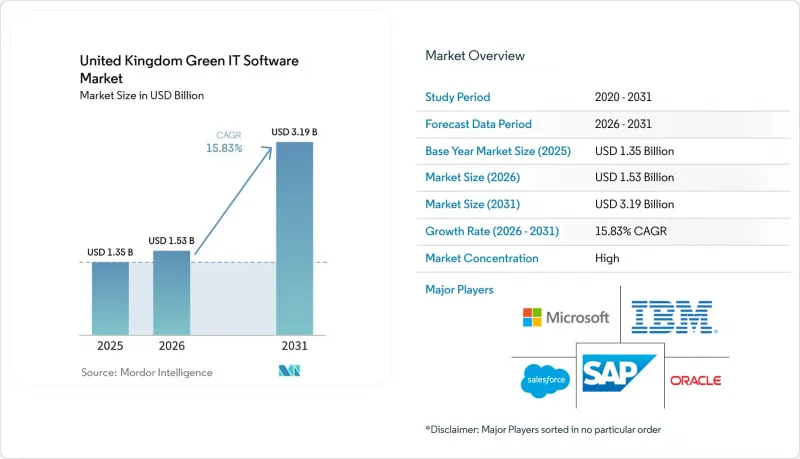
本報告按交付方式(軟體和服務)、部署方式(雲端等)、解決方案類型(碳管理和運算軟體等)、組織規模(大型企業和中小企業)、最終用戶產業(資訊科技和電信等)以及地區進行細分。市場預測以美元計價。
英國綠色IT軟體市場的趨勢與洞察
關於環境、社會及治理 (ESG) 和碳揭露的合規義務
資訊揭露義務是推動英國綠色IT軟體市場成長的最強結構性促進因素。英國商業和貿易部於2026年2月25日發布了「英國永續發展報告準則S1」(UK SRS S1)和「英國永續發展報告準則S2」(UK SRS S2)。這使得英國的報告標準更接近國際永續發展標準理事會(ISSB)的基準,從而增加了對可管理且可審計的永續性數據的需求。英國金融行為監理局(FCA)於2026年1月發布的諮詢文件CP26/5提案,強制要求上市公司在2027年1月1日或之後開始的會計期間,根據英國永續發展報告準則S2披露氣候變遷資訊。這為企業提供了明確的準備期,使軟體選擇成為短期合規挑戰。英國綠色IT軟體市場的發展,因為許多公司已經建立了完善的溫室氣體報告流程,現在可以將這些工作流程遷移到更結構化的平台。 「防止綠色清洗)自2024年5月起適用於所有FCA授權公司,也進一步增加了市場壓力。這是因為企業需要資料佐證其主張,而不能只依賴描述性陳述。因此,英國綠色IT軟體市場的採購活動越來越與法律審查、董事會監督和報告時間表掛鉤,而不是取決於企業自主支配的永續發展預算。
企業對可直接用於審計的排放數據的需求日益成長
英國綠色IT軟體市場也受惠於向可驗證的排放報告模式的明顯轉變。如今,企業需要能夠經受審計師、投資者、監管機構和內部財務團隊同時審查的數據。這項轉變意義重大,因為氣候變遷報告不再局限於寬泛的說明揭露,而是擴展到核心系統、計算方法、管治日誌,甚至包括從供應商收集的數據。從基於TCFD的報告過渡到更廣泛的英國永續發展報告標準(SRS)框架,擴大了報告的範圍,因此企業需要能夠在單一可控環境中管理氣候、風險和永續發展相關資訊的軟體。因此,英國綠色IT軟體市場更青睞能夠支援管治的工作流程、審查程序和證據追蹤的供應商,因為這些功能可以降低在揭露週期後期出現報告缺陷的風險。因此,市場正逐步從僅測量排放量的獨立工具轉向集計算、管治和報告功能於一體的平台。
碎片化的企業資料架構
內部資料碎片化仍是英國綠色IT軟體市場的主要限制因素。永續性資訊通常分散在最初設計時並未考慮整合的各個位置,例如財務系統、採購工具、公用事業收費記錄、工廠資料來源和供應商電子表格。如果企業無法建構可靠的資料層,就很難證明對平台投資的合理性,因為投資的商業理由只是依賴這種資料可見性的缺失。隨著範圍3報告範圍的擴大,這個問題變得更加複雜,外部供應商提供的非標準格式、回應品質的差異以及報告結構成熟度的不同等因素都加劇了這個問題。這減緩了英國綠色IT軟體市場的普及速度,並凸顯了能夠將軟體與諮詢支援結合的供應商的重要性。 IT部門也傾向於選擇能夠提供統一解決方案的大規模平台供應商,這些供應商能夠提供來自單一供應商的跨多個報告工作流程的解決方案。
細分市場分析
到2025年,軟體將佔據英國綠色IT軟體市場61.94%的佔有率,成為當前平台建置階段的主導產品。這一主導地位反映了企業最初的支出模式,即在建立大規模的諮詢和管理支援之前,優先考慮碳核算、ESG報告和資料管理系統。最初,許可和設定支出佔最大佔有率,因為英國綠色IT軟體市場的買家需要工具來取代主導電子表格的報告方式,並支援正式的資訊揭露流程。這也與綠色IT軟體產業目前的成熟階段相吻合,許多買家專注於建立結構化的資料基礎設施,而不是最佳化成熟的永續發展專案。因此,軟體類別受益於迫在眉睫的合規壓力、日益成長的工作流程管理需求以及集中排放和報告活動的強烈趨勢。
預計到2031年,服務業將以17.26%的複合年成長率成長,成為英國綠色IT軟體市場成長最快的領域。這一趨勢反映出技能缺口日益擴大,因為許多公司發現,購買軟體比建立內部系統並進行配置和運行以滿足審計合規標準更為快速。服務也正從一次性部署轉向持續支持,包括部署諮詢、管理彙報、碳排放諮詢和審計協助。這對於那些需要實用永續發展系統但缺乏專門內部團隊的中型買家來說尤其重要。像Normative AB這樣的專業供應商正在採用「軟體+服務」模式來滿足這一需求,使服務業能夠隨著軟體部署的擴展而獲得更多價值。由於監管更新和範圍3的複雜性,初始部署後需要持續的營運工作,因此預計在英國綠色IT軟體市場中,服務將繼續與軟體的擴展緊密相關。
到2025年,基於雲端的部署將佔英國綠色IT軟體市場68.41%的佔有率,這進一步鞏固了雲端部署相對於混合部署和本地部署解決方案的主導地位。這反映了企業對可擴展系統的需求,這些系統能夠支援多站點報告、API連接和頻繁的資訊披露更新,而無需投入大量精力建立內部基礎設施。在英國綠色IT軟體市場,雲端部署之所以備受青睞,是因為不斷擴展的報告要求以及財務、永續發展、採購和營運團隊中越來越多的用戶需要安全存取。隨著報告範圍擴展到範圍3和更廣泛的永續發展主題,雲端平台還有助於與供應商協作、集中管理以及加快系統更新速度,這些功能變得越來越重要。因此,雲端不僅是英國綠色IT軟體市場的託管選項,更是一種能夠實現更快、更協作的報告的實用營運模式。
此外,雲端運算是成長最快的採用模式,預計到2031年將以18.67%的複合年成長率成長。其在規模和成長率方面的領先地位表明,雲端轉型仍在進行中,未來仍有部分本地部署和混合工作負載可以遷移到雲端。在一些金融服務和政府機構中,管理和資料儲存一直是首要考慮因素,因此本地部署工具仍然發揮著至關重要的作用,儘管這些限制正在逐步放寬。對於那些需要在本地處理大量營運數據,同時將報告和分析遷移到雲端的組織而言,混合模式仍然是可行的遷移架構。英國環境、食品和農村事務部 (Defra) 的《數位永續性策略》進一步支持以雲端為中心的方法,該方法能夠更有效地利用資源,從而加強了這項轉型的政策框架。這意味著,在英國綠色IT軟體市場,採用決策越來越與管治、協作速度以及滿足未來合規要求的擴充性等因素密切相關。
其他好處:
- Excel格式的市場預測(ME)表
- 3個月的分析師支持
目錄
第1章:引言
- 研究假設和市場定義
- 調查範圍
第2章:調查方法
第3章執行摘要
第4章 市場狀況
- 市場概覽
- 市場促進因素
- 關於環境、社會及治理(ESG)和碳排放揭露的法律合規義務
- 企業對可直接用於審計的排放數據的需求日益成長
- 永續發展工作流程的雲端遷移
- 利用人工智慧實現碳計量操作自動化
- 採購時優先考慮可衡量的脫碳工具
- 對整個供應鏈的範圍 3 可視性提出更嚴格的要求。
- 市場限制因素
- 碎片化的企業資料架構
- 與傳統ERP和ESG系統整合需要付出相當大的努力。
- 中型企業缺乏永續發展分析的內部技能
- 非核心軟體支出預算審查
- 產業價值鏈分析
- 宏觀經濟因素對市場的影響
- 監理情勢
- 技術展望
- 波特五力分析
第5章 市場規模與成長預測
- 報價
- 軟體
- 服務
- 部署模式
- 基於雲端的
- 現場
- 混合
- 按解決方案類型
- 碳管理和運算軟體
- ESG報告和合規軟體
- 永續性資料管理平台
- 脫碳規劃軟體
- 能源和資源最佳化軟體
- 按組織規模
- 大公司
- 小型企業
- 按最終用戶行業分類
- 資訊科技/通訊
- 製造業
- 銀行、金融服務和保險(BFSI)
- 政府/公共部門
- 能源公用事業
- 衛生保健
- 零售與電子商務
- 建築和基礎設施
- 其他終端用戶產業
第6章 競爭情勢
- 市場集中度
- 策略趨勢
- 市佔率分析
- 公司簡介
- Microsoft Corporation
- SAP SE
- Salesforce, Inc.
- IBM Corporation
- Oracle Corporation
- Schneider Electric SE
- Sphera Solutions, Inc.
- Workiva Inc.
- Wolters Kluwer NV
- EcoVadis SAS
- Watershed Technology, Inc.
- Persefoni AI, Inc.
- Normative AB
- Plan A Earth GmbH
- Emitwise Limited
- Greenly SAS
- Intelex Technologies ULC
- One Trust, LLC
- Cority Software Inc.
- Enablon(Wolters Kluwer NV)
- Dakota Software Corporation
- Diligent Corporation
第7章 市場機會與未來展望
According to Mordor Intelligence, the United Kingdom green IT software market size was valued at USD 1.35 billion in 2025 and estimated to grow from USD 1.53 billion in 2026 to reach USD 3.19 billion by 2031, at a CAGR of 15.83% during the forecast period 2026-2031.
This report is Segmented by Offering (Software, and Services), Deployment (Cloud-Based, and More), Solution Type (Carbon Management and Accounting Software, and More), Organization Size (Large Enterprises, and Small and Medium Enterprises), End-User Industry (Information Technology and Telecommunications, and More), and Geography. The Market Forecasts are Provided in Terms of Value (USD).
United Kingdom Green IT Software Market Trends and Insights
Mandatory ESG and Carbon Disclosure Compliance
Mandatory disclosure is the strongest structural force behind growth in the United Kingdom green IT software market. The Department for Business and Trade published UK SRS S1 and UK SRS S2 on February 25, 2026, which moved UK reporting closer to the ISSB baseline and raised the need for controlled and audit-ready sustainability data. The FCA consultation paper CP26/5, issued in January 2026, proposed mandatory UK SRS S2 climate disclosures for listed issuers from accounting periods beginning on or after January 1, 2027, which gave enterprises a clear preparation window and turned software selection into a near-term compliance task. The United Kingdom green IT software market is also being lifted by the SECR baseline, because many companies already run documented greenhouse gas reporting processes and can now migrate those workflows into more structured platforms. The anti-greenwashing rule that has applied to all FCA-authorized firms since May 2024 adds another layer of pressure because firms need defensible data trails rather than narrative claims alone. This is why procurement in the United Kingdom green IT software market is increasingly tied to legal review, board oversight, and reporting timetables rather than to discretionary sustainability budgets.
Rising Enterprise Demand for Audit-Ready Emissions Data
The United Kingdom green IT software market is also benefiting from a clear shift toward assurance-compatible emissions reporting. Companies now need data that can stand up to scrutiny from auditors, investors, regulators, and internal finance teams at the same time. That change matters because climate reporting now extends beyond high-level narrative disclosure and reaches into source systems, calculation methods, governance logs, and supplier data collection. The transition from TCFD-based reporting toward the broader UK SRS framework widens the reporting surface, so enterprises need software that can manage climate, risk, and sustainability-related information in one controlled environment. The United Kingdom green IT software market, therefore, favors vendors that can support governed workflows, review steps, and evidence trails, because these features reduce the risk of reporting gaps late in the disclosure cycle. As a result, the market is gradually shifting away from stand-alone tools that measure emissions only and toward platforms that combine calculation, governance, and reporting functions.
Fragmented Enterprise Data Architectures
Fragmented internal data remains a major constraint on the United Kingdom green IT software market. Sustainability information often sits across finance systems, procurement tools, utility records, plant data sources, and supplier spreadsheets that were never designed to work together. When enterprises cannot create a reliable data layer, they also struggle to justify platform investment because the business case depends on the same visibility that is currently missing. The problem becomes more difficult when Scope 3 reporting expands, because outside suppliers add non-standard formats, uneven response quality, and different levels of reporting maturity. This slows implementation in the United Kingdom green IT software market and raises the importance of vendors that can combine software with advisory support. IT also favors larger platform providers that can present a single-vendor consolidation path across multiple reporting workflows.
Other drivers and restraints analyzed in the detailed report include:
- Cloud Migration of Sustainability Workflows
- AI-Enabled Automation of Carbon Accounting Workloads
- High Integration Effort With Legacy ERP and ESG Systems
For complete list of drivers and restraints, kindly check the Table Of Contents.
Segment Analysis
Software held a 61.94% share of the United Kingdom green IT software market in 2025, which made it the dominant offering type during the present platform build-out phase. That lead reflected early enterprise spending patterns, because companies first prioritized carbon accounting, ESG reporting, and data management systems before building larger advisory and managed support layers. Buyers across the United Kingdom green IT software market needed tools that could replace spreadsheet-led reporting and support formal disclosure cycles, so licensing and configuration spending took the largest share first. This also matched the current maturity stage of the green IT software industry, where many buyers are still creating a structured data foundation rather than optimizing mature sustainability programs. The software category, therefore, benefited from immediate compliance pressure, a growing need for workflow controls, and a stronger push to centralize emissions and reporting activity.
Services are projected to grow at a 17.26% CAGR through 2031, which makes them the faster-scaling offering within the United Kingdom green IT software market. That pattern reflects a widening skills gap, because many companies can purchase software faster than they can build internal capacity to configure and operate it at audit-ready standards. The services mix is also shifting from one-time deployment work toward recurring support, including implementation consulting, managed reporting, carbon advisory, and audit assistance. This is especially important for mid-market buyers that need workable sustainability systems but do not have dedicated internal teams. Specialist vendors such as Normative AB are using software-plus-service models to match this need, which is helping services capture more value as software adoption broadens. Over time, services are likely to remain closely tied to software expansion in the United Kingdom green IT software market because regulatory updates and Scope 3 complexity create ongoing operational work after the first installation is complete.
Cloud-based deployment commanded 68.41% of the market in 2025 and represented 68.41% of the United Kingdom green IT software market size, which confirmed its lead over hybrid and on-premises models. This position reflected enterprise demand for scalable systems that can support multi-site reporting, API connections, and frequent disclosure updates without heavy internal infrastructure work. The United Kingdom green IT software market has favored cloud deployment because reporting requirements are widening, and more users need secure access across finance, sustainability, procurement, and operations teams. Cloud platforms also make it easier to support supplier collaboration, centralized control, and faster system updates, which are increasingly necessary as reporting extends to Scope 3 and broader sustainability themes. As a result, cloud is not only a hosting option in the United Kingdom green IT software market, but also a practical operating model for faster, more coordinated reporting.
Cloud is also the fastest-growing deployment mode, with an expected CAGR of 18.67% through 2031. That dual lead on both size and growth suggests that migration is still in progress and that meaningful on-premises and hybrid workloads remain available for future conversion. On-premises tools remain relevant in some financial services and government settings where control and residency concerns have mattered, even though these constraints are easing over time. Hybrid models continue to work as transition architectures for organizations that need local handling of asset-heavy operational data while shifting reporting and analytics to the cloud. Defra's digital sustainability strategy further supported cloud-centered approaches that use resources more efficiently, which strengthens the policy backdrop for this transition. This means deployment decisions in the United Kingdom green IT software market are becoming closely tied to governance, collaboration speed, and the ability to scale future compliance demands.
Complete Report Scope:
- By Offering
- Software
- Services
- By Deployment Mode
- Cloud-Based
- On-Premise
- Hybrid
- By Solution Type
- Carbon Management and Accounting Software
- ESG Reporting and Compliance Software
- Sustainability Data Management Platforms
- Decarbonization Planning Software
- Energy and Resource Optimization Software
- By Organization Size
- Large Enterprises
- Small and Medium-Sized Enterprises
- By End User Industry
- IT and Telecommunications
- Manufacturing
- Banking, Financial Services, and Insurance (BFSI)
- Government and Public Sector
- Energy and Utilities
- Healthcare
- Retail and E-Commerce
- Construction and Infrastructure
- Other End User Industries
List of Companies Covered in this Report:
- Microsoft Corporation
- SAP SE
- Salesforce, Inc.
- IBM Corporation
- Oracle Corporation
- Schneider Electric SE
- Sphera Solutions, Inc.
- Workiva Inc.
- Wolters Kluwer N.V.
- EcoVadis SAS
- Watershed Technology, Inc.
- Persefoni AI, Inc.
- Normative AB
- Plan A Earth GmbH
- Emitwise Limited
- Greenly SAS
- Intelex Technologies ULC
- One Trust, LLC
- Cority Software Inc.
- Enablon (Wolters Kluwer N.V.)
- Dakota Software Corporation
- Diligent Corporation
Additional Benefits:
- The market estimate (ME) sheet in Excel format
- 3 months of analyst support
TABLE OF CONTENTS
1 INTRODUCTION
- 1.1 Study Assumptions and Market Definition
- 1.2 Scope of the Study
2 RESEARCH METHODOLOGY
3 EXECUTIVE SUMMARY
4 MARKET LANDSCAPE
- 4.1 Market Overview
- 4.2 Market Drivers
- 4.2.1 Mandatory ESG and Carbon Disclosure Compliance
- 4.2.2 Rising Enterprise Demand for Audit-Ready Emissions Data
- 4.2.3 Cloud Migration of Sustainability Workflows
- 4.2.4 AI-Enabled Automation of Carbon Accounting Workloads
- 4.2.5 Procurement Preference for Measurable Decarbonization Tools
- 4.2.6 Tighter Scope 3 Visibility Requirements Across Supply Chains
- 4.3 Market Restraints
- 4.3.1 Fragmented Enterprise Data Architectures
- 4.3.2 High Integration Effort With Legacy ERP and ESG Systems
- 4.3.3 Limited In-House Sustainability Analytics Skills in Mid-Market Firms
- 4.3.4 Budget Scrutiny for Non-Core Software Spending
- 4.4 Industry Value-Chain Analysis
- 4.5 Impact of Macroeconomic Factors on the Market
- 4.6 Regulatory Landscape
- 4.7 Technological Outlook
- 4.8 Porter's Five Forces Analysis
- 4.8.1 Bargaining Power of Buyers
- 4.8.2 Bargaining Power of Suppliers
- 4.8.3 Threat of New Entrants
- 4.8.4 Threat of Substitutes
- 4.8.5 Intensity of Competitive Rivalry
5 MARKET SIZE AND GROWTH FORECASTS (VALUE)
- 5.1 By Offering
- 5.1.1 Software
- 5.1.2 Services
- 5.2 By Deployment Mode
- 5.2.1 Cloud-Based
- 5.2.2 On-Premise
- 5.2.3 Hybrid
- 5.3 By Solution Type
- 5.3.1 Carbon Management and Accounting Software
- 5.3.2 ESG Reporting and Compliance Software
- 5.3.3 Sustainability Data Management Platforms
- 5.3.4 Decarbonization Planning Software
- 5.3.5 Energy and Resource Optimization Software
- 5.4 By Organization Size
- 5.4.1 Large Enterprises
- 5.4.2 Small and Medium-Sized Enterprises
- 5.5 By End User Industry
- 5.5.1 IT and Telecommunications
- 5.5.2 Manufacturing
- 5.5.3 Banking, Financial Services, and Insurance (BFSI)
- 5.5.4 Government and Public Sector
- 5.5.5 Energy and Utilities
- 5.5.6 Healthcare
- 5.5.7 Retail and E-Commerce
- 5.5.8 Construction and Infrastructure
- 5.5.9 Other End User Industries
6 COMPETITIVE LANDSCAPE
- 6.1 Market Concentration
- 6.2 Strategic Moves
- 6.3 Market Share Analysis
- 6.4 Company Profiles (includes Global Level Overview, Market Level Overview, Core Segments, Financials as available, Strategic Information, Market Rank/Share, Products and Services, Recent Developments)
- 6.4.1 Microsoft Corporation
- 6.4.2 SAP SE
- 6.4.3 Salesforce, Inc.
- 6.4.4 IBM Corporation
- 6.4.5 Oracle Corporation
- 6.4.6 Schneider Electric SE
- 6.4.7 Sphera Solutions, Inc.
- 6.4.8 Workiva Inc.
- 6.4.9 Wolters Kluwer N.V.
- 6.4.10 EcoVadis SAS
- 6.4.11 Watershed Technology, Inc.
- 6.4.12 Persefoni AI, Inc.
- 6.4.13 Normative AB
- 6.4.14 Plan A Earth GmbH
- 6.4.15 Emitwise Limited
- 6.4.16 Greenly SAS
- 6.4.17 Intelex Technologies ULC
- 6.4.18 One Trust, LLC
- 6.4.19 Cority Software Inc.
- 6.4.20 Enablon (Wolters Kluwer N.V.)
- 6.4.21 Dakota Software Corporation
- 6.4.22 Diligent Corporation
7 MARKET OPPORTUNITIES AND FUTURE OUTLOOK
- 7.1 White-Space and Unmet-Need Assessment
- 7.2 AI-Driven Carbon Data Quality and Assurance Automation
- 7.3 Embedded Sustainability Workflows for Mid-Market ERP Users
- 7.4 Sector-Specific Platforms for Financial Services and Public Sector Compliance
- 7.5 Supplier Engagement Tools for Scope 3 Data Collection
- 7.6 Real-Time Energy and IT Asset Optimization For Data-Intensive Enterprises

 北美綠色IT軟體:市場佔有率分析、產業趨勢與統計及成長預測(2026-2031年)印度綠色IT軟體:市場佔有率分析、產業趨勢與統計及成長預測(2026-2031年)新加坡綠色IT軟體:市場佔有率分析、產業趨勢與統計及成長預測(2026-2031年)歐洲綠色IT軟體:市場佔有率分析、產業趨勢與統計及成長預測(2026-2031年)中國綠色IT軟體:市場佔有率分析、產業趨勢與統計及成長預測(2026-2031年)日本綠色IT軟體:市佔率分析、產業趨勢與統計及成長預測(2026-2031年)美國綠色IT軟體:市場佔有率分析、產業趨勢與統計及成長預測(2026-2031年)亞太地區綠色IT軟體:市佔率分析、產業趨勢與統計及成長預測(2026-2031年)印尼綠色IT軟體:市場佔有率分析、產業趨勢與統計及成長預測(2026-2031年)越南綠色IT軟體:市場佔有率分析、產業趨勢與統計及成長預測(2026-2031年)