

 |
市場調查報告書
商品編碼
2063695
日本折疊式紙盒市場:市場佔有率分析、產業趨勢與統計及成長預測(2026-2031年)Japan Folding Carton - Market Share Analysis, Industry Trends & Statistics, Growth Forecasts (2026 - 2031) |
||||||

※ 本網頁內容可能與最新版本有所差異。詳細情況請與我們聯繫。
根據 Mordor Intelligence 預測,日本折疊式紙匣市場規模將從 2025 年的 29.6 億美元成長到 2026 年的 31.4 億美元,到 2031 年將達到 42.9 億美元,2026 年至 2031 年的複合年預計成長率為 6.44%。
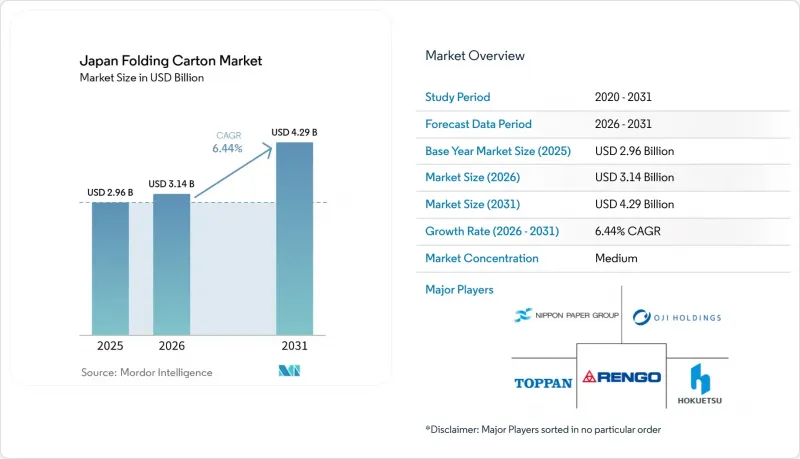
本報告按材料類型(未漂白硫酸紙漿、折疊紙盒用紙板、塗佈未漂白牛皮紙、白線塑合板等)、印刷技術(膠印、柔版印刷、數位印刷等)和終端用戶行業(食品飲料、醫療保健和製藥、電氣電子設備等)進行細分。市場預測以美元計價。
日本折疊式紙盒市場的趨勢與洞察
向永續包裝材料過渡
日本的《塑膠資源回收法》規定,到2030年一次性塑膠的使用量必須減少25%,這迫使品牌商指定使用符合回收設計指南的FSC認證或再生紙板。像羅森這樣的零售商已設定了80%環保包裝的目標,推動了對紙板的需求,使其成為聚苯乙烯翻蓋式容器和聚乙烯包裝袋的替代品。凸版印刷計劃在2030年將其永續包裝的銷售比例提高到80%。這反映出化妝品和個人護理品牌願意為檢驗的環保聲明支付溢價。然而,由於日本禁止出口受污染廢紙,導致國內消費後纖維供應緊張,紙板供應受到限制。像王子控股的「Renewa」計畫這樣的、融入回收網路的加工商正在獲得成本和採購優勢。因此,這種向永續發展的轉變將有利於能夠獲得產銷監管鏈 (CoC) 認證、開發水性油墨並保證閉合迴路回收系統的造紙商,而對於僅限於原生紙漿等級的企業來說,這將是不利的。
政府為減少塑膠廢棄物而製定的目標正在促進紙板的使用。
為了實現2030年塑膠使用量減少25%的國家目標,製藥、個人護理和食品公司正在轉向使用紙板包裝,因為紙板包裝的阻隔性能與塑膠吸塑包裝和翻蓋包裝相當。帶有易撕線或拇指提拉片的紙盒可將開啟所需的力道減少高達40%,從而提高老年人的用藥依從性,同時滿足ISO 8317兒童安全標準。日本製紙株式會社與Elopak公司合作,開始在本地生產Pure-Pak液體紙盒,這為國內無鋁、可回收、無菌包裝的供應奠定了基礎,也為品牌所有者遵守生產者延伸責任制(EPR)鋪平了道路。強制執行嚴格廢棄物分類的市政當局正在加速推廣這種包裝方式,從而推動對認證單一材料結構的加工商的需求。從長遠來看,政策的穩定性有望確保纖維基包裝形式的持續成長,即使通用紙漿價格波動。
原生紙漿價格波動
2026年2月,南美洲漂白長絲牛皮紙漿價格達到每噸655美元,較五個月前上漲14%,令未採取避險措施的加工業者處境艱困。霍爾木茲海峽封鎖造成的能源衝擊也導致石腦油投入成本上漲60%,並波及到二次包裝耗材。小規模工廠受到的衝擊最大,因為它們無法將成本上漲完全轉嫁給品牌所有者,也無法簽訂多年期供應合約。大日本印刷株式會社在其2025會計年度財報中警告稱,利潤率將面臨壓力;同樣,日本製紙株式會社也出於相同原因,將其2026會計年度營業利潤預期下調了40億日元(約合2700萬美元)。垂直整合型企業,尤其是擁有63.6萬公頃森林資產的王子控股,受到的影響較小。然而,紙漿價格的長期波動正在侵蝕整個價值鏈的盈利,並抑制了對資本設備的投資意願。
細分市場分析
2025年,SBS(固態漂白硫酸漿)佔據了日本折疊式紙盒市場38.47%的佔有率。這是因為其白度和硬度符合化妝品和藥品品牌的美學要求。然而,價格比原生紙便宜20-30%的白底紙板預計將在2031年之前以7.26%的複合年成長率超越所有其他材料,因為食品零售商和電商配送公司擴大接受灰色背板作為外觀要求較低的內襯材料。因此,隨著企業致力於減少塑膠使用,優先選擇低碳的消費後再生纖維,日本與再生材料相關的折疊式紙盒市場規模正在擴大。
為了應對紙漿價格的波動,加工商正在擴展產品線,以便快速切換原生紙漿和再生紙漿混合物。配備雙網模塑機和多層塗佈機的造紙廠可以透過在經濟型核心材料上層壓一層薄薄的特種層,從而平衡成本和性能。品牌所有者對生命週期評估 (LCA) 數據的需求日益成長,促使供應商尋求 ISO 14064 二氧化碳排放認證。因此,能夠提供從生產到處置整個生命週期指標的公司正在獲得銷售優勢,尤其是在歐盟包裝法規日益嚴格的出口市場。向再生纖維的轉變符合日本到 2030 年實現塑膠包裝 60% 回收率的目標,從而支持 Whiteline 塑合板及相關再生纖維等級的長期成長。
其他好處:
- Excel格式的市場預測(ME)表
- 3個月的分析師支持
目錄
第1章:引言
- 研究假設和市場定義
- 調查範圍
第2章:調查方法
第3章執行摘要
第4章 市場狀況
- 市場概覽
- 市場促進因素
- 電子商務的快速發展正在加速對客製化紙箱的需求。
- 向永續包裝材料過渡
- 速食食品對高品質圖案的需求日益成長。
- 政府為減少塑膠廢棄物而製定的目標正在促進紙板的使用。
- 零售商自有品牌的擴張推動了對短期數位印刷的需求。
- 隨著人口老化,對易於開啟的藥品包裝盒的需求日益成長。
- 市場限制因素
- 原生紙漿價格波動
- 由於進口紙板原料導致供應鏈中斷
- 加工廠人手不足限制了生產能力。
- 軟包裝袋在休閒食品領域日益普及
- 產業價值鏈分析
- 監理情勢
- 技術展望
- 波特五力分析
第5章 市場規模與成長預測
- 材料類型
- 固態漂白硫酸漿
- 折疊紙板
- 未漂白工藝外套
- 白線塑合板
- 其他材料類型
- 透過印刷技術
- 平版印刷
- 柔版印刷
- 數位印刷
- 凹版印刷
- 其他印刷技術
- 按最終用戶行業分類
- 食品/飲料
- 醫療保健/製藥
- 個人護理化妝品
- 電氣和電子設備
- 家用物品和工業產品
- 菸草
- 電子商務與零售包裝
- 其他終端用戶產業
第6章 競爭情勢
- 市場集中度
- 策略趨勢
- 市佔率分析
- 公司簡介
- Rengo Co., Ltd.
- Oji Holdings Corporation
- Nippon Paper Industries Co., Ltd.
- Toppan Inc.
- Dai Nippon Printing Co., Ltd.
- Hokuetsu Corporation
- Tokan Kogyo Co., Ltd.
- Tomoku Co., Ltd.
- Kyoshin Printing Co., Ltd.
- Hinojosa Group Japan Co., Ltd.
- Seihon Printing Co., Ltd.
- Cartocan Japan Ltd.
- Graphic Packaging International, LLC
- Huhtamaki Oyj
第7章 市場機會與未來展望
According to Mordor Intelligence, the japan folding carton market size is expected to increase from USD 2.96 billion in 2025 to USD 3.14 billion in 2026 and reach USD 4.29 billion by 2031, growing at a CAGR of 6.44% over 2026-2031.
This report is Segmented by Material Type (Solid Bleached Sulfate, Folding Boxboard, Coated Unbleached Kraft, White Line Chipboard, and More), Printing Technology (Lithographic Printing, Flexographic Printing, Digital Printing, and More), and End-User Industry (Food and Beverage, Healthcare/Pharmaceuticals, Electrical and Electronics, and More). The Market Forecasts are Provided in Terms of Value (USD).
Japan Folding Carton Market Trends and Insights
Shift Toward Sustainable Packaging Materials
Japan's Plastic Resource Circulation Act mandates a 25% cut in single-use plastic by 2030, pushing brand owners to specify FSC-certified or recycled cartons that meet design-for-recycling guidelines. Retailers such as Lawson target 80% eco-friendly packaging, raising demand for paperboard that can displace polystyrene clamshells and polyethylene pouches. Toppan plans to raise sustainable packaging sales to 80% by 2030, reflecting the willingness of cosmetics and personal-care brands to pay premiums for verifiable green claims. Supply, however, is constrained because Japan's ban on exporting contaminated recovered paper tightened the domestic pool of post-consumer fiber. Converters integrated into collection networks, like Oji Holdings through its Renewa program, thereby gaining a cost and sourcing advantage. The sustainability pivot, therefore, rewards mills able to certify chain-of-custody, formulate water-based inks, and guarantee closed-loop take-back, while penalizing operators limited to virgin-fiber grades.
Government Plastic Waste Reduction Targets Boosting Paperboard Use
National plastic-reduction targets set at 25% by 2030 are steering pharmaceutical, personal-care, and food companies toward paperboard that matches the barrier performance of plastic blister or clamshell packs. Cartons engineered with tear notches and thumb-lift tabs cut opening force by up to 40%, improving medicine adherence among seniors and aligning with ISO 8317 child-resistance requirements. Nippon Paper's partnership with Elopak to localize Pure-Pak liquid cartons creates a domestic source of non-aluminum, recyclable aseptic packaging, giving brand owners a path to compliance with extended producer responsibility. Municipalities that impose strict waste-sorting accelerate adoption, creating pull-through demand for converters that certify mono-material structures. Over the long term, the policy lock-in ensures baseline growth for fiber-based formats even if commodity pulp costs fluctuate.
Volatility in Virgin Fiber Pulp Prices
South American long-fiber bleached kraft pulp reached USD 655 per ton in February 2026, 14% higher than five months earlier, squeezing converters that lack hedging programs. Energy shocks stemming from the Strait of Hormuz closure also added 60% to naphtha input costs, spilling over into secondary packaging consumables. Smaller plants struggle most because they cannot fully pass increases to brand owners or lock in multiyear supply contracts. Dai Nippon Printing warned of margin pressure in its fiscal-year 2025 results, and Nippon Paper trimmed its FY 2026 operating-income outlook by JPY 4 billion (USD 27 million) for similar reasons. Vertically integrated players, notably Oji Holdings with 636,000 hectares of forestry assets, enjoy partial insulation. Nonetheless, prolonged pulp gyrations erode profitability across the value chain and curb capital-expenditure appetite.
Other drivers and restraints analyzed in the detailed report include:
- E-commerce Boom Accelerating Custom Carton Demand
- Premiumization of Ready-To-Eat Meals Requiring High-Graphics Cartons
- Supply Chain Disruptions from Imported Paperboard Feedstock
For complete list of drivers and restraints, kindly check the Table Of Contents.
Segment Analysis
Solid Bleached Sulfate accounted for 38.47% of the Japan folding carton market share in 2025 because its brightness and stiffness meet the aesthetics demanded by cosmetics and pharmaceutical brands. Yet White Line Chipboard, priced 20-30% below virgin grades, is projected to outpace all others at a 7.26% CAGR through 2031 as grocery retailers and e-commerce shippers accept gray-back board for inner surfaces where appearance matters less. The Japan folding carton market size tied to recycled substrates therefore rises in tandem with corporate plastic-reduction pledges that favor lower-carbon, post-consumer fiber.
Converters are expanding their portfolios to switch rapidly between virgin and recycled recipes as pulp prices swing. Mills equipped with twin-wire formers and multilayer coaters can laminate thin specialty layers over economical core plies, balancing cost against performance. Brand owners increasingly request life-cycle assessment data, prompting suppliers to certify their CO2 footprints under ISO 14064. As a result, those offering cradle-to-grave metrics gain a sales advantage, particularly in export channels where EU packaging regulations are tightening. The pivot toward recycled fiber aligns with Japan's goal of a 60% recycling rate for plastic packaging by 2030, anchoring long-term growth for White Line Chipboard and allied recovered-fiber grades.
List of Companies Covered in this Report:
- Rengo Co., Ltd.
- Oji Holdings Corporation
- Nippon Paper Industries Co., Ltd.
- Toppan Inc.
- Dai Nippon Printing Co., Ltd.
- Hokuetsu Corporation
- Tokan Kogyo Co., Ltd.
- Tomoku Co., Ltd.
- Kyoshin Printing Co., Ltd.
- Hinojosa Group Japan Co., Ltd.
- Seihon Printing Co., Ltd.
- Cartocan Japan Ltd.
- Graphic Packaging International, LLC
- Huhtamaki Oyj
Additional Benefits:
- The market estimate (ME) sheet in Excel format
- 3 months of analyst support
TABLE OF CONTENTS
1 INTRODUCTION
- 1.1 Study Assumptions and Market Definition
- 1.2 Scope of the Study
2 RESEARCH METHODOLOGY
3 EXECUTIVE SUMMARY
4 MARKET LANDSCAPE
- 4.1 Market Overview
- 4.2 Market Drivers
- 4.2.1 E-commerce Boom Accelerating Custom Carton Demand
- 4.2.2 Shift Toward Sustainable Packaging Materials
- 4.2.3 Premiumization of Ready-to-Eat Meals Requiring High-Graphics Cartons
- 4.2.4 Government Plastic Waste Reduction Targets Boosting Paperboard Use
- 4.2.5 Retailers' Private-Label Expansion Driving Short-Run Digital Print Jobs
- 4.2.6 Aging Population Increasing Demand for Easy-Open Pharmaceutical Cartons
- 4.3 Market Restraints
- 4.3.1 Volatility in Virgin Fiber Pulp Prices
- 4.3.2 Supply Chain Disruptions from Imported Paperboard Feedstock
- 4.3.3 Labor Shortages in Converting Facilities Limiting Capacity
- 4.3.4 Rising Popularity of Flexible Pouches in Snacks Segment
- 4.4 Industry Value Chain Analysis
- 4.5 Regulatory Landscape
- 4.6 Technological Outlook
- 4.7 Porter's Five Forces Analysis
- 4.7.1 Threat of New Entrants
- 4.7.2 Bargaining Power of Suppliers
- 4.7.3 Bargaining Power of Buyers
- 4.7.4 Threat of Substitutes
- 4.7.5 Competitive Rivalry
5 MARKET SIZE AND GROWTH FORECASTS (VALUE)
- 5.1 By Material Type
- 5.1.1 Solid Bleached Sulfate
- 5.1.2 Folding Boxboard
- 5.1.3 Coated Unbleached Kraft
- 5.1.4 White Line Chipboard
- 5.1.5 Other Material Types
- 5.2 By Printing Technology
- 5.2.1 Lithographic Printing
- 5.2.2 Flexographic Printing
- 5.2.3 Digital Printing
- 5.2.4 Gravure Printing
- 5.2.5 Other Printing Technologies
- 5.3 By End-User Industry
- 5.3.1 Food and Beverage
- 5.3.2 Healthcare/Pharmaceuticals
- 5.3.3 Personal Care and Cosmetics
- 5.3.4 Electrical and Electronics
- 5.3.5 Household and Industrial Goods
- 5.3.6 Tobacco
- 5.3.7 E-commerce and Retail-ready Packaging
- 5.3.8 Other End-User Industries
6 COMPETITIVE LANDSCAPE
- 6.1 Market Concentration
- 6.2 Strategic Moves
- 6.3 Market Share Analysis
- 6.4 Company Profiles (includes Global level Overview, Market level overview, Core Segments, Financials as available, Strategic Information, Market Rank/Share for key companies, Products and Services, and Recent Developments)
- 6.4.1 Rengo Co., Ltd.
- 6.4.2 Oji Holdings Corporation
- 6.4.3 Nippon Paper Industries Co., Ltd.
- 6.4.4 Toppan Inc.
- 6.4.5 Dai Nippon Printing Co., Ltd.
- 6.4.6 Hokuetsu Corporation
- 6.4.7 Tokan Kogyo Co., Ltd.
- 6.4.8 Tomoku Co., Ltd.
- 6.4.9 Kyoshin Printing Co., Ltd.
- 6.4.10 Hinojosa Group Japan Co., Ltd.
- 6.4.11 Seihon Printing Co., Ltd.
- 6.4.12 Cartocan Japan Ltd.
- 6.4.13 Graphic Packaging International, LLC
- 6.4.14 Huhtamaki Oyj
7 MARKET OPPORTUNITIES AND FUTURE OUTLOOK
- 7.1 White-Space and Unmet-Need Assessment

 金屬化折疊式紙盒市場規模、佔有率和成長分析:按材料、金屬化類型、應用、最終用戶、印刷技術和地區分類 - 行業預測,2026-2033年
 西班牙折疊式紙盒市場:市場佔有率分析、產業趨勢與統計、成長預測(2026-2031)中國折疊式紙盒市場:市場佔有率分析、產業趨勢與統計及成長預測(2026-2031年)中東和非洲折疊式紙盒市場:市場佔有率分析、行業趨勢和統計數據以及成長預測(2026-2031 年)越南折疊式紙盒市場:市場佔有率分析、產業趨勢與統計、成長預測(2026-2031)馬來西亞折疊式紙盒市場:市場佔有率分析、產業趨勢與統計及成長預測(2026-2031)德國折疊式紙盒市場:市場佔有率分析、產業趨勢與統計及成長預測(2026-2031)法國折疊式紙盒市場:市場佔有率分析、產業趨勢與統計、成長預測(2026-2031)義大利折疊式紙盒:市場佔有率分析、產業趨勢與統計、成長預測(2026-2031)英國折疊式紙盒市場:市場佔有率分析、產業趨勢與統計及成長預測(2026-2031)