

 |
市場調查報告書
商品編碼
2124691
北美金融科技:市佔率分析、產業趨勢與統計及成長預測(2026-2031)North America Fintech - Market Share Analysis, Industry Trends & Statistics, Growth Forecasts (2026 - 2031) |
||||||

※ 本網頁內容可能與最新版本有所差異。詳細情況請與我們聯繫。
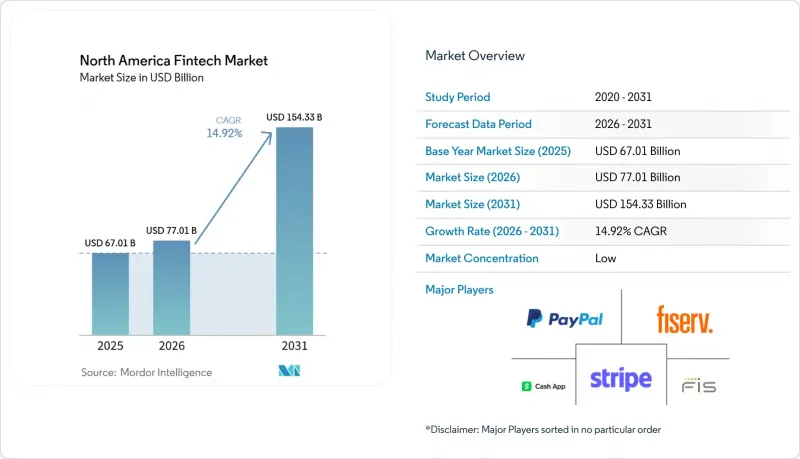
根據 Mordor Intelligence 預測,北美金融科技市場規模預計將在 2025 年達到 670.1 億美元,2026 年達到 770.1 億美元,到 2031 年達到 1543.3 億美元,2026 年至 2031 年的複合年成長率為 14.92%。
本報告按服務領域(數位支付、數位借貸和資金籌措、數位投資、保險科技、新型銀行)、最終用戶(個人、企業)、用戶介面(行動應用、網頁/瀏覽器、POS/物聯網設備)和地區(加拿大、美國、墨西哥)進行細分。市場預測以美元計價。
北美金融科技市場的趨勢與洞察
P2P 和卡片關聯數位錢包的優勢
預計到2024年,Apple Pay、PayPal和Cash App等與銀行卡關聯的電子錢包的總合交易量將超過1.7兆美元,這反映了留在現有卡片組織內所帶來的規模經濟效益。消費者仍傾向選擇能夠保留現有信用額度的電子錢包,Venmo的季度交易量成長了10%,達到756億美元,這進一步印證了P2P生態系統的穩固發展。 FedNow的「請求支付」功能預計將為那些結合加值通訊和發票服務的電子錢包提供者開闢新的收入來源。同時,美國消費者金融保護局(CFPB)將於2025年1月生效的新規將對年交易量超過5000萬筆的非銀行支付應用程式進行直接聯邦審查,這將為小規模的新參與企業帶來更高的固定成本門檻。
在中小企業中實施整合式POS/ISV套件
小規模商家正轉向整合訂單處理、會員積分、薪資核算和貸款等功能的嵌入式軟體支付服務。例如,Toast 就展現了捆綁式服務的獲利潛力,其 2024 年收入的 87% 將來自支付、硬體和輔助金融服務,而非授權費。區域銀行意識到,失去商家的資金管理關係會威脅到其低成本的核心存款,為了保住市場佔有率,一些銀行開始採用白牌POS 金融科技產品。市場分析師預測,嵌入式金融的營收規模將從 2024 年的 1,850 億美元成長到 2028 年的 2,280 億美元,這表明北美金融科技市場的成長軌跡有利於垂直整合型企業。
消費者金融保護局和州政府的合規成本增加。
目前,美國消費者金融保護局(CFPB)的直接監管範圍涵蓋約七家主要的非銀行支付服務提供商,其檢查內容包括資料隱私、欺詐性使用退款的時效性以及帳戶關閉。 2024年,加州和紐約州的監管機構對37%的金融科技相關案件採取了執法行動,追回了3,000萬美元的消費者退款。儘管CFPB在2025年4月的一份備忘錄中暗示聯邦政府的打擊力度有所減弱,但根據非銀行機構註冊規則,必須公佈所有和解協議,這增加了違規帶來的聲譽風險。
細分市場分析
到2025年,數位支付將佔北美金融科技市場佔有率的47.86%,該細分市場收入將達到約321億美元。基於卡片的電子錢包利用現有的卡片網路基礎設施,實現了即時擴展和商家接受。光是PayPal就處理了1.7兆美元的交易總額,而Cash App的月有效用戶超過5500萬。數位借貸憑藉著人工智慧驅動的信用評估模型迅速發展,核准時間縮短至10秒以內,而免手續費的數位投資平台也擴大了其資產規模。
新銀行目前規模較小,但預計將以21.95%的複合年成長率快速成長,到2031年可能佔據北美金融科技市場五分之一以上的佔有率。 Chime擁有超過800萬個帳戶,清楚地展現了其低成本、病毒式成長模式。其客戶獲取成本平均為20美元,而傳統銀行的客戶獲取成本則接近925美元。利用遠端資訊處理和行為數據的保險科技新創公司正在降低汽車和住宅保險的賠付率。在所有服務提案,成熟公司正在將金融、保險和資產管理模組直接整合到消費者的錢包中,從而在不增加用戶轉換門檻的情況下提高每位用戶的平均收入。
其他好處:
- Excel格式的市場預測(ME)表
- 3個月的分析師支持
目錄
第1章:引言
- 研究假設和市場定義
- 調查範圍
第2章:調查方法
第3章執行摘要
第4章 市場狀況
- 市場概覽
- 市場促進因素
- 使用P2P和信用卡的數位錢包的興起
- 中小企業採用整合POS/ISV金融科技套件的現狀
- 銀行和金融科技公司在BaaS/API方面開展合作
- FedNow 與即時鐵路貨幣化層
- 利用人工智慧組織詐欺活動以降低成本
- 代幣化存款和可程式設計貨幣試點項目
- 市場限制因素
- 消費者金融保護局和各州合規成本增加
- 勒索軟體攻擊後,網路保險費飆升。
- 雲端運算價格飆升,給單位經濟效益帶來了壓力。
- 人工智慧和零信任安全技術堆疊人才短缺
- 價值供應鏈分析
- 監理情勢
- 技術展望
- 波特五力模型
第5章 市場規模與成長預測
- 服務方案
- 數位支付
- 數位借貸和金融
- 數位投資
- 保險科技
- 新銀行
- 最終用戶
- 零售
- 公司
- 透過使用者介面
- 行動應用
- 網頁/瀏覽器
- POS/物聯網設備
- 按地區
- 加拿大
- 美國
- 墨西哥
第6章 競爭情勢
- 市場集中度
- 策略趨勢
- 市佔率分析
- 公司簡介
- PayPal
- Stripe
- Block(Square)
- Fiserv
- FIS
- Intuit
- Visa
- Mastercard
- Chime
- SoFi
- LendingClub
- Juspay Technologies(Hyperswitch)
- Brex
- Coinbase
- Robinhood
- Plaid
- Avant
- Upstart
- OnDeck
- Lemonade
- Root
第7章 市場機會與未來展望
According to Mordor Intelligence, the North America fintech market size is projected to be USD 67.01 billion in 2025, USD 77.01 billion in 2026, and reach USD 154.33 billion by 2031, growing at a CAGR of 14.92% from 2026 to 2031.
This report is Segmented by Service Proposition (Digital Payments, Digital Lending & Financing, Digital Investments, Insurtech, Neobanking), End-User (Retail, Businesses), User Interface (Mobile Applications, Web/Browser, POS/IoT Devices), and Geography (Canada, United States, Mexico). The Market Forecasts are Provided in Terms of Value (USD).
North America Fintech Market Trends and Insights
P2P and Card-Funded Digital-Wallet Dominance
Card-backed wallets such as Apple Pay, PayPal, and Cash App processed more than USD 1.7 trillion in combined volume during 2024, illustrating the scale advantage gained by remaining inside established card networks. Consumers continue to prefer wallets that keep existing credit lines intact, and Venmo's quarterly throughput climbed 10% to USD 75.6 billion, reinforcing the stickiness of P2P ecosystems. FedNow's request-to-pay functionality is expected to open complementary revenue streams for wallet providers that overlay value-added messaging and invoice services. At the same time, a January 2025 CFPB rule brings nonbank payment apps handling more than 50 million annual transactions under direct federal examination, raising the fixed-cost bar for smaller entrants.
SME Uptake of Integrated POS/ISV Suites
Small merchants are turning to software-embedded payments that consolidate ordering, loyalty, payroll, and lending. Toast derived 87% of its 2024 top line from payments, hardware, and ancillary financial services rather than license fees, revealing the monetization power of bundled offerings. Community banks acknowledge that losing the merchant cash-management relationship threatens low-cost core deposits, and several have begun white-labeling point-of-sale fintech products to defend share. Market observers expect the embedded-finance revenue pool to grow from USD 185 billion in 2024 to USD 228 billion in 2028, implying a North America fintech market expansion path that rewards vertically integrated players.
Intensifying CFPB and State Compliance Costs
Direct CFPB supervision now applies to about seven large nonbank payment providers, expanding examination scope to data privacy, fraud-refund timing, and account closures. California and New York regulators initiated 37% of fintech enforcement actions in 2024, collecting USD 30 million in consumer restitution. Although an April 2025 CFPB memo signals fewer federal sweeps, the requirement to publicly file all settlement orders under the nonbank registry rule raises reputational stakes for compliance lapses.
Other drivers and restraints analyzed in the detailed report include:
- Bank-Fintech BaaS/API Partnerships
- AI-Based Fraud-Orchestration Savings
- Rising Cyber-Insurance Premiums Post-Ransomware
For complete list of drivers and restraints, kindly check the Table Of Contents.
Segment Analysis
Digital payments controlled 47.86% of the North America fintech market share in 2025, translating to roughly USD 32.1 billion in segment revenue. Card-funded wallets ride the installed card-network rails, providing instant scale and merchant acceptance. PayPal alone processed USD 1.7 trillion in total payment volume, while Cash App's monthly active users surpassed 55 million. Digital lending gained ground as AI underwriting models cut approval times to under 10 seconds, and digital investment portals grew assets by waiving commissions.
Neobanking, although smaller today, is forecast to race ahead at a 21.95% CAGR and could command more than one-fifth of the North America fintech market by 2031. Chime's eight-million-plus account base illustrates the low-cost viral growth economics; its customer acquisition cost averages USD 20, versus nearly USD 925 for traditional banks. Insurtech startups using telematics and behavioral data are shaving loss ratios for auto and home policies. Across propositions, incumbents are embedding financing, insurance, and wealth modules directly inside consumer wallets, expanding average revenue per user without raising switching friction.
Complete Report Scope:
- By Service Proposition
- Digital Payments
- Digital Lending & Financing
- Digital Investments
- Insurtech
- Neobanking
- By End-User
- Retail
- Businesses
- By User Interface
- Mobile Applications
- Web / Browser
- POS / IoT Devices
- By Geography
- Canada
- United States
- Mexico
List of Companies Covered in this Report:
- PayPal
- Stripe
- Block (Square)
- Fiserv
- FIS
- Intuit
- Visa
- Mastercard
- Chime
- SoFi
- LendingClub
- Juspay Technologies (Hyperswitch)
- Brex
- Coinbase
- Robinhood
- Plaid
- Avant
- Upstart
- OnDeck
- Lemonade
- Root
Additional Benefits:
- The market estimate (ME) sheet in Excel format
- 3 months of analyst support
TABLE OF CONTENTS
1 Introduction
- 1.1 Study Assumptions & Market Definition
- 1.2 Scope of the Study
2 Research Methodology
3 Executive Summary
4 Market Landscape
- 4.1 Market Overview
- 4.2 Market Drivers
- 4.2.1 P2P & card-funded digital-wallet dominance
- 4.2.2 SME uptake of integrated POS/ISV fintech suites
- 4.2.3 Bank-fintech BaaS/API partnerships
- 4.2.4 FedNow & Real-Time Rail monetization layers
- 4.2.5 AI-based fraud-orchestration cost reductions
- 4.2.6 Tokenized deposits & program-mable money pilots
- 4.3 Market Restraints
- 4.3.1 Intensifying CFPB & state compliance costs
- 4.3.2 Rising cyber-insurance premiums post-ransomware
- 4.3.3 Cloud-compute price inflation squeezing unit-economics
- 4.3.4 Talent gap in GenAI & zero-trust security stacks
- 4.4 Value / Supply-Chain Analysis
- 4.5 Regulatory Landscape
- 4.6 Technological Outlook
- 4.7 Porter's Five Forces
- 4.7.1 Bargaining Power of Suppliers
- 4.7.2 Bargaining Power of Buyers
- 4.7.3 Threat of New Entrants
- 4.7.4 Threat of Substitutes
- 4.7.5 Competitive Rivalry
5 Market Size & Growth Forecasts
- 5.1 By Service Proposition
- 5.1.1 Digital Payments
- 5.1.2 Digital Lending & Financing
- 5.1.3 Digital Investments
- 5.1.4 Insurtech
- 5.1.5 Neobanking
- 5.2 By End-User
- 5.2.1 Retail
- 5.2.2 Businesses
- 5.3 By User Interface
- 5.3.1 Mobile Applications
- 5.3.2 Web / Browser
- 5.3.3 POS / IoT Devices
- 5.4 By Geography
- 5.4.1 Canada
- 5.4.2 United States
- 5.4.3 Mexico
6 Competitive Landscape
- 6.1 Market Concentration
- 6.2 Strategic Moves
- 6.3 Market Share Analysis
- 6.4 Company Profiles (includes Global level Overview, Market level overview, Core Segments, Financials as available, Strategic Information, Market Rank/Share for key companies, Products & Services, and Recent Developments)
- 6.4.1 PayPal
- 6.4.2 Stripe
- 6.4.3 Block (Square)
- 6.4.4 Fiserv
- 6.4.5 FIS
- 6.4.6 Intuit
- 6.4.7 Visa
- 6.4.8 Mastercard
- 6.4.9 Chime
- 6.4.10 SoFi
- 6.4.11 LendingClub
- 6.4.12 Juspay Technologies (Hyperswitch)
- 6.4.13 Brex
- 6.4.14 Coinbase
- 6.4.15 Robinhood
- 6.4.16 Plaid
- 6.4.17 Avant
- 6.4.18 Upstart
- 6.4.19 OnDeck
- 6.4.20 Lemonade
- 6.4.21 Root
7 Market Opportunities & Future Outlook
- 7.1 Cross-Border B2B Payment Orchestration for Mid-Market Exporters
- 7.2 GenAI-Driven Hyper-Personalized Wealth-Management Micro-Pods

 中東和北非金融科技:市場佔有率分析、行業趨勢和統計數據以及成長預測(2026-2031 年)亞太地區金融科技:市場佔有率分析、產業趨勢與統計及成長預測(2026-2031)德國金融科技:市場佔有率分析、產業趨勢與統計及成長預測(2026-2031)新加坡金融科技:市場佔有率分析、產業趨勢與統計及成長預測(2026-2031)歐洲金融科技:市場佔有率分析、產業趨勢與統計及成長預測(2026-2031)越南金融科技:市場佔有率分析、產業趨勢與統計及成長預測(2026-2031)馬來西亞金融科技:市場佔有率分析、產業趨勢與統計及成長預測(2026-2031)金融科技:市場佔有率分析、產業趨勢與統計、成長預測(2025-2030)印度金融科技:市場佔有率分析、產業趨勢與統計及成長預測(2026-2031)
 金融科技即服務 (FaaS) 市場 - 全球市場預測 2026-2032