


 |
市場調查報告書
商品編碼
2124695
馬來西亞金融科技:市場佔有率分析、產業趨勢與統計及成長預測(2026-2031)Malaysia Fintech - Market Share Analysis, Industry Trends & Statistics, Growth Forecasts (2026 - 2031) |
||||||

※ 本網頁內容可能與最新版本有所差異。詳細情況請與我們聯繫。
據 Mordor Intelligence 稱,馬來西亞金融科技市場在 2025 年的價值為 104 億美元,預計到 2031 年將達到 254.1 億美元,而 2026 年為 120.7 億美元,預測期(2026-2031 年)的複合年成長率為 16.05%。
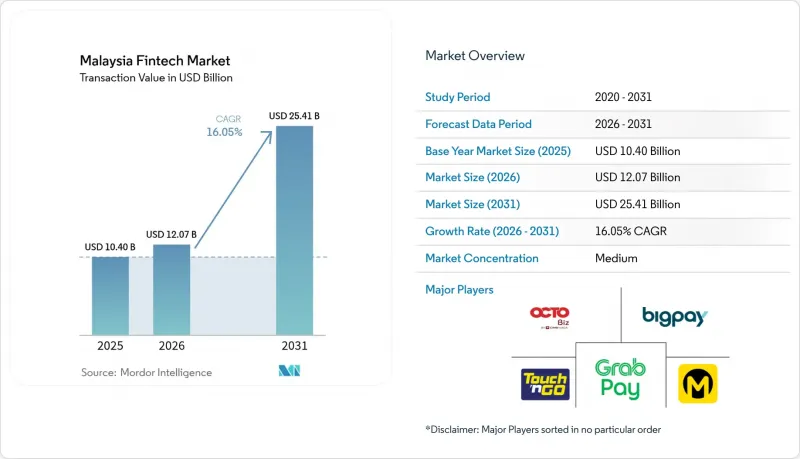
本報告按服務類型(數位支付、數位借貸和資金籌措、數位投資、保險科技、新型銀行)、最終用戶(個人、企業)、用戶介面(行動應用程式、網頁/瀏覽器、POS/物聯網設備)和地區(巴生谷、北部地區、南部地區、東海岸、東馬)細分。市場預測以美元計價。
馬來西亞金融科技市場的趨勢與洞察
智慧型手機和網路的高普及率正在推動目標市場的擴張。
馬來西亞智慧型手機普及率超過85%,網路覆蓋率高達90%,這大大拓展了其數位化用戶群,使他們能夠充分利用金融科技服務。 Touch 'n Go Digital已從戰略投資者處籌集了7500萬美元,預計將於2025年實現首個全年盈利,而這得益於馬來西亞極高的行動普及率。電子錢包的使用率已達40%,超過了傳統銀行服務的普及率。 Google Pay、ShopeePay和TNG eWallet將於2024年達成合作,這表明基礎設施的成熟正在加速生態系統夥伴關係,並提升電子錢包的普及率。年輕一代是主導電子錢包普及的主要力量,40歲以下的用戶佔總用戶數的90%,因此他們也是未來產品的主要目標用戶群。
政府的「MyDigital」計畫和金融產業發展藍圖正在加速生態系統的發展。
「MyDigital」藍圖的目標是到2025年底,數位經濟佔國內生產毛額(GDP)的比重達到25.5%,為此,2024年已批准1,636億馬幣(約343.6億美元)的數位投資(年增250%)。在智慧財產權收入10年免所得稅的稅收優惠政策的推動下,目前全國已有超過3891家公司獲得「馬來西亞數位」認證。政府正提供補貼,以加強支付終端和資料保護系統,從而實現「金融業藍圖」中75%的非現金交易目標。區域擴張也在穩步推進,數位部在檳城設立北部辦事處,並將優惠政策和技術指導擴展到巴生谷以外的地區,便是明證。
對網路詐騙的擔憂正在削弱用戶信任,並增加合規成本。
網路安全威脅和數位詐騙案件的增加對金融科技的普及構成重大阻礙,整個產業的合規成本每年成長25%。 2025年4月,馬來西亞中央銀行(BNM)和泰國中央銀行簽署了關於網路安全和數位詐騙預防合作的合作備忘錄,凸顯了這些威脅的跨國性質。作為應對措施,馬來西亞各銀行已在其行動應用程式中添加了惡意軟體防護功能,而馬來西亞國家銀行的「國家詐騙門戶」已將詐騙追蹤時間推出了75%。這不僅顯示了問題的嚴重性,也反映了相關機構的因應措施。 GXBank推出的「網路詐欺保護」保險產品反映了金融科技公司在滿足客戶風險規避的同時,也將安全擔憂轉化為收益。
細分市場分析
到2025年,數位支付將佔馬來西亞金融科技市場佔有率的50.72%。這主要得益於Touch 'n Go Digital與各種交通和零售模式的整合。政府對無現金支付的激勵措施以及跨區域QR碼互通性的推廣,將進一步擴大這一主導地位。數位借貸將以21.03%的佔有率位居第二,這主要得益於Funding Societies完成的2700萬美元資金籌措,該融資擴大了面向中小企業的符合伊斯蘭教法的貸款服務。保險科技將佔15.05%,這主要得益於PolicyStreet完成的1,540萬美元B資金籌措以及其500萬的用戶群。
新銀行預計將以26.12%的複合年成長率成長,儘管到2025年其增速僅為7.35%,但預計將透過免手續費帳戶和快速開戶服務縮小與現有金融機構的差距。數位投資佔5.85%,隨著StashAway在其符合伊斯蘭教法的投資組合之外推出比特幣和以太坊ETF,收入多元化正在推進。美國證券交易委員會的數位創新基金已共同投資了15個試點項目,顯示未來服務組合將會轉變。
其他好處:
- Excel格式的市場預測(ME)表
- 3個月的分析師支持
目錄
第1章:引言
- 研究假設和市場定義
- 調查範圍
第2章:調查方法
第3章執行摘要
第4章 市場狀況
- 市場概覽
- 市場促進因素
- 智慧型手機和網路普及率高
- 政府透過「MyDigital」和「FSB」推出的舉措
- 電子商務的蓬勃發展
- 有利的沙盒機制和數位銀行牌照
- 伊斯蘭金融科技的需求日益成長
- 東協跨境QR碼整合
- 市場限制因素
- 對網路詐騙的擔憂
- 對現有銀行基礎設施的依賴
- 深科技領域金融科技人才短缺
- 各地區數字稅的複雜性
- 價值供應鏈分析
- 監理情勢
- 技術展望
- 波特五力模型
第5章 市場規模與成長預測
- 服務方案
- 數位支付
- 數位借貸和金融
- 數位投資
- 保險科技
- 新銀行
- 最終用戶
- 零售
- 公司
- 透過使用者介面
- 行動應用
- 網頁/瀏覽器
- POS/物聯網設備
- 按地區
- 巴生穀
- 北部地區
- 南部地區
- 東海岸
- 東馬來西亞
第6章 競爭情勢
- 市場集中度
- 策略趨勢
- 市佔率分析
- 公司簡介
- Maybank
- CIMB
- Touch'n Go Digital
- Boost
- BigPay
- GrabPay
- Razer Fintech
- Axiata Digital(Aspirasi)
- Funding Societies
- CapBay
- MoneyMatch
- Jirnexu(RinggitPlus)
- iMoney
- StashAway
- Wahed Invest
- Bursa Digital Exchange
- PolicyStreet
- Tune Protect
- Oyen
- Etiqa Digital
- Prudential Pulse
- GHL Systems
- MyPOSPay
- Soft Space
- FavePay
第7章 市場機會與未來展望
According to Mordor Intelligence, the Malaysia fintech market size was valued at USD 10.40 billion in 2025 and estimated to grow from USD 12.07 billion in 2026 to reach USD 25.41 billion by 2031, at a CAGR of 16.05% during the forecast period (2026-2031).
This report is Segmented by Service Proposition (Digital Payments, Digital Lending & Financing, Digital Investments, Insurtech, Neobanking), End-User (Retail, Businesses), User Interface (Mobile Applications, Web/Browser, POS/IoT Devices), and Geography (Klang Valley, Northern Region, Southern Region, East Coast, East Malaysia). The Market Forecasts are Provided in Terms of Value (USD).
Malaysia Fintech Market Trends and Insights
High Smartphone & Internet Penetration Drives Addressable Market Expansion
Malaysia's smartphone penetration surpasses 85% and internet connectivity reaches 90% of residents, growing the digital-ready customer pool for fintech services. Touch 'n Go Digital expects its first full-year profitability in 2025 after securing USD 75 million from strategic investors, a milestone enabled by this mobile reach. E-wallet usage already touches 40%, outpacing traditional banking access. Google Pay's 2024 tie-up with ShopeePay and TNG eWallet illustrates how infrastructure maturity accelerates ecosystem partnerships that deepen wallet stickiness. Younger cohorts dominate adoption, with 90% of users aged 40 and below forming the core target for upcoming product launches.
Government MyDigital & Financial Sector Blueprint Initiatives Catalyze Ecosystem Development
The MyDigital roadmap aims for the digital economy to contribute 25.5% of GDP by end-2025, supported by MYR 163.6 billion (USD 34.36 billion) in approved digital investments in 2024, a 250% jump year-on-year. More than 3,891 Malaysia Digital-status firms now operate nationwide, buoyed by tax incentives granting 0% on IP income for a decade. The Financial Sector Blueprint's 75% cashless-transaction goal releases subsidies for payment terminals and data-protection upgrades. Regional expansion is evident as the Digital Ministry opened its northern office in Penang to funnel incentives and technical mentorship beyond Klang Valley.
Cyber-fraud Concerns Erode User Trust and Increase Compliance Costs
Rising cybersecurity threats and digital fraud incidents create significant headwinds for fintech adoption, with compliance costs increasing 25% year-on-year across the industry. Bank Negara Malaysia and Bank of Thailand signed a memorandum of understanding in April 2025 for cybersecurity and digital fraud cooperation, highlighting the cross-border nature of these threats. Malaysian banks responded by adding malware shielding to mobile applications, while BNM's National Fraud Portal launch reduced fraud tracing time by 75%, demonstrating both the severity of the problem and institutional responses. GXBank's introduction of Cyber Fraud Protect insurance products reflects how fintech companies are monetizing security concerns while addressing customer risk aversion.
Other drivers and restraints analyzed in the detailed report include:
- E-commerce Boom Amplifies Payment Volume Growth
- Favourable Sandbox & Digital Bank Licences Lower Entry Barriers
- Reliance on Incumbent Banking Rails Limits Fintech Uptime Guarantees
For complete list of drivers and restraints, kindly check the Table Of Contents.
Segment Analysis
Digital payments captured 50.72% of Malaysia fintech market share in 2025, anchored by Touch 'n Go Digital's multi-modal transport and retail integrations. Government cashless incentives and regional QR interoperability continue to widen this moat. Digital lending ranks second at 21.03%, boosted by Funding Societies' USD 27 million raise that broadened Shariah-compliant SME lines. Insurtech holds 15.05%, validated by PolicyStreet's USD 15.4 million Series B and a 5 million-strong user base.
Neobanking, though only 7.35% in 2025, is projected to grow at a 26.12% CAGR, narrowing gaps with incumbents through fee-free accounts and rapid onboarding. Digital investments stand at 5.85%, where StashAway's launch of Bitcoin and Ethereum ETFs alongside Shariah portfolios diversifies revenue. The Securities Commission's Digital Innovation Fund has co-financed 15 pilots, signalling future service-mix shifts.
Complete Report Scope:
- By Service Proposition
- Digital Payments
- Digital Lending & Financing
- Digital Investments
- Insurtech
- Neobanking
- By End-User
- Retail
- Businesses
- By User Interface
- Mobile Applications
- Web / Browser
- POS / IoT Devices
- By Geography
- Klang Valley
- Northern Region
- Southern Region
- East Coast
- East Malaysia
List of Companies Covered in this Report:
- Maybank
- CIMB
- Touch 'n Go Digital
- Boost
- BigPay
- GrabPay
- Razer Fintech
- Axiata Digital (Aspirasi)
- Funding Societies
- CapBay
- MoneyMatch
- Jirnexu (RinggitPlus)
- iMoney
- StashAway
- Wahed Invest
- Bursa Digital Exchange
- PolicyStreet
- Tune Protect
- Oyen
- Etiqa Digital
- Prudential Pulse
- GHL Systems
- MyPOSPay
- Soft Space
- FavePay
Additional Benefits:
- The market estimate (ME) sheet in Excel format
- 3 months of analyst support
TABLE OF CONTENTS
1 Introduction
- 1.1 Study Assumptions & Market Definition
- 1.2 Scope of the Study
2 Research Methodology
3 Executive Summary
4 Market Landscape
- 4.1 Market Overview
- 4.2 Market Drivers
- 4.2.1 High smartphone & internet penetration
- 4.2.2 Government's MyDigital & FSB initiatives
- 4.2.3 E-commerce boom
- 4.2.4 Favourable sandbox & digital bank licences
- 4.2.5 Rising demand for Islamic fintech
- 4.2.6 ASEAN cross-border QR-code integration
- 4.3 Market Restraints
- 4.3.1 Cyber-fraud concerns
- 4.3.2 Reliance on incumbent banking rails
- 4.3.3 Shortage of deep-tech fintech talent
- 4.3.4 Regional digital tax complexity
- 4.4 Value / Supply-Chain Analysis
- 4.5 Regulatory Landscape
- 4.6 Technological Outlook
- 4.7 Porter's Five Forces
- 4.7.1 Threat of New Entrants
- 4.7.2 Bargaining Power of Suppliers
- 4.7.3 Bargaining Power of Buyers
- 4.7.4 Threat of Substitutes
- 4.7.5 Competitive Rivalry
5 Market Size & Growth Forecasts
- 5.1 By Service Proposition
- 5.1.1 Digital Payments
- 5.1.2 Digital Lending & Financing
- 5.1.3 Digital Investments
- 5.1.4 Insurtech
- 5.1.5 Neobanking
- 5.2 By End-User
- 5.2.1 Retail
- 5.2.2 Businesses
- 5.3 By User Interface
- 5.3.1 Mobile Applications
- 5.3.2 Web / Browser
- 5.3.3 POS / IoT Devices
- 5.4 By Geography
- 5.4.1 Klang Valley
- 5.4.2 Northern Region
- 5.4.3 Southern Region
- 5.4.4 East Coast
- 5.4.5 East Malaysia
6 Competitive Landscape
- 6.1 Market Concentration
- 6.2 Strategic Moves
- 6.3 Market Share Analysis
- 6.4 Company Profiles (includes Global level Overview, Market level overview, Core Segments, Financials as available, Strategic Information, Market Rank/Share for key companies, Products & Services, and Recent Developments)
- 6.4.1 Maybank
- 6.4.2 CIMB
- 6.4.3 Touch 'n Go Digital
- 6.4.4 Boost
- 6.4.5 BigPay
- 6.4.6 GrabPay
- 6.4.7 Razer Fintech
- 6.4.8 Axiata Digital (Aspirasi)
- 6.4.9 Funding Societies
- 6.4.10 CapBay
- 6.4.11 MoneyMatch
- 6.4.12 Jirnexu (RinggitPlus)
- 6.4.13 iMoney
- 6.4.14 StashAway
- 6.4.15 Wahed Invest
- 6.4.16 Bursa Digital Exchange
- 6.4.17 PolicyStreet
- 6.4.18 Tune Protect
- 6.4.19 Oyen
- 6.4.20 Etiqa Digital
- 6.4.21 Prudential Pulse
- 6.4.22 GHL Systems
- 6.4.23 MyPOSPay
- 6.4.24 Soft Space
- 6.4.25 FavePay
7 Market Opportunities & Future Outlook
- 7.1 Embedded finance for SMEs via POS/IoT
- 7.2 Digital wealth for aging affluent segment

 中東和北非金融科技:市場佔有率分析、行業趨勢和統計數據以及成長預測(2026-2031 年)亞太地區金融科技:市場佔有率分析、產業趨勢與統計及成長預測(2026-2031)北美金融科技:市佔率分析、產業趨勢與統計及成長預測(2026-2031)德國金融科技:市場佔有率分析、產業趨勢與統計及成長預測(2026-2031)新加坡金融科技:市場佔有率分析、產業趨勢與統計及成長預測(2026-2031)歐洲金融科技:市場佔有率分析、產業趨勢與統計及成長預測(2026-2031)越南金融科技:市場佔有率分析、產業趨勢與統計及成長預測(2026-2031)金融科技:市場佔有率分析、產業趨勢與統計、成長預測(2025-2030)印度金融科技:市場佔有率分析、產業趨勢與統計及成長預測(2026-2031)
 金融科技即服務 (FaaS) 市場 - 全球市場預測 2026-2032