

 |
市場調查報告書
商品編碼
2121395
日本塑膠包裝市場:市場佔有率分析、產業趨勢與統計及成長預測(2026-2031)Japan Plastic Packaging - Market Share Analysis, Industry Trends & Statistics, Growth Forecasts (2026 - 2031) |
||||||

※ 本網頁內容可能與最新版本有所差異。詳細情況請與我們聯繫。
據 Mordor Intelligence 稱,2025 年日本塑膠包裝市場價值為 541 萬噸,預計到 2031 年將從 2026 年的 565 萬噸成長至 703 萬噸,預測期(2026-2031 年)複合年成長率為 4.47%。
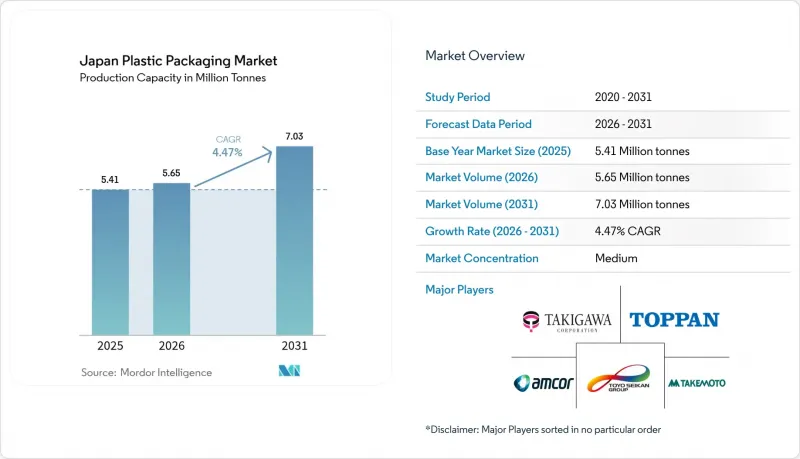
本報告按材料(PET、PE、PP、生物基塑膠等)、類型(硬質塑膠、軟質塑膠)、產品(瓶罐、罐頭、包裝袋、托盤和吸塑包裝、蓋子與封口裝置等)以及終端用戶行業(食品、飲料、醫療保健和製藥、零售和電子商務等)進行細分。市場預測以噸為單位。
日本塑膠包裝市場趨勢與洞察
電子商務的成長正在推動對高阻隔性軟包裝的需求。
日本郵政和私人宅配業者的小包裹處理量持續創下新高,而線上零售商也越來越傾向選擇能夠承受多階段物流流程且無需過度包裝的包裝材料。為此,薄膜製造商正採用結合EVOH和mLLDPE的多層結構,以在維持氧氣阻隔性能的同時,製造出更薄的薄膜,從而降低物流相關的排放和單位運輸成本。因此,專注於複合和數位印刷的加工商的產量穩步成長,電子商務通路也鞏固了其作為日本塑膠包裝市場最大新增需求來源的地位。
隨著人口老化,對藥品泡殼包裝和袋裝包裝的需求不斷增加。
目前,日本65歲及以上人口占總人口的29%以上,導致處方藥和非處方保健品的使用量增加。據藥品包裝製造商稱,專為幫助老年人(尤其是握力下降的老年人)而設計的觸感式按壓吸塑包裝和易撕開包裝袋的需求正呈現兩位數成長。促進居家照護的監管改革推動了單劑量藥物管理包裝需求的成長,這一趨勢為日本塑膠包裝市場帶來了強勁的需求。
對一次性塑膠製品徵收更嚴格的生產者延伸責任(EPR)費用。
根據日本的生產者責任延伸制度(EPR),品牌所有者現在需要承擔收集和回收的成本,這使得一次性產品類型的合規相關支出增加了高達60%。隨著帳單的到來,食品製造商正努力重新設計包裝以減輕重量並過渡到可重複使用的容器。這種短期負擔正在擠壓利潤空間,並減緩日本塑膠包裝市場的銷售量成長。
細分市場分析
聚乙烯用途廣泛,可用於食品包裝薄膜和工業襯墊等多種應用,預計到2025年將佔據日本塑膠包裝市場28.12%的佔有率。成本優勢和成熟的加工基礎設施支撐著聚乙烯的市場主導地位,但品牌商也在積極試點使用甘蔗乙醇生產的生物基聚乙烯(bio-PE),以履行其脫碳承諾。儘管目前生物基塑膠的產量佔總產量的不到5%,但其複合年成長率高達4.93%,並獲得政府補貼以縮小與化石基塑膠的價格差距。
研發團隊正致力於開發一種利用林業廢棄物衍生的纖維素奈米纖維製成的樹脂,該樹脂的剛性與高密度聚乙烯(HDPE)相當,且可在掩埋生物分解。主要樹脂生產商的目標是到2027年將生質乙醇衍生樹脂的產量提高到2萬噸,這將使日本能夠實現2030年生質塑膠產量達到200萬噸的國家目標。這些努力將為日本塑膠包裝市場引進新的原料,實現材料供應多元化,並降低石油衍生原料價格波動的風險。
預計到2025年,軟包裝將佔日本塑膠包裝市場的53.85%,複合年成長率(CAGR)預計為5.84%。有效利用材料的薄膜能夠最大限度地減少貨運過程中的排放氣體和儲存空間,隨著電子商務小包裹密度的增加,薄膜變得至關重要。無溶劑複合技術和數位印刷技術的進步縮短了設計稿的更換時間,使加工商能夠在不產生高昂庫存成本的情況下處理限量版SKU。雖然硬質包裝(例如罐子和拉環)仍然是常溫保存產品的主要包裝形式,但其較高的樹脂用量導致其成長速度低於柔軟性。
取得專利的層分離膜可在使用後輕鬆剝離,確保單一聚合物回收流程,從而消除傳統多層包裝袋的回收問題。在國家回收目標日益嚴格的背景下,這項變革不僅提升了軟包裝產品在日本塑膠包裝市場的佔有率,還最大限度地減少了其生命週期影響。
其他好處:
- Excel格式的市場預測(ME)表
- 3個月的分析師支持
目錄
第1章:引言
- 研究假設和市場定義
- 調查範圍
第2章:調查方法
第3章執行摘要
第4章 市場狀況
- 市場概覽
- 市場促進因素
- 電子商務的成長推動了對軟性包裝的需求,而軟性包裝的進入門檻很高。
- 人口老化推動了藥品泡殼包裝和袋裝包裝需求的成長。
- 更輕的寶特瓶將降低成本並提高銷售量。
- 簡便食品食品的蓬勃發展導致了殺菌袋使用量的增加。
- 政府對化學回收示範工廠的補貼
- 為實現 2030 年可回收目標,推廣廣泛使用等離子塗層單材料薄膜。
- 市場限制因素
- 對一次性塑膠製品徵收更嚴格的生產者延伸責任(EPR)費用
- 消費者對紙張和玻璃替代品的偏好正在轉變
- 日本企業為實現「零塑膠」所做的努力:主要日常消費品公司
- 石腦油價格波動會對樹脂的成本結構產生負面影響。
- 產業價值鏈分析
- 監理情勢
- 技術展望
- 波特五力分析
- 宏觀經濟因素對市場的影響
- 投資分析
第5章 市場規模與成長預測
- 材料
- 聚對苯二甲酸乙二醇酯(PET)
- 聚乙烯(PE)
- 高密度聚苯乙烯(HDPE)
- 低密度聚乙烯(LDPE)
- 線型低密度聚乙烯(LLDPE)
- 聚丙烯(PP)
- 生物基塑膠
- 其他
- 按類型
- 硬質塑膠
- 軟質塑膠
- 依產品
- 瓶子罐
- 能
- 小袋
- 托盤翻蓋
- 蓋子與封口裝置
- 其他
- 按最終用戶行業分類
- 食物
- 飲料
- 醫療和藥品
- 零售與電子商務
- 工業製造
- 個人護理和家居用品
- 其他
第6章 競爭情勢
- 市場集中度
- 策略趨勢
- 市佔率分析
- 公司簡介
- Amcor plc
- Toyo Seikan Group Holdings, Ltd.
- Toppan Inc.
- Takigawa Corporation Japan GK
- Sealed Air Corporation
- Sonoco Products Company
- Takemoto Yohki Co., Ltd.
- Hosokawa Yoko Co., Ltd.
- Kodama Plastics Co., Ltd.
- Fujimori Kogyo Co., Ltd.
- Nihon Yamamura Glass Co., Ltd.
- Sumitomo Bakelite Co., Ltd.
- Mitsubishi Chemical Group Corporation
- Ube Packaging Materials Co., Ltd.
- Dai Nippon Printing Co., Ltd.(DNP)
- Rengo Co., Ltd.(Plastic Unit)
- Shibusawa Package Co., Ltd.
- Kureha Corporation
- Plastikon Japan Inc.
第7章 市場機會與未來展望
According to Mordor Intelligence, the Japan plastic packaging market size was valued at 5.41 million tonnes in 2025 and estimated to grow from 5.65 million tonnes in 2026 to reach 7.03 million tonnes by 2031, at a CAGR of 4.47% during the forecast period (2026-2031).
This report is Segmented by Material (PET, PE, PP, Bio-Based Plastics, and More), Type (Rigid Plastic, Flexible Plastic), Product (Bottles and Jars, Cans, Pouches, Trays and Clamshells, Caps and Closures, and More), End-User Industry (Food, Beverage, Healthcare and Pharmaceuticals, Retail and E-Commerce, and More). The Market Forecasts are Provided in Terms of Volume (Tonnes).
Japan Plastic Packaging Market Trends and Insights
Growth of E-commerce Driving Demand for High-Barrier Flexible Packs
Parcel volumes handled by Japan Post and private couriers continue to set records, prompting online retailers to specify packaging that withstands multistep distribution without overpacking. Film producers answer with multi-layer structures combining EVOH and mLLDPE that deliver oxygen-barrier performance at reduced gauge, thereby trimming logistics emissions and freight cost per unit. The result is steady volume gains for converters specialized in lamination and digital printing, solidifying the e-commerce channel as the single largest new demand node for the Japan plastic packaging market.
Ageing Population Escalating Demand for Pharma Blister and Pouch Formats
Citizens aged 65 and older now represent more than 29% of Japan's population, lifting prescription volumes and over-the-counter supplement usage. Pharma packagers report double-digit volume growth for push-through blisters with tactile cues and easy-tear pouches that aid seniors with reduced grip strength. Regulatory reforms that encourage home-based care intensify the need for unit-dose compliance packaging, a trend that injects resilient demand into the Japan plastic packaging market.
Stricter Extended Producer Responsibility Fees on Single-Use Plastics
Japan's EPR law now requires brand owners to finance collection and recycling, lifting compliance outlays by up to 60% for single-use categories. As invoices arrive, food manufacturers labor to redesign packs that cut gram-weight or move toward reusable containers. The near-term burden trims profit margins and tempers volume expansion in the Japan plastic packaging market.
Other drivers and restraints analyzed in the detailed report include:
- Beverage PET Bottle Lightweighting Lowering Cost and Boosting Volumes
- Convenience Food Boom Raising Use of Retort Pouches
- Consumer Shift Toward Paper and Glass Alternatives
For complete list of drivers and restraints, kindly check the Table Of Contents.
Segment Analysis
Polyethylene held a 28.12% share of the Japan plastic packaging market size in 2025, buoyed by versatility across grocery films and industrial liners. Cost advantages and mature processing infrastructure sustain its dominance, yet decarbonization pledges push brand owners to trial drop-in bio-PE made from sugarcane ethanol. Bio-based plastics, though under 5% of tonnage today, post the fastest 4.93% CAGR and attract subsidies that close price gaps with fossil grades.
R&D groups tap cellulose nanofibers from forestry residues to engineer resins that match HDPE stiffness while offering landfill biodegradability. Resin majors aim for 20,000 tonnes of bioethanol-derived output by 2027, positioning Japan to meet the national 2 million-tonne bio-plastic target by 2030. These initiatives introduce fresh feedstocks into the Japan plastic packaging market, diversifying material supply and mitigating crude-derived volatility.
Flexible packaging captured 53.85% of the Japan plastic packaging market share in 2025 and leads forecast growth at 5.84% CAGR. Material-efficient films minimize freight emissions and storage space, critical for e-commerce parcel density. Advances in solvent-free lamination and digital presses shorten artwork changeovers, letting converters cater to limited-edition SKUs without costly inventory. Rigid categories such as jars and tubs soldier on in ambient staples, yet their growth trails flexible peers given higher resin intensity.
Patented layer-separation films allow post-consumer peel-off that feeds single-polymer streams, eroding recyclability disadvantages historically linked to multi-layer pouches. As national recycling targets tighten, the shift bolsters the flexible segment's share in the Japan plastic packaging market while containing lifecycle impacts.
Complete Report Scope:
- By Material
- Polyethylene Terephthalate (PET)
- Polyethylene (PE)
- High-Density Polyethylene (HDPE)
- Low-Density and Linear-LDPE
- Linear Low-Density Polyethylene (LLDPE)
- Polypropylene (PP)
- Bio-based Plastics
- Other Materials
- By Type
- Rigid Plastic
- Flexible Plastic
- By Product
- Bottles and Jars
- Cans
- Pouches
- Trays and Clamshells
- Caps and Closures
- Other Products
- By End-User Industry
- Food
- Beverage
- Healthcare and Pharmaceuticals
- Retail and E-commerce
- Industrial Manufacturing
- Personal Care and Household
- Other End-User Industries
List of Companies Covered in this Report:
- Amcor plc
- Toyo Seikan Group Holdings, Ltd.
- Toppan Inc.
- Takigawa Corporation Japan G.K.
- Sealed Air Corporation
- Sonoco Products Company
- Takemoto Yohki Co., Ltd.
- Hosokawa Yoko Co., Ltd.
- Kodama Plastics Co., Ltd.
- Fujimori Kogyo Co., Ltd.
- Nihon Yamamura Glass Co., Ltd.
- Sumitomo Bakelite Co., Ltd.
- Mitsubishi Chemical Group Corporation
- Ube Packaging Materials Co., Ltd.
- Dai Nippon Printing Co., Ltd. (DNP)
- Rengo Co., Ltd. (Plastic Unit)
- Shibusawa Package Co., Ltd.
- Kureha Corporation
- Plastikon Japan Inc.
Additional Benefits:
- The market estimate (ME) sheet in Excel format
- 3 months of analyst support
TABLE OF CONTENTS
1 INTRODUCTION
- 1.1 Study Assumptions and Market Definition
- 1.2 Scope of the Study
2 RESEARCH METHODOLOGY
3 EXECUTIVE SUMMARY
4 MARKET LANDSCAPE
- 4.1 Market Overview
- 4.2 Market Drivers
- 4.2.1 Growth of e-commerce driving demand for high-barrier flexible packs
- 4.2.2 Ageing population escalating demand for pharma blister and pouch formats
- 4.2.3 Beverage PET bottle lightweighting lowering cost and boosting volumes
- 4.2.4 Convenience food boom raising use of retort pouches
- 4.2.5 Government subsidies for chemical-recycling pilot plants
- 4.2.6 Spread of plasma-coated mono-material films for 2030 recyclability goals
- 4.3 Market Restraints
- 4.3.1 Stricter Extended Producer Responsibility (EPR) fees on single-use plastics
- 4.3.2 Consumer shift toward paper and glass alternatives
- 4.3.3 Corporate zero-plastic pledges by Japan Inc. FMCG majors
- 4.3.4 Volatility in naphtha prices disrupting resin cost economics
- 4.4 Industry Value Chain Analysis
- 4.5 Regulatory Landscape
- 4.6 Technological Outlook
- 4.7 Porter's Five Forces Analysis
- 4.7.1 Bargaining Power of Suppliers
- 4.7.2 Bargaining Power of Buyers
- 4.7.3 Threat of New Entrants
- 4.7.4 Threat of Substitutes
- 4.7.5 Intensity of Competitive Rivalry
- 4.8 The Impact of Macroeconomic Factors on the Market
- 4.9 Investment Analysis
5 MARKET SIZE AND GROWTH FORECASTS (VOLUME)
- 5.1 By Material
- 5.1.1 Polyethylene Terephthalate (PET)
- 5.1.2 Polyethylene (PE)
- 5.1.2.1 High-Density Polyethylene (HDPE)
- 5.1.2.2 Low-Density and Linear-LDPE
- 5.1.2.3 Linear Low-Density Polyethylene (LLDPE)
- 5.1.3 Polypropylene (PP)
- 5.1.4 Bio-based Plastics
- 5.1.5 Other Materials
- 5.2 By Type
- 5.2.1 Rigid Plastic
- 5.2.2 Flexible Plastic
- 5.3 By Product
- 5.3.1 Bottles and Jars
- 5.3.2 Cans
- 5.3.3 Pouches
- 5.3.4 Trays and Clamshells
- 5.3.5 Caps and Closures
- 5.3.6 Other Products
- 5.4 By End-User Industry
- 5.4.1 Food
- 5.4.2 Beverage
- 5.4.3 Healthcare and Pharmaceuticals
- 5.4.4 Retail and E-commerce
- 5.4.5 Industrial Manufacturing
- 5.4.6 Personal Care and Household
- 5.4.7 Other End-User Industries
6 COMPETITIVE LANDSCAPE
- 6.1 Market Concentration
- 6.2 Strategic Moves
- 6.3 Market Share Analysis
- 6.4 Company Profiles (includes Global Level Overview, Market Level Overview, Core Segments, Financials as available, Strategic Information, Market Rank/Share, Products and Services, Recent Developments)
- 6.4.1 Amcor plc
- 6.4.2 Toyo Seikan Group Holdings, Ltd.
- 6.4.3 Toppan Inc.
- 6.4.4 Takigawa Corporation Japan G.K.
- 6.4.5 Sealed Air Corporation
- 6.4.6 Sonoco Products Company
- 6.4.7 Takemoto Yohki Co., Ltd.
- 6.4.8 Hosokawa Yoko Co., Ltd.
- 6.4.9 Kodama Plastics Co., Ltd.
- 6.4.10 Fujimori Kogyo Co., Ltd.
- 6.4.11 Nihon Yamamura Glass Co., Ltd.
- 6.4.12 Sumitomo Bakelite Co., Ltd.
- 6.4.13 Mitsubishi Chemical Group Corporation
- 6.4.14 Ube Packaging Materials Co., Ltd.
- 6.4.15 Dai Nippon Printing Co., Ltd. (DNP)
- 6.4.16 Rengo Co., Ltd. (Plastic Unit)
- 6.4.17 Shibusawa Package Co., Ltd.
- 6.4.18 Kureha Corporation
- 6.4.19 Plastikon Japan Inc.
7 MARKET OPPORTUNITIES AND FUTURE OUTLOOK
- 7.1 White-space and Unmet-Need Assessment

 2026年全球聚苯乙烯包裝市場報告
 全球一次性塑膠包裝:市場佔有率分析、產業趨勢與統計及成長預測(2026-2031年)
 2035 年前食品飲料塑膠包裝市場分析與預測:類型、產品類型、技術、應用、材料類型、製造流程、最終用戶、功能中東和非洲塑膠包裝市場:市場佔有率分析、行業趨勢和統計數據以及成長預測(2026-2031 年)亞太地區塑膠包裝:市場佔有率分析、產業趨勢與統計及成長預測(2026-2031)全球塑膠包裝:市場佔有率分析、產業趨勢與統計及成長預測(2026-2031年)印度塑膠包裝:市場佔有率分析、產業趨勢與統計及成長預測(2026-2031)美國塑膠包裝:市場佔有率分析、產業趨勢與統計及成長預測(2026-2031)英國塑膠包裝:市場佔有率分析、產業趨勢與統計、成長預測(2026-2031)印尼塑膠包裝市場:市場佔有率分析、產業趨勢與統計及成長預測(2026-2031)