


 |
市場調查報告書
商品編碼
2121318
印尼塑膠包裝市場:市場佔有率分析、產業趨勢與統計及成長預測(2026-2031)Indonesia Plastic Packaging - Market Share Analysis, Industry Trends & Statistics, Growth Forecasts (2026 - 2031) |
||||||

※ 本網頁內容可能與最新版本有所差異。詳細情況請與我們聯繫。
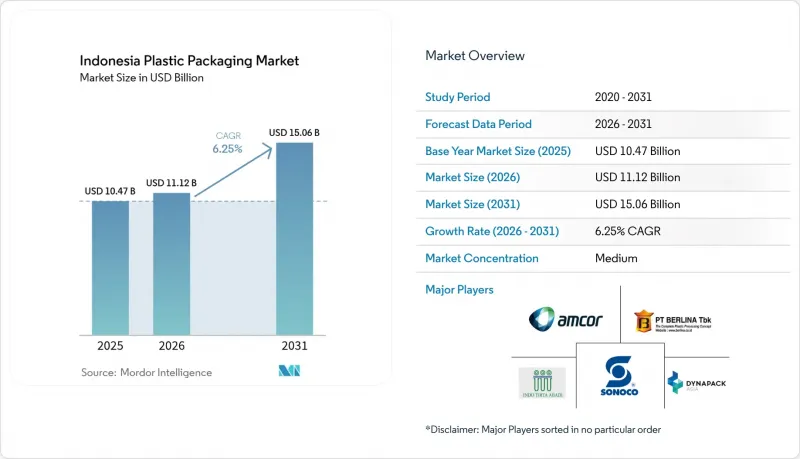
據 Mordor Intelligence 稱,2025 年印尼塑膠包裝市場價值為 104.7 億美元,預計到 2031 年將達到 150.6 億美元,而 2026 年為 111.2 億美元,預測期(2026-2031 年)複合年成長率為 6.25%。
本報告按材料類型(聚乙烯、聚丙烯、PET 及其他)、包裝類型(軟質塑膠、硬質塑膠包裝)、產品形態(瓶/罐、托盤/容器及其他)、終端用戶行業(食品、飲料、醫藥/醫療及其他)和製造程序(擠出、射出成型及其他)進行細分。市場預測以美元計價。
印尼塑膠包裝市場趨勢與洞察
電子商務和最後一公里配送的需求激增。
2024年,印尼的線上市場小包裹量創下歷史新高,這給包裝加工商帶來了更大的壓力,他們需要提供能夠承受島際運輸的保護膜、防篡改包裝袋和節省空間的郵寄信封。國家戰略項目的擴展縮短了配送時間,使得使用以前被認為風險較高的更薄的材料成為可能。印尼郵政(PT Pos Indonesia)的自動化分類中心引入了小包裹尺寸標準,符合尺寸精度要求的供應商將獲得獎勵。電商平台現在已將可回收和可堆肥包裝材料納入供應商評估標準,這促使主要薄膜製造商加快產品開發。隨著永續性條款在履約合約中逐漸標準化,那些領先做出反應的公司在競標中獲得了競爭優勢。
簡便食品和即食食品的消費量增加
都市區核心家庭越來越傾向於選擇單份包裝產品和即食食品,這推動了對阻隔性包裝袋、托盤和獨立包裝的需求。印尼食品藥物管理局(BPOM) 2024 年「營養等級」標籤法規擴大了包裝正面所需的展示面積,鼓勵企業投資於數位印刷生產線,以便在傳遞必要資訊的同時保持包裝的吸引力。政府對營養食品的補貼促進了新乳製品和蛋白質加工廠的產量成長,這些工廠需要使用無菌紙盒和多層瓶。物流鏈也透過增加冷藏設施來應對這一需求,從而增加了對能夠承受冷凝和溫度波動的防穿刺重疊包裝的需求。因此,印尼塑膠包裝市場中來自高附加價值食品應用的收入佔有率正在不斷成長。
嚴格禁止使用一次性塑膠製品並引入生產者額外責任延伸制度(EPR)。
由於地方政府禁止使用一次性刀叉餐具、吸管和發泡聚苯乙烯,傳統產品已從市場上消失,迫使加工商自費升級生產設施。在印尼的生產者責任延伸制度(EPR)下,品牌擁有者必須承擔回收廢棄物的成本,而目前回收人員不足,而這種成本壓力正向下傳遞。由於各省的實施進度不一,監管收緊的進程也參差不齊,導致需求預測困難,並造成庫存估值損失的風險。流動性有限的中小型企業受到的衝擊最大,這可能導致印尼塑膠包裝產業進一步的產業結構調整。
細分市場分析
2025年,聚乙烯在印尼塑膠包裝市場仍將佔據39.45%的佔有率,這主要得益於其廣泛的應用,包括食品袋、拉伸膜和多層包裝袋等。同時,隨著飲料和食用油生產商採用食品級再生PET(rPET),PET預計將以7.18%的年成長率成長。可口可樂印尼公司於2024年推出100%再生瓶也印證了這個趨勢。聚丙烯(PP)在熱填充托盤和微波爐適用托盤領域仍佔據重要地位,但由於發泡塑膠的禁用,聚苯乙烯的市場佔有率正在萎縮。生物基聚合物在醫療保健和美容領域仍佔有一席之地,其高成本可透過高階定位來彌補。
供應穩定性正在影響採購政策。位於爪哇島的薄膜擠出企業從芝勒貢工廠採購乙烯原料,而PET加工商則越來越依賴本地瓶對瓶回收,以規避外匯波動風險。印尼塑膠包裝市場受益於rPET產能的提升,彌補了原生樹脂的短缺,並滿足了生產者責任召回(EPR)配額的要求。同時,印尼國家標準局(SNI)的品質標準更青睞那些能夠證明熔體流動速率穩定且符合重金屬排放法規的成熟製造商。
到2025年,在印尼價格敏感的零售市場,零食、泡麵和清潔劑補充裝的需求不斷成長,推動了軟性包裝解決方案銷售額的53.61%。具有更優異的氧氣和水蒸氣阻隔性的薄膜可以實現更薄的結構,在不影響保存期限的前提下,樹脂用量最多可減少18%。硬質塑膠在化妝品罐和無菌飲料紙盒領域仍保持其高階地位,其防篡改功能和品牌形象提升使其更高的單價物有所值。
在印尼塑膠包裝市場,軟包裝憑藉著規模經濟優勢,有效應對了電子商務中體積效率的挑戰。單一材質的PE或PP結構簡化了回收流程,並滿足了即將實施的回收義務。相較之下,硬質塑膠包裝企業則透過套模貼標、高光澤表面處理以及推出適用於都市區零廢棄商店的可重複填充包裝來實現差異化競爭。
其他好處
- Excel格式的市場預測(ME)表
- 3個月的分析師支持
目錄
第1章:引言
- 研究假設和市場定義
- 調查範圍
第2章:調查方法
第3章執行摘要
第4章 市場狀況
- 市場概覽
- 市場促進因素
- 電子商務和最後一公里配送的需求激增。
- 簡便食品和即食食品的消費量增加
- 主要快速消費品公司輕量化舉措
- 清真認證的包裝設計要求
- 棕櫚油產業向rPET瓶過渡
- 市場限制因素
- 嚴格禁止使用一次性塑膠製品並引入生產者額外責任延伸制度(EPR)。
- 樹脂價格波動與印尼幣貶值
- 再生樹脂供應鏈短缺
- 關於水瓶的BPA警告規定
- 產業價值鏈分析
- 監理情勢
- 技術展望
- 波特五力模型
- 宏觀經濟因素對市場的影響
第5章 市場規模與成長預測
- 依材料類型
- 聚乙烯(PE)
- 聚丙烯(PP)
- 聚對苯二甲酸乙二醇酯(PET)
- 聚苯乙烯(EPS)
- 其他材料類型
- 按包裝類型
- 軟質塑膠包裝
- 硬質塑膠包裝
- 按產品形式
- 瓶子罐
- 托盤和容器
- 小袋
- 包包
- 薄膜包裝
- 其他產品形式
- 按最終用戶行業分類
- 食物
- 飲料
- 藥品和醫療保健
- 化妝品和個人護理
- 產業
- 其他
- 透過製造程序
- 擠壓
- 射出成型
- 吹塑成型
- 熱成型
- 其他製造程序
第6章 競爭情勢
- 市場集中度
- 策略趨勢
- 市佔率分析
- 公司簡介
- Amcor plc
- PT Dynapack Asia
- Sonoco Products Company
- ALPLA Werke Alwin Lehner GmbH and Co KG
- PT Indo Tirta Abadi
- PT Berlina Tbk
- PT ePac Flexibles Indonesia
- PT Prima Jaya Eratama
- PT Solusi Prima Packaging
- PT Hasil Raya Industries
- PT Indonesia Toppan Printing
- PT Tetra Pak Indonesia(Tetra Pak Group AB)
- PT Huhtamaki Foodservice Indonesia(Huhtamaki Oyj)
- PT DNP Indonesia(Dai Nippon Printing Co., Ltd.)
- PT Lotte Packaging
- PT Lamipak Primantara
- PT Indo Polypack
- PT Packindo Sedya Pratama
- PT Greencore Packaging Indonesia
第7章 市場機會與未來展望
According to Mordor Intelligence, the Indonesia plastic packaging market size was valued at USD 10.47 billion in 2025 and estimated to grow from USD 11.12 billion in 2026 to reach USD 15.06 billion by 2031, at a CAGR of 6.25% during the forecast period (2026-2031).
This report is Segmented by Material Type (Polyethylene, Polypropylene, PET, and More), Packaging Type (Flexible, Rigid), Product Form (Bottles and Jars, Trays and Containers, and More), End-User Industry (Food, Beverage, Pharmaceuticals, and Healthcare, and More), Manufacturing Process (Extrusion, Injection Molding, and More). The Market Forecasts are Provided in Terms of Value (USD).
Indonesia Plastic Packaging Market Trends and Insights
Surge in E-commerce and Last-mile Delivery Demand
Indonesia's digital marketplace recorded unprecedented parcel volumes in 2024, pressuring converters to supply protective films, tamper-evident pouches, and space-efficient mailers that withstand inter-island transit. National Strategic Project upgrades have shortened delivery times and enabled lighter gauges once deemed risky. PT Pos Indonesia's automated sortation hubs introduced standardized parcel dimensions, rewarding suppliers that meet dimensional accuracy targets. E-commerce platforms now include recycled-content or compostable packaging in vendor scorecards, prompting rapid product development among leading film producers. Early movers gain tender advantages as sustainability clauses become standard in fulfillment contracts.
Rising Consumption of Convenience and RTE Foods
Urban nuclear families increasingly choose single-serve and heat-and-eat products, expanding demand for high-barrier pouches, trays, and portion sachets. BPOM's 2024 Nutri-Level labeling rule enlarged front-of-pack footprint requirements, spurring investments in digital printing lines that maintain shelf appeal while conveying mandatory data. The government's nutritious-meal subsidy is raising output from new dairy and protein plants that need aseptic cartons and multilayer bottles. Logistics chains adapt by installing additional cold rooms, reinforcing demand for puncture-resistant overwraps able to handle condensation and temperature swings. As a result, the Indonesia plastic packaging market derives a larger revenue share from high-value food applications.
Stringent Single-Use-Plastic Bans and EPR Rollout
Municipal bans on disposable cutlery, straws, and polystyrene foam have already eliminated legacy SKUs, compelling converters to retool at their own expense. Under Indonesia's EPR scheme, brand owners must finance post-consumer waste collection that currently lacks scale, transferring cost pressure downstream. Fragmented timelines across provinces create forecasting hurdles and inventory write-off risks as rules tighten unevenly. Small firms with limited liquidity struggle most, potentially driving consolidation within the Indonesia plastic packaging industry.
Other drivers and restraints analyzed in the detailed report include:
- Lightweighting Initiatives by FMCG Majors
- Halal-Certification Packaging Design Requirements
- Volatile Resin Prices and Rupiah Depreciation
For complete list of drivers and restraints, kindly check the Table Of Contents.
Segment Analysis
Polyethylene retained 39.45% of the Indonesia plastic packaging market share in 2025 thanks to its versatility across grocery bags, stretch wrap, and multilayer pouches. PET, however, is forecast to grow 7.18% annually as beverage and edible-oil producers embrace food-grade rPET, validated by Coca-Cola Indonesia's debut of 100% recycled bottles in 2024. PP maintains relevance in hot-fill and microwave-ready trays, while polystyrene's share erodes under foam bans. Bio-based polymers still occupy niche healthcare and beauty channels where premium positioning offsets higher costs.
Supply security shapes procurement: Java-based film extruders buy ethylene feedstock from the Cilegon complex, whereas PET converters increasingly rely on local bottle-to-bottle recycling to hedge currency swings. The Indonesia plastic packaging market benefits as rPET capacity scales, bridging virgin resin deficits and satisfying EPR collection quotas. Meanwhile, SNI quality standards favor incumbent producers able to document consistent melt-flow indices and heavy-metal compliance.
Flexible solutions commanded 53.61% revenue in 2025, propelled by snack, instant noodle, and detergent refill sachets that thrive in Indonesia's price-sensitive retail landscape. Films with improved oxygen and moisture barriers permit thinner constructions, reducing resin usage by up to 18% without compromising shelf life. Rigid plastics maintain premium positioning in cosmetics jars and aseptic beverage cartons, where tamper evidence and brand presentation justify a higher unit cost.
The Indonesia plastic packaging market enjoys scale economies as flexibles fulfill e-commerce's volumetric efficiency challenge. Mono-material PE or PP structures streamline recycling, aligning with forthcoming take-back mandates. In contrast, rigid players differentiate via in-mold labeling, high-gloss finishes, and refillable pack pilots responding to urban zero-waste stores.
Complete Report Scope:
- By Material Type
- Polyethylene (PE)
- Polypropylene (PP)
- Polyethylene Terephthalate (PET)
- Polystyrene and EPS
- Other Material Types
- By Packaging Type
- Flexible Plastic Packaging
- Rigid Plastic Packaging
- By Product Form
- Bottles and Jars
- Trays and Containers
- Pouches and Sachets
- Bags and Sacks
- Films and Wraps
- Other Product Forms
- By End-User Industry
- Food
- Beverage
- Pharmaceuticals and Healthcare
- Cosmetics and Personal Care
- Industrial
- Other End-user Industries
- By Manufacturing Process
- Extrusion
- Injection Molding
- Blow Molding
- Thermoforming
- Other Manufacturing Processes
List of Companies Covered in this Report:
- Amcor plc
- PT Dynapack Asia
- Sonoco Products Company
- ALPLA Werke Alwin Lehner GmbH and Co KG
- PT Indo Tirta Abadi
- PT Berlina Tbk
- PT ePac Flexibles Indonesia
- PT Prima Jaya Eratama
- PT Solusi Prima Packaging
- PT Hasil Raya Industries
- PT Indonesia Toppan Printing
- PT Tetra Pak Indonesia (Tetra Pak Group AB)
- PT Huhtamaki Foodservice Indonesia (Huhtamaki Oyj)
- PT DNP Indonesia (Dai Nippon Printing Co., Ltd.)
- PT Lotte Packaging
- PT Lamipak Primantara
- PT Indo Polypack
- PT Packindo Sedya Pratama
- PT Greencore Packaging Indonesia
Additional Benefits:
- The market estimate (ME) sheet in Excel format
- 3 months of analyst support
TABLE OF CONTENTS
1 INTRODUCTION
- 1.1 Study Assumptions and Market Definition
- 1.2 Scope of the Study
2 RESEARCH METHODOLOGY
3 EXECUTIVE SUMMARY
4 MARKET LANDSCAPE
- 4.1 Market Overview
- 4.2 Market Drivers
- 4.2.1 Surge in E-commerce and Last-mile Delivery Demand
- 4.2.2 Rising Consumption of Convenience and RTE Foods
- 4.2.3 Lightweighting Initiatives by FMCG Majors
- 4.2.4 Halal-Certification Packaging Design Requirements
- 4.2.5 Palm-Cooking-Oil Sector's Shift to rPET Bottles
- 4.3 Market Restraints
- 4.3.1 Stringent Single-Use-Plastic Bans and EPR Rollout
- 4.3.2 Volatile Resin Prices and Rupiah Depreciation
- 4.3.3 Insufficient Recycled-Resin Supply Chain
- 4.3.4 BPA-Warning Regulation for Water Bottles
- 4.4 Industry Value Chain Analysis
- 4.5 Regulatory Landscape
- 4.6 Technological Outlook
- 4.7 Porters Five Forces
- 4.7.1 Bargaining Power of Suppliers
- 4.7.2 Bargaining Power of Consumers
- 4.7.3 Threat of New Entrants
- 4.7.4 Threat of Substitute Products
- 4.7.5 Intensity of Competitive Rivalry
- 4.8 The Impact of Macroeconomic Factors on the Market
5 MARKET SIZE AND GROWTH FORECASTS (VALUE)
- 5.1 By Material Type
- 5.1.1 Polyethylene (PE)
- 5.1.2 Polypropylene (PP)
- 5.1.3 Polyethylene Terephthalate (PET)
- 5.1.4 Polystyrene and EPS
- 5.1.5 Other Material Types
- 5.2 By Packaging Type
- 5.2.1 Flexible Plastic Packaging
- 5.2.2 Rigid Plastic Packaging
- 5.3 By Product Form
- 5.3.1 Bottles and Jars
- 5.3.2 Trays and Containers
- 5.3.3 Pouches and Sachets
- 5.3.4 Bags and Sacks
- 5.3.5 Films and Wraps
- 5.3.6 Other Product Forms
- 5.4 By End-User Industry
- 5.4.1 Food
- 5.4.2 Beverage
- 5.4.3 Pharmaceuticals and Healthcare
- 5.4.4 Cosmetics and Personal Care
- 5.4.5 Industrial
- 5.4.6 Other End-user Industries
- 5.5 By Manufacturing Process
- 5.5.1 Extrusion
- 5.5.2 Injection Molding
- 5.5.3 Blow Molding
- 5.5.4 Thermoforming
- 5.5.5 Other Manufacturing Processes
6 COMPETITIVE LANDSCAPE
- 6.1 Market Concentration
- 6.2 Strategic Moves
- 6.3 Market Share Analysis
- 6.4 Company Profiles (includes Global level Overview, Market level Overview, Core Segments, Financials as available, Strategic Information, Market Rank/Share for key companies, Products and Services, and Recent Developments)
- 6.4.1 Amcor plc
- 6.4.2 PT Dynapack Asia
- 6.4.3 Sonoco Products Company
- 6.4.4 ALPLA Werke Alwin Lehner GmbH and Co KG
- 6.4.5 PT Indo Tirta Abadi
- 6.4.6 PT Berlina Tbk
- 6.4.7 PT ePac Flexibles Indonesia
- 6.4.8 PT Prima Jaya Eratama
- 6.4.9 PT Solusi Prima Packaging
- 6.4.10 PT Hasil Raya Industries
- 6.4.11 PT Indonesia Toppan Printing
- 6.4.12 PT Tetra Pak Indonesia (Tetra Pak Group AB)
- 6.4.13 PT Huhtamaki Foodservice Indonesia (Huhtamaki Oyj)
- 6.4.14 PT DNP Indonesia (Dai Nippon Printing Co., Ltd.)
- 6.4.15 PT Lotte Packaging
- 6.4.16 PT Lamipak Primantara
- 6.4.17 PT Indo Polypack
- 6.4.18 PT Packindo Sedya Pratama
- 6.4.19 PT Greencore Packaging Indonesia
7 MARKET OPPORTUNITIES AND FUTURE OUTLOOK
- 7.1 White-space and Unmet-Need Assessment

 2026年全球聚苯乙烯包裝市場報告
 全球一次性塑膠包裝:市場佔有率分析、產業趨勢與統計及成長預測(2026-2031年)
 2035 年前食品飲料塑膠包裝市場分析與預測:類型、產品類型、技術、應用、材料類型、製造流程、最終用戶、功能中東和非洲塑膠包裝市場:市場佔有率分析、行業趨勢和統計數據以及成長預測(2026-2031 年)亞太地區塑膠包裝:市場佔有率分析、產業趨勢與統計及成長預測(2026-2031)全球塑膠包裝:市場佔有率分析、產業趨勢與統計及成長預測(2026-2031年)印度塑膠包裝:市場佔有率分析、產業趨勢與統計及成長預測(2026-2031)日本塑膠包裝市場:市場佔有率分析、產業趨勢與統計及成長預測(2026-2031)美國塑膠包裝:市場佔有率分析、產業趨勢與統計及成長預測(2026-2031)英國塑膠包裝:市場佔有率分析、產業趨勢與統計、成長預測(2026-2031)