


 |
市場調查報告書
商品編碼
2073215
馬來西亞綠色IT軟體:市場佔有率分析、產業趨勢與統計及成長預測(2026-2031年)Malaysia Green IT Software - Market Share Analysis, Industry Trends & Statistics, Growth Forecasts (2026 - 2031) |
||||||

※ 本網頁內容可能與最新版本有所差異。詳細情況請與我們聯繫。
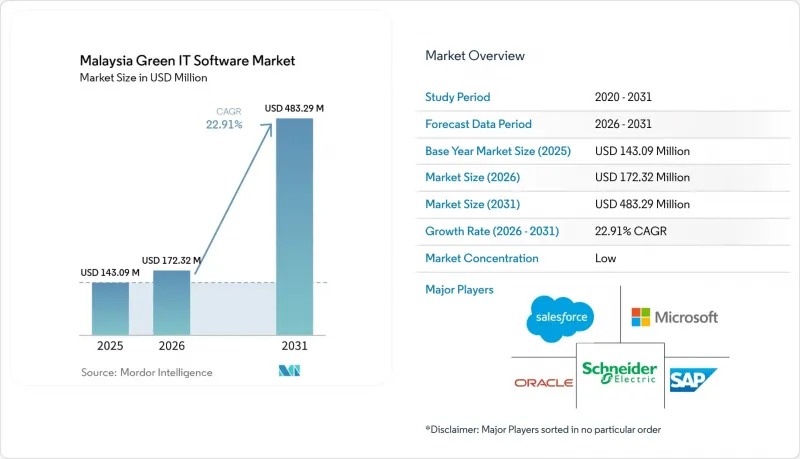
根據 Mordor Intelligence 預測,馬來西亞綠色 IT 軟體市場規模將從 2025 年的 1.4309 億美元和 2026 年的 1.7232 億美元成長到 2031 年的 4.8329 億美元,2026 年至 2031 年的年複合成長率(CAGR)率為 2.91%。
本報告按交付方式(軟體和服務)、部署方式(雲端、本地部署、混合部署)、公司規模(大型企業和中小企業)、解決方案類型(碳管理和計算軟體等)以及最終用戶(資訊技術和電信、製造業、政府機構等)進行分類。市場預測以美元計價。
馬來西亞綠色IT軟體市場趨勢與洞察
馬來西亞證券交易所加強永續發展資訊揭露要求。
馬來西亞證券交易所(Bursa Malaysia)收緊永續發展資訊揭露要求,引發了馬來西亞綠色IT軟體市場前所未有的強勁需求。分階段實施新規,為主要上市公司創造了持續的採購機會,縮短了決策週期,並減少了延誤的可能性。以往依賴定性報告的公司現在需要能夠以可復現格式產生可審計的定量氣候變遷和排放揭露的系統。這改變了核准流程,財務和審計團隊現在將永續發展軟體視為合規要求,而不是隨意的數位化專案。此外,基於馬來西亞永續發展報告架構的統一指南減少了解讀空間,並促進了各公司更快做出採購決策。
企業ESG資料量不斷擴大
ESG資料量的激增使得馬來西亞綠色IT軟體市場現有的手動工作流程難以為繼。上市公司現在需要更頻繁地從各個地點、業務部門和供應商收集數據,這給企業帶來了沉重的報告負擔,單一中央團隊無法應付。隨著價值鏈報告擴展到先前未納入報告週期的中小型供應商,這種壓力進一步加劇。 2025年7月,馬來西亞資本市場透過推出SEDG第二版和中小企業的溫室氣體(GHG)排放計算器,擴展了其數據結構,為更廣泛的用戶群建立了上游數據收集系統。隨著企業在其業務網路中擴展資訊揭露計劃,擁有連接性、引導式資料收集和簡化檢驗流程的供應商將擁有顯著優勢。
與傳統ERP和計量系統整合成本高昂
高昂的整合成本仍是馬來西亞綠色IT軟體市場短期內的主要限制因素。許多行業的負責人仍然依賴過時的ERP環境和現場系統,這些系統在設計時並未考慮排放報告和永續性工作流程。整合發票、計量表、採購記錄和工廠資料通常需要自訂中間件、手動映射和迭代檢驗。這可能導致初始專案成本超過年度軟體許可費,從而可能延緩製造業、能源和公共產業的採用。提供更輕的連接器和可重複使用適配器的供應商在降低部署摩擦和加快價值實現方面具有顯著優勢。
細分市場分析
2025年,軟體仍是馬來西亞綠色IT軟體市場買家支出的主要驅動力,佔銷售額的66.19%。這一佔有率反映出大多數公司優先考慮管理資訊揭露截止日期和氣候數據工作流程所需的核心報告平台。合規時間表縮小了推遲這些採購的空間,尤其對於那些董事會層面負有永續發展課責的組織而言更是如此。這使得軟體層成為採用初期階段的主要支出項目。預計到2031年,服務板塊將以24.71%的複合年成長率成長,顯示受許可需求成長的驅動,對實施支援、檢驗和彙報管理的需求將會增加。
預計服務業將以24.71%的複合年成長率成長,馬來西亞綠色IT軟體市場在該領域正蓬勃發展,因為企業對審計支援、控制設計和管理式揭露工作流程的需求日益成長。買家越來越傾向於尋找能夠處理從配置資料流、檢驗輸出到準備審查證據等所有工作的單一合作夥伴。這不僅推動了對基礎技術設定的需求,也推動了對保證準備支援和工作流程管理的需求。馬來西亞會計師協會指出,IBM Envizi和Workiva是功能全面的永續發展報告工具,能夠滿足平台和控制方面的廣泛功能需求。這種結構有利於那些能夠以與定期報告使用者工作流程高度相似的方式維護面向保證的功能的供應商。服務領域將在滿足日益複雜的永續發展報告需求方面發揮關鍵作用。
預計到2025年,馬來西亞綠色IT軟體市場中,雲端部署將佔57.11%,仍是快速部署的首選模式。訂閱模式可讓團隊新增使用者、更新範本並集中管理報告,無需等待內部基礎架構的開發週期。此外,它還能減輕內部IT團隊在部署初期階段的負擔。在銀行和公共產業產業,本地部署環境仍然十分重要,因為傳統的管治實踐會影響技術選擇。預計到2031年,混合環境將以23.97%的複合年成長率成長,因為企業需要在速度和對敏感營運數據的嚴格控制之間取得平衡。
對混合解決方案日益成長的需求源於眾多企業希望將本地來源資料處理與雲端報告相結合,從而實現全公司範圍的可視性。此外,隨著跨境資料傳輸指南將於2025年發布,採購企業在考慮託管法規時也更加謹慎。這使得企業能夠將來源系統的管理與企業資料的存取和揭露分開。而且,部署架構不再只是技術選擇,更成為管治選擇。在複雜的專案中,支援資料居住管理和分階段雲端部署的供應商將更具優勢。
其他好處:
- Excel格式的市場預測(ME)表
- 3個月的分析師支持
目錄
第1章:引言
- 研究假設和市場定義
- 調查範圍
第2章:調查方法
第3章執行摘要
第4章 市場狀況
- 市場概覽
- 市場促進因素
- 加強馬來西亞證券交易所(Bursa Malaysia)永續發展資訊揭露要求
- 企業ESG資料量不斷擴大
- 實現擴充性永續性報告的雲端遷移
- 利用人工智慧技術繪製排放因子圖和審計追蹤記錄
- 資料主權:優先選擇本地託管
- 供應商面臨的碳排放相關採購和報告壓力
- 市場限制因素
- 與傳統ERP和計量系統整合成本高昂
- 中小企業買家缺乏ESG軟體技能
- 跨多個地點營運的排放數據分散
- 內部投資報酬率不明確,實施僅出於合規目的。
- 宏觀經濟因素對市場的影響
- 產業價值鏈分析
- 監理情勢
- 技術展望
- 波特五力分析
第5章 市場規模與成長預測
- 報價
- 軟體
- 服務
- 不同的發展
- 基於雲端的
- 現場
- 混合
- 按公司規模
- 大公司
- 小型企業
- 按解決方案類型
- 碳管理和運算軟體
- ESG報告和合規軟體
- 永續性資料管理平台
- 脫碳規劃軟體
- 能源和資源最佳化軟體
- 最終用戶
- 資訊科技/通訊
- 銀行業、金融服務業及保險業
- 製造業
- 能源公用事業
- 零售與電子商務
- 政府
- 醫療保健和生命科學
- 建築和基礎設施
- 其他終端用戶產業
第6章 競爭情勢
- 市場集中度
- 策略趨勢
- 市佔率分析
- 公司簡介
- Workiva Inc.
- Wolters Kluwer NV
- International Business Machines Corporation
- Schneider Electric SE
- SAP SE
- Oracle Corporation
- Microsoft Corporation
- Salesforce, Inc.
- ServiceNow, Inc.
- Enablon SAS
- Cority Software Inc.
- Sphera Solutions, Inc.
- Intelex Technologies ULC
- Nasdaq, Inc.
- OneTrust, LLC
- Diligent Corporation
- IBM Malaysia Sdn. Bhd.
- PANTAS Software Sdn. Bhd.
- RAA Capital Partners Sdn. Bhd.
- ASPL(Malaysia)Sdn. Bhd.
第7章 市場機會與未來展望
According to Mordor Intelligence, the malaysia green IT software market size is projected to expand from USD 143.09 million in 2025 and USD 172.32 million in 2026 to USD 483.29 million by 2031, registering a CAGR of 22.91% between 2026 to 2031.
This report is Segmented by Offering (Software, and Services), Deployment (Cloud-Based, On-Premise, and Hybrid), Enterprise Size (Large Enterprises, and Small and Medium Enterprises), Solution Type (Carbon Management and Accounting Software, and More), and End User (Information Technology and Telecom, Manufacturing, Government, and More). The Market Forecasts are Provided in Terms of Value (USD).
Malaysia Green IT Software Market Trends and Insights
Rising Bursa Malaysia Sustainability Disclosure Requirements
Bursa Malaysia's tighter sustainability disclosure schedule is the strongest direct demand trigger in the Malaysia Green IT Software Market. The phased rollout created consecutive buying windows across major listed issuers, compressing decision timelines and reducing the scope for delayed adoption. Enterprises that once relied on qualitative reporting now need systems that can produce auditable, quantitative climate and emissions disclosures in a repeatable format. This changed approval behavior because finance and audit teams began treating sustainability software as a compliance requirement rather than a discretionary digital project. The unified direction under Malaysia's sustainability reporting framework also reduced room for interpretation and supported faster procurement decisions across the corporate base.
Expansion of ESG Data Volumes Across Enterprises
Rising ESG data volumes are making manual workflows less practical across the Malaysia Green IT Software Market. Listed companies now need more frequent data collection from sites, business units, and suppliers, which increases the reporting burden beyond a single central team. The pressure is even higher when value chain reporting reaches smaller suppliers that were not part of earlier reporting cycles. Capital Markets Malaysia expanded the data structure in July 2025 with SEDG Version 2 and the launch of a GHG emissions calculator for SMEs, thereby structuring upstream data collection for a larger user base. Vendors with ready connectors, guided data capture, and simpler validation routines are better placed when enterprises scale disclosure programs across wider operating networks.
High Integration Cost With Legacy ERP and Metering Systems
High integration cost is still the main near-term brake on the Malaysia Green IT Software Market. Many industrial buyers continue to rely on older ERP environments and site systems that were not designed for emissions reporting or sustainability workflows. Connecting bills, meters, procurement records, and plant data often requires custom middleware, manual mapping, and repeated validation. That can push early project costs above the annual software license and slow rollout in manufacturing, energy, and utilities. Vendors that can offer lighter connectors and reusable adapters are better positioned to reduce deployment friction and shorten time-to-value.
Other drivers and restraints analyzed in the detailed report include:
- Cloud Migration for Scalable Sustainability Reporting
- AI-Enabled Emissions Factor Mapping and Audit Trails
- Limited ESG Software Skills Among SME Buyers
For complete list of drivers and restraints, kindly check the Table Of Contents.
Segment Analysis
Software accounted for 66.19% of revenue in 2025 and remained the anchor of buyer spending in the Malaysia Green IT Software Market. This share reflects the fact that most enterprises first prioritized the core reporting platform needed to manage disclosure deadlines and climate data workflows. The compliance calendar reduced room to defer these purchases, especially for organizations with board-level sustainability accountability. This made the software layer the main spending item during the first stage of adoption. Services are projected to grow at a 24.71% CAGR through 2031, indicating that implementation support, validation, and managed reporting are rising alongside license demand.
Services are projected to grow at a 24.71% CAGR, and the Malaysia Green IT Software Market for this offering is expanding as enterprises seek audit support, control design, and managed disclosure workflows. Buyers increasingly want a single partner who can configure data flows, validate outputs, and prepare evidence for review. This is lifting demand for assurance-readiness support and workflow administration, not only basic technical setup. The Malaysian Institute of Accountants listed IBM Envizi and Workiva as comprehensive sustainability reporting tools that support the need for broad feature sets that meet both platform and control requirements. That structure favors providers that can keep assurance-oriented capabilities close to the same user workflow used for recurring reporting. The services segment is poised to play a pivotal role in addressing the growing complexity of sustainability reporting needs.
Cloud-based deployment accounted for 57.11% of the Malaysia Green IT Software Market in 2025 and remained the preferred model for rapid rollout. Subscription delivery helps teams add users, update templates, and centralize reporting without waiting for longer internal infrastructure cycles. It also reduces the burden on internal IT teams during the first phase of deployment. On-premise setups still matter in banking and utilities, where older governance practices shaped technology preferences. Hybrid is projected to grow at a 23.97% CAGR through 2031 as enterprises balance speed with tighter control over sensitive operating data.
Hybrid demand is rising because many firms want local processing for source data and cloud reporting for enterprise-wide visibility. Buyers are also weighing hosting rules more closely after the 2025 publication of cross-border transfer guidance. This helps enterprises separate source-system control from enterprise disclosure access. It also makes deployment architecture a governance choice, not only a technology choice. Vendors that support residency controls and phased cloud adoption should be better placed in complex accounts.
Complete Report Scope:
- By Offering
- Software
- Services
- By Deployment
- Cloud-Based
- On-Premise
- Hybrid
- By Enterprise Size
- Large Enterprises
- Small and Medium Enterprises
- By Solution Type
- Carbon Management and Accounting Software
- ESG Reporting and Compliance Software
- Sustainability Data Management Platforms
- Decarbonization Planning Software
- Energy and Resource Optimization Software
- By End User
- Information Technology and Telecom
- Banking, Financial Services, and Insurance
- Manufacturing
- Energy and Utilities
- Retail and E-Commerce
- Government
- Healthcare and Life Sciences
- Construction and Infrastructure
- Other End-User Industries
List of Companies Covered in this Report:
- Workiva Inc.
- Wolters Kluwer N.V.
- International Business Machines Corporation
- Schneider Electric SE
- SAP SE
- Oracle Corporation
- Microsoft Corporation
- Salesforce, Inc.
- ServiceNow, Inc.
- Enablon SAS
- Cority Software Inc.
- Sphera Solutions, Inc.
- Intelex Technologies ULC
- Nasdaq, Inc.
- OneTrust, LLC
- Diligent Corporation
- IBM Malaysia Sdn. Bhd.
- PANTAS Software Sdn. Bhd.
- RAA Capital Partners Sdn. Bhd.
- ASPL (Malaysia) Sdn. Bhd.
Additional Benefits:
- The market estimate (ME) sheet in Excel format
- 3 months of analyst support
TABLE OF CONTENTS
1 INTRODUCTION
- 1.1 Study Assumptions and Market Definition
- 1.2 Scope of the Study
2 RESEARCH METHODOLOGY
3 EXECUTIVE SUMMARY
4 MARKET LANDSCAPE
- 4.1 Market Overview
- 4.2 Market Drivers
- 4.2.1 Rising Bursa Malaysia Sustainability Disclosure Requirements
- 4.2.2 Expansion of ESG Data Volumes Across Enterprises
- 4.2.3 Cloud Migration for Scalable Sustainability Reporting
- 4.2.4 AI-Enabled Emissions Factor Mapping and Audit Trails
- 4.2.5 Data Sovereignty Preference for Local Hosting
- 4.2.6 Carbon-Linked Procurement and Supplier Reporting Pressure
- 4.3 Market Restraints
- 4.3.1 High Integration Cost With Legacy ERP and Metering Systems
- 4.3.2 Limited ESG Software Skills Among SME Buyers
- 4.3.3 Fragmented Emissions Data Across Multi-Site Operations
- 4.3.4 Unclear Internal ROI Versus Compliance-Only Adoption
- 4.4 Impact of Macroeconomic Factors on the Market
- 4.5 Industry Value Chain Analysis
- 4.6 Regulatory Landscape
- 4.7 Technological Outlook
- 4.8 Porter's Five Forces Analysis
- 4.8.1 Threat of New Entrants
- 4.8.2 Bargaining Power of Buyers
- 4.8.3 Bargaining Power of Suppliers
- 4.8.4 Threat of Substitutes
- 4.8.5 Industry Rivalry
5 MARKET SIZE AND GROWTH FORECASTS (VALUE)
- 5.1 By Offering
- 5.1.1 Software
- 5.1.2 Services
- 5.2 By Deployment
- 5.2.1 Cloud-Based
- 5.2.2 On-Premise
- 5.2.3 Hybrid
- 5.3 By Enterprise Size
- 5.3.1 Large Enterprises
- 5.3.2 Small and Medium Enterprises
- 5.4 By Solution Type
- 5.4.1 Carbon Management and Accounting Software
- 5.4.2 ESG Reporting and Compliance Software
- 5.4.3 Sustainability Data Management Platforms
- 5.4.4 Decarbonization Planning Software
- 5.4.5 Energy and Resource Optimization Software
- 5.5 By End User
- 5.5.1 Information Technology and Telecom
- 5.5.2 Banking, Financial Services, and Insurance
- 5.5.3 Manufacturing
- 5.5.4 Energy and Utilities
- 5.5.5 Retail and E-Commerce
- 5.5.6 Government
- 5.5.7 Healthcare and Life Sciences
- 5.5.8 Construction and Infrastructure
- 5.5.9 Other End-User Industries
6 COMPETITIVE LANDSCAPE
- 6.1 Market Concentration
- 6.2 Strategic Moves
- 6.3 Market Share Analysis
- 6.4 Company Profiles (includes Global Level Overview, Market Level Overview, Core Segments, Financials as available, Strategic Information, Market Rank/Share, Products and Services, Recent Developments)
- 6.4.1 Workiva Inc.
- 6.4.2 Wolters Kluwer N.V.
- 6.4.3 International Business Machines Corporation
- 6.4.4 Schneider Electric SE
- 6.4.5 SAP SE
- 6.4.6 Oracle Corporation
- 6.4.7 Microsoft Corporation
- 6.4.8 Salesforce, Inc.
- 6.4.9 ServiceNow, Inc.
- 6.4.10 Enablon SAS
- 6.4.11 Cority Software Inc.
- 6.4.12 Sphera Solutions, Inc.
- 6.4.13 Intelex Technologies ULC
- 6.4.14 Nasdaq, Inc.
- 6.4.15 OneTrust, LLC
- 6.4.16 Diligent Corporation
- 6.4.17 IBM Malaysia Sdn. Bhd.
- 6.4.18 PANTAS Software Sdn. Bhd.
- 6.4.19 RAA Capital Partners Sdn. Bhd.
- 6.4.20 ASPL (Malaysia) Sdn. Bhd.
7 MARKET OPPORTUNITIES AND FUTURE OUTLOOK
- 7.1 White-Space and Unmet-Need Assessment

 中國綠色IT軟體:市場佔有率分析、產業趨勢與統計及成長預測(2026-2031年)日本綠色IT軟體:市佔率分析、產業趨勢與統計及成長預測(2026-2031年)美國綠色IT軟體:市場佔有率分析、產業趨勢與統計及成長預測(2026-2031年)亞太地區綠色IT軟體:市佔率分析、產業趨勢與統計及成長預測(2026-2031年)印尼綠色IT軟體:市場佔有率分析、產業趨勢與統計及成長預測(2026-2031年)越南綠色IT軟體:市場佔有率分析、產業趨勢與統計及成長預測(2026-2031年)法國綠色IT軟體:市場佔有率分析、產業趨勢與統計及成長預測(2026-2031年)中東和非洲綠色IT軟體:市場佔有率分析、行業趨勢和統計數據以及成長預測(2026-2031年)
 2026年全球數位測量和圖解決方案市場報告
 2026-2030年全球數位化製造軟體市場