


 |
市場調查報告書
商品編碼
2119043
中東和非洲的廣告視訊點播 (AVOD):市場佔有率分析、行業趨勢與統計數據、成長預測 (2026-2031)Middle East and Africa Advertising Video-on-Demand (AVOD) - Market Share Analysis, Industry Trends & Statistics, Growth Forecasts (2026 - 2031) |
||||||

※ 本網頁內容可能與最新版本有所差異。詳細情況請與我們聯繫。
根據 Mordor Intelligence 預測,中東和非洲的 AVOD(廣告視訊點播)市場規模預計將從 2025 年的 32.9 億美元成長到 2026 年的 35.3 億美元,到 2031 年將進一步成長到 59.2 億美元,2026 年至 2031 年的複合年成長率將達到 10.89%。
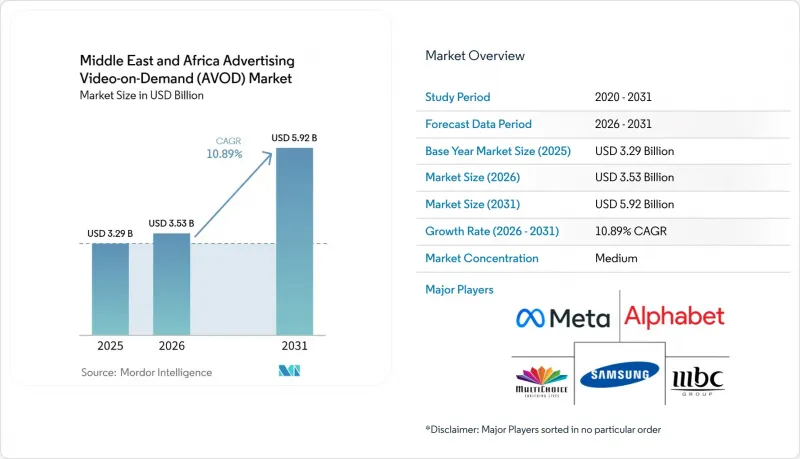
本報告按內容類型(電影、電視節目/劇集、紀錄片等)、設備類型(智慧型手機/平板電腦、智慧型電視、筆記型電腦/桌上型電腦等)、最終用戶(媒體/娛樂、銀行、金融服務和保險等)、廣告形式(前置式、片中廣告、片尾廣告)和地區進行細分。市場預測以美元計價。
中東和非洲AVOD(廣告視訊點播)市場的趨勢和洞察
影片觀看量增加,主要透過智慧型手機觀看。
在中東和非洲的大部分AVOD(廣告視訊點播)市場,智慧型手機是觀看影片的主要螢幕。諾基亞預測,到2029年,智慧型手機將佔該地區連網裝置的78%,影片串流媒體預計將佔行動數據流量的90%。這一趨勢使得免費的行動優先服務能夠比依賴固定寬頻或定期卡片付款的服務接觸到更廣泛的潛在客戶群。 YouTube之所以能夠實現大規模覆蓋,是因為其免費模式適用於不同收入水平和設備類型的用戶。因此,競爭平台不僅需要規模,還需要差異化的內容、更精準的定向投放或更強大的品牌安全環境。此外,如果行動營運商改善數據接入,中東和非洲的AVOD市場也將受益,因為更長的觀看時間將增加可用的廣告空間。
廣告商轉向連網電視和程式化影片
預計到2025年,中東和非洲(MENA)地區的聯網電視(CTV)廣告將成長31%,成為該地區成長最快的數位廣告管道。居住者的日常串流媒體使用量以及在開放網路上觀看影片的時間,正在擴大優質串流廣告的來源。 IAB MENA已確認,CTV和OEM(目的地設備製造商)的廣告供應已擴展到30多個平台,但購買方式和歸因的一致性仍然不足。這一轉變意味著,中東和非洲的廣告視訊點播(AVOD)市場從客廳觀看中獲得的收入超過了標準展示廣告庫存。 2025年6月,電通為MENA地區推出了一個精選的程式化CTV市場。該市場利用Magnite技術,將廣告資源、定向和衡量整合到一個統一的購買環境中。雖然這些系統使代理商更容易購買優質影片廣告,但一致的跨螢幕衡量仍然至關重要。
非洲市場廣告收入率低且每千次曝光成本波動較大
在中東和非洲的廣告視訊隨選 (AVOD) 市場,較低的廣告收入率限制了受眾成長轉化為收入的速度。 YouTube 在加納的每千次展示成本 (CPM) 為 0.75 美元,肯亞為 1.16 美元,南非為 1.72 美元,而美國為 6.21 美元,以色列為 14.08 美元。國內廣告預算較少導致每次展示的收入低於較成熟市場的水平。儘管預計到 2029 年,奈及利亞的數位廣告支出將佔總廣告支出的 84%,但資料通訊成本和經濟狀況仍然限制了優質影片在主要城市以外地區的普及。因此,平台需要更高的展示次數和更精準的定向投放才能從低 CPM 的廣告位中獲利。預計非洲的絕對收入將落後於中東,但其成長速度將更快,從而維持沿岸地區在廣告密度方面的領先地位。
細分市場分析
2025年,電視節目和劇集內容在中東和非洲的廣告視訊點播(AVOD)市場中佔據35.61%的佔有率。這一地位得益於齋月期間阿拉伯語劇集和節目的播出,這些節目在特定時期集中了觀眾和廣告需求。 Shahid報告稱,2025年齋戒月期間AVOD的觀看量增加了55.8%,這表明劇集播出時間表對廣告收入的影響顯著。紀錄片預計到2031年將以11.49%的複合年成長率成長,這主要得益於YouTube上紀實類節目的擴張以及面向海外僑民的“奈及利亞電影”(Nollywood)內容的製作。
與劇情片相比,紀錄片在維持高完成率的同時,也能降低授權成本。電影保持著穩定的地位,區域性串流服務會在廣告支援的串流媒體播放之前提供院線發行。其他內容類型包括短影片和體育節目,這些內容可以吸引程式化領先前置式支出。一份2026年齋戒月報告發現,中東和北非地區的年輕觀眾越來越傾向於觀看10-15集的劇集,而不是傳統的30集劇集。較短的劇集季數使平台能夠更頻繁地更新內容庫,並增加季中廣告投放的機會。這種轉變將使廣告商即使在傳統的齋月高峰期之外也能更持續地提供新鮮節目。此外,它還將使內容製作團隊能夠制定以觀眾留存為優先的串流媒體播放計劃,而不是僅依賴長篇劇集的播出。
2025年,智慧型手機和平板電腦在中東和非洲的廣告視訊點播(AVOD)市場規模中佔33.56%。這一佔有率反映了這兩個次區域的「行動優先」觀看趨勢以及行動裝置的廣泛普及。 2024年,海灣合作理事會(GCC)國家的智慧型手機普及率超過90%,為沙烏地阿拉伯和阿拉伯聯合大公國用戶觀看長篇內容提供了支持。隨著串流媒體服務與電視作業系統整合,預計2031年,智慧電視市場將以11.33%的複合年成長率成長。三星的研究表明,2025年齋戒月期間,中東和北非地區(MENA)的電視使用率在開齋飯後成長了42%,午夜後更是成長了高達80%。因此,智慧電視主螢幕已成為家庭用戶存取串流服務的主要入口。
與行動裝置或一般顯示器相比,聯網電視能夠容納更高價值的廣告,因為觀眾觀看電視的時間更長,沉浸感更強。筆記型電腦和桌上型電腦對於都市區商務人士和學生仍然扮演著重要角色。遊戲機和其他裝置的目標受眾小規模,尤其是在海灣合作理事會(GCC)成員國的高所得家庭中。設備選擇也會影響平台廣告的版面方式,較大的螢幕更適合播放較長時間的廣告和優質視訊格式。為了滿足使用多種裝置的受眾的需求,平台需要確保行動裝置、電視和桌上型電腦等不同平台上的觀看和廣告體驗保持一致。
其他好處:
- Excel格式的市場預測(ME)表
- 3個月的分析師支持
目錄
第1章:引言
- 市場分析與定義的前提條件
- 分析範圍
第2章 分析方法
第3章執行摘要
第4章 市場狀況
- 市場概覽
- 宏觀經濟因素對市場的影響
- 市場促進因素
- 影片觀看量增加,主要透過智慧型手機觀看。
- 廣告主正在加速轉型為連網電視和程式化影片。
- 擴展本地語言和文化相關內容
- 免費和混合串流媒體模式的成長
- 齋戒月及相關活動導致收視率激增
- 在非洲市場利用行動支付獲利
- 市場限制因素
- 非洲市場廣告收入低,且每千次展示成本波動較大。
- 外匯波動與消費者購買力下降
- 測量標準、識別標準和數據標準的變化
- 內容監管、審查和版權管理的複雜性。
- 產業價值鏈分析
- 監理情勢
- 技術展望
- 波特五力分析
第5章:預測市場規模與成長率
- 按內容類型
- 電影
- 電視節目和劇集內容
- 記錄
- 其他類型的內容
- 依設備類型
- 智慧型手機和平板電腦
- 智慧電視
- 筆記型電腦和桌上型電腦
- 其他類型的設備
- 最終用戶
- 媒體與娛樂
- 零售與電子商務
- 銀行、金融服務和保險業 (BFSI)
- 教育
- IT/通訊
- 醫療保健
- 其他最終用戶
- 廣告格式
- 前置式
- 中段滾動
- 後記
- 按地區
- 中東
- 沙烏地阿拉伯
- 阿拉伯聯合大公國
- 卡達
- 科威特
- 巴林
- 阿曼
- 土耳其
- 其他中東國家
- 非洲
- 南非
- 奈及利亞
- 埃及
- 肯亞
- 迦納
- 坦尚尼亞
- 烏干達
- 其他非洲國家
- 中東
第6章 競爭情勢
- 市場集中度
- 策略趨勢
- 市佔率分析
- 公司簡介
- Alphabet Inc.
- MBC Group
- Meta Platforms, Inc.
- MultiChoice Group Limited
- Samsung Electronics Co., Ltd.
- STARZPLAY
- PCCW Limited
- OSN Group
- Netflix, Inc.
- Amazon.com, Inc.
- The Walt Disney Company
- beIN Media Group
- Abu Dhabi Media Network
- Watch iT
- stc Group
- TikTok Ltd.
- Snap Inc.
- Roku, Inc.
- Comcast Corporation
- Paramount Global
- Nielsen Holdings plc
- Comscore, Inc.
第7章 市場機會與未來展望
According to Mordor Intelligence, the Middle East and Africa advertising video-on-demand (AVOD) market size is projected to expand from USD 3.29 billion in 2025 to USD 3.53 billion in 2026, and to USD 5.92 billion by 2031, registering a CAGR of 10.89% between 2026 and 2031.
This report is Segmented by Content Type (Movies and Films, TV Shows and Episodic Content, Documentaries, and More), Device Type (Smartphones and Tablets, Smart TVs, Laptops and Desktops, and More), End User (Media and Entertainment, BFSI, and More), Ad Format (Pre-Roll, Mid-Roll, and Post-Roll), and Geography. The Market Forecasts are Provided in Terms of Value (USD).
Middle East and Africa Advertising Video-on-Demand (AVOD) Market Trends and Insights
Rising Smartphone-First Video Consumption
Smartphones are the main screen for video viewing across much of the Middle East and Africa advertising video-on-demand market. Nokia expects smartphones to represent 78% of connected devices in the region by 2029, while video streaming is expected to account for 90% of mobile data traffic. This pattern gives free, mobile-first services a wider addressable audience than services that depend on fixed broadband or recurring card payments. YouTube has established the baseline for mass reach because its free model works across varied income levels and device types. Competing platforms, therefore, need differentiated programming, more precise targeting, or a stronger brand-safe environment rather than scale alone. The Middle East and Africa advertising video-on-demand market also benefits when mobile operators improve data access, as longer viewing sessions increase the available advertising inventory.
Advertiser Shift Toward CTV and Programmatic Video
Connected TV advertising in MENA grew 31% in 2025, making it the region's fastest-growing digital advertising channel. Daily streaming use among UAE residents and time spent on open-internet video support a larger pool of premium streaming impressions. IAB MENA identified expanding CTV and original equipment manufacturer supply across more than 30 platforms, although buying methods and attribution remain inconsistent. This shift allows the Middle East and Africa advertising video-on-demand market to earn more from living-room viewing than from standard display placements. Dentsu introduced a curated programmatic CTV marketplace for MENA in June 2025, using Magnite technology to consolidate inventory, targeting, and measurement into a single buying environment. These systems make premium video easier for agencies to buy, even though consistent cross-screen measurement remains necessary.
Low Advertising Yields and Uneven CPMs Across African Markets
Low advertising yields limit how quickly audience growth becomes revenue in the Middle East and Africa advertising video-on-demand market. YouTube playback CPMs range from USD 0.75 in Ghana and USD 1.16 in Kenya to USD 1.72 in South Africa, compared with USD 6.21 in the United States and USD 14.08 in Israel. Lower domestic advertising budgets keep revenue per impression below levels seen in more mature markets. Nigeria's digital advertising spending is projected to reach 84% of total advertising spending by 2029, but data costs and economic conditions still limit the adoption of premium video outside major cities. Platforms consequently require high impression volumes and stronger targeting to make low-CPM inventory profitable. Africa can grow faster in percentage terms than the Middle East while generating less revenue in absolute terms, thereby preserving the Gulf region's lead in advertising density.
Other drivers and restraints analyzed in the detailed report include:
- Growth of Free and Hybrid Streaming Models
- Expansion of Local-Language and Culturally Relevant Content
- Currency Volatility and Low Consumer Purchasing Power
For complete list of drivers and restraints, kindly check the Table Of Contents.
Segment Analysis
TV Shows and Episodic Content held 35.61% of the Middle East and Africa advertising video-on-demand market share in 2025. Arabic serialized drama and the Ramadan programming cycle support this position by concentrating viewing and advertising demand in a seasonal period. Shahid reported a 55.8% increase in AVOD viewing during Ramadan 2025, showing how episode schedules can shape advertising revenue. Documentaries are projected to expand at an 11.49% CAGR through 2031, helped by factual programming on YouTube and growing Nollywood production for diaspora audiences.
Documentaries can offer lower licensing costs than drama while maintaining strong completion rates. Movies and Films retain a stable role, and regional services use cinema-first release windows before advertising-supported distribution. Other Content Types include short-form vertical video and sports-adjacent programming that can attract programmatic pre-roll spending. A 2026 Ramadan report found that younger MENA audiences increasingly prefer 10-15 episode series over traditional 30-episode formats. Shorter seasons let platforms refresh catalogs more often and create additional opportunities for mid-season advertising placements. This change can give advertisers a steadier supply of fresh programming outside the traditional Ramadan peak. It also allows content teams to plan release schedules around audience retention rather than relying only on long seasonal runs.
Smartphones and Tablets accounted for 33.56% of the Middle East and Africa advertising video-on-demand market size in 2025. This share reflects mobile-first viewing across both subregions and the broad availability of handheld screens. Smartphone penetration exceeded 90% in GCC countries in 2024, supporting longer-form viewing in Saudi Arabia and the UAE. Smart TVs are projected to expand at an 11.33% CAGR through 2031 as streaming services are embedded in television operating systems. Samsung found that Ramadan 2025 raised television use in MENA by 42% after Iftar and by up to 80% after midnight. Smart TV home screens, therefore, provide a central route into streaming services for household audiences.
Connected TV can support higher-value advertising than mobile or standard display because viewers are engaged in longer sessions. Laptops and Desktops remain relevant for professional and student users in urban areas. Gaming consoles and other devices serve smaller audience groups, especially in higher-income GCC households. Device choice also affects how platforms package advertising, with large screens better suited to longer commercial breaks and premium video formats. A mixed-device audience requires platforms to keep the viewing and advertising experience consistent across mobile, television, and desktop environments.
Complete Report Scope:
- By Content Type
- Movies and Films
- TV Shows and Episodic Content
- Documentaries
- Other Content Types
- By Device Type
- Smartphones and Tablets
- Smart TVs
- Laptops and Desktops
- Other Device Types
- By End User
- Media and Entertainment
- Retail and E-Commerce
- BFSI
- Education
- Information Technology and Telecommunications
- Healthcare
- Other End Users
- By Ad Format
- Pre-Roll
- Mid-Roll
- Post-Roll
- By Geography
- Middle East
- Saudi Arabia
- United Arab Emirates
- Qatar
- Kuwait
- Bahrain
- Oman
- Turkey
- Rest of Middle East
- Africa
- South Africa
- Nigeria
- Egypt
- Kenya
- Ghana
- Tanzania
- Uganda
- Rest of Africa
- Middle East
List of Companies Covered in this Report:
- Alphabet Inc.
- MBC Group
- Meta Platforms, Inc.
- MultiChoice Group Limited
- Samsung Electronics Co., Ltd.
- STARZPLAY
- PCCW Limited
- OSN Group
- Netflix, Inc.
- Amazon.com, Inc.
- The Walt Disney Company
- beIN Media Group
- Abu Dhabi Media Network
- Watch iT
- stc Group
- TikTok Ltd.
- Snap Inc.
- Roku, Inc.
- Comcast Corporation
- Paramount Global
- Nielsen Holdings plc
- Comscore, Inc.
Additional Benefits:
- The market estimate (ME) sheet in Excel format
- 3 months of analyst support
TABLE OF CONTENTS
1 INTRODUCTION
- 1.1 Study Assumptions and Market Definition
- 1.2 Scope of the Study
2 RESEARCH METHODOLOGY
3 EXECUTIVE SUMMARY
4 MARKET LANDSCAPE
- 4.1 Market Overview
- 4.2 Impact of Macroeconomic Factors on the Market
- 4.3 Market Drivers
- 4.3.1 Rising Smartphone-First Video Consumption
- 4.3.2 Increasing Advertiser Shift Toward CTV and Programmatic Video
- 4.3.3 Expansion of Local-Language and Culturally Relevant Content
- 4.3.4 Growth of Free and Hybrid Streaming Models
- 4.3.5 Ramadan and Event-Led Viewing Concentration
- 4.3.6 Mobile-Money Enabled Monetization in African Markets
- 4.4 Market Restraints
- 4.4.1 Low Advertising Yields and Uneven CPMs Across African Markets
- 4.4.2 Currency Volatility and Low Consumer Purchasing Power
- 4.4.3 Fragmented Measurement, Identity and Data Standards
- 4.4.4 Content Regulation, Censorship and Rights-Clearance Complexity
- 4.5 Industry Value Chain Analysis
- 4.6 Regulatory Landscape
- 4.7 Technological Outlook
- 4.8 Porter's Five Forces Analysis
- 4.8.1 Threat of New Entrants
- 4.8.2 Bargaining Power of Suppliers
- 4.8.3 Bargaining Power of Buyers
- 4.8.4 Threat of Substitutes
- 4.8.5 Competitive Rivalry
5 MARKET SIZE AND GROWTH FORECASTS (VALUE)
- 5.1 By Content Type
- 5.1.1 Movies and Films
- 5.1.2 TV Shows and Episodic Content
- 5.1.3 Documentaries
- 5.1.4 Other Content Types
- 5.2 By Device Type
- 5.2.1 Smartphones and Tablets
- 5.2.2 Smart TVs
- 5.2.3 Laptops and Desktops
- 5.2.4 Other Device Types
- 5.3 By End User
- 5.3.1 Media and Entertainment
- 5.3.2 Retail and E-Commerce
- 5.3.3 BFSI
- 5.3.4 Education
- 5.3.5 Information Technology and Telecommunications
- 5.3.6 Healthcare
- 5.3.7 Other End Users
- 5.4 By Ad Format
- 5.4.1 Pre-Roll
- 5.4.2 Mid-Roll
- 5.4.3 Post-Roll
- 5.5 By Geography
- 5.5.1 Middle East
- 5.5.1.1 Saudi Arabia
- 5.5.1.2 United Arab Emirates
- 5.5.1.3 Qatar
- 5.5.1.4 Kuwait
- 5.5.1.5 Bahrain
- 5.5.1.6 Oman
- 5.5.1.7 Turkey
- 5.5.1.8 Rest of Middle East
- 5.5.2 Africa
- 5.5.2.1 South Africa
- 5.5.2.2 Nigeria
- 5.5.2.3 Egypt
- 5.5.2.4 Kenya
- 5.5.2.5 Ghana
- 5.5.2.6 Tanzania
- 5.5.2.7 Uganda
- 5.5.2.8 Rest of Africa
- 5.5.1 Middle East
6 COMPETITIVE LANDSCAPE
- 6.1 Market Concentration
- 6.2 Strategic Moves
- 6.3 Market Share Analysis
- 6.4 Company Profiles (includes Global Level Overview, Market Level Overview, Core Segments, Financials as available, Strategic Information, Market Rank/Share, Products and Services, Recent Developments)
- 6.4.1 Alphabet Inc.
- 6.4.2 MBC Group
- 6.4.3 Meta Platforms, Inc.
- 6.4.4 MultiChoice Group Limited
- 6.4.5 Samsung Electronics Co., Ltd.
- 6.4.6 STARZPLAY
- 6.4.7 PCCW Limited
- 6.4.8 OSN Group
- 6.4.9 Netflix, Inc.
- 6.4.10 Amazon.com, Inc.
- 6.4.11 The Walt Disney Company
- 6.4.12 beIN Media Group
- 6.4.13 Abu Dhabi Media Network
- 6.4.14 Watch iT
- 6.4.15 stc Group
- 6.4.16 TikTok Ltd.
- 6.4.17 Snap Inc.
- 6.4.18 Roku, Inc.
- 6.4.19 Comcast Corporation
- 6.4.20 Paramount Global
- 6.4.21 Nielsen Holdings plc
- 6.4.22 Comscore, Inc.
7 MARKET OPPORTUNITIES AND FUTURE OUTLOOK
- 7.1 White-space and Unmet-Need Assessment

 非洲SVOD市場:市場佔有率分析、產業趨勢與統計及成長預測(2026-2031年)
 2026-2030年全球影音隨選市場北美廣告視訊點播(AVOD):市場佔有率分析、行業趨勢和統計數據以及成長預測(2026-2031 年)南美洲廣告視訊點播 (AVOD):市場佔有率分析、產業趨勢與統計數據、成長預測 (2026-2031)歐洲廣告支援的影片點播(AVOD):市場佔有率分析、行業趨勢與統計數據及成長預測(2026-2031 年)交易型視訊點播 (TVOD):市場佔有率分析、行業趨勢和統計數據、成長預測 (2026-2031)廣告支援的視訊點播(AVOD):市場佔有率分析、行業趨勢和統計數據以及成長預測(2026-2031 年)訂閱式影片發送服務(SVOD):市場佔有率分析、行業趨勢和統計數據以及成長預測(2026-2031 年)
 隨選視訊市場:2026-2032年全球市場預測(依服務模式、內容類型、商品搭售結構、製作模式、語言提供、收費週期、影像品質、設備類型及供應商類型分類)
 2026-2030年全球視訊點播市場