

 |
市場調查報告書
商品編碼
2117416
日本售後市場胎壓監測系統:市場佔有率分析、產業趨勢與統計、成長預測(2026-2031)Japan Aftermarket TPMS - Market Share Analysis, Industry Trends & Statistics, Growth Forecasts (2026 - 2031) |
||||||

※ 本網頁內容可能與最新版本有所差異。詳細情況請與我們聯繫。
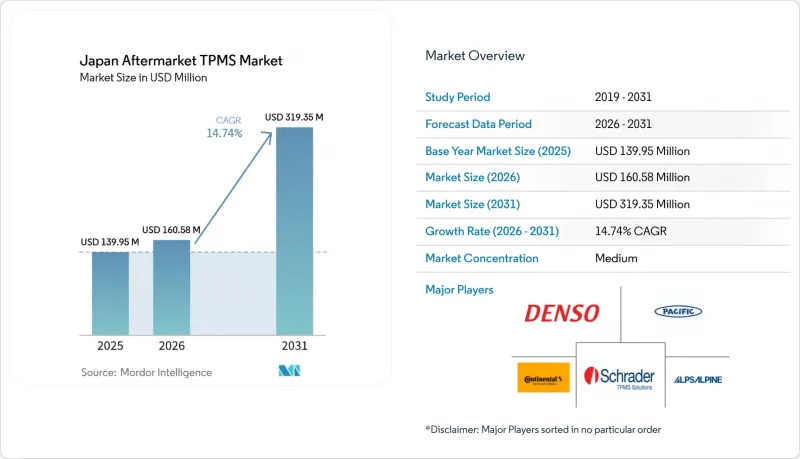
根據 Mordor Intelligence 預測,日本售後市場的胎壓監測系統 (TPMS) 市場規模預計將從 2025 年的 1.3995 億美元和 2026 年的 1.6058 億美元成長到 2031 年的 3.1935 億美元,2026 年成長 2031 年的年複合成長率(CAGR)2031 年為 14%。
本報告按類型(直接式胎壓監測系統、間接式胎壓監測系統)、技術整合(獨立式胎壓監測系統、智慧/連網式胎壓監測系統)、車輛類型(乘用車、商用車)和銷售管道(線下、線上)進行細分。市場預測以價值(美元)和銷售(輛)為單位呈現。
日本售後市場胎壓監測系統 (TPMS) 市場的趨勢與洞察
強制安裝胎壓監測系統正在推動監管合規浪潮。
國土交通省強制規定所有新乘用車必須配備胎壓監測系統(TPMS)。這項規定不僅推動了該技術的普及,也激發了售後市場的需求,尤其是一些在車輛年檢中被標記為不合格的老舊車輛。隨著車主遵守法規並努力提升車輛安全性能,售後市場預計將會擴大。同時,內務部批准了射頻標準的變更。這項變更將使供應商能夠利用全球標準化的感測器設計最佳化運營,從而顯著降低重新設計成本並擴大產品種類。此外,這項變更還將支持更先進的TPMS解決方案的開發,並促進市場創新。隨著消費者對TPMS的了解日益加深,曾經阻礙其普及的知識障礙正逐漸消失,加速了TPMS的推廣應用。服務中心也越來越將TPMS視為一項標準安全功能,並在更換輪胎時無縫整合。隨著對安全性和法規遵循的日益重視,預計TPMS在各個細分市場的普及速度將進一步加快。
車輛老化正在加速車輛更換週期。
許多家庭長期擁有車輛,導致許多感測器電池接近使用壽命終點。太平洋工業公司在設計感測器時設定了固定的使用壽命。然而,在高溫地區和繁忙的道路上,感測器的使用壽命會縮短,通常需要在定期輪胎換位時更換。這個問題尤其關鍵,因為感測器在車輛安全和性能方面發揮著至關重要的作用,及時更換至關重要。在多車擁有率較高的農村地區,不同車輛的感測器更換時間錯開,從而實現了持續的收入成長。此外,隨著高級駕駛輔助系統(ADAS)的日益普及,保持感測器的正常運作變得更加重要,因為這些系統高度依賴感測器的精確度和可靠性。
高昂的改造成本是市場進入的一大障礙。
對於沒有胎壓監測系統(TPMS)線路的車輛來說,感測器套件可能是一筆不小的開支,尤其是在可支配收入低於全國平均水平的農村地區,融資拮据的車主更是如此。對於管理數十輛老舊卡車的車隊營運商而言,這筆費用負擔更加沉重。改裝的總成本可能很快就會達到數百萬日元,這阻礙了TPMS的廣泛普及。雖然一些維修店可以獲得政府補貼,但這些不利因素仍然限制了日本TPMS售後市場的成長速度,尤其是在價格敏感型客戶占主導地位的細分市場。
細分市場分析
2025年,直接式胎壓監測系統(TPMS)佔據了日本售後市場TPMS市場佔有率的80.33%。這反映了車主對每個車輪精確測量的需求。預計2026年至2031年,日本售後市場TPMS直接式解決方案的市場規模將以14.62%的複合年成長率成長。雖然對於配備ABS的乘用車而言,間接式TPMS系統仍然是一種經濟實惠的售後解決方案,但對於優先考慮多輪胎測量精度和可視性的車隊營運商來說,其吸引力正在下降。
電裝公司透過「首次安裝」舉措,致力於將其技術應用於更多車型,這凸顯了在汽車新車銷售低迷的背景下,汽車零件供應商正將重心轉向零件更換週期。通用可程式設計感測器的引進進一步降低了單位成本,對傳統間接式系統所擁有的成本優勢構成了挑戰。
預計到2025年,獨立式產品將佔總銷售額的68.22%。然而,在住友橡膠的「ESP 3.0」和施拉德的「AirCheck BLE」等創新技術的推動下,連網產品預計將以15.83%的複合年成長率快速成長。這些技術進步提高了產品的功能性和即時數據分析能力,從而推動了互聯技術在市場上的應用。
已部署4G車載資訊系統模組的商業營運商只需少量硬體即可無縫傳輸輪胎數據,從而實現快速升級。此功能可減少運作並提高車輛管理效率。雖然智慧型手機配對功能清楚地展現了這些感測器對消費者的價值,但消費者對訂閱服務的抵觸情緒日益成長,限制了其進一步的市場滲透。儘管如此,智慧型手機整合帶來的便利性和易用性仍然吸引著相當一部分消費者。
其他好處:
- Excel格式的市場預測(ME)表
- 3個月的分析師支持
目錄
第1章:引言
- 研究假設和市場定義
- 調查範圍
第2章:調查方法
第3章執行摘要
第4章 市場狀況
- 市場概覽
- 市場促進因素
- 新車必須強制安裝胎壓監測系統(TPMS)。
- 由於車輛老化,更換的需求不斷增加。
- 汽車零件電子商務平台拓展
- 消費者對燃油效率和安全性的關注日益成長
- 利用胎壓監測系統資料的智慧城市停車系統
- 包含胎壓監測系統的訂閱式車載資訊服務包
- 市場限制因素
- 維修舊車的成本很高
- 低成本進口商品導致競爭激烈
- 仿冒感應器的氾濫
- 國土交通省頻率重新分配相關的合規成本
- 價值供應鏈分析
- 監理情勢
- 技術展望
- 波特五力模型
第5章 市場規模與成長預測
- 按類型
- 直接式胎壓監測系統
- 間接式胎壓監測系統
- 透過技術整合
- 獨立式胎壓監測系統
- 智慧型/連網胎壓監測系統
- 按車輛類型
- 搭乘用車
- 掀背車
- 轎車
- SUV 和 MUV
- 商用車輛
- 輕型商用車
- 中型和重型商用車輛
- 巴士和長途汽車
- 搭乘用車
- 透過分銷管道
- 線下(汽車零件商店、專賣店、維修中心)
- 線上(OEM網站/應用程式、電子商務平台)
第6章 競爭情勢
- 市場集中度
- 策略趨勢
- 市佔率分析
- 公司簡介
- Denso Corporation
- Pacific Industrial Co., Ltd.
- Alps Alpine Co., Ltd.
- Continental AG
- Schrader TPMS Solutions(Sensata Technologies, Inc.)
- Huf Hulsbeck & Furst GmbH & Co. KG
- CUB Elecparts Inc.
- NXP Semiconductors NV
- ATEQ TPMS Tools
- Steelmate Co., Ltd.
- Orange Electronic Co., Ltd.
- Salutica Allied Solutions(FOBO)
- Bartec Auto ID Ltd.
- Bridgestone Corporation
- Autobacs Seven Co., Ltd.
- Yellow Hat Ltd.
第7章 市場機會與未來展望
According to Mordor Intelligence, the Japan aftermarket TPMS market size is projected to expand from USD 139.95 million in 2025 and USD 160.58 million in 2026 to USD 319.35 million by 2031, registering a CAGR of 14.74% between 2026 to 2031.
This report is Segmented by Type (Direct TPMS, Indirect TPMS), Technology Integration (Stand-Alone TPMS Units, Smart/Connected TPMS), Vehicle Type (Passenger Cars, Commercial Vehicles), and Distribution Channel (Offline, Online). The Market Forecasts are Provided in Terms of Value (USD) and Volume (Units).
Japan Aftermarket TPMS Market Trends and Insights
Mandatory TPMS Fitment Drives Regulatory Compliance Wave
All new passenger cars must now be equipped with TPMS under a mandate from the MLIT . This ruling not only brings the technology into the mainstream but also ignites interest in retrofitting older models, particularly those flagged during Shaken inspections. The retrofitting market is expected to grow as vehicle owners seek to comply with regulations and enhance safety features. Meanwhile, the Ministry of Internal Affairs and Communications has approved a shift in radio-frequency standards. This change enables suppliers to optimize operations with a standardized global sensor design, significantly reducing re-engineering expenses and broadening SKU availability. Additionally, this shift supports the development of more advanced TPMS solutions, fostering innovation in the market. As consumers become more familiar with TPMS, the educational hurdles that once slowed its adoption fade, accelerating its adoption. Service centers are increasingly treating TPMS as a standard safety feature, seamlessly integrating it during tire changes. The growing emphasis on safety and regulatory compliance is expected to further drive TPMS adoption across various vehicle segments.
Aging Vehicle Fleet Intensifies Replacement Cycles
Households often keep cars for extended periods, leading to many sensors nearing battery exhaustion. Pacific Industrial designs its sensors with a set lifespan. Yet, in hotter climates and on busier routes, this lifespan diminishes, frequently resulting in replacements during routine tire rotations. This issue is particularly significant as sensors play a critical role in vehicle safety and performance, making timely replacements essential. In rural regions, where households typically own multiple vehicles, this trend boosts recurring revenue, as each car's sensor replacement occurs at staggered intervals. Additionally, the growing adoption of advanced driver-assistance systems (ADAS) further emphasizes the importance of maintaining functional sensors, as these systems rely heavily on sensor accuracy and reliability.
High Retrofit Costs Create Market Access Barriers
Sensor kits for vehicles without existing TPMS wiring can cost a significant outlay for cash-strapped owners, especially in rural prefectures where disposable incomes lag national averages. The price burden is heavier on fleet operators managing dozens of aging trucks: aggregate retrofit costs quickly climb into millions of yen, delaying widespread adoption. Some workshops offset expenses through government subsidies, but the overall headwind still trims the Japan aftermarket TPMS market growth rate, particularly in segments dominated by price-sensitive customers.
Other drivers and restraints analyzed in the detailed report include:
- E-commerce Transformation Reshapes Distribution Dynamics
- Consumer Safety Consciousness Drives Premium Adoption
- Import Competition Intensifies Pricing Pressures
For complete list of drivers and restraints, kindly check the Table Of Contents.
Segment Analysis
Direct systems captured 80.33% of the Japanese aftermarket TPMS market in 2025, reflecting owner demand for precise per-wheel readings. The Japan aftermarket TPMS market size for direct solutions is forecast to expand at a 14.62% CAGR between 2026 and 2031. While indirect TPMS remains a cost-effective retrofit for cars equipped with ABS, its appeal diminishes for fleets prioritizing accuracy and visibility across multiple tires.
Denso's targeting additional vehicles with its "First Time Fit" initiative highlights OEM suppliers' shift towards replacement cycles amidst stagnating new-car volumes. The introduction of universal programmable sensors has further reduced per-unit prices, challenging the historical cost advantage of indirect systems.
In 2025, stand-alone units accounted for 68.22% of the revenue. However, connected variants are set to surge at a 15.83% CAGR, buoyed by innovations like Sumitomo Rubber's ESP 3.0 and Schrader's AirCheck BLE. These advancements are driving the adoption of connected technologies in the market, offering enhanced functionality and real-time data insights.
Commercial operators already using 4G telematics modules can seamlessly stream tire data with only minor hardware additions, speeding up upgrades. This capability reduces operational downtime and improves fleet management efficiency. While smartphone pairing clarifies the value of these sensors for consumers, a growing subscription fatigue limits deeper market penetration. Despite this, the convenience and accessibility provided by smartphone integration continue to attract a significant portion of the consumer base.
Complete Report Scope:
- By Type
- Direct TPMS
- Indirect TPMS
- By Technology Integration
- Stand-alone TPMS Units
- Smart/Connected TPMS
- By Vehicle Type
- Passenger Cars
- Hatchbacks
- Sedans
- SUVs and MUVs
- Commercial Vehicles
- Light Commercial Vehicles
- Medium and Heavy Commercial Vehicles
- Buses and Coaches
- Passenger Cars
- By Distribution Channel
- Offline (Auto-parts stores, specialty shops, service centers)
- Online (OEM websites/Apps, e-commerce platforms)
List of Companies Covered in this Report:
- Denso Corporation
- Pacific Industrial Co., Ltd.
- Alps Alpine Co., Ltd.
- Continental AG
- Schrader TPMS Solutions (Sensata Technologies, Inc.)
- Huf Hulsbeck & Furst GmbH & Co. KG
- CUB Elecparts Inc.
- NXP Semiconductors N.V.
- ATEQ TPMS Tools
- Steelmate Co., Ltd.
- Orange Electronic Co., Ltd.
- Salutica Allied Solutions (FOBO)
- Bartec Auto ID Ltd.
- Bridgestone Corporation
- Autobacs Seven Co., Ltd.
- Yellow Hat Ltd.
Additional Benefits:
- The market estimate (ME) sheet in Excel format
- 3 months of analyst support
TABLE OF CONTENTS
1 Introduction
- 1.1 Study Assumptions & Market Definition
- 1.2 Scope of the Study
2 Research Methodology
3 Executive Summary
4 Market Landscape
- 4.1 Market Overview
- 4.2 Market Drivers
- 4.2.1 Mandatory TPMS Fitment on New Cars
- 4.2.2 Aging Vehicle Parc Increasing Replacement Demand
- 4.2.3 Expansion of E-Commerce Auto-Parts Platforms
- 4.2.4 Rising Consumer Focus on Fuel Efficiency and Safety
- 4.2.5 Smart-City Parking Systems Using TPMS Data
- 4.2.6 Subscription-Based Telematics Bundles Incl. TPMS
- 4.3 Market Restraints
- 4.3.1 High Retrofit Costs for Older Vehicles
- 4.3.2 Intense Price Competition from Low-Cost Imports
- 4.3.3 Proliferation of Counterfeit Sensors
- 4.3.4 MLIT Spectrum Re-Allocation Compliance Costs
- 4.4 Value / Supply-Chain Analysis
- 4.5 Regulatory Landscape
- 4.6 Technological Outlook
- 4.7 Porter's Five Forces
- 4.7.1 Threat of New Entrants
- 4.7.2 Bargaining Power of Suppliers
- 4.7.3 Bargaining Power of Buyers
- 4.7.4 Threat of Substitutes
- 4.7.5 Competitive Rivalry
5 Market Size & Growth Forecasts (Value (USD) and Volume (Units))
- 5.1 By Type
- 5.1.1 Direct TPMS
- 5.1.2 Indirect TPMS
- 5.2 By Technology Integration
- 5.2.1 Stand-alone TPMS Units
- 5.2.2 Smart/Connected TPMS
- 5.3 By Vehicle Type
- 5.3.1 Passenger Cars
- 5.3.1.1 Hatchbacks
- 5.3.1.2 Sedans
- 5.3.1.3 SUVs and MUVs
- 5.3.2 Commercial Vehicles
- 5.3.2.1 Light Commercial Vehicles
- 5.3.2.2 Medium and Heavy Commercial Vehicles
- 5.3.2.3 Buses and Coaches
- 5.3.1 Passenger Cars
- 5.4 By Distribution Channel
- 5.4.1 Offline (Auto-parts stores, specialty shops, service centers)
- 5.4.2 Online (OEM websites/Apps, e-commerce platforms)
6 Competitive Landscape
- 6.1 Market Concentration
- 6.2 Strategic Moves
- 6.3 Market Share Analysis
- 6.4 Company Profiles (Includes Global Level Overview, Market Level Overview, Core Segments, Financials as Available, Strategic Information, Market Rank/Share for Key Companies, Products and Services, SWOT Analysis, and Recent Developments)
- 6.4.1 Denso Corporation
- 6.4.2 Pacific Industrial Co., Ltd.
- 6.4.3 Alps Alpine Co., Ltd.
- 6.4.4 Continental AG
- 6.4.5 Schrader TPMS Solutions (Sensata Technologies, Inc.)
- 6.4.6 Huf Hulsbeck & Furst GmbH & Co. KG
- 6.4.7 CUB Elecparts Inc.
- 6.4.8 NXP Semiconductors N.V.
- 6.4.9 ATEQ TPMS Tools
- 6.4.10 Steelmate Co., Ltd.
- 6.4.11 Orange Electronic Co., Ltd.
- 6.4.12 Salutica Allied Solutions (FOBO)
- 6.4.13 Bartec Auto ID Ltd.
- 6.4.14 Bridgestone Corporation
- 6.4.15 Autobacs Seven Co., Ltd.
- 6.4.16 Yellow Hat Ltd.
7 Market Opportunities & Future Outlook
- 7.1 White-space & Unmet-need Assessment

 亞太地區輪胎壓力監測系統(TPMS):市佔率分析、產業趨勢與統計及成長預測(2026-2031)售後市場胎壓監測系統:市場佔有率分析、產業趨勢與統計、成長預測(2026-2031 年)汽車胎壓監測系統:市場佔有率分析、產業趨勢與統計、成長預測(2026-2031)
 輪胎壓力監測系統市場:2026-2032年全球市場預測(依產品類型、組件、驅動系統、運轉環境、最終用戶和車輛類型分類)
 胎壓監測系統 (TPMS) 市場分析及預測(至 2035 年):按類型、產品、技術、組件、應用、最終用戶、功能、安裝類型和解決方案分類
 胎壓監測系統電池市場:按類型、車輛、技術、銷售管道、國家及地區分類-全球產業分析、市場規模、市場佔有率及2026年至2033年預測輪胎壓力監測系統市場:依車輛類型、型號、銷售管道、國家及地區分類-全球產業分析、市場規模、市場佔有率及2026年至2033年預測
 汽車胎壓監測系統市場規模、佔有率和成長分析:按技術類型、組件、車輛應用和地區分類-2026-2033年產業預測
 美國拖車胎壓監測系統市場,2026-2030年汽車胎壓監測系統市場分析與預測(至2035年):按類型、產品、技術、組件、應用、最終用戶、功能、安裝方法、解決方案和模式分類