


 |
市場調查報告書
商品編碼
2116883
印度電動摩托車電池更換市場:市場佔有率分析、行業趨勢和統計數據以及成長預測(2026-2031 年)India Battery Swapping For Electric Two-Wheelers - Market Share Analysis, Industry Trends & Statistics, Growth Forecasts (2026 - 2031) |
||||||

※ 本網頁內容可能與最新版本有所差異。詳細情況請與我們聯繫。
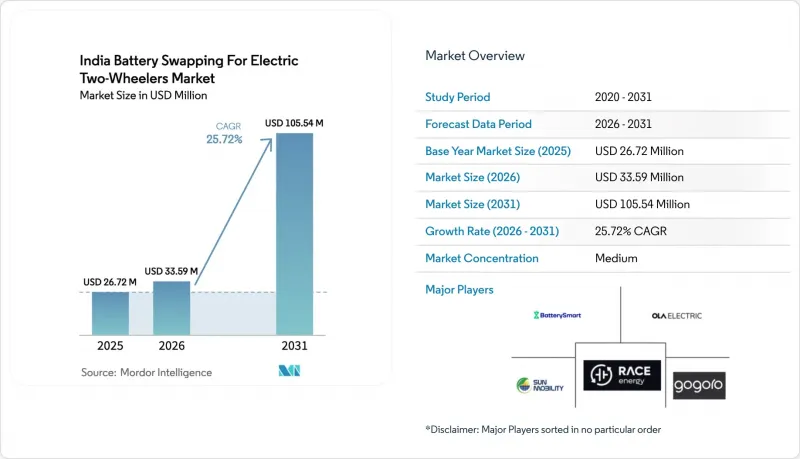
據 Mordor Intelligence 稱,2025 年印度電動摩托車電池更換市場價值為 2,672 萬美元,預計到 2031 年將達到 1.0554 億美元,而 2026 年為 3,359 萬美元,預測期(2026-2031 年)的複合年成長率為 25.72%。
本報告按服務模式(例如,付費使用制)、電池化學成分(例如,鋰離子NMC/NCA)、車輛類型(例如,電動滑板車)、最終用戶(例如,個人通勤者)、電池容量(例如,2.0千瓦或以下,2.1-3.0千瓦或以上)以及充電站類型(例如,固定式充電式充電市場預測以美元計價。
印度電動摩托車電池更換市場趨勢及洞察。
FAME-II獎勵推動電動摩托車銷售快速成長
印度政府於2025年6月26日批准了「電動車發展計畫」(PM e-DRIVE),並於2024-25會計年度至2028-29會計年度期間累計10900印度盧比,用於獎勵以促進電動車的需求成長。隨著傳統補貼計畫的逐步取消,製造商正專注於創新和營運效率,以保持價格競爭力。電動車的普及在提供額外獎勵的邦,例如馬哈拉斯特拉邦、卡納塔克邦和泰米爾納德邦,進展尤其迅速。這擴大了用戶群體,越來越多的人因為電池更換的便利性和成本效益而選擇使用電池更換基礎設施。
降低鋰離子電池成本並實現電池組裝組裝本地化
印度的電池生態系統正經歷突破性的變革,國內生產線預計很快就會投入運作。這項轉型旨在減少對進口的依賴,緩解外匯短缺,並降低整體成本。磷酸鋰鐵(LFP)作為一種電池化學成分正日益受到關注,因為與其他電池相比,它具有更長的使用壽命和更高的成本效益,尤其是在電池更換等高頻應用中。
國內生產打造了高度靈活的供應鏈,有助於實現準時交貨,並減少對大量庫存的需求。此外,與機器人操作相容的標準化電池外殼也有助於提高營運效率。隨著這些效率的提升,訂閱成本有望降低,加速電動摩托車的普及,並推動市場擴張。
火災事故會損害消費者信任。
在電動摩托車市場,安全問題始終是一個不容忽視的隱患,尤其是在事故事件在社群媒體上廣泛傳播之後。即使起火原因是未經授權的改裝,大眾也往往會將風險普遍化,認為整個電動摩托車產業都存在這種風險。
雖然諸如BIS標準之類的監管標準為更安全的產品提供了框架,但僅僅遵守這些標準並不足以恢復消費者的信心。為了安撫對價格敏感的消費者,並保持向電動車轉型的勢頭,至關重要的是確保安全性能的一致性,進行透明的調查,並清晰地傳達事故訊息。
細分市場分析
儘管付費使用制模式在2025年仍佔總收入的42.80%,但訂閱方案的佔有率有所成長。商用車隊專注於固定月度支出和表外交易,這推動了訂閱業務預計將實現27.36%的複合年成長率。 Hero MotoCorp於2025年7月推出的VIDA VX2將底盤和電池的融資分開,展現了OEM廠商為滿足零工經濟客戶需求而採取的靈活策略。
訂閱協議將資本支出 (Capex) 轉化為營運支出 (OpEx),從而降低電池成本 30-40%,而電池成本通常是購買電池的主要障礙。 Battery Smart 的分級方案根據每日行駛里程定價,確保車隊在需求低迷時期避免支付過高的費用。可預測的收入流降低了貸款方的風險並減輕了利息負擔。雖然個人通勤者仍然傾向於付費使用制以避免簽訂固定契約,但結合車隊租賃的混合模式填補了合約期間內的一個細分市場。
預計到2025年,鋰離子NMC/NCA電池將佔62.40%的市場佔有率,而磷酸鐵鋰電池的複合年成長率預計將達到27.70%,這表明磷酸鐵鋰電池在安全性和成本之間具有優勢。磷酸鐵鋰電池3000-5000次的循環壽命使其天然適合高通量電池更換,其固有的熱穩定性有助於降低火災風險,因此對於維護公司聲譽至關重要。
各原始設備製造商(OEM)的行動進一步推動了這項轉變。 Ola Electric的第三代平台正在向磷酸鐵鋰電池(LFP)過渡,而國內電池生產線也由於原料供應充足而傾向於採用鐵基化學成分。隨著垂直整合降低電池組成本,預計2031年,印度電動摩托車電池更換市場(目前依賴LFP電池組)的規模將縮小與鎳基金屬電池(NMC)的差距。鉛酸電池僅適用於時速低於25公里/小時的低速車輛,但隨著鋰價下跌,這一細分市場正在迅速萎縮。
其他好處:
- Excel格式的市場預測(ME)表
- 3個月的分析師支持
目錄
第1章:引言
- 研究假設和市場定義
- 調查範圍
第2章:調查方法
第3章執行摘要
第4章 市場狀況
- 市場概覽
- 市場促進因素
- FAME-II獎勵推動電動摩托車銷售快速成長
- 為實現互通性提出的電池更換政策
- 來自創業投資(VC) 和 OMC 的投資正在加速 SwapStation 的擴張。
- 在運轉率的零工經濟中,最大限度地減少停機時間的需求日益成長。
- 降低鋰離子電池成本並實現電池組本地化組裝。
- BIS安全標準能夠促進資金籌措和保險的使用。
- 市場限制因素
- 電池形狀的多樣化阻礙了互通性。
- 電池即服務收入的商品及服務稅存在不確定性
- 火災事故會損害消費者信任。
- 依賴進口的電池供應容易受到地緣政治風險的影響。
- 價值供應鏈分析
- 監理情勢
- 技術展望
- 波特五力模型
第5章 市場規模與成長預測
- 按服務模式
- 付費使用制
- 訂閱
- 免費租賃(長期)
- 電池化學成分
- 鋰離子(NMC/NCA)
- 鋰離子電池(LFP)
- 鉛酸
- 按車輛類別
- 電動滑板車
- 電動機車
- 電動輕型輕型機踏車
- 最終用戶
- 個人通勤者
- 零工經濟配送車輛
- 共乘/訂閱平台
- 依電池容量(kWh)
- 2.0 或更低
- 2.1~3.0
- 3.1~5.0
- 超過 5.0
- 依站點類型
- 固定櫃
- 行動自助服務終端
- 全自動機器人
- 零售/商店整合(電池ATM)
第6章 競爭情勢
- 市場集中度
- 策略趨勢
- 市佔率分析
- 公司簡介
- SUN Mobility
- Upgrid Solutions Private Limited(Battery Smart)
- Ola Electric Mobility Limited
- RACE Energy Ltd.
- Lithion Power Private Limited
- VoltUp Mobility Pvt. Ltd.
- Esmito Solutions Pvt. Ltd.
- Numocity Technologies Pvt. Ltd.
- Charge-up Mobility Pvt. Ltd.
- Okaya Power Group
- Bounce Infinity
- Yulu Bikes Pvt. Ltd.
- Gogoro
- Hero MotoCorp Ltd.
- Kinetic Green Energy and Power Solutions Ltd.
- Ampere Vehicles Pvt. Ltd.
- Exide Industries Ltd.
- Bharat Petroleum Corporation Ltd.(BPCL)
- Indian Oil Corporation Ltd.(IOCL)
- Zypp Electric Pvt. Ltd.
- eBikeGo Mobility Pvt. Ltd.
第7章 市場機會與未來展望
According to Mordor Intelligence, the India battery swapping for electric two-wheelers market size was valued at USD 26.72 million in 2025 and estimated to grow from USD 33.59 million in 2026 to reach USD 105.54 million by 2031, at a CAGR of 25.72% during the forecast period (2026-2031).
This report is Segmented by Service Model (Pay-Per-Use, and More), Battery Chemistry (Lithium-Ion NMC/NCA, and More), Vehicle Category (Electric Scooters, and More), End User (Personal Commuters, and More), Battery Capacity (Up To 2. 0, 2. 1-3. 0, and More), Swap Station Type (Fixed Cabinet, Mobile Kiosk, and More). The Market Forecasts are Provided in Terms of Value (USD).
India Battery Swapping For Electric Two-Wheelers Market Trends and Insights
Rapid Growth in E-Two-Wheeler Sales Via FAME-II Incentives
PM e-DRIVE was approved on June 26, 2025, with an outlay of ₹10,900 crore for 2024-25 to 2028-29 to support demand incentives for EVs. With the phasing out of previous subsidy schemes, manufacturers are channeling their efforts into innovation and operational efficiency to maintain price competitiveness. Adoption is rising, especially in states like Maharashtra, Karnataka, and Tamil Nadu, which offer extra incentives. This has led to a broader user base, many turning to battery-swapping infrastructure for its convenience and cost benefits.
Declining Li-Ion Costs and Localization of Pack Assembly
India is witnessing a pivotal shift in its battery ecosystem, with domestic production lines poised to commence operations. This transition aims to curtail import dependence, alleviate foreign exchange strains, and trim overall expenses. Lithium iron phosphate (LFP) is gaining traction among battery chemistries, especially for high-usage applications like swapping, due to its extended lifespan and cost-effectiveness compared to other options.
Domestic manufacturing fosters nimble supply chains, facilitating just-in-time deliveries and diminishing the necessity for extensive inventory. Moreover, standardized battery housings for robotic handling enhance operational efficiency. As these efficiencies accumulate, subscription costs are anticipated to decrease, broadening the accessibility of electric mobility and amplifying market reach.
Fire-Safety Incidents Dent Consumer Confidence
Safety concerns loom large over the electric two-wheeler market, especially when incidents gain traction on social media. Even when fires stem from unauthorized aftermarket conversions, the public often generalizes the risk across the entire category.
While regulatory standards like BIS norms provide a framework for safer products, merely adhering to these standards isn't enough to rebuild consumer trust. To reassure price-sensitive buyers and maintain momentum in the shift to electric mobility, it's crucial to ensure consistent safety performance, conduct transparent investigations, and communicate incidents clearly.
Other drivers and restraints analyzed in the detailed report include:
- Draft Battery Swapping Policy Enabling Interoperability
- BIS Safety Standards Unlocking Financing and Insurance
- Import-Dependent Cell Supply Exposed to Geo-Political Risk
For complete list of drivers and restraints, kindly check the Table Of Contents.
Segment Analysis
Subscription plans increased their footprint even though the Pay-Per-Use option retained 42.80% of 2025 revenue. Commercial fleets value fixed monthly outlays and off-balance-sheet treatment, helping the subscription segment log a forecast 27.36% CAGR. Hero MotoCorp's July 2025 VIDA VX2 launch separates chassis and battery financing, showcasing OEM agility in serving gig-economy clients.
Subscription contracts convert capex into opex, mitigating the 30-40% battery cost that often stalls purchases. Tiered plans from Battery Smart align pricing with daily-kilometer bands, ensuring fleets avoid overpaying during slack demand. Predictable revenue streams lower lenders' risk, reducing interest burdens. Individual commuters still lean toward Pay-Per-Use to avoid fixed commitments, while fleet-leasing hybrids fill mid-tenure niches.
Lithium-ion NMC/NCA held 62.40% share in 2025, yet LFP's 27.70% CAGR suggests the safety-value trade-off tilts in its favor. LFP's 3,000-5,000 cycle life pairs naturally with high-throughput swapping, and inherent thermal stability curbs fire risks, a vital reputation safeguard.
OEM moves validate the shift: Ola Electric's Gen 3 platform pivots to LFP, while domestic cell lines favor iron-phosphate chemistry due to raw-material availability. The India battery swapping for electric two-wheelers market size tied to LFP packs is forecast to close the gap with NMC by 2031 as vertical integration compresses pack costs. Lead-acid persists only in low-speed, sub-25 km/h vehicles, a niche eroding fast as lithium prices fall.
Complete Report Scope:
- By Service Model
- Pay-Per-Use
- Subscription
- Fleet Leasing (Long-Term)
- By Battery Chemistry
- Lithium-ion (NMC/NCA)
- Lithium-ion (LFP)
- Lead-acid
- By Vehicle Category
- Electric Scooters
- Electric Motorcycles
- Electric Mopeds
- By End User
- Personal Commuters
- Gig-Economy Delivery Fleets
- Ride-Sharing / Subscription Platforms
- By Battery Capacity (kWh)
- Up to 2.0
- 2.1-3.0
- 3.1-5.0
- Above 5.0
- By Swap Station Type
- Fixed Cabinet
- Mobile Kiosk
- Fully-Automated Robotic
- Retail-Outlet Integrated (Battery ATM)
List of Companies Covered in this Report:
- SUN Mobility
- Upgrid Solutions Private Limited (Battery Smart)
- Ola Electric Mobility Limited
- RACE Energy Ltd.
- Lithion Power Private Limited
- VoltUp Mobility Pvt. Ltd.
- Esmito Solutions Pvt. Ltd.
- Numocity Technologies Pvt. Ltd.
- Charge-up Mobility Pvt. Ltd.
- Okaya Power Group
- Bounce Infinity
- Yulu Bikes Pvt. Ltd.
- Gogoro
- Hero MotoCorp Ltd.
- Kinetic Green Energy and Power Solutions Ltd.
- Ampere Vehicles Pvt. Ltd.
- Exide Industries Ltd.
- Bharat Petroleum Corporation Ltd. (BPCL)
- Indian Oil Corporation Ltd. (IOCL)
- Zypp Electric Pvt. Ltd.
- eBikeGo Mobility Pvt. Ltd.
Additional Benefits:
- The market estimate (ME) sheet in Excel format
- 3 months of analyst support
TABLE OF CONTENTS
1 Introduction
- 1.1 Study Assumptions and Market Definition
- 1.2 Scope of the Study
2 Research Methodology
3 Executive Summary
4 Market Landscape
- 4.1 Market Overview
- 4.2 Market Drivers
- 4.2.1 Rapid Growth in E-Two-Wheeler Sales Via FAME-II Incentives
- 4.2.2 Draft Battery Swapping Policy Enabling Interoperability
- 4.2.3 VC and OMC Investments Accelerating Swap Station Roll-Out
- 4.2.4 High-Utilization Gig-Economy Demand for Near-Zero Downtime
- 4.2.5 Declining Li-Ion Costs and Localization of Pack Assembly
- 4.2.6 BIS Safety Standards Unlocking Financing and Insurance
- 4.3 Market Restraints
- 4.3.1 Fragmented Battery Form-Factors Hinder Interoperability
- 4.3.2 Uncertain GST On Battery-as-a-Service Revenues
- 4.3.3 Fire-Safety Incidents Dent Consumer Confidence
- 4.3.4 Import-Dependent Cell Supply Exposed to Geo-Political Risk
- 4.4 Value / Supply-Chain Analysis
- 4.5 Regulatory Landscape
- 4.6 Technological Outlook
- 4.7 Porter's Five Forces
- 4.7.1 Threat of New Entrants
- 4.7.2 Bargaining Power of Buyers/Consumers
- 4.7.3 Bargaining Power of Suppliers
- 4.7.4 Threat of Substitute Products
- 4.7.5 Intensity of Competitive Rivalry
5 Market Size and Growth Forecasts (Value, USD)
- 5.1 By Service Model
- 5.1.1 Pay-Per-Use
- 5.1.2 Subscription
- 5.1.3 Fleet Leasing (Long-Term)
- 5.2 By Battery Chemistry
- 5.2.1 Lithium-ion (NMC/NCA)
- 5.2.2 Lithium-ion (LFP)
- 5.2.3 Lead-acid
- 5.3 By Vehicle Category
- 5.3.1 Electric Scooters
- 5.3.2 Electric Motorcycles
- 5.3.3 Electric Mopeds
- 5.4 By End User
- 5.4.1 Personal Commuters
- 5.4.2 Gig-Economy Delivery Fleets
- 5.4.3 Ride-Sharing / Subscription Platforms
- 5.5 By Battery Capacity (kWh)
- 5.5.1 Up to 2.0
- 5.5.2 2.1-3.0
- 5.5.3 3.1-5.0
- 5.5.4 Above 5.0
- 5.6 By Swap Station Type
- 5.6.1 Fixed Cabinet
- 5.6.2 Mobile Kiosk
- 5.6.3 Fully-Automated Robotic
- 5.6.4 Retail-Outlet Integrated (Battery ATM)
6 Competitive Landscape
- 6.1 Market Concentration
- 6.2 Strategic Moves
- 6.3 Market Share Analysis
- 6.4 Company Profiles (Includes Global level Overview, Market level overview, Core Segments, Financials as available, Strategic Information, Market Rank/Share for key companies, Products & Services, and Recent Developments)
- 6.4.1 SUN Mobility
- 6.4.2 Upgrid Solutions Private Limited (Battery Smart)
- 6.4.3 Ola Electric Mobility Limited
- 6.4.4 RACE Energy Ltd.
- 6.4.5 Lithion Power Private Limited
- 6.4.6 VoltUp Mobility Pvt. Ltd.
- 6.4.7 Esmito Solutions Pvt. Ltd.
- 6.4.8 Numocity Technologies Pvt. Ltd.
- 6.4.9 Charge-up Mobility Pvt. Ltd.
- 6.4.10 Okaya Power Group
- 6.4.11 Bounce Infinity
- 6.4.12 Yulu Bikes Pvt. Ltd.
- 6.4.13 Gogoro
- 6.4.14 Hero MotoCorp Ltd.
- 6.4.15 Kinetic Green Energy and Power Solutions Ltd.
- 6.4.16 Ampere Vehicles Pvt. Ltd.
- 6.4.17 Exide Industries Ltd.
- 6.4.18 Bharat Petroleum Corporation Ltd. (BPCL)
- 6.4.19 Indian Oil Corporation Ltd. (IOCL)
- 6.4.20 Zypp Electric Pvt. Ltd.
- 6.4.21 eBikeGo Mobility Pvt. Ltd.
7 Market Opportunities & Future Outlook

 泰國摩托車市場:市場佔有率分析、產業趨勢與統計、成長預測(2026-2031)印度摩托車市場:市場佔有率分析、產業趨勢與統計及成長預測(2026-2031)
 摩托車市場規模、佔有率和成長分析:按車型、傳動系統、引擎排氣量、應用、最終用戶、銷售管道和地區分類-2026-2033年產業預測電動摩托車電池更換:市場佔有率分析、行業趨勢和統計數據以及成長預測(2026-2031 年)
 摩托車市場-全球產業規模、佔有率、趨勢、機會和預測:按車型、動力系統、地區和競爭格局分類,2021-2031年
 摩托車市場:2026年至2032年全球預測(按車型、動力系統、性能類型、類別、變速箱類型、價格範圍、應用和最終用戶分類)
 摩托車照明市場規模、佔有率、成長及全球產業分析:按類型、應用和地區分類,並預測至2026-2034年摩托車市場規模、佔有率、成長及全球產業分析:按類型、應用和地區分類的洞察,2026-2034 年預測
 日本摩托車市場:規模、佔有率、趨勢和預測:按類型、技術、變速箱、引擎排氣量、燃料類型、分銷管道、最終用戶和地區分類(2026-2034 年)中國摩托車市場:市場佔有率分析、產業趨勢與統計及成長預測(2026-2031年)