


 |
市場調查報告書
商品編碼
2114410
印度廢棄物管理:市場佔有率分析、產業趨勢與統計及成長預測(2026-2031)India Waste Management - Market Share Analysis, Industry Trends & Statistics, Growth Forecasts (2026 - 2031) |
||||||

※ 本網頁內容可能與最新版本有所差異。詳細情況請與我們聯繫。
據 Mordor Intelligence 稱,2025 年印度廢棄物管理市場價值為 135.8 億美元,預計到 2031 年將達到 189.4 億美元,而 2026 年為 142.9 億美元,預測期(2026-2031 年)的複合年成長率為 5.80%。
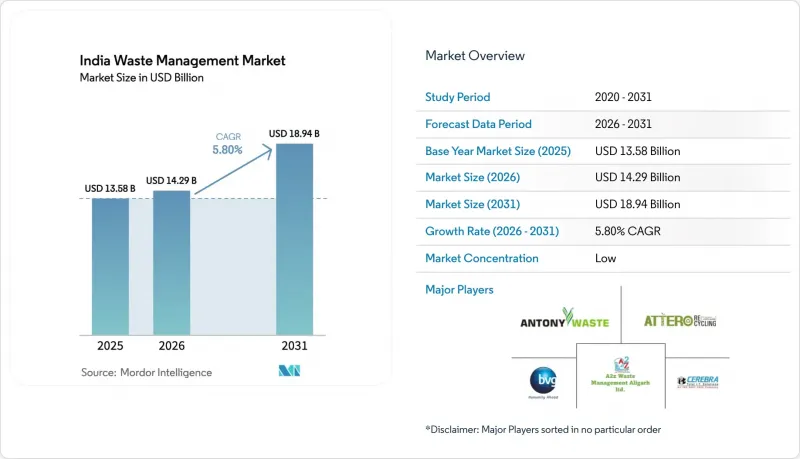
本報告按供應來源(住宅、商業、工業及其他)、服務類型(收集、運輸、分類及其他)、廢棄物類型(城市固態廢棄物、工業危險廢棄物、電子廢棄物廢棄物其他)和地區(印度北部、印度南部、印度西部、印度東部和印度中部)進行細分。市場預測以美元計價。
印度廢棄物管理市場的趨勢和洞察
第十五屆財政委員會撥款 180 億美元用於城市固態廢棄物管理 (SWM) 計畫。
針對垃圾收集車、機械環衛車和資源回收設施的資金投入,正在加速孟買、德里和印多爾等城市的官民合作關係(PPP)競標。與掩埋廢棄物和減少相關的績效考核條件,正迫使地方政府實施數位化監測。儘管由於土地徵用延誤,第一年的資金利用率僅為58%,但該津貼計劃在短期內仍為整體複合年成長率貢獻了1.3%。
《2025年國家循環經濟框架》規定了企業回收目標。
年銷售額超過50億印度盧比的公司必須在2028年前回收至少30%的包裝廢棄物和50%的電子產品,而汽車製造商則面臨更為嚴格的目標,即回收95%的電池品質。品牌所有者擴大與正規的回收商簽訂多年期回收協議,以避免原生樹脂價格波動的風險,並確保合規性可審計。雖然實施的成功取決於經認證的處理能力和及時的處罰,但該框架提供了一條清晰的合規路徑,預計將在預測期內推動該行業的複合年成長率成長約1.1%。
來源排序已達到瓶頸。
將生活垃圾分類為「濕廢棄物」、「乾廢棄物」和「危險廢棄物」的義務在很大程度上仍停留在理想階段,預計到2025年,全國垃圾分類率仍將低於35%。公眾意識薄弱、執法不力以及挨家挨戶收集不均衡,正在降低原料的質量,顯著降低再生產品的轉售價值,並增加堆肥企業的污染處理成本。基於檢查的獎勵,例如卡納塔克邦的房產稅退稅,在局部地區取得了一定的成效,但尚未在全國範圍內推廣。除非地方政府實施即時監測並施加處罰,否則垃圾分類不足將使預期的複合年成長率下降0.8%。
細分市場分析
預計到2025年,住宅廢棄物將佔印度廢棄物管理市場收入的48.83%,但在許多第一線商業區,商業廢棄物可能超過住宅廢棄物。二線城市有組織的零售商店占地面積不斷擴大,辦公大樓群日益集中,導致垃圾流量更大、更穩定。商業客戶通常簽訂多年服務契約,每噸垃圾的處理費為27至46美元,遠高於生活廢棄物10至15美元的收費標準,這使得商業客戶群體對私營運營商極具吸引力。此外,使用RFID標籤垃圾桶和配備GPS的垃圾壓縮車進一步最佳化了垃圾收集路線,降低了燃料成本並縮短了收集週期。受這些趨勢的推動,預計到2031年,商業廢棄物的處理量將以8.6%的複合年成長率成長,成長率高於住宅廢棄物的基準成長率。
購物中心和商業園區的開發商正擴大在現場整合分類室和打包機,從而提高下游回收商的原料品質。快速電商的「閉合迴路店」和最後一公里配送中心正在實施閉迴路包裝,為正規回收網路增加更多可回收的紙板和塑膠。像Antony Waste Handling Cell這樣的營運商透過到2025年將業務規模擴大28%,並與大型零售連鎖店和企業園區簽訂新契約,增強了其收入前景。總體而言,由於利潤率高和合約續約率高,商業領域正在成為印度廢棄物管理市場的主要成長引擎。
其他好處
- Excel格式的市場預測(ME)表
- 3個月的分析師支持
目錄
第1章:引言
- 研究假設和市場定義
- 調查範圍
第2章:調查方法
第3章執行摘要
第4章 市場狀況
- 市場概覽
- 市場促進因素
- 實施《2024年塑膠廢棄物管理(修訂)條例》及禁止使用一次性塑膠製品
- 《2025年國家循環經濟架構》下的強制性企業回收目標
- 到 2026 年,FAME-III 電池的 EPR 法規將產生約 50 GWh 的廢棄鋰離子電池。
- 第十五屆財政委員會批准撥付 1.5 兆 ULB 資本支出用於 2025-2026地方政府的固態廢棄物管理 (SWM)。
- 透過補貼將農業生質能轉化為生質壓縮天然氣,促進農村地區有機廢棄物的有效利用(SATAT 2.0)
- 透過超大規模資料中心的「零電子廢棄物」計劃,擴大優質回收合約的覆蓋範圍。
- 市場限制因素
- 特定來源的分類和收集率已趨於穩定(到 2025 年,全國平均將低於 35%)。
- 鄰避效應訴訟阻礙了計劃於 2025 年建成的 280MW垃圾焚化發電發電廠的建設。
- 碳權價格的急劇下降(低於 600 盧比/噸二氧化碳當量)導致 RDF 聯合處理收入減少。
- 高濃度的含氨混合廚餘垃圾會導致厭氧消化裝置腐蝕,並使運作維護成本增加 15% 以上。
- 價值供應鏈分析
- 監理展望
- 科技趨勢(人工智慧、物聯網、機器人、垃圾焚化發電)
- 物流基礎設施及發展分析
- 產業吸引力—五力分析
- 新進入者的威脅
- 供應商的議價能力
- 買方的議價能力
- 替代品的威脅
- 競爭公司之間的競爭
- 投資與資金籌措分析
第5章 市場規模與成長預測
- 按供應來源
- 住宅
- 商業(零售、辦公、其他)
- 產業
- 醫療(健康和製藥)
- 建設與拆除
- 其他(組織、農業等)
- 按服務類型
- 收集、運輸、分類和分離
- 處置和處理
- 掩埋處置
- 回收和資源回收
- 焚燒和垃圾焚化發電
- 其他(化學處理、堆肥等)
- 其他(諮詢、審計、訓練等)
- 廢棄物類型
- 都市固態廢棄物
- 工業用危險廢棄物
- 電子廢棄物
- 塑膠廢棄物
- 醫療廢棄物
- 建築和拆除廢棄物
- 農業廢棄物
- 其他特殊廢棄物(放射性廢棄物等)
- 按地區
- 印度北部
- 南印度
- 西印度群島
- 東印度
- 印度中部
第6章 競爭情勢
- 市場集中度
- 策略趨勢
- 市佔率分析
- 公司簡介
- A2Z Green Waste Management Ltd
- Antony Waste Handling Cell Ltd
- Attero Recycling Pvt Ltd
- BVG India Ltd
- Cerebra Integrated Technologies Ltd
- Ecogreen Energy Pvt Ltd
- Ecowise Waste Management Pvt Ltd
- Exigo Recycling Pvt Ltd
- Hanjer BIoTech Energies Pvt Ltd
- Hydroair Tectonics(PCD)Ltd
- IL&FS Environmental Infrastructure & Services Ltd
- Jindal ITF Urban Infrastructure Ltd
- NEPRA Resource Management Pvt Ltd
- Ramky Enviro Engineers Ltd
- Recykal(Rapidue Technologies)
- Saahas Zero Waste
- Spak Green Enviro Pvt Ltd
- Tatva Global Environment Ltd
- Waste Ventures India Pvt Ltd
- Zonta Infratech Pvt Ltd
第7章 市場機會與未來展望
According to Mordor Intelligence, the India waste management market size was valued at USD 13.58 billion in 2025 and is estimated to grow from USD 14.29 billion in 2026 to reach USD 18.94 billion by 2031, at a CAGR of 5.80% during the forecast period (2026-2031).
This report is Segmented by Source (Residential, Commercial, Industrial, and More), by Service Type (Collection, Transportation, Sorting & Segregation and More), by Waste Type (Municipal Solid Waste, Industrial Hazardous Waste, E-Waste, Plastic Waste, and More), and by Region (North India, South India, West India, East India and Central India). The Market Forecasts are Provided in Terms of Value (USD).
India Waste Management Market Trends and Insights
15th Finance Commission Grants Unlock USD 18 billion for Municipal SWM
Disbursements covering collection vehicles, mechanized sweepers, and materials-recovery facilities are accelerating PPP bids in cities such as Mumbai, Delhi, and Indore. Performance-linked conditions tied to segregation and landfill diversion are forcing municipalities to adopt digital monitoring. Land-acquisition delays capped first-year utilization at 58%, yet the grant program still contributes +1.3% to overall CAGR in the short term.
National Circular Economy Framework 2025 Mandates Corporate Recycling Targets
Companies with annual turnover above INR 500 crore must recycle at least 30% of packaging waste and 50% of electronic products by 2028, with even stricter 95% battery-mass recovery targets for vehicle manufacturers. Brand owners are increasingly entering multi-year offtake contracts with organized recyclers to hedge against virgin-resin price swings and to secure auditable compliance. Implementation success depends on certified capacity and timely penalties; nevertheless, the framework sets a clear compliance pathway and adds roughly +1.1% to sector CAGR over the forecast horizon.
Source-Segregation Plateau
Mandatory household segregation into wet, dry, and hazardous waste categories remains largely aspirational, with the national rate stuck below 35% in 2025. Poor civic awareness, weak enforcement, and patchy door-to-door coverage degrade feedstock quality, slashing resale value for recyclables and raising contamination costs for composters. Pilot incentives such as property-tax rebates in Karnataka show localized success but have yet to scale nationally. Unless municipalities adopt real-time monitoring and levy penalties, the sub-optimal segregation will shave -0.8% off forecast CAGR.
Other drivers and restraints analyzed in the detailed report include:
- Enforcement of Plastic Waste Management Amendment Rules 2024 & Single-Use-Plastic Ban
- FAME-III Battery EPR Rules Bring 50 GWh End-of-Life Li-ion by 2026
- NIMBY Litigation Against WtE Plants
For complete list of drivers and restraints, kindly check the Table Of Contents.
Segment Analysis
Residential sources accounted for 48.83% of India's waste management market revenue in 2025, although commercial volumes can eclipse residential volumes in many tier-1 business districts. Rising organized retail floor space and office complex densification in tier-2 cities are producing larger, more predictable waste streams. Commercial clients typically lock in multiyear service contracts at gate fees of USD 27 - 46 per tonne, compared with USD 10-15 for household waste, making this customer segment attractive to private operators. Collection routing is further optimized through RFID-tagged bins and GPS-enabled compactor trucks, cutting fuel cost and improving turnaround time. Aided by these dynamics, commercial waste volumes are estimated to grow at an 8.6% CAGR to 2031, outpacing the baseline expansion of residential streams.
Developers of shopping malls and business parks increasingly integrate on-site segregation rooms and balers, enhancing feedstock quality for downstream recyclers. Quick-commerce "dark stores" and last-mile delivery hubs are adopting closed-loop packaging, adding additional recyclable cardboard and plastics to formal networks. Operators such as Antony Waste Handling Cell expanded their commercial footprint by 28% in 2025, acquiring new contracts from large retail chains and corporate campuses, reinforcing revenue visibility. On balance, the commercial segment's higher margin profile and contractual stickiness position it as the prime growth engine within the India waste management market.
Complete Report Scope:
- By Source
- Residential
- Commercial (retail, office, etc.)
- Industrial
- Medical (Health and Pharmaceutical)
- Construction & Demolition
- Others (institutional, agricultural, etc)
- By Service Type
- Collection, Transportation, Sorting & Segregation
- Disposal / Treatment
- Landfill
- Recycling & Resource Recovery
- Incineration & Waste-to-Energy
- Others (Chemical Treatment, Composting, etc.)
- Others (Consulting, Audit & Training, etc.)
- By Waste Type
- Municipal Solid Waste
- Industrial Hazardous Waste
- E-waste
- Plastic Waste
- Biomedical Waste
- Construction & Demolition Waste
- Agricultural Waste
- Other Specialized Waste (radio active, etc)
- By Region
- North India
- South India
- West India
- East India
- Central India
List of Companies Covered in this Report:
- A2Z Green Waste Management Ltd
- Antony Waste Handling Cell Ltd
- Attero Recycling Pvt Ltd
- BVG India Ltd
- Cerebra Integrated Technologies Ltd
- Ecogreen Energy Pvt Ltd
- Ecowise Waste Management Pvt Ltd
- Exigo Recycling Pvt Ltd
- Hanjer Biotech Energies Pvt Ltd
- Hydroair Tectonics (PCD) Ltd
- IL&FS Environmental Infrastructure & Services Ltd
- Jindal ITF Urban Infrastructure Ltd
- NEPRA Resource Management Pvt Ltd
- Ramky Enviro Engineers Ltd
- Recykal (Rapidue Technologies)
- Saahas Zero Waste
- Spak Green Enviro Pvt Ltd
- Tatva Global Environment Ltd
- Waste Ventures India Pvt Ltd
- Zonta Infratech Pvt Ltd
Additional Benefits:
- The market estimate (ME) sheet in Excel format
- 3 months of analyst support
TABLE OF CONTENTS
1 Introduction
- 1.1 Study Assumptions & Market Definition
- 1.2 Scope of the Study
2 Research Methodology
3 Executive Summary
4 Market Landscape
- 4.1 Market Overview
- 4.2 Market Drivers
- 4.2.1 Enforcement of Plastic Waste Management (Amendment) Rules 2024 & single-use plastic ban
- 4.2.2 National Circular Economy Framework 2025 mandates corporate recycling targets
- 4.2.3 FAME-III battery EPR rules bring ~50 GWh end-of-life Li-ion by 2026
- 4.2.4 15th Finance Commission grants unlock ?1.5 trn ULB capex for SWM 2025-26
- 4.2.5 Agri-biomass-to-bioCNG subsidies (SATAT 2.0) spur rural organic-waste valorization
- 4.2.6 Zero-e-waste commitments from hyperscale data-centers drive premium recycling contracts
- 4.3 Market Restraints
- 4.3.1 Source-segregation plateau, national average below 35 % in 2025
- 4.3.2 NIMBY litigation stalls 280 MW planned WtE capacity in 2025
- 4.3.3 Carbon-credit price slump (Less than ₹ 600/tCO2e) erodes RDF co-processing revenues
- 4.3.4 Ammonia-rich mixed food waste corrodes AD plants, raising O&M more than 15 %
- 4.4 Value / Supply-Chain Analysis
- 4.5 Regulatory Outlook
- 4.6 Technological Outlook (AI, IoT, Robotics, WtE)
- 4.7 Logistics Infrastructure & Development Analysis
- 4.8 Industry Attractiveness - Porter's Five Force Analysis
- 4.8.1 Threat of New Entrants
- 4.8.2 Bargaining Power of Suppliers
- 4.8.3 Bargaining Power of Buyers
- 4.8.4 Threat of Substitutes
- 4.8.5 Intensity of Competitive Rivalry
- 4.9 Investment & Funding Analysis
5 Market Size & Growth Forecasts (Values In USD Billion)
- 5.1 By Source
- 5.1.1 Residential
- 5.1.2 Commercial (retail, office, etc.)
- 5.1.3 Industrial
- 5.1.4 Medical (Health and Pharmaceutical)
- 5.1.5 Construction & Demolition
- 5.1.6 Others (institutional, agricultural, etc)
- 5.2 By Service Type
- 5.2.1 Collection, Transportation, Sorting & Segregation
- 5.2.2 Disposal / Treatment
- 5.2.2.1 Landfill
- 5.2.2.2 Recycling & Resource Recovery
- 5.2.2.3 Incineration & Waste-to-Energy
- 5.2.2.4 Others (Chemical Treatment, Composting, etc.)
- 5.2.3 Others (Consulting, Audit & Training, etc.)
- 5.3 By Waste Type
- 5.3.1 Municipal Solid Waste
- 5.3.2 Industrial Hazardous Waste
- 5.3.3 E-waste
- 5.3.4 Plastic Waste
- 5.3.5 Biomedical Waste
- 5.3.6 Construction & Demolition Waste
- 5.3.7 Agricultural Waste
- 5.3.8 Other Specialized Waste (radio active, etc)
- 5.4 By Region
- 5.4.1 North India
- 5.4.2 South India
- 5.4.3 West India
- 5.4.4 East India
- 5.4.5 Central India
6 Competitive Landscape
- 6.1 Market Concentration
- 6.2 Strategic Moves
- 6.3 Market Share Analysis
- 6.4 Company Profiles (includes Global level Overview, Market level overview, Core Segments, Financials as available, Strategic Information, Products & Services, Recent Developments)
- 6.4.1 A2Z Green Waste Management Ltd
- 6.4.2 Antony Waste Handling Cell Ltd
- 6.4.3 Attero Recycling Pvt Ltd
- 6.4.4 BVG India Ltd
- 6.4.5 Cerebra Integrated Technologies Ltd
- 6.4.6 Ecogreen Energy Pvt Ltd
- 6.4.7 Ecowise Waste Management Pvt Ltd
- 6.4.8 Exigo Recycling Pvt Ltd
- 6.4.9 Hanjer Biotech Energies Pvt Ltd
- 6.4.10 Hydroair Tectonics (PCD) Ltd
- 6.4.11 IL&FS Environmental Infrastructure & Services Ltd
- 6.4.12 Jindal ITF Urban Infrastructure Ltd
- 6.4.13 NEPRA Resource Management Pvt Ltd
- 6.4.14 Ramky Enviro Engineers Ltd
- 6.4.15 Recykal (Rapidue Technologies)
- 6.4.16 Saahas Zero Waste
- 6.4.17 Spak Green Enviro Pvt Ltd
- 6.4.18 Tatva Global Environment Ltd
- 6.4.19 Waste Ventures India Pvt Ltd
- 6.4.20 Zonta Infratech Pvt Ltd
7 Market Opportunities & Future Outlook
- 7.1 White-space & Unmet-need Assessment

 2026-2030年全球廢棄物管理市場
 PFAS廢棄物管理、修復和分解:市場佔有率分析、行業趨勢和統計數據以及成長預測(2026-2031年)紡織廢棄物管理:市場佔有率分析、產業趨勢與統計、成長預測(2026-2031)
 2026-2030年全球建築廢棄物管理市場中國廢棄物管理:市場佔有率分析、產業趨勢與統計、成長預測(2026-2031)新加坡廢棄物管理:市場佔有率分析、產業趨勢與統計及成長預測(2026-2031)東協廢棄物管理:市場佔有率分析、產業趨勢與統計及成長預測(2026-2031)越南廢棄物管理:市場佔有率分析、產業趨勢與統計、成長預測(2026-2031)非洲廢棄物管理:市場佔有率分析、產業趨勢與統計、成長預測(2026-2031 年)
 多氟烷基物質 (PFAS)廢棄物管理市場:全球產業分析、市場規模、市場佔有率及 2026 年至 2033 年預測(按 PFAS 類型、服務領域、處理方法、廢棄物來源、國家和地區分類)