


 |
市場調查報告書
商品編碼
2073188
越南跨境B2C電子商務物流:市場佔有率分析、產業趨勢與統計及成長預測(2026-2031年)Vietnam Cross-Border B2C E-Commerce Logistics - Market Share Analysis, Industry Trends & Statistics, Growth Forecasts (2026 - 2031) |
||||||

※ 本網頁內容可能與最新版本有所差異。詳細情況請與我們聯繫。
根據 Mordor Intelligence 預測,越南跨境B2C 電子商務物流市場規模預計在 2025 年達到 1.2474 億美元,2026 年達到 1.5363 億美元,2031 年達到 3.6845 億美元,在 2026 年至 2031 年達到 3.6845 億美元,在 2026 年至 2031 年的預測期內,複合年成長率。
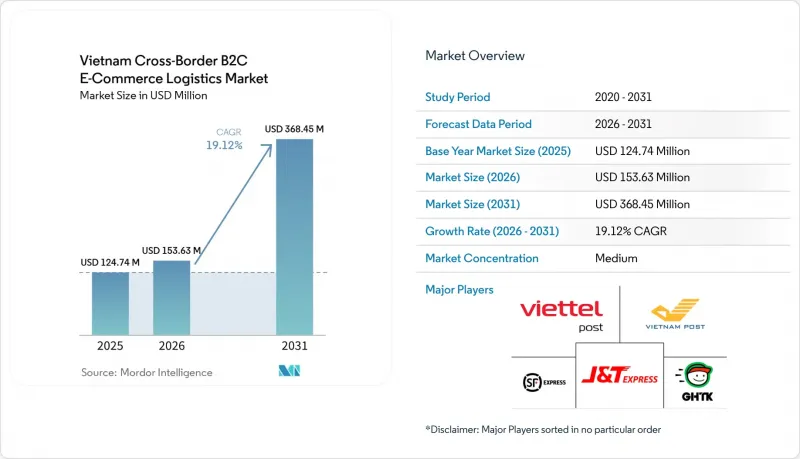
越南跨境B2C電商物流市場目前正經歷快速擴張,這主要得益於網際網路普及率的飆升、中產階級的崛起及其帶來的可支配收入的增加,以及直播帶貨等社交電商模式的廣泛應用。本報告按產品類型(食品飲料、個人護理及家居用品、時尚生活、家電及家用設備等)、物流功能(運輸、附加價值服務等)、配送速度(快遞、標準)及物流流向(入境、出庫)進行細分。市場預測以美元計價。
越南跨境B2C電子商務物流市場趨勢與洞察。
越南線上零售需求快速成長
越南跨境B2C電商物流市場正受惠於此趨勢的雙重影響。越南消費者擴大從海外賣家購買商品,而本地中小企業也正利用數位化管道拓展國際市場。這種雙軌趨勢正推動小包裹量、海關環節、退貨處理和履約複雜性迅速成長——其速度遠遠超出訂單量本身所能預測的。同時,價值重心也從簡單的配送服務轉向能夠管理從倉庫到客戶家門口全程可視性和跨境服務協調的供應商。隨著需求的不斷擴大,越南跨境B2C電商物流市場正減少對單一品類或路線的依賴,轉而更加重視跨多個應用情境的可靠服務。
東協主導的自由貿易主導貿易走廊擴張
越南的貿易走廊依託於RCEP、CPTPP、EVFTA和東協框架等關鍵協議,這些協議降低了關稅摩擦,使跨境物流對托運人和市場而言更具可預測性。 2025年5月,大湄公河跨境便利化協定(GMS)路線將連接中國與龍邊內陸貨櫃堆場,為途經越南北部的進口小包裹和出口貨物拓展了切實可行的路線選擇。這對越南跨境B2C電商物流市場意義重大,因為路線網路的擴展也將增加單證要求,使具備綜合清關和仲介能力的企業更具優勢。這些自由貿易協定在擴大貿易的同時,也提高了合規物流服務的營運溢價,這對向多個目的地市場分銷商品的經銷商而言尤其有利。
加強增值稅和低價值進口稅的課稅
越南於2025年收緊了低價值進口商品的稅收政策,取消了先前透過宅配運送的價值低於100萬越南盾(約38美元)的進口商品的增值稅豁免。新規也要求電商平台業者在交易確認時代扣代繳增值稅。這直接影響了越南跨境B2C電商物流市場中進口小包裹的獲利能力,因為低價值貨物幾乎沒有空間承受額外的合規成本。企業需要更精確地申報和處理稅務,這將增加每個小包裹的處理負擔,並削弱先前推動進口量成長的低價值進口模式。此外,嚴重依賴高密度、低價值進口的企業將面臨規模經濟效益下降的問題。相較於仍依賴人工流程的企業,擁有自動化稅務和海關流程的供應商更有利於維持獲利能力。
細分市場分析
到2025年,時尚和生活風格類別將佔越南跨境B2C電商物流市場佔有率的29%,成為該品類結構中最大的產品細分市場。這一地位反映了越南服裝鞋帽產業的穩固基礎,既支撐著國際品牌的進口物流,也支撐著本土生產商的出口物流。該細分市場受益於重複購買趨勢、輕量化小包裹形式以及大規模的賣家群體,這些因素都非常適合以市場主導的跨境貿易模式。
預計到2031年,食品飲料產業將以20.11%的複合年成長率成長,成為越南跨境B2C電商物流市場中成長最快的產品線。該行業的成長與高階農產品和食品的出口密切相關,這些產品透過數位化管道進行分銷,尤其是水產品、咖啡、特色米和熱帶水果等需要更複雜低溫運輸管理的產品。這一趨勢推動了對溫控倉庫、規範包裝和更快捷的國際運輸解決方案的需求,以確保產品品質。這也反映出電商平台與出口商之間合作的加強,促進了跨境銷售,使消費者能夠直接購買到商品。因此,物流供應商正在擴展其專業的低溫運輸能力和端到端可視性解決方案,以支援生鮮食品的配送。
預計到2025年,運輸將佔越南跨境B2C電商物流市場規模的57.46%,成為營收貢獻最大的物流環節。這項預期符合預期,因為所有跨境運輸仍將主要依賴公路、航空、鐵路或海運。道路運輸將繼續在中國與越南之間以及東協地區內部的運輸中發揮核心作用,而航空運輸將負責對時間要求嚴格、價值較高的貨物的運輸。
預計到2031年,倉儲、配送和庫存管理將以24.29%的複合年成長率成長,成為越南跨境B2C電商物流市場中成長最快的物流職能。這一成長滯後表明,跨境履約從單純的轉運處理轉向在海關口岸附近進行庫存管理。這種轉變正在縮短最後一公里配送時間,並降低跨境運輸的不確定性。這也反映出,為了支持不斷成長的電商交易量,企業正在增加對保稅倉庫、本地履約中心和技術驅動的庫存最佳化方面的投資。因此,物流供應商正從單純提供運輸服務轉向提供整合化、加值服務模式。
其他好處:
- Excel格式的市場預測(ME)表
- 3個月的分析師支持
目錄
第1章:引言
- 研究假設和市場定義
- 調查範圍
第2章:調查方法
第3章執行摘要
第4章 市場狀況
- 市場概況及跨境電商物流在電商市場的作用
- 電子商務產業趨勢
- 消費者行為及供需分析
- 法律規範
- 價值鍊和通路分析
- 市場促進因素
- 越南線上零售需求快速成長
- 東協主導的自由貿易主導貿易走廊擴張
- 投資保稅倉庫和履約中心
- 人們越來越願意為更快捷的國際運輸支付費用
- 新南威爾斯和澳洲西南州海關資料的整合
- 將航空運輸能力重新分配給東南亞用於電子商務
- 市場限制因素
- 收緊增值稅和低價值進口課稅
- 基礎設施分散,海關手續複雜。
- 經濟快速成長和排放氣體的壓力
- 物流系統之間的資料碎片化
- 技術創新前景
- 波特五力模型
- 跨境電子商務物流需求的變化
- 地緣政治事件對供應鏈轉型的影響
第5章 市場規模及成長預測(價值與數量,2020-2031 年)
- 產品類型
- 食品/飲料
- 個人護理和居家護理
- 時尚與生活方式(配件、服裝、鞋類)
- 家具
- 家用電子電器和電器產品
- 其他產品
- 透過物流功能
- 運輸
- 道路運輸
- 航空
- 海路和內河航道
- 鐵路
- 倉儲、物流和庫存管理
- 附加價值服務及其他
- 運輸
- 按配送速度
- 表達
- 標準
- 按流向
- 出口
- 北美洲
- 歐洲
- 亞太地區
- 中東和非洲
- 南美洲
- 入境(進口)
- 北美洲
- 歐洲
- 亞太地區
- 中東和非洲
- 南美洲
- 出口
第6章 競爭情勢
- 市場集中度
- 關鍵策略趨勢
- 市佔率分析
- 公司簡介
- DHL
- FedEx
- UPS
- Cainiao Network
- SF Express
- J&T Express
- Viettel Post
- BEST Express
- Kerry Express
- VNPost EMS
- GHN(Giao Hang Nhanh)
- GHTK(Giao Hang Tiet Kiem)
- CJ Logistics
- Sagawa Express
- Kuehne+Nagel
- Maersk Logistics
- Yusen Logistics
- Aramex
- Boxme Global
- 4PX Express
- YunExpress
- ECMS Express
第7章 市場機會與未來展望
According to Mordor Intelligence, the vietnam cross-border B2C e-commerce logistics market was valued at USD 124.74 million in 2025 and is estimated to grow from USD 153.63 million in 2026 to reach USD 368.45 million by 2031, at a CAGR of 19.12% during the forecast period 2026 to 2031.
Vietnam's cross-border B2C e-commerce logistics market is currently experiencing rapid expansion, driven by soaring internet penetration, a burgeoning middle class with rising disposable incomes, and the widespread adoption of social commerce formats such as livestreaming. This report is Segmented by Product Category (Foods and Beverages, Personal and Household Care, Fashion and Lifestyle, Consumer Electronics and Household Appliances, and More), by Logistics Function (Transportation, Value-Added Services, and More), by Delivery Speed (Express, Standard), and by Flow Direction (Inbound, Outbound). The Market Forecasts are Provided in Terms of Value (USD).
Vietnam Cross-Border B2C E-Commerce Logistics Market Trends and Insights
Rapid Expansion of Vietnam Online Retail Demand
The Vietnam cross-border B2C e-commerce logistics market benefits from both sides of that flow, because Vietnamese consumers are buying more from foreign sellers while local SMEs are using digital channels to sell abroad. That dual movement increases parcel volumes, customs touchpoints, return handling, and fulfillment complexity faster than order counts alone would suggest. It also moves the value pool away from stand-alone delivery toward providers that can manage warehouse-to-door visibility and cross-border service coordination. As this demand base broadens, the Vietnam cross-border B2C e-commerce logistics market becomes less dependent on a single category or corridor and more reliant on service reliability across multiple use cases.
FTA-Led and ASEAN-Enabled Trade Corridor Expansion
Vietnam's trade corridors are supported by major agreements such as RCEP, CPTPP, EVFTA, and ASEAN frameworks, which lower tariff friction and make cross-border movement more predictable for shippers and marketplaces. The Greater Mekong Subregion Cross-Border Transport Facilitation Agreement route linked China to the Long Bien Inland Container Depot in May 2025, widening practical routing options for inbound parcels and outbound goods moving through northern Vietnam. In the Vietnam cross-border B2C e-commerce logistics market, this matters because corridor growth also increases documentation requirements, which favor operators with integrated customs and brokerage capabilities. The same FTAs that expand trade are also lifting the operational premium on compliance-ready logistics services, especially for sellers moving through multiple destination markets.
VAT and Low-Value Import Tax Tightening
Vietnam tightened the tax treatment of low-value imports in 2025, ending the old VAT exemption for imported goods under VND 1 million (USD 38) delivered through express services, and it also moved e-commerce platform operators toward VAT withholding at the point of transaction confirmation. In the Vietnam cross-border B2C e-commerce logistics market, this directly affects inbound parcel economics, as low-ticket shipments have less room to absorb additional compliance costs. Operators must now handle declarations and tax treatment with more accuracy, which raises the processing burden per parcel and weakens the low-value import model that drove earlier volume growth. This also narrows the benefit of scale for players that relied mainly on dense, low-ticket inbound traffic. Providers with automated tax and customs workflows are better placed to preserve margins than operators that still depend on manual intervention.
Other drivers and restraints analyzed in the detailed report include:
- NSW and ASW Customs Data Integration
- Reallocation of E-Commerce Air Capacity into Southeast Asia
- Fragmented Infrastructure and Customs Complexity
For complete list of drivers and restraints, kindly check the Table Of Contents.
Segment Analysis
Fashion and lifestyle accounted for 29% of the Vietnam cross-border B2C e-commerce logistics market share in 2025, making it the largest product segment in the category mix. That position reflects Vietnam's deep apparel and footwear base, which supports both inbound flows from international brands and outbound shipments from local producers. The segment benefits from repeat ordering patterns, light parcel formats, and a large seller base that fits marketplace-led cross-border trade.
Foods and beverages are projected to expand at a 20.11% CAGR through 2031, making it the fastest-growing product line in the Vietnam cross-border B2C e-commerce logistics market. Growth in that segment is tied to premium agri-food exports moving through digital channels, especially seafood, coffee, specialty rice, and tropical fruit formats that need better cold-chain handling. This trend is driving demand for temperature-controlled storage, compliant packaging, and faster international shipping solutions to preserve product quality. It also reflects increasing alignment between e-commerce platforms and exporters to enable direct-to-consumer cross-border sales. As a result, logistics providers are scaling specialized cold chain capabilities and end-to-end visibility solutions to support perishable product flows.
Transportation accounted for 57.46% of the Vietnam cross-border B2C e-commerce logistics market size in 2025, making it the largest logistics function by revenue contribution. That position is expected because every cross-border shipment still depends first on movement across road, air, rail, or sea links. Road remains central on China-Vietnam and intra-ASEAN movements, while air carries the time-sensitive and higher-value portion of the flow.
Warehousing, distribution, and inventory management are forecast to expand at a 24.29% CAGR through 2031, which is the fastest pace among logistics functions in the Vietnam cross-border B2C e-commerce logistics market. The growth gap shows that cross-border fulfillment is moving from pass-through handling to inventory positioning near customs gateways. This shift is enabling faster last-mile delivery timelines and reducing cross-border transit uncertainties. It also reflects increasing investments in bonded warehousing, localized fulfillment centers, and technology-driven inventory optimization to support rising e-commerce volumes. As a result, logistics providers are transitioning toward integrated, value-added service models rather than pure transportation offerings
Complete Report Scope:
- By Product Category
- Foods and Beverages
- Personal and Household Care
- Fashion and Lifestyle (Accessories, Apparel, Footwear)
- Furniture
- Consumer Electronics and Household Appliances
- Other Products
- By Logistics Function
- Transportation
- Road
- Air
- Sea and Inland Waterways
- Rail
- Warehousing, Distribution and Inventory Management
- Value-added Services and Others
- Transportation
- By Delivery Speed
- Express
- Standard
- By Flow Direction
- Outbound (Exports)
- North America
- Europe
- Asia-Pacific
- Middle East and Africa
- South America
- Inbound (Imports)
- North America
- Europe
- Asia-Pacific
- Middle East and Africa
- South America
- Outbound (Exports)
List of Companies Covered in this Report:
- DHL
- FedEx
- UPS
- Cainiao Network
- SF Express
- J&T Express
- Viettel Post
- BEST Express
- Kerry Express
- VNPost EMS
- GHN (Giao Hang Nhanh)
- GHTK (Giao Hang Tiet Kiem)
- CJ Logistics
- Sagawa Express
- Kuehne+Nagel
- Maersk Logistics
- Yusen Logistics
- Aramex
- Boxme Global
- 4PX Express
- YunExpress
- ECMS Express
Additional Benefits:
- The market estimate (ME) sheet in Excel format
- 3 months of analyst support
TABLE OF CONTENTS
1 Introduction
- 1.1 Study Assumptions & Market Definition
- 1.2 Scope of the Study
2 Research Methodology
3 Executive Summary
4 Market Landscape
- 4.1 Market Overview & Role of Cross-border E-commerce Logistics in E-commerce Market
- 4.2 Trends in E-Commerce Industry
- 4.3 Consumer Behavior and Demand-Supply Analysis
- 4.4 Regulatory Framework
- 4.5 Value Chain and Distribution Channel Analysis
- 4.6 Market Drivers
- 4.6.1 Rapid Expansion of Vietnam Online Retail Demand
- 4.6.2 FTA-Led and ASEAN-Enabled Trade Corridor Expansion
- 4.6.3 Bonded Warehousing and Fulfillment Investment Near Gateways
- 4.6.4 Rising Willingness to Pay for Faster Cross-Border Delivery
- 4.6.5 NSW and ASW Customs Data Integration
- 4.6.6 Reallocation of E-Commerce Air Capacity into Southeast Asia
- 4.7 Market Restraints
- 4.7.1 VAT and Low-Value Import Tax Tightening
- 4.7.2 Fragmented Infrastructure and Customs Complexity
- 4.7.3 Express-Speed Economics and Emissions Pressure
- 4.7.4 Data Fragmentation Across Logistics Systems
- 4.8 Technology Innovations Outlook
- 4.9 Porter's Five Forces
- 4.9.1 Threat of New Entrants
- 4.9.2 Bargaining Power of Suppliers
- 4.9.3 Bargaining Power of Buyers
- 4.9.4 Threat of Substitutes
- 4.9.5 Rivalry Among Competitors
- 4.10 Evolution of Cross-border E-commerce Logistics Requirements
- 4.11 Impact of Geo-Political Events on Supply Chain Shifts
5 Market Size & Growth Forecasts (Value and Volume, 2020-2031)
- 5.1 By Product Category
- 5.1.1 Foods and Beverages
- 5.1.2 Personal and Household Care
- 5.1.3 Fashion and Lifestyle (Accessories, Apparel, Footwear)
- 5.1.4 Furniture
- 5.1.5 Consumer Electronics and Household Appliances
- 5.1.6 Other Products
- 5.2 By Logistics Function
- 5.2.1 Transportation
- 5.2.1.1 Road
- 5.2.1.2 Air
- 5.2.1.3 Sea and Inland Waterways
- 5.2.1.4 Rail
- 5.2.2 Warehousing, Distribution and Inventory Management
- 5.2.3 Value-added Services and Others
- 5.2.1 Transportation
- 5.3 By Delivery Speed
- 5.3.1 Express
- 5.3.2 Standard
- 5.4 By Flow Direction
- 5.4.1 Outbound (Exports)
- 5.4.1.1 North America
- 5.4.1.2 Europe
- 5.4.1.3 Asia-Pacific
- 5.4.1.4 Middle East and Africa
- 5.4.1.5 South America
- 5.4.2 Inbound (Imports)
- 5.4.2.1 North America
- 5.4.2.2 Europe
- 5.4.2.3 Asia-Pacific
- 5.4.2.4 Middle East and Africa
- 5.4.2.5 South America
- 5.4.1 Outbound (Exports)
6 Competitive Landscape
- 6.1 Market Concentration
- 6.2 Key Strategic Moves
- 6.3 Market Share Analysis
- 6.4 Company Profiles (includes Global level Overview, Market level overview, Core Segments, Financials as available, Strategic Information, Market Rank/Share for key companies, Products & Services, and Recent Developments)
- 6.4.1 DHL
- 6.4.2 FedEx
- 6.4.3 UPS
- 6.4.4 Cainiao Network
- 6.4.5 SF Express
- 6.4.6 J&T Express
- 6.4.7 Viettel Post
- 6.4.8 BEST Express
- 6.4.9 Kerry Express
- 6.4.10 VNPost EMS
- 6.4.11 GHN (Giao Hang Nhanh)
- 6.4.12 GHTK (Giao Hang Tiet Kiem)
- 6.4.13 CJ Logistics
- 6.4.14 Sagawa Express
- 6.4.15 Kuehne+Nagel
- 6.4.16 Maersk Logistics
- 6.4.17 Yusen Logistics
- 6.4.18 Aramex
- 6.4.19 Boxme Global
- 6.4.20 4PX Express
- 6.4.21 YunExpress
- 6.4.22 ECMS Express
7 Market Opportunities & Future Outlook
- 7.1 White-space & Unmet-Need Assessment

 全球電子商務物流市場規模、佔有率、趨勢和成長分析報告(2026-2034年)
 英國電子商務物流:市場佔有率分析、產業趨勢與統計、成長預測(2026-2031)印度電子商務物流:市場佔有率分析、行業趨勢和統計數據以及成長預測(2026-2031 年)東協電子商務物流:市場佔有率分析、產業趨勢與統計及成長預測(2026-2031年)
 電子商務物流市場:全球市場預測(2026-2032)中國跨境電商物流:市佔率分析、產業趨勢與統計及成長預測(2026-2031年)中國電子商務物流:市場佔有率分析、產業趨勢與統計及成長預測(2026-2031年)印尼電子商務物流:市場佔有率分析、產業趨勢與統計及成長預測(2026-2031)印度跨境B2C電子商務物流:市場佔有率分析、產業趨勢與統計及成長預測(2026-2031年)美國跨境電子商務物流:市場佔有率分析、產業趨勢與統計及成長預測(2026-2031)