


 |
市場調查報告書
商品編碼
2154966
南美洲藥品包裝:市佔率分析、產業趨勢與統計及成長預測(2026-2031 年)South America Pharmaceutical Packaging - Market Share Analysis, Industry Trends & Statistics, Growth Forecasts (2026 - 2031) |
||||||

※ 本網頁內容可能與最新版本有所差異。詳細情況請與我們聯繫。
據 Mordor Intelligence 稱,2025 年南美藥品包裝市場價值 61.5 億美元,預計從 2026 年到 2031 年將以 6.79% 的複合年成長率成長,到 2031 年達到 91 億美元。
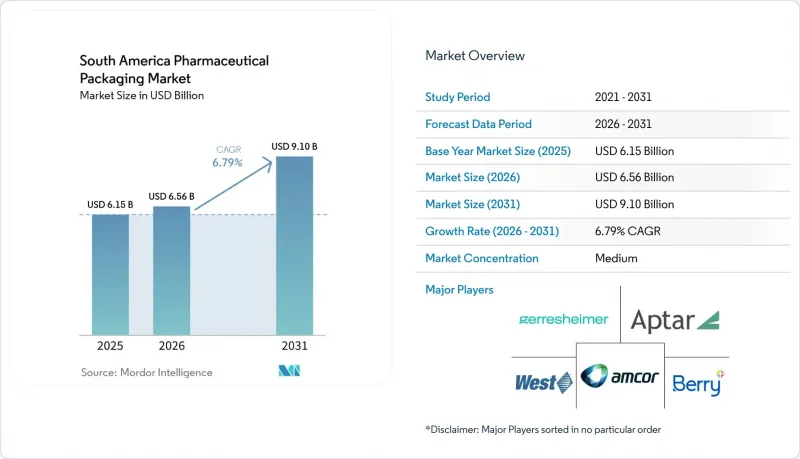
南美洲藥品包裝市場趨勢與洞察
巴西和阿根廷製藥業的擴張
在巴西和阿根廷,藥品生產能力正在擴張,從而支撐了多種藥品類別對初級和二級包裝的需求。預計到2025年,巴西學名藥生產商的銷售量將達到數十億劑,較2024年顯著成長。這些銷量的大部分來自巴西本土製藥公司。在巴西統一醫療系統(SUS)下,公共採購優先採購高血壓和糖尿病等藥物的獨立泡殼包裝單劑量藥品,而非大瓶裝藥品。這項要求支撐了對泡殼包裝的需求,即使是已上市的學名藥也是如此。 2025年,巴西國家經濟社會發展銀行(BNDES)批准向Bionovis公司提供6.5億雷亞爾(約合1.11億美元)的貸款,以支持巴西國內生物製藥生產,並滿足未來對高度複雜的注射劑包裝的需求。
慢性病增多和學名藥銷售擴張。
慢性病治療為南美洲口服固態學名藥的包裝創造了穩定的銷售量基礎。 2025年,巴西主要的學名藥包括氯沙坦、Enalapril、阿替洛爾和氨氯地平。截至2025年4月,氯沙坦的銷售量已達5,640萬盒。該地區的零售藥局通常使用帶狀包裝或單劑量泡殼包裝來包裝這些藥物。這一趨勢推動了對鋁箔複合包裝和預印包裝的需求,而不是大瓶包裝。這也有助於長期治療所需的大批量藥物的持續生產。學名藥銷售的成長並不一定意味著包裝需求的減少。即使活性成分的成本下降,有關單劑量規格和可追溯性的法規也可能導致每個藥品包裝的含量增加。
進口樹脂、鋁和藥用玻璃的價格波動。
原料成本波動對南美洲製藥包裝製造商構成重大業務挑戰。巴西超過70%的高純度硼矽酸玻璃管依賴進口。根據NCM編碼7010,醫藥玻璃容器的進口關稅在12%至18%之間。若巴西幣貶值10%,在沒有抵銷機制的情況下,玻璃容器的進口成本可能增加5%至8%。 2023年至2025年間,倫敦金屬交易所(LME)的鋁價波動幅度高達±30%。這些價格波動迫使泡殼鋁箔製造商與製藥買家重新談判契約,尤其是那些簽訂了多年固定供應協議的買家。產能限制進一步加劇了這種成本風險。歐洲和日本資本財供應商提供的硼矽酸玻璃管成型生產線的交貨週期為18至24個月。由於價格波動導致需求變化,生產商無法迅速調整供應水準。
細分市場分析
到2025年,塑膠將佔南美藥品包裝市場48.62%的佔有率。高密度聚乙烯(HDPE)瓶和聚對苯二甲酸乙二醇酯(PET)容器用於口服固態學名藥,而低密度聚乙烯(LDPE)和線性低密度聚乙烯(LLDPE)袋和管則用於液體和半固態劑型。由於用於生物製藥和疫苗的I型硼矽酸玻璃容器價格較高,玻璃製品的銷售額佔比高於銷售量。金屬、生物聚合物和其他材料則用於滿足特定需求,例如鋁箔可用作泡殼包裝的蓋材。由於缺乏檢驗的藥用級替代品,生物聚合物的應用仍然受到限制。
預計2026年至2031年間,紙張和紙板的複合年成長率將達到7.45%,成為成長最快的材料類別。智利的回收法規和巴西的永續性計畫正在影響對可回收紙盒和吸塑卡的需求。 Suzano的「Pharma Plus」紙板專為藥品外包裝紙盒和吸塑卡應用而設計。 Klockner Pentaplus和Constantia Flexibles正在開發單材料吸塑複合材料,該材料在保持防潮和阻氧性能的同時,也符合可回收包裝的目標。南美洲的藥品包裝產業必須在永續性要求、藥品保護和監管文件方面取得平衡。
截至2025年,初級包裝佔南美洲藥品包裝市場規模的74.62%。預計到2031年,其複合年成長率將達到7.78%,是所有包裝等級中成長最快的。該細分市場包括直接保護藥品的容器和密封系統,其市場規模反映了注射劑、生物製藥和疫苗的需求。預填充式注射器是成長最快的初級包裝形式,因為製造商正從管瓶和注射器系統轉向即用型包裝。管瓶和安瓿瓶仍然是注射用抗生素和疫苗中最大的包裝形式。
肖特製藥位於巴西伊圖佩巴的工廠將於2026年迎來25週年慶,該工廠擁有500名員工。工廠主要生產安瓿瓶、管瓶和藥筒,供應當地市場。二級包裝包括紙盒、套筒、標籤和附加檔,三級包裝包括瓦楞紙箱和托盤。巴西國家衛生監督局(ANVISA)的RDC 885/2024數位說明書試驗計畫要求對二級包裝盒進行改造,以適應與監管資訊電子庫相容的2D資料矩陣碼。生物相似藥和疫苗的冷鏈配送推動了對整合式一級、二級和三級包裝解決方案的需求。
其他好處:
- Excel格式的市場預測(ME)表
- 3個月的分析師支持
目錄
第1章:引言
- 研究假設和市場定義
- 調查範圍
第2章:調查方法
第3章執行摘要
第4章 市場狀況
- 市場概覽
- 市場促進因素
- 巴西和阿根廷製藥業的擴張
- 慢性病發生率上升及學名藥銷售成長
- 生技藥品、疫苗和腸外療法領域的成長
- 永續性驅動的向可回收包裝轉型
- 單劑量包裝的序列化和可追溯性要求
- 灌裝、封裝和合約包裝能力的區域分佈
- 市場限制因素
- 進口樹脂、鋁和藥用玻璃的價格波動。
- 無菌和阻隔包裝的驗證成本很高
- 分散的廢棄物收集和回收基礎設施
- 外匯、進口和營運資金等因素對採購包裝材料的企業造成壓力。
- 產業價值/價值鏈分析
- 監理情勢
- 巴西,ANVISA關於標籤和包裝資訊的要求
- 電子處方箋和可追溯性在阿根廷的影響
- 智利擴大生產者責任制和包裝召回範圍
- 良好生產規範 (GMP) 和初級包裝品質標準
- 技術展望
- 序列化吸塑包裝印刷和視覺檢測
- 灌裝管瓶、藥筒和預填充式注射器
- 含有再生材料和單一材料的包裝形式
- 電子宣傳冊、QR碼、智慧包裝
- 波特五力分析
- 宏觀經濟因素對市場的影響
第5章 市場規模與成長預測
- 材料
- 塑膠
- HDPE
- 低密度聚乙烯和線性低密度聚乙烯
- PET
- 其他塑膠
- 玻璃
- I型硼硼矽酸玻璃
- II 型處理鈉鈣玻璃
- 第三型鈉鈣玻璃
- 金屬
- 紙張和紙板
- 生物聚合物和其他材料
- 塑膠
- 按包裝級別
- 初級包裝
- 瓶子
- 預填充式注射器
- 病毒安瓿
- 吸塑包裝
- 二級包裝
- 紙箱和套筒
- 標籤和插頁
- 三級包裝
- 紙板運輸箱
- 托盤和防護系統
- 初級包裝
- 依產品類型
- 瓶子
- 預填充式注射器
- 病毒安瓿
- 吸塑包裝
- 蓋子和封口
- 管狀物和袋狀物
- 其他產品類型
- 最終用戶
- 製藥公司
- 合約研發生產組織(CDMO)
- 研究機構
- 其他最終用戶
- 國家
- 巴西
- 阿根廷
- 智利
- 哥倫比亞
- 秘魯
- 其他南美國家
第6章 競爭情勢
- 市場集中度
- 策略趨勢
- 市佔率分析
- 公司簡介
- Amcor plc
- Gerresheimer AG
- West Pharmaceutical Services, Inc.
- Berry Global Group, Inc.
- AptarGroup, Inc.
- Smurfit WestRock plc
- Becton, Dickinson and Company
- Stevanato Group SpA
- SCHOTT Pharma AG and Co. KGaA
- Nipro Corporation
- SGD Pharma
- Klockner Pentaplast Group
- Constantia Flexibles Group GmbH
- Huhtamaki Oyj
- Tekni-Plex, Inc.
- Evertis SA
- Grupo HZ
- Condensa SA
- TGI Pack SRL
- SG+PACK
第7章 市場機會與未來展望
According to Mordor Intelligence, the South America pharmaceutical packaging market size was valued at USD 6.15 billion in 2025 and is projected to reach USD 9.1 billion by 2031, at a CAGR of 6.79% during 2026-2031.
South America Pharmaceutical Packaging Market Trends and Insights
Expansion of Pharmaceutical Manufacturing in Brazil and Argentina
Brazil and Argentina are expanding pharmaceutical production capacity, thereby supporting demand for primary and secondary packaging across multiple drug categories. Brazilian generic drug manufacturers sold billions of units in 2025, a significant increase over 2024, with domestic laboratories accounting for most of the generic unit volume. Public procurement under Brazil's Unified Health System favors individually blister-packed doses for hypertension and diabetes treatments rather than bulk bottles. This requirement supports demand for blister packaging, even for established generic molecules. BNDES approved BRL 650 million (USD 111 million) in financing for Bionovis in 2025, supporting domestic biologics production and future demand for high-complexity injectable packaging.
Rising Chronic Disease and Generic Drug Volumes
Chronic disease treatment creates a stable volume base for oral-solid generic packaging across South America. Losartan, enalapril, atenolol, and amlodipine were among the leading generic products in Brazil during 2025. Losartan recorded 56.4 million boxes sold through April 2025. Retail pharmacies in the region commonly use strip packs and unit-dose blisters for these medicines. This preference increases demand for aluminum foil laminates and printed packaging rather than bulk-bottle formats. It also supports recurring production runs for high-volume medicines that are dispensed over long treatment periods. Generic volume does not necessarily reduce packaging requirements. Unit-dose specifications and traceability rules can increase packaging content per medicine even as active ingredient costs decline.
Volatility in Imported Resin, Aluminum, and Pharmaceutical Glass Costs
Raw material cost volatility is a major operational challenge for pharmaceutical packaging converters in South America. More than 70% of high-purity borosilicate glass tubing used in Brazil is imported. Import tariffs on pharmaceutical glass containers under NCM code 7010 range from 12% to 18%. A 10% depreciation of the Brazilian real can raise landed glass container costs by 5% to 8% in the absence of an offsetting mechanism. Aluminum prices on the London Metal Exchange moved by +-30% between 2023 and 2025. These movements required blister-foil converters to renegotiate contracts with pharmaceutical buyers that may use multiyear fixed supply agreements. Capacity constraints add to this cost exposure. Borosilicate tubing forming lines require 18 to 24 months of lead time from European and Japanese capital equipment suppliers. Producers cannot quickly adjust supply when price changes alter demand.
Other drivers and restraints analyzed in the detailed report include:
- Growth of Biologics, Vaccines, and Parenteral Therapies
- Sustainability-Led Shift Toward Recyclable Packaging
- High Validation Costs for Sterile and Barrier Packaging
For complete list of drivers and restraints, kindly check the Table Of Contents.
Segment Analysis
Plastics held 48.62% of the South America pharmaceutical packaging market in 2025. HDPE bottles and PET containers support oral-solid generic medicines, while LDPE and LLDPE pouches and tubes serve liquid and semi-solid formulations. Glass carries greater revenue weight than its volume share because Type I borosilicate formats for biologics and vaccines carry a premium. Metal, biopolymers, and other materials address specialized needs, including aluminum foil for blister lidding. The use of biopolymers remains limited by the availability of validated pharmaceutical-grade alternatives.
Paper and paperboard is projected to expand at a 7.45% CAGR from 2026 to 2031, making it the fastest-growing material category. Chilean recovery rules and sustainability programs in Brazil are influencing demand for recyclable cartons and blister cards. Suzano's Pharma Plus paperboard was designed for pharmaceutical outer cartons and blister-card uses. Klockner Pentaplast and Constantia Flexibles are developing mono-material blister laminates that retain moisture- and oxygen-barrier performance while supporting recyclable packaging goals. The South America pharmaceutical packaging industry must balance sustainability requirements with drug protection and regulatory documentation.
Primary packaging accounted for 74.62% of the South America pharmaceutical packaging market size in 2025. It is projected to expand at a 7.78% CAGR through 2031, the highest rate among packaging levels. The segment includes containers and closure systems that directly protect medicines, with its value position reflecting the needs of injectables, biologics, and vaccines. Prefilled syringes are the fastest-growing primary format as manufacturers shift from vial-and-syringe systems to ready-to-use configurations. Vials and ampoules still handle the largest volumes for parenteral antibiotics and vaccines.
SCHOTT Pharma's Itupeva facility in Brazil marked its 25th anniversary in 2026 and employs 500 people. The site produces ampoules, vials, and cartridges for the local market. Secondary packaging includes cartons, sleeves, labels, and inserts, while tertiary formats include corrugated shippers and pallets. ANVISA's RDC 885/2024 digital leaflet pilot requires changes to secondary cartons so they can carry compliant 2D DataMatrix codes for the regulatory information electronic repository. Cold-chain distribution for biosimilars and vaccines increases the need for coordinated primary, secondary, and tertiary solutions.
Complete Report Scope:
- By Material
- Plastics
- HDPE
- LDPE and LLDPE
- PET
- Other Plastics
- Glass
- Type I Borosilicate
- Type II Treated Soda-Lime
- Type III Soda-Lime
- Metal
- Paper and Paperboard
- Biopolymers and Other Materials
- Plastics
- By Packaging Level
- Primary Packaging
- Bottles
- Prefilled Syringes
- Vials and Ampoules
- Blister Packs
- Secondary Packaging
- Cartons and Sleeves
- Labels and Inserts
- Tertiary Packaging
- Corrugated Shippers
- Pallets and Protective Systems
- Primary Packaging
- By Product Type
- Bottles
- Prefilled Syringes
- Vials and Ampoules
- Blister Packs
- Caps and Closures
- Tubes and Pouches
- Other Product Types
- By End User
- Pharmaceutical Companies
- Contract Development and Manufacturing Organizations
- Research Institutes
- Other End Users
- By Country
- Brazil
- Argentina
- Chile
- Colombia
- Peru
- Rest of South America
List of Companies Covered in this Report:
- Amcor plc
- Gerresheimer AG
- West Pharmaceutical Services, Inc.
- Berry Global Group, Inc.
- AptarGroup, Inc.
- Smurfit WestRock plc
- Becton, Dickinson and Company
- Stevanato Group S.p.A.
- SCHOTT Pharma AG and Co. KGaA
- Nipro Corporation
- SGD Pharma
- Klockner Pentaplast Group
- Constantia Flexibles Group GmbH
- Huhtamaki Oyj
- Tekni-Plex, Inc.
- Evertis S.A.
- Grupo HZ
- Condensa S.A.
- TGI Pack S.R.L.
- SG+PACK
Additional Benefits:
- The market estimate (ME) sheet in Excel format
- 3 months of analyst support
TABLE OF CONTENTS
1 INTRODUCTION
- 1.1 Study Assumptions and Market Definition
- 1.2 Scope of the Study
2 RESEARCH METHODOLOGY
3 EXECUTIVE SUMMARY
4 MARKET LANDSCAPE
- 4.1 Market Overview
- 4.2 Market Drivers
- 4.2.1 Expansion of Pharmaceutical Manufacturing in Brazil and Argentina
- 4.2.2 Rising Chronic-Disease and Generic-Drug Volumes
- 4.2.3 Growth of Biologics, Vaccines, and Parenteral Therapies
- 4.2.4 Sustainability-Led Shift Toward Recyclable Packaging
- 4.2.5 Serialization and Traceability Requirements in Unit-Dose Packaging
- 4.2.6 Regionalization of Fill-Finish and Contract Packaging Capacity
- 4.3 Market Restraints
- 4.3.1 Volatility in Imported Resin, Aluminum, and Pharmaceutical Glass Costs
- 4.3.2 High Validation Costs for Sterile and Barrier Packaging
- 4.3.3 Fragmented Waste-Collection and Recycling Infrastructure
- 4.3.4 Currency, Import, and Working-Capital Pressure on Packaging Buyers
- 4.4 Industry Value / Supply-Chain Analysis
- 4.5 Regulatory Landscape
- 4.5.1 Brazil, ANVISA Labeling and Package-Information Requirements
- 4.5.2 Argentina, Digital Prescription and Traceability Implications
- 4.5.3 Chile, Extended Producer Responsibility and Packaging Recovery
- 4.5.4 Good Manufacturing Practice and Primary-Packaging Quality Standards
- 4.6 Technological Outlook
- 4.6.1 Serialization-Ready Blister Printing and Vision Inspection
- 4.6.2 Ready-to-Fill Vials, Cartridges, and Prefilled Syringes
- 4.6.3 Recycled-Content and Mono-Material Packaging Formats
- 4.6.4 Digital Leaflets, QR Codes, and Connected Packaging
- 4.7 Porter's Five Forces Analysis
- 4.7.1 Bargaining Power of Suppliers
- 4.7.2 Bargaining Power of Buyers
- 4.7.3 Threat of New Entrants
- 4.7.4 Threat of Substitutes
- 4.7.5 Degree of Competition
- 4.8 Impact of Macroeconomic Factors on the Market
5 MARKET SIZE AND GROWTH FORECASTS (VALUE)
- 5.1 By Material
- 5.1.1 Plastics
- 5.1.1.1 HDPE
- 5.1.1.2 LDPE and LLDPE
- 5.1.1.3 PET
- 5.1.1.4 Other Plastics
- 5.1.2 Glass
- 5.1.2.1 Type I Borosilicate
- 5.1.2.2 Type II Treated Soda-Lime
- 5.1.2.3 Type III Soda-Lime
- 5.1.3 Metal
- 5.1.4 Paper and Paperboard
- 5.1.5 Biopolymers and Other Materials
- 5.1.1 Plastics
- 5.2 By Packaging Level
- 5.2.1 Primary Packaging
- 5.2.1.1 Bottles
- 5.2.1.2 Prefilled Syringes
- 5.2.1.3 Vials and Ampoules
- 5.2.1.4 Blister Packs
- 5.2.2 Secondary Packaging
- 5.2.2.1 Cartons and Sleeves
- 5.2.2.2 Labels and Inserts
- 5.2.3 Tertiary Packaging
- 5.2.3.1 Corrugated Shippers
- 5.2.3.2 Pallets and Protective Systems
- 5.2.1 Primary Packaging
- 5.3 By Product Type
- 5.3.1 Bottles
- 5.3.2 Prefilled Syringes
- 5.3.3 Vials and Ampoules
- 5.3.4 Blister Packs
- 5.3.5 Caps and Closures
- 5.3.6 Tubes and Pouches
- 5.3.7 Other Product Types
- 5.4 By End User
- 5.4.1 Pharmaceutical Companies
- 5.4.2 Contract Development and Manufacturing Organizations
- 5.4.3 Research Institutes
- 5.4.4 Other End Users
- 5.5 By Country
- 5.5.1 Brazil
- 5.5.2 Argentina
- 5.5.3 Chile
- 5.5.4 Colombia
- 5.5.5 Peru
- 5.5.6 Rest of South America
6 COMPETITIVE LANDSCAPE
- 6.1 Market Concentration
- 6.2 Strategic Moves
- 6.3 Market Share Analysis
- 6.4 Company Profiles (includes Global Level Overview, Market Level Overview, Core Segments, Financials as available, Strategic Information, Market Rank/Share, Products and Services, Recent Developments)
- 6.4.1 Amcor plc
- 6.4.2 Gerresheimer AG
- 6.4.3 West Pharmaceutical Services, Inc.
- 6.4.4 Berry Global Group, Inc.
- 6.4.5 AptarGroup, Inc.
- 6.4.6 Smurfit WestRock plc
- 6.4.7 Becton, Dickinson and Company
- 6.4.8 Stevanato Group S.p.A.
- 6.4.9 SCHOTT Pharma AG and Co. KGaA
- 6.4.10 Nipro Corporation
- 6.4.11 SGD Pharma
- 6.4.12 Klockner Pentaplast Group
- 6.4.13 Constantia Flexibles Group GmbH
- 6.4.14 Huhtamaki Oyj
- 6.4.15 Tekni-Plex, Inc.
- 6.4.16 Evertis S.A.
- 6.4.17 Grupo HZ
- 6.4.18 Condensa S.A.
- 6.4.19 TGI Pack S.R.L.
- 6.4.20 SG+PACK
7 MARKET OPPORTUNITIES AND FUTURE OUTLOOK
- 7.1 White-Space and Unmet-Need Assessment

 2026-2030年全球實驗室耗材初級包裝市場
 中國藥品包裝市場:市場佔有率分析、產業趨勢與統計及成長預測(2026-2031年)
 全球藥品包裝市場規模、佔有率、趨勢和成長分析報告(2026-2034年)菲律賓藥品包裝市場:市場佔有率分析、產業趨勢與統計及成長預測(2026-2031)印度藥品包裝市場:市場佔有率分析、產業趨勢與統計及成長預測(2026-2031)
 實驗室耗材初級包裝市場-2026-2032年全球市場預測北美藥品包裝市場:市佔率分析、產業趨勢與統計及成長預測(2026-2031 年)歐洲藥品包裝:市場佔有率分析、產業趨勢與統計及成長預測(2026-2031)醫藥包裝器材:市場佔有率分析、產業趨勢與統計、成長預測(2026-2031)醫藥瓶市場:2026-2032年全球市場預測(依產品類型、材質、容量、瓶蓋、瓶型、應用及通路分類)