


 |
市場調查報告書
商品編碼
2118235
美國企業內容管理 (ECM):市場佔有率分析、行業趨勢和統計數據以及成長預測 (2026-2031)United States Enterprise Content Management (ECM) - Market Share Analysis, Industry Trends & Statistics, Growth Forecasts (2026 - 2031) |
||||||

※ 本網頁內容可能與最新版本有所差異。詳細情況請與我們聯繫。
據 Mordor Intelligence 稱,2025 年美國企業內容管理 (ECM) 市場價值為 120.4 億美元,預計從 2026 年到 2031 年將以 11.07% 的複合年成長率成長,到 2031 年達到 224.1 億美元。
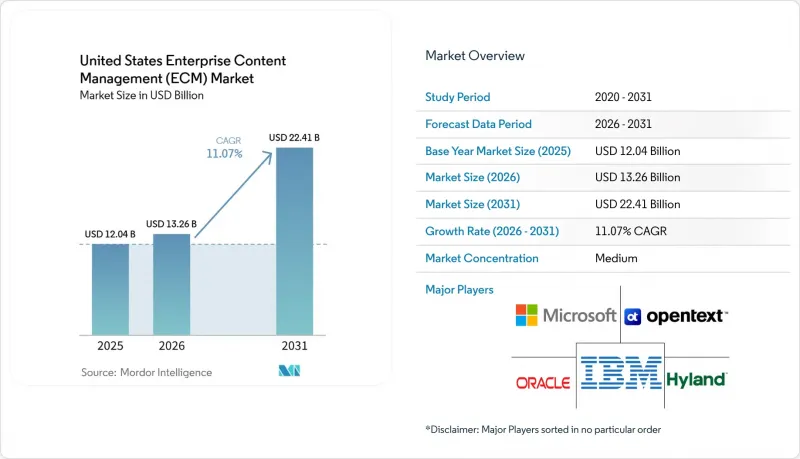
本報告按解決方案類型(文件管理、記錄管理等)、部署模式(本地部署、雲端部署、混合部署)、企業規模(中小企業、大型企業)和最終用戶行業(銀行、金融服務和保險業、政府和公共部門、醫療保健等)進行細分。市場預測以美元計價。
美國企業內容管理 (ECM) 市場的趨勢與洞察
在受監管行業中,數位文件的標準化進程正在加速。
多個行業對文件生命週期管理的監管要求日益嚴格,推動了美國企業內容管理 (ECM) 市場的需求。美國證券交易委員會 (SEC) 第 17a-4 號規則允許證券公司選擇不同的保留方式,但兩種方式都要求正式的電子記錄管理和可靠的可審計性。在醫療保健領域,美國衛生與公眾服務部 (HHS) 民權司於 2024 年 12 月提案了修正案,要求受監管機構及其合作夥伴維護技術資產清單、顯示電子受保護健康資訊 (ePHI) 流向的網路圖,並進行年度合規性審計。這些要求與現代 ECM 功能密切相關,例如保留期限管理、存取管治、稽核日誌和文件化的處置工作流程。當公司將其內容流程標準化為一套規則時,同樣的結構通常會支撐其他內部和外部控制,從而更容易證明更廣泛部署的合理性。
快速轉向雲端優先內容平台
目前,雲端已成為美國企業內容管理 (ECM) 市場的首選架構,買家將其視為新內容項目的預設起點。這一趨勢的驅動力並非主要來自基礎設施成本的降低,而是源自於對支援人工智慧、協作和分散式存取的、管理管治的內容的需求。 OpenText 報告稱,其 2026 會計年度第二季雲端收入達 4.78 億美元,企業雲訂單達 2.95 億美元,年增 18.0%。 iManage 在 2026 年 5 月宣布,其全球客戶群中有 78% 已遷移到雲端,這表明即使是監管嚴格的用戶也在將其核心儲存庫從傳統環境遷移出來。無法提供雲端原生管治、基於角色的控制和人工智慧介面的供應商發現,維持傳統的部署模式變得越來越困難。
美國大型公司整合舊有系統的複雜性
傳統企業內容管理 (ECM) 環境仍然依賴與 ERP、CRM、協作和歸檔工具的自訂鏈接,這減緩了美國企業內容管理 (ECM) 市場的現代化進程。許多大型企業被迫在過渡期間並行運行新舊儲存庫,這增加了營運負擔並延長了決策週期。 2026 年 1 月,OpenText 以 1.63 億美元的價格將 eDOCS 出售給了 NetDocuments,這表明隨著供應商將重點重新轉向雲端和人工智慧,他們正在精簡其傳統產品組合。擁有詳細自訂規則、保留策略和權限模型的買家面臨更具挑戰性的遷移,因為他們必須在目標環境中仔細重建這些控制功能。因此,儘管對現代化的需求持續存在,但大型客戶的採用速度正在放緩,分階段遷移計畫正在增加。
細分市場分析
到2025年,文件管理將占美國企業內容管理(ECM)市場佔有率的26.14%,成為最大的解決方案類別。這一主導地位源自於各行業對文件收集、儲存和搜尋的長期需求,尤其是在那些合規性法規影響日常營運的行業。在銀行和金融服務業,記錄保存義務使得可驗證的文件管理成為基本採購要求。在醫療產業,隨著人們對電子受保護健康資訊(ePHI)的管治、可審計性和存取控制的期望不斷提高,這項需求也更加迫切。
在法律、醫療保健和公共部門等環境中,文件完整性和可追溯的操作歷史至關重要,因此記錄管理和案例管理仍然能夠滿足這些領域的相關需求。雖然網路內容管理支援外部數位發布,但數位資產管理在零售和媒體行業正日益受到關注,因為這些行業需要管理大量的品牌和媒體文件。預計到 2031 年,工作流程和業務流程管理將以 17.42% 的複合年成長率成長,成為本報告中成長最快的解決方案領域。這種轉變反映了買家興趣的轉變,即從內容儲存轉向透過一系列可控步驟來管理營運。 Box 將於 2026 年 4 月發布 Box Automate,這是一款無需編寫程式碼的工作流程工具,可在人員、人工智慧代理和互聯系統之間分配任務,體現了內容管理和流程自動化的整合。
到2025年,雲端運算已成為美國企業內容管理(ECM)市場的主導部署模式,市佔率高達72.83%。如此大規模的部署規模反映了多年來的遷移努力,以及對訂閱式交付、遠端存取和快速更新的廣泛支援。 2026年5月,iManage報告稱,其全球客戶群中已有78%在使用其雲端平台,並且在截至2026年中的一年內新增了90家客戶。此外,隨著買家對人工智慧賦能環境和更方便存取的需求不斷成長,預計到2031年,雲端運算的複合年成長率將達到創紀錄的16.94%。
在聯邦政府機構、國防相關環境以及嚴格監管的金融領域,本地部署仍然至關重要,因為內容儲存和系統管理仍然高度敏感。混合模式作為一種橋樑模式正日益受到重視,它允許組織在受控環境中保留部分記錄,同時利用雲端進行協作、分析和使用新的人工智慧功能。微軟 SharePoint Embedded 的定位及其基於 Purview 的合規性整合反映了市場對傳統儲存庫和新型雲端服務之間連接器的需求。這種方法減輕了一次性替換所有系統的壓力,並為擁有龐大且多樣化環境的組織提供了更分階段的遷移路徑。
其他好處:
- Excel格式的市場預測(ME)表
- 3個月的分析師支持
目錄
第1章:引言
- 研究假設和市場定義
- 調查範圍
第2章:調查方法
第3章執行摘要
第4章 市場狀況
- 市場概覽
- 市場促進因素
- 在受監管行業中,數位文件的標準化進程正在加速。
- 快速轉向雲端優先內容平台
- 對符合審計要求的記錄和可追溯性的需求日益成長。
- 對人工智慧驅動的元資料收集和內容分類的需求日益成長。
- 拓展面向公民和客戶的數位化工作流程
- 混合辦公和分散式協作的要求
- 市場限制因素
- 與巴西大型企業舊有系統整合的複雜性
- 高度敏感內容的資料儲存位置和合規性問題
- 多年企業軟體現代化週期帶來的預算壓力
- 中型企業缺乏內部企業內容管理(ECM)技能
- 產業價值鏈分析
- 監理情勢
- 技術展望
- 宏觀經濟因素對市場的影響
- 波特五力分析
第5章 市場規模與成長預測
- 按解決方案類型
- 文件管理
- 記錄管理
- 工作流程和業務流程管理
- 個案管理
- 數位資產管理
- 網站內容管理
- 其他解決方案
- 部署模式
- 現場
- 雲
- 混合
- 按公司規模
- 小型企業
- 大公司
- 按最終用戶行業分類
- BFSI
- 政府/公共部門
- 衛生保健
- 資訊科技/通訊
- 製造業
- 零售
- 媒體與娛樂
- 教育
- 能源公用事業
- 其他終端用戶產業
第6章 競爭情勢
- 市場集中度
- 策略趨勢
- 市佔率分析
- 公司簡介
- OpenText Corporation
- Microsoft Corporation
- Hyland Software, Inc.
- Oracle Corporation
- IBM Corporation
- Adobe Inc.
- Box, Inc.
- Laserfiche, Inc.
- M-Files Corporation
- DocuWare GmbH
- Newgen Software Technologies Limited
- SER Group Holding GmbH
- Fabasoft AG
- Alfresco Software, Inc.
- KnowledgeLake, Inc.
- Objective Corporation Limited
- iManage LLC
- Egnyte, Inc.
- Everteam Group
- ELO Digital Office GmbH
第7章 市場機會與未來展望
According to Mordor Intelligence, the United States enterprise content management (ECM) market size was valued at USD 12.04 billion in 2025 and is forecast to reach USD 22.41 billion by 2031, at a CAGR of 11.07% from 2026 to 2031.
This report is Segmented by Solution Type (Document Management, Records Management, and More), Deployment Mode (On-Premises, Cloud, and Hybrid), Enterprise Size (Small and Medium Enterprises, and Large Enterprises), and End-User Industry (BFSI, Government and Public Sector, Healthcare, and More). The Market Forecasts are Provided in Terms of Value (USD).
United States Enterprise Content Management (ECM) Market Trends and Insights
Accelerating Digital Document Standardization Across Regulated Industries
Regulatory demands for document lifecycle control are becoming stricter across several sectors, strengthening demand in the United States Enterprise Content Management (ECM) Market. SEC Rule 17a-4 gives broker-dealers a choice of storage approaches, but both options still require formal electronic recordkeeping and reliable auditability. In healthcare, the HHS Office for Civil Rights proposed changes in December 2024 that would require technology asset inventories, network maps showing ePHI flows, and annual compliance audits for covered entities and business associates. Those requirements align closely with modern ECM functions such as retention control, access governance, audit logs, and documented disposition workflows. Once firms standardize content processes for one rule set, the same structure often supports other internal and external controls, which makes broader rollouts easier to justify.
Rapid Shift Toward Cloud-First Content Platforms
Cloud is now the main architecture choice in the United States Enterprise Content Management (ECM) Market, and buyers are treating it as a default starting point for new content programs. The current move is less tied to infrastructure savings and more to the need for governed content that supports AI, collaboration, and distributed access. OpenText reported cloud revenue of USD 478 million in the second quarter of fiscal year 2026, and enterprise cloud bookings reached USD 295 million, up 18.0% year over year. iManage stated in May 2026 that 78% of its global customer base had migrated to the cloud, indicating that even highly regulated users are moving core repositories out of older environments. Vendors that cannot show cloud-native governance, role-based control, and AI-ready interfaces are finding it harder to defend older deployment models.
Legacy Integration Complexity in Large United States Enterprises
Older ECM estates still rely on custom links to ERP, CRM, collaboration, and archive tools, which slows modernization across the United States Enterprise Content Management (ECM) Market. Many large organizations must run both old and new repositories in parallel during migration, which increases operational effort and extends decision cycles. OpenText completed the divestiture of eDOCS to NetDocuments for USD 163 million in January 2026, which showed how vendors are pruning older portfolios as they refocus on cloud and AI. Buyers with deep custom rules, retention schedules, and permissions models face more challenging transitions because those controls must be carefully rebuilt in the target environment. The result is continued demand for modernization, but slower implementation and more staged migration plans in large accounts.
Other drivers and restraints analyzed in the detailed report include:
- Growing Need for Audit-Ready Records and Traceability
- Rising Demand for AI-Assisted Metadata Capture and Content Classification
- Data Residency and Compliance Concerns for Sensitive Content
For complete list of drivers and restraints, kindly check the Table Of Contents.
Segment Analysis
Document Management held 26.14% of the United States Enterprise Content Management (ECM) market share in 2025, making it the largest solution category. Its lead came from long-standing demand for document capture, retention, and retrieval in sectors where compliance rules shape daily operations. In banking and financial services, recordkeeping obligations still make defensible document control a basic purchase requirement. In healthcare, this need is reinforced by tighter expectations for ePHI governance, auditability, and controlled access.
Records Management and Case Management continue to serve related needs in legal, healthcare, and public-sector environments where file integrity and a traceable action history matter. Web Content Management supports outward-facing digital publishing, while Digital Asset Management is gaining more attention in retail and media settings that manage larger volumes of brand and media files. Workflow and Business Process Management is projected to grow at a 17.42% CAGR through 2031, making it the fastest-moving solution area in this report. That shift reflects a change in buyer focus from storing content to moving work through a set of governed steps. Box launched Box Automate in April 2026 as a no-code workflow tool that routes tasks across people, AI agents, and connected systems, which shows how content management and process automation are coming together.
Cloud accounted for 72.83% of the United States Enterprise Content Management (ECM) market in 2025, making it the clear leader in the deployment model. The large installed base reflects several years of migration activity and a wider preference for subscription delivery, remote access, and faster updates. iManage reported in May 2026 that 78% of its global customer base was already on its cloud platform, and the company had added 90 new customer logos in the year through mid-2026. Cloud is also projected to record the highest CAGR of 16.94% through 2031 as buyers seek AI-ready environments and easier access.
On-premises deployments still matter in federal agencies, defense-related settings, and tightly regulated financial environments where content location and system control remain sensitive. Hybrid is gaining relevance as a bridge model because it lets organizations keep some records in controlled environments while using the cloud for collaboration, analytics, and newer AI functions. Microsoft's SharePoint Embedded positioning, together with Purview-based compliance integration, reflects the demand for connectors between older repositories and newer cloud services. That approach reduces the pressure to replace everything at once and gives buyers a more gradual migration path that works for large, mixed estates.
Complete Report Scope:
- By Solution Type
- Document Management
- Records Management
- Workflow and Business Process Management
- Case Management
- Digital Asset Management
- Web Content Management
- Other Solutions
- By Deployment Mode
- On-Premises
- Cloud
- Hybrid
- By Enterprise Size
- Small and Medium Enterprises
- Large Enterprises
- By End-User Industry
- BFSI
- Government and Public Sector
- Healthcare
- IT and Telecommunications
- Manufacturing
- Retail
- Media and Entertainment
- Education
- Energy and Utilities
- Other End-User Industries
List of Companies Covered in this Report:
- OpenText Corporation
- Microsoft Corporation
- Hyland Software, Inc.
- Oracle Corporation
- IBM Corporation
- Adobe Inc.
- Box, Inc.
- Laserfiche, Inc.
- M-Files Corporation
- DocuWare GmbH
- Newgen Software Technologies Limited
- SER Group Holding GmbH
- Fabasoft AG
- Alfresco Software, Inc.
- KnowledgeLake, Inc.
- Objective Corporation Limited
- iManage LLC
- Egnyte, Inc.
- Everteam Group
- ELO Digital Office GmbH
Additional Benefits:
- The market estimate (ME) sheet in Excel format
- 3 months of analyst support
TABLE OF CONTENTS
1 INTRODUCTION
- 1.1 Study Assumptions and Market Definition
- 1.2 Scope of the Study
2 RESEARCH METHODOLOGY
3 EXECUTIVE SUMMARY
4 MARKET LANDSCAPE
- 4.1 Market Overview
- 4.2 Market Drivers
- 4.2.1 Accelerating Digital Document Standardization Across Regulated Industries
- 4.2.2 Rapid Shift Toward Cloud-First Content Platforms
- 4.2.3 Growing Need for Audit-Ready Records and Traceability
- 4.2.4 Rising Demand For AI-Assisted Metadata Capture and Content Classification
- 4.2.5 Expansion Of Citizen-Facing and Customer-Facing Digital Workflows
- 4.2.6 Hybrid Work and Distributed Collaboration Requirements
- 4.3 Market Restraints
- 4.3.1 Legacy Integration Complexity in Large Brazilian Enterprises
- 4.3.2 Data Residency And Compliance Concerns for Sensitive Content
- 4.3.3 Budget Pressure from Multi-Year Enterprise Software Modernization Cycles
- 4.3.4 Limited Internal ECM Skills in Mid-Market Organizations
- 4.4 Industry Value-Chain Analysis
- 4.5 Regulatory Landscape
- 4.6 Technological Outlook
- 4.7 Impact of Macroeconomic Factors on the Market
- 4.8 Porter's Five Forces Analysis
- 4.8.1 Threat of New Entrants
- 4.8.2 Bargaining Power of Buyers
- 4.8.3 Bargaining Power of Suppliers
- 4.8.4 Threat of Substitutes
- 4.8.5 Intensity of Competitive Rivalry
5 MARKET SIZE AND GROWTH FORECASTS (VALUE)
- 5.1 By Solution Type
- 5.1.1 Document Management
- 5.1.2 Records Management
- 5.1.3 Workflow and Business Process Management
- 5.1.4 Case Management
- 5.1.5 Digital Asset Management
- 5.1.6 Web Content Management
- 5.1.7 Other Solutions
- 5.2 By Deployment Mode
- 5.2.1 On-Premises
- 5.2.2 Cloud
- 5.2.3 Hybrid
- 5.3 By Enterprise Size
- 5.3.1 Small and Medium Enterprises
- 5.3.2 Large Enterprises
- 5.4 By End-User Industry
- 5.4.1 BFSI
- 5.4.2 Government and Public Sector
- 5.4.3 Healthcare
- 5.4.4 IT and Telecommunications
- 5.4.5 Manufacturing
- 5.4.6 Retail
- 5.4.7 Media and Entertainment
- 5.4.8 Education
- 5.4.9 Energy and Utilities
- 5.4.10 Other End-User Industries
6 COMPETITIVE LANDSCAPE
- 6.1 Market Concentration
- 6.2 Strategic Moves
- 6.3 Market Share Analysis
- 6.4 Company Profiles (includes Global Level Overview, Market Level Overview, Core Segments, Financials as Available, Strategic Information, Market Rank/Share for Key Companies, Products and Services, and Recent Developments)
- 6.4.1 OpenText Corporation
- 6.4.2 Microsoft Corporation
- 6.4.3 Hyland Software, Inc.
- 6.4.4 Oracle Corporation
- 6.4.5 IBM Corporation
- 6.4.6 Adobe Inc.
- 6.4.7 Box, Inc.
- 6.4.8 Laserfiche, Inc.
- 6.4.9 M-Files Corporation
- 6.4.10 DocuWare GmbH
- 6.4.11 Newgen Software Technologies Limited
- 6.4.12 SER Group Holding GmbH
- 6.4.13 Fabasoft AG
- 6.4.14 Alfresco Software, Inc.
- 6.4.15 KnowledgeLake, Inc.
- 6.4.16 Objective Corporation Limited
- 6.4.17 iManage LLC
- 6.4.18 Egnyte, Inc.
- 6.4.19 Everteam Group
- 6.4.20 ELO Digital Office GmbH
7 MARKET OPPORTUNITIES AND FUTURE OUTLOOK
- 7.1 White-Space and Unmet-Need Assessment

 企業架構服務市場:全球市場預測,2026-2032年
 中國企業內容管理(ECM):市場佔有率分析、產業趨勢與統計及成長預測(2026-2031)新加坡企業內容管理 (ECM):市佔率分析、產業趨勢與統計及成長預測 (2026-2031)義大利企業內容管理:市場佔有率分析、產業趨勢與統計及成長預測(2026-2031)西班牙企業內容管理:市場佔有率分析、產業趨勢與統計及成長預測(2026-2031)企業內容管理:市場佔有率分析、產業趨勢與統計、成長預測(2026-2031)基於雲端的企業內容管理市場-2026年至2032年全球市場預測雲端的企業內容管理:市場佔有率分析、產業趨勢與統計及成長預測(2026-2031 年)
 Frost Radar™:數位媒體內容安全與反派餅服務,2026 年企業內容管理市場-2026-2032年全球市場預測