


 |
市場調查報告書
商品編碼
2116358
英國彈性辦公空間:市場佔有率分析、產業趨勢與統計及成長預測(2026-2031)United Kingdom Flexible Office Space - Market Share Analysis, Industry Trends & Statistics, Growth Forecasts (2026 - 2031) |
||||||

※ 本網頁內容可能與最新版本有所差異。詳細情況請與我們聯繫。
據 Mordor Intelligence 稱,2025 年英國靈活辦公空間市場價值為 38.4 億美元,預計到 2031 年將達到 64.8 億美元,而 2026 年為 41.9 億美元,預測期內(2026-2031 年)的複合年成長率為 9.15%。
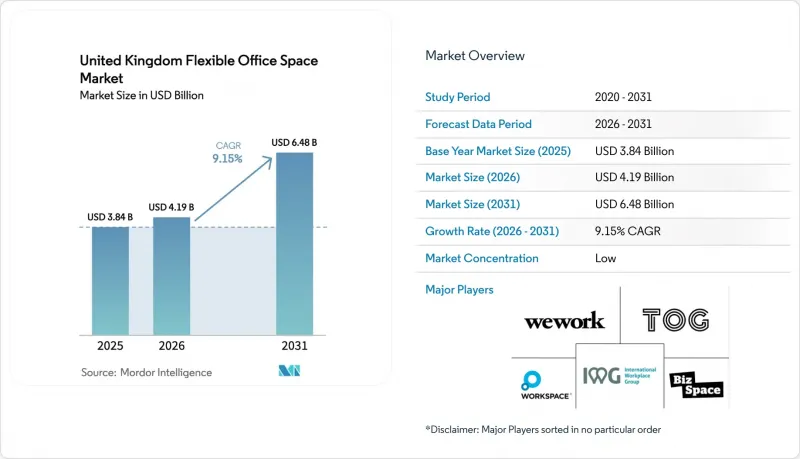
本報告按類型(共享辦公空間、服務式辦公室/行政套房、其他)、行業(IT及IT服務業、銀行、金融服務和保險業、商業諮詢和專業服務業、其他服務業)、最終用戶(自由職業者、企業、新創公司、其他)以及國家/地區(英格蘭、蘇格蘭、威爾斯、北愛爾蘭)進行細分。市場預測以美元計價。
英國靈活辦公空間市場的趨勢與洞察
倫敦及周邊地區城市對混合辦公解決方案的需求強勁。
在不斷變化的職場政策和員工偏好的驅動下,對混合辦公解決方案的需求持續成長。疫情期間的臨時措施如今已成為常態。隨著相關法規的訂定,允許員工從入職第一天起即可申請彈性的工作安排,混合辦公模式於2024年4月正式成為標準做法。在這種不斷變化的環境中,大型企業被迫適應兩極化的市場。雖然其中一半企業仍要求員工全職上班,但值得注意的是,28%的員工採用的是每週工作兩班制。這種轉變催生了對每日調整的辦公桌的迫切需求。為了因應這種兩極化的局面,企業正在策略性地在曼徹斯特和伯明翰等城市設立衛星辦公室。此舉不僅減輕了通勤壓力,也有助於應對倫敦不斷上漲的租金。辦公空間營運商巧妙地利用了這項需求,提供多地點辦公通行證,巧妙地將市中心的尊貴與郊區的便利性融合在一起。此外,法律規定企業在拒絕彈性辦公安排的申請之前,必須進行充分的協商。這意義重大,因為將彈性辦公空間的預算納入長期損益計算後,曾經被視為可自由支配的支出現在已經轉變為至關重要的策略議題。
在科技、創新和專業服務業採用率很高。
對靈活辦公空間日益成長的需求正在改變各行各業企業的運作方式。數位公司擴大選擇即插即用的辦公空間,使團隊能夠快速啟動產品開發衝刺、聘用自由工作者,並與客戶舉辦Hackathon,而無需承擔資本投入的負擔。大型金融機構也正在藉鏡科技業的文化,以吸引頂尖的工程人才。 WeWork位於金絲雀碼頭的28.6萬平方英尺的辦公中心就是這一轉變的典型例證,它已成為銀行、金融服務和保險(BFSI)行業擁抱這一趨勢的象徵。對於創新機構和顧問公司而言,靈活辦公空間正在演變為一個充滿活力的環境,用於創意生成、原型製作和成果展示,成為提升客戶體驗的關鍵工具。為了滿足這一需求,營運商正在引入播客工作室、身臨其境型演示室和符合法律規定的隱私隔間等專業設施。此外,主要都市區多元化產業的集中不僅增加了商業機會,也使租戶能夠從輕鬆的咖啡閒聊無縫過渡到正式的合約簽署。這種活力不僅放大了人脈拓展的優勢,也有助於營運商確保穩定的入住率。
倫敦市中心特定子市場有供應過剩風險
倫敦市中心辦公大樓市場正面臨供應過剩的挑戰,尤其是在金融城周邊地區。 2024年,該地區的空置率上升至9.2%,其中老舊的B級辦公室受到的衝擊最大,因為大型企業紛紛轉向符合ESG標準的物業。供應過剩加劇了開發商之間的價格競爭,大幅壓縮了利潤空間,而租戶更換的速度卻無法彌補這一損失。一些引人注目的租賃終止糾紛,例如WeWork在南岸的訴訟,凸顯了簽訂15年期主租賃合約的風險,尤其是在需求轉向東部和郊區通勤城市的情況下。然而,隨著新樓竣工量的預期下降,市場可能在2027年恢復平衡。能夠經受未來兩年挑戰的參與企業,或許有機會在供應過剩緩解後,將物業價格調整為溢價。
細分市場分析
到2025年,共享辦公空間將佔據英國彈性辦公空間市場50.85%的佔有率。從「午餐學習會」到投資者路演活動等以社區為中心的項目,有效降低了辦公桌的周轉率,並維持了較高的推薦率。營運商透過整合無固定辦公桌、專屬辦公桌和獨立工作室等服務,穩定了所有用戶群體的收入。隨著財富500強企業將15%的英國員工轉為彈性辦公模式,企業需求激增。這促使營運商在共用樓層內為企業創建高度安全、徽章管理的區域。目前,與競爭對手區分開來的關鍵在於獨特的應用程式生態系統,可自動完成預訂、計費和存取管理,從而將人員編制比例降低到每300名會員配備不到一名社群經理。
預計到2031年,「其他」細分市場(混合辦公和虛擬辦公室)將以10.35%的複合年成長率實現計量型,這主要得益於分散式團隊採用「常規辦公室辦公」套餐(包括郵箱、季度異地空間和按需付費會議額度)。虛擬地址使總部位於英國的外國公司能夠滿足英國脫歐後的監管要求,同時幾乎零成本地試水市場。隨著員工人數的成長,主要供應商正利用其網路向虛擬客戶提升銷售實體辦公桌,從而提高客戶終身價值。混合辦公模式也提供即時使用數據,幫助企業最佳化固定租賃規模,並提高企業離開平台時的轉換成本,進一步鞏固了大型企業在英國靈活辦公空間市場的主導地位。
其他好處:
- Excel格式的市場預測(ME)表
- 3個月的分析師支持
目錄
第1章:引言
- 研究假設和市場定義
- 調查範圍
第2章:調查方法
第3章執行摘要
第4章 市場狀況
- 市場概覽
- 市場促進因素
- 倫敦及周邊城市對混合辦公解決方案的需求正在不斷成長。
- 科技、創新和專業服務業的採用率很高。
- 投資者對靈活辦公物業組合作為一種具有韌性的資產類別表現出濃厚的興趣。
- 市場對獲得永續發展認證或融入健康元素的辦公空間的需求日益成長。
- 這家全球共同工作品牌正與當地產業合作擴張。
- 市場限制因素
- 倫敦市中心特定子市場有供應過剩的風險
- 英國脫歐後,宏觀經濟情勢不明朗,投資態度謹慎。
- 彈性辦公空間營運商營運成本不斷上漲,正在影響其利潤率。
- 價值供應鏈分析
- 概述
- 房地產開發商和業主—關鍵的定量和定性見解
- 工作空間設計與技術顧問—關鍵的定量和定性見解
- 模組化家具和智慧辦公室解決方案供應商—關鍵定量和定性洞察
- 政府在業界的法規和舉措
- 彈性辦公空間房地產市場的技術創新
- 辦公室房地產行業關鍵指標分析(供應量、租金、價格、運轉率/空置率(%))。
- 遠距辦公對辦公室需求的影響
- 波特五力模型
第5章 市場規模與成長預測
- 按類型
- 共同工作空間
- 服務式辦公室/行政套房
- 其他(混合辦公、虛擬辦公)
- 按行業
- 資訊科技(IT 和 ITES)
- 銀行、金融服務和保險業 (BFSI)
- 商業諮詢和專業服務
- 其他服務(零售、生命科學、能源、法律服務)
- 最終用戶
- 自由工作者
- 公司
- 新創企業及其他
- 國家
- 英格蘭
- 蘇格蘭
- 威爾斯
- 北愛爾蘭
第6章 競爭情勢
- 市場集中度
- 策略趨勢
- 公司簡介
- International Workplace Group(IWG/Regus/Spaces)
- WeWork
- The Office Group
- Workspace Group
- BizSpace(Sirius Real Estate)
- Bruntwood Works
- Landmark Space
- Huckletree
- Fora
- TOG & Fora(Joint entity)
- Knotel UK
- Industrious(LXD UK)
- x+why
- Plexal
- Mindspace
- Labs
- Uncommon
- Runway East
- Oval Real Estate(Division)
- Orega
第7章 市場機會與未來展望
According to Mordor Intelligence, the UK flexible office market size was valued at USD 3.84 billion in 2025 and estimated to grow from USD 4.19 billion in 2026 to reach USD 6.48 billion by 2031, at a CAGR of 9.15% during the forecast period (2026-2031).
This report is Segmented by Type (Co-Working Space, Serviced Offices/Executive Suites and Others), by Sector (IT and ITES, BFSI, Business Consulting & Professional Service and Other Services), by End Use (Freelancers, Enterprises, Start Ups and Others), and by Country (England, Scotland, Wales and Northern Ireland). The Market Forecasts are Provided in Terms of Value (USD).
United Kingdom Flexible Office Space Market Trends and Insights
Strong Demand for Hybrid Work Solutions Across London and Regional Cities
The demand for hybrid work solutions continues to grow, driven by evolving workplace policies and employee preferences. What began as a temporary measure during the pandemic has now solidified into a permanent fixture. Following the April 2024 regulation allowing staff to request flexibility from day one, hybrid working has transitioned into a standard policy. In this evolving landscape, large employers find themselves navigating a divided market. While half of these employers still mandate full-time attendance, a notable 28% of workers have adopted a split-week approach. This shift has created a pressing demand for desks that can be adjusted on a daily basis. In response to this duality, corporations are strategically positioning satellite hubs in cities like Manchester and Birmingham. This move not only alleviates commuter stress but also serves as a countermeasure against the soaring rents in London. Operators are adeptly tapping into this demand, offering multisite access passes that seamlessly combine the allure of city-center prestige with the practicality of suburban convenience. Furthermore, a legal mandate now requires meaningful consultations before any rejection of flexible requests. This has significant implications: it integrates flexible office budgets into long-term profit and loss considerations, transforming what was once viewed as a discretionary expense into a pivotal strategic imperative.
High Adoption by Technology, Creative, and Professional Services Sectors
The increasing demand for flexible office spaces is reshaping how businesses operate across various sectors. Digital firms are increasingly opting for plug-and-play offices, enabling teams to swiftly initiate product sprints, onboard gig talent, and conduct client hackathons-all without the burden of capital expenditure. Major financial institutions, in a bid to attract top coding talent, are adopting a culture reminiscent of the tech industry. A testament to this shift is WeWork's expansive 286,000 square-foot hub in Canary Wharf, now a beacon of the banking, financial services, and insurance (BFSI) sector's embrace. For creative agencies and consultancies, flexible office spaces have evolved into pivotal tools for enhancing client experiences-serving as dynamic environments for ideation, prototyping, and showcasing results. This demand has prompted operators to incorporate specialized features like podcast studios, immersive demo rooms, and privacy booths that meet legal standards. Furthermore, the clustering of diverse industries in major urban centers not only boosts deal flow but also allows tenants to seamlessly transition from casual coffee discussions to formal contracts. This dynamic not only amplifies the advantages of networking but also ensures consistent occupancy for operators.
Oversupply Risk in Certain Central London Submarkets
The Central London office market is grappling with oversupply challenges, particularly in the City fringe. In 2024, the vacancy rate in this area increased to 9.2%, with older Grade B towers being the most affected as blue-chip companies transitioned to ESG-compliant properties. This oversupply has triggered price wars among operators, significantly eroding margins at a pace that license churn cannot counterbalance. Prominent lease-exit disputes, such as WeWork's Southbank litigation, highlight the risks of committing to 15-year headleases, especially as demand shifts towards the east or commuter towns. However, the anticipated reduction in new completions could help restore balance by 2027. Market participants who can endure the next two challenging years may have the opportunity to reprice their spaces at a premium once the oversupply diminishes.
Other drivers and restraints analyzed in the detailed report include:
- Investor Interest in Flexible Office Portfolios as a Resilient Asset Class
- Growing Demand for Sustainability-Certified and Wellness-Integrated Workspaces
- Rising Operational Costs for Flexible Office Operators Impacting Margins
For complete list of drivers and restraints, kindly check the Table Of Contents.
Segment Analysis
The co-working segment represented 50.85% of UK flexible office market share in 2025. Community programming, ranging from lunch-and-learns to investor pitch nights, keeps desk churn low and referral volume high. Operators blend hot-desk passes, dedicated desks, and private studios to smooth revenue across user tiers. Corporate demand surged after Fortune 500s shifted 15% of their UK headcount into flexible allowances, prompting providers to carve enterprise-grade, badge-controlled zones inside shared floors. Competitive differentiation now centers on proprietary app ecosystems that automate booking, billing, and access, which cuts staffing ratios to under one community manager per 300 members.
The Others segment (hybrid and virtual) will grow fastest at 10.35% CAGR through 2031 as distributed teams adopt "periodic presence" packages: bundles that include mailbox, quarterly off-site space, and pay-as-you-go meeting credits. Virtual addresses satisfy post-Brexit regulatory rules for overseas companies setting up in the UK while letting them test market entry with near-zero overhead. Larger providers leverage their footprint to upsell virtual clients into physical desks once headcount scales, extending lifetime value. Hybrid passes also supply real-time usage data, helping corporates right-size fixed leases and raising switching costs should they leave the platform-extending the lead of scale players in the UK flexible office market.
Complete Report Scope:
- By Type
- Co-Working Space
- Serviced offices / Executive suites
- Others (Hybrid, Virtual Office)
- By Sector
- Information Technology (IT and ITES)
- BFSI (Banking, Financial Services and Insurance)
- Business Consulting & Professional Service
- Other Services (Retail, Lifesciences, Energy, Legal Services)
- By End Use
- Freelancers
- Enterprises
- Start Ups and Others
- By Country
- England
- Scotland
- Wales
- Northern Ireland
List of Companies Covered in this Report:
- International Workplace Group (IWG / Regus / Spaces)
- WeWork
- The Office Group
- Workspace Group
- BizSpace (Sirius Real Estate)
- Bruntwood Works
- Landmark Space
- Huckletree
- Fora
- TOG & Fora (Joint entity)
- Knotel UK
- Industrious (LXD UK)
- x+why
- Plexal
- Mindspace
- Labs
- Uncommon
- Runway East
- Oval Real Estate (Division)
- Orega
Additional Benefits:
- The market estimate (ME) sheet in Excel format
- 3 months of analyst support
TABLE OF CONTENTS
1 Introduction
- 1.1 Study Assumptions & Market Definition
- 1.2 Scope of the Study
2 Research Methodology
3 Executive Summary
4 Market Landscape
- 4.1 Market Overview
- 4.2 Market Drivers
- 4.2.1 Strong demand for hybrid work solutions across London and regional cities
- 4.2.2 High adoption by technology, creative, and professional services sectors
- 4.2.3 Investor interest in flexible office portfolios as a resilient asset class
- 4.2.4 Growing demand for sustainability-certified and wellness-integrated workspaces
- 4.2.5 Expansion of global co-working brands alongside strong local operators
- 4.3 Market Restraints
- 4.3.1 Oversupply risk in certain central London submarkets
- 4.3.2 Uncertain macroeconomic conditions and Brexit-linked investment caution
- 4.3.3 Rising operational costs for flexible office operators impacting margins
- 4.4 Value / Supply-Chain Analysis
- 4.4.1 Overview
- 4.4.2 Real Estate Developers and Asset Owners - Key Quantitative and Qualitative Insights
- 4.4.3 Workspace Design and Technology Consultants - Key Quantitative and Qualitative Insights
- 4.4.4 Modular Furniture and Smart Office Solutions Providers - Key Quantitative and Qualitative Insights
- 4.5 Government Regulations and Initiatives in the Industry
- 4.6 Technological Innovations in the Flexible Office Real Estate Market
- 4.7 Insights into the Key Office Real Estate Industry Metrics (Supply, Rentals, Prices, Occupancy/Vacancy (%))
- 4.8 Impact of Remote Working on Space Demand
- 4.9 Porter's Five Forces
- 4.9.1 Bargaining Power of Suppliers
- 4.9.2 Bargaining Power of Buyers
- 4.9.3 Threat of New Entrants
- 4.9.4 Threat of Substitutes
- 4.9.5 Intensity of Competitive Rivalry
5 Market Size & Growth Forecasts (Value USD)
- 5.1 By Type
- 5.1.1 Co-Working Space
- 5.1.2 Serviced offices / Executive suites
- 5.1.3 Others (Hybrid, Virtual Office)
- 5.2 By Sector
- 5.2.1 Information Technology (IT and ITES)
- 5.2.2 BFSI (Banking, Financial Services and Insurance)
- 5.2.3 Business Consulting & Professional Service
- 5.2.4 Other Services (Retail, Lifesciences, Energy, Legal Services)
- 5.3 By End Use
- 5.3.1 Freelancers
- 5.3.2 Enterprises
- 5.3.3 Start Ups and Others
- 5.4 By Country
- 5.4.1 England
- 5.4.2 Scotland
- 5.4.3 Wales
- 5.4.4 Northern Ireland
6 Competitive Landscape
- 6.1 Market Concentration
- 6.2 Strategic Moves
- 6.3 Company Profiles {(includes Global level Overview, Market level overview, Core Segments, Financials as available, Strategic Information, Market Rank/Share for key companies, Products & Services, and Recent Developments)}
- 6.3.1 International Workplace Group (IWG / Regus / Spaces)
- 6.3.2 WeWork
- 6.3.3 The Office Group
- 6.3.4 Workspace Group
- 6.3.5 BizSpace (Sirius Real Estate)
- 6.3.6 Bruntwood Works
- 6.3.7 Landmark Space
- 6.3.8 Huckletree
- 6.3.9 Fora
- 6.3.10 TOG & Fora (Joint entity)
- 6.3.11 Knotel UK
- 6.3.12 Industrious (LXD UK)
- 6.3.13 x+why
- 6.3.14 Plexal
- 6.3.15 Mindspace
- 6.3.16 Labs
- 6.3.17 Uncommon
- 6.3.18 Runway East
- 6.3.19 Oval Real Estate (Division)
- 6.3.20 Orega
7 Market Opportunities & Future Outlook

 節能型辦公空間市場分析及預測(至2035年):依類型、產品、服務、技術、組件、應用、材料類型、部署方式、最終用戶及解決方案分類
 共享辦公空間市場規模、佔有率和成長分析:按空間類型、經營模式、最終用戶、應用、產業、會員期限和地區分類-2026-2033年產業預測
 亞太地區共享辦公空間:市場佔有率分析、產業趨勢與統計及成長預測(2026-2031)北美共享辦公空間:市場佔有率分析、產業趨勢與統計及成長預測(2026-2031)南美洲共享辦公空間:市場佔有率分析、產業趨勢與統計及成長預測(2026-2031 年)印度共享辦公空間:市場佔有率分析、產業趨勢與統計及成長預測(2026-2031)美國共享辦公空間:市場佔有率分析、產業趨勢與統計及成長預測(2026-2031)
 辦公空間市場規模、佔有率和成長分析:按物業類型、等級、租賃類型、公司規模、最終用途產業、用途和地區分類-2026-2033年產業預測印度彈性辦公空間:市場佔有率分析、產業趨勢與統計及成長預測(2026-2031)
 共享辦公空間市場:按類型、產品類型、營運模式、產業和最終用戶分類-2026-2032年全球市場預測