


 |
市場調查報告書
商品編碼
2113706
印尼農藥市場:市場佔有率分析、產業趨勢與統計及成長預測(2026-2031)Indonesia Agrochemicals - Market Share Analysis, Industry Trends & Statistics, Growth Forecasts (2026 - 2031) |
||||||

※ 本網頁內容可能與最新版本有所差異。詳細情況請與我們聯繫。
根據 Mordor Intelligence 預測,印尼農藥市場規模將從 2025 年的 43 億美元成長到 2026 年的 45.4 億美元,到 2031 年將達到 59.5 億美元,2026 年至 2031 年的複合年成長率為 5.55%。
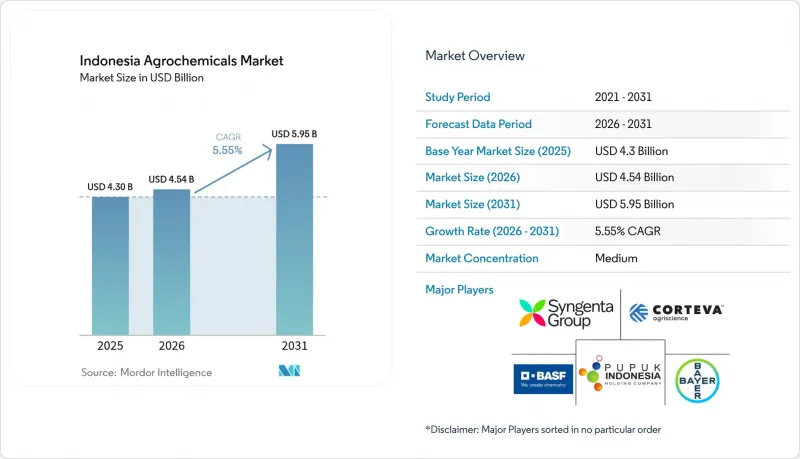
本報告按類型(肥料、農藥、助劑、植物生長調節劑)和應用(穀物、豆類和油籽、水果和蔬菜、經濟作物)進行分類。市場預測以價值(美元)表示。
印尼農藥市場趨勢與洞察
政府補貼化肥並發放電子代金券
印尼的化肥補貼計畫催生了一個雙層市場,補貼營養混合物和優質複合肥在此展開競爭。透過行動平台進行數位化分銷,提高了精準度和透明度,使供應商能夠提供符合當地種植需求的客製化產品。該體系維持了基礎肥料的穩定需求,增強了農民對國內生產商的忠誠度,同時也鼓勵國際公司開發差異化配方和高性能包膜技術。東爪哇是該補貼的最大受益地區,其分銷網路主要集中在大都會區。由於補貼主要針對水稻等主糧作物,特種肥料供應商需要調整策略,以服務補貼範圍之外的園藝種植區。該計劃維持了價格穩定,並凸顯了政府在農藥產業合作中的重要性。
擴大國內化肥生產能力
印尼正大規模投資化肥生產基礎設施,包括在全國各地新建工廠和維修現有工廠。此舉旨在減少對進口的依賴,並最佳化供應鏈,特別關注那些歷來面臨物流挑戰的離島。隨著產量的增加,標準級化肥市場的競爭日益激烈,促使生產商將重點轉向高附加價值配方以提高利潤率。此次擴張也帶動了對上游工程化學成分需求的成長,為國際特殊化學品供應商創造了商機。新增產能預計將透過降低生產成本和推動市場細分(例如高階產品類別)來影響市場動態。
假冒和非法農藥湧入
印尼農業正面臨大量未經許可的農藥產品湧入市場的嚴峻挑戰。這些非法農藥往往模仿知名品牌,損害了農民的信任,並擾亂了合法的分銷網路。為了維護品牌的真實性,各公司正在加大對防篡改包裝和數位追蹤系統等保護措施的投資。由於物流複雜和執法力度不足,印尼的海上邊界仍容易受到非法進口的衝擊。儘管行業相關人員和監管機構正在共同努力加強管控和執法措施,但市場混亂的局面仍然存在。各公司正在實施零售店檢查和農民宣傳教育等預防措施,以維護市場信心並保障銷售。
細分市場分析
2025年,化肥佔印尼農藥市場的62.35%。由於政府補貼,需求保持穩定,但市場商品化促使生產商開發包膜、緩釋和微量元素強化產品以提高利潤率。隨著國內產能的擴大,傳統化肥生產商正與特種化學品公司合作,以獲取新技術。農藥仍是第二大細分市場,抗藥性管理推動了活性成分的多樣化和管理計畫的推進。殺菌劑和添加劑呈現穩定成長態勢,尤其是在性能和適用性至關重要的高頻施用領域。
儘管植物生長調節劑的市佔率較小,但其年複合成長率高達8.05%,成為成長最快的市場之一。這主要得益於精密農業和可控栽培方法的發展,這些方法需要使用荷爾蒙製劑來實現產量的均一性。目前,跨國公司正將生長調節劑及其助劑與農藥產品結合使用,以提供全面的作物管理解決方案。較長的註冊期限雖然設置了市場准入壁壘,有利於現有企業,但也限制了新配方的推出。要想在市場上取得成功,必須嚴格遵守相關法規,並具備靈活的研發能力,以滿足不斷變化的農業需求。
其他好處:
- Excel格式的市場預測(ME)表
- 3個月的分析師支持
目錄
第1章:引言
- 研究假設和市場定義
- 調查範圍
第2章:調查方法
第3章執行摘要
第4章 市場狀況
- 市場概覽
- 市場促進因素
- 政府補貼化肥並發放電子代金券
- 擴大國內化肥生產能力
- 水稻機械化進程的加速是其驅動力。
- 在園藝產品出口國,化學品的使用量正在迅速增加。
- 人工智慧驅動的作物諮詢應用程式正在增加農藥的使用。
- 棕櫚油產品,特別是植物生長調節劑,正受益於加快的監管程序。
- 市場限制因素
- 假冒和非法農藥湧入
- 越來越多的小規模農戶正在轉向有機認證。
- 抗除草劑雜草的出現
- 厄爾尼諾現象導致化肥價格飆升
- 監理情勢
- 技術展望
- 波特五力分析
第5章 市場規模與成長預測
- 按類型
- 肥料
- 氮基
- 磷酸鹽基
- 鉀基
- 其他肥料
- 殺蟲劑
- 除草劑
- 殺蟲劑
- 消毒劑
- 其他農藥
- 佐劑
- 植物生長調節劑
- 肥料
- 透過使用
- 穀類和穀類食品
- 豆類和油籽
- 水果和蔬菜
- 經濟作物
第6章 競爭情勢
- 市場集中度
- 策略趨勢
- 市佔率分析
- 公司簡介
- Bayer AG
- Syngenta Group
- Corteva Agriscience
- BASF SE
- FMC Corporation
- UPL Limited
- Yara International ASA
- PT. Sumitomo Indonesia
- PT. Pupuk Indonesia
- PT. Sentana Adidaya Pratama(Wilmar International)
- PT. Multi Mas Chemindo
- PT. Meroke Tetap Jaya
- PT. Asia Kimindo Prima
- PT. Mest Indonesiy(Mestindo Group)
- Grupa Azoty SA(Compo Expert)
第7章 市場機會與未來展望
According to Mordor Intelligence, the Indonesia agrochemicals market size is expected to grow from USD 4.3 billion in 2025 to USD 4.54 billion in 2026 and is forecast to reach USD 5.95 billion by 2031 at 5.55% CAGR over 2026-2031.
This report is Segmented by Type (Fertilizers, Pesticides, Adjuvants, and Plant Growth Regulators) and by Application (Cereals and Grains, Pulses and Oilseeds, Fruits and Vegetables, and Commercial Crops). The Market Forecasts are Provided in Terms of Value (USD).
Indonesia Agrochemicals Market Trends and Insights
Government Fertilizer Subsidies and E-voucher Distribution
Indonesia's fertilizer subsidy program has created a dual-tier market where subsidized nutrient blends compete with premium formulations. The digital delivery through mobile platforms improves targeting and transparency, allowing suppliers to match products with regional cropping requirements. This system maintains steady demand for basic fertilizers and increases farmer loyalty to domestic producers, while encouraging international companies to develop differentiated blends and enhanced coatings. East Java receives the largest share of subsidies, with distribution networks centered around major urban areas. As the subsidy focuses on staple crops like rice, suppliers of specialty inputs must modify their approaches to serve horticultural zones outside the subsidy coverage. The program maintains price stability and highlights the importance of government collaboration in the agrochemical industry.
Expansion of Domestic Fertilizer Capacity
Indonesia's significant investment in fertilizer production infrastructure includes new facilities and upgrades across various regions. This expansion aims to decrease import dependence and enhance supply chain performance, particularly to remote islands with historical logistics challenges. The higher production volume increases competition in standard fertilizer grades, encouraging manufacturers to focus on value-added formulations for better profit margins. The expansion increases demand for upstream chemical components, creating opportunities for international specialty chemical suppliers. The additional capacity will influence market dynamics by reducing production costs and promoting market segmentation into premium categories.
Counterfeit and Illegal Pesticide Inflow
The Indonesian agricultural sector faces significant challenges from unauthorized agrochemical products entering the market. These illicit pesticides, which often mimic established brands, negatively impact farmer trust and disrupt authorized distribution networks. Companies have increased their investments in protective measures, including tamper-evident packaging and digital tracking systems, to maintain brand authenticity. The country's maritime borders remain susceptible to illegal imports due to logistical complexities and enforcement limitations. While industry participants and regulatory authorities work together to strengthen controls and enforcement measures, market disruptions continue. Companies are implementing preventive strategies, including retail outlet inspections and farmer awareness programs, to maintain market confidence and protect sales.
Other drivers and restraints analyzed in the detailed report include:
- Accelerating Mechanized Paddy Conversion Drives
- Chemical Use Surge in Horticulture Export Targets
- Growing Smallholder Shift to Organic Certifications
For complete list of drivers and restraints, kindly check the Table Of Contents.
Segment Analysis
Fertilizers contributed 62.35% of Indonesia's agrochemicals market size in 2025. Government subsidies maintain consistent demand, while market commoditization has prompted manufacturers to develop coated, slow-release, and micronutrient-enriched products for improved margins. The expansion of domestic production capacity has led traditional fertilizer manufacturers to partner with specialty chemical companies to access new technologies. Pesticides remain the second-largest segment, with resistance management driving diversification in active ingredients and stewardship programs. Fungicides and adjuvants show steady growth, particularly in high-frequency application areas where performance and compatibility are essential.
Plant growth regulators, despite their small market share, demonstrate the highest growth rate at 8.05% CAGR, supported by precision farming practices and controlled cultivation methods that require hormonal products for harvest uniformity. Multinational companies now combine regulators and adjuvants with pesticide products to provide comprehensive crop management solutions. Extended registration periods create barriers to entry, benefiting established companies but limiting the introduction of new formulations. Market success requires strong regulatory compliance and adaptable research capabilities to address evolving agricultural needs.
Complete Report Scope:
- By Type
- Fertilizers
- Nitrogenous
- Phosphatic
- Potassic
- Other Fertilizers
- Pesticides
- Herbicides
- Insecticides
- Fungicides
- Other Pesticides
- Adjuvants
- Plant Growth Regulators
- Fertilizers
- By Application
- Cereals and Grains
- Pulses and Oilseeds
- Fruits and Vegetables
- Commercial Crops
List of Companies Covered in this Report:
- Bayer AG
- Syngenta Group
- Corteva Agriscience
- BASF SE
- FMC Corporation
- UPL Limited
- Yara International ASA
- PT. Sumitomo Indonesia
- PT. Pupuk Indonesia
- PT. Sentana Adidaya Pratama (Wilmar International)
- PT. Multi Mas Chemindo
- PT. Meroke Tetap Jaya
- PT. Asia Kimindo Prima
- PT. Mest Indonesiy (Mestindo Group)
- Grupa Azoty S.A. (Compo Expert)
Additional Benefits:
- The market estimate (ME) sheet in Excel format
- 3 months of analyst support
TABLE OF CONTENTS
1 Introduction
- 1.1 Study Assumptions and Market Definition
- 1.2 Scope of the Study
2 Research Methodology
3 Executive Summary
4 Market Landscape
- 4.1 Market Overview
- 4.2 Market Drivers
- 4.2.1 Government Fertilizer Subsidies and E-voucher Distribution
- 4.2.2 Expansion of Domestic Fertilizer Capacity
- 4.2.3 Accelerating Mechanized Paddy Conversion Drives
- 4.2.4 Chemical Use Surge in Horticulture Export Targets
- 4.2.5 AI-enabled Crop Advisory Apps Boosting Agrochemicals Intensity
- 4.2.6 Palm-oil By-product Plant Growth Regulators Gaining Regulatory Fast-track
- 4.3 Market Restraints
- 4.3.1 Counterfeit and Illegal Pesticide Inflow
- 4.3.2 Growing Smallholder Shift to Organic Certifications
- 4.3.3 Herbicide-resistant Weed Outbreaks
- 4.3.4 El-Nino Induced Fertilizer Price Shocks
- 4.4 Regulatory Landscape
- 4.5 Technological Outlook
- 4.6 Porter's Five Forces Analysis
- 4.6.1 Bargaining Power of Suppliers
- 4.6.2 Bargaining Power of Buyers
- 4.6.3 Threat of New Entrants
- 4.6.4 Threat of Substitutes
- 4.6.5 Intensity of Competitive Rivalry
5 Market Size and Growth Forecasts (Value)
- 5.1 By Type
- 5.1.1 Fertilizers
- 5.1.1.1 Nitrogenous
- 5.1.1.2 Phosphatic
- 5.1.1.3 Potassic
- 5.1.1.4 Other Fertilizers
- 5.1.2 Pesticides
- 5.1.2.1 Herbicides
- 5.1.2.2 Insecticides
- 5.1.2.3 Fungicides
- 5.1.2.4 Other Pesticides
- 5.1.3 Adjuvants
- 5.1.4 Plant Growth Regulators
- 5.1.1 Fertilizers
- 5.2 By Application
- 5.2.1 Cereals and Grains
- 5.2.2 Pulses and Oilseeds
- 5.2.3 Fruits and Vegetables
- 5.2.4 Commercial Crops
6 Competitive Landscape
- 6.1 Market Concentration
- 6.2 Strategic Moves
- 6.3 Market Share Analysis
- 6.4 Company Profiles (Includes Global Level Overview, Market Level Overview, Core Segments, Financials as Available, Strategic Information, Market Rank/Share for Key Companies, Products and Services, and Recent Developments)
- 6.4.1 Bayer AG
- 6.4.2 Syngenta Group
- 6.4.3 Corteva Agriscience
- 6.4.4 BASF SE
- 6.4.5 FMC Corporation
- 6.4.6 UPL Limited
- 6.4.7 Yara International ASA
- 6.4.8 PT. Sumitomo Indonesia
- 6.4.9 PT. Pupuk Indonesia
- 6.4.10 PT. Sentana Adidaya Pratama (Wilmar International)
- 6.4.11 PT. Multi Mas Chemindo
- 6.4.12 PT. Meroke Tetap Jaya
- 6.4.13 PT. Asia Kimindo Prima
- 6.4.14 PT. Mest Indonesiy (Mestindo Group)
- 6.4.15 Grupa Azoty S.A. (Compo Expert)
7 Market Opportunities and Future Outlook

 右旋苯醚菊酯市場規模、佔有率和成長分析:按製劑、應用、目標害蟲、分銷管道和地區分類 - 產業預測,2026-2033年
 農業化學品市場報告:趨勢、預測和競爭分析(至2035年)
 2034年酶基工業化學品市場預測-按酵素類型、原料、生產方法、功能特性、最終用戶和地區分類的全球分析
 作物缺水緩解劑及噴劑的市場機會、成長促進因素、產業趨勢分析及2026-2035年預測
 農藥儲槽市場:全球市場預測,2026-2032年
 北美農藥市場:市佔率分析、產業趨勢與統計及成長預測(2026-2031 年)南美洲農藥市場:市場佔有率分析、產業趨勢與統計及成長預測(2026-2031 年)非洲農藥:市場佔有率分析、產業趨勢與統計及成長預測(2026-2031 年)印度農業化學品:市場佔有率分析、產業趨勢與統計及成長預測(2026-2031)馬來西亞農藥市場:市場佔有率分析、產業趨勢與統計及成長預測(2026-2031)