


 |
市場調查報告書
商品編碼
2155623
義大利醫藥物流:市場佔有率分析、產業趨勢與統計及成長預測(2026-2031)Italy Pharmaceutical Logistics - Market Share Analysis, Industry Trends & Statistics, Growth Forecasts (2026 - 2031) |
||||||

※ 本網頁內容可能與最新版本有所差異。詳細情況請與我們聯繫。
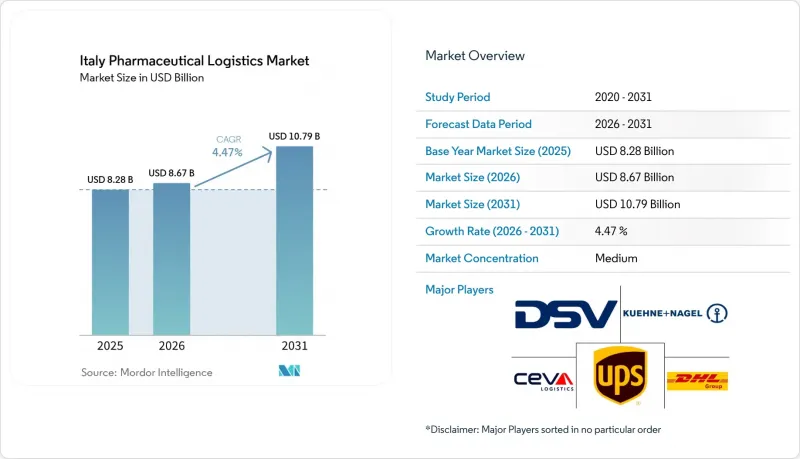
據 Mordor Intelligence 稱,2025 年義大利醫藥物流市場價值 82.8 億美元,預計到 2031 年將從 2026 年的 86.7 億美元成長至 107.9 億美元,預測期(2026-2031 年)的複合年預計成長率為 4.47%。
義大利的製藥生產基地正經歷原料藥的持續流入和成品藥的持續流出。本報告按物流功能(運輸、倉儲配送及其他)、營運模式(冷鏈物流和非冷鏈物流)、產品類型(處方藥、成藥及其他)和地區(義大利北部、中部和南部(含島嶼))進行細分。市場預測以美元計價。
義大利醫藥物流市場趨勢與洞察
生物製藥、疫苗和先進療法的成長
義大利製造業在該國對專業醫藥物流的需求中佔有重要佔有率。到2025年,義大利製藥企業的產值將達到740億歐元(約870.4億美元)。生物製藥和疫苗需要檢驗的包裝、持續的溫度監控以及完整的運輸記錄。這些要求貫穿從生產、運輸到儲存、配送的整個過程。因此,隨著生產轉向對環境要求更高的療法,義大利醫藥物流市場正受益於服務密度的提升。細胞和基因療法進一步加劇了這一需求,因為它們需要嚴格的儲存歷史管理和精心策劃的每次運輸配送流程。
擴大溫控物流與特種物流
訂單規模的縮小正在改變藥品分銷的營運模式。 2025年,義大利藥局通路的單次出貨小包裹數量將增加17%。隨著配送次數的增加,車輛準備、包裝核查、溫度記錄和路線管理等工作也隨之增加。即使是小批量出貨,這些工作也必不可少。這一趨勢推動了義大利藥品物流市場對溫控和專業物流服務的需求。同時,能夠以一致的處理標準處理頻繁訂單的自動化物流中心也因此更有價值。為了提高倉庫效率和可追溯性,DHL供應鏈義大利公司於2025年7月在其位於利夫拉加的健康物流園區引進了一套機器人系統。
檢驗的冷鏈基礎設施高成本
符合良好儲存標準 (GDP) 的冷鏈設施比普通倉庫需要更多投資。操作員需要溫控區、持續監控、備用冷卻設備、校準設備以及有據可查的資格確認流程。 2025 年,義大利醫療保健物流的營業利潤率預計為 3%,而義大利整個物流行業的營業利潤率則為 6%。這限制了小規模業者利用內部資金為新的冷鏈產能融資的能力。同時,大規模綜合營運商可以更容易投資於資產管理和數位化系統。這種差距在義大利北部主要物流走廊以外的地區尤其顯著。此外,向義大利南部和西西里島運送細胞和基因療法需要低溫包裝,並與當地專業宅配業者協調。
細分市場分析
至2025年,運輸業將佔義大利醫藥物流市場的48.29%。這一細分市場的規模反映了在製造地、批發倉庫、醫院、藥房和出口口岸之間運輸藥品的需求。公路貨運仍是國內藥品分銷的基礎,承擔日常多點配送網路的運作。符合GDP認證的冷藏車運輸需要溫控的產品。空運雖然貨運量較小,但為生物製藥、臨床試驗材料和先進療法提供了高價值的服務。米蘭和羅馬是國際醫學流的重要樞紐。鐵路、海運和內河航運服務雖然作用相對較小,但鐵路在北部工業走廊為需要特定溫控的多式聯運提供支援。
預計2026年至2031年間,附加價值服務及其他細分領域將以7.30%的複合年成長率成長。此類別包括二次包裝、序號檢驗、品質文件和冷鏈重新包裝。製造商在將內部生產能力轉向生產活動時會利用這些服務。在義大利醫藥物流市場,此功能市場規模的成長主要受生產後合規相關服務需求的增加所驅動。隨著客戶將庫存管理和受控儲存操作外包,倉儲和配送產業也從中受益。義大利中部和北部獲得GDP認證的物流中心正在擴大其容納常溫和溫控庫存的能力。儘管運輸仍然是重要的收入來源,但隨著服務包的提供,專業物流合約的角色可能會擴大。這一趨勢有利於那些將貨運代理與文件化的品管和處理能力相結合的供應商。
其他好處:
- Excel格式的市場預測(ME)表
- 3個月的分析師支持
目錄
第1章:引言
- 研究假設和市場定義
- 調查範圍
第2章:調查方法
第3章執行摘要
第4章 市場狀況
- 市場概況及物流在製藥業中的作用
- 藥品支出趨勢
- 市場促進因素
- 生技藥品、疫苗和先進療法的成長
- 擴大溫控物流與特種物流
- 藥品生產及出口集中
- 外包給符合GDPR規定的第三方物流供應商
- 高價值、時間緊迫的細胞和基因治療工作流程
- 臨床試驗和直接患者網路的在地化
- 市場限制因素
- 檢驗的冷鏈基礎設施高成本
- GDP、GMP 和 AIFA 的嚴格合規要求所帶來的負擔。
- 區域醫療服務體系片段化和最後一公里服務的複雜性。
- 小規模超低溫路線可行性的限制。
- 法律規範
- 價值鍊和分銷管道的結構分析
- 技術創新前景
- 波特五力分析
- 藥品物流要求的變化
- 地緣政治事件對供應鏈變化的影響
第5章 市場規模及成長預測(價值,2026-2031 年)
- 按職能分類的物流
- 運輸
- 路
- 航空
- 海路和內河航道
- 鐵路
- 倉儲/物流
- 附加價值服務及其他
- 運輸
- 透過操作模式
- 冷鏈物流
- 非冷鏈物流
- 依產品類型
- 處方藥
- 非處方藥
- 生物製劑和生物相似藥
- 疫苗和血液製品
- 臨床試驗材料
- 細胞和基因治療
- 醫療設備及診斷設備
- 動物用藥品
- 其他
- 按地區
- 義大利北部
- 義大利中部
- 義大利南部(包括島嶼)
第6章 競爭情勢
- 市場集中度
- 關鍵策略趨勢
- 市佔率分析
- 公司簡介
- DHL Group
- United Parcel Service, Inc.
- Kuehne+Nagel International AG
- CEVA Logistics SA
- DSV A/S
- GXO Logistics, Inc.
- NIPPON EXPRESS HOLDINGS, INC.
- Logista Pharma, SAU
- Alloga AG
- GEODIS SA
- Rhenus SE & Co. KG
- Fercam SpA
- Savino Del Bene SpA
- Arcese Holding SpA
- STEF SA
- Expeditors International of Washington, Inc.
- Medlog SA
- Yusen Logistics(Including Movianto)
- PHSE Srl
- H.Essers NV
- Biocair International Limited
第7章 市場機會與未來展望
According to Mordor Intelligence, the Italy pharmaceutical logistics market size was valued at USD 8.28 billion in 2025 and is estimated to grow from USD 8.67 billion in 2026 to reach USD 10.79 billion by 2031, at a CAGR of 4.47% during the forecast period (2026-2031).
Italy's pharmaceutical production base creates recurring inbound flows of active pharmaceutical ingredients and outbound flows of finished medicines. This report is Segmented by Logistics Function (Transportation, Warehousing & Distribution, and More), by Mode of Operation (Cold-Chain Logistics and Non-Cold-Chain Logistics), by Product Type (Prescription Drugs, OTC Drugs, and More), and by Region (Northern Italy, Central Italy, and Southern Italy (Including the Islands)). The Market Forecasts are Provided in Terms of Value (USD).
Italy Pharmaceutical Logistics Market Trends and Insights
Growth of Biologics, Vaccines, and Advanced Therapies
Italian manufacturing generates a substantial share of the country's need for specialized pharmaceutical logistics. Pharmaceutical facilities in Italy produced EUR 74 billion (USD 87.04 billion) of output in 2025. Biologics and vaccines need validated packaging, continuous temperature monitoring, and complete transport records. These requirements apply from manufacturing release through storage, transport, and delivery. The Italy pharmaceutical logistics market, therefore, benefits from higher service intensity as production shifts toward sensitive therapies. Cell and gene therapies extend this need because each shipment requires strict chain-of-custody controls and carefully planned delivery steps.
Expansion of Temperature-Controlled and Specialty Logistics
Smaller order sizes are changing the operating model for pharmaceutical distribution. Parcels per shipment in the Italian pharmacy channel increased 17% in 2025. More deliveries require more vehicle preparation, packaging checks, temperature records, and route controls. These activities are needed even when the shipment contains a small product volume. This pattern supports demand for temperature-controlled and specialty services in the Italy pharmaceutical logistics market. It also increases the value of automated distribution centers that can process frequent orders with consistent handling standards. DHL Supply Chain Italy opened a robotic system at its Livraga Health Logistics Campus in July 2025, reflecting the focus on warehouse productivity and traceability.
High Cost of Validated Cold-Chain Infrastructure
A GDP-compliant cold-chain site requires more investment than a standard warehouse. Operators need controlled temperature zones, continuous monitoring, backup cooling, calibrated equipment, and documented qualification processes. Italian healthcare logistics operating margins were recorded at 3% in 2025, compared with 6% for the broader Italian logistics sector. This limits the ability of smaller providers to finance new cold-chain capacity from internal resources. Larger integrated providers can invest more readily in controlled assets and digital systems. The resulting gap is most visible outside the main Northern Italian logistics corridor. Cell and gene therapy deliveries to Southern Italy and Sicily also require cryogenic packaging and specialized local courier coordination.
Other drivers and restraints analyzed in the detailed report include:
- Outsourcing to GDP-Compliant Third-Party Logistics Providers
- Regionalization of Clinical-Trial and Direct-to-Patient Networks
- Stringent GDP, GMP, and AIFA Compliance Burden
For complete list of drivers and restraints, kindly check the Table Of Contents.
Segment Analysis
Transportation held 48.29% of the Italy pharmaceutical logistics market share in 2025. The segment's scale reflects the need to move medicines between production sites, wholesale depots, hospitals, pharmacies, and export gateways. Road freight remains the foundation of domestic pharmaceutical distribution because it serves routine multi-stop delivery networks. GDP-certified refrigerated fleets support products that require controlled temperature conditions. Air freight carries smaller volumes but has a higher service value for biologics, clinical trial materials, and advanced therapies. Milan and Rome provide important connections for international pharmaceutical flows. Rail, sea, and inland waterway services have smaller roles, although rail supports selected temperature-controlled intermodal movements in the Northern industrial corridor.
The value-added services and others segment is forecast to expand at a 7.30% CAGR between 2026 and 2031. This category includes secondary packaging, serialization code verification, quality documentation, and cold-chain repackaging. Manufacturers use these services when they redirect internal capacity toward production activities. The Italy pharmaceutical logistics market size for this function is supported by the growing need for compliance-related tasks after manufacturing. Warehousing and distribution also benefit as customers outsource inventory management and controlled storage. GDP-certified hubs in Central and Northern Italy add capacity for ambient and temperature-controlled inventory. Transportation will remain essential for revenue, while service bundles can increase the role of specialist logistics contracts. The pattern favors providers that combine freight operations with documented quality and handling capabilities.
Complete Report Scope:
- By Logistics Function
- Transportation
- Road
- Air
- Sea and Inland Waterways
- Rail
- Warehousing and Distribution
- Value-added Services and Others
- Transportation
- By Mode of Operation
- Cold-Chain Logistics
- Non-Cold-Chain Logistics
- By Product Type
- Prescription Drugs
- OTC Drugs
- Biologics and Biosimilars
- Vaccines and Blood Products
- Clinical Trial Materials
- Cell and Gene Therapies
- Medical Devices and Diagnostics
- Veterinary Medicine
- Others
- By Region
- Northern Italy
- Central Italy
- Southern Italy (incl. the Islands)
List of Companies Covered in this Report:
- DHL Group
- United Parcel Service, Inc.
- Kuehne + Nagel International AG
- CEVA Logistics SA
- DSV A/S
- GXO Logistics, Inc.
- NIPPON EXPRESS HOLDINGS, INC.
- Logista Pharma, S.A.U.
- Alloga AG
- GEODIS SA
- Rhenus SE & Co. KG
- Fercam S.p.A.
- Savino Del Bene S.p.A.
- Arcese Holding S.p.A.
- STEF S.A.
- Expeditors International of Washington, Inc.
- Medlog SA
- Yusen Logistics (Including Movianto)
- PHSE S.r.l.
- H.Essers N.V.
- Biocair International Limited
Additional Benefits:
- The market estimate (ME) sheet in Excel format
- 3 months of analyst support
TABLE OF CONTENTS
1 Introduction
- 1.1 Study Assumptions and Market Definition
- 1.2 Scope of the Study
2 Research Methodology
3 Executive Summary
4 Market Landscape
- 4.1 Market Overview and Role of Logistics in Pharmaceutical
- 4.2 Pharmaceutical Spending Trends
- 4.3 Market Drivers
- 4.3.1 Growth of Biologics, Vaccines and Advanced Therapies
- 4.3.2 Expansion of Temperature-Controlled and Specialty Logistics
- 4.3.3 Pharmaceutical Manufacturing and Export Concentration
- 4.3.4 Outsourcing to GDP-Compliant Third-Party Logistics Providers
- 4.3.5 High-Value, Time-Critical Cell and Gene Therapy Flows
- 4.3.6 Regionalization of Clinical-Trial and Direct-to-Patient Networks
- 4.4 Market Restraints
- 4.4.1 High Cost of Validated Cold-Chain Infrastructure
- 4.4.2 Stringent GDP, GMP and AIFA Compliance Burden
- 4.4.3 Fragmented Regional Healthcare Delivery and Last-Mile Complexity
- 4.4.4 Limited Viability of Low-Volume Ultra-Cold and Cryogenic Routes
- 4.5 Regulatory Framework
- 4.6 Value Chain and Distribution Channel Architecture Analysis
- 4.7 Technology Innovations Outlook
- 4.8 Porter's Five Forces Analysis
- 4.8.1 Threat of New Entrants
- 4.8.2 Bargaining Power of Suppliers
- 4.8.3 Bargaining Power of Buyers
- 4.8.4 Threat of Substitutes
- 4.8.5 Rivalry Among Competitors
- 4.9 Evolution of Pharmaceutical Logistics Requirements
- 4.10 Impact of Geo-Political Events on Supply Chain Shifts
5 Market Size and Growth Forecasts (Value, 2026-2031)
- 5.1 By Logistics Function
- 5.1.1 Transportation
- 5.1.1.1 Road
- 5.1.1.2 Air
- 5.1.1.3 Sea and Inland Waterways
- 5.1.1.4 Rail
- 5.1.2 Warehousing and Distribution
- 5.1.3 Value-added Services and Others
- 5.1.1 Transportation
- 5.2 By Mode of Operation
- 5.2.1 Cold-Chain Logistics
- 5.2.2 Non-Cold-Chain Logistics
- 5.3 By Product Type
- 5.3.1 Prescription Drugs
- 5.3.2 OTC Drugs
- 5.3.3 Biologics and Biosimilars
- 5.3.4 Vaccines and Blood Products
- 5.3.5 Clinical Trial Materials
- 5.3.6 Cell and Gene Therapies
- 5.3.7 Medical Devices and Diagnostics
- 5.3.8 Veterinary Medicine
- 5.3.9 Others
- 5.4 By Region
- 5.4.1 Northern Italy
- 5.4.2 Central Italy
- 5.4.3 Southern Italy (incl. the Islands)
6 Competitive Landscape
- 6.1 Market Concentration
- 6.2 Key Strategic Moves
- 6.3 Market Share Analysis
- 6.4 Company Profiles (includes Global level Overview, Market level overview, Core Segments, Financials as available, Strategic Information, Geographic/Network Coverage, Products and Services, and Recent Developments)
- 6.4.1 DHL Group
- 6.4.2 United Parcel Service, Inc.
- 6.4.3 Kuehne + Nagel International AG
- 6.4.4 CEVA Logistics SA
- 6.4.5 DSV A/S
- 6.4.6 GXO Logistics, Inc.
- 6.4.7 NIPPON EXPRESS HOLDINGS, INC.
- 6.4.8 Logista Pharma, S.A.U.
- 6.4.9 Alloga AG
- 6.4.10 GEODIS SA
- 6.4.11 Rhenus SE & Co. KG
- 6.4.12 Fercam S.p.A.
- 6.4.13 Savino Del Bene S.p.A.
- 6.4.14 Arcese Holding S.p.A.
- 6.4.15 STEF S.A.
- 6.4.16 Expeditors International of Washington, Inc.
- 6.4.17 Medlog SA
- 6.4.18 Yusen Logistics (Including Movianto)
- 6.4.19 PHSE S.r.l.
- 6.4.20 H.Essers N.V.
- 6.4.21 Biocair International Limited
7 Market Opportunities and Future Outlook
- 7.1 White-space and Unmet-Need Assessment

 2026-2030年全球醫學流市場
 生物製藥運輸市場規模、佔有率和成長分析:按運輸方式、包裝類型、溫度範圍、產品類型、最終用途產業和地區分類-2026-2033年產業預測
 英國醫藥物流:市場佔有率分析、產業趨勢與統計、成長預測(2026-2031)生物製藥物流:市場佔有率分析、產業趨勢與統計、成長預測(2026-2031)亞太地區醫藥物流:市場佔有率分析、產業趨勢與統計及成長預測(2026-2031)北美醫藥物流:市場佔有率分析、產業趨勢與統計及成長預測(2026-2031)歐洲醫藥物流:市場佔有率分析、產業趨勢與統計及成長預測(2026-2031)
 醫藥物流市場分析及至2035年的預測:依類型、產品、服務、技術、組件、應用、設備、運輸方式及階段
 生物製藥物流市場:2026-2032年全球市場預測(依產品類型、服務類型、運輸方式、溫度需求及最終用戶分類)中國醫藥物流:市場佔有率分析、產業趨勢與統計及成長預測(2026-2031)