


 |
市場調查報告書
商品編碼
2125466
義大利容器玻璃:市場佔有率分析、產業趨勢與統計、成長預測(2026-2031)Italy Container Glass - Market Share Analysis, Industry Trends & Statistics, Growth Forecasts (2026 - 2031) |
||||||

※ 本網頁內容可能與最新版本有所差異。詳細情況請與我們聯繫。
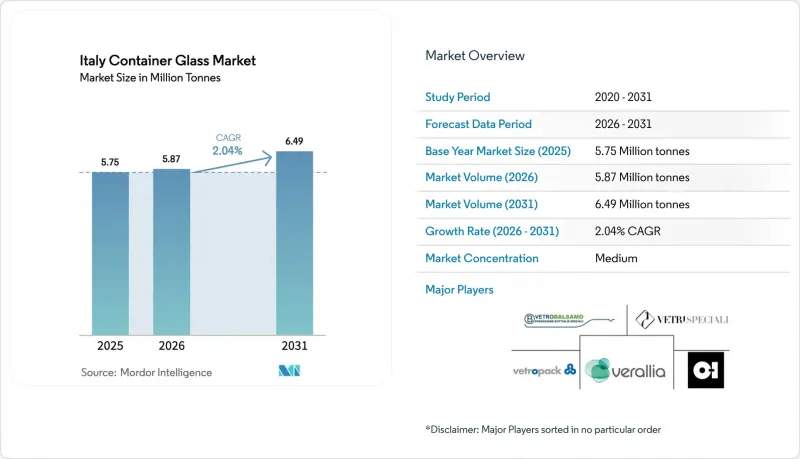
根據 Mordor Intelligence 預測,義大利容器玻璃市場將從 2025 年的 575 萬噸成長到 2026 年的 587 萬噸,然後從 2026 年到 2031 年以 2.04% 的複合年成長率成長,到 2031 年達到 649 萬噸。
本報告按最終用戶(飲料[酒精飲料(啤酒、葡萄酒、烈酒及其他酒精飲料)和非酒精飲料(碳酸飲料、乳製品飲料及其他)]、食品[果醬、果凍、調味品等]、化妝品及個人護理用品、藥品和香水)和顏色(綠色、琥珀色、燧石色及其他顏色)進行細分。市場預測以噸為單位。
義大利容器玻璃市場的趨勢與洞察
對環保和永續包裝解決方案的需求日益成長
義大利消費者將可無限循環利用的玻璃視為解決包裝廢棄物問題的實際方案。如今,超級市場優先為可回收或高回收率的瓶裝產品預留貨架空間,迫使品牌商轉向使用玻璃容器。 PPWR(義大利塑膠包裝廢棄物回收協會)提出的2030年實現90%回收率的目標正在加速這一轉型,而CONAI(義大利國家塑膠協會)的逆向物流網路確保了玻璃屑的穩定供應,為義大利玻璃容器市場提供了結構性支撐。由於品牌願意為環保因素支付溢價,需求不斷成長,而塑膠替代品則面臨課稅和聲譽風險,義大利玻璃容器市場仍然是高階產品的首選。
支持循環經濟的政府政策和歐盟法規
義大利於2024年開始徵收每公斤0.45歐元(0.48美元)的塑膠稅,此舉立即縮小了PET和玻璃之間的成本差距。根據生產者責任延伸制度,費用根據可回收性評分而有所不同,有效地津貼了回收率高的玻璃。在CoReVe框架下營運的義大利國內玻璃回收廠每年處理超過200萬噸玻璃屑,確保了生產商的穩定供應。這些措施共同提高了義大利容器玻璃市場的門檻,並抑制了高階市場替代品的出現。
來自輕巧且經濟實惠的替代品的激烈競爭。
鋁罐比同等體積的玻璃罐輕約 60%,可降低長途運輸成本高達 25%。 PET寶特瓶製造商正將重心轉向高階產品線,在這些產品中,包裝不僅是產品成本,更是品牌傳承的核心要素。
細分市場分析
到2025年,飲料業將佔義大利容器玻璃市場57.74%的佔有率,貢獻大部分熔爐產量,並支撐多班次生產。酒精飲料,尤其是葡萄酒,將佔總產量的35%,並與當地葡萄種植叢集緊密相關。精釀啤酒年均成長率達4.2%,刺激了對獨特瓶模的需求,小規模玻璃製造商能夠以可觀的利潤率供應這些瓶模。非酒精類高階果汁和植物蘇打水也推動了這一成長勢頭,進一步擴大了義大利容器玻璃市場的規模。
化妝品和個人護理品領域成長最快,複合年成長率達3.9%,這反映出消費者對可重複填充玻璃瓶和高級香水的需求。奢侈品牌正利用玻璃的觸感和視覺吸引力來支撐更高的定價,並提升每噸銷售量。食品應用領域構成了一個穩定且波動性較小的基礎,而藥品管瓶和安瓿則受益於義大利以出口為導向的製藥業。這些趨勢共同作用,使得熔爐運轉率保持在90%以上,從而促進了專門用於小批量、高利潤生產的生產線的引入。
其他好處
- Excel格式的市場預測(ME)表
- 3個月的分析師支持
目錄
第1章:引言
- 研究假設和市場定義
- 調查範圍
第2章:調查方法
第3章執行摘要
第4章 市場狀況
- 市場概覽
- 市場促進因素
- 對環保和永續包裝解決方案的需求日益成長
- 支持循環經濟的政府政策和歐盟法規
- 飲料產業,尤其是葡萄酒、烈酒和精釀啤酒產業,正在蓬勃發展。
- 消費者對健康與安全的意識
- 玻璃製造領域的技術創新
- 玻璃包裝的高階品牌形象與展示效果
- 市場限制因素
- 來自輕巧且經濟實惠的替代品的激烈競爭。
- 搬運和運輸過程中損壞的風險
- 重量增加導致運輸和倉儲成本上升
- 與可塑性材料相比,設計自由度受到限制
- PESTLE分析
- 產業價值鏈分析
- 義大利容器玻璃熔爐的生產能力和位置
- 工廠位置及投產年份
- 生產能力
- 爐型
- 玻璃的顏色
- 貨櫃玻璃進出口資料-涵蓋主要進出口目的地。
- 2021年至2024年進口量及進口額
- 2021年至2024年出口量及出口額
- 波特五力分析
- 原料分析
- 玻璃包裝回收趨勢
- 玻璃包裝供需分析
第5章 市場規模與成長預測
- 最終用戶
- 飲料
- 酒精飲料
- 啤酒
- 葡萄酒
- 烈酒
- 其他酒精飲料(蘋果酒和其他發酵飲料)
- 不含酒精的飲料
- 汁
- 碳酸飲料(CSD)
- 乳製品飲料
- 其他非酒精飲料
- 酒精飲料
- 食品(果醬、果凍、橘子醬、蜂蜜、香腸/調味品、食用油、醃菜)
- 化妝品和個人護理
- 藥品(不包括管瓶和安瓿)
- 香水
- 飲料
- 按顏色
- 綠色的
- 琥珀色
- 燧石
- 其他顏色
第6章 競爭情勢
- 市場集中度
- 策略動向和趨勢
- 各公司企業市場占有率分析(基於最新產能)
- 公司簡介
- Verallia Italia SpA
- Vetropack Italia Srl
- Vetri Speciali SpA
- Vetrobalsamo SpA
- OI Glass Italy Srl(Owens-Illinois)
- Bormioli Luigi SpA
- Ardagh Glass SA
- Zignago Vetro SpA
- Vetreria Etrusca SpA
- Vetrerie Riunite SpA
- Vidrala Italia Srl
- 斯托爾茲玻璃集團(義大利分部)
- Gerresheimer Italia SpA
- Saverglass Italia Srl
- Vetreria di Borgonovo SpA
- Vetreria Palomar Srl
- Vetreria Artistica Rosa Srl
- Vetreria Empolese SpA
第7章 市場機會與未來展望
According to Mordor Intelligence, the Italy container glass market size is expected to grow from 5.75 million tonnes in 2025 to 5.87 million tonnes in 2026 and is forecast to reach 6.49 million tonnes by 2031 at 2.04% CAGR over 2026-2031.
This report is Segmented by End-User (Beverages [Alcoholic {Beer, Wine, Spirits, Other Alcoholic Beverages}, and Non-Alcoholic {CSDs, Dairy Product Based Drinks, and More}], Food [Jam and Jelly, Condiments and Sauces, and More], Cosmetics and Personal Care, Pharmaceuticals, and Perfumery) and Color (Green, Amber, Flint, and Other Colors). The Market Forecasts are Provided in Terms of Volume (Tonnes).
Italy Container Glass Market Trends and Insights
Rising Demand for Eco-Friendly and Sustainable Packaging Solutions
Italian shoppers view endlessly recyclable glass as a tangible response to packaging waste concerns. Supermarkets now prioritize shelf space for products in returnable or high-recycled-content bottles, pushing brand owners toward glass. The PPWR target of 90% collection by 2030 accelerates this shift, and the Italy container glass market gains structural support as CONAI's reverse-logistics network achieves consistent cullet flows. Brands willing to pay a green premium amplify demand, ensuring that the Italy container glass market remains the default for high-image goods while plastic alternatives face levies and reputational risks.
Government Policies and EU Regulations Supporting Circular Economy
Italy's plastic tax of EUR 0.45 (USD 0.48) per kg, introduced in 2024, immediately narrowed the cost gap between PET and glass. Extended producer-responsibility fees now scale with recyclability scores, effectively subsidizing glass because of its high recovery rate. National glass-recycling plants operating under CoReVe process more than 2 million tons of cullet annually, guaranteeing supply stability for producers. These policy levers collectively raise the baseline for the Italy container glass market and discourage substitution in premium segments.
Intense Competition from Lightweight and Cost-Effective Alternatives
Aluminum cans weigh roughly 60% less than equal-volume glass, trimming freight outlays by as much as 25% for long hauls. PET bottles add design freedom and shatter resistance that appeal to on-the-go consumers. Beverage giants seeking quick cost wins can pivot formats rapidly, siphoning shared volume from the Italy container glass market in entry-price segments. Glass producers respond by targeting premium lines where packaging is central to brand heritage rather than a commodity cost.
Other drivers and restraints analyzed in the detailed report include:
- Booming Beverage Industry, Especially Wine, Spirits, and Craft Beer
- Technological Innovations in Glass Manufacturing
- Higher Transportation and Storage Costs Due to Weight
For complete list of drivers and restraints, kindly check the Table Of Contents.
Segment Analysis
The beverage segment commanded 57.74% of the Italy container glass market in 2025, generating the bulk of furnace throughput and sustaining multi-shift operations. Alcoholic drinks especially wine account for 35% of total volume and remain closely tied to rural viticulture clusters. Craft beer, posting 4.2% annual growth, energizes demand for distinctive bottle molds that smaller glassmakers can supply at attractive margins. Non-alcoholic premium juices and botanical sodas join this momentum, reinforcing the Italy container glass market size uplift.
Cosmetics and personal care exhibits the fastest expansion at a 3.9% CAGR, reflecting consumers' appetite for refillable glass jars and prestige fragrances. Luxury brands leverage glass's tactile and visual cues to justify higher price points, lifting revenue density per ton. Food applications form a stable, low-volatility base, while pharmaceutical vials and ampoules gain from Italy's export-oriented drug sector. Together, these trends keep furnace utilization above 90% and encourage lines dedicated to smaller-batch, higher-margin runs.
Complete Report Scope:
- By End-user
- Beverages
- Alcoholic
- Beer
- Wine
- Spirits
- Other Alcoholic Beverages (Cider and Other Fermented Drinks)
- Non-Alcoholic
- Juices
- Carbonated Drinks (CSDs)
- Dairy Product Based Drinks
- Other Non-Alcoholic Beverages
- Alcoholic
- Food (Jam, Jelly, Marmalades, Honey, Sausages and Condiments, Oil, Pickles)
- Cosmetics and Personal Care
- Pharmaceuticals (excluding Vials and Ampoules)
- Perfumery
- Beverages
- By Color
- Green
- Amber
- Flint
- Other Colors
List of Companies Covered in this Report:
- Verallia Italia S.p.A.
- Vetropack Italia S.r.l.
- Vetri Speciali S.p.A.
- Vetrobalsamo S.p.A.
- O-I Glass Italy S.r.l. (Owens-Illinois)
- Bormioli Luigi S.p.A.
- Ardagh Glass S.A.
- Zignago Vetro S.p.A.
- Vetreria Etrusca S.p.A.
- Vetrerie Riunite S.p.A.
- Vidrala Italia S.r.l.
- Stolzle Glass Group (Italy Division)
- Gerresheimer Italia S.p.A.
- Saverglass Italia S.r.l.
- Vetreria di Borgonovo S.p.A.
- Vetreria Palomar S.r.l.
- Vetreria Artistica Rosa S.r.l.
- Vetreria Empolese S.p.A.
Additional Benefits:
- The market estimate (ME) sheet in Excel format
- 3 months of analyst support
TABLE OF CONTENTS
1 INTRODUCTION
- 1.1 Study Assumptions and Market Definition
- 1.2 Scope of the Study
2 RESEARCH METHODOLOGY
3 EXECUTIVE SUMMARY
4 MARKET LANDSCAPE
- 4.1 Market Overview
- 4.2 Market Drivers
- 4.2.1 Rising Demand for Eco-Friendly and Sustainable Packaging Solutions
- 4.2.2 Government Policies and EU Regulations Supporting Circular Economy
- 4.2.3 Booming Beverage Industry, Especially Wine, Spirits, and Craft Beer
- 4.2.4 Health and Safety Awareness Among Consumers
- 4.2.5 Technological Innovations in Glass Manufacturing
- 4.2.6 Premium Branding and Shelf Appeal of Glass Packaging
- 4.3 Market Restraints
- 4.3.1 Intense Competition from Lightweight and Cost-Effective Alternatives
- 4.3.2 Fragility and Risk of Breakage During Handling and Transport
- 4.3.3 Higher Transportation and Storage Costs Due to Weight
- 4.3.4 Limited Design Flexibility Compared to Malleable Materials
- 4.4 PESTEL Analysis
- 4.5 Industry Value Chain Analysis
- 4.6 Container Glass Furnace Capacity and Locations in Italy
- 4.6.1 Plant Locations and Year of Commencement
- 4.6.2 Production Capacities
- 4.6.3 Types of Furnaces
- 4.6.4 Color of Glass Produced
- 4.7 Export-Import Data of Container Glass - Covering Key Import and Export Destinations
- 4.7.1 Import Volume and Value, 2021-2024
- 4.7.2 Export Volume and Value, 2021-2024
- 4.8 Porter's Five Forces Analysis
- 4.8.1 Threat of New Entrants
- 4.8.2 Bargaining Power of Suppliers
- 4.8.3 Bargaining Power of Buyers
- 4.8.4 Threat of Substitutes
- 4.8.5 Competitive Rivalry
- 4.9 Raw Material Analysis
- 4.10 Recycling Trends for Glass Packaging
- 4.11 Demand vs Supply Analysis for Glass Packaging
5 MARKET SIZE AND GROWTH FORECASTS (VOLUME)
- 5.1 By End-user
- 5.1.1 Beverages
- 5.1.1.1 Alcoholic
- 5.1.1.1.1 Beer
- 5.1.1.1.2 Wine
- 5.1.1.1.3 Spirits
- 5.1.1.1.4 Other Alcoholic Beverages (Cider and Other Fermented Drinks)
- 5.1.1.2 Non-Alcoholic
- 5.1.1.2.1 Juices
- 5.1.1.2.2 Carbonated Drinks (CSDs)
- 5.1.1.2.3 Dairy Product Based Drinks
- 5.1.1.2.4 Other Non-Alcoholic Beverages
- 5.1.1.1 Alcoholic
- 5.1.2 Food (Jam, Jelly, Marmalades, Honey, Sausages and Condiments, Oil, Pickles)
- 5.1.3 Cosmetics and Personal Care
- 5.1.4 Pharmaceuticals (excluding Vials and Ampoules)
- 5.1.5 Perfumery
- 5.1.1 Beverages
- 5.2 By Color
- 5.2.1 Green
- 5.2.2 Amber
- 5.2.3 Flint
- 5.2.4 Other Colors
6 COMPETITIVE LANDSCAPE
- 6.1 Market Concentration
- 6.2 Strategic Moves and Developments
- 6.3 Company Market Share Analysis, (Based on Latest Production Capacity)
- 6.4 Company Profiles (includes Global level Overview, Market level overview, Core Segments, Financials as available, Strategic Information, Market Rank/Share for key companies, Products and Services, and Recent Developments)
- 6.4.1 Verallia Italia S.p.A.
- 6.4.2 Vetropack Italia S.r.l.
- 6.4.3 Vetri Speciali S.p.A.
- 6.4.4 Vetrobalsamo S.p.A.
- 6.4.5 O-I Glass Italy S.r.l. (Owens-Illinois)
- 6.4.6 Bormioli Luigi S.p.A.
- 6.4.7 Ardagh Glass S.A.
- 6.4.8 Zignago Vetro S.p.A.
- 6.4.9 Vetreria Etrusca S.p.A.
- 6.4.10 Vetrerie Riunite S.p.A.
- 6.4.11 Vidrala Italia S.r.l.
- 6.4.12 Stolzle Glass Group (Italy Division)
- 6.4.13 Gerresheimer Italia S.p.A.
- 6.4.14 Saverglass Italia S.r.l.
- 6.4.15 Vetreria di Borgonovo S.p.A.
- 6.4.16 Vetreria Palomar S.r.l.
- 6.4.17 Vetreria Artistica Rosa S.r.l.
- 6.4.18 Vetreria Empolese S.p.A.
7 MARKET OPPORTUNITIES AND FUTURE OUTLOOK
- 7.1 White-space and Unmet-Need Assessment

 日本容器玻璃市場:市場佔有率分析、產業趨勢與統計及成長預測(2026-2031)法國玻璃容器:市場佔有率分析、行業趨勢和統計數據以及成長預測(2026-2031 年)泰國容器玻璃:市場佔有率分析、產業趨勢與統計、成長預測(2026-2031)西班牙容器玻璃:市場佔有率分析、產業趨勢與統計、成長預測(2026-2031)印度容器用玻璃器皿:市場佔有率分析、產業趨勢與統計、成長預測(2026-2031)
 玻璃器皿市場-2026-2032年全球市場預測
 玻璃器皿市場規模、佔有率、成長和行業分析:按玻璃類型、成型方法、應用和地區分類,並預測至2034年
 玻璃器皿市場規模、佔有率和趨勢分析報告:按產品、應用、地區和細分市場分類(2026-2033 年)玻璃瓶市場:依材質、顏色、容量、應用及通路分類-2026-2032年全球市場預測
 酒精飲料瓶市場規模、佔有率和成長分析:按形狀、容量、材質、應用和地區分類-2026-2033年產業預測