


 |
市場調查報告書
商品編碼
2116742
泰國容器玻璃:市場佔有率分析、產業趨勢與統計、成長預測(2026-2031)Thailand Container Glass - Market Share Analysis, Industry Trends & Statistics, Growth Forecasts (2026 - 2031) |
||||||

※ 本網頁內容可能與最新版本有所差異。詳細情況請與我們聯繫。
據 Mordor Intelligence 稱,2025 年泰國容器玻璃市場價值為 395 萬噸,預計到 2026 年將達到 412 萬噸,到 2031 年將達到 509 萬噸,預測期(2026-2031 年)複合年成長率為 4.30%。
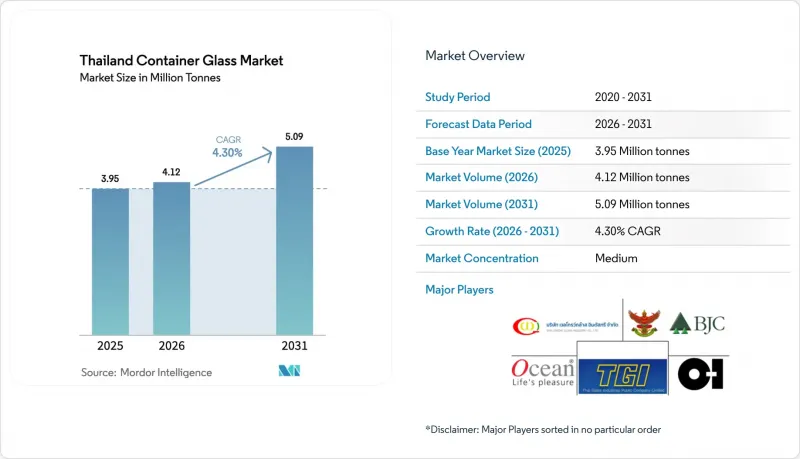
本報告按最終用戶(飲料[含酒精飲料(啤酒、葡萄酒、烈酒等)和非酒精飲料(果汁、碳酸飲料、乳製品等)]、食品[果醬、果凍、橘子醬、食用油、醃菜等]、化妝品和個人護理用品、藥品、香水)和顏色(綠色、琥珀色、燧石色及其他顏色)進行細分。市場預測以噸為單位。
泰國玻璃容器市場趨勢及洞察。
促進永續和可回收包裝的法規制定
泰國減少塑膠廢棄物的藍圖旨在2025年逐步淘汰一次性發泡聚苯乙烯食品容器和薄塑膠杯,並推廣以玻璃容器進行結構性替代。該法規的範圍還包括從2020年起禁止在化妝品中使用微珠,以及零售商主導逐步淘汰塑膠袋的使用,從而鞏固消費者對玻璃是默認低碳選擇的認知。考慮到整個生命週期的碳足跡,碳排放稅將進一步擴大塑膠和玻璃之間的成本差距,鼓勵品牌所有者指定使用再生玻璃。泰國國家石油公司(PTT)作為一家大型能源集團,已經制定了循環廢棄物管理目標,並正在加強可回收包裝材料的供應鏈協調。隨著政策里程碑的臨近,能夠保證高碎玻璃屑率和低排放生產的製造商的需求前景日益光明。因此,這種法規環境的協同效應將推動泰國玻璃容器市場的預期複合年成長率提高1.2個百分點。
飲料和化妝品包裝的優質化
品牌正利用玻璃的美感來為其精釀啤酒、機能飲料和高階化妝品系列的高價辯護。在這些領域,包裝在傳遞產品真實性和永續性方面發揮著至關重要的作用。即飲綠茶的早期成功——其市場規模從2001年的1000萬美元成長到2004年的1.5億美元——表明,當包裝與他們感知到的品質相匹配時,消費者願意選擇價格更高的產品。社群媒體上的圖片進一步提升了透明光滑玻璃表面的吸引力,增強了其在展示中的吸引力,並促使具有環保意識的千禧世代重複購買。順應此一趨勢,國內化妝品製造商正在推出採用厚壁玻璃瓶和滴管的新產品,維持著優質化的良性循環,推動市場成長0.8個百分點。
PET和鋁罐的迅速普及
輕質PET和鋁製包裝在低利潤率的飲料行業具有成本和物流優勢,對便利商店通路的玻璃容器銷售量構成壓力。 Indorama Ventures對PET的下游整合正在改善供應鏈經濟性,並使其能夠在大眾軟性飲料市場採取更具競爭力的價格策略。便利商店營運商更傾向於輕質包裝以最佳化貨架補貨,這導致價格敏感品類對玻璃容器的需求下降,並使市場複合年成長率降低了1.1個百分點。
細分市場分析
到2025年,飲料將佔泰國玻璃容器市場佔有率的53.78%,超過其他所有用途,這主要得益於旅遊業的復甦和消費者對高階精釀飲品的需求成長。雖然啤酒仍將保持其在該市場銷售量上的領先地位,頂級烈酒和機能飲料目前正引領著價值成長,這主要得益於瓶型差異化、壓紋工藝和防篡改瓶蓋等因素。隨著酒店業遊客數量恢復到疫情前水平,預計泰國與飲料相關的玻璃容器市場規模將穩定成長。
隨著品牌越來越關注永續性,如今的玻璃瓶中含有30%至65%的回收玻璃廢料,這不僅鞏固了其在循環經濟中的地位,也降低了熔爐的能源消耗。同時,包括康普茶和冷萃咖啡在內的非酒精飲料產業也開始轉向玻璃容器,以強調產品的真實性和潔淨標示的可信度。目前規模較小的化妝品和個人護理類別預計到2031年將達到5.01%的複合年成長率。這反映出消費者越來越傾向於選擇能夠傳遞產品功效和環保意識的優質玻璃瓶、滴管和滾珠瓶。高階護膚品牌已經開始宣傳其瓶子100%可回收,這進一步推動了追求負責任的奢侈品的國內消費者的接受度。
其他好處:
- Excel格式的市場預測(ME)表
- 3個月的分析師支持
目錄
第1章:引言
- 研究假設和市場定義
- 調查範圍
第2章:調查方法
第3章執行摘要
第4章 市場狀況
- 市場概覽
- 市場促進因素
- 監管部門努力促進永續和可回收包裝
- 飲料和化妝品包裝的優質化
- 國內精釀啤酒和酒精飲料的消費量正在上升。
- 政府採購中再生材料含量的強制性目標
- 含大麻成分的飲料正在推動對防紫外線玻璃的需求。
- 碎鋼使用率達60%時,退還玻璃屑附加費
- 市場限制因素
- PET和鋁罐的迅速普及
- 高爐的能源成本和燃料轉換相關的資本投資
- 2023 年更嚴格的氮氧化物排放上限推遲了反應器維修。
- 農村地區玻璃廢料收集物流系統的去中心化
- PESTLE分析
- 產業價值鏈分析
- 泰國容器玻璃熔爐的生產能力和位置
- 工廠位置及投產年份
- 生產能力
- 爐子的種類
- 玻璃的顏色
- 貨櫃玻璃的進出口資料-涵蓋主要進出口目的地。
- 2021年至2024年進口量及進口額
- 2021年至2024年出口量及出口額
- 波特五力分析
- 原料分析
- 玻璃包裝回收趨勢
- 玻璃包裝供需分析
第5章 市場規模與成長預測
- 最終用戶
- 飲料
- 酒精飲料
- 啤酒
- 葡萄酒
- 烈酒
- 其他酒精飲料(蘋果酒和其他發酵飲料)
- 非酒精性
- 汁
- 碳酸飲料(CSD)
- 乳製品飲料
- 其他非酒精飲料
- 酒精飲料
- 食品(果醬、果凍、橘子醬、蜂蜜、香腸和調味品、食用油、醃菜)
- 化妝品和個人護理
- 藥品(不包括管瓶和安瓿)
- 香水
- 飲料
- 按顏色
- 綠色的
- 琥珀色
- 燧石
- 其他顏色
第6章 競爭情勢
- 市場集中度
- 策略舉措和趨勢
- 各公司企業市場占有率分析(基於最新產能)
- 公司簡介
- Thai Glass Industries Public Company Limited
- Wellgrow Glass Industry Co., Ltd.
- Berli Jucker Public Company Limited(BJC Packaging)
- Ocean Glass Public Company Limited
- OI Glass, Inc.
- Ardagh Group SA
- Verallia SA
- Nihon Yamamura Glass Co., Ltd.
- Saverglass SAS
- Heinz-Glas GmbH & Co. KGaA
- Gerresheimer AG
- Vetropack Holding AG
- Asahi Glass Public Company Limited(AGC)
- Sisecam Group
- AGI Glaspac(HSIL Ltd.)
- PT Culletprima Setia(Indonesia)
- Union Glass Public Company Limited
第7章 市場機會與未來展望
According to Mordor Intelligence, the Thailand container glass market size was valued at 3.95 million tonnes in 2025 and estimated to grow from 4.12 million tonnes in 2026 to reach 5.09 million tonnes by 2031, at a CAGR of 4.30% during the forecast period (2026-2031).
This report is Segmented by End-User(Beverages [Alcoholic {Beer, Wine, Spirits, and More}, and Non-Alcoholic {Juices, Csds, Dairy Product Based Drinks, and More}], Food [Jam, Jelly, Marmalades, Oil, Pickles, and More], Cosmetics and Personal Care, Pharmaceuticals, and Perfumery), Color (Green, Amber, Flint, and Other Colors). The Market Forecasts are Provided in Terms of Volume (Tonnes).
Thailand Container Glass Market Trends and Insights
Regulatory Push for Sustainable and Recyclable Packaging
Thailand's plastic-waste roadmap eliminates single-use foam food boxes and thin plastic cups by 2025, creating structural substitution toward glass containers. Enforcement extends to microbead bans in cosmetics since 2020 and retailer-led plastic-bag phase-downs, anchoring consumer perception of glass as the low-carbon default. The carbon tax amplifies cost differentials between plastics and glass when lifecycle footprints are considered, encouraging brand owners to specify recycled-content glass. Leading energy conglomerate PTT has already committed to circular waste management targets, reinforcing supply-chain alignment around recyclable packaging. As policy milestones approach, demand visibility rises for producers able to guarantee high-cullet, low-emission output. The combined regulatory environment therefore adds 1.2 percentage points to the forecast CAGR of the Thailand container glass market.
Premiumization in Beverage and Cosmetics Packaging
Brands leverage glass aesthetics to justify higher price points in craft beer, functional drinks, and prestige beauty lines, where packaging communicates authenticity and sustainability. Early success stories in ready-to-drink green tea, whose value expanded from USD 10 million in 2001 to USD 150 million by 2004, underscore consumers' willingness to trade up when packaging aligns with perceived quality. Social-media imagery further rewards clear, glossy glass surfaces, elevating shelf appeal and driving repeat purchases among eco-conscious millennials. Domestic cosmetic companies translate these cues into product launches that feature thick-wall flint jars and droppers, sustaining a premiumization flywheel that adds 0.8 percentage points to market growth.
Rapid Penetration of PET and Aluminum Cans
Lightweight PET and aluminum offer cost and logistics advantages in low-margin beverage segments, squeezing glass volumes in convenience channels. Indorama Ventures' downstream PET integration improves supply economics, enabling aggressive pricing into mass-market soft drinks. C-store operators favor lighter packs to optimize shelf replenishment, dulling glass demand in price-sensitive categories and shaving 1.1 percentage points off market CAGR.
Other drivers and restraints analyzed in the detailed report include:
- Domestic Craft-Beer and Alcoholic Consumption Uptrend
- Cannabis Beverages Driving Demand for UV-Protective Glass
- High Furnace Energy Costs and Fuel-Switching CAPEX
For complete list of drivers and restraints, kindly check the Table Of Contents.
Segment Analysis
Beverages accounted for 53.78% of Thailand container glass market share in 2025, outpacing all other uses by leveraging the tourism rebound and a shift toward premium craft formulations. Within this base, beer maintains volume leadership, but premium spirits and functional drinks now contribute the highest value growth, supported by differentiated bottle shapes, embossing, and tamper-evident closures. The Thailand container glass market size attached to beverages is projected to expand steadily as hospitality footfall returns to pre-pandemic norms.
Growing brand focus on sustainability integrates 30-65% recycled cullet into bottles, reinforcing circular economy positioning while reducing furnace energy intensity. In parallel, non-alcoholic segments such as kombucha and cold-brew coffee migrate to glass to emphasize authenticity and clean-label credentials. The cosmetics and personal care category though smaller today will post a 5.01% CAGR to 2031, reflecting consumer preference for premium glass jars, droppers, and rollers that convey efficacy and eco-consciousness. High-end skincare brands already advertise their bottles as 100% recyclable, reinforcing adoption momentum among domestic shoppers seeking responsible luxury.
Complete Report Scope:
- By End-user
- Beverages
- Alcoholic
- Beer
- Wine
- Spirits
- Other Alcoholic Beverages (Cider and Other Fermented Drinks)
- Non-Alcoholic
- Juices
- Carbonated Drinks (CSDs)
- Dairy Product Based Drinks
- Other Non-Alcoholic Beverages
- Alcoholic
- Food (Jam, Jelly, Marmalades, Honey, Sausages and Condiments, Oil, Pickles)
- Cosmetics and Personal Care
- Pharmaceuticals (excluding Vials and Ampoules)
- Perfumery
- Beverages
- By Color
- Green
- Amber
- Flint
- Other Colors
List of Companies Covered in this Report:
- Thai Glass Industries Public Company Limited
- Wellgrow Glass Industry Co., Ltd.
- Berli Jucker Public Company Limited (BJC Packaging)
- Ocean Glass Public Company Limited
- O-I Glass, Inc.
- Ardagh Group S.A.
- Verallia S.A.
- Nihon Yamamura Glass Co., Ltd.
- Saverglass SAS
- Heinz-Glas GmbH & Co. KGaA
- Gerresheimer AG
- Vetropack Holding AG
- Asahi Glass Public Company Limited (AGC)
- Sisecam Group
- AGI Glaspac (HSIL Ltd.)
- PT Culletprima Setia (Indonesia)
- Union Glass Public Company Limited
Additional Benefits:
- The market estimate (ME) sheet in Excel format
- 3 months of analyst support
TABLE OF CONTENTS
1 INTRODUCTION
- 1.1 Study Assumptions and Market Definition
- 1.2 Scope of the Study
2 RESEARCH METHODOLOGY
3 EXECUTIVE SUMMARY
4 MARKET LANDSCAPE
- 4.1 Market Overview
- 4.2 Market Drivers
- 4.2.1 Regulatory push for sustainable and recyclable packaging
- 4.2.2 Premiumization in beverage and cosmetics packaging
- 4.2.3 Domestic craft-beer and alcoholic consumption uptrend
- 4.2.4 Mandatory recycled-content targets in government procurement
- 4.2.5 Cannabis beverages driving demand for UV-protective glass
- 4.2.6 Scrap-surcharge rebates for 60 % cullet usage
- 4.3 Market Restraints
- 4.3.1 Rapid penetration of PET and aluminum cans
- 4.3.2 High furnace energy costs and fuel-switching CAPEX
- 4.3.3 Stricter 2023 NOx caps delaying furnace rebuilds
- 4.3.4 Fragmented rural cullet-collection logistics
- 4.4 PESTEL Analysis
- 4.5 Industry Value Chain Analysis
- 4.6 Container Glass Furnace Capacity and Locations in Thailand
- 4.6.1 Plant Locations and Year of Commencement
- 4.6.2 Production Capacities
- 4.6.3 Types of Furnaces
- 4.6.4 Color of Glass Produced
- 4.7 Export-Import Data of Container Glass - Covering Key Import and Export Destinations
- 4.7.1 Import Volume and Value, 2021-2024
- 4.7.2 Export Volume and Value, 2021-2024
- 4.8 Porter's Five Forces Analysis
- 4.8.1 Threat of New Entrants
- 4.8.2 Bargaining Power of Suppliers
- 4.8.3 Bargaining Power of Buyers
- 4.8.4 Threat of Substitutes
- 4.8.5 Competitive Rivalry
- 4.9 Raw Material Analysis
- 4.10 Recycling Trends for Glass Packaging
- 4.11 Demand vs Supply Analysis for Glass Packaging
5 MARKET SIZE AND GROWTH FORECASTS (VOLUME)
- 5.1 By End-user
- 5.1.1 Beverages
- 5.1.1.1 Alcoholic
- 5.1.1.1.1 Beer
- 5.1.1.1.2 Wine
- 5.1.1.1.3 Spirits
- 5.1.1.1.4 Other Alcoholic Beverages (Cider and Other Fermented Drinks)
- 5.1.1.2 Non-Alcoholic
- 5.1.1.2.1 Juices
- 5.1.1.2.2 Carbonated Drinks (CSDs)
- 5.1.1.2.3 Dairy Product Based Drinks
- 5.1.1.2.4 Other Non-Alcoholic Beverages
- 5.1.1.1 Alcoholic
- 5.1.2 Food (Jam, Jelly, Marmalades, Honey, Sausages and Condiments, Oil, Pickles)
- 5.1.3 Cosmetics and Personal Care
- 5.1.4 Pharmaceuticals (excluding Vials and Ampoules)
- 5.1.5 Perfumery
- 5.1.1 Beverages
- 5.2 By Color
- 5.2.1 Green
- 5.2.2 Amber
- 5.2.3 Flint
- 5.2.4 Other Colors
6 COMPETITIVE LANDSCAPE
- 6.1 Market Concentration
- 6.2 Strategic Moves and Developments
- 6.3 Company Market Share Analysis, (Based on Latest Production Capacity)
- 6.4 Company Profiles (includes Global level Overview, Market level overview, Core Segments, Financials as available, Strategic Information, Market Rank/Share for key companies, Products and Services, and Recent Developments)
- 6.4.1 Thai Glass Industries Public Company Limited
- 6.4.2 Wellgrow Glass Industry Co., Ltd.
- 6.4.3 Berli Jucker Public Company Limited (BJC Packaging)
- 6.4.4 Ocean Glass Public Company Limited
- 6.4.5 O-I Glass, Inc.
- 6.4.6 Ardagh Group S.A.
- 6.4.7 Verallia S.A.
- 6.4.8 Nihon Yamamura Glass Co., Ltd.
- 6.4.9 Saverglass SAS
- 6.4.10 Heinz-Glas GmbH & Co. KGaA
- 6.4.11 Gerresheimer AG
- 6.4.12 Vetropack Holding AG
- 6.4.13 Asahi Glass Public Company Limited (AGC)
- 6.4.14 Sisecam Group
- 6.4.15 AGI Glaspac (HSIL Ltd.)
- 6.4.16 PT Culletprima Setia (Indonesia)
- 6.4.17 Union Glass Public Company Limited
7 MARKET OPPORTUNITIES AND FUTURE OUTLOOK
- 7.1 White-space and Unmet-Need Assessment

 日本容器玻璃市場:市場佔有率分析、產業趨勢與統計及成長預測(2026-2031)法國玻璃容器:市場佔有率分析、行業趨勢和統計數據以及成長預測(2026-2031 年)義大利容器玻璃:市場佔有率分析、產業趨勢與統計、成長預測(2026-2031)西班牙容器玻璃:市場佔有率分析、產業趨勢與統計、成長預測(2026-2031)印度容器用玻璃器皿:市場佔有率分析、產業趨勢與統計、成長預測(2026-2031)
 玻璃器皿市場-2026-2032年全球市場預測
 玻璃器皿市場規模、佔有率、成長和行業分析:按玻璃類型、成型方法、應用和地區分類,並預測至2034年
 玻璃器皿市場規模、佔有率和趨勢分析報告:按產品、應用、地區和細分市場分類(2026-2033 年)玻璃瓶市場:依材質、顏色、容量、應用及通路分類-2026-2032年全球市場預測
 酒精飲料瓶市場規模、佔有率和成長分析:按形狀、容量、材質、應用和地區分類-2026-2033年產業預測