


 |
市場調查報告書
商品編碼
2125462
西班牙容器玻璃:市場佔有率分析、產業趨勢與統計、成長預測(2026-2031)Spain Container Glass - Market Share Analysis, Industry Trends & Statistics, Growth Forecasts (2026 - 2031) |
||||||

※ 本網頁內容可能與最新版本有所差異。詳細情況請與我們聯繫。
據 Mordor Intelligence 稱,西班牙容器玻璃市場在 2025 年的價值為 288 萬噸,預計到 2031 年將從 2026 年的 296 萬噸成長到 339 萬噸,在預測期(2026-2031 年)內的複合年成長率為 2.78%。
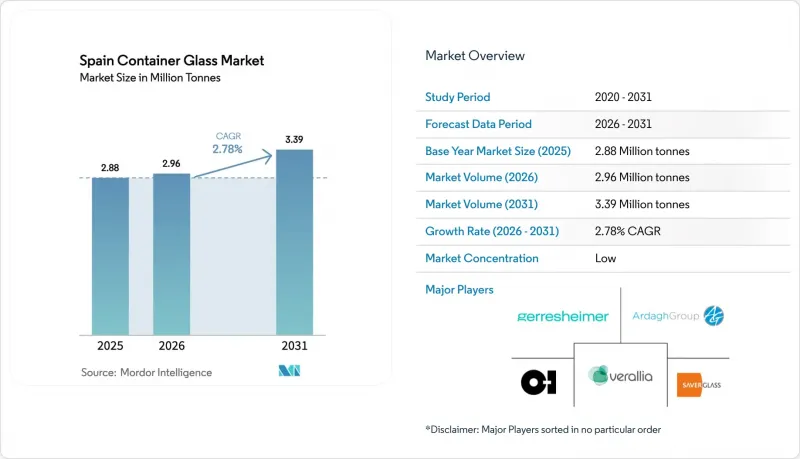
本報告按最終用戶(飲料[含酒精飲料{啤酒、葡萄酒、烈酒等}和非酒精飲料{果汁、碳酸飲料(CSD)、乳製品飲料等}]、食品[果醬、果凍、橘子醬、食用油、醃菜等]、化妝品和個人護理用品、藥品及其他]和顏色(燧石色、綠色、琥珀色等)進行細分市場預測市場以噸為單位。
西班牙玻璃容器市場趨勢與洞察
對永續包裝解決方案的需求日益成長
歐盟法規要求在2030年實現90%的玻璃回收率和85%的再利用率,這正在強化企業的永續發展目標,並吸引品牌所有者進入西班牙的玻璃包裝市場。像托雷斯這樣的優質葡萄酒生產商正在改用重量減輕15-20%的酒瓶,在保持產品展示吸引力的同時,減少範圍3的排放。能夠提供輕巧且結構堅固的容器的製造商正成為供應商名單上的首選。儘管玻璃包裝的單位成本高於塑膠包裝,但監管要求、投資者的關注以及消費者意識的提高,都透過推動基本需求,促進了西班牙玻璃包裝市場的持續成長。
人們越來越偏好可回收的環保玻璃。
消費者調查顯示,注重健康的消費者,尤其是居住在西班牙大都會圈的消費者,願意為可無限循環利用的玻璃製品支付更高的價格。玻璃因其比塑膠更能保持食物的風味和香氣而備受推崇,塑膠在有限的回收週期後就會劣化。 Ecovidrio 擁有 240,302 個玻璃回收箱,支援西班牙 79.8% 的玻璃回收率,並確保了玻璃屑(再生玻璃)的充足供應。碎玻璃使用量每增加 10%,玻璃屑能耗就能降低 2-3%。隨著回收利用良性循環的不斷強化,成本競爭力日益增強,進一步鞏固了玻璃作為西班牙容器玻璃市場首選高階包裝材料的地位。
玻璃容器生產成本高
能源成本佔玻璃生產成本的35%至39%。儘管西班牙2023年的工業用電價格平均為0.17歐元/千瓦時(0.19美元/kWh),比歐盟平均水平低29%,但運作高達攝氏1600度C的熔爐仍容易受到價格上漲的影響。 OI Glass在2024年額外承擔了1.75億美元的成本,並根據其「Fit to Win」計劃,到2025年中期將其歐洲產能至少削減7%。堿灰和二氧化矽價格的波動進一步加劇了這種壓力,迫使西班牙容器玻璃市場持續提高效率。
細分市場分析
到2025年,飲料將佔西班牙玻璃容器市場佔有率的62.46%,其中以葡萄酒、啤酒和烈酒為主。酒精飲料細分市場受益於優質化趨勢、低透氧滲透性以及出口對產品真實性的要求,從而確保了穩定的需求。精釀啤酒生產商也偏愛帶有壓紋的琥珀色玻璃瓶,這種玻璃瓶可以阻擋紫外線,提升其手工啤酒的形象。在非酒精飲料領域,玻璃容器正被應用於一些小眾市場,例如有機果汁和康普茶,這些產品對產地要求較高。化妝品和個人護理是成長最快的應用領域,預計到2031年將以3.95%的複合年成長率成長,其中高階護膚品、香水和健康產品採用厚重、客製化形狀的玻璃罐包裝,推動了該領域的成長。
西班牙化妝品玻璃容器市場預計將穩定成長,這主要得益於奢侈品牌注重品牌故事,強調產品握在手中時所體現的品質感和永續性。橄欖油、果醬和高級醬料等食品應用領域的玻璃容器出貨量保持穩定,主要得益於西班牙的農產品出口。在製藥業,中性硼矽酸玻璃瓶(不包括管瓶)的需求仍然溫和。同時,香水產業正利用先進的玻璃雕刻技術來提升品牌價值。這種細分市場的多樣性使得西班牙玻璃容器市場不易受到特定終端用戶產業波動的影響。
其他好處:
- Excel格式的市場預測(ME)表
- 3個月的分析師支持
目錄
第1章:引言
- 研究假設和市場定義
- 調查範圍
第2章:調查方法
第3章執行摘要
第4章 市場狀況
- 市場概覽
- 市場促進因素
- 對永續包裝解決方案的需求日益成長
- 對可回收和環保玻璃的需求日益成長
- 西班牙酒精消費量增加
- 玻璃瓶製造技術的進步
- 政府對循環經濟和回收的獎勵
- 葡萄酒、橄欖油和化妝品包裝優質化趨勢
- 市場限制因素
- 玻璃容器製造成本高昂
- 來自塑膠和金屬包裝的激烈競爭。
- 能源密集型製造程序
- 供應鏈中斷與原物料價格波動
- PESTLE分析
- 產業供應鏈分析
- 西班牙容器用玻璃熔爐的生產能力和位置
- 工廠位置及投產年份
- 生產能力
- 爐子的種類
- 玻璃的顏色
- 貨櫃玻璃的進出口資料-涵蓋主要進出口目的地。
- 2021年至2024年進口量及進口額
- 2021年至2024年出口量及出口額
- 波特五力分析
- 原料分析
- 玻璃包裝回收趨勢
- 玻璃包裝供需分析
第5章 市場規模與成長預測
- 最終用戶
- 飲料
- 酒精飲料
- 啤酒
- 葡萄酒
- 烈酒
- 其他酒精飲料(蘋果酒和其他發酵飲料)
- 非酒精性
- 汁
- 碳酸飲料(CSD)
- 乳製品飲料
- 其他非酒精飲料
- 酒精飲料
- 食品(果醬、果凍、橘子醬、蜂蜜、香腸和調味品、食用油、醃菜)
- 化妝品和個人護理
- 藥品(不包括管瓶和安瓿)
- 香水
- 飲料
- 按顏色
- 綠色的
- 琥珀色
- 燧石
- 其他顏色
第6章 競爭情勢
- 市場集中度
- 策略舉措和趨勢
- 各公司企業市場占有率分析(基於最新產能)
- 公司簡介
- Verallia Spain SA
- OI Manufacturing Spain, SL
- Ramon Clemente, SA
- BA Glass Iberia, SA
- ALGLASS, SA
- Vidrala, SA
- Verescence La Granja, SL
- Gerresheimer Zaragoza SA
- Saverglass Iberica SAU
- Botellas del Mediterraneo, SL
- Vicrila Industrias del Vidrio, SLU
- Vidra Foc, SA
- Astiglass, SL
- Grupo Glass Madrid SL
- Inphinity Glass SL
- Dream Glass Group SL
- Ardagh Group SA
第7章 市場機會與未來展望
According to Mordor Intelligence, the Spain container glass market size was valued at 2.88 million tonnes in 2025 and estimated to grow from 2.96 million tonnes in 2026 to reach 3.39 million tonnes by 2031, at a CAGR of 2.78% during the forecast period (2026-2031).
This report is Segmented by End-User (Beverages [Alcoholic {Beer, Wine, Spirits, and More}, and Non-Alcoholic {Juices, Carbonated Drinks (CSDs), Dairy Product Based Drinks, and More}], Food [Jam, Jelly, Marmalades, Oil, Pickles, and More], Cosmetics and Personal Care, Pharmaceuticals, and More), Color (Flint, Green, Amber, and More). The Market Forecasts are Provided in Terms of Volume (Tonnes).
Spain Container Glass Market Trends and Insights
Increasing Demand for Sustainable Packaging Solutions
EU legislation mandating 90% collection and 85% recycling of glass by 2030 amplifies corporate sustainability targets, steering brand owners toward the Spain container glass market. Premium wine producers such as Torres have switched to 15-20% lighter bottles, reducing scope 3 emissions while retaining shelf appeal. Manufacturers able to deliver lighter yet structurally robust containers gain priority in supplier rosters. This alignment of regulatory pull, investor scrutiny, and consumer sentiment collectively lifts baseline demand despite higher unit costs than plastic, sustaining growth momentum for the Spain container glass market.
Growing Preference for Recyclable and Eco-Friendly Glass
Consumer surveys show willingness to pay price premiums for products in infinitely recyclable glass, particularly among health-conscious demographics in Spain's larger cities. Glass retains flavor and aroma better than plastics that degrade after limited recycling loops, reinforcing quality perceptions. Ecovidrio's network of 240,302 green bins underpins Spain's 79.8% glass collection rate, ensuring an abundant cullet supply that lowers furnace energy by 2-3% per 10% cullet usage. As virtuous collection-recycling cycles strengthen, cost competitiveness improves, further anchoring glass as the preferred premium pack in the Spain container glass market.
High Production Costs of Glass Containers
Energy accounts for 35-39% of glass production costs, and although Spanish industrial electricity averaged EUR 0.17/kWh (USD 0.19/kWh) in 2023 29% below the broader EU, furnaces operating at 1,600 °C remain exposed to price spikes. O-I Glass absorbed USD 175 million in incremental expenses in 2024, prompting its "Fit to Win" plan to shed at least 7% European capacity by mid-2025. Soda-ash and silica volatility compounds the pressure, forcing relentless efficiency drives across the Spain container glass market.
Other drivers and restraints analyzed in the detailed report include:
- Rising Consumption of Alcoholic Beverages in Spain
- Premiumization Trends in Wine, Olive Oil, and Cosmetics Packaging
- Intense Competition from Plastic and Metal Packaging
For complete list of drivers and restraints, kindly check the Table Of Contents.
Segment Analysis
Beverages accounted for 62.46% of Spain's container glass market share in 2025, led by wine, beer, and spirits. The alcoholic-beverage subsegment benefits from premium cues, oxygen impermeability, and export authenticity requirements, ensuring stable demand. Craft brewers also prefer embossed amber bottles that protect against UV and reinforce artisanal positioning. Non-alcoholic drinks lean on glass for niche organic juices and kombucha, where provenance matters. Cosmetics and personal care are the fastest-growing applications at a 3.95% CAGR to 2031, buoyed by luxury skincare, perfumery, and wellness products packaged in heavy, custom-shaped jars.
The Spain container glass market size for cosmetics is projected to rise steadily as deluxe brands favor tactile heft and sustainable storytelling. Food applications such as olive oil, jam, and gourmet sauces sustain stable tonnage, underpinned by Spain's agricultural export engine. Pharmaceuticals retain moderate demand for neutral borosilicate bottles outside vial niches, while perfumery leverages intricate glass sculpting to bolster brand equity. Segment diversity shields the Spain container glass market from cyclical shocks in any single end-use stream.
Complete Report Scope:
- By End-user
- Beverages
- Alcoholic
- Beer
- Wine
- Spirits
- Other Alcoholic Beverages (Cider and Other Fermented Drinks)
- Non-Alcoholic
- Juices
- Carbonated Drinks (CSDs)
- Dairy Product Based Drinks
- Other Non-Alcoholic Beverages
- Alcoholic
- Food (Jam, Jelly, Marmalades, Honey, Sausages and Condiments, Oil, Pickles)
- Cosmetics and Personal Care
- Pharmaceuticals (excluding Vials and Ampoules)
- Perfumery
- Beverages
- By Color
- Green
- Amber
- Flint
- Other Colors
List of Companies Covered in this Report:
- Verallia Spain S.A.
- O-I Manufacturing Spain, S.L.
- Ramon Clemente, S.A.
- BA Glass Iberia, S.A.
- ALGLASS, S.A.
- Vidrala, S.A.
- Verescence La Granja, S.L.
- Gerresheimer Zaragoza S.A.
- Saverglass Iberica S.A.U.
- Botellas del Mediterraneo, S.L.
- Vicrila Industrias del Vidrio, S.L.U.
- Vidra Foc, S.A.
- Astiglass, S.L.
- Grupo Glass Madrid S.L.
- Inphinity Glass S.L.
- Dream Glass Group S.L.
- Ardagh Group S.A.
Additional Benefits:
- The market estimate (ME) sheet in Excel format
- 3 months of analyst support
TABLE OF CONTENTS
1 INTRODUCTION
- 1.1 Study Assumptions and Market Definition
- 1.2 Scope of the Study
2 RESEARCH METHODOLOGY
3 EXECUTIVE SUMMARY
4 MARKET LANDSCAPE
- 4.1 Market Overview
- 4.2 Market Drivers
- 4.2.1 Increasing Demand for Sustainable Packaging Solutions
- 4.2.2 Growing Preference for Recyclable and Eco-Friendly Glass
- 4.2.3 Rising Consumption of Alcoholic Beverages in Spain
- 4.2.4 Technological Advancements in Glass Bottle Manufacturing
- 4.2.5 Government Incentives for Circular Economy and Recycling
- 4.2.6 Premiumization Trends in Wine, Olive Oil, and Cosmetics Packaging
- 4.3 Market Restraints
- 4.3.1 High Production Costs of Glass Containers
- 4.3.2 Intense Competition from Plastic and Metal Packaging
- 4.3.3 Energy-Intensive Manufacturing Process
- 4.3.4 Supply Chain Disruptions and Raw Material Volatility
- 4.4 PESTEL Analysis
- 4.5 Industry Supply-Chain Analysis
- 4.6 Container Glass Furnace Capacity and Locations in Spain
- 4.6.1 Plant Locations and Year of Commencement
- 4.6.2 Production Capacities
- 4.6.3 Types of Furnaces
- 4.6.4 Color of Glass Produced
- 4.7 Export-Import Data of Container Glass - Covering Key Import and Export Destinations
- 4.7.1 Import Volume and Value, 2021-2024
- 4.7.2 Export Volume and Value, 2021-2024
- 4.8 Porter's Five Forces Analysis
- 4.8.1 Threat of New Entrants
- 4.8.2 Bargaining Power of Suppliers
- 4.8.3 Bargaining Power of Buyers
- 4.8.4 Threat of Substitutes
- 4.8.5 Competitive Rivalry
- 4.9 Raw Material Analysis
- 4.10 Recycling Trends for Glass Packaging
- 4.11 Demand vs Supply Analysis for Glass Packaging
5 MARKET SIZE AND GROWTH FORECASTS (VOLUME)
- 5.1 By End-user
- 5.1.1 Beverages
- 5.1.1.1 Alcoholic
- 5.1.1.1.1 Beer
- 5.1.1.1.2 Wine
- 5.1.1.1.3 Spirits
- 5.1.1.1.4 Other Alcoholic Beverages (Cider and Other Fermented Drinks)
- 5.1.1.2 Non-Alcoholic
- 5.1.1.2.1 Juices
- 5.1.1.2.2 Carbonated Drinks (CSDs)
- 5.1.1.2.3 Dairy Product Based Drinks
- 5.1.1.2.4 Other Non-Alcoholic Beverages
- 5.1.1.1 Alcoholic
- 5.1.2 Food (Jam, Jelly, Marmalades, Honey, Sausages and Condiments, Oil, Pickles)
- 5.1.3 Cosmetics and Personal Care
- 5.1.4 Pharmaceuticals (excluding Vials and Ampoules)
- 5.1.5 Perfumery
- 5.1.1 Beverages
- 5.2 By Color
- 5.2.1 Green
- 5.2.2 Amber
- 5.2.3 Flint
- 5.2.4 Other Colors
6 COMPETITIVE LANDSCAPE
- 6.1 Market Concentration
- 6.2 Strategic Moves and Developments
- 6.3 Company Market Share Analysis, (Based on Latest Production Capacity)
- 6.4 Company Profiles (includes Global level Overview, Market level overview, Core Segments, Financials as available, Strategic Information, Market Rank/Share for key companies, Products and Services, and Recent Developments)
- 6.4.1 Verallia Spain S.A.
- 6.4.2 O-I Manufacturing Spain, S.L.
- 6.4.3 Ramon Clemente, S.A.
- 6.4.4 BA Glass Iberia, S.A.
- 6.4.5 ALGLASS, S.A.
- 6.4.6 Vidrala, S.A.
- 6.4.7 Verescence La Granja, S.L.
- 6.4.8 Gerresheimer Zaragoza S.A.
- 6.4.9 Saverglass Iberica S.A.U.
- 6.4.10 Botellas del Mediterraneo, S.L.
- 6.4.11 Vicrila Industrias del Vidrio, S.L.U.
- 6.4.12 Vidra Foc, S.A.
- 6.4.13 Astiglass, S.L.
- 6.4.14 Grupo Glass Madrid S.L.
- 6.4.15 Inphinity Glass S.L.
- 6.4.16 Dream Glass Group S.L.
- 6.4.17 Ardagh Group S.A.
7 MARKET OPPORTUNITIES AND FUTURE OUTLOOK
- 7.1 White-space and Unmet-Need Assessment

 日本容器玻璃市場:市場佔有率分析、產業趨勢與統計及成長預測(2026-2031)法國玻璃容器:市場佔有率分析、行業趨勢和統計數據以及成長預測(2026-2031 年)泰國容器玻璃:市場佔有率分析、產業趨勢與統計、成長預測(2026-2031)義大利容器玻璃:市場佔有率分析、產業趨勢與統計、成長預測(2026-2031)印度容器用玻璃器皿:市場佔有率分析、產業趨勢與統計、成長預測(2026-2031)
 玻璃器皿市場-2026-2032年全球市場預測
 玻璃器皿市場規模、佔有率、成長和行業分析:按玻璃類型、成型方法、應用和地區分類,並預測至2034年
 玻璃器皿市場規模、佔有率和趨勢分析報告:按產品、應用、地區和細分市場分類(2026-2033 年)玻璃瓶市場:依材質、顏色、容量、應用及通路分類-2026-2032年全球市場預測
 酒精飲料瓶市場規模、佔有率和成長分析:按形狀、容量、材質、應用和地區分類-2026-2033年產業預測