


 |
市場調查報告書
商品編碼
2125452
法國玻璃容器:市場佔有率分析、行業趨勢和統計數據以及成長預測(2026-2031 年)France Container Glass - Market Share Analysis, Industry Trends & Statistics, Growth Forecasts (2026 - 2031) |
||||||

※ 本網頁內容可能與最新版本有所差異。詳細情況請與我們聯繫。
據 Mordor Intelligence 稱,2025 年法國玻璃容器市場價值為 600 萬噸,預計到 2031 年將從 2026 年的 613 萬噸成長至 684 萬噸,預測期(2026-2031 年)的複合年成長率為 2.21%。
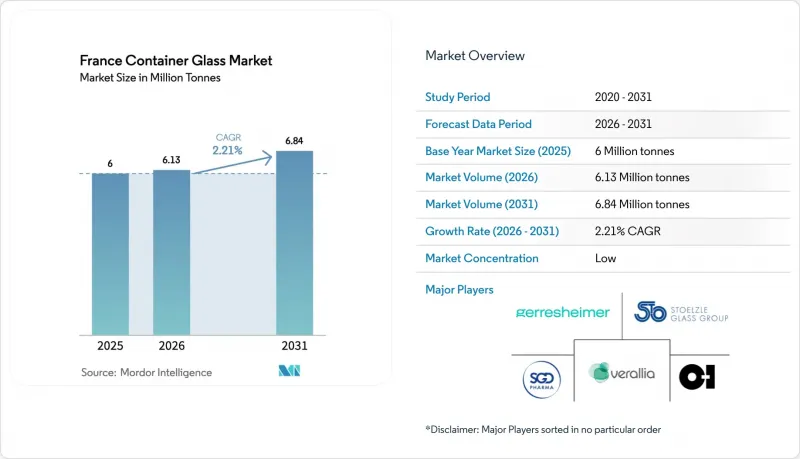
本報告按最終用戶(飲料[含酒精飲料{啤酒、葡萄酒、烈酒及其他酒精飲料}和非酒精飲料{碳酸飲料(CSD)、乳製品飲料等}]、食品[果醬和果凍、調味品和醬料等]、化妝品和個人護理用品、香水及其他])和顏色(燧石色、琥珀色、綠色及其他)進行細分。市場預測以噸為單位。
法國玻璃容器市場趨勢與洞察
高階酒精飲料的成長
香檳和干邑白蘭地生產商繼續堅持使用厚壁燧石玻璃和獨特的琥珀色酒瓶,以強化其品牌傳承。儘管其他飲料細分市場對價格較為敏感,但玻璃製品幾乎不可替代。 2024年,儘管葡萄酒出口量持平,但出口收入仍成長至95.8億歐元(108.3億美元)。這顯示價值正向高階產品轉移,精緻的酒瓶,例如帶有複雜底部凹槽和壓紋的酒瓶,其更高的單價也因此得以體現。帝亞吉歐的目標是到2030年佔據法國烈酒市場12%的佔有率,凸顯了市場對高利潤玻璃包裝的巨大需求。 AOC(原產地命名控制)保護條例進一步鞏固了玻璃在真偽檢驗中的作用,從而強化了結構性需求。
化妝品和奢侈香水產業的擴張
格拉斯和巴黎的高階香水製造商偏愛造型精巧、瓶頸採用金屬材質、並飾以酸蝕工藝的香水瓶,而這些特點只有大規模生產玻璃容器才能實現。到2030年,這一細分市場將以2.83%的複合年成長率成長,超過法國整體玻璃容器市場的成長速度。這主要得益於某些塑膠零件的相關法規以及消費者對可回收高階包裝的需求。 SGD Pharma公司計劃於2024年投資3,100萬歐元(約3,500萬美元)對其兩座用於化妝品包裝的國內熔爐進行現代化改造,這也印證了市場對玻璃容器日益成長的需求。諸如SEALIAN之類的內部矽化處理技術,能夠在進一步減輕重量的同時,抑制玻璃容器與高揮發性香料基料的相互作用。
玻璃製造過程中的高能耗
1600 度C的高熔點導致能源消耗強度居高不下,進一步加劇了電力價格的影響。 2024 年,法國工業的電力價格幾乎加倍。歐盟排放交易體系 (EU ETS) 第四階段將減少免費配額,使標準端燃式爐的碳排放合規成本每噸二氧化碳排放量增加 80-90 歐元(90-102 美元)。 Velaria 公司 2024 年銷售額下降 8.7% 表明,如果價格上漲不足以完全彌補能源附加費,利潤率將立即受到擠壓。
細分市場分析
到2025年,飲料業將佔法國玻璃容器出貨量的59.62%,相當於法國玻璃容器市場規模的3,577.2千噸。儘管輕質寶特瓶在入門級蘋果酒和果汁瓶市場佔據了一定的佔有率,但由於香檳、干邑白蘭地和無氣泡葡萄酒的成長,這一趨勢並未影響飲料行業的基準貨量。高階酒類品牌堅持使用玻璃瓶,因為玻璃瓶具有更優異的抗氧性能和觸感,足以支撐更高的商店價格。國內小型釀酒廠正在採用壓紋可回收玻璃瓶來強調其精釀啤酒的特色,這在一定程度上抵消了大眾市場拉格啤酒鋁製容器使用量的激增。
食品、化妝品和藥品合計佔法國玻璃容器市場剩餘的40.38%,其中化妝品和個人護理行業在奢侈品出口強勁的推動下,以2.69%的複合年成長率成長。卡地亞、迪奧和愛馬仕等品牌推出了裝在雕塑般瓶子中的限量版香水,刺激了對帶有變色預爐的特種熔爐的需求。製藥公司繼續採用I型硼矽酸管瓶包裝生物製藥產品,即使在飲料市場經濟波動時期也能維持基準的生產水準。
其他好處:
- Excel格式的市場預測(ME)表
- 3個月的分析師支持
目錄
第1章:引言
- 研究假設和市場定義
- 調查範圍
第2章:調查方法
第3章執行摘要
第4章 市場狀況
- 市場概覽
- 市場促進因素
- 高級酒精飲料(香檳、干邑白蘭地、葡萄酒)的成長
- 化妝品和奢侈香水產業的擴張
- 消費者偏好無毒包裝
- 輕質玻璃製造技術進步
- 消費者環保意識增強
- 法國對包裝食品的出口需求
- 市場限制因素
- 玻璃製造過程中的高能耗
- 來自輕量化替代方案的競爭
- 市場脆弱性和運輸成本上升
- 原物料價格波動範圍
- PESTLE分析
- 產業供應鏈分析
- 法國容器用玻璃熔爐的生產能力和位置
- 工廠位置及投產年份
- 生產能力
- 爐子的種類
- 玻璃的顏色
- 玻璃容器進出口資料-涵蓋主要進出口目的地。
- 2021年至2024年進口量及進口額
- 2021年至2024年出口量及出口額
- 波特五力分析
- 原料分析
- 玻璃包裝回收趨勢
- 玻璃包裝供需分析
第5章 市場規模與成長預測
- 最終用戶
- 飲料
- 酒精飲料
- 啤酒
- 葡萄酒
- 烈酒
- 其他酒精飲料(蘋果酒和其他發酵飲料)
- 非酒精性
- 汁
- 碳酸飲料(CSD)
- 乳製品飲料
- 其他非酒精飲料
- 酒精飲料
- 食品(果醬、果凍、橘子醬、蜂蜜、香腸和調味品、食用油、醃菜)
- 化妝品和個人護理
- 藥品(不包括管瓶和安瓿)
- 香水
- 飲料
- 按顏色
- 綠色的
- 琥珀色
- 燧石
- 其他顏色
第6章 競爭情勢
- 市場集中度
- 策略舉措和趨勢
- 各公司企業市場占有率分析(基於最新產能)
- 公司簡介
- OI Glass, Inc.
- Verallia Packaging SAS
- Verescence SA
- Saverglass Group
- SGD SA
- Stoelzle Glass Group
- Pochet Group
- Gerresheimer AG
- Zignago Vetro SpA
- Ardagh Glass SA
- Vidrala, SA
- Coverpla SAS
- Id Labo
第7章 市場機會與未來展望
According to Mordor Intelligence, the France container glass market size was valued at 6 million tonnes in 2025 and estimated to grow from 6.13 million tonnes in 2026 to reach 6.84 million tonnes by 2031, at a CAGR of 2.21% during the forecast period (2026-2031).
This report is Segmented by End-User (Beverages [Alcoholic {Beer, Wine, Spirits, Other Alcoholic Beverages}, and Non-Alcoholic {Carbonated Drinks (CSDs), Dairy Product Based Drinks, and More}], Food [Jam and Jelly, Condiments and Sauces, and More], Cosmetics and Personal Care, Perfumery, and More), Color (Flint, Amber, Green, and More). The Market Forecasts are Provided in Terms of Volume (Tonnes).
France Container Glass Market Trends and Insights
Growth in Premium Alcoholic Beverages
Champagne and cognac houses continue to specify thick-wall flint and specialty amber flasks to reinforce brand heritage, making glass effectively non-substitutable despite price sensitivity in other beverage niches. Wine export earnings rose to EUR 9.58 billion (USD 10.83 billion) in 2024, even as volumes plateaued, illustrating value migration to premium SKUs where elaborate punted bottles and embossing justify higher unit economics. Diageo's stated goal of seizing 12% of French spirits sales by 2030 underscores external appetite for high-margin formats anchored in glass. Protected-designation rules under AOC further cement glass's role in authenticity verification, locking in structural demand.
Expansion of Cosmetics and Luxury Perfumes Sector
Luxury perfume houses in Grasse and Paris favor intricately molded flacons with metallized necks and acid-etched logos that only container glass can deliver at scale. The segment is growing at 2.83% CAGR through 2030, outpacing the broader France container glass market, helped by regulatory curbs on certain plastic components and consumer pursuit of recyclable prestige packaging. SGD Pharma invested EUR 31 million (USD 35 million) in 2024 to modernize two domestic furnaces geared toward cosmetic formats, signaling entrenched demand. Internal siliconization treatments such as SEALIAN mitigate interaction with volatile fragrance bases while enabling further lightweighting.
High Energy Consumption in Glass Production
Melting temperatures of 1,600°C keep energy intensity elevated, amplifying exposure to electricity prices that nearly doubled for French industry in 2024. Phase IV of the EU ETS slices free allocations, lifting carbon compliance costs by EUR 80-90 (USD 90-102) per ton of CO2 emitted for a standard end-fired furnace. Verallia's 8.7% revenue drop in 2024 shows immediate margin erosion when price hikes cannot fully cover energy surcharges.
Other drivers and restraints analyzed in the detailed report include:
- Consumer Preference for Non-Toxic Packaging
- Technological Advancements in Lightweight Glass Manufacturing
- Competition from Lightweight Alternatives
For complete list of drivers and restraints, kindly check the Table Of Contents.
Segment Analysis
The beverages channel generated 59.62% of 2025 shipments, equal to 3,577.2 kilotons of the France container glass market size. Growth in Champagne, cognac, and premium still wines secures baseline volume even as lighter PET erodes entry-level cider and juice bottles. Premium alcoholic labels retain glass for superior oxygen ingress protection and tactile cues that rationalize higher shelf prices. Domestic microbreweries lean into embossed, returnable glass to emphasize craft provenance, slightly offsetting aluminum's surge among mass-market lagers.
Food, cosmetics, and pharmaceuticals collectively account for the remaining 40.38% of France's container glass market volume, yet cosmetics and personal care are expanding at a 2.69% CAGR on strong luxury exports.Cartier, Dior, and Hermes launch limited-edition scents in sculptural flacons, stimulating demand for specialty furnaces with color-changing forehearths. Pharmaceutical firms adhere to type-I borosilicate vials for biologics, reinforcing baseline throughput during beverage cyclicality.
Complete Report Scope:
- By End-user
- Beverages
- Alcoholic
- Beer
- Wine
- Spirits
- Other Alcoholic Beverages (Cider and Other Fermented Drinks)
- Non-Alcoholic
- Juices
- Carbonated Drinks (CSDs)
- Dairy Product Based Drinks
- Other Non-Alcoholic Beverages
- Alcoholic
- Food (Jam, Jelly, Marmalades, Honey, Sausages and Condiments, Oil, Pickles)
- Cosmetics and Personal Care
- Pharmaceuticals (excluding Vials and Ampoules)
- Perfumery
- Beverages
- By Color
- Green
- Amber
- Flint
- Other Colors
List of Companies Covered in this Report:
- O-I Glass, Inc.
- Verallia Packaging SAS
- Verescence S.A.
- Saverglass Group
- SGD S.A.
- Stoelzle Glass Group
- Pochet Group
- Gerresheimer AG
- Zignago Vetro SpA
- Ardagh Glass S.A.
- Vidrala, S.A
- Coverpla S.A.S.
- Id Labo
Additional Benefits:
- The market estimate (ME) sheet in Excel format
- 3 months of analyst support
TABLE OF CONTENTS
1 INTRODUCTION
- 1.1 Study Assumptions and Market Definition
- 1.2 Scope of the Study
2 RESEARCH METHODOLOGY
3 EXECUTIVE SUMMARY
4 MARKET LANDSCAPE
- 4.1 Market Overview
- 4.2 Market Drivers
- 4.2.1 Growth in Premium Alcoholic Beverages (Champagne, Cognac, Wine)
- 4.2.2 Expansion of Cosmetics and Luxury Perfumes Sector
- 4.2.3 Consumer Preference for Non-Toxic Packaging
- 4.2.4 Technological Advancements in Lightweight Glass Manufacturing
- 4.2.5 Rise in Eco-Conscious Consumer Behavior
- 4.2.6 Export Demand for French Packaged Goods
- 4.3 Market Restraints
- 4.3.1 High Energy Consumption in Glass Production
- 4.3.2 Competition from Lightweight Alternatives
- 4.3.3 Fragility and Higher Transportation Costs
- 4.3.4 Volatility in Raw Material Prices
- 4.4 PESTEL Analysis
- 4.5 Industry Supply-Chain Analysis
- 4.6 Container Glass Furnace Capacity and Locations in France
- 4.6.1 Plant Locations and Year of Commencement
- 4.6.2 Production Capacities
- 4.6.3 Types of Furnaces
- 4.6.4 Color of Glass Produced
- 4.7 Export-Import Data of Container Glass - Covering Key Import and Export Destinations
- 4.7.1 Import Volume and Value, 2021-2024
- 4.7.2 Export Volume and Value, 2021-2024
- 4.8 Porter's Five Forces Analysis
- 4.8.1 Threat of New Entrants
- 4.8.2 Bargaining Power of Suppliers
- 4.8.3 Bargaining Power of Buyers
- 4.8.4 Threat of Substitutes
- 4.8.5 Competitive Rivalry
- 4.9 Raw Material Analysis
- 4.10 Recycling Trends for Glass Packaging
- 4.11 Demand vs Supply Analysis for Glass Packaging
5 MARKET SIZE AND GROWTH FORECASTS (VOLUME)
- 5.1 By End-user
- 5.1.1 Beverages
- 5.1.1.1 Alcoholic
- 5.1.1.1.1 Beer
- 5.1.1.1.2 Wine
- 5.1.1.1.3 Spirits
- 5.1.1.1.4 Other Alcoholic Beverages (Cider and Other Fermented Drinks)
- 5.1.1.2 Non-Alcoholic
- 5.1.1.2.1 Juices
- 5.1.1.2.2 Carbonated Drinks (CSDs)
- 5.1.1.2.3 Dairy Product Based Drinks
- 5.1.1.2.4 Other Non-Alcoholic Beverages
- 5.1.1.1 Alcoholic
- 5.1.2 Food (Jam, Jelly, Marmalades, Honey, Sausages and Condiments, Oil, Pickles)
- 5.1.3 Cosmetics and Personal Care
- 5.1.4 Pharmaceuticals (excluding Vials and Ampoules)
- 5.1.5 Perfumery
- 5.1.1 Beverages
- 5.2 By Color
- 5.2.1 Green
- 5.2.2 Amber
- 5.2.3 Flint
- 5.2.4 Other Colors
6 COMPETITIVE LANDSCAPE
- 6.1 Market Concentration
- 6.2 Strategic Moves and Developments
- 6.3 Company Market Share Analysis, (Based on Latest Production Capacity)
- 6.4 Company Profiles (includes Global level Overview, Market level overview, Core Segments, Financials as available, Strategic Information, Market Rank/Share for key companies, Products and Services, and Recent Developments)
- 6.4.1 O-I Glass, Inc.
- 6.4.2 Verallia Packaging SAS
- 6.4.3 Verescence S.A.
- 6.4.4 Saverglass Group
- 6.4.5 SGD S.A.
- 6.4.6 Stoelzle Glass Group
- 6.4.7 Pochet Group
- 6.4.8 Gerresheimer AG
- 6.4.9 Zignago Vetro SpA
- 6.4.10 Ardagh Glass S.A.
- 6.4.11 Vidrala, S.A
- 6.4.12 Coverpla S.A.S.
- 6.4.13 Id Labo
7 MARKET OPPORTUNITIES AND FUTURE OUTLOOK
- 7.1 White-space and Unmet-Need Assessment

 日本容器玻璃市場:市場佔有率分析、產業趨勢與統計及成長預測(2026-2031)泰國容器玻璃:市場佔有率分析、產業趨勢與統計、成長預測(2026-2031)義大利容器玻璃:市場佔有率分析、產業趨勢與統計、成長預測(2026-2031)西班牙容器玻璃:市場佔有率分析、產業趨勢與統計、成長預測(2026-2031)印度容器用玻璃器皿:市場佔有率分析、產業趨勢與統計、成長預測(2026-2031)
 玻璃器皿市場-2026-2032年全球市場預測
 玻璃器皿市場規模、佔有率、成長和行業分析:按玻璃類型、成型方法、應用和地區分類,並預測至2034年
 玻璃器皿市場規模、佔有率和趨勢分析報告:按產品、應用、地區和細分市場分類(2026-2033 年)玻璃瓶市場:依材質、顏色、容量、應用及通路分類-2026-2032年全球市場預測
 酒精飲料瓶市場規模、佔有率和成長分析:按形狀、容量、材質、應用和地區分類-2026-2033年產業預測