


 |
市場調查報告書
商品編碼
2124513
歐洲航空燃油:市場佔有率分析、行業趨勢和統計數據、成長預測(2026-2031 年)Europe Aviation Fuel - Market Share Analysis, Industry Trends & Statistics, Growth Forecasts (2026 - 2031) |
||||||

※ 本網頁內容可能與最新版本有所差異。詳細情況請與我們聯繫。
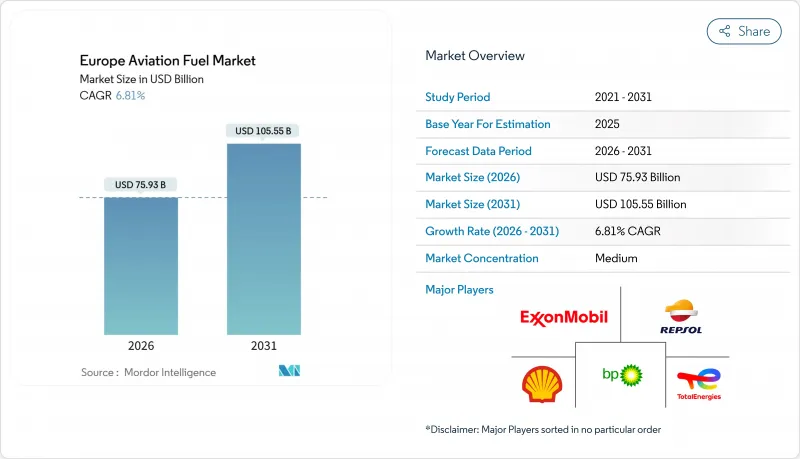
根據 Mordor Intelligence 估計,2026 年歐洲航空燃油市場價值為 759.3 億美元,預計在預測期(2026-2031 年)內將以 6.81% 的複合年成長率成長,到 2031 年達到 1055.5 億美元。
本報告按燃料類型(傳統噴射機燃料、永續航空燃料、航空汽油)、飛機類型(窄體飛機、寬體飛機、支線噴射機和渦輪螺旋槳飛機、貨機)、應用(民用航空、國防和軍事航空、通用航空和公務航空)以及地區(英國、德國、法國、義大利、西班牙、北歐國家、俄羅斯和其他通用航空和公務航空)以及地區(英國、德國、法國、義大利、西班牙、北歐國家、俄羅斯和其他通用航空和公務航空)以及地區(英國、德國、法國、義大利、西班牙、北歐國家、俄羅斯和其他通用航空和公務航空)以及地區(英國、德國、法國、義大利、西班牙、北歐國家、俄羅斯和其他通用航空和公務航空)以及地區(英國、德國、法國、義大利、西班牙、北歐國家)進行分類。
歐洲航空燃油市場的趨勢與洞察
新冠疫情後航空客運量恢復情形
2024年,歐洲航空公司運送旅客11億人次,超過了疫情前的高峰。廉價航空公司為了抓住休閒需求低迷的局面,將營運運力提高了12%,但激烈的票價競爭擠壓了幹線航線的獲利空間。為此,傳統航空公司加快了老舊寬體飛機的退役速度,並加快了A321neo和737 MAX飛機的交付,以降低燃油消耗。客運量成長與燃油需求之間的脫節持續給供應商帶來壓力,他們需要準確預測分散機場網路中的燃油需求。隨著客運量逐漸恢復正常,歐洲航空燃油市場受益於高客座率,但航空公司卻面臨整個價值鏈利潤率下降的困境。
歐盟範圍內混合永續航空燃料(SAF)的義務
2025年1月生效的「ReFuelEU Aviation」法規規定,永續航空燃料(SAF)的摻混比例為2%,並強制要求到2030年提高到6%,到2035年提高到20%。違反該法規將面臨每公升最高5歐元的罰款,迫使煉油商和經銷商即使價格上漲也要確保SAF的供應。漢莎航空與殼牌公司簽訂的80萬噸SAF採購協議以及法國航空-荷航集團10%的採購承諾,都是先行者採取避險策略的例證。然而,原料短缺正在限制供應。歐洲廢棄食用油的供應量低於規定的需求,迫使企業投資於酒精製航空燃料和FISCHER-TROPSCH法。隨著監管的日益嚴格,歐洲航空燃料市場將越來越依賴先進生質燃料的擴充性和電子燃料的經濟性。
原油價格劇烈波動與外匯風險
2024年至2025年間,布蘭特原油價格在每桶70美元至95美元之間波動。燃油成本佔瑞安航空營運支出的比例上升至38%,令缺乏穩健對沖策略的航空公司預算捉襟見肘。東歐航空則因本國貨幣兌歐元貶值而舉步維艱,導致以美元計價的燃油帳單增加。飆升的選擇權溢價限制了對沖期限,使小規模的航空公司更容易受到現貨市場波動的影響。持續的波動可能會擠壓歐洲航空燃油市場的利潤空間,並加速財務狀況較弱的航空公司之間的整合。
細分市場分析
永續航空燃料(SAF)成長速度最快,預計2026年至2031年複合年成長率將達25.2%。然而,到2025年,傳統煤油仍將佔航空燃料消費量的95.4%,凸顯了實現完全脫碳仍任重道遠。殼牌、道達爾能源和耐斯特已撥款42億歐元,用於2027年前建造歐洲永續航空燃料設施。耐斯特位於鹿特丹的工廠已將生產力計畫翻倍,到2028年達到100萬噸。此舉旨在透過利用動物廢油和林業殘餘物來實現燃料來源多元化,而非依賴有限的廢棄食用油來源。歐盟排放交易體系(ETS)第四階段已將碳成本提高至每噸90歐元,導致噴射機燃料價格每公升增加0.23歐元的附加費,這使得航空公司採用永續航空燃料的商業理由更加清晰。
到2030年,合成電子燃料的配額將限制在1.2%,促進了對電轉液(P2L)技術的投資,但目前歐洲只有三家商業運作的工廠,總合產能不足1.5萬噸。挪威電子燃料公司(Norsk e-Fuel)位於莫佐恩(Moszoen)的年產能1萬噸的工廠於2025年交付了首批產品,展現了其擴張潛力。傳統煉油廠仍然主導著分銷基礎設施,鞏固了其在歐洲航空燃料市場的短期主導地位。然而,儘管合成航空燃料(SAF)的噸經濟效益很高,但更嚴格的處罰和企業ESG目標限制了其需求的結構性下限。
其他好處:
- Excel格式的市場預測(ME)表
- 3個月的分析師支持
目錄
第1章:引言
- 研究假設和市場定義
- 調查範圍
第2章:調查方法
第3章執行摘要
第4章 市場狀況
- 市場概覽
- 市場促進因素
- 新冠疫情後航空旅客數量的復甦趨勢
- 歐盟範圍內混合永續航空燃料(SAF)的義務
- 加強歐洲遠程窄體飛機機隊建設
- 跨境電子商務推動航空貨運快速成長
- 歐盟排放交易體系(EU-ETS)第四階段成本轉移對節能型車輛群的影響。
- 「空制電燃料」PtL先導工廠已達商業規模。
- 市場限制因素
- 原油價格劇烈波動與外匯風險
- 歐洲SAF原料產能瓶頸
- 機場供水系統改造相關的資本投資負擔。
- 地緣政治動盪影響燃料物流(黑海)
- 供應鏈分析
- 監理情勢
- 技術展望
- 波特五力模型
第5章 市場規模與成長預測
- 按燃料類型
- 傳統噴射機燃料
- 永續航空燃料(SAF)
- 航空汽油(Avgas)
- 按飛機類型
- 窄體飛機
- 寬體飛機
- 支線噴射機和渦輪螺旋槳飛機
- 貨機/專用貨機
- 透過使用
- 私人航空公司
- 國防/軍用航空
- 通用航空和公務航空
- 按地區
- 英國
- 德國
- 法國
- 義大利
- 西班牙
- 北歐國家
- 俄羅斯
- 其他歐洲國家
第6章 競爭情勢
- 市場集中度
- 策略趨勢(併購、聯盟、購電協議)
- 市場佔有率分析(主要公司的市場排名和佔有率)
- 公司簡介
- BP plc
- Royal Dutch Shell plc
- TotalEnergies SE
- Repsol SA
- Exxon Mobil Corp.
- Gazprom Neft PJSC
- Neste Oyj
- OMV AG
- Eni SpA
- MOL Group
- Vitol Aviation
- LanzaJet Inc.
- World Energy LLC
- SkyNRG BV
- Preem AB
- PKN Orlen SA
- PKN Orlen-LOTOS Asfalt
- Air Total Aviation Services
- Air BP(bp Subsidiary)
- Gazpromneft-Aero
第7章 市場機會與未來展望
According to Mordor Intelligence, the Europe aviation fuel market size is estimated at USD 75.93 billion in 2026, and is expected to reach USD 105.55 billion by 2031, at a CAGR of 6.81% during the forecast period (2026-2031).
This report is Segmented by Fuel Type (Conventional Jet Fuel, Sustainable Aviation Fuel, and Avgas), Aircraft Type (Narrow-Body, Wide-Body, Regional Jets and Turboprops, and Cargo/Freighters), Application (Commercial Airlines, Defense/Military Aviation, and General and Business Aviation), and Geography (United Kingdom, Germany, France, Italy, Spain, NORDIC Countries, Russia, and Rest of Europe).
Europe Aviation Fuel Market Trends and Insights
Rising Air-Passenger Traffic Rebound Post-COVID-19
European carriers moved 1.1 billion passengers in 2024, surpassing pre-pandemic peaks. Low-cost airlines lifted capacity by 12% to tap pent-up leisure demand, yet competitive fares compressed yields on trunk routes. Legacy operators responded by retiring older wide-bodies and accelerating A321neo and 737 MAX deliveries to cut fuel burn. The decoupling of passenger growth from fuel demand keeps pressure on suppliers to predict uplift volume accurately across a fragmented airport network. As traffic continues to normalize, the European aviation fuel market benefits from higher load factors but faces thinner margins across the airline value chain.
EU-Wide Sustainable Aviation Fuel Blending Mandates
The ReFuelEU Aviation regulation became effective in January 2025, requiring a 2% SAF share, rising to 6% by 2030 and 20% by 2035. Non-compliance triggers penalties of up to EUR 5 per liter, driving refiners and distributors to secure SAF even at premium prices. Lufthansa's 800,000-ton SAF offtake with Shell and Air France-KLM's 10% sourcing pledge illustrate early-mover hedging strategies. Feedstock scarcity, however, constrains supply; Europe's used-cooking-oil pool covers only a fraction of mandated demand, forcing investment in alcohol-to-jet and Fischer-Tropsch pathways. As mandates tighten, the European aviation fuel market will hinge increasingly on advanced biofuel scalability and e-fuel economics.
High Crude-Oil Price Volatility and FX Risk
Brent fluctuated between USD 70-95 per barrel during 2024-2025. Fuel costs climbed to 38% of Ryanair's operating outlays, squeezing budgets of carriers lacking robust hedging books. Eastern European airlines grappled with currency depreciation against the euro, inflating dollar-denominated fuel invoices. Elevated option premiums limited hedge tenors, exposing smaller operators to spot-market swings. Persistent volatility narrows margins in the European aviation fuel market and may accelerate consolidation among financially weaker carriers.
Other drivers and restraints analyzed in the detailed report include:
- Ramp-Up of Long-Haul Narrow-Body Fleets in Europe
- Boom in Cross-Border E-Commerce Air Cargo
- Capacity Bottlenecks in European SAF Feedstocks
For complete list of drivers and restraints, kindly check the Table Of Contents.
Segment Analysis
Sustainable aviation fuel posted the quickest advance, expanding at a 25.2% CAGR over 2026-2031. Yet conventional kerosene retained 95.4% of 2025 consumption, highlighting the distance to full decarbonization. Shell, TotalEnergies, and Neste earmarked EUR 4.2 billion for European SAF facilities through 2027. Neste's Rotterdam complex doubled capacity plans to 1 million tons by 2028, tapping waste animal fats and forestry residues to diversify away from limited used-cooking-oil pools. EU Emissions Trading System Phase 4 lifted carbon costs to EUR 90 per ton, adding EUR 0.23 per liter to jet-fuel prices and sharpening the airline business case for SAF.
The synthetic e-fuel sub-quota of 1.2% by 2030 spurs power-to-liquid investment, yet only three European plants are commercial today, jointly supplying below 15,000 tons. Norsk e-Fuel's 10,000-ton Mosjoen facility delivered its first batch in 2025, showcasing potential scalability. Conventional refineries still dominate distribution infrastructure, reinforcing their short-term hold on the European aviation fuel market. However, escalating penalties and corporate ESG targets ensure a structural demand floor for SAF despite higher per-ton economics.
Complete Report Scope:
- By Fuel Type
- Conventional Jet Fuel
- Sustainable Aviation Fuel (SAF)
- Avgas
- By Aircraft Type
- Narrow-body
- Wide-body
- Regional Jets and Turboprops
- Cargo/Freighters
- By Application
- Commercial Airlines
- Defense/Military Aviation
- General and Business Aviation
- By Geography
- United Kingdom
- Germany
- France
- Italy
- Spain
- NORDIC Countries
- Russia
- Rest of Europe
List of Companies Covered in this Report:
- BP plc
- Royal Dutch Shell plc
- TotalEnergies SE
- Repsol SA
- Exxon Mobil Corp.
- Gazprom Neft PJSC
- Neste Oyj
- OMV AG
- Eni SpA
- MOL Group
- Vitol Aviation
- LanzaJet Inc.
- World Energy LLC
- SkyNRG BV
- Preem AB
- PKN Orlen SA
- PKN Orlen - LOTOS Asfalt
- Air Total Aviation Services
- Air BP (bp Subsidiary)
- Gazpromneft-Aero
Additional Benefits:
- The market estimate (ME) sheet in Excel format
- 3 months of analyst support
TABLE OF CONTENTS
1 Introduction
- 1.1 Study Assumptions & Market Definition
- 1.2 Scope of the Study
2 Research Methodology
3 Executive Summary
4 Market Landscape
- 4.1 Market Overview
- 4.2 Market Drivers
- 4.2.1 Rising air-passenger traffic rebound post-COVID-19
- 4.2.2 EU-wide sustainable aviation fuel (SAF) blending mandates
- 4.2.3 Ramp-up of long-haul narrow-body fleets in Europe
- 4.2.4 Boom in cross-border e-commerce air cargo
- 4.2.5 Phase-4 EU-ETS cost pass-through to fuel-efficient fleets
- 4.2.6 Air-to-e-fuel PtL pilot plants reaching commercial scale
- 4.3 Market Restraints
- 4.3.1 High crude-oil price volatility and FX risk
- 4.3.2 Capacity bottlenecks in European SAF feedstocks
- 4.3.3 Airport hydrant-system conversion capex burden
- 4.3.4 Geopolitical disruptions to fuel logistics (Black Sea)
- 4.4 Supply-Chain Analysis
- 4.5 Regulatory Landscape
- 4.6 Technological Outlook
- 4.7 Porter's Five Forces
- 4.7.1 Bargaining Power of Suppliers
- 4.7.2 Bargaining Power of Buyers
- 4.7.3 Threat of New Entrants
- 4.7.4 Threat of Substitutes
- 4.7.5 Competitive Rivalry
5 Market Size & Growth Forecasts
- 5.1 By Fuel Type
- 5.1.1 Conventional Jet Fuel
- 5.1.2 Sustainable Aviation Fuel (SAF)
- 5.1.3 Avgas
- 5.2 By Aircraft Type
- 5.2.1 Narrow-body
- 5.2.2 Wide-body
- 5.2.3 Regional Jets and Turboprops
- 5.2.4 Cargo/Freighters
- 5.3 By Application
- 5.3.1 Commercial Airlines
- 5.3.2 Defense/Military Aviation
- 5.3.3 General and Business Aviation
- 5.4 By Geography
- 5.4.1 United Kingdom
- 5.4.2 Germany
- 5.4.3 France
- 5.4.4 Italy
- 5.4.5 Spain
- 5.4.6 NORDIC Countries
- 5.4.7 Russia
- 5.4.8 Rest of Europe
6 Competitive Landscape
- 6.1 Market Concentration
- 6.2 Strategic Moves (M&A, Partnerships, PPAs)
- 6.3 Market Share Analysis (Market Rank/Share for key companies)
- 6.4 Company Profiles (includes Global level Overview, Market level overview, Core Segments, Financials as available, Strategic Information, Products & Services, and Recent Developments)
- 6.4.1 BP plc
- 6.4.2 Royal Dutch Shell plc
- 6.4.3 TotalEnergies SE
- 6.4.4 Repsol SA
- 6.4.5 Exxon Mobil Corp.
- 6.4.6 Gazprom Neft PJSC
- 6.4.7 Neste Oyj
- 6.4.8 OMV AG
- 6.4.9 Eni SpA
- 6.4.10 MOL Group
- 6.4.11 Vitol Aviation
- 6.4.12 LanzaJet Inc.
- 6.4.13 World Energy LLC
- 6.4.14 SkyNRG BV
- 6.4.15 Preem AB
- 6.4.16 PKN Orlen SA
- 6.4.17 PKN Orlen - LOTOS Asfalt
- 6.4.18 Air Total Aviation Services
- 6.4.19 Air BP (bp Subsidiary)
- 6.4.20 Gazpromneft-Aero
7 Market Opportunities & Future Outlook
- 7.1 White-space & Unmet-need Assessment

 航空燃料市場:全球市場預測,2026-2032年
 航空燃料:市場佔有率分析、產業趨勢與統計、成長預測(2026-2031)運輸燃料市場:依燃料類型、來源、混合比例、最終用戶和分銷管道分類-2026-2032年全球市場預測
 全球航空燃料市場規模、佔有率、趨勢和成長分析報告(2026-2034年)
 航空燃料市場機會、成長促進因素、產業趨勢分析及2026-2035年預測。南美航空燃料:市場佔有率分析、產業趨勢與統計及成長預測(2025-2031 年)
 可再生/生物噴射機燃料市場-全球產業規模、佔有率、趨勢、機會、預測:按轉換路徑、來源、地區和競爭格局分類,2021-2031年
 航空燃料市場預測至2034年—按燃料類型、飛機類型、最終用戶和地區分類的全球分析航空燃油添加劑市場:商業機會、成長要素、產業趨勢分析及 2026-2035 年預測。航空燃料市場規模、佔有率、成長及全球產業分析:按類型、應用和地區分類,並預測至2026-2034年