


 |
市場調查報告書
商品編碼
2123374
美國自助倉儲:市場佔有率分析、產業趨勢與統計及成長預測(2026-2031)United States Self Storage - Market Share Analysis, Industry Trends & Statistics, Growth Forecasts (2026 - 2031) |
||||||

※ 本網頁內容可能與最新版本有所差異。詳細情況請與我們聯繫。
根據 Mordor Intelligence 預測,美國自助倉儲市場規模將從 2025 年的 453.4 億美元成長到 2026 年的 472.8 億美元,然後在 2031 年達到 577.9 億美元,2026 年至 2031 年的複合年成長率為 4.10%。
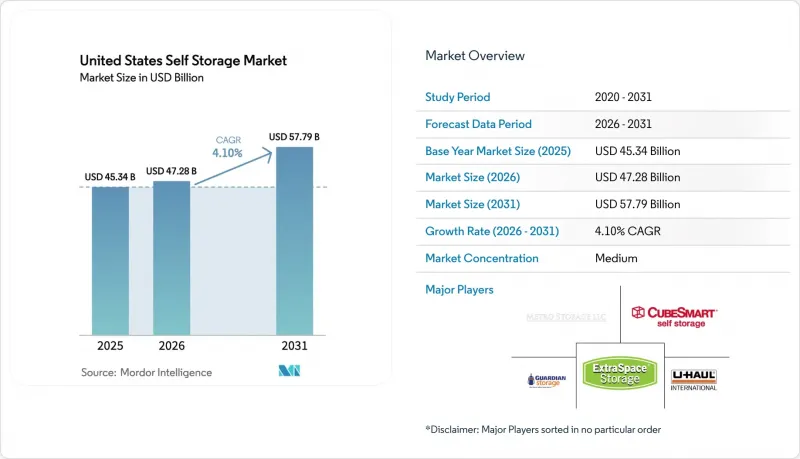
本報告按使用者類型(個人、企業)、單位面積(例如,100平方英尺以下(小型))、物業類型(例如,專用設施)、預訂管道(線下(親自/電話)、線上聚合平台和商業入口網站)以及租賃期限(短期(少於6個月)、長期(6個月或以上))進行細分。市場預測以美元計價。
美國自助倉儲市場趨勢與洞察
都市化進程與居住面積萎縮
2024年新建獨棟住宅的中位數面積為2146平方英尺,低於以往的尖峰時段。同時,在主要都會區,由於開發商盡可能提高每塊地皮的單位數量,公寓的占地面積減少。根據自助倉儲協會的一項調查,2024年美國租賃家庭數量達到1,668萬戶,市場滲透率從2022年的11.1%上升至12.6%。千禧世代約佔租賃家庭的40%,78%的千禧世代重視24小時全天候服務,超過三分之一的千禧世代願意為延長使用時間支付額外費用。在紐約和舊金山等城市,嚴格的區域規劃法規限制了建築面積比率,加劇了住宅短缺,並支持了對異地儲存的需求。這些因素共同推動了美國自助倉儲市場的穩定成長,因為都市區擴大利用租賃單位來存放季節性物品、家具和愛好設備。
電子商務對微型倉配的需求日益成長。
根據普洛斯(Prologis)估計,電子商務目前佔用的物流面積面積實體零售的三倍,預計到2030年將達到2.5億至3.5億平方英尺。無力負擔專用倉庫費用的小規模經銷商擴大在都市區配送中心附近租賃溫控倉儲單元,以縮短最後一公里配送時間。企業租戶優先考慮靈活的租賃條款、全天候訪問以及裝卸貨平台,這促使營運商維修設施,例如拓寬車道和安裝捲簾門。該業務板塊預計4.89%的複合年成長率表明,最佳化商業租戶的合約和設施可以抓住美國自助倉儲市場短期成長的相當大一部分佔有率。承包商和工匠在工作間隙存放工具,進一步拓展了收入來源,並延長了平均租賃期限。
土地和建築成本上漲
自2017年以來,土地和建築成本上漲了40%至50%,對開發收益率造成壓力,並將新計畫的目標資本化率推高至5.75%至8.0%。材料和人手不足延長了工期,削弱了預期收益。許多業者現在更傾向於收購現有物業組合,而不是從零開始開發,例如Extra Space和Life Storage以127億美元合併,在不增加建設風險的情況下新增了1200多個物業。利率上升進一步推高了資金籌措成本,抑制了投機性項目。這些因素共同限制了美國自助倉儲市場的供應成長,並提高了現有物業改造自我調整的吸引力。
細分市場分析
預計2026年至2031年間,企業租戶的複合年成長率將達到4.89%,超過整體市場成長率,主要得益於電子商務企業、建築公司和服務公司將倉儲單元改造為臨時庫存和設備儲存用途。到2025年,個人用戶仍將佔總收入的77.19%,他們利用倉儲設施進行搬家、季節性儲存以及紀念人生重要時刻。企業租戶優先考慮全天候存取、裝卸平台和安全感測器,這促使營運商投資於物聯網監控系統。雖然這些系統資本投入較高,但有助於提高客戶維繫。
企業用戶需求的多元化降低了對搬遷週期的依賴,延長了平均租賃期限,並提高了價格接受度,所有這些都有助於提升美國自助倉儲市場的現金流穩定性。承包商在不同工地間儲存工具和材料的需求也在不斷成長,從而推動了跨經濟領域的需求。提供包裹接收和設備充電插座等客製化服務的供應商預計將在美國自助倉儲產業這一不斷擴張的業務部門中佔據主導地位。
面積小於100平方英尺的標準儲物櫃預計在2025年將佔總收入的35.57%,成為家庭搬家和季節性需求的主要保障。然而,由於都市區租戶傾向於支付更高的費用來保護電子產品、文件和收藏品,預計到2031年,空調儲物櫃的年複合成長率將達到5.11%。 2025年4月,美國30個大都會圈中有17個的空調儲物櫃租金上漲,而標準租金則保持不變,凸顯了市場的兩極化。
為了提高租金並擴大美國自助倉儲市場,尤其是高階物業市場,營運商正在常溫儲物單元中加裝除濕機和LED照明。配備環境感測器的智慧儲物櫃,租戶可以透過手機應用程式監控溫度,正受到千禧世代和Z世代消費者的青睞。這種轉變凸顯了營運商的策略重心正從單純的面積轉向增值功能,即使在商品價格持續低迷的情況下,也能維持利潤率。
其他好處:
- Excel格式的市場預測(ME)表
- 3個月的分析師支持
目錄
第1章:引言
- 研究假設和市場定義
- 調查範圍
第2章:調查方法
第3章執行摘要
第4章 市場狀況
- 市場概覽
- 市場促進因素
- 都市化進程與居住面積萎縮
- 電子商務對微型倉配的需求日益成長。
- 住宅流動性和移民率不斷上升
- 對表現不佳的零售和辦公資產進行重新利用
- 按需子彈儲存平台的興起
- 存儲需要減輕天氣造成的損害
- 市場限制因素
- 城市中心的分區和土地使用法規
- 土地和建築成本上漲
- 對能源密集型氣候相關項目進行ESG審查
- REIT重組浪潮為利潤率帶來壓力
- 宏觀經濟因素對市場的影響
- 產業供應鏈分析
- 監理情勢
- 技術展望
- 波特五力分析
- 價格分析(租金/平方英尺)
- 營運指標基準測試
第5章 市場規模與成長預測
- 依使用者類型
- 個人
- 公司
- 按單位大小
- 100平方英尺或更少(小型)
- 101-200平方英尺(中等大小)
- 超過 200 平方英尺(大型/車輛用途)
- 空調儲物櫃
- 按屬性類型
- 專用設施
- 商業建築改造
- 貨櫃式/移動設施
- 透過預訂管道
- 線下(到店訪問/電話)
- 線上聚合平台和商業入口網站
- 按使用期限
- 短期(少於6個月)
- 長期(6個月或以上)
第6章 競爭情勢
- 市場集中度
- 策略趨勢
- 市佔率分析
- 公司簡介
- Metro Storage LLC
- Guardian Storage Solutions, LLC
- CubeSmart LP
- Extra Space Storage Inc.
- U-Haul International, Inc.
- Life Storage, Inc.
- National Storage Affiliates Trust
- Public Storage
- StorageMart Partners, LLC
- Simply Self Storage Management LLC
- KO Storage LLC
- Global Self Storage, Inc.
- Prime Storage Group, LLC
- Storage Asset Management, LLC
- SmartStop Self Storage REIT, Inc.
- A-American Self Storage Management, LLC
- StorQuest Self Storage, LLC
- Safeguard Self Storage, Inc.
- SpareBox Storage, LLC
- Mini U Storage, LLC
第7章 市場機會與未來展望
According to Mordor Intelligence, the United States self storage market size is expected to grow from USD 45.34 billion in 2025 to USD 47.28 billion in 2026 and is forecast to reach USD 57.79 billion by 2031 at 4.10% CAGR over 2026-2031.
This report is Segmented by User Type (Personal, and Business), Unit Size (<= 100 Sq Ft Small, and More), Property Type (Purpose-Built Facilities, and More), Booking Channel (Offline Walk-in/Phone, and Online Aggregators and Operator Portals), and End-Use Duration (Short-Term (Less Than 6 Months), Long-Term (More Than 6 Months)). The Market Forecasts are Provided in Terms of Value (USD).
United States Self Storage Market Trends and Insights
Increased Urbanization and Shrinking Dwelling Size
Median new single-family homes measured 2,146 square feet in 2024, down from prior peaks, while apartment footprints contracted in major metros as developers maximized unit counts per parcel. A Self Storage Association study counted 16.68 million household renters in 2024, lifting penetration to 12.6% from 11.1% in 2022. Millennials account for roughly 40% of renters, and 78% value round-the-clock access, with over one-third willing to pay premium rates for extended hours. Tight zoning caps floor-area ratios in cities such as New York and San Francisco, perpetuating housing scarcity and sustaining demand for off-site storage. Collectively, these forces funnel urban households toward rental units for seasonal gear, furniture, and hobby equipment, reinforcing a steady uptake trajectory for the United States self-storage market.
Growth in E-commerce Micro-Fulfilment Demand
Prologis estimates e-commerce absorbs three times the logistics square footage of brick-and-mortar retail, with total take-up projected at 250 to 350 million square feet by 2030. Small sellers unable to secure dedicated warehouses increasingly lease climate-controlled units near urban delivery nodes to shave last-mile transit times. Business renters prioritize flexible lease terms, 24-hour entry, and loading-dock access, prompting operators to retrofit sites with wider drive aisles and roll-up doors. The business segment's 4.89% forecast CAGR signals that tailoring contracts and amenities for commercial tenants can unlock an outsized share of near-term growth within the United States self-storage market. Contractors and tradespeople storing tools between jobs further diversify revenue streams and lengthen average lease duration.
Escalating Land and Construction Costs
Land and building expenses have risen 40-50% since 2017, squeezing development yields and pushing target cap rates to 5.75-8.0% for new projects. Material shortages and labor constraints extend build times, undermining pro-forma assumptions. Many operators now favor portfolio acquisitions over ground-up developments, as illustrated by the USD 12.7 billion Extra Space-Life Storage merger that added more than 1,200 properties without construction risk. Higher interest rates further inflate financing costs, discouraging speculative projects. Collectively, these factors temper supply growth in the United States self-storage market and magnify the appeal of adaptive reuse.
Other drivers and restraints analyzed in the detailed report include:
- Adaptive Reuse of Distressed Retail or Office Assets
- Rising Residential Mobility and Migration Rates
- Zoning and Land-Use Restrictions in Urban Cores
For complete list of drivers and restraints, kindly check the Table Of Contents.
Segment Analysis
Business tenants are forecast to expand at a 4.89% CAGR from 2026 to 2031, outpacing overall market growth as e-commerce sellers, contractors, and service firms repurpose units for inventory staging and equipment storage. Personal users still anchored 77.19% of 2025 revenue, relying on facilities during moves, seasonal storage, and life events. Commercial renters value 24-hour access, loading docks, and security sensors, prompting operators to invest in IoT-enabled monitoring systems that raise capital intensity but boost retention.
The diversification toward commercial users reduces reliance on relocation cycles, lengthens average lease terms, and raises price tolerance, enhancing cash-flow stability for the United States self-storage market. Contractors parking tools and materials between job sites likewise broaden demand across economic sectors. Operators tailoring offerings such as package-receipt services or electrical outlets for device charging stand to capture a disproportionate share of the expanding business segment within the United States self-storage industry.
The 10 X 10-foot format commanded 35.57% of 2025 revenue, serving as the workhorse for household moves and seasonal needs. Yet climate-controlled lockers are projected to grow at a 5.11% CAGR through 2031 as urban renters pay premiums to protect electronics, documents, and collectibles. In April 2025 climate-controlled rents climbed across 17 of the 30 largest metros while standard rates stagnated, highlighting a bifurcated market.
Operators retrofit ambient units with dehumidifiers and LED lighting, capturing higher rents and boosting the United States self-storage market size tied to premium inventory. Smart lockers with environmental sensors let tenants track temperature via mobile apps, appealing to millennials and Gen Z customers. The shift underscores a strategic thrust toward value-added features rather than mere square footage, allowing operators to defend margins even as commodity pricing plateaus.
Complete Report Scope:
- By User Type
- Personal
- Business
- By Unit Size
- <= 100 sq ft (Small)
- 101-200 sq ft (Medium)
- More than 200 sq ft (Large/Vehicle)
- Climate-Controlled Lockers
- By Property Type
- Purpose-Built Facilities
- Converted Commercial Buildings
- Container-Based/Mobile Sites
- By Booking Channel
- Offline (Walk-in / Phone)
- Online Aggregators and Operator Portals
- By End-Use Duration
- Short-Term (Less than 6 Months)
- Long-Term (More than equal to 6 Months)
List of Companies Covered in this Report:
- Metro Storage LLC
- Guardian Storage Solutions, LLC
- CubeSmart L.P.
- Extra Space Storage Inc.
- U-Haul International, Inc.
- Life Storage, Inc.
- National Storage Affiliates Trust
- Public Storage
- StorageMart Partners, LLC
- Simply Self Storage Management LLC
- KO Storage LLC
- Global Self Storage, Inc.
- Prime Storage Group, LLC
- Storage Asset Management, LLC
- SmartStop Self Storage REIT, Inc.
- A-American Self Storage Management, LLC
- StorQuest Self Storage, LLC
- Safeguard Self Storage, Inc.
- SpareBox Storage, LLC
- Mini U Storage, LLC
Additional Benefits:
- The market estimate (ME) sheet in Excel format
- 3 months of analyst support
TABLE OF CONTENTS
1 INTRODUCTION
- 1.1 Study Assumptions and Market Definition
- 1.2 Scope of the Study
2 RESEARCH METHODOLOGY
3 EXECUTIVE SUMMARY
4 MARKET LANDSCAPE
- 4.1 Market Overview
- 4.2 Market Drivers
- 4.2.1 Increased Urbanization and Shrinking Dwelling Size
- 4.2.2 Growth in E-commerce Micro-Fulfilment Demand
- 4.2.3 Rising Residential Mobility and Migration Rates
- 4.2.4 Adaptive Reuse of Distressed Retail/Office Assets
- 4.2.5 Emergence of On-Demand Valet Storage Platforms
- 4.2.6 Weather-Related Loss-Mitigation Storage Needs
- 4.3 Market Restraints
- 4.3.1 Zoning and Land-Use Restrictions in Urban Cores
- 4.3.2 Escalating Land and Construction Costs
- 4.3.3 ESG Scrutiny on Energy-Intensive Climate Units
- 4.3.4 Margin Pressure from REIT Consolidation Wave
- 4.4 Impact of Macroeconomic Factors on the Market
- 4.5 Industry Supply-Chain Analysis
- 4.6 Regulatory Landscape
- 4.7 Technological Outlook
- 4.8 Porter's Five Forces Analysis
- 4.8.1 Bargaining Power of Suppliers
- 4.8.2 Bargaining Power of Buyers
- 4.8.3 Threat of New Entrants
- 4.8.4 Intensity of Competitive Rivalry
- 4.8.5 Threat of Substitutes
- 4.9 Pricing Analysis (Rent / sq-ft)
- 4.10 Operational Metrics Benchmarking
5 MARKET SIZE AND GROWTH FORECASTS (VALUE)
- 5.1 By User Type
- 5.1.1 Personal
- 5.1.2 Business
- 5.2 By Unit Size
- 5.2.1 <= 100 sq ft (Small)
- 5.2.2 101-200 sq ft (Medium)
- 5.2.3 More than 200 sq ft (Large/Vehicle)
- 5.2.4 Climate-Controlled Lockers
- 5.3 By Property Type
- 5.3.1 Purpose-Built Facilities
- 5.3.2 Converted Commercial Buildings
- 5.3.3 Container-Based/Mobile Sites
- 5.4 By Booking Channel
- 5.4.1 Offline (Walk-in / Phone)
- 5.4.2 Online Aggregators and Operator Portals
- 5.5 By End-Use Duration
- 5.5.1 Short-Term (Less than 6 Months)
- 5.5.2 Long-Term (More than equal to 6 Months)
6 COMPETITIVE LANDSCAPE
- 6.1 Market Concentration
- 6.2 Strategic Moves
- 6.3 Market Share Analysis
- 6.4 Company Profiles (includes Global Level Overview, Market Level Overview, Core Segments, Financials as Available, Strategic Information, Market Rank/Share for Key Companies, Products and Services, and Recent Developments)
- 6.4.1 Metro Storage LLC
- 6.4.2 Guardian Storage Solutions, LLC
- 6.4.3 CubeSmart L.P.
- 6.4.4 Extra Space Storage Inc.
- 6.4.5 U-Haul International, Inc.
- 6.4.6 Life Storage, Inc.
- 6.4.7 National Storage Affiliates Trust
- 6.4.8 Public Storage
- 6.4.9 StorageMart Partners, LLC
- 6.4.10 Simply Self Storage Management LLC
- 6.4.11 KO Storage LLC
- 6.4.12 Global Self Storage, Inc.
- 6.4.13 Prime Storage Group, LLC
- 6.4.14 Storage Asset Management, LLC
- 6.4.15 SmartStop Self Storage REIT, Inc.
- 6.4.16 A-American Self Storage Management, LLC
- 6.4.17 StorQuest Self Storage, LLC
- 6.4.18 Safeguard Self Storage, Inc.
- 6.4.19 SpareBox Storage, LLC
- 6.4.20 Mini U Storage, LLC
7 MARKET OPPORTUNITIES AND FUTURE OUTLOOK
- 7.1 White-Space and Unmet-Need Assessment

 德國自助倉儲:市場佔有率分析、產業趨勢與統計及成長預測(2026-2031)新加坡自助倉儲:市場佔有率分析、產業趨勢與統計及成長預測(2026-2031)越南自助倉儲:市場佔有率分析、產業趨勢與統計及成長預測(2026-2031)亞太地區自助倉儲:市場佔有率分析、產業趨勢與統計及成長預測(2026-2031)歐洲自助倉儲:市場佔有率分析、產業趨勢與統計及成長預測(2026-2031 年)自助倉儲:市場佔有率分析、產業趨勢與統計、成長預測(2026-2031)
 城市按需儲存服務市場預測至2034年-按服務類型、儲存格式、預訂模式、儲存容量、服務期限、最終用戶和地區分類的全球分析
 自助倉儲市場規模、佔有率、趨勢和預測:按儲存單元規模、最終用途和地區分類,2026-2034 年
 2026年全球自助倉儲市場報告
 自助倉儲市場:2026-2032年全球市場預測(按單位類型、租賃期限、單位面積、存取方式及最終用戶分類)