

 |
市場調查報告書
商品編碼
2123032
義大利包裝產業:市場佔有率分析、產業趨勢與統計及成長預測(2026-2031 年)Italy Packaging Industry - Market Share Analysis, Industry Trends & Statistics, Growth Forecasts (2026 - 2031) |
||||||

※ 本網頁內容可能與最新版本有所差異。詳細情況請與我們聯繫。
根據 Mordor Intelligence 預測,義大利包裝產業市場規模將從 2025 年的 34.4 億美元成長到 2026 年的 35.5 億美元,然後在 2031 年達到 41.4 億美元,2026 年至 2031 年的複合年成長率為 3.12%。
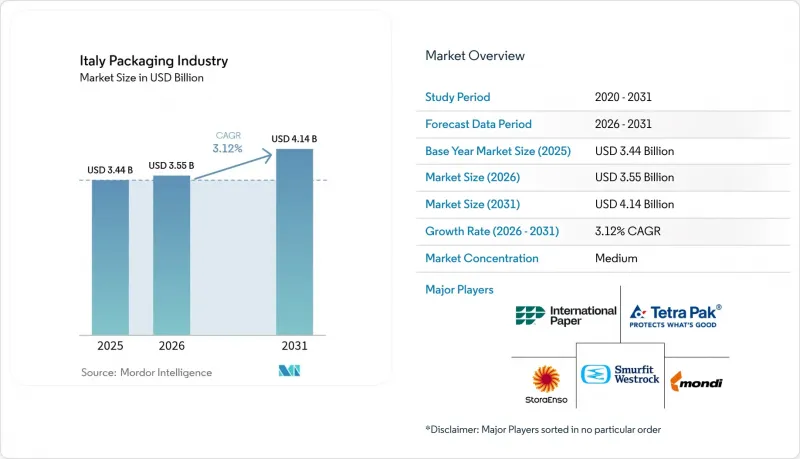
本報告按包裝類型(塑膠、紙、玻璃容器、金屬罐)、包裝形式(軟包裝、硬包裝)、最終用途行業(食品、飲料、藥品、個人護理及其他)和功能(初級包裝、二級包裝、三級包裝)進行細分。市場預測以美元計價。
義大利包裝產業的趨勢和見解
擴大輕量和可回收材料的使用
每公斤0.45歐元的塑膠稅,加上品牌所有者制定的永續性評估標準,正在加速加工商的材料創新。拉瓦扎(Lavazza)在食品業展現了領先地位,計劃到2023年使其76%的包裝可回收,並力爭到2025年實現完全可回收。卡薩奧普蒂瑪(Casa Optima)透過在2024年實現100%可回收聚丙烯包裝的商業化,證明了單一材料解決方案的技術可行性。對阻隔塗層的投資消除了多層結構的複雜性,使得現有產品可以直接替代,而不會影響保存期限。零售商對不可回收包裝的處罰正在影響上游產品開發決策,為擁有研發能力、能夠縮短認證週期的公司創造了可衡量的競爭優勢。隨著國內零售商逐年提高可回收標準,輕巧且可回收的設計對於商店展示和出口清關至關重要。
電子商務導致小包裹處理量激增
預計到2024年,線上零售市場規模將達到588億歐元(641億美元),並重塑了物流模式。其中,食品雜貨領域尤其實現了8%的年成長,達到46億歐元(63.9億美元)。瓦楞紙板供應商在北部物流樞紐附近正經歷著需求激增,他們正擴大產能並建造即時生產衛星工廠以降低運輸成本。體積重量定價推動了對輔助選擇合適尺寸的軟體、可擴展的郵寄信封以及能夠承受循環商業模式下往返運輸的緩衝材料的需求。電子產品和服裝的退貨處理設計正在為專門從事易撕條和再封功能的加工商創造新的收入來源。這些包裝要求正日益影響上游製程中的材料選擇,輕質紙張和聚烯薄膜在成本、保護性和可回收性之間取得了平衡,因此更受青睞。
原生聚合物和紙漿價格波動
2024年,全球石化市場波動推高聚合物價格,使其高於五年平均水平,而由於北歐供應中斷,紙漿價格仍強勁。 Versalis關閉了位於布林迪西和普里奧羅的裂解裝置,加劇了對進口的依賴,並使加工商面臨運費和外匯風險。由於避險能力有限,中小企業被迫承受EBITDA的即時下滑,導致併購活動增加,企業紛紛尋求規模經濟效益。由於認證上限的限制,造紙加工商面臨原料纖維供應不足的問題,這刺激了對再生纖維的投資,而紙漿價格仍取決於原生紙漿的價格趨勢。買家現在要求簽訂與指數掛鉤的契約,並採用混合材料包裝來緩衝價格波動,一些買家甚至推遲了創新產品的推出,直到成本穩定下來。
細分市場分析
2025年,塑膠在義大利包裝產業仍佔42.03%的佔有率。這主要得益於食品和個人護理領域對塑膠阻隔性能的需求。儘管這些領域的成長動能依然強勁,但受電子商務和《包裝及包裝廢棄物法規》(PPWR)帶來的替代需求推動,預計到2031年,義大利紙質替代包裝產業將以4.55%的複合年成長率成長。
紙張加工商正從線上零售商、瓦楞紙箱和模塑纖維容器等免徵塑膠稅的包裝材料中獲得訂單。水性塗料等混合創新技術可取代聚乙烯內襯,縮短了標榜產品可回收性的品牌所有者的投資回收期。玻璃在飲料和化妝品領域保持高階利基市場的地位。 Veralia 的義大利分公司在 2024 年上半年實現了 15.3 億歐元(18 億美元)的銷售額,這得益於回收玻璃附加費轉嫁給買家的政策。金屬罐因其無限期可回收性而備受青睞,在地緣政治因素導致的供應中斷背景下,消費者對保存期限長的食品信心增強,金屬罐也因此受益。經營多種材料的公司在規避政策風險的同時,也滿足了更換基材的客戶的需求。
其他好處
- Excel格式的市場預測(ME)表
- 3個月的分析師支持
目錄
第1章:引言
- 研究假設和市場定義
- 調查範圍
第2章:調查方法
第3章執行摘要
第4章 市場狀況
- 市場概覽
- 市場促進因素
- 擴大輕量和可回收材料的使用
- 電子商務導致小包裹處理量激增
- 透過遵守歐盟的 PPWR 和 EPR 標準,加速永續包裝的發展。
- 人工智慧驅動的回收設施分類和品管
- 熱泵製造業的蓬勃發展帶動了對EPS包裝材料的需求。
- 市場限制因素
- 原生聚合物和紙漿價格波動
- 塑膠包裝稅(0.45 歐元/公斤)正在擠壓加工商的利潤空間。
- 南北迴收基礎設施差距
- 產業價值鏈分析
- 波特五力分析
- 宏觀經濟因素對市場的影響
- 技術展望
- 監理情勢
第5章 市場規模與成長預測
- 按包裝類型
- 塑膠包裝
- 按類型
- 硬質塑膠包裝
- 依材料類型
- 聚乙烯(PE)
- 聚丙烯(PP)
- 聚對苯二甲酸乙二醇酯(PET)
- 聚氯乙烯(PVC)
- 聚苯乙烯(PS)和發泡聚苯乙烯(EPS)
- 其他材料類型
- 依產品類型
- 瓶子和罐子
- 蓋子和封口
- 托盤和容器
- 其他
- 按最終用途行業分類
- 食物
- 飲料
- 製藥
- 化妝品和個人護理
- 產業
- 其他
- 依材料類型
- 軟質塑膠包裝
- 依材料類型
- 聚乙烯(PE)
- 雙軸延伸聚丙烯(BOPP)
- 流延聚丙烯(CPP)
- 其他材料類型
- 依產品類型
- 小袋和包包
- 薄膜和包裝
- 其他
- 按最終用途行業分類
- 食物
- 飲料
- 製藥
- 化妝品和個人護理
- 產業
- 其他
- 依材料類型
- 硬質塑膠包裝
- 依產品類型
- 瓶子和罐子
- 小袋和包包
- 散裝產品
- 其他
- 按最終用途行業分類
- 食物
- 飲料
- 化妝品和個人護理
- 製藥
- 產業
- 其他
- 按類型
- 紙包裝
- 依產品類型
- 折疊式紙箱
- 瓦楞紙箱
- 液體紙容器
- 其他
- 按最終用途行業分類
- 食物
- 飲料
- 電子商務
- 其他
- 依產品類型
- 玻璃容器
- 按顏色
- 綠色的
- 琥珀色
- 燧石
- 其他顏色
- 按最終用途行業分類
- 食物
- 飲料
- 酒精飲料
- 非酒精性
- 個人護理和化妝品
- 藥品(不包括管瓶和安瓿)
- 香水
- 按顏色
- 金屬罐和容器
- 依材料類型
- 鋼
- 鋁
- 依產品類型
- 能
- 桶和罐
- 蓋子和封口
- 其他
- 按最終用途行業分類
- 食物
- 飲料
- 化工/石油
- 產業
- 油漆和塗料
- 其他
- 依材料類型
- 塑膠包裝
- 按包裝類型
- 柔軟的
- 難的
- 按最終用途行業分類
- 食物
- 飲料
- 藥品和醫療保健
- 個人護理和化妝品
- 產業
- 電子商務
- 其他
第6章 競爭情勢
- 市場集中度
- 策略趨勢
- 市佔率分析
- 公司簡介
- Tetra Pak International SA
- International Paper Company
- Mondi plc
- Stora Enso Oyj
- Smurfit WestRock
- Amcor plc
- Carton Pack SpA
- Zignago Vetro SpA
- Wipak Bordi Srl
- Plast Pack Packaging Srl
- Rotofil Srl
- AFG Srl
- Gruppo Goglio SpA
- Sealed Air Corporation
- Verallia SA
- Italpack Cartons Srl
- PET Engineering Srl
- IMA Industrie Macchine Automatiche SpA
第7章 市場機會與未來展望
According to Mordor Intelligence, the packaging industry in Italy market size is expected to grow from USD 3.44 billion in 2025 to USD 3.55 billion in 2026 and is forecast to reach USD 4.14 billion by 2031 at 3.12% CAGR over 2026-2031.
This report is Segmented by Packaging Type (Plastic, Paper, Container Glass, and Metal Cans), Format (Flexible, and Rigid), End-Use Industry (Food, Beverage, Pharmaceuticals, Personal Care, and More), and Function (Primary, Secondary, and Tertiary). The Market Forecasts are Provided in Terms of Value (USD).
Italy Packaging Industry Trends and Insights
Growing Adoption of Lightweight and Recyclable Materials
Converters accelerate material innovation as the EUR 0.45/kg plastic tax and brand-owner sustainability scorecards converge. Lavazza achieved 76% recyclable packaging in 2023 and targets full recyclability by 2025, illustrating food-sector leadership. Casa Optima commercialized 100% recyclable polypropylene packs in 2024, showcasing the technical viability of mono-material solutions. Investments in barrier coatings that remove multilayer complexity enable drop-in replacements without sacrificing shelf life. Retail penalties for non-recyclable formats now influence upstream product-development decisions, creating measurable competitive advantages for firms with R&D capabilities that shorten qualification cycles. As national retailers elevate recyclability thresholds annually, lightweight and recyclable designs become prerequisites for shelf access and export clearance.
Surge in E-commerce Parcel Volumes
Online retail worth EUR 58.8 billion (USD 64.1 billion) in 2024 has redefined shipment profiles, especially for food and grocery, which reached EUR 4.6 billion (USD 6.39 billion) with 8% year-over-year growth. Corrugated suppliers see spikes around Northern logistics hubs, prompting capacity expansions and just-in-time satellite plants that lower transit costs. Dimensional-weight pricing pushes right-sizing software, expandable mailers, and cushioning that tolerates two-way journeys under circular commerce models. Return-ready designs for electronics and apparel add new revenue lines for converters specializing in tear-strip and reseal features. These packaging requirements increasingly dictate upstream material choice, favoring lightweight paper and mono-polyolefin films that align cost, protection, and recyclability.
Volatility in Virgin Polymer and Paper Pulp Prices
Global petrochemical swings raised polymer quotes above five-year averages in 2024, while pulp costs held firm after Nordic supply disruptions. Versalis shuttered cracking units in Brindisi and Priolo, lifting import reliance and exposing converters to freight and FX risk. Smaller operators with limited hedging absorb immediate EBITDA erosion, triggering M&A as firms seek scale procurement power. Paper converters face certification ceilings that curb raw-fiber availability, reinforcing recycled-fiber investment but tying prices to virgin-pulp trajectories. Buyers now request indexed contracts or mixed-material packs to buffer volatility, occasionally delaying innovation rollouts until cost stability returns.
Other drivers and restraints analyzed in the detailed report include:
- EU PPWR and EPR Compliance Accelerating Sustainable Packaging
- AI-Driven Sorting and Quality Control in Recycling Facilities
- Plastic Packaging Tax Squeezing Converter Margins
For complete list of drivers and restraints, kindly check the Table Of Contents.
Segment Analysis
Plastic retained a 42.03% share of the packaging industry in the Italian market in 2025, anchored by the barrier performance sought in food and personal-care categories. The segment's expansion remains steady, though the packaging industry in the Italian market for paper alternatives is projected to grow at a 4.55% CAGR to 2031 on the back of e-commerce and PPWR-driven substitution.
Paper converters win orders from online retail, corrugated boxes, and molded-fiber containers exempt from the plastic tax. Hybrid innovations, such as water-based coatings that replace polyethylene liners, shorten the payback for brand owners seeking recyclable claims. Glass maintains premium niches in beverages and cosmetics; Verallia's Italian division posted EUR 1.53 billion (USD 1.80 billion) H1 2024 revenue, aided by recycled-glass surcharges passed onto buyers. Metal cans, prized for infinite recyclability, benefit from consumer trust in shelf-stable food during geopolitical supply disruptions. Firms straddling multiple materials hedge policy risks while servicing customers migrating between substrates.
Complete Report Scope:
- By Packaging Type
- Plastic Packaging
- By Type
- Rigid Plastic Packaging
- By Material Type
- Polyethylene (PE)
- Polypropylene (PP)
- Polyethylene Terephthalate (PET)
- Polyvinyl Chloride (PVC)
- Polystyrene (PS) and Expanded Polystyrene (EPS)
- Other Material Types
- By Product Type
- Bottles and Jars
- Caps and Closures
- Trays and Containers
- Other Product Types
- By End-use Industry
- Food
- Beverage
- Pharmaceutical
- Cosmetics and Personal Care
- Industrial
- Other End-use Industry
- By Material Type
- Flexible Plastic Packaging
- By Material Type
- Polyethylene (PE)
- Biaxially Oriented Polypropylene (BOPP)
- Cast Polypropylene (CPP)
- Other Material Types
- By Product Type
- Pouches and Bags
- Films and Wraps
- Other Product Types
- By End-use Industry
- Food
- Beverage
- Pharmaceutical
- Cosmetics and Personal Care
- Industrial
- Other End-use Industry
- By Material Type
- Rigid Plastic Packaging
- By Product Type
- Bottles and Jars
- Pouches and Bags
- Bulk-Grade Products
- Other Product Types
- By End-use Industry
- Food
- Beverages
- Cosmetics and Personal Care
- Pharamceuticals
- Industrial
- Other End-use Industry
- By Type
- Paper Packaging
- By Product Type
- Folding Carton
- Corrugated Boxes
- Liquid Paperboard
- Other Product Type
- By End-use Industry
- Food
- Beverages
- E-commerce
- Other End-use Industry
- By Product Type
- Container Glass
- By Color
- Green
- Amber
- Flint
- Other Colors
- By End-use Industry
- Food
- Beverage
- Alcoholic
- Non-Alcoholic
- Personal Care and Cosmetics
- Pharmaceuticals (excluding Vials and Ampoules)
- Perfumery
- By Color
- Metal Cans and Containers
- By Material Type
- Steel
- Aluminum
- By Product Type
- Cans
- Drums and Barrels
- Caps and Closures
- Other Product Type
- By End-use Industry
- Food
- Beverage
- Chemicals and Petroleum
- Industrial
- Paints and coatings
- Other End-use Industry
- By Material Type
- Plastic Packaging
- By Packaging Format
- Flexible
- Rigid
- By End-use Industry
- Food
- Beverage
- Pharmaceuticals and Healthcare
- Personal Care and Cosmetics
- Industrial
- E-commerce
- Other End-use Industry
List of Companies Covered in this Report:
- Tetra Pak International SA
- International Paper Company
- Mondi plc
- Stora Enso Oyj
- Smurfit WestRock
- Amcor plc
- Carton Pack SpA
- Zignago Vetro SpA
- Wipak Bordi Srl
- Plast Pack Packaging Srl
- Rotofil Srl
- AFG Srl
- Gruppo Goglio SpA
- Sealed Air Corporation
- Verallia SA
- Italpack Cartons Srl
- PET Engineering Srl
- IMA Industrie Macchine Automatiche SpA
Additional Benefits:
- The market estimate (ME) sheet in Excel format
- 3 months of analyst support
TABLE OF CONTENTS
1 INTRODUCTION
- 1.1 Study Assumptions and Market Definition
- 1.2 Scope of the Study
2 RESEARCH METHODOLOGY
3 EXECUTIVE SUMMARY
4 MARKET LANDSCAPE
- 4.1 Market Overview
- 4.2 Market Drivers
- 4.2.1 Growing adoption of lightweight and recyclable materials
- 4.2.2 Surge in e-commerce parcel volumes
- 4.2.3 EU PPWR and EPR compliance accelerating sustainable packaging
- 4.2.4 AI-driven sorting and quality control in recycling facilities
- 4.2.5 Heat-pump manufacturing boom driving EPS packaging demand
- 4.3 Market Restraints
- 4.3.1 Volatility in virgin polymer and paper pulp prices
- 4.3.2 Plastic packaging tax (EUR 0.45 /kg) squeezing converter margins
- 4.3.3 North-South disparities in recycling infrastructure
- 4.4 Industry Value Chain Analysis
- 4.5 Porter's Five Forces Analysis
- 4.5.1 Bargaining Power of Suppliers
- 4.5.2 Bargaining Power of Buyers
- 4.5.3 Threat of New Entrants
- 4.5.4 Threat of Substitute Products
- 4.5.5 Intensity of Competitive Rivalry
- 4.6 The Impact of Macroeconomic Factors on the Market
- 4.7 Technological Outlook
- 4.8 Regulatory Landscape
5 MARKET SIZE AND GROWTH FORECASTS (VALUE)
- 5.1 By Packaging Type
- 5.1.1 Plastic Packaging
- 5.1.1.1 By Type
- 5.1.1.1.1 Rigid Plastic Packaging
- 5.1.1.1.1.1 By Material Type
- 5.1.1.1.1.1.1 Polyethylene (PE)
- 5.1.1.1.1.1.2 Polypropylene (PP)
- 5.1.1.1.1.1.3 Polyethylene Terephthalate (PET)
- 5.1.1.1.1.1.4 Polyvinyl Chloride (PVC)
- 5.1.1.1.1.1.5 Polystyrene (PS) and Expanded Polystyrene (EPS)
- 5.1.1.1.1.1.6 Other Material Types
- 5.1.1.1.1.2 By Product Type
- 5.1.1.1.1.2.1 Bottles and Jars
- 5.1.1.1.1.2.2 Caps and Closures
- 5.1.1.1.1.2.3 Trays and Containers
- 5.1.1.1.1.2.4 Other Product Types
- 5.1.1.1.1.3 By End-use Industry
- 5.1.1.1.1.3.1 Food
- 5.1.1.1.1.3.2 Beverage
- 5.1.1.1.1.3.3 Pharmaceutical
- 5.1.1.1.1.3.4 Cosmetics and Personal Care
- 5.1.1.1.1.3.5 Industrial
- 5.1.1.1.1.3.6 Other End-use Industry
- 5.1.1.1.1.1 By Material Type
- 5.1.1.1.2 Flexible Plastic Packaging
- 5.1.1.1.2.1 By Material Type
- 5.1.1.1.2.1.1 Polyethylene (PE)
- 5.1.1.1.2.1.2 Biaxially Oriented Polypropylene (BOPP)
- 5.1.1.1.2.1.3 Cast Polypropylene (CPP)
- 5.1.1.1.2.1.4 Other Material Types
- 5.1.1.1.2.2 By Product Type
- 5.1.1.1.2.2.1 Pouches and Bags
- 5.1.1.1.2.2.2 Films and Wraps
- 5.1.1.1.2.2.3 Other Product Types
- 5.1.1.1.2.3 By End-use Industry
- 5.1.1.1.2.3.1 Food
- 5.1.1.1.2.3.2 Beverage
- 5.1.1.1.2.3.3 Pharmaceutical
- 5.1.1.1.2.3.4 Cosmetics and Personal Care
- 5.1.1.1.2.3.5 Industrial
- 5.1.1.1.2.3.6 Other End-use Industry
- 5.1.1.1.2.1 By Material Type
- 5.1.1.1.1 Rigid Plastic Packaging
- 5.1.1.2 By Product Type
- 5.1.1.2.1 Bottles and Jars
- 5.1.1.2.2 Pouches and Bags
- 5.1.1.2.3 Bulk-Grade Products
- 5.1.1.2.4 Other Product Types
- 5.1.1.3 By End-use Industry
- 5.1.1.3.1 Food
- 5.1.1.3.2 Beverages
- 5.1.1.3.3 Cosmetics and Personal Care
- 5.1.1.3.4 Pharamceuticals
- 5.1.1.3.5 Industrial
- 5.1.1.3.6 Other End-use Industry
- 5.1.1.1 By Type
- 5.1.2 Paper Packaging
- 5.1.2.1 By Product Type
- 5.1.2.1.1 Folding Carton
- 5.1.2.1.2 Corrugated Boxes
- 5.1.2.1.3 Liquid Paperboard
- 5.1.2.1.4 Other Product Type
- 5.1.2.2 By End-use Industry
- 5.1.2.2.1 Food
- 5.1.2.2.2 Beverages
- 5.1.2.2.3 E-commerce
- 5.1.2.2.4 Other End-use Industry
- 5.1.2.1 By Product Type
- 5.1.3 Container Glass
- 5.1.3.1 By Color
- 5.1.3.1.1 Green
- 5.1.3.1.2 Amber
- 5.1.3.1.3 Flint
- 5.1.3.1.4 Other Colors
- 5.1.3.2 By End-use Industry
- 5.1.3.2.1 Food
- 5.1.3.2.2 Beverage
- 5.1.3.2.2.1 Alcoholic
- 5.1.3.2.2.2 Non-Alcoholic
- 5.1.3.2.3 Personal Care and Cosmetics
- 5.1.3.2.4 Pharmaceuticals (excluding Vials and Ampoules)
- 5.1.3.2.5 Perfumery
- 5.1.3.1 By Color
- 5.1.4 Metal Cans and Containers
- 5.1.4.1 By Material Type
- 5.1.4.1.1 Steel
- 5.1.4.1.2 Aluminum
- 5.1.4.2 By Product Type
- 5.1.4.2.1 Cans
- 5.1.4.2.2 Drums and Barrels
- 5.1.4.2.3 Caps and Closures
- 5.1.4.2.4 Other Product Type
- 5.1.4.3 By End-use Industry
- 5.1.4.3.1 Food
- 5.1.4.3.2 Beverage
- 5.1.4.3.3 Chemicals and Petroleum
- 5.1.4.3.4 Industrial
- 5.1.4.3.5 Paints and coatings
- 5.1.4.3.6 Other End-use Industry
- 5.1.4.1 By Material Type
- 5.1.1 Plastic Packaging
- 5.2 By Packaging Format
- 5.2.1 Flexible
- 5.2.2 Rigid
- 5.3 By End-use Industry
- 5.3.1 Food
- 5.3.2 Beverage
- 5.3.3 Pharmaceuticals and Healthcare
- 5.3.4 Personal Care and Cosmetics
- 5.3.5 Industrial
- 5.3.6 E-commerce
- 5.3.7 Other End-use Industry
6 COMPETITIVE LANDSCAPE
- 6.1 Market Concentration
- 6.2 Strategic Moves
- 6.3 Market Share Analysis
- 6.4 Company Profiles (includes Global level Overview, Market level overview, Core Segments, Financials as available, Strategic Information, Market Rank/Share for key companies, Products and Services, and Recent Developments)
- 6.4.1 Tetra Pak International SA
- 6.4.2 International Paper Company
- 6.4.3 Mondi plc
- 6.4.4 Stora Enso Oyj
- 6.4.5 Smurfit WestRock
- 6.4.6 Amcor plc
- 6.4.7 Carton Pack SpA
- 6.4.8 Zignago Vetro SpA
- 6.4.9 Wipak Bordi Srl
- 6.4.10 Plast Pack Packaging Srl
- 6.4.11 Rotofil Srl
- 6.4.12 AFG Srl
- 6.4.13 Gruppo Goglio SpA
- 6.4.14 Sealed Air Corporation
- 6.4.15 Verallia SA
- 6.4.16 Italpack Cartons Srl
- 6.4.17 PET Engineering Srl
- 6.4.18 IMA Industrie Macchine Automatiche SpA
7 MARKET OPPORTUNITIES AND FUTURE OUTLOOK
- 7.1 White-space and Unmet-Need Assessment

 西班牙包裝產業:市場佔有率分析、產業趨勢與統計、成長預測(2026-2031)包裝泵和分配器:市場佔有率分析、行業趨勢和統計數據、成長預測(2026-2031 年)非洲包裝市場:市場佔有率分析、產業趨勢與統計及成長預測(2026-2031 年)
 微波爐適用包裝市場分析及至2035年預測:類型、技術、應用、形狀、材料類型、製程、最終用戶、功能、設備
 2034年纖維基阻隔性包裝市場預測-全球分析(依纖維材料、阻隔塗層、包裝形式、阻隔技術、最終用戶和地區分類)法國包裝:市場佔有率分析、產業趨勢與統計、成長預測(2026-2031)中國包裝市場:市場佔有率分析、產業趨勢與統計、成長預測(2026-2031)德國包裝產業:市場佔有率分析、產業趨勢與統計、成長預測(2026-2031)英國包裝業:市場佔有率分析、產業趨勢與統計、成長預測(2026-2031)高視覺性包裝解決方案:市場佔有率分析、產業趨勢與統計、成長預測(2026-2031 年)