


 |
市場調查報告書
商品編碼
2114381
中東和非洲石膏板市場:市場佔有率分析、行業趨勢和統計數據以及成長預測(2026-2031 年)Middle-East And Africa Gypsum Board - Market Share Analysis, Industry Trends & Statistics, Growth Forecasts (2026 - 2031) |
||||||

※ 本網頁內容可能與最新版本有所差異。詳細情況請與我們聯繫。
根據 Mordor Intelligence 預測,中東和非洲的石膏板市場將從 2025 年的 19.5 億平方公尺成長到 2026 年的 20.6 億平方公尺,然後從 2026 年到 2031 年以 5.61% 的複合年成長率成長,到 203 億平方公尺。
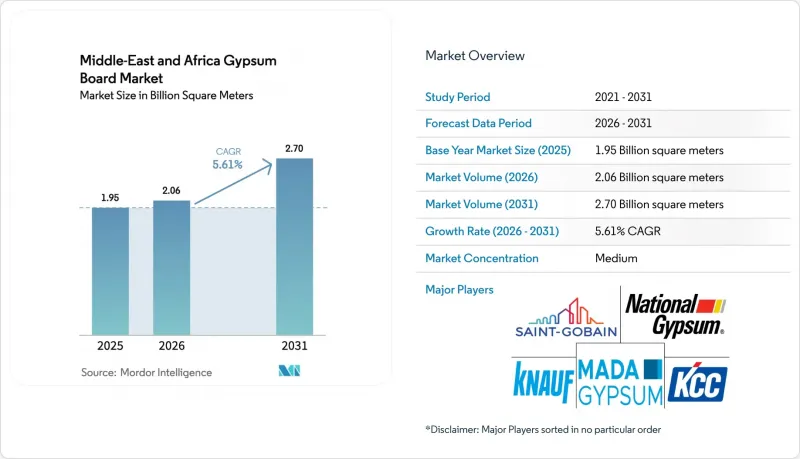
本報告按板材類型(牆板、天花板、預裝飾板、防火板)、最終用途領域(住宅、商業、公共、工業/倉儲)和地區(沙烏地阿拉伯、阿拉伯聯合大公國、卡達、科威特、伊朗、南非、奈及利亞、肯亞以及其他中東和非洲國家)進行細分。市場預測以平方公尺為單位。
中東及非洲石膏板市場趨勢及洞察
沙烏地阿拉伯和阿拉伯聯合大公國計劃開展政府資助的大型企劃
2023年前三個季度,大規模政府主導計畫的合約總額超過550億美元,這些計畫採用分階段交付的方式,並依靠標準化的輕質隔間材料來縮短工期。僅NEOM專案就強制要求約30%的住宅單元使用工廠預製的內牆組件,這將推動未來幾年對板材的需求。紅海計畫、新穆拉巴和吉迪亞計畫正透過超快速建設新增數百萬平方公尺的占地面積,而杜拜2040計畫中也已規劃了大量商業大樓、學校和醫療設施,這些設施將陸續建成。開發商選擇防火石膏板,因為它們符合海灣合作理事會(GCC)的新測試標準,且不會增加結構重量,這對於高層建築設計至關重要。目前,融資和保險公司已將這些標準納入合約條款,從而有效地推動了中東和非洲石膏板市場對特殊板材的需求。
海灣合作理事會酒店業的旅遊業主導了對石膏板內飾的需求。
預計卡達將在2025年迎來400萬遊客。這一成長促使卡達政府推出一項100億卡達裡亞爾(約27.5億美元)的酒店資金籌措計劃,並提高了快速整修的標準。位於拉斯海瑪阿爾瑪爾詹島的永利度假酒店計劃於2027年初開業,僅客房和後勤部門走廊就需要超過15萬平方公尺的防火石膏板。沙烏地阿拉伯的「2030願景」旨在將年遊客量提升至1億,相當於新增約50萬間飯店客房。如果包括走廊和公共區域,平均每間客房將需要150平方公尺的石膏板。企劃團隊傾向於使用預製防潮石膏板,以縮短驗收清單的處理時間,並最大限度地減少定期維修期間的停工時間。這些規格使得高價、高性能的 SKU 能夠納入工作分解結構 (WBS) 中,從而支持中東和非洲石膏板市場的全年出貨。
紙板表面材料易受潮和黴變損害。
當相對濕度超過 80% 時,紙質材料上的黴菌生長速度會加快。沿岸地區公寓的現場檢查證實,標準石膏板在兩年內就會出現肉眼可見的黴菌。建築公司可以選擇玻璃纖維氈或水泥纖維等替代品,但這些替代品的價格高出 15% 至 25%,而且大多數地方政府建築規範尚未強制使用。維修工程尤其容易受到這個問題的影響,因為現有的空調系統很少能將濕度維持在 50% 至 60% 之間。提前更換的成本削弱了「整體擁有成本」的論點,而該論點曾經認為石膏板優於磚石結構。
細分市場分析
預計到2031年,防火板材市場將以6.68%的複合年成長率成長,超過5.61%的基準成長率。這主要得益於海灣合作理事會(GCC)於2024年修訂的防火測試標準,該標準強制要求高層建築筒採用X型或C型組裝結構。儘管到2025年,牆板仍將佔據中東和非洲石膏板市場46.12%的佔有率,但隨著天花板和預裝飾板的日益普及,其主導地位正在下降,尤其是在酒店業維修項目和模組化建築中。建築師青睞C型板材,因為它結合了高密度芯材和玻璃纖維,能夠在2小時的耐火條件下保持結構完整性。在杜拜發生一系列外牆火災後,保險公司現在也提出了這項要求。像 Glasroc X 這樣的高級天花板板材價格要高出 30-40%,但在對聲學性能和抗撓曲性要求極高的項目中,例如機場候機廳和度假村大廳,它們往往能贏得競標。
此外,由於特種板材的含碳量低於水泥基板材,因此在阿拉伯聯合大公國的Estida-Ma標準和沙烏地阿拉伯修訂後的SBC 601標準的能源部分可以獲得加分。因此,製造商優先考慮能夠在標準批次和耐火批次之間切換並最大限度減少停機時間的窯爐,從而能夠滿足NEOM多套裝保險契約中常見的各種訂單配置。隨著模組化工廠的擴張,大尺寸板材將從傳統的1.20米 x 2.40米標準尺寸轉向客製化的3米尺寸,從而減少垂直接縫並縮短每平方公尺的加工時間。這種轉變將帶來產品差異化,即使在中東和非洲石膏板市場日益商品化的背景下,也能保障利潤率。
其他好處:
- Excel格式的市場預測(ME)表
- 3個月的分析師支持
目錄
第1章:引言
- 研究假設和市場定義
- 調查範圍
第2章:調查方法
第3章執行摘要
第4章 市場狀況
- 市場概覽
- 市場促進因素
- 沙烏地阿拉伯和阿拉伯聯合大公國政府資助的大型企劃
- 海灣合作理事會地區飯店設施中旅遊業主導石膏板內牆施工的需求不斷成長。
- 預製和模組化建築在中東和非洲地區的迅速普及
- 強制性節能建築標準
- 促進石膏回收和合成石膏分配的循環經濟。
- 市場限制因素
- 紙背板易受潮和黴變損害。
- 天然石膏開採的特許權使用費和運費波動。
- 水泥纖維和矽酸鈣基替代品的供應量增加
- 價值鏈分析
- 波特五力模型
第5章 市場規模及成長預測(面積:平方公尺)
- 依電路板類型
- 牆板
- 天花板
- 預裝飾板
- 防火板
- 按最終用途類別
- 住宅
- 商業
- 公共機構(醫療保健和教育)
- 工業和倉儲
- 按地區
- 沙烏地阿拉伯
- 阿拉伯聯合大公國
- 卡達
- 科威特
- 埃及
- 伊朗
- 南非
- 奈及利亞
- 肯亞
- 其他中東和非洲國家
第6章 競爭情勢
- 市場集中度
- 策略趨勢
- 市佔率和排名分析
- 公司簡介
- AYHACO
- Diamond Frames Pvt. Ltd.
- El Khayyat Gypsum
- Etex Group
- Global Gypsum Company LLC
- Gypsemna
- KCC Corporation
- Knauf Group
- Kuwait Gypsum Company
- Mada Gypsum Company
- National Gypsum Services Company
- Saint-Gobain
- United Mining Industries
第7章 市場機會與未來展望
According to Mordor Intelligence, the Middle-East and Africa gypsum board market size is expected to grow from 1.95 Billion square meters in 2025 to 2.06 Billion square meters in 2026 and is forecast to reach 2.70 Billion square meters by 2031 at 5.61% CAGR over 2026-2031.
This report is Segmented by Board Type (Wall Board, Ceiling Board, Pre-Decorated Board, and Fire-Resistant Board), End-Use Sector (Residential, Commercial, Institutional, and Industrial and Warehouse), and Geography (Saudi Arabia, UAE, Qatar, Kuwait, Iran, South Africa, Nigeria, Kenya, and Rest of Middle-East and Africa). The Market Forecasts are Provided in Terms of Volume (Square Meters).
Middle-East And Africa Gypsum Board Market Trends and Insights
Government-Funded Pipeline Megaprojects in Saudi Arabia and UAE
Massive sovereign programs exceeded USD 55 billion in awarded contracts during the first three quarters of 2023 and have locked in phased delivery schedules that rely on standardized, lightweight partitions for faster close-out. NEOM alone mandates factory-made interior wall assemblies for roughly 30% of its residential units, pulling board demand forward several years. The Red Sea Project, New Murabba, and Qiddiya add millions of square meters of ultra-fast-track floor area, and Dubai 2040 is layering commercial towers, schools, and health-care facilities on an already deep pipeline. Developers opt for fire-rated drywall because it satisfies new GCC test standards without adding structural weight, a critical concern in high-rise design. Lenders and insurers now embed these standards into covenants, effectively institutionalizing demand for specialty boards across the Middle-East and Africa gypsum board market.
Tourism-Led Demand for Drywall Fit-Outs in GCC Hospitality Assets
Qatar welcomed 4 million visitors in 2025, a surge that has prompted a QAR 10 billion (USD 2.75 billion) hotel funding plan and raised the bar for rapid refurbishments. The Wynn Resort on Al Marjan Island in Ras Al Khaimah is scheduled for early 2027 opening and alone requires more than 150,000 square meters of fire-resistant drywall in guestrooms and back-of-house corridors. Vision 2030 aims for 100 million annual visitors to Saudi Arabia, which translates into roughly 500,000 new hotel keys; each room carries an average of 150 square meters of board when corridors and amenity areas are included. Project teams favor pre-decorated and moisture-resistant panels because they compress punch-list cycles and minimize downtime during periodic upgrades. These specifications lock premium-priced, high-performance SKUs into work-breakdown structures, underpinning year-round shipments in the Middle-East and Africa gypsum board market.
Susceptibility of Paper-Faced Boards to Water and Mold Damage
Relative humidity above 80% accelerates fungal growth on paper facings, and field audits in Gulf apartments have found visible mold on standard boards within two years. Builders can specify fiberglass-mat or cement-fiber alternatives, but those carry 15-25% price premiums and are not yet mandatory in most municipal codes. Renovation work is especially exposed because existing HVAC systems rarely maintain 50-60% humidity. Premature replacement costs dent the total-cost-of-ownership narrative that once favored gypsum over masonry.
Other drivers and restraints analyzed in the detailed report include:
- Fast-Track Prefab and Modular Construction Uptake Across MEA
- Mandated Energy-Efficient Building Codes
- Volatile Natural-Gypsum Mining Royalties and Freight Costs
For complete list of drivers and restraints, kindly check the Table Of Contents.
Segment Analysis
Fire-resistant board is growing at a 6.68% CAGR to 2031 and is outpacing the 5.61% baseline because 2024 updates to GCC fire-test standards require Type X or C assemblies in high-rise cores. Wall board still represented 46.12% of the Middle-East and Africa gypsum board market share in 2025, but its dominance is slipping as ceiling and pre-decorated panels climb the specification ladder, particularly in hospitality retrofits and modular pods. Architects value the fact that Type C panels combine higher core density with glass fiber to maintain structural integrity for two-hour ratings, something insurers now demand since a series of facade fires in Dubai. Premium ceiling boards such as Glasroc X sell at 30-40% price premiums yet win bids where acoustic performance and sag resistance matter, for example in airport concourses and resort lobbies.
Specialty boards also carry lower embodied carbon than cementitious alternates, so they earn points under UAE Estidama and Saudi Arabia's updated SBC 601 energy chapter. Manufacturers therefore prioritize kilns that can toggle between standard and fire-resistant batches with minimal downtime, helping them meet mixed order profiles common on NEOM multi-package contracts. As modular factories scale, large-format boards will migrate from 1.20 X 2.40 meter staples to custom 3 meter lengths that reduce vertical joints, trimming labor minutes per square meter. That shift embeds product differentiation that protects margins even when wall board becomes more commoditized in the Middle-East and Africa gypsum board market.
Complete Report Scope:
- By Board Type
- Wall Board
- Ceiling Board
- Pre-decorated Board
- Fire-resistant Board
- By End-use Sector
- Residential
- Commercial
- Institutional (Healthcare and Education)
- Industrial and Warehouse
- By Geography
- Saudi Arabia
- United Arab Emirates
- Qatar
- Kuwait
- Egypt
- Iran
- South Africa
- Nigeria
- Kenya
- Rest of Middle-East and Africa
List of Companies Covered in this Report:
- AYHACO
- Diamond Frames Pvt. Ltd.
- El Khayyat Gypsum
- Etex Group
- Global Gypsum Company LLC
- Gypsemna
- KCC Corporation
- Knauf Group
- Kuwait Gypsum Company
- Mada Gypsum Company
- National Gypsum Services Company
- Saint-Gobain
- United Mining Industries
Additional Benefits:
- The market estimate (ME) sheet in Excel format
- 3 months of analyst support
TABLE OF CONTENTS
1 Introduction
- 1.1 Study Assumptions and Market Definition
- 1.2 Scope of the Study
2 Research Methodology
3 Executive Summary
4 Market Landscape
- 4.1 Market Overview
- 4.2 Market Drivers
- 4.2.1 Government-Funded Pipelines Megaprojects in Saudi Arabia and UAE
- 4.2.2 Tourism-Led Demand for Drywall Fit-Outs in GCC Hospitality Assets
- 4.2.3 Fast-Track Prefab and Modular Construction Uptake Across MEA
- 4.2.4 Mandated Energy-Efficient Building Codes
- 4.2.5 Circular-Economy Push for Gypsum Recycling And Synthetic Gypsum Quotas
- 4.3 Market Restraints
- 4.3.1 Susceptibility of Paper-Faced Boards to Water and Mold Damage
- 4.3.2 Volatile Natural-Gypsum Mining Royalties and Freight Costs
- 4.3.3 Rising Availability of Cement Fibre and Calcium-Silicate Substitutes
- 4.4 Value Chain Analysis
- 4.5 Porter's Five Forces
- 4.5.1 Bargaining Power of Suppliers
- 4.5.2 Bargaining Power of Buyers
- 4.5.3 Threat of New Entrants
- 4.5.4 Threat of Substitutes
- 4.5.5 Competitive Rivalry
5 Market Size and Growth Forecasts (Area in square meters)
- 5.1 By Board Type
- 5.1.1 Wall Board
- 5.1.2 Ceiling Board
- 5.1.3 Pre-decorated Board
- 5.1.4 Fire-resistant Board
- 5.2 By End-use Sector
- 5.2.1 Residential
- 5.2.2 Commercial
- 5.2.3 Institutional (Healthcare and Education)
- 5.2.4 Industrial and Warehouse
- 5.3 By Geography
- 5.3.1 Saudi Arabia
- 5.3.2 United Arab Emirates
- 5.3.3 Qatar
- 5.3.4 Kuwait
- 5.3.5 Egypt
- 5.3.6 Iran
- 5.3.7 South Africa
- 5.3.8 Nigeria
- 5.3.9 Kenya
- 5.3.10 Rest of Middle-East and Africa
6 Competitive Landscape
- 6.1 Market Concentration
- 6.2 Strategic Moves
- 6.3 Market Share(%)/Ranking Analysis
- 6.4 Company Profiles (includes Global-level Overview, Market-level Overview, Core Segments, Financials as available, Strategic Information, Market Rank/Share, Products and Services, Recent Developments)
- 6.4.1 AYHACO
- 6.4.2 Diamond Frames Pvt. Ltd.
- 6.4.3 El Khayyat Gypsum
- 6.4.4 Etex Group
- 6.4.5 Global Gypsum Company LLC
- 6.4.6 Gypsemna
- 6.4.7 KCC Corporation
- 6.4.8 Knauf Group
- 6.4.9 Kuwait Gypsum Company
- 6.4.10 Mada Gypsum Company
- 6.4.11 National Gypsum Services Company
- 6.4.12 Saint-Gobain
- 6.4.13 United Mining Industries
7 Market Opportunities and Future Outlook
- 7.1 White-Space and Unmet-Need Assessment
- 7.2 Growing Awareness on Energy Efficient Policy

 歐洲石膏板:市場佔有率分析、產業趨勢與統計、成長預測(2026-2031)石膏板襯紙:市場佔有率分析、產業趨勢與統計、成長預測(2026-2031)石膏板襯裡:市場佔有率分析、行業趨勢和統計數據、成長預測(2026-2031)亞太地區石膏板市場:市場佔有率分析、產業趨勢與統計及成長預測(2026-2031)
 石膏板市場:全球市場預測(2026-2032年)石膏板:市場佔有率分析、產業趨勢與統計、成長預測(2026-2031)石膏板市場-2026-2032年全球市場預測
 石膏板市場規模、佔有率和成長分析:按產品類型、最終用途、分銷管道、厚度、表面處理和地區分類-2026-2033年產業預測
 石膏板市場-全球產業規模、佔有率、趨勢、機會、預測:按類型、厚度、應用、地區和競爭格局分類,2021-2031年
 2026年全球石膏板懸吊天花板市場報告