


 |
市場調查報告書
商品編碼
2113529
印度黏合劑和密封劑市場:市場佔有率分析、行業趨勢和統計數據以及成長預測(2026-2031 年)India Adhesives And Sealants - Market Share Analysis, Industry Trends & Statistics, Growth Forecasts (2026 - 2031) |
||||||

※ 本網頁內容可能與最新版本有所差異。詳細情況請與我們聯繫。
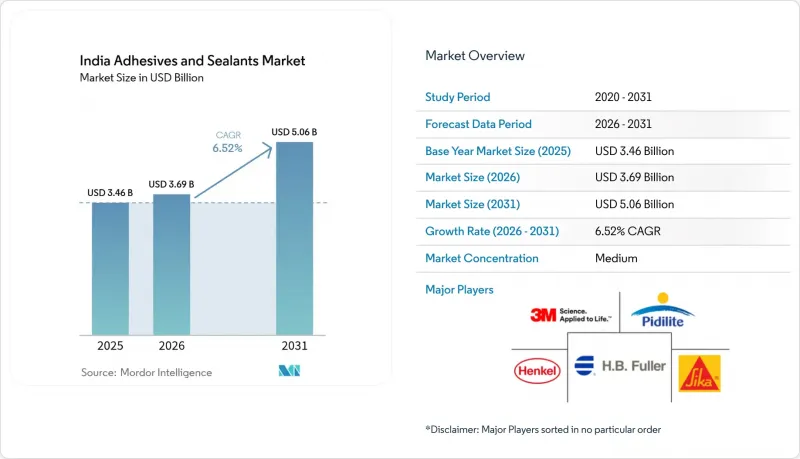
根據 Mordor Intelligence 預測,印度黏合劑和密封劑市場規模將從 2025 年的 34.6 億美元成長到 2026 年的 36.9 億美元,然後在 2031 年達到 50.6 億美元,2026 年至 2031 年的複合年成長率為 6.52%。
本報告按黏合劑樹脂(聚氨酯、環氧樹脂、丙烯酸酯、矽酮等)、黏合劑技術(水性、溶劑型、反應型等)、密封劑樹脂(矽酮、聚氨酯、丙烯酸酯等)以及終端用戶產業(航太、汽車、建築、鞋類和皮革、醫療保健等)進行細分。市場預測以美元計價。
印度黏合劑和密封劑市場趨勢及洞察
住宅和基礎設施建設需求不斷成長
一項2024年撥款1200億美元用於住宅和城市發展的基礎設施計劃,正推動建築化學品的使用量激增,其中包括結構性黏著劑、幕牆玻璃密封劑和節能建築圍護結構解決方案。依賴工廠預塗膠合劑的模組化和預製建築方法正日益普及,因為它們能顯著減少現場勞動力並縮短工期。建築公司也面臨印度標準局(BIS)日益嚴格的要求,促使他們採用經認證的低VOC膠黏劑系統。擁有符合BIS標準的聚氨酯和矽酮產品線的製造商正透過提供現場技術審核和培訓服務來擴大市場佔有率。尤其值得一提的是,市場對能夠承受印度極端溫差的耐候密封劑需求旺盛,這迫使供應商在新德里(NCR)和海得拉巴等主要建築中心附近擴建研發中心。
電子商務的快速成長推動了包裝需求的成長。
隨著線上零售兩位數的成長,包裝已從單純的成本中心轉變為品牌保護工具,需要具備防篡改、耐熱和可回收等特性。軟包裝製造商正在擴大水性及無溶劑複合膠黏合劑的生產規模,包括UFlex的彩色白色複合膠和濕式複合系統,以滿足每月超過5000噸的訂單。食品級過渡限制和生產者延伸責任制(EPR)法規有利於採用經全球食品接觸測試檢驗的低VOC化學品。低溫運輸的擴展推動了對可在-20 度C至50 度C範圍內保持黏合強度的密封劑的需求。同時,直接面對消費者的配送方式的增加,促使快速固化熱熔膠的應用,以防止瓦楞紙箱在最後一公里配送過程中受損。在該領域取得成功的供應商透過將線上黏度監測與黏合劑用量分析相結合,減少了8-10%的廢棄物。
嚴格的VOC和EHS法規
中央污染控制委員會降低了揮發性有機化合物(VOCs)的允許閾值,迫使製造商在其生產線中引入再生式熱氧化設備,並將產品系列轉向水性及熱熔產品。對於中小企業而言,資本投資可能高達100萬美元,這將導致短期內營業利潤率下降。此外,包括二氯甲烷在內的航太組合藥物正在全球逐步淘汰,導致重新認證成本增加和暫時的供不應求。孟買和班加羅爾的工廠正在實施封閉回路型溶劑回收系統以符合法規要求,但其複雜性更有利於擁有成熟環境工程團隊的跨國公司。同時,終端使用者要求提供符合全球化學品統一分類和標籤制度(GHS)第八版規定的安全資料表(SDS),這進一步加重了文件的編制負擔。
細分市場分析
到2025年,聚氨酯將佔據印度黏合劑和密封劑市場21.88%的佔有率。這主要得益於其能夠粘合不同材料,並在建築和汽車連接中提供耐化學腐蝕性能。環氧樹脂和丙烯酸黏合劑則在需要耐熱性和紫外線穩定性的應用領域中佔據主導地位。儘管VAE/EVA市場規模較小,但預計到2031年,其年複合成長率(CAGR)將達到7.42%,成為市場成長最快的材料,這主要得益於軟包裝製造商轉向使用可回收的單一材料薄膜。領先企業正透過在其產品中添加二氧化碳回收的多元醇和植物油衍生的中間體,加強其環保承諾,以符合品牌所有者的永續發展評估標準。
在預測期內,印度黏合劑和密封劑市場的需求將轉向兼具可塗裝性和耐候性的聚氨酯-矽酮混合材料,尤其適用於高層建築的玻璃帷幕牆。氰基丙烯酸酯黏合劑因其快速黏合的特性,將繼續在電子產品、緊急維修和消費者DIY套件等細分市場佔有一席之地。供應商透過強調降低危險廢棄物處理成本和排碳權抵銷的潛力,擴大其生物基原料的使用,從而在總體擁有成本 (TCO) 方面更具競爭力。已獲得印度標準局 (BIS) 認證並擁有新型化學成分的配方商,預計將更快獲得房地產行業和汽車原始設備製造商 (OEM) 的規格批准。
預計到2025年,熱熔膠將佔印度黏合劑和密封劑市場規模的36.62%,並有望以6.88%的複合年成長率持續成長至2031年,表現優於其他平台。由於熱熔膠不含溶劑、固化速度快且固化所需能量低,因此非常適合用於瓦楞紙板包裝和一次性衛生用品,其加工速度可達每分鐘600件。水性乳液黏合劑佔據第二大市場佔有率,配方設計人員透過調整粒徑和界面活性劑體系,使其黏性與溶劑型黏合劑相當,同時將揮發性有機化合物(VOC)含量控制在5克/公升以下。
隨著大都會圈市政當局收緊工廠廢氣排放法規,溶劑型黏合劑的產量逐年下降。然而,它們在皮革黏合和某些需要深度滲透基材的金屬預處理中仍然發揮著至關重要的作用。反應型聚氨酯在擋風玻璃黏合領域越來越受歡迎,其開放時間和按需固化特性使其組裝柔軟性。隨著mini-LED和OLED顯示器製造商優先考慮精密黏合,紫外線固化丙烯酸酯在電子產品生產線上的應用也日益廣泛。為了應對印度黏合劑和密封劑市場的發展趨勢,設備製造商正在將相容工業4.0的感測器整合到其熔化設備中,並將黏度和溫度數據發送到雲端控制面板,從而使每班次的黏合劑消耗量減少8-12%。
其他好處:
- Excel格式的市場預測(ME)表
- 3個月的分析師支持
目錄
第1章:引言
- 研究假設和市場定義
- 調查範圍
第2章:調查方法
第3章執行摘要
第4章 市場狀況
- 市場概覽
- 市場促進因素
- 住宅和基礎設施建設需求不斷成長
- 電子商務的快速發展帶動了包裝需求的成長。
- 促進汽車輕量化和國產化
- 木工和模組化家具的普及
- 印度國防和航太領域的「印度製造」抵銷措施正在促進高規格黏合技術的發展。
- 市場限制因素
- 嚴格的VOC和EHS法規
- 石油基原物料價格波動
- 特種單體(異氰酸酯、矽烷)的進口依賴性
- 價值鏈分析
- 波特五力模型
第5章 市場規模與成長預測
- 黏合劑
- 聚氨酯
- 環氧樹脂
- 丙烯酸纖維
- 矽酮
- 氰基丙烯酸酯
- VAE/EVA
- 其他樹脂
- 黏合劑與技術
- 水溶液
- 溶劑型
- 反應性
- 熱熔膠
- 紫外線固化型
- 按類型分類的密封劑和樹脂
- 矽酮
- 聚氨酯
- 丙烯酸纖維
- 環氧樹脂
- 其他樹脂
- 按最終用戶行業分類
- 航太
- 車
- 建築/施工
- 鞋類和皮革
- 衛生保健
- 包裝
- 木工和細木工
- 其他終端用戶產業
第6章 競爭情勢
- 市場集中度
- 策略性措施(併購、合資、擴大生產能力)
- 市佔率和排名分析
- 公司簡介
- 3M
- Arkema
- Ashland
- Astral Adhesives
- Atul Ltd
- AVERY DENNISON CORPORATION
- BASF
- Dow
- HB Fuller Company
- Henkel AG & Co. KGaA
- HP Adhesives
- Huntsman International LLC
- Jubilant Agri and Consumer Products Limited(JACPL)
- Mapei SpA
- Parker Hannifin Corp
- Pidilite Industries Ltd.
- Sika AG
- Soudal India Private Limited
第7章 市場機會與未來展望
According to Mordor Intelligence, the India adhesives and Sealants Market size is expected to grow from USD 3.46 billion in 2025 to USD 3.69 billion in 2026 and is forecast to reach USD 5.06 billion by 2031 at 6.52% CAGR over 2026-2031.
This report is Segmented by Adhesive Resin (Polyurethane, Epoxy, Acrylic, Silicone, and More), Adhesive Technology (Water-Borne, Solvent-Borne, Reactive, and More), Sealant Resin (Silicone, Polyurethane, Acrylic, and More), End-User Industry (Aerospace, Automotive, Building and Construction, Footwear and Leather, Healthcare, and More). The Market Forecasts are Provided in Terms of Value (USD).
India Adhesives And Sealants Market Trends and Insights
Rising Residential and Infrastructure Construction Demand
Infrastructure programs worth USD 120 billion allocated to housing and urban development in 2024 are triggering a spike in construction chemical usage, including structural adhesives, sealants for facade glazing, and energy-efficient building envelope solutions. Modular and prefabricated techniques that rely on factory-applied bonding are gaining favor because they slash on-site labor and accelerate project schedules. Builders also face stricter Bureau of Indian Standards (BIS) requirements, which encourage the adoption of certified, low-VOC bonding systems. Manufacturers with BIS-compliant polyurethane and silicone lines win share by offering on-site technical audits and training services. Demand is particularly strong for weather-resistant sealants that tolerate India's temperature swings, pushing suppliers to expand research and development centers near major construction hubs in Delhi-NCR and Hyderabad.
Booming E-Commerce-Led Packaging Requirements
Double-digit online retail growth has changed packaging from a cost-center to a brand-protection tool requiring tamper evidence, heat resistance, and recyclability. Flexible packaging converters are scaling up water-borne and solvent-free laminating adhesives, such as UFlex's pigmented white and wet-lamination systems, to service monthly order runs exceeding 5,000 tonnes. Food-grade migration limits and Extended Producer Responsibility rules favor low-VOC chemistries validated under global food-contact tests. Cold-chain expansion drives the need for sealants that maintain bond strength from -20 °C to 50 °C, while direct-to-consumer shipments fuel the uptake of fast-setting hot-melts that keep corrugated boxes intact over last-mile cycles. Suppliers winning in this space bundle online viscosity monitoring and adhesive usage analytics that cut waste by 8-10%.
Stringent VOC and EHS Regulations
The Central Pollution Control Board has lowered allowable VOC thresholds, compelling producers to retrofit lines with regenerative thermal oxidizers and to shift portfolio mix toward water-borne and hot-melt grades. Capital outlays for small firms can reach USD 1 million, reducing operating margins in the near term. Aerospace formulations containing methylene chloride are under global phase-out, creating requalification costs and temporary shortages. Plants in Mumbai and Bangalore have introduced closed-loop solvent recovery to stay compliant, but the added complexity favors multinationals with established environmental engineering teams. End-users meanwhile insist on Safety Data Sheets aligned with GHS version 8, adding further documentation overhead.
Other drivers and restraints analyzed in the detailed report include:
- Automotive Lightweighting and Localisation Push
- Woodworking and Modular Furniture Uptake
- Petro-Feedstock Price Volatility
For complete list of drivers and restraints, kindly check the Table Of Contents.
Segment Analysis
Polyurethane accounted for 21.88% of India's adhesives and sealants market share in 2025, underpinned by its ability to bond dissimilar substrates and resist chemicals in construction and automotive joints. Epoxy and acrylic systems follow for applications that demand high-temperature endurance or UV stability. VAE/EVA, though smaller in base, is registering the fastest 7.42% CAGR through 2031 as flexible packaging converters switch to recyclable mono-material films. Market leaders are improving green credentials by incorporating CO2-captured polyols and plant-oil intermediates, moves that align with brand-owner sustainability scorecards.
Over the forecast window, India's adhesives and sealants market demand shifts toward hybrid polyurethane-silicone blends that combine paintability with weatherability, especially in high-rise glazing. Cyanoacrylates retain niches in electronics, fast repair, and consumer DIY kits owing to instant bonding speeds. Suppliers scaling bio-based feedstocks compete on total cost of ownership by highlighting lower hazardous-waste fees and possible carbon-credit offsets. Formulators that earn BIS certification for their new chemistries are expected to gain quicker specification approvals from real estate and automotive OEMs.
Hot-melt held 36.62% of India adhesives and sealants market size in 2025 and continues to outpace other platforms with a 6.88% CAGR through 2031. Zero-solvent content, fast set times, and low energy curing make hot-melts ideal for corrugated packaging and hygiene disposables processed at up to 600 units-per-minute. Water-borne emulsions stand second as formulators tune particle size and surfactant systems to approach solvent-borne tack while remaining under 5 g/L VOC.
Solvent-borne volumes decline annually as metro governments tighten plant-air permits, yet remain relevant for leather bonding and certain metal pretreatments requiring deep substrate penetration. Reactive polyurethanes gain traction in windshield bonding, where open time and cure-on-demand deliver assembly flexibility. UV-curable acrylates capture more electronics lines as mini-LED and OLED display makers prioritize precision bonding. Equipment manufacturers responding toIndia'sa adhesives and sealants market trends now bundle melter systems with Industry 4.0 sensors that feed viscosity and temperature data to cloud dashboards, cutting glue consumption 8-12% per shift.
Complete Report Scope:
- By Adhesives Resin
- Polyurethane
- Epoxy
- Acrylic
- Silicone
- Cyanoacrylate
- VAE / EVA
- Other Resins
- By Adhesives Technology
- Water-borne
- Solvent-borne
- Reactive
- Hot-Melt
- UV Cured
- By Sealants Resin
- Silicone
- Polyurethane
- Acrylic
- Epoxy
- Other Resins
- By End-user Industry
- Aerospace
- Automotive
- Building and Construction
- Footwear and Leather
- Healthcare
- Packaging
- Woodworking And Joinery
- Other End-user Industries
List of Companies Covered in this Report:
- 3M
- Arkema
- Ashland
- Astral Adhesives
- Atul Ltd
- AVERY DENNISON CORPORATION
- BASF
- Dow
- H.B. Fuller Company
- Henkel AG & Co. KGaA
- HP Adhesives
- Huntsman International LLC
- Jubilant Agri and Consumer Products Limited (JACPL)
- Mapei SpA
- Parker Hannifin Corp
- Pidilite Industries Ltd.
- Sika AG
- Soudal India Private Limited
Additional Benefits:
- The market estimate (ME) sheet in Excel format
- 3 months of analyst support
TABLE OF CONTENTS
1 Introduction
- 1.1 Study Assumptions and Market Definition
- 1.2 Scope of the Study
2 Research Methodology
3 Executive Summary
4 Market Landscape
- 4.1 Market Overview
- 4.2 Market Drivers
- 4.2.1 Rising residential and infrastructure construction demand
- 4.2.2 Booming e-commerce-led packaging requirements
- 4.2.3 Automotive lightweighting and localisation push
- 4.2.4 Woodworking and modular furniture uptake
- 4.2.5 Make-in-India defence / aerospace offsets fuel high-spec bonding
- 4.3 Market Restraints
- 4.3.1 Stringent VOC and EHS regulations
- 4.3.2 Petro-feedstock price volatility
- 4.3.3 Import-dependency for specialty monomers (isocyanates, silanes)
- 4.4 Value Chain Analysis
- 4.5 Porter's Five Forces
- 4.5.1 Bargaining Power of Suppliers
- 4.5.2 Bargaining Power of Buyers
- 4.5.3 Threat of New Entrants
- 4.5.4 Threat of Substitutes
- 4.5.5 Degree of Competition
5 Market Size and Growth Forecasts (Value)
- 5.1 By Adhesives Resin
- 5.1.1 Polyurethane
- 5.1.2 Epoxy
- 5.1.3 Acrylic
- 5.1.4 Silicone
- 5.1.5 Cyanoacrylate
- 5.1.6 VAE / EVA
- 5.1.7 Other Resins
- 5.2 By Adhesives Technology
- 5.2.1 Water-borne
- 5.2.2 Solvent-borne
- 5.2.3 Reactive
- 5.2.4 Hot-Melt
- 5.2.5 UV Cured
- 5.3 By Sealants Resin
- 5.3.1 Silicone
- 5.3.2 Polyurethane
- 5.3.3 Acrylic
- 5.3.4 Epoxy
- 5.3.5 Other Resins
- 5.4 By End-user Industry
- 5.4.1 Aerospace
- 5.4.2 Automotive
- 5.4.3 Building and Construction
- 5.4.4 Footwear and Leather
- 5.4.5 Healthcare
- 5.4.6 Packaging
- 5.4.7 Woodworking And Joinery
- 5.4.8 Other End-user Industries
6 Competitive Landscape
- 6.1 Market Concentration
- 6.2 Strategic Moves (Mergers and Acquisitions, JVs, Capacity Expansions)
- 6.3 Market Share (%)/Ranking Analysis
- 6.4 Company Profiles (includes Global level Overview, Market level overview, Core Segments, Financials as available, Strategic Information, Market Rank/Share for key companies, Products and Services, and Recent Developments)
- 6.4.1 3M
- 6.4.2 Arkema
- 6.4.3 Ashland
- 6.4.4 Astral Adhesives
- 6.4.5 Atul Ltd
- 6.4.6 AVERY DENNISON CORPORATION
- 6.4.7 BASF
- 6.4.8 Dow
- 6.4.9 H.B. Fuller Company
- 6.4.10 Henkel AG & Co. KGaA
- 6.4.11 HP Adhesives
- 6.4.12 Huntsman International LLC
- 6.4.13 Jubilant Agri and Consumer Products Limited (JACPL)
- 6.4.14 Mapei SpA
- 6.4.15 Parker Hannifin Corp
- 6.4.16 Pidilite Industries Ltd.
- 6.4.17 Sika AG
- 6.4.18 Soudal India Private Limited
7 Market Opportunities and Future Outlook
- 7.1 White-space and Unmet-need Assessment

 黏合劑和密封劑:市場佔有率分析、行業趨勢和統計數據、成長預測(2026-2031 年)彈性黏合劑和密封劑:市場佔有率分析、行業趨勢和統計數據、成長預測(2026-2031 年)歐洲黏合劑和密封劑:市場佔有率分析、行業趨勢和統計數據以及成長預測(2026-2031 年)中東和非洲的黏合劑和密封劑:市場佔有率分析、行業趨勢和統計數據以及成長預測(2025-2031 年)
 建築圍護結構黏合劑和密封劑市場-2026-2032年全球市場預測防水黏合劑和密封劑市場:2026-2032年全球市場預測(依產品類型、技術、形態、固化機制、基材、最終用途、應用和分銷通路分類)黏合劑和密封劑市場:2026-2032年全球市場預測(按產品類型、技術、形態、最終用途產業、應用和分銷管道分類)彈性黏合劑和密封劑市場:按樹脂類型、包裝類型、技術、形式、終端用戶產業和分銷管道分類-全球預測,2026-2032年混合型黏合劑和密封劑:市場佔有率分析、行業趨勢和統計數據以及成長預測(2026-2031 年)
 雙層玻璃黏合劑和密封劑市場報告:按樹脂類型、最終用戶和地區分類(2026-2034 年)