


 |
市場調查報告書
商品編碼
2073386
歐洲戶外廣告投放:市場佔有率分析、產業趨勢與統計及成長預測(2026-2031 年)Europe Out Of Home (OOH) Delivery - Market Share Analysis, Industry Trends & Statistics, Growth Forecasts (2026 - 2031) |
||||||

※ 本網頁內容可能與最新版本有所差異。詳細情況請與我們聯繫。
據 Mordor Intelligence 稱,2025 年歐洲戶外 (OOH) 配送市場價值為 137 億美元,預計到 2031 年將達到 181.9 億美元,而 2026 年為 143.7 億美元,2026 年至 2031 年的複合年成長率為 4.83%。
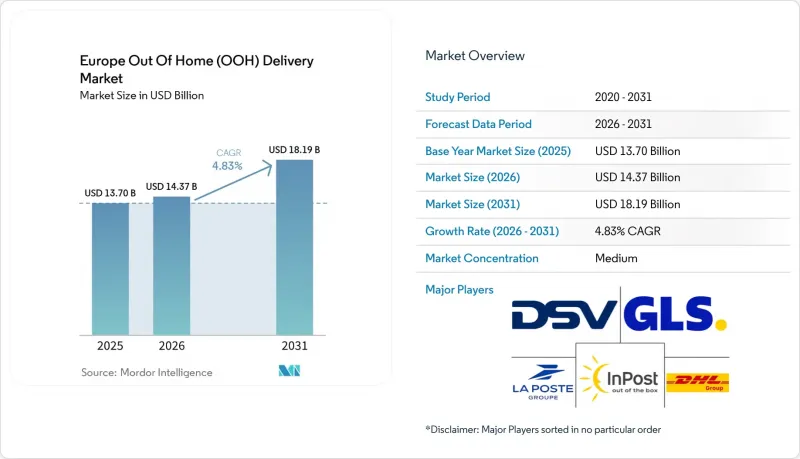
本報告按最終用戶產業(例如,電子商務、商業金融服務 (BFSI)、醫療保健、製造業)、經營模式(企業對企業 (B2B)、企業對消費者 (B2C)、消費者對消費者 (C2C))和國家(德國、法國、波蘭、義大利、西班牙、英國和其他英國國家)進行細分。市場預測以美元 (USD) 計價。
歐洲戶外(OOH)配送市場的趨勢與洞察
電子商務支付趨勢正朝著更靈活的配送方式轉變。
歐洲戶外配送市場正受益於支付環境的改善,消費者越來越希望能夠選擇包裹的配送方式和地點。 DHL發布的2025年報告顯示,如果消費者偏好的配送方式不可用,全球81%的消費者會放棄購物車;如果偏好的退貨方式不可用,79%的消費者會放棄購物車。這表明轉換率與配送選項之間存在直接聯繫。 Geopost發布的2025年電子購物晴雨表顯示,歐洲46%的網購達人更喜歡在家門口收貨,比2019年成長了15個百分點,而宅配櫃是歐洲第二大最受歡迎的配送方式。 DHL的研究也表明,年輕用戶更傾向於使用自提櫃退貨,Z世代選擇宅配櫃退貨的頻率高於嬰兒潮世代,這表明隨著消費者群體結構的變化,中期內對自提櫃的需求將持續成長。因此,零售商的服務合約中擴大納入了網路基地台覆蓋範圍。這是因為網路覆蓋範圍有限會帶來銷售機會損失和退貨便利性降低的風險。因此,在歐洲戶外配送市場,網路覆蓋範圍、結帳流程的可見性以及在包裹出貨前提供可靠的替代配送選項的能力變得越來越重要。
由於未送達的家庭訂單,快遞公司面臨成本壓力。
歐洲戶外配送市場擴張的另一個原因是,傳統的送貨上門服務仍有可避免的重複投遞、客戶服務環節以及堵塞路段的低停靠密度等問題。透過將更多包裹分流至儲物櫃和人工取貨點,承運商只需一次車輛停靠即可服務更多收件人,從而提高路線效率,而這在高峰時段的門到門配送中往往難以實現。這也是大型承運商紛紛建構共用開放系統而非僅依賴住宅送貨上門模式的原因之一。 DHL已透過其在德國推出的開放且規模化的「包裹站」模式證明,公共存取和規模對於未來發展的經濟效益至關重要。同時,DPD和GLS正在共同建構「inboxx」網路,透過共用基礎設施來分配配送量。其商業性邏輯很簡單:避免小包裹被送至不可靠的家庭,就能提高配送效率,並減少人口密集都市區內的重複投遞次數。這些營運壓力不斷推動歐洲戶外 (OOH) 配送市場朝向定價模式和服務設計方向發展,使戶外配送對承運商和最終用戶更具吸引力。
農村和人口稀少地區儲物櫃安裝不平衡
歐洲戶外配送市場在主要都市區和郊區走廊以外的實際覆蓋範圍仍然存在差異。在這些地區,小包裹密度低,削弱了部署新網路基地台的經濟可行性。在農村地區,儲物櫃網路尚未普及到足以推動大規模的行為改變,因此,即使成本更高,快遞公司通常仍然優先選擇送貨上門。這形成了一個惡性循環:覆蓋範圍小限制了使用率,而低使用率又會減緩未來的投資。歐洲部署情況的比較研究表明,在戶外配送市場發展最成熟的地區,人均儲物櫃使用率仍然遠高於仍依賴傳統配送模式的廣大農村地區。雖然太陽能和電池供電的硬體可以幫助提高安裝地點的可行性,但它們並不能完全解決偏遠地區單點使用率低所帶來的配送量挑戰。除非透過共用基礎設施、公共支援或通訊業者之間更廣泛的合作來改善當地經濟,否則歐洲戶外配送市場將繼續在全部區域不平衡地擴張。
細分市場分析
預計到2025年,電子商務將佔據歐洲戶外配送市場34.91%的佔有率,並預計在2031年以5.14%的複合年成長率成長,在所有已公佈的終端用戶市場中增速最高。這一主導地位源自於線上訂購行為模式與戶外配送核心優勢的直接契合:靈活的配送時間、便利的退貨流程以及低廉的末端配送成本。根據Geopost發布的2025年消費者調查,46%的歐洲網消費者更傾向於戶外配送,這進一步印證了電子商務在歐洲戶外配送產業的強勢地位。快時尚、美妝產品和消費性電子產品等類別因其較高的訂單頻率和退貨率而尤為重要。這增加了單筆交易的處理量,因為同一網路可以同時產生配送和退貨的機會。
這種結構使得電子商務領域最有獎勵在購買流程早期階段就提升網路基地台的可見度。零售商受惠於配送失敗率的降低和逆向物流可預測性的提高,而承運商則受惠於路線整合和單次配送效率的提升。正是這種相互促進的邏輯,使得在歐洲戶外(OOH)配送市場,戶外接入不僅被視為物流的後端功能,更被視為網路購物提案的一部分。金融服務、醫療保健和製造業仍然是重要的二級用戶,在這些行業中,受控接入對於安全的文件交換、樣品運輸和小零件配送至關重要。一級產業、線下批發零售和其他機構類別雖然市場佔有率仍然較小,但它們正透過利用網路運輸定期、安全且非緊急的小包裹,來擴大其目標需求群體。
其他好處:
- Excel格式的市場預測(ME)表
- 3個月的分析師支持
目錄
第1章:引言
- 研究假設和市場定義
- 調查範圍
第2章:調查方法
第3章執行摘要
第4章 市場狀況
- 市場概覽
- 市場促進因素
- 電子商務支付偏好正轉向更靈活的配送方式。
- 未送達宅配給快遞公司帶來成本壓力。
- 跨境小包裹數量的增加擴大了戶外廣告的使用範圍。
- 提高都市區交通樞紐儲物櫃和自提點網路的密度。
- 透過營運商中立的軟體編配提高網路利用率
- 購物退貨率高,使得異地退貨中心更具優勢。
- 市場限制因素
- 農村和人口稀少地區儲物櫃供應不平衡。
- 地方政府對街道設備的許可程序和限制
- 竊盜、蓄意破壞以及因資產維護造成的運作
- 通訊業者網路和系統之間的互通性差距
- 價值供應鏈分析
- 監理情勢
- 技術展望
- 波特五力分析
- 地緣政治事件對市場的影響
第5章 市場規模與成長預測
- 按最終用戶行業分類
- 電子商務
- 金融服務(BFSI)
- 衛生保健
- 製造業
- 一級產業
- 批發和零售貿易(線下)
- 其他
- 按經營模式
- 企業對企業 (B2B) 交易
- 企業對消費者 (B2C)
- 個人對個人(C2C)交易
- 國家
- 德國
- 法國
- 波蘭
- 義大利
- 西班牙
- 英國
- 其他歐洲國家
第6章 競爭情勢
- 市場集中度
- 策略趨勢
- 市佔率分析
- 公司簡介
- DHL Group
- InPost(including Mondial Relay)
- GLS Group
- Evri Limited
- Poste Italiane
- DSV A/S
- United Parcel Service, Inc.
- PostNord Sverige AB
- Correos
- La Poste(including Geopost)
- Packeta Ltd
- myflexbox
- SwipBox A/S
- Nova Post
- Bpost
- PostNL NV
- Osterreichische Post AG(Austrian Post)
- Instabee Group AB
- Sameday
- Swiss Post Ltd
第7章 市場機會與未來展望
According to Mordor Intelligence, the europe out-of-home (OOH) delivery market size was valued at USD 13.7 billion in 2025 and is estimated to grow from USD 14.37 billion in 2026 to reach USD 18.19 billion by 2031, growing at a CAGR of 4.83% from 2026 to 2031.
This report is Segmented by End-User Industry (E-Commerce, Financial Services (BFSI), Healthcare, Manufacturing, and More), by Business Model (Business-To-Business (B2B), Business-To-Consumer (B2C), Consumer-To-Consumer (C2C)), and by Country (Germany, France, Poland, Italy, Spain, United Kingdom, and Rest of Europe). The Market Forecasts are Provided in Terms of Value (USD).
Europe Out Of Home (OOH) Delivery Market Trends and Insights
E-Commerce Checkout Preference Shift Toward Flexible Delivery
The Europe out-of-home (OOH) delivery market is gaining support from a checkout environment where shoppers now expect to choose how and where a parcel will be delivered. DHL reported in 2025 that 81% of global shoppers abandon a basket if their preferred delivery option is unavailable, and 79% abandon if their preferred returns method is unavailable, tying conversion directly to delivery choice. Geopost stated in its 2025 E-Shopper Barometer that 46% of European regular online shoppers preferred out-of-home options, up 15 percentage points from 2019, and that parcel lockers had become the second-most-preferred delivery option in Europe. DHL also showed that younger users are more comfortable with locker-based returns, with Gen Z choosing parcel lockers for returns more often than Baby Boomers, which keeps the medium-term demand trend tilted upward as shopping cohorts change. As a result, access-point coverage is moving into retailer service agreements, because limited network reach now risks both checkout loss and lower returns convenience. This is why the European out-of-home (OOH) delivery market is increasingly defined by reach, visibility at checkout, and the ability to present a reliable non-home option before a parcel is even dispatched.
Carrier Cost Pressure From Failed Home Delivery Attempts
The Europe out-of-home (OOH) delivery market is also advancing because home delivery still carries avoidable reattempts, customer service work, and low stop density in congested routes. When carriers move more parcels into lockers or staffed collection points, one vehicle stop can serve many recipients, improving route productivity in a way doorstep delivery often cannot during peak periods. This is one reason large operators are building shared and open-access formats rather than relying solely on proprietary residential delivery models. DHL has already signaled that public access and scale matter to future rollout economics through its open-access and expanded Packstation approach in Germany, while DPD and GLS are jointly building the inboxx network to spread volume across shared infrastructure. The commercial logic is straightforward because every parcel redirected away from an uncertain home handoff improves stop efficiency and reduces the need for repeated attempts in dense cities. That operating pressure keeps pushing the Europe out-of-home (OOH) delivery market toward pricing models and service designs that make non-home delivery more attractive to both carriers and end users.
Uneven Locker Footprint In Rural and Low-Density Areas
The Europe out-of-home (OOH) delivery market still faces a practical coverage gap outside urban and suburban corridors, where lower parcel density weakens the economics of new access-point rollout. In rural districts, carriers often continue to prioritize home delivery even when those routes are more expensive, because the locker network is not yet deep enough to change behavior at scale. This creates a circular problem: thin coverage limits usage, and low usage slows future investment. Evidence from comparative deployment discussions in Europe shows that per-capita locker access remains much stronger in the most mature OOH territories than in large rural areas that still depend on traditional delivery patterns. Solar and battery-based hardware helps with site feasibility, but it does not fully solve the volume challenge in remote areas where each stop serves fewer users. Unless shared infrastructure, public facilitation, or broader carrier collaboration improves rural economics, the Europe out-of-home (OOH) delivery market will keep expanding unevenly across the region.
Other drivers and restraints analyzed in the detailed report include:
- Cross-Border Parcel Growth Increasing OOH Use Cases
- Locker and PUDO Network Densification In Urban Transit Hubs
- Municipal Permitting And Street-Furniture Constraints
For complete list of drivers and restraints, kindly check the Table Of Contents.
Segment Analysis
E-commerce accounted for 34.91% share of the Europe out-of-home (OOH) delivery market size in 2025, and it is expected to post the fastest disclosed end-user CAGR at 5.14% through 2031. That lead comes from a direct fit between online order behavior and the core strengths of OOH delivery, namely flexible pickup timing, easier returns, and lower last-mile consolidation costs. Geopost's 2025 shopper research showed that 46% of European regular online shoppers preferred out-of-home options, which supports the strong positioning of e-commerce within the Europe out-of-home (OOH) delivery industry. Categories such as fast fashion, beauty, and consumer electronics are especially relevant because they tend to combine high order frequency with high return intensity. That increases throughput per transaction, since a single order can generate both a delivery event and a return event over the same network.
The same structure makes e-commerce the segment with the clearest incentive to push access-point visibility earlier in the purchase path. Retailers gain from fewer missed handoffs and more predictable reverse logistics, while carriers gain from route consolidation and higher stop productivity. This mutually reinforcing logic is why the Europe out-of-home (OOH) delivery market keeps seeing OOH access treated as part of the online shopping proposition rather than only as a logistics backend feature. Financial services, healthcare, and manufacturing remain meaningful secondary users where secure document exchange, sample movement, and small-parts distribution benefit from controlled access. Primary industry, offline wholesale and retail trade, and other institutional categories still contribute smaller shares, but they widen the base of addressable demand by using the network for scheduled, secure, and non-urgent parcel movement.
Complete Report Scope:
- By End-User Industry
- E-Commerce
- Financial Services (BFSI)
- Healthcare
- Manufacturing
- Primary Industry
- Wholesale and Retail Trade (Offline)
- Others
- By Business Model
- Business-to-Business (B2B)
- Business-to-Consumer (B2C)
- Consumer-to-Consumer (C2C)
- By Country
- Germany
- France
- Poland
- Italy
- Spain
- United Kingdom
- Rest of Europe
List of Companies Covered in this Report:
- DHL Group
- InPost (including Mondial Relay)
- GLS Group
- Evri Limited
- Poste Italiane
- DSV A/S
- United Parcel Service, Inc.
- PostNord Sverige AB
- Correos
- La Poste (including Geopost)
- Packeta Ltd
- myflexbox
- SwipBox A/S
- Nova Post
- Bpost
- PostNL N.V.
- Osterreichische Post AG (Austrian Post)
- Instabee Group AB
- Sameday
- Swiss Post Ltd
Additional Benefits:
- The market estimate (ME) sheet in Excel format
- 3 months of analyst support
TABLE OF CONTENTS
1 Introduction
- 1.1 Study Assumptions and Market Definition
- 1.2 Scope of the Study
2 Research Methodology
3 Executive Summary
4 Market Landscape
- 4.1 Market Overview
- 4.2 Market Drivers
- 4.2.1 E-Commerce Checkout Preference Shift Toward Flexible Delivery
- 4.2.2 Carrier Cost Pressure From Failed Home Delivery Attempts
- 4.2.3 Cross-Border Parcel Growth Increasing OOH Use Cases
- 4.2.4 Locker and PUDO Network Densification In Urban Transit Hubs
- 4.2.5 Carrier-Neutral Software Orchestration Improving Network Utilization
- 4.2.6 Return-Heavy Shopping Behavior Favoring OOH Drop-Off Points
- 4.3 Market Restraints
- 4.3.1 Uneven Locker Footprint In Rural and Low-Density Areas
- 4.3.2 Municipal Permitting And Street-Furniture Constraints
- 4.3.3 Asset Theft, Vandalism, And Maintenance Downtime
- 4.3.4 Interoperability Gaps Across Carrier Networks And Systems
- 4.4 Value / Supply-Chain Analysis
- 4.5 Regulatory Landscape
- 4.6 Technological Outlook
- 4.7 Porter's Five Forces Analysis
- 4.7.1 Bargaining Power of Suppliers
- 4.7.2 Bargaining Power of Buyers
- 4.7.3 Threat of New Entrants
- 4.7.4 Threat of Substitutes
- 4.7.5 Industry Rivalry
- 4.8 Impact of Geopolitical Events on the Market
5 Market Size & Growth Forecasts (Value in USD)
- 5.1 By End-User Industry
- 5.1.1 E-Commerce
- 5.1.2 Financial Services (BFSI)
- 5.1.3 Healthcare
- 5.1.4 Manufacturing
- 5.1.5 Primary Industry
- 5.1.6 Wholesale and Retail Trade (Offline)
- 5.1.7 Others
- 5.2 By Business Model
- 5.2.1 Business-to-Business (B2B)
- 5.2.2 Business-to-Consumer (B2C)
- 5.2.3 Consumer-to-Consumer (C2C)
- 5.3 By Country
- 5.3.1 Germany
- 5.3.2 France
- 5.3.3 Poland
- 5.3.4 Italy
- 5.3.5 Spain
- 5.3.6 United Kingdom
- 5.3.7 Rest of Europe
6 Competitive Landscape
- 6.1 Market Concentration
- 6.2 Strategic Moves
- 6.3 Market Share Analysis
- 6.4 Company Profiles (includes Global Level Overview, Market Level Overview, Core Segments, Financials as available, Strategic Information, Market Rank/Share, Products and Services, Recent Developments)
- 6.4.1 DHL Group
- 6.4.2 InPost (including Mondial Relay)
- 6.4.3 GLS Group
- 6.4.4 Evri Limited
- 6.4.5 Poste Italiane
- 6.4.6 DSV A/S
- 6.4.7 United Parcel Service, Inc.
- 6.4.8 PostNord Sverige AB
- 6.4.9 Correos
- 6.4.10 La Poste (including Geopost)
- 6.4.11 Packeta Ltd
- 6.4.12 myflexbox
- 6.4.13 SwipBox A/S
- 6.4.14 Nova Post
- 6.4.15 Bpost
- 6.4.16 PostNL N.V.
- 6.4.17 Osterreichische Post AG (Austrian Post)
- 6.4.18 Instabee Group AB
- 6.4.19 Sameday
- 6.4.20 Swiss Post Ltd
7 Market Opportunities & Future Outlook
- 7.1 White-Space and Unmet-Need Assessment

 法國數位戶外廣告 (DOOH):市場佔有率分析、行業趨勢和統計數據以及成長預測 (2026-2031)亞太地區戶外數位廣告:市場佔有率分析、產業趨勢與統計及成長預測(2026-2031)中東和非洲數位戶外(DOOH):市場佔有率分析、行業趨勢和統計數據以及成長預測 (2026-2031)
 全球數位戶外廣告市場規模、佔有率、趨勢和成長分析報告(2026-2034年)全球數位戶外廣告市場規模、佔有率、趨勢和成長分析報告(2026-2034年)數位戶外廣告:市場佔有率分析、產業趨勢與統計及成長預測(2026-2031 年)
 數位戶外(DOOH) 市場:按平台、媒體類型、螢幕尺寸、網路基礎設施、顯示類型和行業分類 - 全球預測,2026-2032 年英國戶外廣告和數位戶外廣告:市場佔有率分析、行業趨勢和統計數據以及成長預測(2026-2031 年)新加坡戶外廣告 (OOH) 和數位戶外廣告 (DOOH):市場佔有率分析、行業趨勢和統計數據以及成長預測 (2026-2031)
 全球數位戶外廣告 (DOOH) 市場:按格式類型、位置類型、顯示技術、內容格式、採購模式、應用程式和廣告主規模分類 - 市場規模、行業動態、機會分析和預測 (2026–2035)