


 |
市場調查報告書
商品編碼
2154262
北美汽車鋼板沖壓市場:市場佔有率分析、產業趨勢與統計、成長預測(2026-2031)North America Automotive Steel Stamping - Market Share Analysis, Industry Trends & Statistics, Growth Forecasts (2026 - 2031) |
||||||

※ 本網頁內容可能與最新版本有所差異。詳細情況請與我們聯繫。
據 Mordor Intelligence 稱,2025 年北美汽車鈑金沖壓市值為 194.3 億美元,預計 2026 年將達到 201.3 億美元。
此外,預計從 2026 年到 2031 年,該產業將以 3.65% 的複合年成長率成長,到 2031 年將達到 240.9 億美元。
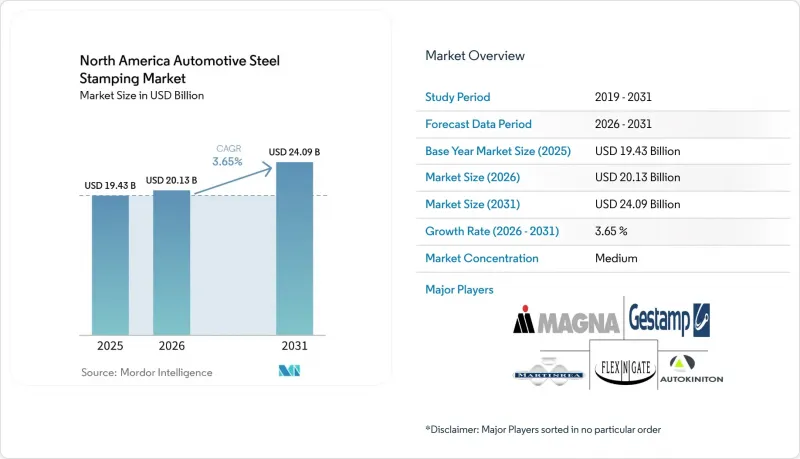
北美汽車板材沖壓成型市場趨勢與洞察。
原始設備製造商 (OEM) 對減輕重量的需求推動了對 AHSS 和 UHSS 沖壓件的需求。
克利夫蘭克里夫斯公司將於2025年獲得1500兆帕熱壓硬化鋼的認證,與傳統鋼材相比,這將使B柱和門環的重量減輕20-25%。同樣,SSAB公司的「Docol 2200兆帕」鋼材和塔塔鋼鐵公司的2.2吉帕鋼材產品也已上市,但採用這些鋼材需要昂貴的熱沖壓生產線,每條生產線的成本在800萬至1200萬美元之間。 Gestamp公司位於聖路易斯波托西的7,400萬歐元熱沖壓工廠採用其「Ges-Multistep」技術,將成型和硬化整合在一個循環中,從而降低模具成本並提高尺寸精度和重複性。能夠投資此類設備升級的一級供應商可以獲得高利潤的超高高抗張強度鋼(UHSS)項目,而規模小規模的本地沖壓公司則面臨著傳統低碳鋼板商品化的風險。
美墨加協定收緊區域採購要求將有利於當地鋼板沖壓企業。
隨著美墨加協定(USMCA)中關於區域增值和鋼鐵採購的要求全面生效,墨西哥巴希奧走廊沿線、汽車零件製造商(OEM)工廠附近以及美國邊境各州製造廠附近的供應商,其業務日益集中。墨西哥正鞏固其作為美國汽車零件主要進口來源國的地位,與其他供應商相比,其市場佔有率不斷擴大,並吸引了大量新的外國直接投資進入汽車行業。這一趨勢反映了區域價值鏈、接近性OEM生產基地以及遵守USMCA採購要求的重要性日益凸顯。儘管未來的條約修訂會帶來政策上的不確定性,但進一步收緊勞動增值法規可能會進一步促進近岸外包,使在美國、墨西哥和加拿大擁有成熟製造地的沖壓加工製造商受益。
電動車普及率低於預期,抑制了印刷加工產業的增量生產。
聯邦政府於2025年底取消電動車獎勵,導致電動車銷售出現顯著的季度環比下滑。此外,2026年初,純電動車(BEV)的市佔率也較去年同期下降。福特汽車對多個電動車項目提列了減損準備,而通用汽車則推遲了產能擴張計劃,並將短期重心轉向混合動力汽車混合動力汽車的電池外殼更小,高抗張強度鋼(UHSS)沖壓件用量也更少。如果沒有政策支持,供應商將面臨電動車專用模具閒置的風險。然而,能夠同時用於內燃機(ICE)和純電動車專案的通用模具則需要更高的初始投資。
細分市場分析
落料製程廣泛應用於各種領域,包括支架、平板坯料和下游製程所使用的預成型件,預計2025年將佔銷售額的31.28%。另一方面,壓花製程預計將以4.67%的複合年成長率成長,因為OEM廠商透過增加加強筋,無需焊接即可實現單板減重8-12%。壓花超高強度鋼(UHSS)可能會使模具磨損加速高達50%,這可能導致大批量生產線每年的模具維護預算高達20萬美元。然而,已經建立預測性維護的沖壓機操作員無疑能夠獲得這筆額外費用。壓印、翻邊和彎曲仍然是小眾領域,但它們分別是精密接觸件、邊緣精加工件和底盤橫樑的關鍵工藝。
同時,多工位沖壓機正逐漸取代傳統沖壓機,將落料、壓花和翻邊工序整合於一次沖程中,從而減少操作流程並確保符合 IATF 16949 可追溯性標準。 Trans-Matic 已在北美地區提供 119 台此類整合式傳送沖壓機,可協助原始設備製造商 (OEM) 簡化供應商流程並降低成本。
2025年,鈑金成型仍佔銷售額的38.15%,主要得益於外飾板和車門鎖件的大規模生產。熱沖壓預計將以4.69%的複合年成長率成長,這主要得益於強度要求在1500-2200兆帕之間的結構件需求不斷成長。 Gestamp位於聖路易斯波托西的新生產線計劃於2026年運作,屆時將為通用汽車和Stellantis公司供應比冷壓件輕20-25%的壓鑄硬化門環。由於熱沖壓需要大量的資本投入,其產能主要集中在大型一級供應商手中,而鈑金成型則繼續承擔通用件的大規模生產。能夠同時採用這兩種工藝的供應商可以參與更廣泛的項目,並擁有更強的議價能力。
輥壓成型和金屬加工各自涵蓋了長型材和小批量生產等相關領域。然而,OEM廠商減少零件數量的趨勢更傾向於整合式大型沖壓,除非這些二次加工工藝與小眾電動商用車平台相關,否則這將給它們帶來更大的壓力。
其他好處:
- Excel格式的市場預測(ME)表
- 3個月的分析師支持
目錄
第1章:引言
- 研究假設和市場定義
- 調查範圍
第2章:調查方法
第3章執行摘要
第4章 市場狀況
- 市場概覽
- 市場促進因素
- OEM廠商對減輕重量的需求推動了對AHSS和UHSS沖壓件的需求。
- 美墨加協定收緊區域採購標準,這對當地鋼板沖壓企業來說是有利的。
- 疫情後北美輕型車產量激增及復甦
- 為滿足IRA合規要求,採用陸上壓模製程生產電池組機殼
- 對印刷機自動化的投資正在降低零件成本。
- 電動車車架對鋼材巨型沖壓製程的需求日益成長,以取代巨型鑄造製程。
- 市場限制因素
- 電動車普及速度低於預期,抑制了印刷處理量的成長。
- 北美扁鋼價格波動
- OEM廠商對模具「降低成本」的要求,給一級供應商的現金流量帶來了壓力。
- 來自鋁擠型和複合材料成型等替代產品的競爭。
- 價值供應鏈分析
- 監理情勢
- 技術展望
- 波特五力分析
第5章 市場規模與成長預測
- 透過技術
- 空白
- 壓紋飾面
- 鑄幣
- 法蘭加工
- 彎曲過程
- 其他技術
- 透過流程
- 輥壓成型
- 熱壓印
- 鈑金成型
- 金屬加工
- 其他流程
- 車輛類型
- 搭乘用車
- 輕型商用車
- 大型商用車輛
- 透過推進力
- 內燃機(ICE)
- 電動車(EV)
- 國家
- 美國
- 加拿大
- 墨西哥
- 其他北美國家
第6章 競爭情勢
- 市場集中度
- 策略趨勢
- 市佔率分析
- 公司簡介
- Magna International Inc.
- Gestamp Automocion SA
- Martinrea International Inc.
- Autokiniton US Holdings, Inc.
- Shiloh Industries LLC
- Flex-N-Gate Corporation
- Aisin World Corp. of America
- Trans-Matic Manufacturing Co.
- Anchor Manufacturing Group Inc.
- Worthington Industries Inc.
- Multimatic Inc.
- American Axle and Manufacturing Holdings Inc.
- ThyssenKrupp North America
- Kenmode Precision Metal Stamping
- NIDEC ARISA(press solutions)
- US Steel Automotive Center
- ArcelorMittal Tailored Blanks
- JIER North America(press lines)
第7章 市場機會與未來展望
According to Mordor Intelligence, the North American automotive steel stamping market size was valued at USD 19.43 billion in 2025 and is estimated at USD 20.13 billion in 2026, and is projected to reach USD 24.09 billion by 2031, growing at a CAGR of 3.65% from 2026 to 2031.
North America Automotive Steel Stamping Market Trends and Insights
OEM Lightweighting Push Spurring Demand for AHSS and UHSS Stampings
Cleveland-Cliffs certified 1,500 MPa press-hardened steel in 2025, enabling 20-25% mass savings in B-pillars and door rings compared with conventional grades. Likewise, SSAB's Docol 2200 MPa and Tata Steel's 2.2 GPa offerings are commercially available, but adoption hinges on expensive hot-stamping lines that can cost USD 8-12 million each. Gestamp's EUR 74 million hot-stamping plant in San Luis Potosi will leverage its Ges-Multistep technology to combine forming and quenching in a single cycle, cutting tooling expenses and improving dimensional repeatability. Tier-1s with the capital to fund such upgrades will capture high-margin UHSS programs, while smaller regional stampers risk commodity status on legacy mild-steel panels.
Tighter USMCA Regional-Content Rules Favoring Local Steel Stampers
USMCA's regional value-content and steel procurement requirements have fully taken effect, directing work toward suppliers located near OEM hubs in Mexico's Bajio Corridor and manufacturing plants in US border states. Mexico has strengthened its position as a leading source of US auto parts imports, gaining share relative to other supplying countries and attracting substantial new automotive foreign direct investment. This trend reflects the growing importance of regional supply chains, proximity to OEM production centers, and compliance with USMCA sourcing requirements. The upcoming treaty review introduces policy uncertainty; however, stricter labor value-content rules would likely further encourage nearshoring and benefit stampers with established manufacturing footprints across the United States, Mexico, and Canada.
Slower-Than-Expected BEV Adoption Curbing Incremental Stamping Volumes
The repeal of federal EV incentives in late 2025 led to a significant quarter-over-quarter decline in sales. BEV market share also declined in early 2026 compared with the previous year. Ford wrote down several EV programs, while GM deferred capacity expansion plans and shifted its near-term focus toward hybrids, which require smaller battery enclosures and fewer ultra-high-strength steel (UHSS) stampings. In the absence of policy support, suppliers face the risk of stranded EV-specific tooling. However, flexible dies that can support both ICE and BEV programs require substantially higher upfront investment.
Other drivers and restraints analyzed in the detailed report include:
- Surge in North American Light-Vehicle Production Rebound Post-Pandemic
- Automation Investments Lowering Per-Part Cost in Stamping Presses
- Volatility in North American Flat-Steel Prices
For complete list of drivers and restraints, kindly check the Table Of Contents.
Segment Analysis
Blanking generated 31.28% of 2025 revenue due to its ubiquity across brackets, flat blanks, and pre-forms used downstream. Embossing, however, is projected to expand at a 4.67% CAGR as OEMs add stiffening ribs that eliminate weld-on reinforcements, trimming mass by 8-12% per panel. Embossing UHSS accelerates die wear by up to 50%, pushing annual tool-maintenance budgets as high as USD 200,000 for high-volume lines, yet stampers mastering predictive maintenance capture the premium. Coining, flanging, and bending remain niche yet essential for precision contacts, edge preparation, and chassis rails, respectively.
A parallel shift is unfolding toward integrated multi-station presses that combine blanking, embossing, and flanging in a single stroke, cutting handling steps and ensuring IATF 16949 traceability. Trans-Matic already offers 119 transfer presses in North America capable of such consolidation, allowing OEMs to rationalize supplier panels and lock in cost savings.
Sheet-metal forming retained 38.15% of 2025 revenue on the back of high-volume outer panels and closure parts. Hot stamping is set to advance at a 4.69% CAGR, capturing structural roles demanding 1,500-2,200 MPa strength. Gestamp's new San Luis Potosi line, due online in 2026, will supply GM and Stellantis with press-hardened door rings that cut weight 20-25% over cold-stamped counterparts. High capex keeps hot-stamping capacity concentrated among large Tier-1s, while sheet-metal forming continues to own commodity volumes. Suppliers that combine both processes secure broader program coverage and greater negotiating clout.
Roll forming and metal fabrication cover the long-profile and low-volume fringes, respectively. Still, OEM part-count reduction favors integrated megastampings, putting incremental pressure on these secondary processes unless they align with niche electrified commercial platforms.
Complete Report Scope:
- By Technology
- Blanking
- Embossing
- Coining
- Flanging
- Bending
- Other Technologies
- By Process
- Roll Forming
- Hot Stamping
- Sheet-Metal Forming
- Metal Fabrication
- Other Processes
- By Vehicle Type
- Passenger Car
- Light Commercial Vehicle
- Heavy Commercial Vehicle
- By Propulsion
- Internal Combustion Engine (ICE)
- Electric Vehicle (EV)
- By Country
- United States
- Canada
- Mexico
- Rest of North America
List of Companies Covered in this Report:
- Magna International Inc.
- Gestamp Automocion S.A.
- Martinrea International Inc.
- Autokiniton US Holdings, Inc.
- Shiloh Industries LLC
- Flex-N-Gate Corporation
- Aisin World Corp. of America
- Trans-Matic Manufacturing Co.
- Anchor Manufacturing Group Inc.
- Worthington Industries Inc.
- Multimatic Inc.
- American Axle and Manufacturing Holdings Inc.
- ThyssenKrupp North America
- Kenmode Precision Metal Stamping
- NIDEC ARISA (press solutions)
- U.S. Steel Automotive Center
- ArcelorMittal Tailored Blanks
- JIER North America (press lines)
Additional Benefits:
- The market estimate (ME) sheet in Excel format
- 3 months of analyst support
TABLE OF CONTENTS
1 Introduction
- 1.1 Study Assumptions and Market Definition
- 1.2 Scope of the Study
2 Research Methodology
3 Executive Summary
4 Market Landscape
- 4.1 Market Overview
- 4.2 Market Drivers
- 4.2.1 OEM Lightweighting Push Spurring Demand for AHSS and UHSS Stampings
- 4.2.2 Tighter USMCA Regional-Content Rules Favouring Local Steel Stampers
- 4.2.3 Surge in North-American Light-Vehicle Production Rebound Post-Pandemic
- 4.2.4 On-Shoring of Battery-Pack Enclosure Stamping for IRA Compliance
- 4.2.5 Automation Investments Lowering Per-Part Cost in Stamping Presses
- 4.2.6 Demand for "Gigacasting-Replacement" Steel Megastampings in EV Frames
- 4.3 Market Restraints
- 4.3.1 Slower-Than-Expected BEV Adoption Curbing Incremental Stamping Volumes
- 4.3.2 Volatility in North-American Flat-Steel Prices
- 4.3.3 Tier-1 Cash-Flow Squeeze from OEM "Cost-Down" Mandates on Tooling
- 4.3.4 Competition from Aluminium Extrusion and Composite Moulding Substitutes
- 4.4 Value / Supply-Chain Analysis
- 4.5 Regulatory Landscape
- 4.6 Technological Outlook
- 4.7 Porter's Five Forces Analysis
- 4.7.1 Threat of New Entrants
- 4.7.2 Bargaining Power of Suppliers
- 4.7.3 Bargaining Power of Buyers
- 4.7.4 Threat of Substitutes
- 4.7.5 Competitive Rivalry
5 Market Size and Growth Forecasts (Value (USD))
- 5.1 By Technology
- 5.1.1 Blanking
- 5.1.2 Embossing
- 5.1.3 Coining
- 5.1.4 Flanging
- 5.1.5 Bending
- 5.1.6 Other Technologies
- 5.2 By Process
- 5.2.1 Roll Forming
- 5.2.2 Hot Stamping
- 5.2.3 Sheet-Metal Forming
- 5.2.4 Metal Fabrication
- 5.2.5 Other Processes
- 5.3 By Vehicle Type
- 5.3.1 Passenger Car
- 5.3.2 Light Commercial Vehicle
- 5.3.3 Heavy Commercial Vehicle
- 5.4 By Propulsion
- 5.4.1 Internal Combustion Engine (ICE)
- 5.4.2 Electric Vehicle (EV)
- 5.5 By Country
- 5.5.1 United States
- 5.5.2 Canada
- 5.5.3 Mexico
- 5.5.4 Rest of North America
6 Competitive Landscape
- 6.1 Market Concentration
- 6.2 Strategic Moves
- 6.3 Market Share Analysis
- 6.4 Company Profiles (Includes Global Level Overview, Market Level Overview, Core Segments, Financials as Available, Strategic Information, Market Rank/Share for Key Companies, Products and Services, SWOT Analysis, and Recent Developments)
- 6.4.1 Magna International Inc.
- 6.4.2 Gestamp Automocion S.A.
- 6.4.3 Martinrea International Inc.
- 6.4.4 Autokiniton US Holdings, Inc.
- 6.4.5 Shiloh Industries LLC
- 6.4.6 Flex-N-Gate Corporation
- 6.4.7 Aisin World Corp. of America
- 6.4.8 Trans-Matic Manufacturing Co.
- 6.4.9 Anchor Manufacturing Group Inc.
- 6.4.10 Worthington Industries Inc.
- 6.4.11 Multimatic Inc.
- 6.4.12 American Axle and Manufacturing Holdings Inc.
- 6.4.13 ThyssenKrupp North America
- 6.4.14 Kenmode Precision Metal Stamping
- 6.4.15 NIDEC ARISA (press solutions)
- 6.4.16 U.S. Steel Automotive Center
- 6.4.17 ArcelorMittal Tailored Blanks
- 6.4.18 JIER North America (press lines)
7 Market Opportunities and Future Outlook
- 7.1 White-space and Unmet-Need Assessment

 汽車金屬衝壓成型市場:依製程、應用和地區分類
 歐洲汽車鋼板沖壓市場:市場佔有率分析、產業趨勢與統計、成長預測(2026-2031)
 汽車鋼材沖壓市場機會、成長促進因素、產業趨勢分析及2026-2035年預測。
 汽車沖壓成型市場規模、佔有率和成長分析:按零件類型、金屬類型、製程類型、車輛類型和地區分類-2026-2033年產業預測
 汽車沖壓件市場:依材質類型、技術、應用和最終用途產業分類-2026-2032年全球預測汽車底盤沖壓件市場按製程類型、材料類型、車輛類型、應用和最終用戶分類,全球預測,2026-2032年汽車金屬衝壓:市場佔有率分析、產業趨勢與統計、成長預測(2026-2031)汽車座椅靠背沖壓件市場:按材質、製造流程、車輛類型、應用和最終用戶分類 - 全球預測 2026-2032汽車沖壓機自動化市場機會、成長促進因素、產業趨勢分析及預測(2025-2034年)
 汽車金屬沖壓加工市場評估:車輛類型·技術·流程·各地區的機會及預測 (2018-2032年)