

 |
市場調查報告書
商品編碼
2124624
東協電子商務物流:市場佔有率分析、產業趨勢與統計及成長預測(2026-2031年)ASEAN E-commerce Logistics - Market Share Analysis, Industry Trends & Statistics, Growth Forecasts (2026 - 2031) |
||||||

※ 本網頁內容可能與最新版本有所差異。詳細情況請與我們聯繫。
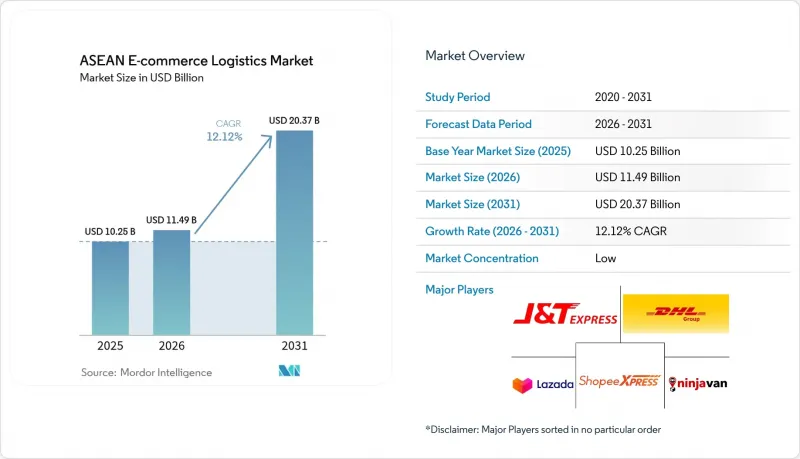
據 Mordor Intelligence 稱,2025 年東協電子商務物流市場價值 102.5 億美元,預計到 2031 年將從 2026 年的 114.9 億美元成長至 203.7 億美元,預測期(2026-2031 年)複合年成長率為 12.12%。
本報告按服務(運輸、倉儲及履約、其他)、經營模式(B2C、B2B、C2C)、目的地(國內、跨境)、配送速度(當日達、其他)、產品類型(食品飲料、其他)和地區(印尼、泰國、越南、菲律賓、馬來西亞、新加坡及其他東南亞國協)進行細分。市場預測以美元計價。
東協電子商務物流市場趨勢與洞察
東協地區的電子商務市場正在加速成長。
Shopee佔據社群電商28.4%的市場佔有率,加上TikTok Shop的病毒式銷售模式,流量正集中於整合的結帳和物流路線,小包裹流向支援分期付款和即時追蹤的平台。 IDC預測,到2028年,區域商品交易總額(GMV)將達到3,250億美元,其中數位支付將佔94%,從而消除現金處理帶來的延誤。 J&T Express和Shopee Indonesia等獨家協議的終止,迫使物流公司實現多元化經營,並投資開發能夠接受來自多個平台訂單的中立API。跨境電商市場的整合預計到2028年將達到146億美元,這將推動多幣種支付和統一清關流程的需求。在日益激烈的「贏家通吃」競爭環境中,能夠同時連接多個大型平台的物流供應商正獲得壓倒性的市場佔有率。
先買後付和數位錢包的快速發展正在提升支付轉換率。
數位錢包已佔物流行業發票的34%,透過減少支付摩擦提高了訂單頻率。先買後付(BNPL)正在擴大消費者信貸機會,一項針對10億用戶的交易級分析顯示,該服務正在提昇平均購買金額,並提高在銀行卡使用不普及的市場中商家的接受度。在印度尼西亞,雖然「先買後付」模式促進了時尚商品的衝動性購買,但貨到付款(COD)仍然受到風險規避型消費者的青睞,迫使承運商並行運營兩種支付流程:預付款和現金支付。預計到2025年,數位錢包的使用率將超過全球電子商務的50%,這將增加末端物流公司(需要近乎即時地向商家、承運商和平台處理付款)的營運資金管理複雜性。
東協單一窗口海關規則碎片化
僅有九個成員國交換東協海關申報單據,導致承運商承擔繁瑣的文書工作,難以兌現當日或隔天送達的承諾。越南2025年實施的交通法規預計將使物流成本增加10%,而準時送達率已降至90%以下。沒有專屬報關行的中小企業履約物流成本居高不下。
細分市場分析
到2025年,運輸將佔東協電子商務物流市場收入的62.55%,即使在印尼和菲律賓等島國的地理限制下,運輸仍是東協電子商務物流市場的基礎。道路運輸車輛利用爪哇島高速公路和泰國的全國高速公路網,減少了乾線公路的延誤;隨著中老鐵路的開通,昆明至萬象之間的前置作業時間顯著縮短,鐵路運輸的佔有率也在不斷擴大。空運仍然是高價值電子產品的主要運輸方式,海運則支撐著大量的跨境訂單。倉儲和履約雖然在東協電子商務物流市場中所佔佔有率較小,但得益於雅加達、曼谷和胡志明市的「暗店」網路,其成長速度很快,該網路已將交貨承諾時間縮短至兩小時。自動化揀貨使處理能力提高了50-60%,而人工智慧驅動的貨位分配則將當日送達的商品與滯銷商品進行合理搭配。隨著平台公司努力創造差異化的拆箱體驗,諸如套裝組裝和客製化標籤等附加價值服務正在產生小眾的利潤率。
該領域的前景有利於那些實現車隊數位化、整合小包裹級可視性並利用輕型商用車對沖燃油價格波動風險的承運商。投資於夾層機器人的履約業者正隨著小包裹密度的增加而逐步攤銷其資本投資。市場參與企業可能會採用輕資產模式,利用政府支持並將中間環節外包,同時保留內部面向客戶的技術,而不是從零開始建立網路深度。
預計到2025年,B2C市場將維持68.20%的市場佔有率,主要得益於Shopee、Lazada和Tokopedia等平台的規模優勢,以及其穩定的幹線和樞紐運輸能力。隨著支付數位化率達到94%,貨到付款(COD)模式消除了現金滯留,簡化了現金流。同時,受TikTok Shop等平台病毒式傳播效應的推動,C2C市場正以8.77%的複合年成長率成長,迫使物流公司學習如何處理上門取件和不同尺寸的小包裹。消費者對當日送達服務等級協定(SLA)的期望意味著,平台所要求的緊迫性正蔓延至非正規的賣家。
一種混合物流API,既能接受C2C貨運標籤,又能確保B2C幹線運輸的空間,進而提升運轉率效率。 B2B業務目前佔比最小,但隨著批發商實現補貨作業數位化並嘗試「先買後付」(BNPL)信貸模式,B2B業務正在日趨成熟,最終實現了向本地配送中心穩定輸送托盤貨物。
其他好處:
- Excel格式的市場預測(ME)表
- 3個月的分析師支持
目錄
第1章:引言
- 研究假設和市場定義
- 調查範圍
第2章:調查方法
第3章執行摘要
第4章 市場狀況
- 市場概覽
- 市場促進因素
- 東協地區的電子商務市場正在加速成長。
- 先買後付(BNPL)和數位錢包的快速發展正在提升支付轉換率。
- 政府資助的國家物流走廊(例如,印尼的TOL Laut)
- CLMV次區域內跨境社交電商交易增加
- 一個可按需配送的暗店網路,能夠在 2 小時內送達。
- 利用 Gen-AI 進行路線最佳化,可將單位成本降低 12% 以上。
- 市場限制因素
- 東協單一窗口內海關規則的差異
- 二、三線城市中短程和最後一公里路線長期人手不足。
- 由於高價值小包裹的保險覆蓋不足,風險溢價正在上升。
- 提高商用車輛都市區壅塞稅
- 價值供應鏈分析
- 監理情勢
- 技術展望
- 需求與供給分析
- 該行業的吸引力
- 波特五力模型
- 新進入者的威脅
- 買方的議價能力
- 供應商的議價能力
- 替代品的威脅
- 競爭公司之間的競爭
- 逆向/退貨物流洞察
- 地緣政治事件對供應鏈變化的影響
第5章 市場規模與成長預測
- 按服務
- 運輸
- 路
- 鐵路
- 航空
- 海
- 倉儲和履約
- 附加價值服務(貼標籤、包裝、套件組裝)
- 運輸
- 按經營模式
- B2C
- B2B
- C2C
- 按目的地
- 國內的
- 跨境(國際)
- 配送速度
- 當日送達(24小時內)
- 隔日送達(24-48小時)
- 標準(3-5天)
- 其他(5天或以上)
- 產品類型
- 食品/飲料
- 個人護理和居家護理
- 時尚與生活方式(配件、服裝、鞋類)
- 家具
- 家用電子設備/電器產品
- 其他產品
- 國家
- 印尼
- 泰國
- 越南
- 菲律賓
- 馬來西亞
- 新加坡
- 其他東南亞國協(柬埔寨、寮國、緬甸、汶萊)
第6章 競爭情勢
- 市場集中度
- 策略趨勢
- 市佔率分析
- 公司簡介
- JandT Express
- Ninja Van
- Deutsche Post DHL Group
- Shopee Xpress
- Lazada Logistics
- Kerry Express
- Flash Express
- Best Express
- FedEx Corporation
- UPS Inc.
- Pos Indonesia
- JNE Express
- TIKI
- Giao Hang Nhanh
- LBC Express
- GD Express
- aCommerce
- SF International
- CJ Logistics
- Yusen Logistics
第7章 市場機會與未來展望
According to Mordor Intelligence, the ASEAN e-commerce logistics market size was valued at USD 10.25 billion in 2025 and estimated to grow from USD 11.49 billion in 2026 to reach USD 20.37 billion by 2031, at a CAGR of 12.12% during the forecast period (2026-2031).
This report is Segmented by Service (Transportation, Warehousing & Fulfilment, and More), Business Model (B2C, B2B, C2C), Destination (Domestic, Cross-Border), Delivery Speed (Same-Day, and More), Product Category (Foods & Beverages, and More), and Geography (Indonesia, Thailand, Vietnam, Philippines, Malaysia, Singapore, Rest of ASEAN). The Market Forecasts are Provided in Terms of Value (USD).
ASEAN E-commerce Logistics Market Trends and Insights
Accelerated Growth of ASEAN-Based E-Commerce Marketplaces
Shopee's 28.4% social-commerce share and TikTok Shop's viral selling model concentrate traffic on integrated checkout-logistics rails, shifting parcel flows toward venues that can support split payments and real-time tracking. IDC forecasts regional GMV of USD 325 billion by 2028, with digital payments reaching 94%, eliminating cash-handling delays. The end of exclusive deals such as J&T Express-Shopee Indonesia forces carriers to diversify and invest in neutral APIs that accept orders from multiple storefronts. Cross-border marketplace integration worth USD 14.6 billion by 2028 drives demand for multi-currency settlement and harmonised customs workflows. Logistics providers able to plug simultaneously into several mega-platforms capture disproportionate volume as winner-take-all dynamics escalate.
Rapid Expansion of BNPL and Digital Wallets Boosting Checkout Conversion
Digital wallets already settle 34% of logistics-sector invoices and accelerate order frequency by cutting checkout friction. BNPL widens consumer credit access; transaction-level analysis across 1 billion users links the product to higher basket sizes and merchant acceptance in card-scarce markets. In Indonesia, pay-later schemes lift impulsive fashion purchases, whereas COD persists among risk-averse shoppers, obliging carriers to operate dual workstreams for prepaid and cash segments. Wallet usage is set to pass 50% of global e-commerce by 2025, intensifying working-capital complexity for last-mile firms that settle funds to merchants, couriers, and platforms in near real time.
Fragmented Customs Clearance Rules Across ASEAN Single Window
Only nine members exchange ASEAN Customs Declaration Documents, forcing carriers to juggle redundant paperwork that erodes same-day and next-day promises. Vietnam's 2025 traffic rules lifted logistics costs 10% and cut on-time rates below 90%. SMEs lacking dedicated brokers struggle most, curbing export participation. Divergent requirements from ISO 9001 mandates to country-specific licensing delay broader harmonisation and keep cross-border fulfillment expensive.
Other drivers and restraints analyzed in the detailed report include:
- Government-Funded National Logistics Corridors
- Rising Cross-Border Social-Commerce Flows Within CLMV
- Chronic Middle- and Last-Mile Labor Shortages in Tier-2/3 Cities
For complete list of drivers and restraints, kindly check the Table Of Contents.
Segment Analysis
Transportation accounts for 62.55% of 2025 revenue, anchoring the ASEAN e-commerce logistics market size amid the archipelago geography of Indonesia and the Philippines. Road fleets leverage trans-Java and pan-Thailand highways to trim line-haul latency, while rail gains share following the China-Laos link that slashes Kunming-Vientiane lead time. Air freight remains the go-to for high-value electronics, and sea lanes support bulk cross-border orders. The ASEAN e-commerce logistics market share of warehousing & fulfillment, though smaller, grows swiftly as dark-store grids inside Jakarta, Bangkok, and Ho Chi Minh City shorten promise windows to two hours. Automated picking lifts throughput 50-60%, and AI slotting blends same-day SKUs with slower movers. Value-added services kitting, custom labels present niche margins as platforms seek differentiated unboxing.
The segment outlook favors transport firms that digitalize fleets, integrate parcel-level visibility, and hedge fuel price swings via electric light-commercial vehicles. Fulfillment operators investing in mezzanine robotics amortize capex over accelerating parcel density. Market entrants may piggyback government corridors rather than replicate network depth, adopting asset-light models that subcontract middle mile while owning customer-facing tech.
B2C maintains 68.20% of 2025 value thanks to Shopee, Lazada, and Tokopedia scale, underpinning predictable line-haul and hub capacity. Checkout digitalization at 94% removes COD float, simplifying cash cycles. Yet C2C, buoyed by TikTok Shop's viral engines, logs an 8.77% CAGR, forcing carriers to master doorstep pickup and variable parcel sizing. Same-day SLA expectations transfer platform urgency onto lightly formalized sellers.
Hybrid logistics APIs that accept C2C waybills while reserving space on B2C trunk routes unlock utilisation gains. B2B, though the smallest slice, matures as wholesalers digitize replenishment and experiment with BNPL credit, creating steady pallet flows into provincial depots.
Complete Report Scope:
- By Service
- Transportation
- Road
- Rail
- Air
- Sea
- Warehousing and Fulfilment
- Value-Added Services (Labelling, Packaging, Kitting)
- Transportation
- By Business Model
- B2C
- B2B
- C2C
- By Destination
- Domestic
- Cross-border (international)
- By Delivery Speed
- Same-day (less than 24 h)
- Next-day (24-48 h)
- Standard (3-5 days)
- Others (more than 5 days)
- By Product Category
- Foods and Beverages
- Personal and Household Care
- Fashion and Lifestyle (accessories, apparel, footwear)
- Furniture
- Consumer Electronics and Household Appliances
- Other Products
- By Country
- Indonesia
- Thailand
- Vietnam
- Philippines
- Malaysia
- Singapore
- Rest of ASEAN (Cambodia, Laos, Myanmar, Brunei)
List of Companies Covered in this Report:
- JandT Express
- Ninja Van
- Deutsche Post DHL Group
- Shopee Xpress
- Lazada Logistics
- Kerry Express
- Flash Express
- Best Express
- FedEx Corporation
- UPS Inc.
- Pos Indonesia
- JNE Express
- TIKI
- Giao Hang Nhanh
- LBC Express
- GD Express
- aCommerce
- SF International
- CJ Logistics
- Yusen Logistics
Additional Benefits:
- The market estimate (ME) sheet in Excel format
- 3 months of analyst support
TABLE OF CONTENTS
1 Introduction
- 1.1 Study Assumptions and Market Definition
- 1.2 Scope of the Study
2 Research Methodology
3 Executive Summary
4 Market Landscape
- 4.1 Market Overview
- 4.2 Market Drivers
- 4.2.1 Accelerated growth of ASEAN-based e-commerce marketplaces
- 4.2.2 Rapid expansion of BNPL and digital wallets boosting checkout-conversion
- 4.2.3 Government-funded national logistics corridors (e.g., Indonesia TOL Laut)
- 4.2.4 Rising cross-border social-commerce flows within CLMV sub-region
- 4.2.5 On-demand dark-store networks enabling 2-hour delivery windows
- 4.2.6 Gen-AI-driven route-optimisation lowering per-parcel cost by >12 %
- 4.3 Market Restraints
- 4.3.1 Fragmented customs clearance rules across ASEAN single window
- 4.3.2 Chronic middle- and last-mile labour shortages in tier-2/3 cities
- 4.3.3 Under-insurance of high-value parcels increasing risk-premiums
- 4.3.4 Escalating urban congestion taxes on commercial vehicles
- 4.4 Value / Supply-Chain Analysis
- 4.5 Regulatory Landscape
- 4.6 Technological Outlook
- 4.7 Demand and Supply Analysis
- 4.8 Industry Attractiveness
- 4.8.1 Porter's Five Forces
- 4.8.2 Threat of New Entrants
- 4.8.3 Bargaining Power of Buyers
- 4.8.4 Bargaining Power of Suppliers
- 4.8.5 Threat of Substitutes
- 4.8.6 Competitive Rivalry
- 4.9 Reverse / Return Logistics Insights
- 4.10 Impact of Geo-Political Events on Supply Chain Shifts
5 Market Size and Growth Forecasts (Value)
- 5.1 By Service
- 5.1.1 Transportation
- 5.1.1.1 Road
- 5.1.1.2 Rail
- 5.1.1.3 Air
- 5.1.1.4 Sea
- 5.1.2 Warehousing and Fulfilment
- 5.1.3 Value-Added Services (Labelling, Packaging, Kitting)
- 5.1.1 Transportation
- 5.2 By Business Model
- 5.2.1 B2C
- 5.2.2 B2B
- 5.2.3 C2C
- 5.3 By Destination
- 5.3.1 Domestic
- 5.3.2 Cross-border (international)
- 5.4 By Delivery Speed
- 5.4.1 Same-day (less than 24 h)
- 5.4.2 Next-day (24-48 h)
- 5.4.3 Standard (3-5 days)
- 5.4.4 Others (more than 5 days)
- 5.5 By Product Category
- 5.5.1 Foods and Beverages
- 5.5.2 Personal and Household Care
- 5.5.3 Fashion and Lifestyle (accessories, apparel, footwear)
- 5.5.4 Furniture
- 5.5.5 Consumer Electronics and Household Appliances
- 5.5.6 Other Products
- 5.6 By Country
- 5.6.1 Indonesia
- 5.6.2 Thailand
- 5.6.3 Vietnam
- 5.6.4 Philippines
- 5.6.5 Malaysia
- 5.6.6 Singapore
- 5.6.7 Rest of ASEAN (Cambodia, Laos, Myanmar, Brunei)
6 Competitive Landscape
- 6.1 Market Concentration
- 6.2 Strategic Moves
- 6.3 Market Share Analysis
- 6.4 Company Profiles (includes Global level Overview, Market level overview, Core Segments, Financials as available, Strategic Information, Market Rank/Share for key companies, Products and Services, and Recent Developments)
- 6.4.1 JandT Express
- 6.4.2 Ninja Van
- 6.4.3 Deutsche Post DHL Group
- 6.4.4 Shopee Xpress
- 6.4.5 Lazada Logistics
- 6.4.6 Kerry Express
- 6.4.7 Flash Express
- 6.4.8 Best Express
- 6.4.9 FedEx Corporation
- 6.4.10 UPS Inc.
- 6.4.11 Pos Indonesia
- 6.4.12 JNE Express
- 6.4.13 TIKI
- 6.4.14 Giao Hang Nhanh
- 6.4.15 LBC Express
- 6.4.16 GD Express
- 6.4.17 aCommerce
- 6.4.18 SF International
- 6.4.19 CJ Logistics
- 6.4.20 Yusen Logistics
7 Market Opportunities and Future Outlook
- 7.1 White-space and Unmet-need Assessment

 英國電子商務物流:市場佔有率分析、產業趨勢與統計、成長預測(2026-2031)印度電子商務物流:市場佔有率分析、行業趨勢和統計數據以及成長預測(2026-2031 年)
 電子商務物流市場:全球市場預測(2026-2032)中國跨境電商物流:市佔率分析、產業趨勢與統計及成長預測(2026-2031年)中國電子商務物流:市場佔有率分析、產業趨勢與統計及成長預測(2026-2031年)印尼電子商務物流:市場佔有率分析、產業趨勢與統計及成長預測(2026-2031)印度跨境B2C電子商務物流:市場佔有率分析、產業趨勢與統計及成長預測(2026-2031年)美國跨境電子商務物流:市場佔有率分析、產業趨勢與統計及成長預測(2026-2031)越南跨境B2C電子商務物流:市場佔有率分析、產業趨勢與統計及成長預測(2026-2031年)印度跨境電子商務物流:市場佔有率分析、產業趨勢與統計及成長預測(2026-2031)