


 |
市場調查報告書
商品編碼
2119352
印度太陽能逆變器用電池:市場佔有率分析、行業趨勢和統計數據以及成長預測(2026-2031 年)India Solar Inverter Battery - Market Share Analysis, Industry Trends & Statistics, Growth Forecasts (2026 - 2031) |
||||||

※ 本網頁內容可能與最新版本有所差異。詳細情況請與我們聯繫。
據 Mordor Intelligence 稱,印度太陽能逆變器電池市場預計將從 2025 年的 1.3585 億美元成長到 2026 年的 1.5008 億美元,到 2031 年達到 2.1459 億美元,預計 2026 年至 2031 年的複合年成長率為 7.41%。
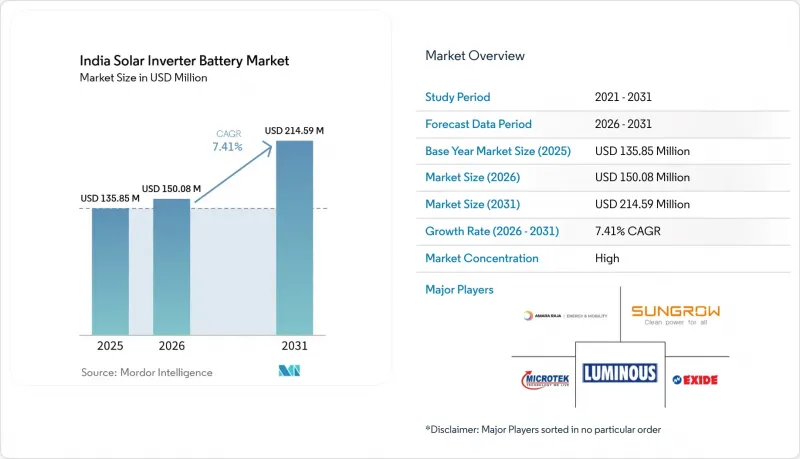
本報告按電池化學成分(鋰離子電池、鉛酸電池、鈉離子電池、液流電池及其他)、電池容量(小於5千瓦時、5-10千瓦時、10-20千瓦時、大於20千瓦時)、最終用戶(住宅、商業、工業、公用事業規模)和地區(印度)進行細分。市場預測以美元計價。
印度太陽能逆變器用電池市場趨勢及洞察。
加速屋頂太陽能發電和分散式發電的發展
在印度,屋頂太陽能發電裝置容量從2024年的3.2吉瓦增加到2025年的7.1吉瓦,其中住宅佔2025年新增裝置容量的76%。預計到2026年8月,總理太陽能計畫(PM Surya Ghar)的受益家庭將超過500萬戶,這將增加未來可能需要儲能系統的家庭數量。在目前的計劃下,電池採購和太陽能發電補貼是分開的,因此每個家庭仍然需要評估備用電源和自用帶來的附加價值。阿薩姆邦的屋頂太陽能發電裝置容量年增463%,達到344兆瓦,而北方邦的裝置容量則加倍多,達到714兆瓦。與西部主要市場相比,這些邦的電網狀況更為不穩定,因此電池備用電源的實際價值更高。 2025 年,印度「用戶端」固定式儲能需求為 32 GWh,預計到 2033 年將超過 39 GWh。
公用事業規模「太陽能+儲能」競標及配電公司支持
到了2025年,單體電池競標累計規模達90.7吉瓦,當年共進行69場競標,總容量達102吉瓦時。 2026年的專案儲備包括95吉瓦時處於部署階段,另有80吉瓦時處於競標階段,顯示電池供應商擁有更大的潛在市場。 2026年6月,古吉拉特邦電力公司(GUVNL)根據第九階段可行性缺口資金(VGF)計畫採購450兆瓦和900兆瓦時的儲能容量。拉賈斯坦邦的三家配電公司也於2026年8月就172兆瓦和688兆瓦時的分散式儲能項目進行了競標。能源儲存義務(ESO)要求配電公司在2030年將儲能容量提高到電力需求的4%,這推動了長期採購。儘管競標數量龐大,但對供應商的需求將取決於開發商能否獲得資金籌措並按計劃完成專案。
進口依賴和細胞供應鏈風險
印度的鋰離子電池生態系統嚴重依賴從中國進口電芯,因此極易受到供應和價格波動的影響。中國電池出口退稅政策的調整以及盧比貶值,導致印度買家收到的電芯價格預計將上漲11-12%。由於原料成本佔314Ah磷酸鋰鐵電池成本的近65%,價格反彈可能導致零件成本上漲15-20%。截至2025年12月,印度已透過合法管道處理了58.26噸廢棄物電池,但只有不到5%的廢鋰離子電池進入了正規的回收流程。 Amara Raja計畫於2027年開始大規模生產鋰離子電池,Walee ESS也計畫在2027年前提高產能。雖然這些項目可能會緩解供應壓力,但短期內進口電池仍將發揮重要作用。
細分市場分析
預計到2025年,鋰離子電池將佔據71.1%的市場佔有率,這主要得益於其較低的成本和成熟的安裝商群體。自2023年以來,鋰離子電池的價格已下降了30%至40%,使其成為新建混合動力系統中更實用的選擇。鉛酸電池由於初始成本較低且與現有逆變器系統相容,在二線城市和農村地區仍保持一定的市場需求。液流電池則主要用於規模有限的公用事業應用,其較高的初始投資成本因其較長的循環壽命和對安裝地點的嚴格要求而顯得物有所值。印度新能源和再生能源部(MNRE)根據IS 16221第二部分和IS 16169標準提高了併網系統的認證要求。
預計到2031年,鈉離子電池將以9.1%的複合年成長率成長,成為印度太陽能逆變器電池市場成長最快的電池技術。 Naqsion Energy於2025年12月在哥印拜陀推出了一款年產能為1.5吉瓦時的鈉離子儲能系統。該公司還宣布,將在2027年前投資20,0000萬印度盧比,用於500兆瓦時的電池製造先導計畫。由於碳酸鈉的成本遠低於碳酸鋰,鈉離子電池在大規模生產中可望比鋰離子電池經濟20-30%。由Amara Raja領導的Sodion Energy已承諾在特倫甘納邦建設1吉瓦時的鈉離子電池產能,這表明印度對鈉離子電池的興趣持續成長。
其他好處:
- Excel格式的市場預測(ME)表
- 3個月的分析師支持
目錄
第1章:引言
- 研究假設和市場定義
- 調查範圍
第2章:調查方法
第3章執行摘要
第4章 市場狀況
- 市場概覽
- 市場促進因素
- 加速屋頂太陽能發電和分散式發電的發展
- 競標公用事業規模的太陽能發電和儲能聯合計畫。
- 降低鋰離子和磷酸鋰鐵電池儲能成本
- PM Surya Ghar、PM-KUSUM 與可再生能源發電目標
- 配電公司(DISCOM)的儲能義務以及來自VGF的支持
- 針對印度電網脆弱環境,開發在地化的韌體和安裝程式。
- 市場限制因素
- 進口依賴和細胞供應鏈風險
- 儲能系統競標價格和銀行貸款合格風險的過度降低
- DISCOM 設備之間的互連和安裝人員審核工作流程碎片化。
- 流通中鋰電池處置階段可追溯性的限制。
- 供應鏈分析
- 波特五力分析
- 科技趨勢
- 監理情勢
- 投資分析
第5章 市場規模與成長預測
- 電池化學成分
- 鋰離子電池
- 鉛酸電池
- 鈉離子電池
- 液流電池
- 其他電池化學成分
- 按電池容量
- 小於 5 千瓦時
- 5~10 kWh
- 10~20 kWh
- 20度或以上
- 最終用戶
- 住宅
- 商業
- 產業
- 公用事業規模
第6章 競爭情勢
- 市場集中度
- 策略趨勢
- 市佔率分析
- 公司簡介
- Amara Raja Energy and Mobility Limited
- BYD Company Limited
- Contemporary Amperex Technology Co., Limited(CATL)
- Delta Electronics, Inc.
- Enphase Energy, Inc.
- Exide Energy Solutions Limited
- GoodWe Technologies Co., Ltd.
- Growatt New Energy Technology Co., Ltd.
- Huawei Digital Power Technologies Co., Ltd.
- Jakson Group
- Luminous Power Technologies Private Limited
- Microtek International Private Limited
- Naxion Energy India Pvt. Ltd.
- Sineng Electric Co., Ltd.
- SOFARSOLAR Co., Ltd.
- SolarEdge Technologies, Inc.
- Sungrow Power Supply Co., Ltd.
- Tesla, Inc.
- Waaree Energies Limited
第7章 市場機會與未來展望
According to Mordor Intelligence, the India solar inverter battery market size is expected to increase from USD 135.85 million in 2025 to USD 150.08 million in 2026 and reach USD 214.59 million by 2031, at a CAGR of 7.41% over 2026-2031.
This report is Segmented by Battery Chemistry (Lithium-Ion Batteries, Lead-Acid Batteries, Sodium-Ion Batteries, Flow Batteries, Others), Battery Capacity (Below 5 KWh, 5-10 KWh, 10-20 KWh, Above 20 KWh), End User (Residential, Commercial, Industrial, Utility-Scale), and Geography (India). The Market Forecasts are Provided in Terms of Value (USD).
India Solar Inverter Battery Market Trends and Insights
Accelerating Rooftop Solar and Distributed Generation
India added 7.1 GW of rooftop solar capacity in 2025, compared with 3.2 GW in 2024, and residential consumers contributed 76% of the 2025 additions. PM Surya Ghar crossed 50 lakh beneficiary households by August 2026, which expanded the number of homes with a potential future need for storage. The scheme's current design keeps battery procurement separate from the solar subsidy, so households must still assess the added value of backup power and self-consumption. Assam's rooftop solar capacity reached 344 MW after 463% year-over-year growth, while Uttar Pradesh more than doubled its capacity to 714 MW. These states have more variable grid conditions than the large western markets, which increases the practical value of battery backup. India's behind-the-meter stationary storage demand was 32 GWh in 2025 and is expected to exceed 39 GWh by 2033.
Utility-Scale Solar-Plus-Storage Tendering and DISCOM Support
Standalone battery tenders reached 90.7 GW cumulatively through 2025, and 69 tenders totaling 102 GWh were issued during that year. The 2026 pipeline includes 95 GWh in deployment stages and another 80 GWh in tendering, which points to a larger addressable base for battery suppliers. GUVNL sought 450 MW and 900 MWh in June 2026 under Phase IX viability gap funding. Rajasthan's three distribution companies also tendered 172 MW and 688 MWh of decentralized storage in August 2026. The Energy Storage Obligation requires distribution companies to increase storage to 4% of electricity demand by 2030, supporting longer-term procurement. Tender volumes are substantial, but supplier demand will depend on developers securing finance and completing projects on schedule.
Import Dependence and Cell Supply-Chain Exposure
India's lithium-ion ecosystem relies heavily on imported Chinese cells, creating exposure to supply and pricing movements. China's battery export rebate changes and rupee depreciation added an estimated 11-12% to landed cell prices for Indian buyers. Raw materials represented nearly 65% of the cost of a 314Ah LFP cell, so a rebound could add 15-20% to the bill of materials. Formal channels handled 58.26 lakh tonnes of battery waste by December 2025, while fewer than 5% of end-of-life lithium-ion batteries entered formal recycling. Amara Raja plans bulk lithium-ion cell production in 2027, and Waaree ESS plans capacity additions by FY2027. These projects may ease supply pressure, but imported cells will remain important during the near term.
Other drivers and restraints analyzed in the detailed report include:
- Falling Lithium-Ion and LFP Storage Costs
- PM Surya Ghar, PM-KUSUM and Renewable Capacity Targets
- Aggressive BESS Tender Pricing and Bankability Risk
For complete list of drivers and restraints, kindly check the Table Of Contents.
Segment Analysis
Lithium-ion held 71.1% share in 2025, supported by lower costs and an established installer base. Prices had fallen 30-40% since 2023, making lithium-ion more practical for new hybrid installations. Lead-acid batteries retained demand in tier-2 and rural locations because they have a lower initial cost and work with existing inverter systems. Flow batteries serve limited utility-scale applications where long cycle life and site requirements justify higher capital costs. MNRE requirements under IS 16221 Part II and IS 16169 have raised certification requirements for grid-connected systems.
Sodium-ion is forecast to expand at a 9.1% CAGR through 2031, making it the fastest-growing chemistry in the India solar inverter battery market. Naxion Energy launched sodium-ion energy storage systems from Coimbatore in December 2025 with 1.5 GWh of annual pack capacity. It also announced INR 200 crore for a 500 MWh cell manufacturing pilot by 2027. Sodium-ion cells could be 20-30% more economical than lithium-ion cells at scale because sodium carbonate costs much less than lithium carbonate. Amara Raja's Sodion Energy unit has committed to 1 GWh of sodium-ion capacity in Telangana, indicating continued domestic interest.
Complete Report Scope:
- By Battery Chemistry
- Lithium-ion Batteries
- Lead-acid Batteries
- Sodium-ion Batteries
- Flow Batteries
- Other Battery Chemistries
- By Battery Capacity
- Below 5 kWh
- 5-10 kWh
- 10-20 kWh
- Above 20 kWh
- By End User
- Residential
- Commercial
- Industrial
- Utility-scale
List of Companies Covered in this Report:
- Amara Raja Energy and Mobility Limited
- BYD Company Limited
- Contemporary Amperex Technology Co., Limited (CATL)
- Delta Electronics, Inc.
- Enphase Energy, Inc.
- Exide Energy Solutions Limited
- GoodWe Technologies Co., Ltd.
- Growatt New Energy Technology Co., Ltd.
- Huawei Digital Power Technologies Co., Ltd.
- Jakson Group
- Luminous Power Technologies Private Limited
- Microtek International Private Limited
- Naxion Energy India Pvt. Ltd.
- Sineng Electric Co., Ltd.
- SOFARSOLAR Co., Ltd.
- SolarEdge Technologies, Inc.
- Sungrow Power Supply Co., Ltd.
- Tesla, Inc.
- Waaree Energies Limited
Additional Benefits:
- The market estimate (ME) sheet in Excel format
- 3 months of analyst support
TABLE OF CONTENTS
1 INTRODUCTION
- 1.1 Study Assumptions and Market Definition
- 1.2 Scope of the Study
2 RESEARCH METHODOLOGY
3 EXECUTIVE SUMMARY
4 MARKET LANDSCAPE
- 4.1 Market Overview
- 4.2 Market Drivers
- 4.2.1 Accelerating Rooftop Solar and Distributed Generation
- 4.2.2 Utility-Scale Solar-Plus-Storage Tendering
- 4.2.3 Falling Lithium-Ion and LFP Storage Costs
- 4.2.4 PM Surya Ghar, PM-KUSUM and Renewable Capacity Targets
- 4.2.5 DISCOM Energy Storage Obligations and VGF Support
- 4.2.6 India-Specific Firmware and Installer Localization for Weak-Grid Operation
- 4.3 Market Restraints
- 4.3.1 Import Dependence and Cell Supply-Chain Exposure
- 4.3.2 Aggressive BESS Tender Pricing and Bankability Risk
- 4.3.3 Fragmented DISCOM Interconnection and Installer Approval Workflows
- 4.3.4 Limited End-of-Life Traceability for Distributed Lithium Batteries
- 4.4 Supply-Chain Analysis
- 4.5 Porter's Five Forces Analysis
- 4.5.1 Bargaining Power of Suppliers
- 4.5.2 Bargaining Power of Buyers
- 4.5.3 Threat of New Entrants
- 4.5.4 Threat of Substitutes
- 4.5.5 Competitive Rivalry
- 4.6 Technology Outlook
- 4.7 Regulatory Landscape
- 4.8 Investment Analysis
5 MARKET SIZE AND GROWTH FORECASTS
- 5.1 By Battery Chemistry
- 5.1.1 Lithium-ion Batteries
- 5.1.2 Lead-acid Batteries
- 5.1.3 Sodium-ion Batteries
- 5.1.4 Flow Batteries
- 5.1.5 Other Battery Chemistries
- 5.2 By Battery Capacity
- 5.2.1 Below 5 kWh
- 5.2.2 5-10 kWh
- 5.2.3 10-20 kWh
- 5.2.4 Above 20 kWh
- 5.3 By End User
- 5.3.1 Residential
- 5.3.2 Commercial
- 5.3.3 Industrial
- 5.3.4 Utility-scale
6 COMPETITIVE LANDSCAPE
- 6.1 Market Concentration
- 6.2 Strategic Moves
- 6.3 Market Share Analysis
- 6.4 Company Profiles (includes Global Level Overview, Market Level Overview, Core Segments, Financials as available, Strategic Information, Market Rank/Share, Products and Services, Recent Developments)
- 6.4.1 Amara Raja Energy and Mobility Limited
- 6.4.2 BYD Company Limited
- 6.4.3 Contemporary Amperex Technology Co., Limited (CATL)
- 6.4.4 Delta Electronics, Inc.
- 6.4.5 Enphase Energy, Inc.
- 6.4.6 Exide Energy Solutions Limited
- 6.4.7 GoodWe Technologies Co., Ltd.
- 6.4.8 Growatt New Energy Technology Co., Ltd.
- 6.4.9 Huawei Digital Power Technologies Co., Ltd.
- 6.4.10 Jakson Group
- 6.4.11 Luminous Power Technologies Private Limited
- 6.4.12 Microtek International Private Limited
- 6.4.13 Naxion Energy India Pvt. Ltd.
- 6.4.14 Sineng Electric Co., Ltd.
- 6.4.15 SOFARSOLAR Co., Ltd.
- 6.4.16 SolarEdge Technologies, Inc.
- 6.4.17 Sungrow Power Supply Co., Ltd.
- 6.4.18 Tesla, Inc.
- 6.4.19 Waaree Energies Limited
7 MARKET OPPORTUNITIES AND FUTURE OUTLOOK
- 7.1 White-Space and Unmet-Need Assessment

 2026-2034年全球太陽能發電微型逆變器市場規模、佔有率、趨勢和成長分析報告
 太陽能逆變器用電池:市場佔有率分析、行業趨勢和統計數據以及成長預測(2026-2031 年)中東和非洲太陽能光電逆變器:市場佔有率分析、行業趨勢和統計數據以及成長預測(2026-2031 年)印度太陽能逆變器:市場佔有率分析、產業趨勢與統計及成長預測(2026-2031)歐洲太陽能逆變器:市場佔有率分析、產業趨勢與統計及成長預測(2026-2031 年)
 太陽能逆變器市場規模及預測(2021-2034),全球及區域佔有率、趨勢和成長機會分析報告:按產品類型、相數、連接方式、最終用戶、容量和地區分類太陽能逆變器市場規模、佔有率、成長、全球產業分析、區域趨勢及2026年至2034年預測。
 智慧逆變器市場預測至2034年-按逆變器類型、相數、電壓等級、通訊技術、最終用戶和地區分類的全球分析
 太陽能逆變器市場-2026-2032年全球市場預測太陽能逆變器:市場佔有率分析、產業趨勢與統計及成長預測(2026-2031)