


 |
市場調查報告書
商品編碼
2116393
印度膠原蛋白:市場佔有率分析、產業趨勢與統計及成長預測(2026-2031)India Collagen - Market Share Analysis, Industry Trends & Statistics, Growth Forecasts (2026 - 2031) |
||||||

※ 本網頁內容可能與最新版本有所差異。詳細情況請與我們聯繫。
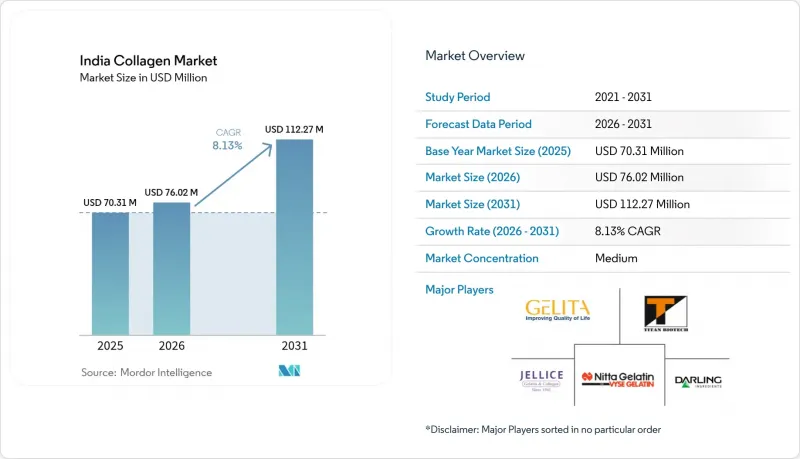
根據 Mordor Intelligence 預測,印度膠原蛋白市場規模將從 2025 年的 7,031 萬美元成長到 2026 年的 7,602 萬美元,到 2031 年將達到 1.1227 億美元,2026 年至 2031 年的複合年成長率為 8.13%。
本報告按原料(動物源性、海洋源性、植物來源)、產品類型(明膠、水解膠原膠原蛋白、天然/未變性膠原蛋白)、形態(粉末、液體)和應用領域(食品飲料、化妝品及個人護理、膳食補充劑及其他)進行分類。市場預測以價值(美元)和數量(噸)表示。
印度膠原蛋白市場的趨勢與洞察
人口老化與美感意識
印度龐大的勞動年齡人口和加速的老化趨勢,為膠原蛋白產品帶來了巨大的市場機會。儘管印度擁有全球規模最大的年輕人口,但其老年人口也顯著成長。根據聯合國人口基金(UNFPA)的數據,預計到2050年,60歲及以上人口將從2023年的1.53億增加到3.47億。這種人口結構的變化,源自於人們對老化和美容意識的提高,從而催生了從治療應用到生活方式改善等各個領域的廣泛需求。臨床數據顯示,膠原蛋白在12個月內對關節健康、皮膚彈性和骨骼密度均有顯著改善,有助於消除消費者的疑慮,並提高市場接受度。年輕一代擴大將膠原蛋白用於預防疾病,而老年消費者則更關注其治療用途。預計在2040年左右達到人口高峰的喀拉拉邦和泰米爾納德邦等地區,預計將成為抗衰老產品的早期使用者。目前,安全標準由印度食品標準局 (FSSAI) 監管,但引入中央藥品標準和控制組織 (CDSCO) 的監管可能會加強品質要求,並導致市場整合。
運動營養
由於政府加大投入,印度的運動營養市場正經歷顯著成長。印度青年和體育部已累計379.05億盧比,用於在2021-22會計年度至2025-26會計年度期間擴大計畫覆蓋範圍並改善體育基礎設施。這項強化支持正在促進運動的參與,從而帶動專業運動員和健身愛好者對包括膠原蛋白補充劑在內的先進營養解決方案的需求成長。膠原蛋白標籤法律規範的加強,以及膠原蛋白肽被公認為安全(GRAS)並已被證實對糖尿病管理和關節健康有效,進一步鞏固了其市場地位。在大都會圈,由於健身房會員人數的增加和健身意識的提高,運動營養產品的使用率也不斷提高。市場應用範圍已超越傳統的關節健康領域,出現了諸如Lucero的Nectida GC等專業配方,該產品已被證實可將餐後血糖值峰值降低42%。印度食品安全標準局 (FSSAI) 對蛋白質補充劑實施的嚴格監管,為符合這些規定的膠原蛋白生產商帶來了機會。此外,年輕一代越來越傾向於選擇經過科學驗證、潔淨標示」的營養產品,這進一步鞏固了膠原蛋白相對於合成替代品的市場地位。
原物料供應限制
印度的膠原蛋白供應鏈面臨結構性限制,因為其明膠生產依賴進口原料。海洋膠原蛋白的供應受季節性捕撈模式和加工基礎設施不足的限制。海產品加工設施集中在沿海各邦,這帶來了物流方面的挑戰,而宗教和文化因素則限制了牛和豬來源原料的供應。 GELITA 開發了諸如「RXL 明膠」等專業技術,以應對亞太地區的加工阻礙,這表明該行業已意識到基礎設施的局限性。海洋膠原蛋白的價格會因氣候變遷導致的漁獲量波動而波動。生產基地和加工設施之間缺乏一體化的低溫運輸基礎設施,導致原料劣化和營運成本增加。由於高度依賴進口特種膠原蛋白,製造商,特別是那些沒有長期供應合約的中小型企業,面臨供應穩定性風險和外匯風險。
細分市場分析
憑藉成熟的供應鏈和成本優勢,預計到2025年,動物源膠原膠原蛋白將佔54.48%的市佔率。同時,海洋源膠原膠原蛋白正經歷快速成長,預計到2031年將以9.05%的複合年成長率成長,這主要得益於人們對永續性的關注以及其不受宗教飲食限制的廣泛接受度。動物源膠原膠原蛋白因其豐富的原料和現有的加工基礎設施而主導著動物源膠原蛋白市場。然而,其在印度教人口相對集中的地區的市場佔有率有限。豬源膠原膠原蛋白由於伊斯蘭教飲食限制而面臨市場限制,給生產商帶來了分銷方面的挑戰。海洋源膠原膠原蛋白雖然價格較高,但由於其宗教認可度和環境效益,吸引了具有環保意識的消費者。利用魚貝類加工廢棄物為海洋源膠原蛋白的生產提供了經濟高效的原料來源。
生物技術的進步使得開發植物來源膠原蛋白替代品成為可能。其中包括實驗室生產的純素膠原膠原蛋白,它是透過將人類膠原蛋白基因導入微生物而製成的。雖然這些替代品無需進行檢測,但其生產成本高於傳統膠原蛋白來源。儘管海洋膠原蛋白價格高昂,但人們對永續性的需求,以及對宗教飲食限制的考量,仍在推動其持續成長。
儘管水解膠原膠原蛋白預計到2031年將以8.64%的複合年成長率保持最高成長率,但明膠預計在2025年仍將保持其48.05%的市場佔有率。明膠的市場主導地位歸功於其在食品和製藥領域的廣泛應用、成本效益以及在不同終端用途中的多功能性。天然/未變性膠原蛋白在某些治療領域發揮至關重要的作用,尤其是在維持關節健康方面,並且由於II型膠原蛋白的特殊結構特性,其價格也更高。
由於水解膠原蛋白肽具有卓越的吸收率,並有臨床證據支持,因此在營養補充品和化妝品領域中得到越來越廣泛的應用。製造商正利用先進的加工技術,根據不同的應用需求生產特定分子量的水解膠原膠原蛋白。例如,Russello 公司的「Nextida GC」平台展示了水解膠原膠原蛋白不斷擴展的應用範圍,其可降低餐後血糖值42%,並且正在超越傳統的關節健康市場。
其他好處:
- Excel格式的市場預測(ME)表
- 3個月的分析師支持
目錄
第1章:引言
- 研究假設和市場定義
- 調查範圍
第2章:調查方法
第3章執行摘要
第4章 市場狀況
- 市場概覽
- 市場促進因素
- 人口老化與美感意識
- 運動營養
- 擴大機能性食品和飲料的種類
- 寵物健康與動物營養
- 增加素食和當地特色菜等選擇
- 對產品標籤透明度和潔淨標示的需求
- 市場限制因素
- 原物料供應限制
- 宗教和倫理方面的飲食限制
- 與穩定性和保存期限相關的挑戰
- 缺乏證據以及消費者對療效的懷疑
- 供應鏈分析
- 監管和技術展望
- 波特五力分析
第5章 市場規模與成長預測
- 來源
- 動物源性
- 海洋來源
- 植物來源
- 依產品類型
- 明膠
- 水解膠原膠原蛋白
- 天然/非變性膠原蛋白
- 按形式
- 粉末
- 液體
- 透過使用
- 食品/飲料
- 化妝品和個人護理
- 營養補充品
- 其他
第6章 競爭情勢
- 市場集中度
- 策略趨勢
- 市場排名分析
- 公司簡介
- Nitta Gelatin India Ltd
- Gelita AG
- Rousselot(Darling Ingredients)
- Jellice Group
- Wellbeing Nutrition
- HealthKart(HK Vitals)
- Carbamide Forte
- Titan Biotech
- Shiseido
- Dabur India
- Abbott India
- Herbalife Nutrition
- Cargill
- Darling Ingredients India
- Lumenis
- Cutera
- EndyMed Medical
- Integra LifeSciences
- Coloplast
- Smith & Nephew
- Johnson & Johnson
第7章 市場機會與未來展望
According to Mordor Intelligence, the India collagen market size is expected to grow from USD 70.31 million in 2025 to USD 76.02 million in 2026 and is forecast to reach USD 112.27 million by 2031 at 8.13% CAGR over 2026-2031.
This report is Segmented by Source (Animal-Based, Marine-Based, Plant-Based), by Product Type (Gelatin, Hydrolyzed Collagen, and Native/Undenatured Collagen), by Form (Powder, Liquid), and by Application (Food and Beverages, Cosmetics and Personal Care, Dietary Supplements, Others). The Market Forecasts are Provided in Terms of Value (USD) and Volume (Tons).
India Collagen Market Trends and Insights
Aging Population and Beauty Consciousness
India's demographic transition presents distinct market opportunities for collagen products due to its large working-age population and accelerating aging trends. The country has the world's largest youth population, while its elderly segment is growing significantly. According to the United Nations Population Fund, the population aged 60 and above is expected to increase from 153 million in 2023 to 347 million by 2050. This demographic shift generates demand across therapeutic and lifestyle enhancement applications, driven by increased aging awareness and beauty consciousness. Clinical evidence demonstrating collagen's benefits for joint health, skin elasticity, and bone mineral density over 12-month periods has helped address consumer skepticism and increase market acceptance. The younger population segment increasingly uses collagen for preventive purposes, while older consumers focus on its therapeutic applications. States such as Kerala and Tamil Nadu, which are projected to reach peak population around 2040, are positioned to be early adopters of age-management products. While FSSAI regulations currently govern safety standards, potential oversight from the Central Drugs Standard Control Organization (CDSCO) may enhance quality requirements and lead to market consolidation.
Sports and Performance Nutrition
Sports and performance nutrition in India is experiencing significant growth due to increased government investment. The Ministry of Youth Affairs and Sports has allocated ₹3,790.50 crore for 2021-22 to 2025-26, expanding program coverage and improving sports infrastructure. This enhanced support is promoting athletic participation, which increases the demand for advanced nutrition solutions, including collagen supplements, among professional athletes and fitness enthusiasts. The regulatory oversight of protein claims has enhanced the market position of collagen peptides, supported by their Generally Recognized as Safe (GRAS) status and proven benefits in diabetes management and joint health. The adoption of performance nutrition products is growing in metropolitan areas, driven by increased gym memberships and fitness awareness. Specialized formulations, such as Rousselot's Nextida GC, which demonstrates a 42% reduction in post-meal glucose spikes, expand the market beyond traditional joint health applications. The Food Safety and Standards Authority of India's (FSSAI) strict protein supplement regulations present opportunities for compliant collagen manufacturers. Additionally, the younger demographic's preference for clean-label, scientifically validated nutrition products strengthens collagen's market position compared to synthetic alternatives.
Raw-Material Supply Limitations
India's collagen supply chain faces structural constraints due to its dependence on imported raw materials for gelatin production. Marine collagen availability is restricted by seasonal fishing patterns and inadequate processing infrastructure. The concentration of seafood processing facilities in coastal states creates logistical challenges, while religious and cultural factors limit the availability of bovine and porcine raw materials. GELITA developed specialized technologies, such as RXL gelatin, to address processing constraints in the Asia-Pacific region, demonstrating industry recognition of infrastructure limitations. Marine-derived collagen prices fluctuate due to climate-related variations in fish catch volumes. The absence of an integrated cold-chain infrastructure between source locations and processing facilities increases raw material deterioration and operational costs. Manufacturers, especially smaller ones without long-term supply agreements, face supply security risks and currency exposure due to their reliance on imported specialized collagen.
Other drivers and restraints analyzed in the detailed report include:
- Expansion of Functional Food and Beverage Offerings
- Pet Health and Animal Nutrition
- Religious and Ethical Dietary Restrictions
For complete list of drivers and restraints, kindly check the Table Of Contents.
Segment Analysis
Animal-based collagen holds a dominant market share of 54.48% in 2025, supported by well-established supply chains and cost advantages. Marine-based collagen is experiencing rapid growth with a 9.05% CAGR through 2031, driven by sustainability considerations and broader religious dietary acceptance. Bovine collagen leads the animal segment due to abundant raw materials and existing processing infrastructure. However, its market reach is limited in regions with significant Hindu populations. Porcine collagen faces market limitations due to Islamic dietary restrictions, creating distribution challenges for manufacturers. Marine collagen, despite higher prices, offers religious acceptability and environmental benefits that attract environmentally conscious consumers. The utilization of fish processing waste provides a cost-effective source for marine collagen production.
Biotechnology advancements have enabled the development of plant-based collagen alternatives. These include laboratory-produced vegan collagen, created by introducing human collagen genes into microorganisms. While these alternatives provide cruelty-free options, their production costs exceed traditional collagen sources. The combination of increasing sustainability demands and religious dietary considerations supports the continued growth of marine collagen, despite its premium pricing.
Hydrolyzed collagen shows the highest growth rate at 8.64% CAGR through 2031, while gelatin maintains market dominance with a 48.05% share in 2025. Gelatin's market leadership position results from its widespread use in food and pharmaceutical applications, cost-effectiveness, and functional versatility across multiple end-uses. Native/undenatured collagen serves specific therapeutic segments, particularly in joint health applications where type II collagen's structural properties are essential and command premium prices.
Hydrolyzed collagen peptides are gaining increasing adoption in dietary supplements and cosmetics due to superior absorption rates, supported by clinical evidence. Manufacturers leverage advanced processing technologies to produce hydrolyzed collagen with specific molecular weights for different applications. For example, Rousselot's Nextida GC platform demonstrates the expanding applications of hydrolyzed collagen, achieving a 42% reduction in post-meal glucose levels and extending beyond traditional joint health markets.
Complete Report Scope:
- By Source
- Animal-Based
- Marine-Based
- Plant-Based
- By Product Type
- Gelatin
- Hydrolyzed Collagen
- Native/Undenatured Collagen
- By Form
- Powder
- Liquid
- By Application
- Food and Beverages
- Cosmetics and Personal Care
- Dietary Supplements
- Others
List of Companies Covered in this Report:
- Nitta Gelatin India Ltd
- Gelita AG
- Rousselot (Darling Ingredients)
- Jellice Group
- Wellbeing Nutrition
- HealthKart (HK Vitals)
- Carbamide Forte
- Titan Biotech
- Shiseido
- Dabur India
- Abbott India
- Herbalife Nutrition
- Cargill
- Darling Ingredients India
- Lumenis
- Cutera
- EndyMed Medical
- Integra LifeSciences
- Coloplast
- Smith & Nephew
- Johnson & Johnson
Additional Benefits:
- The market estimate (ME) sheet in Excel format
- 3 months of analyst support
TABLE OF CONTENTS
1 INTRODUCTION
- 1.1 Study Assumptions and Market Definition
- 1.2 Scope of the Study
2 RESEARCH METHODOLOGY
3 EXECUTIVE SUMMARY
4 MARKET LANDSCAPE
- 4.1 Market Overview
- 4.2 Market Drivers
- 4.2.1 Aging population and beauty consciousness
- 4.2.2 Sports and performance nutrition
- 4.2.3 Expansion of functional food and beverage offerings
- 4.2.4 Pet health and animal nutrition
- 4.2.5 Increasing vegan and specialty source options
- 4.2.6 Product label transparency and clean-label demand
- 4.3 Market Restraints
- 4.3.1 Raw-material supply limitations
- 4.3.2 Religious and ethical dietary restrictions
- 4.3.3 Stability and shelf-life issues
- 4.3.4 Evidence gap and consumer skepticism on efficacy
- 4.4 Supply-Chain Analysis
- 4.5 Regulatory and Technological Outlook
- 4.6 Porter's Five Forces Analysis
- 4.6.1 Threat of New Entrants
- 4.6.2 Bargaining Power of Buyers
- 4.6.3 Bargaining Power of Suppliers
- 4.6.4 Threat of Substitutes
- 4.6.5 Intensity of Competitive Rivalry
5 MARKET SIZE AND GROWTH FORECASTS (VALUE AND VOLUME)
- 5.1 By Source
- 5.1.1 Animal-Based
- 5.1.2 Marine-Based
- 5.1.3 Plant-Based
- 5.2 By Product Type
- 5.2.1 Gelatin
- 5.2.2 Hydrolyzed Collagen
- 5.2.3 Native/Undenatured Collagen
- 5.3 By Form
- 5.3.1 Powder
- 5.3.2 Liquid
- 5.4 By Application
- 5.4.1 Food and Beverages
- 5.4.2 Cosmetics and Personal Care
- 5.4.3 Dietary Supplements
- 5.4.4 Others
6 COMPETITIVE LANDSCAPE
- 6.1 Market Concentration
- 6.2 Strategic Moves
- 6.3 Market Ranking Analysis
- 6.4 Company Profiles {(includes Global level Overview, Market level overview, Core Segments, Financials as available, Strategic Information, Market Rank/Share for key companies, Products and Services, and Recent Developments)}
- 6.4.1 Nitta Gelatin India Ltd
- 6.4.2 Gelita AG
- 6.4.3 Rousselot (Darling Ingredients)
- 6.4.4 Jellice Group
- 6.4.5 Wellbeing Nutrition
- 6.4.6 HealthKart (HK Vitals)
- 6.4.7 Carbamide Forte
- 6.4.8 Titan Biotech
- 6.4.9 Shiseido
- 6.4.10 Dabur India
- 6.4.11 Abbott India
- 6.4.12 Herbalife Nutrition
- 6.4.13 Cargill
- 6.4.14 Darling Ingredients India
- 6.4.15 Lumenis
- 6.4.16 Cutera
- 6.4.17 EndyMed Medical
- 6.4.18 Integra LifeSciences
- 6.4.19 Coloplast
- 6.4.20 Smith & Nephew
- 6.4.21 Johnson & Johnson
7 MARKET OPPORTUNITIES AND FUTURE OUTLOOK

 全球膠原蛋白市場,2026-2030年
 2026年重組人源化膠原膠原蛋白全球市場報告
 英國膠原蛋白:市佔率分析、產業趨勢與統計及成長預測(2026-2031)南美洲膠原蛋白:市場佔有率分析、產業趨勢與統計及成長預測(2026-2031 年)亞太地區膠原蛋白:市佔率分析、產業趨勢與統計及成長預測(2026-2031)歐洲膠原蛋白:市場佔有率分析、產業趨勢與統計及成長預測(2026-2031)
 無端肽膠原蛋白市場規模、佔有率和成長分析:按原料、純化形式、應用、最終用戶和地區分類-2026-2033年產業預測
 膠原蛋白市場:2026-2032年全球市場預測(依膠原蛋白類型、原料、形態、萃取製程、等級、應用及銷售管道)
 膠原蛋白市場-全球產業規模、佔有率、趨勢、機會與預測:按產品、原料、應用、地區和競爭格局分類,2021-2031年
 植物來源膠原蛋白市場:依原料、產品類型、應用、功能、通路和地區分類。