


 |
市場調查報告書
商品編碼
2114514
牛飼料:市場佔有率分析、產業趨勢與統計、成長預測(2026-2031)Cattle Feed - Market Share Analysis, Industry Trends & Statistics, Growth Forecasts (2026 - 2031) |
||||||

※ 本網頁內容可能與最新版本有所差異。詳細情況請與我們聯繫。
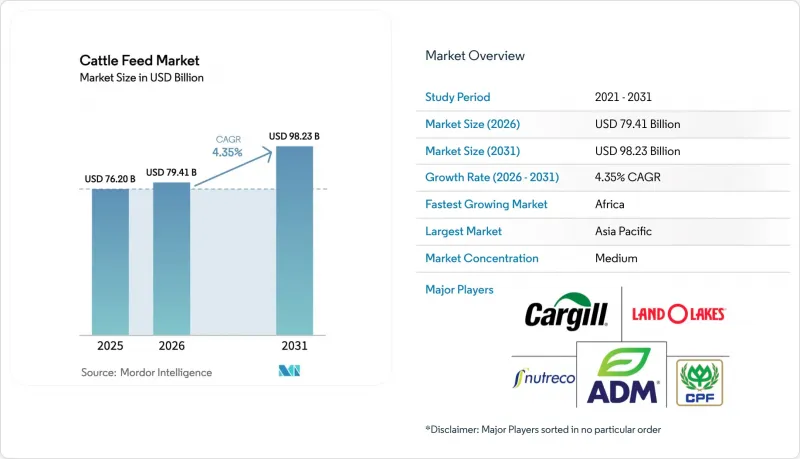
據 Mordor Intelligence 稱,2025 年牛飼料市場規模估計為 762 億美元,預計到 2026 年將擴大到 794.1 億美元,到 2031 年將進一步成長到 982.3 億美元,在預測期(2026-2031 年)內複合成長率為 4.35%。
本報告按牲畜類型(牛和牛)、原料(穀物、餅料和混合料、食物廢棄物、飼料添加劑和其他原料)、形態(顆粒、粉狀、碎粒和液體)以及地區(北美、南美、歐洲、亞太地區以及中東和非洲)進行細分。市場預測以價值(美元)和數量(公噸)表示。
全球牛飼料市場趨勢與洞察
政府對飼料強化計畫的獎勵
肯亞、衣索比亞和印度政府已訂定法規,強制規定牛飼料中微量元素和維生素的最低含量。這些政策顯著降低了農民的成本,並加速了傳統農場飼料混合方式的轉變。肯亞於2024年實施的一項補貼計劃,對強化飼料的成本提供30%的補貼,僅九個月就使複合飼料的需求量增加了12萬噸。印度已撥款50億印度盧比(約6020萬美元)用於發展營養強化基礎設施,旁遮普邦和哈里亞納邦的早期實施工作正在穩步推進。根據聯合國糧食及農業組織(糧農組織)估計,到2028年,複合飼料在撒哈拉以南非洲的普及率可能達到34%,這將為預混合料供應商創造龐大的商機。
對高蛋白乳製品和肉品的需求不斷成長
中國和沙烏地阿拉伯等國收入的成長推動了牛奶和牛肉消費量的成長。這一趨勢促使農場採用高蛋白飼料配方以達到生產目標。預計2024年,中國人均牛奶消費量將達到42公斤,粗蛋白含量超過18%的飼料使用也十分普遍。沙烏地阿拉伯進口了120萬噸複合飼料,以支持其實現肉類自給自足的目標。這種需求也促進了含有瘤胃保護脂肪的液體補充劑的成長,該細分市場目前規模達21億美元。
糧食價格波動會影響投入成本
穀物價格波動持續給飼料生產商帶來挑戰。玉米和大豆粕佔飼料成本的75%之多,使得飼料廠極易受到市場波動的影響。 2024年,芝加哥玉米價格在每蒲式耳4.20美元至5.80美元之間波動,導致部分季度的利潤率低於3%。阿根廷的乾旱使大豆出口減少了22%,迫使買家為從巴西進口的大豆支付每噸40美元的溢價。在這樣的時期,沒有避險手段的小規模飼料廠將面臨嚴重的融資壓力。
細分市場分析
乳牛牛仍是牛飼料市場的主要驅動力,預計到2025年將佔53.2%的最大佔有率。高蛋白飼料仍然至關重要,但植物來源替代品的興起正在擠壓加工商的利潤空間。大規模畜牧場正在添加過瘤胃蛋白和保護性脂肪以維持產量,而「從農場到餐桌」舉措下的監管獎勵正在推動低排放飼料技術的應用。儘管取得了這些進展,但成本和偏好的挑戰仍然限制了這些技術的廣泛應用。加工商的垂直整合也在重塑供應鏈,減少了獨立飼料生產商的交易量,同時加強了他們對飼料配方的控制。
預計到2031年,肉牛牛的成長速度將超過牛,年複合成長率將達到5.2%。這反映出,在巴西和阿根廷等土地價格快速上漲的地區,育肥場的成本競爭力比擴大新的牧場更高。出口商越來越注重遵守大理石紋標準,以滿足獎勵的溢價配額,這進一步增強了牛育肥業的前景。甲烷減排添加劑雖然目前應用仍然有限,但隨著碳市場的成熟和激勵機制與永續性目標的契合,它們有望成為主流。
區域分析
受中國工業化酪農和印度龐大牛的推動,亞太地區預計到2025年將佔據全球36.6%的最大佔有率。目前,中國擁有1,000頭以上牛隻的大型農場佔全國牛奶產量的大部分,且複合飼料的推廣應用正在加速。印度的合作社正在投資推廣服務和強化飼料,這顯示其生產力仍有很大的提升空間。收入的成長和飲食結構向高蛋白攝取的轉變也支撐了該地區的需求,可以肯定的是,未來幾年亞太地區仍將是全球牛飼料需求的重要支柱。
預計非洲將以最快的速度成長,到2031年將維持5.5%的複合年成長率。補貼貸款項目和強制性強化飼料正在推動酪農合作社採用複合飼料。聯合國糧食及農業組織(糧農組織)估計,到2028年,複合飼料的使用量可能會顯著增加,這將為預混合料供應商創造巨大的商機。在奈及利亞,牛的擴大和捐助者支持的飼料廠建設正在重塑供應鏈,而南非的先進育肥場則面臨基礎設施的挑戰。非洲的成長軌跡既反映了結構性需求,也反映了政策主導的畜牧系統現代化進程。
在北美,由於乾旱導致的淘汰,乳牛數量正在下降;而在歐洲,則面臨彈性素食飲食和人口限制等挑戰。在南美,巴西育肥業的擴張與阿根廷因稅收壓力而放緩形成了鮮明對比。中東地區仍然高度依賴進口,並且各國都受到水資源短缺的限制。這些地區的趨勢各不相同,有些地區經歷了加速成長,而有些地區則面臨結構性阻力。總而言之,這些都凸顯了全球牛飼料普及速度的差異,其中亞太地區和非洲已成為明顯的成長驅動力。
其他好處:
- Excel格式的市場預測(ME)表
- 3個月的分析師支持
目錄
第1章:引言
- 研究假設和市場定義
- 調查範圍
第2章:調查方法
第3章執行摘要
第4章 市場狀況
- 市場概覽
- 市場促進因素
- 政府對飼料強化計畫的獎勵
- 對高蛋白乳製品和肉品的需求不斷成長
- 新興國家畜牧業的快速集約化
- 精密餵料技術的商業化
- 一個簡化飼料採購的數位化市場。
- 耐氣候變遷飼料作物的發展促進了複合飼料的使用。
- 市場限制因素
- 糧食價格波動正在影響投入成本。
- 成熟經濟體向植物來源飲食的轉型
- 對抗菌劑的嚴格監管增加了產品重組的成本。
- 極端天氣事件會擾亂供應鏈
- 監理情勢
- 技術展望
- 波特五力分析
第5章 市場規模與成長預測
- 依動物類型
- 乳牛
- 肉牛
- 按成分
- 穀類
- 蛋糕和預拌粉
- 食物廢棄物
- 飼料添加劑
- 其他成分
- 按形式
- 顆粒
- 搗碎
- 崩潰
- 液體
- 按地區
- 北美洲
- 美國
- 加拿大
- 墨西哥
- 其他北美國家
- 南美洲
- 巴西
- 阿根廷
- 其他南美國家
- 歐洲
- 德國
- 英國
- 法國
- 西班牙
- 義大利
- 俄羅斯
- 其他歐洲國家
- 亞太地區
- 中國
- 印度
- 日本
- 澳洲
- 其他亞太國家
- 中東
- 沙烏地阿拉伯
- 土耳其
- 其他中東國家
- 非洲
- 南非
- 奈及利亞
- 其他非洲國家
- 北美洲
第6章 競爭情勢
- 市場集中度
- 策略趨勢
- 市佔率分析
- 公司簡介
- Archer Daniels Midland Company
- Cargill Incorporated
- Land O'Lakes Incorporated
- Charoen Pokphand Foods Group
- DSM-Firmenich AG
- Nutreco NV(SHV Holdings NV)
- De Heus Animal Nutrition BV
- ForFarmers NV
- DBN Group
- Kemin Industries, Inc.
- New Hope Group
- Wen's Food Group
- Godrej Agrovet Limited(Godrej Group)
- Kent Nutrition Group(Kent Corporation)
- Alltech, Inc.
- Ridley Corporation
第7章 市場機會與未來展望
According to Mordor Intelligence, the cattle feed market size, estimated at USD 76.20 billion in 2025, is set to increase to USD 79.41 billion in 2026 and further climb to USD 98.23 billion by 2031, growing at a CAGR of 4.35% during the forecast period (2026-2031).
This report is Segmented by Animal Type (Dairy Cattle and Beef Cattle), by Ingredient (Cereals, Cakes and Mixes, Food Wastages, Feed Additives, and Other Ingredients), by Form (Pellets, Mash, Crumble, and Liquid), and by Geography (North America, South America, Europe, Asia Pacific, Middle East, and Africa). The Market Forecasts are Provided in Terms of Value in USD and Volume in Metric Tons.
Global Cattle Feed Market Trends and Insights
Government Incentives for Feed Fortification Programs
Governments in Kenya, Ethiopia, and India have introduced mandates requiring minimum inclusion of trace minerals and vitamins in cattle feed. These policies reduce effective costs for farmers and accelerate the transition away from traditional on-farm mixes. Kenya's subsidy program in 2024 covered 30% of the costs of fortified rations, which boosted compound feed demand by 120,000 metric tons in just nine months. India allocated INR 5 billion (USD 60.2 million) to build fortification infrastructure, with early adoption seen in Punjab and Haryana. The Food and Agriculture Organization's estimates suggest that compound feed penetration in Sub-Saharan Africa could reach 34% by 2028, creating strong opportunities for premix suppliers.
Escalating Demand for High Protein Dairy and Meat Products
Rising incomes in countries such as China and Saudi Arabia are driving higher consumption of milk and beef. This trend is pushing farms to adopt rations with elevated protein levels to meet production targets. In 2024, China's per-capita milk intake reached 42 kilograms, resulting in widespread adoption of diets with crude protein levels exceeding 18%. Saudi Arabia imported 1.2 million metric tons of compound feed to support its goal of achieving meat self-sufficiency. The demand has also fueled growth in liquid supplements containing rumen-protected fats, a segment now valued at USD 2.1 billion.
Volatile Grain Prices Impacting Input Costs
Grain price volatility continues to pose a challenge for feed manufacturers. Corn and soybean meal account for up to 75% of ration costs, leaving mills highly exposed to market swings. In 2024, Chicago corn prices fluctuated between USD 4.20 and USD 5.80 per bushel, compressing margins to below 3% in some quarters. Argentina's drought reduced soybean exports by 22%, forcing buyers to pay premiums of USD 40 per metric ton from Brazil. Smaller mills without hedging tools face severe liquidity pressures during such periods.
Other drivers and restraints analyzed in the detailed report include:
- Rapid Intensification of Cattle Farming in Emerging Economies
- Commercialization of Precision Feeding Technologies
- Shift Toward Plant-Based Diets in Mature Economies
For complete list of drivers and restraints, kindly check the Table Of Contents.
Segment Analysis
Dairy cattle continue to dominate the cattle feed market size, holding the largest share in 2025 at 53.2%. High-protein rations remain essential, but the rise of plant-based alternatives is putting pressure on processor margins. Large herds integrate bypass proteins and protected fats to sustain yields, while regulatory incentives under the Farm to Fork initiative encourage the adoption of low-emission feed technologies. Despite these advances, cost and palatability challenges still limit the widespread use of these technologies. Vertical integration by processors is also reshaping supply chains, diverting volumes from independent mills and consolidating control over feed formulations.
Beef cattle are positioned to expand more rapidly than dairy, advancing at a 5.2% CAGR through 2031. This reflects the cost competitiveness of feedlots compared to new pasture expansion in regions such as Brazil and Argentina, where land prices have increased significantly. Exporters are increasingly focused on marbling compliance to meet premium European Union quotas, further strengthening the outlook for beef finishing. Methane-reducing additives, though still at limited penetration, could become mainstream if carbon markets mature and incentives align with sustainability goals.
Complete Report Scope:
- By Animal Type
- Dairy Cattle
- Beef Cattle
- By Ingredient
- Cereals
- Cakes and Mixes
- Food Wastages
- Feed Additives
- Other Ingredients
- By Form
- Pellets
- Mash
- Crumble
- Liquid
- By Geography
- North America
- United States
- Canada
- Mexico
- Rest of North America
- South America
- Brazil
- Argentina
- Rest of South America
- Europe
- Germany
- United Kingdom
- France
- Spain
- Italy
- Russia
- Rest of Europe
- Asia-Pacific
- China
- India
- Japan
- Australia
- Rest of Asia-Pacific
- Middle East
- Saudi Arabia
- Turkey
- Rest of Middle East
- Africa
- South Africa
- Nigeria
- Rest of Africa
- North America
Geography Analysis
Asia Pacific captured the largest 2025 share at 36.6%, driven by China's industrialized dairies and India's sizable herd. Large-scale Chinese farms housing over 1,000 head now produce the majority of the nation's milk, accelerating the adoption of compound feed. India's cooperatives are investing in extension services and fortified rations, signaling significant upside potential in productivity. Regional demand is also supported by rising incomes and dietary shifts toward higher protein consumption, ensuring that the Asia Pacific region remains the anchor of global cattle feed demand in the years ahead.
Africa is forecast to grow at the fastest pace, advancing at a 5.5% CAGR through 2031. Subsidized credit programs and fortified ration mandates are driving the adoption of compound feed across dairy cooperatives. Food and Agriculture Organization estimates indicate that compound feed penetration could increase substantially by 2028, creating significant opportunities for premix suppliers. Nigeria's herd expansion and donor-backed feed mills are reshaping supply chains, while South Africa's advanced feedlots face infrastructure challenges. Africa's growth trajectory reflects both structural demand and policy-driven modernization of livestock systems.
North America has faced herd contractions due to drought-driven cow liquidations, while Europe contends with flexitarian diets and herd caps. South America is split between Brazil's expanding feedlot sector and Argentina's slowdown under tax pressures. The Middle East remains heavily reliant on imports, with countries constrained by water scarcity. These regions exhibit mixed dynamics, with some experiencing intensification of scaling, while others face structural headwinds. Together, they highlight the uneven pace of cattle feed adoption globally, with Asia-Pacific and Africa emerging as the clear growth leaders.
- Archer Daniels Midland Company
- Cargill Incorporated
- Land O'Lakes Incorporated
- Charoen Pokphand Foods Group
- DSM-Firmenich AG
- Nutreco N.V. (SHV Holdings N.V.)
- De Heus Animal Nutrition B.V.
- ForFarmers N.V.
- DBN Group
- Kemin Industries, Inc.
- New Hope Group
- Wen's Food Group
- Godrej Agrovet Limited (Godrej Group)
- Kent Nutrition Group (Kent Corporation)
- Alltech, Inc.
- Ridley Corporation
Additional Benefits:
- The market estimate (ME) sheet in Excel format
- 3 months of analyst support
TABLE OF CONTENTS
1 Introduction
- 1.1 Study Assumptions and Market Definition
- 1.2 Scope of the Study
2 Research Methodology
3 Executive Summary
4 Market Landscape
- 4.1 Market Overview
- 4.2 Market Drivers
- 4.2.1 Government incentives for feed fortification programs
- 4.2.2 Escalating demand for high-protein dairy and meat products
- 4.2.3 Rapid intensification of cattle farming in emerging economies
- 4.2.4 Commercialization of precision feeding technologies
- 4.2.5 Digital marketplaces simplifying feed procurement
- 4.2.6 Climate-resilient forage development boosting compound feed use
- 4.3 Market Restraints
- 4.3.1 Volatile grain prices impacting input costs
- 4.3.2 Shift toward plant-based diets in mature economies
- 4.3.3 Stringent anti-microbial regulations raising reformulation costs
- 4.3.4 Supply-chain disruptions from extreme weather events
- 4.4 Regulatory Landscape
- 4.5 Technological Outlook
- 4.6 Porter's Five Forces Analysis
- 4.6.1 Bargaining Power of Suppliers
- 4.6.2 Bargaining Power of Buyers/Consumers
- 4.6.3 Threat of New Entrants
- 4.6.4 Threat of Substitute Products
- 4.6.5 Intensity of Competitive Rivalry
5 Market Size and Growth Forecasts (Value and Volume)
- 5.1 By Animal Type
- 5.1.1 Dairy Cattle
- 5.1.2 Beef Cattle
- 5.2 By Ingredient
- 5.2.1 Cereals
- 5.2.2 Cakes and Mixes
- 5.2.3 Food Wastages
- 5.2.4 Feed Additives
- 5.2.5 Other Ingredients
- 5.3 By Form
- 5.3.1 Pellets
- 5.3.2 Mash
- 5.3.3 Crumble
- 5.3.4 Liquid
- 5.4 By Geography
- 5.4.1 North America
- 5.4.1.1 United States
- 5.4.1.2 Canada
- 5.4.1.3 Mexico
- 5.4.1.4 Rest of North America
- 5.4.2 South America
- 5.4.2.1 Brazil
- 5.4.2.2 Argentina
- 5.4.2.3 Rest of South America
- 5.4.3 Europe
- 5.4.3.1 Germany
- 5.4.3.2 United Kingdom
- 5.4.3.3 France
- 5.4.3.4 Spain
- 5.4.3.5 Italy
- 5.4.3.6 Russia
- 5.4.3.7 Rest of Europe
- 5.4.4 Asia-Pacific
- 5.4.4.1 China
- 5.4.4.2 India
- 5.4.4.3 Japan
- 5.4.4.4 Australia
- 5.4.4.5 Rest of Asia-Pacific
- 5.4.5 Middle East
- 5.4.5.1 Saudi Arabia
- 5.4.5.2 Turkey
- 5.4.5.3 Rest of Middle East
- 5.4.6 Africa
- 5.4.6.1 South Africa
- 5.4.6.2 Nigeria
- 5.4.6.3 Rest of Africa
- 5.4.1 North America
6 Competitive Landscape
- 6.1 Market Concentration
- 6.2 Strategic Moves
- 6.3 Market Share Analysis
- 6.4 Company Profiles (Includes Global Level Overview, Market Level Overview, Core Segments, Financials as Available, Strategic Information, Market Rank/Share for Key Companies, Products and Services, and Recent Developments)
- 6.4.1 Archer Daniels Midland Company
- 6.4.2 Cargill Incorporated
- 6.4.3 Land O'Lakes Incorporated
- 6.4.4 Charoen Pokphand Foods Group
- 6.4.5 DSM-Firmenich AG
- 6.4.6 Nutreco N.V. (SHV Holdings N.V.)
- 6.4.7 De Heus Animal Nutrition B.V.
- 6.4.8 ForFarmers N.V.
- 6.4.9 DBN Group
- 6.4.10 Kemin Industries, Inc.
- 6.4.11 New Hope Group
- 6.4.12 Wen's Food Group
- 6.4.13 Godrej Agrovet Limited (Godrej Group)
- 6.4.14 Kent Nutrition Group (Kent Corporation)
- 6.4.15 Alltech, Inc.
- 6.4.16 Ridley Corporation
7 Market Opportunities and Future Outlook

 2026-2030年全球牛飼料市場
 乳牛飼料添加劑:市場佔有率分析、產業趨勢與統計及成長預測(2026-2031 年)肉牛飼料添加劑:市場佔有率分析、產業趨勢與統計及成長預測(2026-2031)肉牛飼料:市場佔有率分析、產業趨勢與統計、成長預測(2026-2031)乳牛飼料:市場佔有率分析、產業趨勢和統計數據、成長預測(2026-2031)
 全球牛飼料及飼料添加劑市場規模、佔有率、趨勢及成長分析報告:2026-2034年
 牛飼料市場規模、佔有率及成長分析(按來源、通路、應用及地區分類)-2026-2033年產業預測
 乳牛飼料市場至2032年的預測:按產品類型、牛類型、產地、形態、最終用戶和地區的全球分析