


 |
市場調查報告書
商品編碼
2113426
歐洲水產飼料:市場佔有率分析、產業趨勢與統計及成長預測(2026-2031)Europe Aquafeed - Market Share Analysis, Industry Trends & Statistics, Growth Forecasts (2026 - 2031) |
||||||

※ 本網頁內容可能與最新版本有所差異。詳細情況請與我們聯繫。
據 Mordor Intelligence 稱,2025 年歐洲水產飼料市值為 72.8 億美元,預計到 2031 年將從 2026 年的 76.5 億美元成長至 98.4 億美元,預測期(2026-2031 年)的複合年成長率為 5.14%。
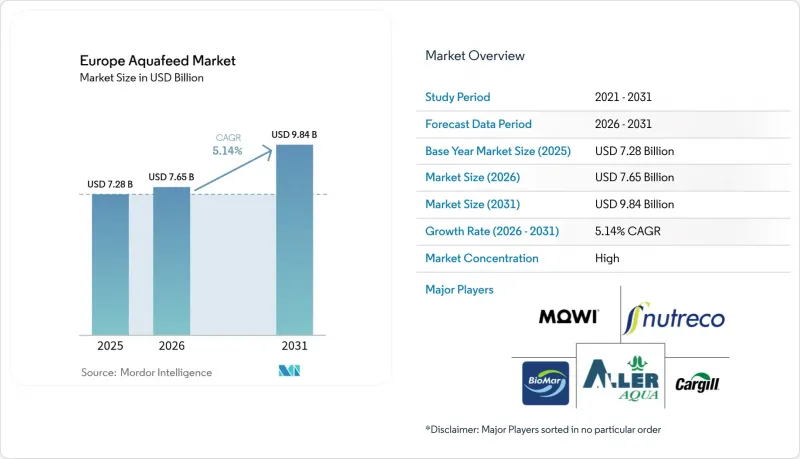
本報告按飼料種類(魚飼料、甲殼類飼料、軟體動物飼料及其他水產飼料)、原料(穀物、魚粉、添加劑及其他原料)及地區(德國、法國、義大利、西班牙、英國、挪威及其他歐洲國家)進行細分。市場預測以美元計價。
歐洲水產養殖飼料市場趨勢與洞察
歐洲水產養殖集約化過程的進展
隨著養殖戶從大型池塘養殖轉向高密度浮式網箱和陸基養殖設施,歐洲水產養殖產量正在增加。這種集約化生產模式集中了飼料需求,使飼料生產商能夠受益於規模經濟並最佳化分銷網路。 2023年,挪威特倫德拉格地區的水產養殖產量達到23.98萬噸,價值171億挪威克朗(約16億美元),這顯示集中生產如何創造了龐大的需求中心。雖然簡化的集約化水產養殖許可程序正在加速這項轉型,但環境法規限制了大規模水產養殖的發展。這種發展趨勢維持了對高性能飼料的需求,這些飼料透過提高飼料轉換率和減少環境影響而價格更高。
循環水產養殖系統(RAS)的擴張推動了對專用高密度飼料的需求。
在德國、荷蘭和挪威,循環水產養殖系統(RAS)正蓬勃發展,這得益於穩定的能源價格和不斷提高的工程可靠性。這些封閉式系統需要使用易消化、低磷的專用飼料來維持水質。 2021年,BioMar等飼料生產商開發了專為RAS設計的系列產品,這些產品具有更高的營養吸收率、更少的固態廢棄物和更長的使用壽命。這些專用飼料的技術複雜性使其價格更高,同時也為傳統飼料生產商設定了進入門檻。飼料生產商與RAS技術供應商之間的合作能夠提高客戶留存率,並帶來競爭優勢。受土地資源緊張和防止魚類逃脫法規的推動,預計到2030年,RAS的普及率將持續成長,從而帶動飼料銷售的持續成長。
升級擠出和造粒設備以適應新的原料需要高昂的資本投入。
加工昆蟲粉和藻油需要具備特定剪切力、溫度控制和包覆能力的專用設備,而現有生產線無法滿足這些需求。升級生產線的成本在200萬至500萬歐元(220萬至540萬美元)之間,這對區域飼料廠構成了資金壓力。歐洲投資銀行於2024年向Protix波蘭業務提供的3700萬歐元(4000萬美元)貸款顯示了巨大的資金需求。像Nutreco NV這樣的大型公司正在透過將投資成本分散到多個工廠來整合市場。這種資金障礙迫使小型生產商推遲採用替代原料,阻礙了該產業從海洋來源蛋白向其他來源蛋白的轉型。
細分市場分析
至2025年,魚飼料將佔歐洲水產飼料市場的37.28%。這主要得益於挪威鮭魚和鱒魚養殖業的發展,以及中歐和南歐對鯉魚和吳郭魚的穩定需求。鮭魚飼料的銷售量最大,為大規模浮式網箱養殖和陸基循環水產養殖系統(RAS)的擴張提供了支持,這些系統需要高濃度的飼料配方。鯉魚飼料則用於支持波蘭和捷克的池塘養殖,而吳郭魚飼料則供應給地中海地區全年營運的池塘養殖企業。
甲殼類飼料市場預計將以7.06%的複合年成長率成長,成為市場中成長最快的領域。這一成長主要由蝦類養殖推動,尤其是在西班牙和葡萄牙,南美白對蝦(Litopenaeus vannamei)的生產系統正在不斷擴張,這種蝦類飼料需要與魚飼料不同的特定蛋白質和脂質成分。此外,法國和英國的螃蟹養殖實驗計畫也刺激了市場需求。由於甲殼類飼料比魚飼料價格更高,其收入成長速度超過了銷售量。甲殼類飼料生產的擴張為那些希望降低對波動性較大的鮭魚飼料市場依賴的生產商提供了市場多元化的機會。
其他好處:
- Excel格式的市場預測(ME)表
- 3個月的分析師支持
目錄
第1章:引言
- 研究假設和市場定義
- 調查範圍
第2章:調查方法
第3章執行摘要
第4章 市場狀況
- 市場概覽
- 市場促進因素
- 全部區域的水產養殖活動日益活性化。
- 循環水產養殖系統(RAS)的擴張增加了對專用高密度飼料的需求。
- 歐盟「綠色新政」下對低碳飼料原料的獎勵
- 擴大單細胞蛋白質(SCP)的應用以解決歐洲蛋白質短缺問題
- 利用數位孿生技術進行精準飼餵,降低飼料轉換率。
- 零售商的永續發展評分卡正在鼓勵採購經過認證的海鮮飼料。
- 市場限制因素
- 升級擠出和造粒設備以適應新的原料需要高昂的資本投入。
- 消費者對基改飼料原料的懷疑態度
- 生物安全威脅正在延長產品核可所需的時間。
- 能源價格波動推高了飼料廠的生產成本。
- 監理情勢
- 技術展望
- 波特五力分析
第5章 市場規模與成長預測
- 按類型
- 魚飼料
- 鯉魚
- 鮭魚
- 吳郭魚
- 鯰魚
- 其他魚類飼料
- 甲殼類動物飼料
- 蝦
- 其他甲殼類飼料
- 軟體動物飼料
- 其他水產飼料
- 魚飼料
- 按成分
- 穀類
- 魚粉
- 補充
- 其他原料
- 按地區
- 德國
- 法國
- 義大利
- 西班牙
- 英國
- 挪威
- 其他歐洲國家
第6章 競爭情勢
- 市場集中度
- 策略趨勢
- 市佔率分析
- 公司簡介
- Nutreco NV(SHV Holdings NV)
- BioMar Group A/S(Schouw & Co. A/S)
- Cargill, Incorporated
- Aller Aqua A/S
- Mowi Feed AS(Mowi ASA)
- Alltech Inc.
- BASF SE
- ADM(Archer Daniels Midland Company)
- Adisseo(A Bluestar Company)
- DSM-Firmenich
- De Heus Animal Nutrition BV
- Kemin Industries, Inc.
- Charoen Pokphand Foods PCL
- Zooca-Calanus AS
- Dibaq Acuaculture(Grupo Dibaq)
第7章 市場機會與未來展望
According to Mordor Intelligence, the Europe aquafeed market size was valued at USD 7.28 billion in 2025 and estimated to grow from USD 7.65 billion in 2026 to reach USD 9.84 billion by 2031, at a CAGR of 5.14% during the forecast period (2026-2031).
This report is Segmented by Type (Fish Feed, Crustaceans Feed, Mollusks Feed, and Other Aquafeed), by Ingredient (Cereals, Fishmeal, Supplements, and Other Ingredients), and by Geography (Germany, France, Italy, Spain, United Kingdom, Norway, and Rest of Europe). The Market Forecasts are Provided in Terms of Value (USD).
Europe Aquafeed Market Trends and Insights
Rising Intensification of Aquaculture Across the Region
European aquaculture production is increasing as operators transition from extensive ponds to high-density sea cages and land-based facilities. This intensification creates concentrated feed demand, enabling feed mills to benefit from economies of scale and optimize delivery networks. The 2023 harvest in Norway's Trondelag region, which reached 239,800 metric tons valued at NOK 17.1 billion (USD 1.6 billion), illustrates how concentrated production creates high-volume demand centers. Simplified permitting processes for compliant intensive operations support this transition, while environmental regulations limit extensive farming. This development pattern sustains demand for high-performance feeds that command higher prices due to improved feed conversion ratios and lower environmental impact.
Growth of Recirculating Aquaculture Systems (RAS) Demanding Specialized High-density Feeds
Recirculating Aquaculture Systems (RAS) are expanding across Germany, the Netherlands, and Norway, supported by stable energy prices and improved engineering reliability. These closed-loop systems require specialized feeds with high digestibility and low phosphorus content to maintain water quality. Feed manufacturers, such as BioMar, developed RAS-specific product lines in 2021 with enhanced nutrient absorption and durability features that reduce solid waste output. The technical complexity of these specialized feeds enables premium pricing while creating barriers for conventional feed producers. The integration between feed manufacturers and RAS technology suppliers increases customer retention and competitive advantages. RAS adoption is anticipated to grow through 2030, driven by land availability constraints and regulations aimed at preventing fish escapes, which will support continued growth in feed revenue.
High Capital Cost of Extrusion and Pelletizing Upgrades for Novel Ingredients
The processing of insect meal and algal oils requires specialized equipment with specific shear forces, temperature controls, and coating capabilities that existing production lines cannot accommodate. Production line upgrades cost between EUR 2-5 million (USD 2.2-5.4 million), which creates financial constraints for regional feed mills. The EUR 37 million (USD 40 million) loan from the European Investment Bank to Protix in 2024 for its Polish operations demonstrates the significant capital requirements. Large companies, including Nutreco N.V., can distribute investment costs across multiple facilities, which increases market consolidation. This financial barrier causes smaller manufacturers to delay the adoption of alternative ingredients, impeding the industry's transition from marine-based proteins.
Other drivers and restraints analyzed in the detailed report include:
- European Union Green Deal Incentives for Low-Carbon Feed Ingredients
- Retailer Sustainability Scorecards Pushing Certified Aquafeed Sourcing
- Biosecurity Threats Lengthening Product-Approval Timelines
For complete list of drivers and restraints, kindly check the Table Of Contents.
Segment Analysis
Fish feed accounts for 37.28% of the Europe aquafeed market share in 2025, driven by Norway's salmon and trout production and consistent demand for carp and tilapia in Central and Southern Europe. Salmon feed represents the highest volume, supporting extensive sea-cage operations and increasing land-based recirculating aquaculture systems (RAS) that require concentrated feed formulations. Carp feed sustains pond systems in Poland and the Czech Republic, while tilapia feed serves Mediterranean pond operations that maintain year-round production cycles.
The crustacean feed segment is projected to grow at a 7.06% CAGR, representing the highest growth rate in the market. This growth is primarily driven by shrimp farming, with Spain and Portugal expanding their Litopenaeus vannamei production systems, which require specific protein and lipid compositions different from fish feed. Additional demand comes from experimental crab farming operations in France and the United Kingdom. Crustacean feed commands higher prices than fish feed, resulting in faster revenue growth compared to volume increases. The expansion of crustacean feed production offers market diversification opportunities for producers looking to reduce their dependence on salmon feed market fluctuations.
Complete Report Scope:
- By Type
- Fish Feed
- Carp
- Salmon
- Tilapia
- Catfish
- Other Fish Feed
- Crustaceans Feed
- Shrimp
- Other Crustacean Feed
- Mollusks Feed
- Other Aquafeed
- Fish Feed
- By Ingredient
- Cereals
- Fishmeal
- Supplements
- Other Ingredients
- By Geography
- Germany
- France
- Italy
- Spain
- United Kingdom
- Norway
- Rest of Europe
List of Companies Covered in this Report:
- Nutreco N.V. (SHV Holdings N.V.)
- BioMar Group A/S (Schouw & Co. A/S)
- Cargill, Incorporated
- Aller Aqua A/S
- Mowi Feed AS (Mowi ASA)
- Alltech Inc.
- BASF SE
- ADM (Archer Daniels Midland Company)
- Adisseo (A Bluestar Company)
- DSM-Firmenich
- De Heus Animal Nutrition B.V.
- Kemin Industries, Inc.
- Charoen Pokphand Foods PCL
- Zooca - Calanus AS
- Dibaq Acuaculture (Grupo Dibaq)
Additional Benefits:
- The market estimate (ME) sheet in Excel format
- 3 months of analyst support
TABLE OF CONTENTS
1 Introduction
- 1.1 Study Assumptions and Market Definition
- 1.2 Scope of the Study
2 Research Methodology
3 Executive Summary
4 Market Landscape
- 4.1 Market Overview
- 4.2 Market Drivers
- 4.2.1 Rising Intensification of Aquaculture Across the Region
- 4.2.2 Growth of Recirculating Aquaculture Systems (RAS) Demanding Specialized High-density Feeds
- 4.2.3 European Union Green Deal Incentives for Low-Carbon Feed Ingredients
- 4.2.4 Widening Adoption of Single-Cell Protein (SCP) to Bridge Europe's Protein Gap
- 4.2.5 Digital Twin-Enabled Precision Feeding Reducing Feed Conversion Ratio
- 4.2.6 Retailer Sustainability Scorecards Pushing Certified Aquafeed Sourcing
- 4.3 Market Restraints
- 4.3.1 High Capital Cost of Extrusion and Pelletizing Upgrades for Novel Ingredients
- 4.3.2 Consumer Skepticism Toward Genetically Edited Feed Ingredients
- 4.3.3 Biosecurity Threats Lengthening Product-Approval Timelines
- 4.3.4 Energy Price Swings Elevating Production Costs for Feed Mills
- 4.4 Regulatory Landscape
- 4.5 Technological Outlook
- 4.6 Porter's Five Forces Analysis
- 4.6.1 Bargaining Power of Suppliers
- 4.6.2 Bargaining Power of Buyers
- 4.6.3 Threat of New Entrants
- 4.6.4 Threat of Substitutes
- 4.6.5 Intensity of Competitive Rivalry
5 Market Size and Growth Forecasts (Value)
- 5.1 By Type
- 5.1.1 Fish Feed
- 5.1.1.1 Carp
- 5.1.1.2 Salmon
- 5.1.1.3 Tilapia
- 5.1.1.4 Catfish
- 5.1.1.5 Other Fish Feed
- 5.1.2 Crustaceans Feed
- 5.1.2.1 Shrimp
- 5.1.2.2 Other Crustacean Feed
- 5.1.3 Mollusks Feed
- 5.1.4 Other Aquafeed
- 5.1.1 Fish Feed
- 5.2 By Ingredient
- 5.2.1 Cereals
- 5.2.2 Fishmeal
- 5.2.3 Supplements
- 5.2.4 Other Ingredients
- 5.3 By Geography
- 5.3.1 Germany
- 5.3.2 France
- 5.3.3 Italy
- 5.3.4 Spain
- 5.3.5 United Kingdom
- 5.3.6 Norway
- 5.3.7 Rest of Europe
6 Competitive Landscape
- 6.1 Market Concentration
- 6.2 Strategic Moves
- 6.3 Market Share Analysis
- 6.4 Company Profiles (Includes Global-Level Overview, Market-Level Overview, Core Segments, Financials as Available, Strategic Information, Market Rank/Share, Products and Services, Recent Developments)
- 6.4.1 Nutreco N.V. (SHV Holdings N.V.)
- 6.4.2 BioMar Group A/S (Schouw & Co. A/S)
- 6.4.3 Cargill, Incorporated
- 6.4.4 Aller Aqua A/S
- 6.4.5 Mowi Feed AS (Mowi ASA)
- 6.4.6 Alltech Inc.
- 6.4.7 BASF SE
- 6.4.8 ADM (Archer Daniels Midland Company)
- 6.4.9 Adisseo (A Bluestar Company)
- 6.4.10 DSM-Firmenich
- 6.4.11 De Heus Animal Nutrition B.V.
- 6.4.12 Kemin Industries, Inc.
- 6.4.13 Charoen Pokphand Foods PCL
- 6.4.14 Zooca - Calanus AS
- 6.4.15 Dibaq Acuaculture (Grupo Dibaq)
7 Market Opportunities and Future Outlook

 蝦粉飼料飼料市場-2026年至2032年全球市場預測
 中國水產飼料:市場佔有率分析、產業趨勢與統計及成長預測(2026-2031年)亞太地區水產飼料:市場佔有率分析、產業趨勢與統計、成長預測(2026-2031)水產飼料:市場佔有率分析、產業趨勢與統計、成長預測(2026-2031)水產養殖飼料市場:2026-2032年全球市場預測(依飼料種類、食材種類、原料來源種類、目標魚類、水產養殖系統、水產養殖環境、飼料配方、最終使用者和分銷管道分類)微藻類水產飼料:市場佔有率分析、行業趨勢和統計數據以及成長預測(2026-2031 年)
 水產飼料市場報告:按魚類品種、原料、添加劑、產品形式和地區分類(2026-2034 年)
 水生幼蟲飼料市場規模、佔有率和成長分析:按類型、應用、配方/形式、配銷通路、物種、地區和行業預測,2026-2033年
 水產養殖飼料酵素市場規模、佔有率和成長分析:按酵素類型、酵素形態、水生動物和地區分類-2026-2033年產業預測
 水產飼料市場規模、佔有率、成長和全球產業分析:按類型、應用和地區分類,並對 2026-2034 年進行洞察和預測。