


 |
市場調查報告書
商品編碼
2065588
南美洲IT設備:市場佔有率分析、產業趨勢與統計及成長預測(2026-2031年)South America IT Device - Market Share Analysis, Industry Trends & Statistics, Growth Forecasts (2026 - 2031) |
||||||

※ 本網頁內容可能與最新版本有所差異。詳細情況請與我們聯繫。
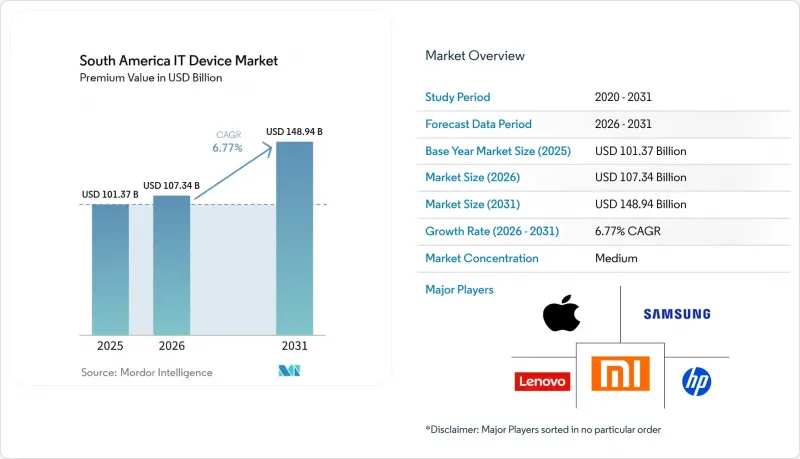
據 Mordor Intelligence 稱,2025 年南美 IT 設備市場價值為 1013.7 億美元,預計到 2031 年將達到 1489.4 億美元,而 2026 年為 1073.4 億美元,預測期(2026-2031 年)的複合年成長率為 6.77%。
本報告按設備類型(智慧型手機、平板電腦、筆記型電腦、桌上型電腦和工作站、穿戴式裝置)、終端用戶產業(消費者、企業等)、分銷管道(線上零售商、全通路零售商等)、價格範圍(低價位;低於 200 美元;中價位;201-600 美元;高價位;高於 601 美元)和地區進行細分。市場預測以美元計價。
南美洲IT設備市場趨勢與洞察
智慧型手機在中產階級的普及率不斷提高
巴西、墨西哥和哥倫比亞可支配收入的成長正推動功能手機用戶升級到智慧型手機,預計到2025年,巴西的行動網路普及率將達到84%。 4G網路覆蓋範圍已擴大到92%的家庭,通訊業者將售價低於200美元的入門級5G設備捆綁銷售,使得區域城市的出貨量實現了兩位數的成長。三星Galaxy A07 5G將於2026年在秘魯上市,這表明廠商正透過瞄準首次升級用戶來降低成本。流入墨西哥的633億美元匯款正在推動高階機型的更換,售價超過10,000墨西哥披索(約588美元)的設備在2025年第三季佔了17.1%的市場佔有率。這些趨勢共同擴大了南美洲IT設備市場的潛在基本客群。
遠距辦公和混合辦公模式的興起正在推動對個人電腦和平板電腦的需求成長。
隨著混合辦公模式的日益普及,企業硬體預算正轉向筆記型電腦和平板電腦。預計2024年,巴西的ICT硬體支出將達到432億美元,佔ICT總支出的48%。企業目前正尋求能夠實現設備端翻譯與降噪的AI加速晶片組。聯想與Positivo合作,規劃於2026年部署「Spark AI」工作站,凸顯了企業對邊緣運算的重視。此外,加固型平板電腦在現場服務環境中也越來越普及,進一步豐富了整個南美IT設備市場的設備種類。
貨幣波動和通貨膨脹會削弱消費者的購買力。
2024年,阿根廷披索對美元貶值54%,巴西雷亞爾匯率波動幅度達15%,導致零件和成品進口成本上升。哥倫比亞2025年平均通膨率達7.2%,加劇了自由裁量權預算壓力,並將智慧型手機的更換週期從24個月延長至30個月。巴西根據第214號補充法案進行的激進稅制改革造成了價格不確定性,零售商將這種不確定性轉嫁給了消費者。此外,由於消費者利用巴拉圭和智利的免稅額度,跨境購物也激增。這些趨勢正在抑制南美IT設備市場的短期銷售成長。
細分市場分析
儘管智慧型手機仍主導南美IT設備市場,預計2025年銷量將佔53.76%,但穿戴式裝置正展現出強勁的成長動能。巴西和哥倫比亞等國的創新保險項目推動了穿戴式裝置的普及,這些國家的保險公司向同意提供生物辨識數據的客戶提供10%至15%的保費回饋。預計到2031年,此一趨勢將推動穿戴式裝置品類達到7.77%的複合年成長率。三星、華為和Amazfit等主要廠商在2024年至2026年間推出了售價低於100美元的平價追蹤器,這些追蹤器具備心率監測和血氧飽和度感測器等先進功能。同時,小米將其Watch 5的定價策略定在5000墨西哥披索(約294美元),旨在鼓勵用戶從基礎健身手環升級到功能豐富的智慧型手錶。
除了穿戴式裝置外,平板電腦和二合一筆記型電腦的需求也在成長,這主要得益於全部區域混合辦公模式的持續推廣。企業擴大指定使用配備手寫筆的設備來滿足現場工作人員的需求,進一步推動了此類設備的普及。雖然桌上型電腦目前仍屬於小眾市場,但在設計工作室和政府機構等對效能和可靠性要求極高的專業環境中,其需求依然穩定。隨著健康監測獎勵的日益普及以及商用診斷設備法律規範的日益清晰,預計南美IT設備市場的穿戴式設備佔有率將逐步縮小與智慧型手機的差距,並鞏固其作為該地區主要驅動力的地位。
預計到2025年,消費者支出將佔總支出的65.12%,這主要得益於假期季節促銷期間智慧型手機銷售的激增。隨著個人用戶越來越重視將個人設備用於溝通、娛樂和辦公,消費者群體將繼續主導市場。然而,企業需求也不斷成長,年增率達7.37%。伴隨這一成長,採購習慣也在發生變化,企業傾向於選擇包含增強安全功能、託管服務和人工智慧終端的捆綁式解決方案,以滿足不斷變化的業務需求。例如,聯想正利用這一趨勢,提供將硬體與現場支援服務結合的多年合約框架。這項策略舉措使聯想在南美IT設備市場的PC領域佔據了超過20%的市場。
來自政府和教育機構的訂單也呈現顯著成長,尤其是在哥倫比亞,該國正在推行一項國家舉措,目標是在2027年前向1萬所學校部署平板電腦。這項計畫凸顯了科技在教育領域日益重要的作用,以及政府為彌合數位落差所做的努力。然而,阿根廷的財政緊縮措施限制了大規模部署,凸顯了公共部門投資的區域差異。同時,南美洲各地的企業,尤其是在巴西《通用資料保護法》(LGPD)的背景下,越來越將IT設備視為合規的必要工具。企業優先考慮具備生物識別和遠端擦拭巾等高階功能的設備,以確保資料安全和符合監管要求。這一趨勢推高了設備的平均售價,進一步影響了南美洲的IT設備市場。
其他好處:
- Excel格式的市場預測(ME)表
- 3個月的分析師支持
目錄
第1章:引言
- 研究假設和市場定義
- 調查範圍
第2章:調查方法
第3章執行摘要
第4章 市場狀況
- 市場概覽
- 市場促進因素
- 智慧型手機在中產階級的廣泛普及
- 遠距辦公和混合辦公模式的興起推高了對個人電腦和平板電腦的需求。
- 電子商務的成長正在加速線上設備銷售。
- 馬瑙斯自由貿易區的稅收優惠政策使得在當地設立組裝成為可能。
- PIX Instant Pay 分期付款計劃讓您能夠購買昂貴的設備。
- 半導體供應鏈多元化可以緩解價格波動。
- 市場限制因素
- 貨幣波動和通貨膨脹正在削弱消費者的購買力。
- 對成品電子設備徵收高額進口關稅
- 由於記憶體供應短缺,平均售價正在上漲。
- 水貨設備威脅合法銷售管道
- 宏觀經濟因素對市場的影響
- 產業價值鏈分析
- 監理情勢
- 技術展望
- 波特五力分析
第5章 市場規模與成長預測
- 依設備類型
- 智慧型手機
- 藥片
- 筆記型電腦
- 桌上型電腦和工作站
- 穿戴式裝置
- 按最終用戶行業分類
- 消費者
- 公司
- 政府/教育
- 透過分銷管道
- 線上零售商
- 全通路零售商
- 公司自營店
- 多品牌實體店面
- 按價格範圍
- 價格低廉(低於200美元)
- 中價位(201-600美元)
- 更高的價格(601美元以上)
- 按地區
- 巴西
- 墨西哥
- 阿根廷
- 哥倫比亞
- 其他南美國家
第6章 競爭情勢
- 市場集中度
- 策略趨勢
- 市佔率分析
- 公司簡介
- Samsung Electronics Co., Ltd.
- Apple Inc.
- Lenovo Group Limited
- HP Inc.
- Dell Technologies Inc.
- ASUSTeK Computer Inc.
- Acer Inc.
- Huawei Technologies Co., Ltd.
- Xiaomi Corporation
- Sony Group Corporation
- LG Electronics Inc.
- ZTE Corporation
- Hon Hai Precision Industry Co., Ltd.
- HTC Corporation
- TCL Technology Group Corporation
- Transsion Holdings Co., Ltd.
- BBK Electronics Corporation Limited
- Positivo Tecnologia SA
- Multilaser Industrial SA
- Compal Electronics, Inc.
第7章 市場機會與未來展望
According to Mordor Intelligence, the south america iT device market size was valued at USD 101.37 billion in 2025 and estimated to grow from USD 107.34 billion in 2026 to reach USD 148.94 billion by 2031, at a CAGR of 6.77% during the forecast period (2026-2031).
This report is Segmented by Device Type (Smartphones, Tablets, Laptops and Notebooks, Desktops and Workstations, and Wearables), End-User Industry (Consumer, Enterprise, and More), Distribution Channel (Online Retailers, Omnichannel Retailers, and More), Price Band (Budget <=USD 200, Mid-Range USD 201-600, and Premium >=USD 601), and Geography. The Market Forecasts are Provided in Terms of Value (USD).
South America IT Device Market Trends and Insights
Expanding Middle-Class Smartphone Penetration
Rising disposable incomes in Brazil, Mexico, and Colombia are converting feature phone users into smartphone owners, lifting mobile internet penetration to 84% in Brazil in 2025. Secondary cities posted double-digit shipment gains as 4G coverage expanded to 92% of households and carriers bundled entry-level 5G handsets at below USD 200. Samsung's Galaxy A07 5G debut in Peru in 2026 illustrates how vendors compress costs to target first-time upgraders. Remittance inflows of USD 63.3 billion into Mexico funded premium upgrades, pushing devices above MXN 10,000 (approximately USD 588) to a 17.1% share in Q3 2025. Together, these trends enlarge the addressable base for the South America IT device market.
Shift to Remote and Hybrid Work Boosting PC and Tablet Demand
Corporate hardware budgets pivoted to notebooks and tablets as hybrid work became entrenched, lifting Brazil's ICT hardware outlays to USD 43.2 billion in 2024, or 48% of total ICT spend. Enterprises now request AI-accelerated chipsets that enable on-device translation and noise suppression, and Lenovo's 2026 tie-up with Positivo to deploy Spark AI workstations underscores the emphasis on edge compute. Rugged tablets are also proliferating in field services, reinforcing device diversity across the South America IT device market.
Currency Volatility and Inflation Eroding Consumer Purchasing Power
Argentina's peso fell 54% against the dollar in 2024, while Brazil's real swung within a 15% band, escalating import costs for both components and finished goods. Inflation averaged 7.2% in Colombia during 2025, squeezing discretionary budgets and stretching smartphone replacement cycles from 24 to 30 months. Brazil's sweeping tax overhaul under Complementary Law 214 introduced pricing uncertainty that retailers passed on to consumers, and cross-border shopping surged as buyers exploited duty-free thresholds in Paraguay and Chile. These dynamics restrain near-term unit growth for the South America IT device market
Other drivers and restraints analyzed in the detailed report include:
- E-commerce Growth Accelerating Online Device Sales
- Manaus Free Trade Zone Tax Incentives Enabling Local Assembly Lines
- High Import Tariffs on Finished Electronics
For complete list of drivers and restraints, kindly check the Table Of Contents.
Segment Analysis
Wearables have been gaining significant traction, even though smartphones continue to dominate the South America IT device market, accounting for 53.76% of the revenue in 2025. The growing adoption of wearables is being driven by innovative insurance programs in countries like Brazil and Colombia, where insurers now offer premium rebates of 10-15% to customers who agree to share their biometric data. This trend is expected to drive a compound annual growth rate (CAGR) of 7.77% for the wearables category through 2031. Major players such as Samsung, Huawei, and Amazfit have introduced affordable trackers priced under USD 100, equipped with advanced features like heart-rate monitoring and SpO2 sensors, during the 2024-2026 period. Meanwhile, Xiaomi has strategically positioned its Watch 5 at a price point of MXN 5,000 (approximately USD 294) to encourage users to transition from basic fitness bands to fully featured smartwatches.
In addition to wearables, tablets and 2-in-1 notebooks have also witnessed increased demand, particularly as hybrid work models continue to expand across the region. Enterprises are increasingly specifying devices with stylus support to meet the needs of field workers, further driving their adoption. While desktops remain a niche segment, they continue to hold steady demand in specialized environments such as design studios and public agencies, where their performance and reliability are critical. As health-monitoring incentives become more widespread and regulatory frameworks for over-the-counter diagnostics become clearer, the wearables segment in the South America IT device market is expected to gradually close the gap with smartphones, solidifying its position as a key growth driver in the region.
Consumers accounted for 65.12% of 2025 spending, primarily driven by the surge in smartphone purchases during holiday promotions. The consumer segment continues to dominate the market as individuals increasingly prioritize personal devices for communication, entertainment, and productivity. However, corporate demand is also on the rise, advancing at an annual growth rate of 7.37%. This growth is reshaping procurement habits, with businesses opting for bundled solutions that include enhanced security features, managed services, and AI-ready endpoints to meet evolving operational needs. Lenovo, for instance, has capitalized on this trend by offering multi-year frameworks that combine hardware with on-site support services. This strategic approach has enabled Lenovo to secure over 20% of the South America IT device market share in the PC segment.
Government and education orders are also witnessing significant growth, particularly in Colombia, where a national initiative aims to equip 10,000 schools with tablets by 2027. This program underscores the increasing role of technology in education and the government's commitment to bridging the digital divide. However, fiscal austerity measures in Argentina have constrained large-scale deployments, highlighting regional disparities in public-sector investment. Meanwhile, enterprises across South America are increasingly viewing IT devices as critical compliance tools, especially under Brazil's LGPD (General Data Protection Law). Businesses are prioritizing devices with advanced features, such as biometric authentication and remote wipe capabilities, to ensure data security and regulatory compliance. These preferences are driving up device average selling prices, further influencing the dynamics of the South America IT device market.
List of Companies Covered in this Report:
- Samsung Electronics Co., Ltd.
- Apple Inc.
- Lenovo Group Limited
- HP Inc.
- Dell Technologies Inc.
- ASUSTeK Computer Inc.
- Acer Inc.
- Huawei Technologies Co., Ltd.
- Xiaomi Corporation
- Sony Group Corporation
- LG Electronics Inc.
- ZTE Corporation
- Hon Hai Precision Industry Co., Ltd.
- HTC Corporation
- TCL Technology Group Corporation
- Transsion Holdings Co., Ltd.
- BBK Electronics Corporation Limited
- Positivo Tecnologia S.A.
- Multilaser Industrial S.A.
- Compal Electronics, Inc.
Additional Benefits:
- The market estimate (ME) sheet in Excel format
- 3 months of analyst support
TABLE OF CONTENTS
1 INTRODUCTION
- 1.1 Study Assumptions and Market Definition
- 1.2 Scope of the Study
2 RESEARCH METHODOLOGY
3 EXECUTIVE SUMMARY
4 MARKET LANDSCAPE
- 4.1 Market Overview
- 4.2 Market Drivers
- 4.2.1 Expanding Middle-Class Smartphone Penetration
- 4.2.2 Shift to Remote and Hybrid Work Boosting PC and Tablet Demand
- 4.2.3 E-commerce Growth Accelerating Online Device Sales
- 4.2.4 Manaus Free Trade Zone Tax Incentives Enabling Local Assembly Lines
- 4.2.5 PIX Instant-Pay Installment Scheme Unlocking High-Ticket Device Purchases
- 4.2.6 Semiconductor Supply Diversification Mitigating Price Volatility
- 4.3 Market Restraints
- 4.3.1 Currency Volatility and Inflation Eroding Consumer Purchasing Power
- 4.3.2 High Import Tariffs on Finished Electronics
- 4.3.3 Memory Supply Crunch Raising Average Selling Prices
- 4.3.4 Gray-Market Devices Undercutting Official Channels
- 4.4 Impact of Macroeconomic Factors on the Market
- 4.5 Industry Value Chain Analysis
- 4.6 Regulatory Landscape
- 4.7 Technological Outlook
- 4.8 Porter's Five Forces Analysis
- 4.8.1 Bargaining Power of Suppliers
- 4.8.2 Bargaining Power of Buyers
- 4.8.3 Threat of New Entrants
- 4.8.4 Threat of Substitutes
- 4.8.5 Intensity of Competitive Rivalry
5 MARKET SIZE AND GROWTH FORECASTS (VALUE)
- 5.1 By Device Type
- 5.1.1 Smartphones
- 5.1.2 Tablets
- 5.1.3 Laptops and Notebooks
- 5.1.4 Desktops and Workstations
- 5.1.5 Wearables
- 5.2 By End-User Industry
- 5.2.1 Consumer
- 5.2.2 Enterprise
- 5.2.3 Government and Education
- 5.3 By Distribution Channel
- 5.3.1 Online Retailers
- 5.3.2 Omnichannel Retailers
- 5.3.3 Brand-owned Stores
- 5.3.4 Multi-brand Physical Outlets
- 5.4 By Price Band
- 5.4.1 Budget (<= USD 200)
- 5.4.2 Mid-range (USD 201-600)
- 5.4.3 Premium (>= USD 601)
- 5.5 By Geography
- 5.5.1 Brazil
- 5.5.2 Mexico
- 5.5.3 Argentina
- 5.5.4 Colombia
- 5.5.5 Rest of South America
6 COMPETITIVE LANDSCAPE
- 6.1 Market Concentration
- 6.2 Strategic Moves
- 6.3 Market Share Analysis
- 6.4 Company Profiles (includes Global Level Overview, Market Level Overview, Core Segments, Financials as available, Strategic Information, Market Rank/Share, Products and Services, Recent Developments)
- 6.4.1 Samsung Electronics Co., Ltd.
- 6.4.2 Apple Inc.
- 6.4.3 Lenovo Group Limited
- 6.4.4 HP Inc.
- 6.4.5 Dell Technologies Inc.
- 6.4.6 ASUSTeK Computer Inc.
- 6.4.7 Acer Inc.
- 6.4.8 Huawei Technologies Co., Ltd.
- 6.4.9 Xiaomi Corporation
- 6.4.10 Sony Group Corporation
- 6.4.11 LG Electronics Inc.
- 6.4.12 ZTE Corporation
- 6.4.13 Hon Hai Precision Industry Co., Ltd.
- 6.4.14 HTC Corporation
- 6.4.15 TCL Technology Group Corporation
- 6.4.16 Transsion Holdings Co., Ltd.
- 6.4.17 BBK Electronics Corporation Limited
- 6.4.18 Positivo Tecnologia S.A.
- 6.4.19 Multilaser Industrial S.A.
- 6.4.20 Compal Electronics, Inc.
7 MARKET OPPORTUNITIES AND FUTURE OUTLOOK
- 7.1 White-Space and Unmet-Need Assessment

 數據應用解決方案和服務市場:全球市場預測,2026-2032年
 城市交通技術市場預測(2034 年)—按類型、部署模式、技術、應用、最終用戶和地區分類的全球分析
 中東和非洲IT設備市場:市場佔有率分析、行業趨勢和統計數據以及成長預測(2025-2030年)
 2026年全球資訊科技(IT)網路市場報告IT設備:市場佔有率分析、產業趨勢與統計、成長預測(2026-2031年)亞太地區IT設備:市場佔有率分析、產業趨勢與統計及成長預測(2026-2031年)北美IT設備:市場佔有率分析、產業趨勢與統計及成長預測(2026-2031年)歐洲IT設備:市場佔有率分析、產業趨勢與統計、成長預測(2026-2031年)
 ITaaS(資訊科技即服務)市場報告:按類型、應用和地區分類(2026-2034 年)2026年全球混合資訊科技(IT)管理市場報告