


 |
市場調查報告書
商品編碼
2157108
印尼第四方物流(4PL):市場佔有率分析、產業趨勢與統計及成長預測(2026-2031)Indonesia Fourth-party Logistics (4PL) - Market Share Analysis, Industry Trends & Statistics, Growth Forecasts (2026 - 2031) |
||||||

※ 本網頁內容可能與最新版本有所差異。詳細情況請與我們聯繫。
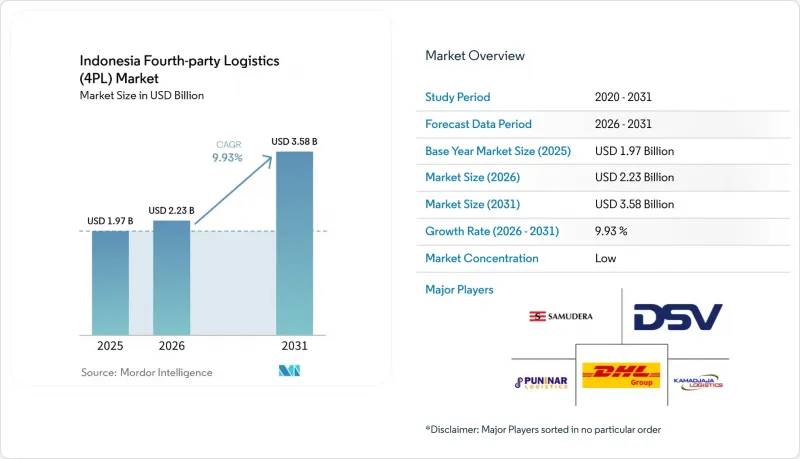
據 Mordor Intelligence 稱,2025 年印尼物流(4PL) 市場價值為 19.7 億美元,預計到 2031 年將達到 35.8 億美元,而 2026 年為 22.3 億美元,2026 年至 2031 年預測成長率內的複合年成長率為 9.93%。
由於印尼地理環境複雜,超過17,000個島嶼的物流協調往往必不可少,這使得單一承運商難以提供端到端的物流服務。本報告按營運模式(有限責任合夥企業、解決方案整合商、數位化平台4PL)、終端用戶行業(快速消費品、零售/電商、時尚、科技/電子、製冷/醫藥、其他)、公司規模(中小企業、大型企業)和地區(爪哇島、蘇門答臘島、加里曼丹島、蘇拉威西島、巴努沙瓦島、巴努瓦島/巴努瓦島)進行細分。市場預測以美元計價。
印尼物流(4PL)市場趨勢與洞察
電子商務日益複雜化,推動了對整合式第四方物流服務的需求。
預計到2025年,印尼的商品交易總額(GMV)將達到710億美元,年增14%。該國的線上經銷商數量預計將增加75%,到2025年將達到80萬家活躍經銷商。同時,視訊商務預計將成長90%,交易量將達到26億筆。為了應對如此龐大的交易量,管理眾多經銷商的訂單、最佳化配送路線、處理退貨以及協調承運商至關重要。印尼的第三方物流(4PL)市場可以滿足使用多家承運商且需要通用營運基礎設施的經銷商的這些需求。與傳統的全方位服務合約相比,數位平台提供者可以使這些服務更容易被小規模經銷商所接受。
物流數位化正在加速端到端供應鏈的協調。
據印尼海關當局稱,「國家物流生態系統」計劃在2026年覆蓋55個港口和12個機場。該計劃已在目標地點將處理時間縮短了73%,物流成本降低了17%。這些成果證明了資料共用和協同運輸管理的有效性。印尼第三方物流(4PL)市場可以透過加強系統間協調,以更低的營運成本支援控制塔服務。 2026年9月,印尼電信(Telkomsel)實施了一項智慧倉庫先導計畫,將揀貨效率提高了25%,並將備貨時間從4小時縮短至3小時。
島嶼間基礎設施的碎片化增加了轉運的複雜性。
到2025年,印尼的物流成本將佔GDP的14.3%,而已開發經濟體的平均為8%。在印尼東部,支線船舶運作頻率、滾裝船運輸能力以及港口水深等因素會延長運輸時間。這些因素導致涉及多家承運商的服務合約成本增加,並不確定性。印尼第三方物流(4PL)市場主要集中在爪哇島和蘇門答臘島,這兩個島嶼的物流基礎設施較為完善。類似的差異可能會限制供應商將統一的營運模式推廣到巴布亞、馬魯古、加里曼丹島周邊地區以及努沙登加拉群島等地區。
細分市場分析
2025年,主導物流供應商(LLP)佔據了印尼第三方物流(4PL)市場42.85%的佔有率,但基於數位化平台的4PL預計在2026年至2031年間將以16.32%的複合年成長率成長。 LLP模式對尋求在其複雜供應鏈中擁有單一負責協調方的跨國公司極具吸引力,因為它能夠提供清晰的服務水準、合規支援和明確的升級機制。汽車製造商、製藥公司和工業集團通常需要在多個供應商、承運商和島嶼之間進行這種程度的協調。
對於那些尋求供應鏈視覺性和協調性,但又不想採用全面外包模式的客戶而言,基於數位化平台的第四方物流 (4PL) 服務正日益受到重視。 Waresix 旗下上市子公司 PT BSA Logistics Indonesia 在 2026 年上半年實現了 42.6% 的營收成長,凸顯了數位化物流營運的擴張。靈活的最低處理量和整合的工作流程也有助於數位化平台更好地服務中型企業客戶。因此,印尼的 4PL 產業正透過有限責任合夥制 (LLP) 和數位化營運模式來滿足多樣化的客戶需求,每種模式都能靈活適應不同的供應鏈管理水準和外包程度。
其他好處:
- Excel格式的市場預測(ME)表
- 3個月的分析師支持
目錄
第1章:引言
- 研究假設和市場定義
- 調查範圍
第2章:調查方法
第3章執行摘要
- 市場規模、成長率與未來預測
- 第四方物流市場的主要需求促進因素和趨勢
- 主要物流網路與需求集中度
- 競爭格局與主要第四方物流供應商
第4章 市場狀況
- 市場概覽及第四方物流的重要性
- 市場促進因素
- 電子商務日益複雜化,推動了對整合式第四方物流服務的需求。
- 物流數位化正在加速端到端供應鏈的協調。
- 製造業本地化導致多個行業對複雜物流的需求不斷成長。
- 對即時可視性的需求正在推動控制塔的普及。
- 醫療保健產業對合規性的日益重視,推動了對專業供應鏈管理的需求。
- 隨著多島網路的擴展,對最佳化和回程傳輸協調的需求也日益增加。
- 市場限制因素
- 島嶼間基礎設施的分散增加了轉運的複雜性。
- 資料互通性問題阻礙了整合式第四方物流平台的發展。
- 分析人才的短缺是阻礙因素高階編配能力的限制因素。
- 策略管理的擔憂限制了第四方物流外包的普及。
- 價值鏈結構與第四方物流服務流程分析
- 法律規範與第四方物流合規要求分析
- 技術採納與供應鏈數位化分析
- 運輸和倉儲業投資趨勢分析
- 評估國內和跨境貨物流動的複雜性。
- 區域物流投資與網路擴張分析
- 波特五力分析
- 地緣政治事件對供應鏈變化的影響
第5章 市場規模與成長預測
- 按營運模式
- 首席物流供應商(LLP)
- 解決方案整合商
- 數位平台 4PL
- 按最終用戶行業分類
- FMCG
- 零售與電子商務
- 時尚與生活風格
- 技術與電子
- 冷凍和製藥
- 汽車與出行
- 工業製造
- 其他
- 按公司規模
- 小型企業
- 大公司
- 按地區
- 爪哇島(雅加達和博多)
- 蘇門答臘
- 加里曼丹
- 蘇拉威西
- 峇裡島和努沙登加拉
- 巴布亞地區和摩鹿加群島
第6章 競爭情勢
- 市場集中度
- 策略趨勢
- 市佔率分析
- 公司簡介
- DHL Group
- Kuehne+Nagel International AG
- DSV A/S
- AP Moller-Maersk A/S
- CEVA Logistics
- GEODIS
- NX Group
- Rhenus Group
- Toll Group
- PSA BDP
- Puninar Logistics
- Expeditors International
- Kintetsu World Express(Including APL Logistics)
- Yusen Logistics Co., Ltd.
- CJ Logistics Corporation
- LOGISTEED, Ltd.
- PT Samudera Indonesia Tbk
- PT Catur Aman Sentosa
- Janio
- Waresix
- EnviLog
- PT Makmur Berkat Solusi
第7章 市場機會與未來展望
第8章附錄
According to Mordor Intelligence, the Indonesia fourth-party logistics (4PL) market size was valued at USD 1.97 billion in 2025 and is estimated to grow from USD 2.23 billion in 2026 to reach USD 3.58 billion by 2031, at a CAGR of 9.93% during the forecast period 2026-2031.
Indonesia's geography creates coordination needs across more than 17,000 islands, where a single carrier relationship often cannot manage end-to-end movement. This report is Segmented by Operating Model (LLP, Solution Integrator, Digital Platform 4PL), by End-User Industry (FMCG, Retail and E-Commerce, Fashion, Technology and Electronics, Refrigerated and Pharma, and More), by Enterprise Size (SMEs, Large Enterprises), and by Region (Java, Sumatra, Kalimantan, Sulawesi, Bali and Nusa Tenggara, Papua and Maluku). The Market Forecasts are Provided in Terms of Value (USD).
Indonesia Fourth-party Logistics (4PL) Market Trends and Insights
E-Commerce Complexity Increasing Demand for Integrated 4PL Services
Indonesia's e-commerce GMV reached USD 71 billion in 2025 and grew 14% from the prior year. The country had 800,000 active online sellers in 2025 after a 75% increase, while video commerce recorded 2.6 billion transactions after 90% growth. These volumes require order management, routing, returns handling, and carrier coordination across many individual sellers. The Indonesia fourth-party logistics (4PL) market can serve this need, where merchants use more than 1 carrier and need a common operating layer. Digital platform providers can make these services more accessible to smaller sellers than conventional full-service arrangements.
Logistics Digitalization Accelerating End-to-End Supply Chain Orchestration
The National Logistics Ecosystem covers 55 ports and 12 airports in 2026, according to Indonesia's customs authority. The program reduces processing time by 73% and logistics costs by 17% at covered locations. These results strengthen the case for shared data and coordinated shipment management. The Indonesia fourth-party logistics (4PL) market can use greater system connectivity to support control-tower services at a lower operating cost. In September 2026, Telkomsel introduced a smart warehouse pilot that improved picking performance by 25% and reduced preparation time from 4 hours to 3 hours.
Fragmented Inter-Island Infrastructure Increasing Transshipment Complexity
Indonesia's logistics costs represented 14.3% of GDP in 2025, compared with an 8% average in developed economies. Feeder shipping frequency, roll-on and roll-off capacity, and shallow ports can raise transit time in Eastern Indonesia. These conditions add cost and uncertainty to a multi-carrier service agreement. The Indonesia fourth-party logistics (4PL) market remains more established in Java and Sumatra because those locations have stronger logistics infrastructure. The same gap can restrict providers from extending a consistent operating model into Papua, Maluku, outer Kalimantan, and Nusa Tenggara.
Other drivers and restraints analyzed in the detailed report include:
- Manufacturing Localization Expanding Complex Multi-Industry Logistics Requirements
- Real-Time Visibility Demand Driving Control-Tower Adoption
- Data Interoperability Issues Hindering Integrated 4PL Platforms
For complete list of drivers and restraints, kindly check the Table Of Contents.
Segment Analysis
Lead logistics provider (LLP) accounted for 42.85% of the Indonesia fourth-party logistics (4PL) market share in 2025, while digital platform 4PL is forecast to record a 16.32% CAGR from 2026 to 2031. The LLP model appeals to multinational clients seeking one accountable coordinator for complex supply chains, offering defined service levels, compliance support, and a clear escalation structure. Automotive manufacturers, pharmaceutical companies, and industrial groups commonly require this level of coordination across multiple suppliers, carriers, and islands.
Digital platform 4PL is gaining relevance among customers seeking supply chain visibility and coordination without adopting a full-scope outsourcing model. Waresix's listed subsidiary, PT BSA Logistics Indonesia, reported 42.6% revenue growth in H1 2026, highlighting the expansion of digitally enabled logistics operations. Flexible minimum volumes and connected workflows can also help digital platforms serve mid-market customers. As a result, Indonesia's 4PL industry accommodates distinct customer requirements through LLP and digital operating models, with each model addressing different levels of supply chain control and outsourcing.
Complete Report Scope:
- By Operating Model
- Lead Logistics Provider (LLP)
- Solution Integrator
- Digital Platform 4PL
- By End-User Industry
- FMCG
- Retail and E-commerce
- Fashion and Lifestyle
- Technology and Electronics
- Refrigerated and Pharma
- Automotive and Mobility
- Industrial Manufacturing
- Others
- By Enterprise Size
- Small and Medium Enterprises
- Large Enterprises
- By Region
- Java (Jakarta and BOD)
- Sumatra
- Kalimantan
- Sulawesi
- Bali and Nusa Tenggara
- Papua Region and Maluku Islands
List of Companies Covered in this Report:
- DHL Group
- Kuehne+Nagel International AG
- DSV A/S
- A.P. Moller - Maersk A/S
- CEVA Logistics
- GEODIS
- NX Group
- Rhenus Group
- Toll Group
- PSA BDP
- Puninar Logistics
- Expeditors International
- Kintetsu World Express (Including APL Logistics)
- Yusen Logistics Co., Ltd.
- CJ Logistics Corporation
- LOGISTEED, Ltd.
- PT Samudera Indonesia Tbk
- PT Catur Aman Sentosa
- Janio
- Waresix
- EnviLog
- PT Makmur Berkat Solusi
Additional Benefits:
- The market estimate (ME) sheet in Excel format
- 3 months of analyst support
TABLE OF CONTENTS
1 INTRODUCTION
- 1.1 Study Assumptions and Market Definition
- 1.2 Scope of the Study
2 RESEARCH METHODOLOGY
3 EXECUTIVE SUMMARY
- 3.1 Market Size, Growth, and Forecast Outlook
- 3.2 Key Demand Drivers and 4PL Market Trends
- 3.3 Major Logistics Networks and Demand Concentration
- 3.4 Competitive Landscape and Leading 4PL Providers
4 MARKET LANDSCAPE
- 4.1 Market Overview and Importance of 4PL
- 4.2 Market Drivers
- 4.2.1 E-Commerce Complexity Increasing Demand for Integrated 4PL Services
- 4.2.2 Logistics Digitalization Accelerating End-to-End Supply Chain Orchestration
- 4.2.3 Manufacturing Localization Expanding Complex Multi-Industry Logistics Requirements
- 4.2.4 Real-Time Visibility Demand Driving Control-Tower Adoption
- 4.2.5 Healthcare Compliance Increasing Specialized Supply Chain Management Demand
- 4.2.6 Multi-Island Networks Increasing Optimization and Backhaul Coordination Needs
- 4.3 Market Restraints
- 4.3.1 Fragmented Inter-Island Infrastructure Increasing Transshipment Complexity
- 4.3.2 Data Interoperability Issues Hindering Integrated 4PL Platforms
- 4.3.3 Limited Analytics Talent Constraining Advanced Orchestration Capabilities
- 4.3.4 Strategic Control Concerns Limiting 4PL Outsourcing Adoption
- 4.4 Value Chain Structure and 4PL Service Flow Analysis
- 4.5 Regulatory Framework and 4PL Compliance Requirements Analysis
- 4.6 Technology Adoption and Supply Chain Digitalization Analysis
- 4.7 Transportation and Warehousing Investment Trend Analysis
- 4.8 Domestic and Cross-Border Cargo Flow Complexity Assessment
- 4.9 Regional Logistics Investment and Network Expansion Analysis
- 4.10 Porter's Five Forces Analysis
- 4.10.1 Threat of New Entrants
- 4.10.2 Bargaining Power of Buyers
- 4.10.3 Bargaining Power of Suppliers
- 4.10.4 Threat of Substitute Services
- 4.10.5 Intensity of Competitive Rivalry
- 4.11 Impact of Geo-Political Events on Supply Chain Shifts
5 MARKET SIZE AND GROWTH FORECASTS
- 5.1 By Operating Model
- 5.1.1 Lead Logistics Provider (LLP)
- 5.1.2 Solution Integrator
- 5.1.3 Digital Platform 4PL
- 5.2 By End-User Industry
- 5.2.1 FMCG
- 5.2.2 Retail and E-commerce
- 5.2.3 Fashion and Lifestyle
- 5.2.4 Technology and Electronics
- 5.2.5 Refrigerated and Pharma
- 5.2.6 Automotive and Mobility
- 5.2.7 Industrial Manufacturing
- 5.2.8 Others
- 5.3 By Enterprise Size
- 5.3.1 Small and Medium Enterprises
- 5.3.2 Large Enterprises
- 5.4 By Region
- 5.4.1 Java (Jakarta and BOD)
- 5.4.2 Sumatra
- 5.4.3 Kalimantan
- 5.4.4 Sulawesi
- 5.4.5 Bali and Nusa Tenggara
- 5.4.6 Papua Region and Maluku Islands
6 COMPETITIVE LANDSCAPE
- 6.1 Market Concentration
- 6.2 Strategic Moves
- 6.3 Market Share Analysis
- 6.4 Company Profiles (includes Global Level Overview, Market Level Overview, Core Segments, Financials as available, Strategic Information, Geographic Coverage, Products and Services, Recent Developments)
- 6.4.1 DHL Group
- 6.4.2 Kuehne+Nagel International AG
- 6.4.3 DSV A/S
- 6.4.4 A.P. Moller - Maersk A/S
- 6.4.5 CEVA Logistics
- 6.4.6 GEODIS
- 6.4.7 NX Group
- 6.4.8 Rhenus Group
- 6.4.9 Toll Group
- 6.4.10 PSA BDP
- 6.4.11 Puninar Logistics
- 6.4.12 Expeditors International
- 6.4.13 Kintetsu World Express (Including APL Logistics)
- 6.4.14 Yusen Logistics Co., Ltd.
- 6.4.15 CJ Logistics Corporation
- 6.4.16 LOGISTEED, Ltd.
- 6.4.17 PT Samudera Indonesia Tbk
- 6.4.18 PT Catur Aman Sentosa
- 6.4.19 Janio
- 6.4.20 Waresix
- 6.4.21 EnviLog
- 6.4.22 PT Makmur Berkat Solusi
7 MARKET OPPORTUNITIES AND FUTURE OUTLOOK
- 7.1 White-Space Opportunities and Unmet 4PL Service Needs
- 7.2 High-Potential End-User Segments and Growth Opportunities
- 7.3 Strategic Growth Priorities Across 4PL Ecosystem
- 7.4 Future Market Outlook and Emerging Demand Pockets


