


 |
市場調查報告書
商品編碼
2157073
印尼貨運:市場佔有率分析、產業趨勢與統計、成長預測(2026-2031)Indonesia Freight Forwarding - Market Share Analysis, Industry Trends & Statistics, Growth Forecasts (2026 - 2031) |
||||||

※ 本網頁內容可能與最新版本有所差異。詳細情況請與我們聯繫。
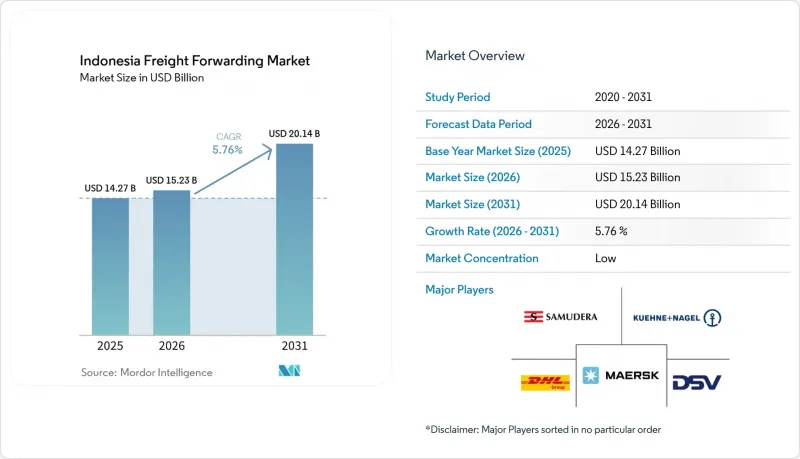
據 Mordor Intelligence 稱,2025 年印尼貨運代理市場價值 142.7 億美元,預計到 2031 年將達到 201.4 億美元,而 2026 年為 152.3 億美元,預測期(2026-2031 年)複合年成長率為 5.76%。
印尼貨運代理市場的趨勢與洞察
擴大出口導向製造業及特殊貨物
印尼的下游政策正推動鎳、銅和礬土的加工離產地更近,增加了半成品、工業設備及相關文件的國際運輸量。預計到2026年4月,印尼製造業出口額將達到755.7億美元,中國、美國和印度是主要出口目的地,這將帶動貨運代理的需求,以協調供應商文件、原產地證書和裝卸要求。冶煉廠和精煉廠的建設也催生了對超大型設備的專案物流需求,這些設備需要具備散裝和重型貨物運輸能力。同時,醫療、化學和電動車相關貨物需要危險物品處理、溫度控制、法規的記錄保存和準時交付。電動車零件即時生產和順序交付的增加進一步提高了服務要求,為擁有超越標準貨櫃仲介業務的專業能力的營運商創造了新的商機。
跨境電子商務與消費品進口
小包裹數量的增加正推動貨物結構向平均重量下降的方向轉變,從而帶動了拼箱、零擔貨運和空運服務的需求。印尼貨運代理市場受惠於電經銷商頻繁出貨的需求,而國內履約則將海關監管的樞紐與區域配送網路連接起來。這有利於提供貨運代理、倉儲、清關和配送一體化服務的供應商,但同時也加劇了來自建構自身物流能力的電商平台的競爭。需求正從爪哇島和蘇門答臘島擴展到蘇拉威西島和峇里島等市場。同時,數位化報價和自動化單據提高了小規模進口商的便利性,並簡化了大量低價值貨物的處理流程。然而,隨著單一小包裹收入的下降,高效的拼箱、可預測的配送和透明的定價變得至關重要,而從國際到國內配送的履約對於保障貨物價值也至關重要。
港口擁擠和海關手續複雜
丹戎不碌港承擔著印尼大部分進口貨物和約40%的國內貨櫃吞吐量。壅塞是印尼貨運代理市場面臨的主要風險,表現為船舶排隊時間延長、堆場運轉率提高、滯留費增加。在2026年3月至4月開齋節後的高峰期,綜合物流流管理指揮中心協調了各碼頭、貨運公司和公共機構的工作。然而,僅僅增加碼頭吞吐能力不足以立即解決道路通行和貨車調度方面的限制,迫使貨運代理預估運輸時間和貨物交付計劃的延誤。此外,海關程序需要協調關稅、消費稅、檢疫、印尼食品藥物管理局(BPOM)以及行業特定許可等事宜,而人工流程增加了文件風險。約600家貨運代理和物流公司透過ALFI對KBLI 2025的擬議修正案提出異議,這給綜合服務模式和相關投資帶來了不確定性。擁有完善的貨物到達前文件核查系統和強大的監管合規能力的供應商可以降低海關延誤和罰款風險。
細分市場分析
截至2025年,海運將佔印尼貨運代理市場佔有率的72.86%,而空運預計到2031年將以7.98%的複合年成長率成長。海運服務於需要經濟高效的長途運輸的容器化貨物、半成品和製成品。整箱貨運(FCL)服務支持棕櫚油、煤炭、鎳製品、服飾及相關品類的大規模托運人,這些托運人通常簽訂出口合約。拼箱貨運(LCL)服務則滿足那些需要更靈活的運輸時間且無法裝滿貨櫃的供應商的需求。陸運貨運連接爪哇島及跨蘇門答臘走廊沿線的工廠、倉庫和碼頭。即使主要貨物透過海運運輸,這些「首公里」和「末公里」運輸環節也至關重要。
印尼空運市場主要由高價值、時效性強的貨物驅動,例如半導體元件、藥品和時尚商品。空運服務能夠滿足海運無法實現的短時送達要求。 DHL Express 正在擴大其雅加達門戶的運輸能力,計劃於 2025 年 12 月啟用升級後的泗水門戶。由於貨運網路集中在爪哇島,以及軌道軌距和運輸能力的限制,鐵路貨運仍受到限制。對於在爪哇島產區和物流中心之間運輸的托盤裝農產品和日常消費品,海陸聯運變得越來越重要。跨國托運人在選擇受監管的空運服務時,擴大採用國際航空運輸協會 (IATA) 關於危險品和藥品的標準。
截至2025年,大型企業將佔據印尼貨運代理市場68.43%的佔有率,而中小企業預計到2031年將以9.56%的複合年成長率成長。主要客戶包括跨國製造商、國有能源公司和大型零售商,他們通常透過與承運商簽訂優先合約開展業務。這些客戶持續的貨運量促使貨運代理投資於門戶、倉儲設施和獲得清關許可的能力,同時也增強了他們與承運商的議價能力。此外,大型客戶優先考慮可靠的運輸能力、合規性和服務的連續性,這鞏固了印尼貨運代理行業老牌企業的地位。
線上報價、電子載貨證券和數位化報關單有效地降低了小規模出口商的進入門檻。食品加工商、手工藝品製造商、電子產品供應商和特殊化學品製造商現在即使是小批量貨物也可以使用國際貨運代理服務。這些客戶通常需要貨物追蹤、靈活的拼箱安排以及報關單據的協助。 2026年5月,DSV將DB Schenker併入PT DSV Transport Indonesia,擴大了合併後公司的本地服務範圍。這種擴展的服務範圍也可能為中型企業提供企業級服務選擇。對於受管製商品,許可證要求仍然有利於信譽良好的持牌供應商,而非非正式的仲介。
其他好處:
- Excel格式的市場預測(ME)表
- 3個月的分析師支持
目錄
第1章:引言
- 研究假設和市場定義
- 調查範圍
第2章:調查方法
第3章執行摘要
- 市場規模、成長率與未來預測
- 主要需求推動要素和發展趨勢
- 主要貿易走廊及貨物流集中區域
- 競爭格局和主要貨運代理商
第4章 市場狀況
- 市場概況及貨運代理的重要性
- 市場促進因素
- 出口導向型製造業的擴張
- 跨境電子商務與消費品進口
- 港口、機場和國家物流走廊的現代化
- 國內物流生態系的數位化
- 為電動車、醫療保健和冷鏈貨物提供專業物流服務。
- 島嶼間一體化;來自次級經濟中心的需求
- 市場限制因素
- 港口擁塞和貨櫃存放場限制
- 海關手續的複雜性以及與文件相關的風險。
- 島際網路不平衡及空貨櫃重新分配
- 物流相關人員之間數位系統互通性的不一致性
- 價值鏈結構及前向流分析
- 國際貨運監理與海關框架分析
- 將技術引入貨運運營
- 國內外貨運流模式分析
- 票價和轉運利潤的結構分析
- 主要港口和門戶的貨物集中度分析
- 波特五力分析
- 地緣政治事件對供應鏈變化的影響
第5章 市場規模與成長預測
- 透過運輸方式
- 海運貨運代理
- 整箱貨(FCL)
- 拼箱 (LCL)
- 公路貨運代理
- 整車運輸 (FTL)
- 低於100%的運費(零擔運輸)
- 空運貨運代理
- 鐵路貨運代理
- 多模態和多式聯運貨運
- 海運貨運代理
- 按公司規模
- 小型企業
- 大公司
- 前移式卡車型號
- 傳統輕資產型貨運代理
- 數位優先/線上平台
- 混合資產型貨運代理
- 按最終用戶行業分類
- 工業和製造業
- 零售與電子商務
- 醫療和藥品
- 石油、天然氣和能源
- 食品/飲料
- 車
- 化學品
- 其他最終用戶
- 按貨物組成
- 貨櫃貨物
- 散貨和項目貨物
- 乾散貨
- 液體散貨
- 按地區
- 爪哇島(雅加達和博多)
- 蘇門答臘
- 加里曼丹
- 蘇拉威西
- 峇裡島和努沙登加拉
- 巴布亞地區和摩鹿加群島
第6章 競爭情勢
- 市場集中度
- 策略趨勢
- 市佔率分析
- 公司簡介
- DHL Group
- DSV A/S
- Kuehne+Nagel
- AP Moller-Maersk
- CEVA Logistics(CMA CGM Group)
- NX Group/PT NX Lemo Indonesia Logistik
- Expeditors International
- GEODIS
- Yusen Logistics
- DP World
- KLN Logistics Group Limited
- Sinotrans Limited
- CJ Logistics
- PT Samudera Indonesia Tbk
- Meratus Group
- PT Cipta Krida Bahari(CKB Logistics)
- PT Kamadjaja Logistics
- PT Puninar Logistics
- PT Kintetsu World Express Indonesia(KWE)
- PT Multi Terminal Indonesia(MTI)
- JNE Freight/PT Tiki Jalur Nugraha Ekakurir
- Rhenus Logistics
第7章 市場機會與未來展望
第8章附錄
According to Mordor Intelligence, the Indonesia freight forwarding market size was valued at USD 14.27 billion in 2025, and is estimated to grow from USD 15.23 billion in 2026 to reach USD 20.14 billion by 2031, at a CAGR of 5.76% during the forecast period (2026-2031).
Indonesia Freight Forwarding Market Trends and Insights
Expansion of Export-Oriented Manufacturing and Specialized Cargo
Indonesia's downstreaming policy is shifting nickel, copper, and bauxite processing closer to source locations, increasing international shipments of semi-finished goods, industrial equipment, and related documentation. Manufacturing exports reached USD 75.57 billion in April 2026, with China, the United States, and India as important destinations, supporting demand for freight forwarders that coordinate supplier documents, origin certificates, and handling requirements. Smelter and refinery construction also creates project logistics demand for oversized equipment requiring breakbulk and heavy-lift capabilities. In contrast, healthcare, chemical, and EV cargo require dangerous goods handling, temperature control, compliant records, and timed delivery. Rising just-in-time manufacturing and EV component sequencing further increase service requirements, creating opportunities for providers with specialized capabilities beyond standard container brokerage.
Cross-Border E-Commerce and Consumer-Goods Imports
Smaller parcels are shifting freight mixes toward lower average shipment weights, increasing demand for consolidation, less-than-container-load, and air cargo services. The Indonesia freight forwarding market benefits as e-commerce sellers require frequent dispatches, while domestic fulfillment connects customs-controlled locations with local delivery networks. This favors providers offering integrated forwarding, storage, customs processing, and delivery handoffs, although competition is increasing from marketplaces developing in-house logistics capabilities. Demand extends beyond Java and Sumatra to markets such as Sulawesi and Bali. At the same time, digital quotation and automated documentation can improve access for smaller importers and simplify high-volume, low-value shipments. However, lower revenue per parcel requires efficient consolidation, predictable handoffs, and transparent pricing, making international-to-domestic fulfillment integration important for protecting shipment value.
Port Congestion and Customs Complexity
Tanjung Priok handles the majority of Indonesia's imports and around 40% of national container throughput, making congestion a key risk for the Indonesia freight forwarding market through longer vessel queues, higher yard occupancy, and greater demurrage exposure. During the March-April 2026 post-Eid peak, an Integrated Logistics Flow Control Command Center coordinated terminals, trucking firms, and public agencies, but new terminal capacity did not immediately address road access and truck-scheduling constraints, requiring forwarders to factor delays into transit times and cargo release planning. Customs clearance also requires coordination across duty, excise, quarantine, BPOM, and sector-specific licensing, with manual processes increasing documentation risks. The KBLI 2025 revision is being contested by around 600 freight-forwarding and logistics companies through ALFI, creating uncertainty for integrated service models and related investments. Providers with pre-arrival document checks and strong regulatory capabilities can reduce clearance delays and penalty risks.
Other drivers and restraints analyzed in the detailed report include:
- Port, Airport, Corridor Modernization and Digitalization
- Inter-Island Consolidation and Secondary Economic Hubs
- Network Imbalance and Uneven System Interoperability
For complete list of drivers and restraints, kindly check the Table Of Contents.
Segment Analysis
Ocean freight forwarding held 72.86% of the Indonesia freight forwarding market share in 2025, while air freight forwarding is forecast to expand at a 7.98% CAGR through 2031. The ocean freight serves containerized commodities, semi-processed products, and manufactured goods that need cost-effective long-distance transport. Full-container-load services support large shippers with regular export contracts in palm oil, coal, nickel products, garments, and related categories. Less-than-container-load movements serve suppliers that need more flexible dispatch timing and cannot fill a full container. Road forwarding connects factories, warehouses, and terminals across Java and the trans-Sumatra corridor. These first-mile and last-mile functions remain essential even when the main shipment moves by sea.
The Indonesia freight forwarding market size for air freight forwarding benefits from higher-value and time-sensitive cargo such as semiconductor components, pharmaceuticals, and fashion goods. Air services can meet short transit requirements that ocean movements cannot support. DHL Express opened an upgraded Surabaya Gateway in December 2025 and is expanding capacity at Jakarta Gateway. Rail forwarding remains limited because the freight network is concentrated on Java and faces gauge and capacity constraints. Sea-road intermodal options are becoming more relevant for palletized agricultural and fast-moving consumer goods between production areas and Java distribution centers. International Air Transport Association dangerous-goods and pharmaceutical standards are increasingly used by multinational shippers when selecting compliant air cargo services.
Large enterprises held 68.43% of the Indonesia freight forwarding market size in 2025, while small and medium enterprises are forecast to register at a 9.56% CAGR through 2031. Key customers include multinational manufacturers, state-owned energy companies, and large retailers that typically operate through preferred-carrier agreements. Their recurring shipment volumes support forwarders' investments in gateways, warehousing facilities, and licensed brokerage capabilities, while strengthening negotiating power with carriers. Large customers also prioritize reliable capacity, regulatory compliance, and service continuity, supporting the role of established operators in Indonesia's freight forwarding industry.
Online quotation, electronic bills of lading, and digital customs filing reduce the practical entry threshold for smaller exporters. Food processors, handicraft producers, electronics suppliers, and specialty chemical firms can access international freight services with smaller shipment sizes. These customers often require tracking, flexible consolidation schedules, and help with duty documentation. DSV completed its integration of DB Schenker into PT DSV Transport Indonesia in May 2026, expanding the combined company's local service coverage. This broader coverage may extend enterprise-grade service options to mid-market accounts. Import licensing requirements still favor established and licensed providers over informal brokers for regulated goods.
Complete Report Scope:
- By Mode of Transport
- Ocean Freight Forwarding
- Full Container Load (FCL)
- Less-Than-Container Load (LCL)
- Road Freight Forwarding
- Full Truck Load (FTL)
- Less-Than-Truck Load (LTL)
- Air Freight Forwarding
- Rail Freight Forwarding
- Multimodal and Intermodal Forwarding
- Ocean Freight Forwarding
- By Enterprise Size
- Small and Medium Enterprises
- Large Enterprises
- By Forwarder Model
- Traditional Asset-Light Forwarders
- Digital-First / Online Platforms
- Hybrid Asset-Enabled Forwarders
- By End-User Industry
- Industrial and Manufacturing
- Retail and E-commerce
- Healthcare and Pharmaceuticals
- Oil, Gas and Energy
- Food and Beverages
- Automotive
- Chemicals
- Other End-Users
- By Cargo Configuration
- Containerized Cargo
- Breakbulk and Project Cargo
- Dry Bulk Cargo
- Liquid Bulk Cargo
- By Region
- Java (Jakarta and BOD)
- Sumatra
- Kalimantan
- Sulawesi
- Bali and Nusa Tenggara
- Papua Region and Maluku Islands
List of Companies Covered in this Report:
- DHL Group
- DSV A/S
- Kuehne+Nagel
- A.P. Moller - Maersk
- CEVA Logistics (CMA CGM Group)
- NX Group / PT NX Lemo Indonesia Logistik
- Expeditors International
- GEODIS
- Yusen Logistics
- DP World
- KLN Logistics Group Limited
- Sinotrans Limited
- CJ Logistics
- PT Samudera Indonesia Tbk
- Meratus Group
- PT Cipta Krida Bahari (CKB Logistics)
- PT Kamadjaja Logistics
- PT Puninar Logistics
- PT Kintetsu World Express Indonesia (KWE)
- PT Multi Terminal Indonesia (MTI)
- JNE Freight / PT Tiki Jalur Nugraha Ekakurir
- Rhenus Logistics
Additional Benefits:
- The market estimate (ME) sheet in Excel format
- 3 months of analyst support
TABLE OF CONTENTS
1 INTRODUCTION
- 1.1 Study Assumptions and Market Definition
- 1.2 Scope of the Study
2 RESEARCH METHODOLOGY
3 EXECUTIVE SUMMARY
- 3.1 Market Size, Growth, and Forecast Outlook
- 3.2 Key Demand Drivers and Freight Forwarding Trends
- 3.3 Major Trade Corridors and Cargo Flow Concentration
- 3.4 Competitive Landscape and Leading Freight Forwarders
4 MARKET LANDSCAPE
- 4.1 Market Overview and Importance of Freight Forwarding
- 4.2 Market Drivers
- 4.2.1 Expansion of Export-Oriented Manufacturing
- 4.2.2 Cross-Border E-Commerce and Consumer-Goods Imports
- 4.2.3 Port, Airport and National Logistics-Corridor Modernization
- 4.2.4 National Logistics Ecosystem Digitalization
- 4.2.5 Specialized EV, Healthcare and Cold-Chain Cargo Flows
- 4.2.6 Inter-Island Consolidation Demand from Secondary Economic Hubs
- 4.3 Market Restraints
- 4.3.1 Port Congestion and Container-Yard Constraints
- 4.3.2 Customs Complexity and Documentation Risk
- 4.3.3 Inter-Island Network Imbalance and Empty-Container Repositioning
- 4.3.4 Uneven Digital-System Interoperability Across Logistics Stakeholders
- 4.4 Value Chain Structure and Freight Forwarding Flow Analysis
- 4.5 Freight Forwarding Regulatory and Customs Framework Analysis
- 4.6 Technology Adoption in Freight Forwarding Operations
- 4.7 Domestic and International Shipment Flow Pattern Analysis
- 4.8 Freight Rates and Forwarding Margin Structure Analysis
- 4.9 Major Port and Gateway Cargo Concentration Analysis
- 4.10 Porter's Five Forces Analysis
- 4.10.1 Threat of New Entrants
- 4.10.2 Bargaining Power of Buyers
- 4.10.3 Bargaining Power of Suppliers
- 4.10.4 Threat of Substitute Services
- 4.10.5 Intensity of Competitive Rivalry
- 4.11 Impact of Geo-Political Events on Supply Chain Shifts
5 MARKET SIZE AND GROWTH FORECASTS
- 5.1 By Mode of Transport
- 5.1.1 Ocean Freight Forwarding
- 5.1.1.1 Full Container Load (FCL)
- 5.1.1.2 Less-Than-Container Load (LCL)
- 5.1.2 Road Freight Forwarding
- 5.1.2.1 Full Truck Load (FTL)
- 5.1.2.2 Less-Than-Truck Load (LTL)
- 5.1.3 Air Freight Forwarding
- 5.1.4 Rail Freight Forwarding
- 5.1.5 Multimodal and Intermodal Forwarding
- 5.1.1 Ocean Freight Forwarding
- 5.2 By Enterprise Size
- 5.2.1 Small and Medium Enterprises
- 5.2.2 Large Enterprises
- 5.3 By Forwarder Model
- 5.3.1 Traditional Asset-Light Forwarders
- 5.3.2 Digital-First / Online Platforms
- 5.3.3 Hybrid Asset-Enabled Forwarders
- 5.4 By End-User Industry
- 5.4.1 Industrial and Manufacturing
- 5.4.2 Retail and E-commerce
- 5.4.3 Healthcare and Pharmaceuticals
- 5.4.4 Oil, Gas and Energy
- 5.4.5 Food and Beverages
- 5.4.6 Automotive
- 5.4.7 Chemicals
- 5.4.8 Other End-Users
- 5.5 By Cargo Configuration
- 5.5.1 Containerized Cargo
- 5.5.2 Breakbulk and Project Cargo
- 5.5.3 Dry Bulk Cargo
- 5.5.4 Liquid Bulk Cargo
- 5.6 By Region
- 5.6.1 Java (Jakarta and BOD)
- 5.6.2 Sumatra
- 5.6.3 Kalimantan
- 5.6.4 Sulawesi
- 5.6.5 Bali and Nusa Tenggara
- 5.6.6 Papua Region and Maluku Islands
6 COMPETITIVE LANDSCAPE
- 6.1 Market Concentration
- 6.2 Strategic Moves
- 6.3 Market Share Analysis
- 6.4 Company Profiles (includes Global Level Overview, Market Level Overview, Core Segments, Financials as available, Strategic Information, Geographic Coverage, Products and Services, Recent Developments)
- 6.4.1 DHL Group
- 6.4.2 DSV A/S
- 6.4.3 Kuehne+Nagel
- 6.4.4 A.P. Moller - Maersk
- 6.4.5 CEVA Logistics (CMA CGM Group)
- 6.4.6 NX Group / PT NX Lemo Indonesia Logistik
- 6.4.7 Expeditors International
- 6.4.8 GEODIS
- 6.4.9 Yusen Logistics
- 6.4.10 DP World
- 6.4.11 KLN Logistics Group Limited
- 6.4.12 Sinotrans Limited
- 6.4.13 CJ Logistics
- 6.4.14 PT Samudera Indonesia Tbk
- 6.4.15 Meratus Group
- 6.4.16 PT Cipta Krida Bahari (CKB Logistics)
- 6.4.17 PT Kamadjaja Logistics
- 6.4.18 PT Puninar Logistics
- 6.4.19 PT Kintetsu World Express Indonesia (KWE)
- 6.4.20 PT Multi Terminal Indonesia (MTI)
- 6.4.21 JNE Freight / PT Tiki Jalur Nugraha Ekakurir
- 6.4.22 Rhenus Logistics
7 MARKET OPPORTUNITIES AND FUTURE OUTLOOK
- 7.1 White-Space Opportunities and Unmet Freight Forwarding Needs
- 7.2 High-Potential Cargo Segments and Trade Growth Opportunities
- 7.3 Strategic Growth Priorities Across Freight Forwarding Ecosystem
- 7.4 Future Market Outlook and Emerging Trade Demand Pockets
8 APPENDIX

 航空貨運代理市場:全球市場預測,2026-2032年航空貨運代理解決方案市場:全球市場預測,2026-2032年
 貨運代理市場規模、佔有率、成長、全球產業分析、區域趨勢以及2026年至2034年的預測
 2026-2030年全球貨運市場
 東協貨運代理:市場佔有率分析、產業趨勢與統計及成長預測(2026-2031)貨運:市場佔有率分析、產業趨勢與統計、成長預測(2026-2031)航空貨運代理市場-2026-2032年全球市場預測
 全球貨運代理市場:2026 年
 貨運代理市場機會、成長促進因素、產業趨勢分析及2026-2035年預測。
 2026年全球貨運代理市場報告