


 |
市場調查報告書
商品編碼
2154403
企業級人工智慧代理安全平台:市場佔有率分析、產業趨勢與統計、成長預測(2026-2031)Enterprise AI Agent Safety Platforms - Market Share Analysis, Industry Trends & Statistics, Growth Forecasts (2026 - 2031) |
||||||

※ 本網頁內容可能與最新版本有所差異。詳細情況請與我們聯繫。
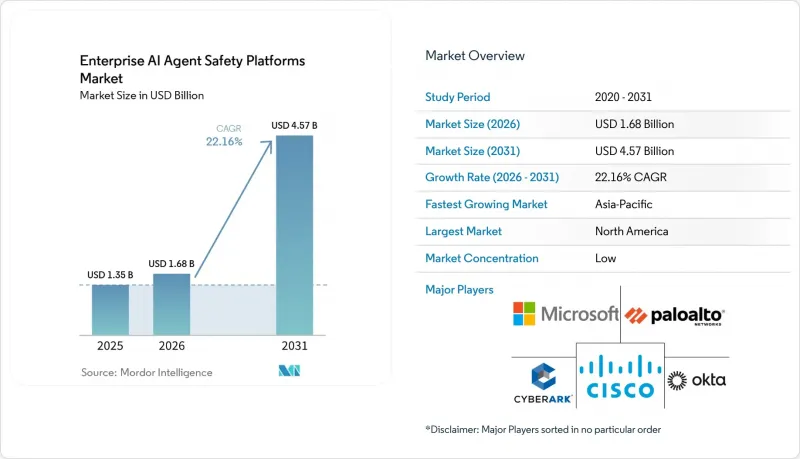
根據 Mordor Intelligence 預測,企業 AI 代理程式安全平台市場規模將從 2025 年的 13.5 億美元成長到 2026 年的 16.8 億美元,到 2031 年達到 45.7 億美元,2026 年至 2031 年的年複合成長率(CAGR)為 2.16%。
全球企業級人工智慧代理安全平台市場趨勢與洞察
企業自主工作流程代理的實施
企業部署自主工作流程代理正在擴大企業人工智慧代理安全平台市場的安全範圍。代理在跨多個系統的工作流程中結合了工具使用、記憶體和多階段推理。因此,受損或惡意代理程式可能在負責人發現問題之前執行相關操作。隨著部署規模的擴大,組織需要識別代理身份、限制權限並監控會話。 「EchoLeak」漏洞(CVE-2025-32711)表明,精心建構的電子郵件允許透過 Microsoft 365 Copilot 在無需使用者乾預的情況下遠端竊取資料。此漏洞的存在凸顯了在設計階段就採取安全措施的重要性,而不是在代理部署到生產環境後再新增控制功能。
對高影響力人工智慧決策的監管課責
監管趨勢日益凸顯了對自主人工智慧系統進行文件化控制的重要性。隨著監管力道的加大,權限管理、系統設計、行為監控和課責對於自主人工智慧系統的重要性也與日俱增。歐盟人工智慧法第50條規定,某些與人類互動的系統必須揭露其人工智慧本質及其所代表的當事人身分。附件三中針對高風險系統的義務預計將於2027年12月生效,具體生效日期已根據修訂後的時間表確定。美國國家標準與技術研究院(NIST)於2026年1月推出了“人工智慧代理標準舉措”,旨在解決代理系統的互通性和安全標準問題。這些進展進一步提升了監控、身分驗證和稽核記錄在企業採購中的重要性。
代理框架和協定之間的標準碎片化
代理框架和協定在身分管理、工具呼叫和記憶體處理方式上存在差異。這使得擁有不同代理商環境的買家難以應用一致的策略。模型上下文協議 (MCP) 擴展了代理與工具之間的協作,但也帶來了新的安全隱患。國家漏洞資料庫 (NVD) 已記錄了 CVE-2026-25536,這是一個存在於官方 MCP 軟體開發工具包中的用戶端到客戶端資料外洩漏洞。美國國家標準與技術研究院 (NIST) 正在透過其人工智慧代理標準化舉措制定互通性指南。在標準成熟之前,供應商需要支援多種運行時環境,買家可能面臨更高的整合和測試成本。
細分市場分析
到 2025 年,軟體平台將佔據企業級 AI 代理程式安全平台市場 72.39% 的佔有率。買家更傾向於整合式管治主機而非獨立的單點解決方案,因為前者允許在不同的代理程式執行環境中建立單一策略層。統一的控制層減輕了整合工作的負擔,並消除了活動可見度的差距。此元件透過通用介面支援身分識別管理、策略執行、工具監控和稽核功能。平台提供者也在建立服務合作夥伴生態系統,以支援區域性和中型企業的客戶帳戶。微軟將於 2026 年 5 月正式發布 Agent 365,並指定Accenture、Capgemini SA、畢馬威和 Protiviti 等服務合作夥伴。
服務業是成長最快的產業,預計到2031年複合年成長率將達到22.78%。這包括資安管理服務、專業部署支援和諮詢服務。這種成長反映出能夠跨多個代理框架設計和運作控制功能的團隊短缺。服務供應商可以幫助企業制定管治策略並審查高風險工作流程。平台供應商將其產品與合作夥伴提供的部署支援結合。這種方法可能會減少獨立服務公司的工作範圍,同時增加與平台部署相關的服務總量。
到 2025 年,基於雲端的部署將佔企業級 AI 代理程式安全平台市場 59.55% 的佔有率。許多代理程式已經利用了託管的大規模語言模型 (LLM) API 和駐留在雲端的無伺服器工具執行時間環境。透過雲端交付的安全工具可以與這些架構無縫整合,最大限度地減少運維阻力。這使得雲端平台成為代理庫存管理、策略分發和監控的理想選擇。雲端部署也支援分散式企業團隊之間的一致更新。在代理工作流程中使用託管服務的雲端交付模式,仍然在企業級 AI 代理安全平台市場佔據主導地位。
基於雲端的部署模式也是成長最快的模式,到 2031 年的複合年成長率將達到 22.94%。本地部署在與空氣間隙的政府機構、受監管的金融基礎設施以及具有主權資料要求的環境中仍然發揮著至關重要的作用。混合架構允許將本地編配層和基於雲端的工具註冊中心結合。採購組織可以在管理敏感工作流程時隔離代理運算環境並限制網路存取。私有雲端和本地環境可以為有需要的組織提供更精細的網路分段。這些需求確保了即使基於雲端的產品不斷擴展,混合部署模式仍將繼續存在。
區域分析
到2025年,北美將佔據企業級人工智慧代理安全平台市場40.22%的佔有率。該地區受益於企業人工智慧的積極應用以及成熟的網路安全供應商生態系統。在美國,聯邦政府對測試和人工審核流程的採購要求推動了對合規代理控制的需求。加拿大金融服務業的需求也促進了這項需求,而墨西哥則透過金融基礎設施的數位化提升了需求。受監管的買家越來越重視權限管理、監督和課責。這些因素鞏固了北美的領先地位。
在歐洲,企業級人工智慧代理安全平台市場正逐漸形成以合規性為導向的採購模式。歐盟《人工智慧法》第50條對某些與使用者互動的基於代理的系統施加了透明度要求。根據目前的計劃,屬於高風險類別的附件三義務預計將於2027年12月生效。德國於2025年12月引進了NIS2,擴大了聯邦網路安全監理義務的範圍。因此,歐洲買家可以從文件化的管治、存取控制和審計能力中獲得更多價值。在合規性要求主導採購決策的交易中,歐洲供應商可以與美國超大規模資料中心業者營運商競爭。
亞太地區是成長最快的地區,預計到2031年複合年成長率將達到23.15%。在日本,一些專業服務正在蓬勃發展,例如“GMO Cybersecurity”,這是穿透測試的服務,已於2026年4月推出。印度的IT和ITES產業正在推動需求成長,這既源自於國內市場的應用,也源自於國際客戶對離岸人工智慧工作流程合規性認證的需求。中國、韓國和澳洲各自擁有獨特的監管和商業性環境。沙烏地阿拉伯和阿拉伯聯合大公國正在推動國家主導的人工智慧基礎設施投資,而南非和奈及利亞則是金融服務領域的先驅。這種多元化的活動支撐著亞太地區的成長,而這種成長並不依賴任何單一國家。
其他好處:
- Excel格式的市場預測(ME)表
- 3個月的分析師支持
目錄
第1章:引言
- 研究假設和市場定義
- 調查範圍
第2章:調查方法
第3章執行摘要
第4章 市場狀況
- 市場概覽
- 市場促進因素
- 企業部署自主工作流程代理
- 對高影響力人工智慧決策的監管課責
- 非人類身分的傳播和最小權力原則。
- 快速注射和器械誤用帶來的風險
- 多代理交接中的授權委託
- 擴展 MCP 工具生態系統和工具歷史的要求。
- 市場限制因素
- 代理框架和協定之間的標準碎片化
- 運行時安全延遲和計算開銷
- 缺乏代理安全工程技能
- 動態代理工作流程中的誤報
- 宏觀經濟因素對市場的影響
- 產業價值鏈分析
- 科技趨勢
- 監理情勢
- 波特五力分析
第5章 市場規模與成長預測
- 按組件
- 軟體平台
- 服務
- 不同的發展
- 基於雲端的
- 現場
- 按功能
- 身份和存取安全
- 人工智慧管治與風險管理平台
- 威脅偵測與回應
- 資料安全與隱私
- 漏洞評估和糾正措施
- 其他功能
- 按組織規模
- 大公司
- 小型企業
- 按行業分類
- 銀行業、金融服務業及保險業
- 醫療保健和生命科學
- 政府/國防
- 資訊科技和基於資訊科技的服務
- 電訊
- 零售與電子商務
- 其他工業部門
- 按地區
- 北美洲
- 美國
- 加拿大
- 墨西哥
- 歐洲
- 德國
- 英國
- 法國
- 義大利
- 西班牙
- 其他歐洲國家
- 亞太地區
- 中國
- 日本
- 印度
- 韓國
- 澳洲
- 其他亞太國家
- 南美洲
- 巴西
- 阿根廷
- 智利
- 其他南美國家
- 中東
- 阿拉伯聯合大公國
- 沙烏地阿拉伯
- 卡達
- 其他中東國家
- 非洲
- 南非
- 埃及
- 奈及利亞
- 其他非洲國家
- 北美洲
第6章 競爭情勢
- 市場集中度
- 策略趨勢
- 市佔率分析
- 公司簡介
- Microsoft Corporation
- Palo Alto Networks, Inc.
- CyberArk Software Ltd.
- Cisco Systems, Inc.
- Okta, Inc.
- CrowdStrike Holdings, Inc.
- SentinelOne, Inc.
- Google LLC
- Amazon Web Services, Inc.
- Cato Networks Ltd.
- Proofpoint, Inc.
- Zenity, Inc.
- Lakera AI AG
- Protect AI, Inc.
- HiddenLayer, Inc.
- Prompt Security, Inc.
- Astrix Security, Inc.
- Oasis Security Ltd.
- Saviynt, Inc.
- Cranium AI, Inc.
第7章 市場機會與未來展望
According to Mordor Intelligence, the enterprise AI agent safety platforms market size is projected to expand from USD 1.35 billion in 2025 to USD 1.68 billion in 2026, and to USD 4.57 billion by 2031, registering a CAGR of 22.16% between 2026 and 2031.
Global Enterprise AI Agent Safety Platforms Market Trends and Insights
Enterprise Deployment of Autonomous Workflow Agents
Enterprise adoption of autonomous workflow agents is expanding the scope of security in the Enterprise AI Agent Safety Platforms Market. Agents combine tool use, memory, and multistep reasoning in workflows that can span several systems. A compromised or misbehaving agent can therefore execute linked actions before a reviewer identifies the issue. Organizations need to discover agent identities, restrict permissions, and monitor sessions as deployments scale. The EchoLeak vulnerability, CVE-2025-32711, showed that a crafted email could enable remote data exfiltration through Microsoft 365 Copilot without user interaction. This exposure makes concurrent security design more important than adding controls after an agent reaches production.
Regulatory Accountability for High-Impact AI Decisions
Regulatory activity is raising the importance of documented controls for autonomous AI systems. Regulatory attention is increasing the importance of privilege management, system design, behavioral monitoring, and accountability for autonomous AI systems. The EU AI Act requires certain systems that interact with people to disclose their AI nature and the identity of the party they represent under Article 50. High-risk system obligations under Annex III are scheduled for December 2027 under the amended timetable. NIST launched its AI Agent Standards Initiative in January 2026 to address interoperability and security standards for agent systems. These developments make monitoring, identity verification, and audit records more relevant in enterprise procurement.
Fragmented Standards Across Agent Frameworks and Protocols
Agent frameworks and protocols handle identity, tool calling, and memory in different ways. This makes consistent policy enforcement difficult for buyers with varied agent environments. The Model Context Protocol has expanded the connection between agents and tools, but it also introduces new security concerns. The National Vulnerability Database recorded CVE-2026-25536 for cross-client data leakage in the official MCP software development kit. NIST is developing interoperability guidance through its AI Agent Standards Initiative. Until standards mature, vendors must support several runtimes, and buyers may face higher integration and testing costs.
Other drivers and restraints analyzed in the detailed report include:
- Non-Human Identity Sprawl and Least-Privilege Requirements
- Prompt Injection and Tool Misuse Risk
- Shortage of Agent-Security Engineering Skills
For complete list of drivers and restraints, kindly check the Table Of Contents.
Segment Analysis
Software Platforms held 72.39% of the Enterprise AI Agent Safety Platforms Market share in 2025. Buyers favor a consolidated governance console over separate point solutions because it enables a single policy layer across different agent runtimes. A unified control layer can reduce integration work and gaps in activity visibility. The component supports identity control, policy enforcement, tool oversight, and audit functions from a common interface. Platform providers are also building service partner ecosystems to support regional and mid-market accounts. Microsoft made Agent 365 generally available in May 2026 and identified services partners, including Accenture, Capgemini, KPMG, and Protiviti.
Services are the fastest-growing component at a 22.78% CAGR through 2031. It includes managed security services, professional deployment, and advisory work. This growth reflects the shortage of teams capable of designing and operating controls across multiple agent frameworks. Service providers can help enterprises establish governance policies and review high-risk workflows. Platform vendors are combining their products with partner-delivered implementation support. This approach may reduce the addressable work for independent service firms while increasing the total volume of services tied to platform adoption.
Cloud-Based deployment accounted for 59.55% of the Enterprise AI Agent Safety Platforms Market size in 2025. Many agents use managed large language model APIs and serverless tool runtimes that are already cloud-resident. Cloud-delivered security tools can be deployed alongside these architectures with less operational friction. This makes cloud platforms a practical option for agent inventory, policy distribution, and monitoring. Cloud adoption also supports consistent updates across distributed enterprise teams. The Enterprise AI Agent Safety Platforms Market continues to favor cloud delivery, where agent workflows use managed services.
Cloud-based deployment is also the fastest-growing model, with a 22.94% CAGR through 2031. On-premises deployments retain a role in air-gapped government settings, regulated financial infrastructure, and environments with sovereign data requirements. Hybrid architectures can combine an on-premises orchestration layer with cloud-based tool registries. Buyers can isolate agent compute environments and limit network reachability when managing sensitive workflows. Private-cloud and on-premises environments can provide more detailed network segmentation for organizations that need it. These needs sustain a mixed deployment pattern even as cloud-based delivery expands.
Complete Report Scope:
- By Component
- Software Platforms
- Services
- By Deployment
- Cloud-Based
- On-Premises
- By Function
- Identity and Access Security
- AI Governance and Risk Platforms
- Threat Detection and Response
- Data Security and Privacy
- Vulnerability Assessment and Remediation
- Other Functions
- By Organization Size
- Large Enterprises
- Small and Medium-Sized Enterprises
- By Industry Vertical
- Banking, Financial Services and Insurance
- Healthcare and Life Sciences
- Government and Defense
- IT and IT-Enabled Services
- Telecommunications
- Retail and E-Commerce
- Other Industry Verticals
- By Geography
- North America
- United States
- Canada
- Mexico
- Europe
- Germany
- United Kingdom
- France
- Italy
- Spain
- Rest of Europe
- Asia-Pacific
- China
- Japan
- India
- South Korea
- Australia
- Rest of Asia-Pacific
- South America
- Brazil
- Argentina
- Chile
- Rest of South America
- Middle East
- United Arab Emirates
- Saudi Arabia
- Qatar
- Rest of Middle East
- Africa
- South Africa
- Egypt
- Nigeria
- Rest of Africa
- North America
Geography Analysis
North America held 40.22% of the Enterprise AI Agent Safety Platforms Market share in 2025. The region benefits from strong enterprise AI adoption and an established cybersecurity vendor ecosystem. The United States has federal procurement requirements for testing and human-review pathways that support demand for compliant agent controls. Canada contributes to demand in financial services, while Mexico adds to demand through the digitization of financial infrastructure. Regulated buyers place greater value on privilege management, monitoring, and accountability. These conditions support North America's leading position.
Europe has a compliance-led purchasing pattern for the Enterprise AI Agent Safety Platforms Market. Article 50 of the EU AI Act applies transparency requirements to certain agentic systems that interact with users. High-risk Annex III obligations are expected in December 2027 under the current timetable. Germany expanded mandatory federal cybersecurity supervision through its NIS2 implementation in December 2025. European buyers can therefore place added value on documented governance, access control, and audit capability. European vendors can compete with U.S. hyperscalers in accounts where compliance requirements guide purchasing decisions.
Asia-Pacific is the fastest-growing region at a 23.15% CAGR through 2031. Japan has developed specialized offerings, including GMO Cybersecurity, an IERAE AI Agent Penetration Testing service launched in April 2026. India's IT and ITES sectors drive demand for domestic deployments and for international clients that require compliance attestations for offshore AI workflows. China, South Korea, and Australia contribute separate regulatory and commercial conditions. Saudi Arabia and the United Arab Emirates are investing in sovereign AI infrastructure, while South Africa and Nigeria are early adopters in financial services. This spread of activity supports growth that is not dependent on one Asia-Pacific country.
- Microsoft Corporation
- Palo Alto Networks, Inc.
- CyberArk Software Ltd.
- Cisco Systems, Inc.
- Okta, Inc.
- CrowdStrike Holdings, Inc.
- SentinelOne, Inc.
- Google LLC
- Amazon Web Services, Inc.
- Cato Networks Ltd.
- Proofpoint, Inc.
- Zenity, Inc.
- Lakera AI AG
- Protect AI, Inc.
- HiddenLayer, Inc.
- Prompt Security, Inc.
- Astrix Security, Inc.
- Oasis Security Ltd.
- Saviynt, Inc.
- Cranium AI, Inc.
Additional Benefits:
- The market estimate (ME) sheet in Excel format
- 3 months of analyst support
TABLE OF CONTENTS
1 INTRODUCTION
- 1.1 Study Assumptions and Market Definition
- 1.2 Scope of the Study
2 RESEARCH METHODOLOGY
3 EXECUTIVE SUMMARY
4 MARKET LANDSCAPE
- 4.1 Market Overview
- 4.2 Market Drivers
- 4.2.1 Enterprise Deployment of Autonomous Workflow Agents
- 4.2.2 Regulatory Accountability for High-Impact AI Decisions
- 4.2.3 Non-Human Identity Sprawl and Least-Privilege Requirements
- 4.2.4 Prompt Injection and Tool Misuse Risk
- 4.2.5 Delegated Authority Across Multi-Agent Handoffs
- 4.2.6 MCP Tool Ecosystem Expansion and Tool-Provenance Requirements
- 4.3 Market Restraints
- 4.3.1 Fragmented Standards Across Agent Frameworks and Protocols
- 4.3.2 Runtime Security Latency and Compute Overhead
- 4.3.3 Shortage of Agent-Security Engineering Skills
- 4.3.4 False Positives Across Dynamic Agent Workflows
- 4.4 Impact of Macroeconomic Factors on the Market
- 4.5 Industry Value-Chain Analysis
- 4.6 Technology Outlook
- 4.7 Regulatory Landscape
- 4.8 Porter's Five Forces Analysis
- 4.8.1 Threat of New Entrants
- 4.8.2 Bargaining Power of Suppliers
- 4.8.3 Bargaining Power of Buyers
- 4.8.4 Threat of Substitutes
- 4.8.5 Intensity of Competitive Rivalry
5 MARKET SIZE AND GROWTH FORECASTS (VALUE)
- 5.1 By Component
- 5.1.1 Software Platforms
- 5.1.2 Services
- 5.2 By Deployment
- 5.2.1 Cloud-Based
- 5.2.2 On-Premises
- 5.3 By Function
- 5.3.1 Identity and Access Security
- 5.3.2 AI Governance and Risk Platforms
- 5.3.3 Threat Detection and Response
- 5.3.4 Data Security and Privacy
- 5.3.5 Vulnerability Assessment and Remediation
- 5.3.6 Other Functions
- 5.4 By Organization Size
- 5.4.1 Large Enterprises
- 5.4.2 Small and Medium-Sized Enterprises
- 5.5 By Industry Vertical
- 5.5.1 Banking, Financial Services and Insurance
- 5.5.2 Healthcare and Life Sciences
- 5.5.3 Government and Defense
- 5.5.4 IT and IT-Enabled Services
- 5.5.5 Telecommunications
- 5.5.6 Retail and E-Commerce
- 5.5.7 Other Industry Verticals
- 5.6 By Geography
- 5.6.1 North America
- 5.6.1.1 United States
- 5.6.1.2 Canada
- 5.6.1.3 Mexico
- 5.6.2 Europe
- 5.6.2.1 Germany
- 5.6.2.2 United Kingdom
- 5.6.2.3 France
- 5.6.2.4 Italy
- 5.6.2.5 Spain
- 5.6.2.6 Rest of Europe
- 5.6.3 Asia-Pacific
- 5.6.3.1 China
- 5.6.3.2 Japan
- 5.6.3.3 India
- 5.6.3.4 South Korea
- 5.6.3.5 Australia
- 5.6.3.6 Rest of Asia-Pacific
- 5.6.4 South America
- 5.6.4.1 Brazil
- 5.6.4.2 Argentina
- 5.6.4.3 Chile
- 5.6.4.4 Rest of South America
- 5.6.5 Middle East
- 5.6.5.1 United Arab Emirates
- 5.6.5.2 Saudi Arabia
- 5.6.5.3 Qatar
- 5.6.5.4 Rest of Middle East
- 5.6.6 Africa
- 5.6.6.1 South Africa
- 5.6.6.2 Egypt
- 5.6.6.3 Nigeria
- 5.6.6.4 Rest of Africa
- 5.6.1 North America
6 COMPETITIVE LANDSCAPE
- 6.1 Market Concentration
- 6.2 Strategic Moves
- 6.3 Market Share Analysis
- 6.4 Company Profiles (includes Global Level Overview, Market Level Overview, Core Segments, Financials as available, Strategic Information, Market Rank/Share, Products and Services, Recent Developments)
- 6.4.1 Microsoft Corporation
- 6.4.2 Palo Alto Networks, Inc.
- 6.4.3 CyberArk Software Ltd.
- 6.4.4 Cisco Systems, Inc.
- 6.4.5 Okta, Inc.
- 6.4.6 CrowdStrike Holdings, Inc.
- 6.4.7 SentinelOne, Inc.
- 6.4.8 Google LLC
- 6.4.9 Amazon Web Services, Inc.
- 6.4.10 Cato Networks Ltd.
- 6.4.11 Proofpoint, Inc.
- 6.4.12 Zenity, Inc.
- 6.4.13 Lakera AI AG
- 6.4.14 Protect AI, Inc.
- 6.4.15 HiddenLayer, Inc.
- 6.4.16 Prompt Security, Inc.
- 6.4.17 Astrix Security, Inc.
- 6.4.18 Oasis Security Ltd.
- 6.4.19 Saviynt, Inc.
- 6.4.20 Cranium AI, Inc.
7 MARKET OPPORTUNITIES AND FUTURE OUTLOOK
- 7.1 White-Space and Unmet-Need Assessment

 2026-2034年網路安全人工智慧(AI)全球市場規模、佔有率、趨勢和成長分析報告
 2026年全球能源行為分析市場報告
 生成式人工智慧安全市場預測至2034年-全球分析(按組件、部署模式、安全類型、安全功能、組織規模、最終用戶和地區分類)
 AI驅動的安全分析平台:市場佔有率分析、產業趨勢與統計數據、成長預測(2026-2031年)對抗性演算法競賽與防禦型人工智慧:市場佔有率分析、產業趨勢與統計數據及成長預測(2026-2031)網路防禦中的生成式人工智慧:市場佔有率分析、產業趨勢與統計數據以及成長預測(2026-2031 年)
 補丁優先級人工智慧市場:按組件、部署方法、企業規模、應用、國家和地區分類 - 全球產業分析、市場規模與佔有率及未來預測(2026-2033 年)2026年全球人工智慧(AI)補丁優先市場報告
 人工智慧安全工具市場分析及預測(至2035年):類型、產品類型、服務、技術、應用、部署模式、最終用戶、功能
 基於代理的人工智慧安全與協調解決方案市場:規模、佔有率和成長分析(按解決方案類型、部署模式、應用領域、組織規模、銷售管道和地區分類)-2026-2033年產業預測